Customer support has changed as businesses grow and customer expectations rise. What once worked with shared inboxes and manual follow ups often becomes difficult to manage at scale. Support requests arrive from multiple channels, priorities compete, and important issues can slip through the cracks without a clear system in place.
A helpdesk system brings order to this complexity. It helps teams capture requests, organize work, and respond with consistency and accountability. Support teams gain visibility into what needs attention, while customers receive faster and more reliable responses.
For growing companies, a helpdesk becomes a foundation for sustainable support operations rather than a reactive solution. Understanding how helpdesk systems work makes it easier to build support processes that scale alongside the business.
What Is a Helpdesk System?
A helpdesk system is a centralized support platform that helps businesses manage customer questions, issues, and service requests from one place. It turns inquiries from email, chat, social media, or web forms into organized support tickets that agents can track, prioritize, and resolve efficiently. Modern helpdesk systems bring all customer interactions together so teams can see complete histories, assign work to the right people, and ensure nothing gets missed. Many systems include automation for routing tickets, canned replies, and tools for tracking service levels, which speeds up response times and reduces manual effort. At its core, a helpdesk system is about making support work smoother and more consistent, helping teams deliver better customer experiences with less confusion and more clarity.
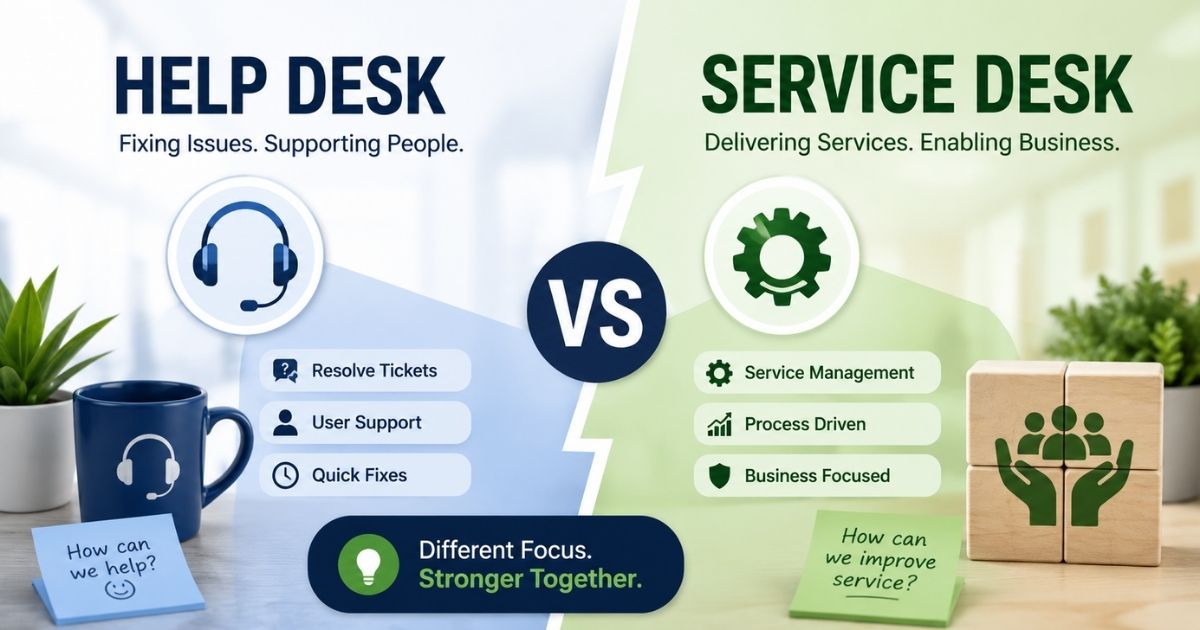
Helpdesk vs. Service Desk: What’s The Difference
| Aspect | Helpdesk | Service Desk |
| Primary focus | Resolving user issues and questios | Managing IT services end to end |
| Main goal | Fix problems quickly | Align IT services with business needs |
| Scope | Reactive support for tickets and requests | Broader service management and strategy |
| Typical users | Customer support teams, internal support teams | IT teams and service management teams |
| Type of issues | Customer queries, product issues, access problems | Incidents, service requests, changes, assets |
| Processes involved | Ticket tracking, assignment, resolution | Incident, change, problem, and asset management |
| Business impact | Improves response time and customer satisfaction | Improves service reliability and operational efficiency |
| Best suited for | Growing businesses and support teams | Larger organizations with mature IT operations |
How Does a Helpdesk System Work?
A helpdesk system operates through a defined support workflow that standardizes request handling. Each stage introduces structure, visibility, and accountability, enabling support teams to manage volume efficiently while maintaining service quality.
Request intake across support channels
Support requests are ingested from multiple sources such as email, chat widgets, and web forms. The system normalizes these inputs into a single queue, ensuring consistent handling regardless of the entry point.
Ticket creation and data structuring
Incoming requests are converted into tickets containing metadata such as requester identity, issue category, priority level, and timestamps. This structured data enables traceability, historical context, and accurate reporting.
Routing, assignment, and prioritization logic
Tickets are distributed based on predefined rules or manual triage. Factors such as urgency, workload distribution, and specialization guide assignment, allowing teams to address high impact issues without neglecting lower priority requests.
Centralized collaboration and response management
All communication related to a ticket is stored within the system. Internal notes, shared views, and response templates support collaboration while preserving a complete audit trail of actions and decisions.
Status tracking and workflow control
Tickets progress through defined lifecycle stages such as open, pending, or resolved. Status transitions provide real time visibility into support operations and help teams identify delays or process breakdowns.
Operational analytics and continuous improvement
The system captures performance data including response times, resolution rates, and ticket volume trends. These metrics inform staffing decisions, workflow adjustments, and long term service improvements
Why Businesses Need a Helpdesk System
As customer expectations continue to rise, businesses face growing pressure to respond faster and more consistently. A helpdesk system provides the structure needed to manage support at scale while maintaining quality, accountability, and visibility across teams.
Clear ownership and accountability
A helpdesk system removes ambiguity around who is responsible for each request. Every issue is assigned to a specific owner, making it clear who is expected to respond and resolve the problem. This accountability reduces delays caused by handoffs or overlooked messages. Teams spend less time checking shared inboxes and more time acting, while managers gain confidence that no request is being ignored or forgotten.
Consistent and reliable customer responses
Without a centralized system, responses can vary widely depending on who answers a message. A helpdesk system creates consistency by standardizing workflows, response templates, and escalation paths. Customers receive clearer, more predictable communication, which builds trust over time. Consistency also helps teams avoid mistakes that come from missing context or relying on memory rather than documented information.
Better control over support priorities
Not all issues have the same level of urgency, and a helpdesk system helps teams reflect that reality. Requests can be prioritized based on impact, customer type, or service level expectations. This prevents critical problems from being buried under routine questions. Teams stay focused on what matters most, while customers with urgent needs receive faster attention.
Improved collaboration across teams
Support work often requires input from product, engineering, or operations. A helpdesk system keeps conversations and context in one place, making collaboration smoother. Team members can add internal notes, share updates, and track decisions without switching tools. This reduces miscommunication and helps issues move forward without unnecessary back and forth.
Greater visibility into workload and performance
A helpdesk system provides real time insight into ticket volume, response times, and resolution rates. Managers can see where work is piling up and adjust resources accordingly. This visibility supports smarter staffing decisions and helps identify process gaps. Over time, teams gain a clearer understanding of their true support capacity.
Faster resolution through structured processes
Structured workflows reduce guesswork and waste effort. A helpdesk system guides tickets through defined stages, ensuring that each step follows a repeatable process. This structure shortens resolution times by minimizing rework and confusion. Teams become more efficient as they rely on proven processes rather than improvising solutions.
Data driven improvements and long-term scalability
Every interaction in a helpdesk system generates useful data. Patterns in customer issues, response delays, and recurring problems become visible over time. Businesses use this information to improve products, refine documentation, and plan for growth. As support volume increases, the system scales without forcing teams to abandon their existing workflows or quality standards.
Key Features of a Modern Helpdesk System
Modern helpdesk systems are built to support teams that manage increasing support volume without sacrificing quality or speed. Rather than functioning as basic ticket inboxes, they provide structured workflows, automation, and visibility that help teams operate efficiently and scale support operations with confidence.
Centralized ticket management
All customer support requests are captured and organized within a single system. Messages from email, live chat, and web forms are converted into tickets that move through a defined lifecycle. Each ticket contains the full history of communication, internal notes, and status updates, allowing agents to work with complete context. Centralization reduces the risk of missed requests and ensures consistent handling across the team.
Multi-channel support coordination
Customers often reach out through different channels depending on urgency or preference. A modern helpdesk connects these channels into one unified interface, allowing teams to respond without switching tools. Conversations remain linked to the same ticket even if the channel changes, which preserves context and avoids duplicate responses. Support teams maintain clarity while customers experience smoother communication.
Automation and workflow management
Automation reduces repetitive manual tasks that slow down support operations. Helpdesk systems allow teams to configure rules for ticket routing, assignment, priority setting, and notifications. Automated workflows ensure high priority issues receive timely attention while standard requests follow consistent processes. Reduced manual intervention leads to faster response times and fewer errors.
Internal collaboration and visibility
Support work often involves multiple departments. Modern helpdesks include features such as internal notes, shared ticket views, and role-based access that allow collaboration within the system. Product teams, engineers, or operations staff can review tickets and contribute without disrupting workflows. All discussions and decisions remain documented, which improves accountability and reduces miscommunication.
Knowledge base and self-service capabilities
A built-in knowledge base allows businesses to document answers to common questions and known issues. Customers can access help articles independently, reducing incoming ticket volume. Support agents benefit by referencing standardized content rather than writing responses from scratch. Over time, self-service becomes a key component of efficient support operations and improves customer satisfaction.
Reporting and performance insights
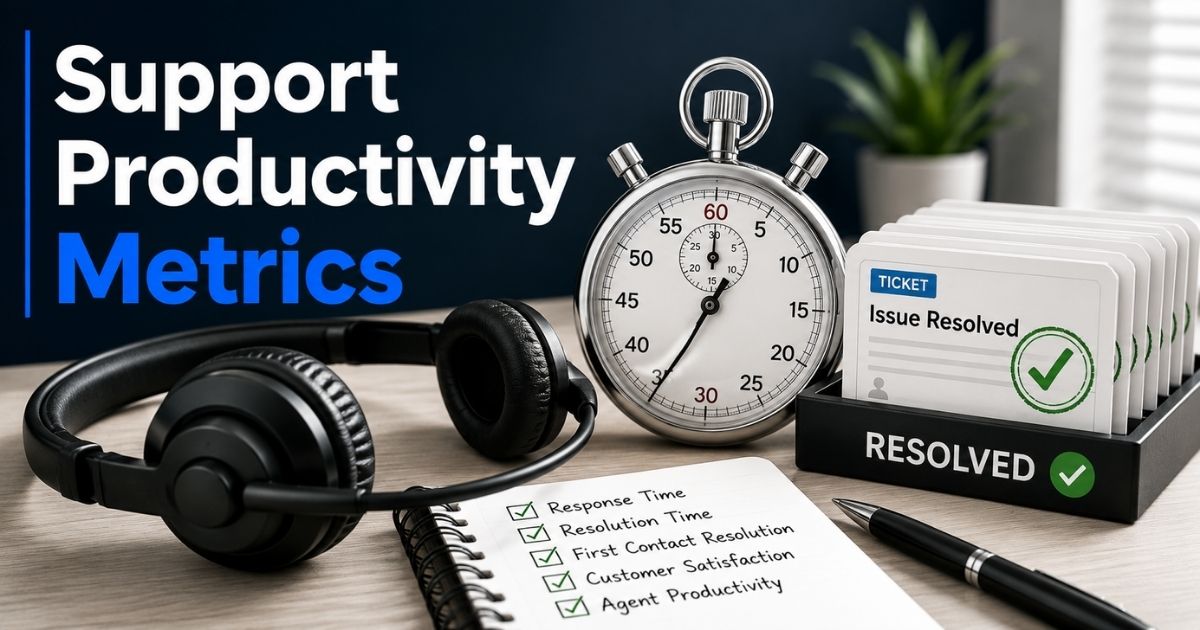
Operational visibility plays an important role in managing support teams. Modern helpdesk systems provide reports on ticket volume, response times, resolution rates, and backlog trends. Managers use these insights to identify bottlenecks, adjust staffing levels, and refine workflows. Data driven reporting supports continuous improvement and more predictable service outcomes.
Usability and ease of adoption
Ease of use directly affects how quickly teams adopt a helpdesk system. Clean interfaces, intuitive navigation, and simple setup reduce training time. Faster onboarding allows teams to focus on resolving issues rather than learning complex tools. High usability also encourages consistent usage, which improves data accuracy and overall system effectiveness.
Types of Helpdesk Systems
Helpdesk systems are not one size fits all. Different types exist to support specific business needs, team structures, and use cases.
Customer support helpdesk
Customer support helpdesks are designed to manage external requests from users or customers. These systems focus on handling inquiries, product issues, and service questions through channels like email, chat, and web forms. Features typically prioritize ticket tracking, response management, service level visibility, and customer communication history. Businesses that provide products or services to external users rely on this type of helpdesk to maintain consistent and timely support.
Internal helpdesk
Internal helpdesks support employees rather than customers. Common use cases include IT support, HR requests, access management, and operational issues. These systems emphasize structured request intake, clear ownership, and internal collaboration. Internal helpdesks help organizations reduce interruptions, track recurring problems, and ensure employees receive timely assistance without relying on informal communication.
IT helpdesk
IT helpdesks specialize in managing technical issues related to systems, devices, and infrastructure. Requests often involve hardware problems, software access, or network issues. These systems typically require strong categorization, priority handling, and escalation workflows. IT helpdesks help organizations maintain uptime and resolve technical issues efficiently while keeping clear records for audits and compliance.
Shared inbox-based helpdesk
Shared inbox helpdesks organize support around a team email address. Messages are assigned, replied to, and tracked within a shared interface. This type works well for small teams with low support volume. Limitations appear as volume increases, since reporting, automation, and advanced workflows are often limited compared to full helpdesk platforms.
Cloud based helpdesk
Cloud based helpdesks are hosted online and accessed through a browser. Setup is faster, maintenance is handled by the provider, and teams can work from anywhere. These systems scale more easily and receive regular updates. Most modern helpdesks fall into this category due to flexibility and lower operational overhead.
Enterprise helpdesk
Enterprise helpdesks support large organizations with complex support needs. These systems handle high ticket volume, multiple departments, and strict process requirements. Advanced reporting, role-based access, and integration with other business systems are common. Enterprise helpdesks prioritize control, security, and scalability across large teams.
How to Choose the Right Helpdesk System for Your Business?
Choosing a helpdesk system is a strategic decision that affects how your team works and how customers experience your support. The right choice depends on your workflows, team size, and long term goals rather than a simple feature checklist.
Understand who you are supporting
Start by clarifying whether the helpdesk will serve customers, internal teams, or both. Customer facing support often requires multi channel communication and response tracking, while internal support may need structured request forms and approval flows. Knowing the audience helps narrow the type of system you need.
Match the system to your support volume
Support volume shapes system requirements. Smaller teams with limited requests may need basic ticket tracking, while higher volumes require automation and prioritization. Choosing a system that fits current demand but can scale prevents early replacement and operational disruption.
Look for workflow flexibility
Every support team works differently. A good helpdesk should adapt to your processes rather than forcing rigid workflows. Custom fields, routing rules, and configurable statuses allow teams to reflect real work patterns and handle exceptions without workarounds.
Evaluate ease of adoption
A helpdesk system must be easy for agents and users to adopt. Clean interfaces and simple setup reduce training time and resistance. Faster adoption improves data quality and ensures the system becomes part of daily operations instead of an unused tool.
Check reporting and visibility
Operational insight matters as much as ticket handling. Look for clear reports on response times, resolution rates, and backlog trends. These insights support staffing decisions, performance reviews, and long term service improvement.
Consider integration needs
Support rarely exists in isolation. The helpdesk should integrate with tools used for communication, product management, or customer data. Integrations reduce manual work and help teams maintain context across systems.
Think beyond immediate needs
Short term requirements matter, but future growth matters more. A helpdesk system should support increased volume, more agents, and evolving processes without major reconfiguration. Choosing with scalability in mind reduces risk and supports sustainable support operations.
Improve Your Customer Experience and Team Productivity With EasyDesk
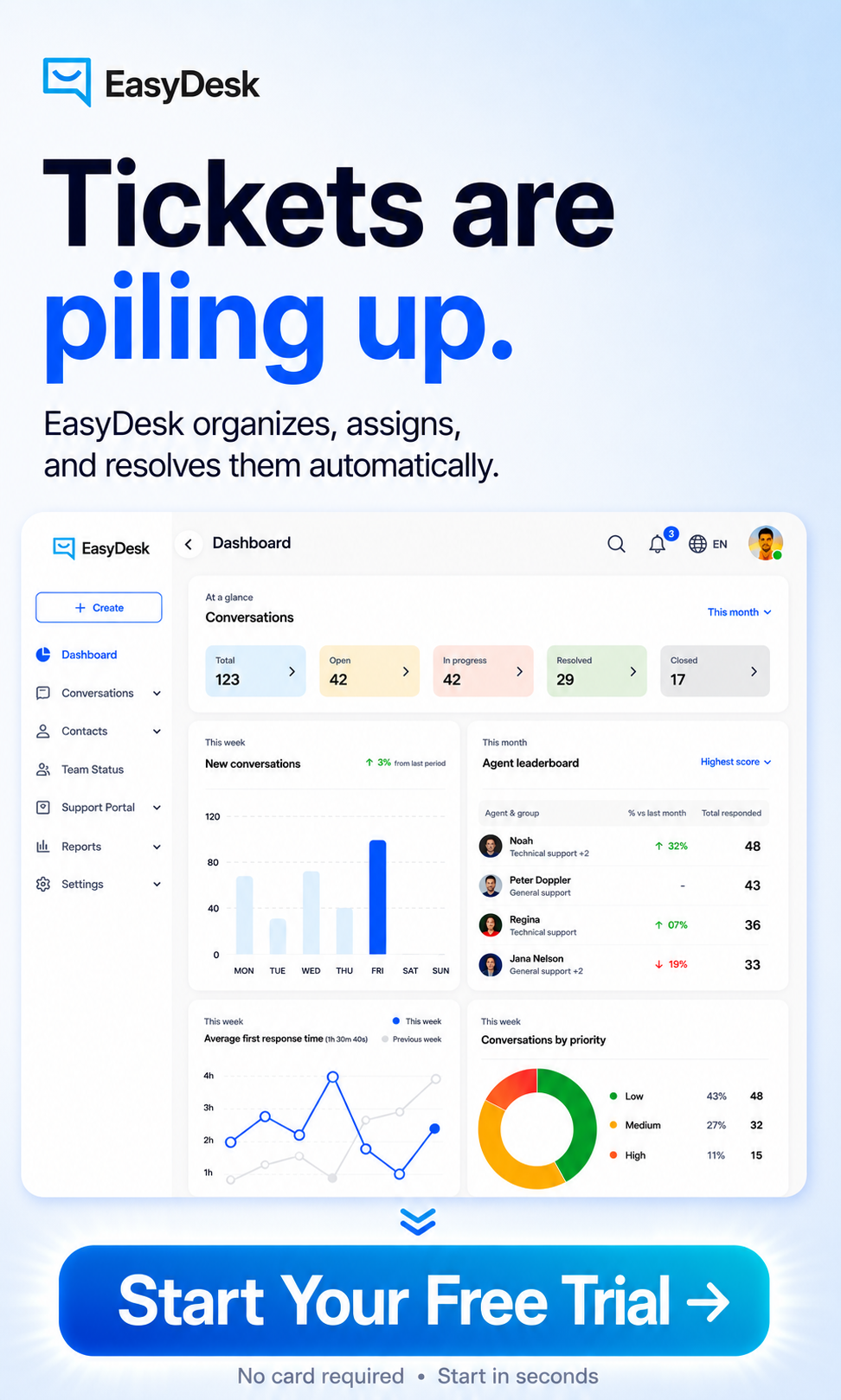
Strong support depends on clarity, speed, and consistency. When requests are scattered across tools, teams lose time and customers lose trust. EasyDesk brings structure to support by organizing every request in one shared workspace with clear ownership and visibility.
Support teams respond faster because tickets are routed, prioritized, and tracked without manual effort. Collaboration becomes easier when conversations, context, and updates live in one place. Customers benefit from timely responses and fewer follow ups, while teams stay focused on solving real issues.
EasyDesk scales with growing support needs and provides insight into performance and workload. Start using EasyDesk today and build a support experience that works better for both customers and your team.
FAQs
What is a helpdesk system used for?
A helpdesk system is used to manage and resolve support requests in an organized way. It helps teams track issues, assign ownership, and respond consistently across different communication channels.
Who should use a helpdesk system?
Helpdesk systems are useful for customer support teams, internal IT teams, HR departments, and any business that handles recurring requests. They are especially valuable as support volume grows.
Is a helpdesk system only for large businesses?
Helpdesk systems are suitable for small teams as well. Many modern tools are designed to scale, allowing businesses to start simple and add structure as their support needs increase.
How does a helpdesk improve response times?
Requests are centralized and prioritized automatically, which reduces manual sorting and missed messages. Clear ownership ensures faster follow ups and quicker resolutions.
Can a helpdesk system support multiple channels?
Most modern helpdesk systems handle requests from email, chat, and web forms in one place. This helps teams maintain context even when conversations move between channels.
What metrics can a helpdesk system track?
Common metrics include response time, resolution time, ticket volume, backlog size, and agent workload. These insights help teams improve processes and plan resources.
How long does it take to set up a helpdesk system?
Many cloud-based helpdesk systems can be set up in a few hours. Basic workflows and ticket routing can be configured quickly, allowing teams to start supporting users without long delays.