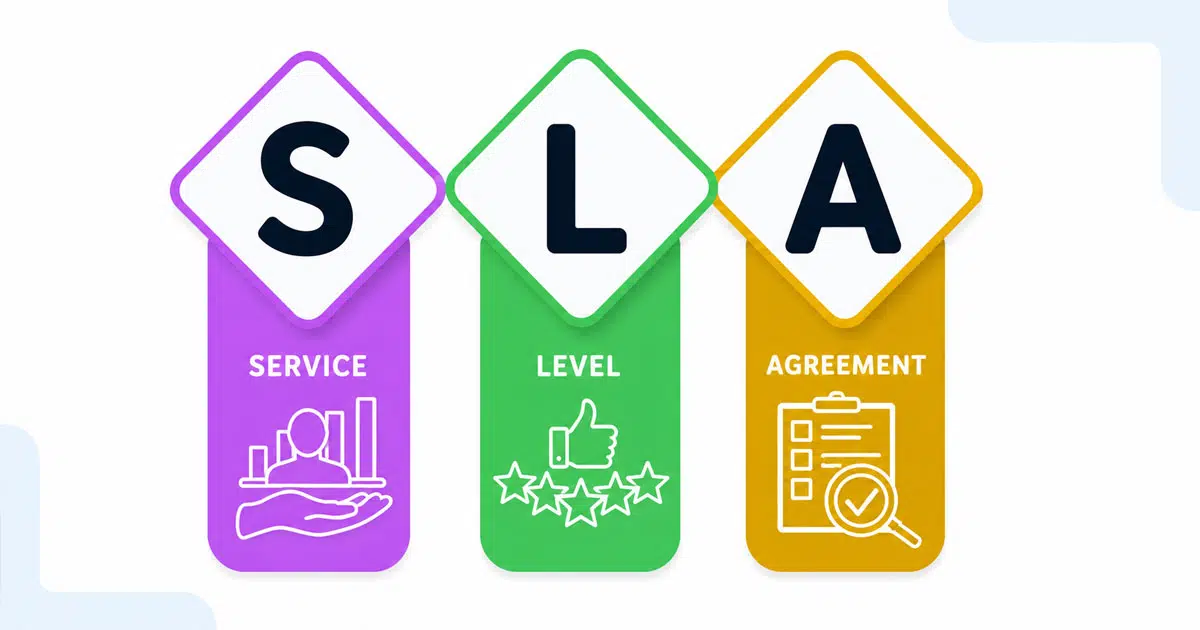
Did you know that 82% of companies experience significant revenue loss due to SLA breaches? A proper service level agreement definition is crucial for any business relying on third-party vendors or providing services to clients.
Unfortunately, many organizations treat SLAs as mere formalities—documents to be signed and filed away until something goes wrong. What are SLAs if not the foundation of accountability between service providers and their clients? When crafted properly, they establish clear expectations, metrics, and remediation paths. However, poorly constructed SLAs can lead to misaligned expectations, dispute escalations, and substantial financial consequences.
The costs of getting your SLAs wrong extend far beyond the penalties explicitly stated in the contract. From customer churn to productivity losses and reputational damage, the ripple effects can impact your bottom line in ways that aren't immediately obvious. As a result, understanding both the explicit and hidden costs of SLA failures is essential for any business that wants to maintain healthy service relationships and protect their revenue.
Understanding the Role of SLAs in Service Delivery
Service level agreements form the backbone of modern service relationships, establishing clear parameters for service delivery and performance expectations. Understanding what makes an effective SLA can mean the difference between successful partnerships and costly service failures.
Definition of a Service Level Agreement (SLA)
A service level agreement is a formal contract between a service provider and a customer that defines the services to be delivered and the expected performance levels. More than a simple agreement, an SLA outlines specific metrics such as uptime, response time, resolution time, and delivery timeframes. The document also details the consequences for failing to meet these requirements, including remediation steps, additional support options, or financial penalties.
SLAs can exist between companies and external suppliers or between departments within the same organization. The formality of these agreements provides both parties with legal protection and clearly defined processes for handling service disruptions.
Why SLAs are Critical in IT and Business Services
SLAs serve multiple essential functions in business relationships. Primarily, they strengthen trust between service providers and customers by establishing accountability for service delivery. Through clearly defined metrics and performance standards, both parties gain a mutual understanding of what constitutes acceptable service quality.
Furthermore, SLAs improve productivity by enabling teams to prioritize incoming requests based on their urgency and contractual requirements. This focused approach allows service providers to allocate resources efficiently while maintaining service quality across their operations.
Another vital benefit involves risk management and service continuity. SLAs define expectations around service availability, set policies for handling downtime, and establish procedures for disaster recovery. These provisions help minimize disruptions and ensure faster resolution of technical issues when they occur.
Beyond everyday operations, SLAs provide a framework for continuous improvement. By measuring performance against agreed-upon metrics, organizations can identify improvement areas and enhance their service delivery over time.
Common Use Cases Across Industries
SLAs have evolved beyond IT departments to become essential tools across numerous business sectors:
- Financial Services: In fintech, SLAs are measured in minutes rather than days, with immediate consequences for delayed responses. These agreements help prevent financial losses, ensure regulatory compliance, and build customer trust. Financial institutions rely on SLAs to guarantee critical data transfers and meet regulatory deadlines.
- Retail and Manufacturing: These industries depend on time-sensitive SLAs for supply chain operations, including truck loading schedules, inventory management, and production planning. Missing these deadlines can disrupt entire supply chains, resulting in revenue losses and customer dissatisfaction.
- Healthcare: SLAs establish standards for appointment wait times, access to emergency services, and patient data confidentiality. These agreements ensure timely patient care and maintain compliance with healthcare regulations.
- IT Services: The traditional home of SLAs, IT departments use these agreements to guarantee system availability, performance benchmarks, and support response times. Customer-based SLAs might cover all services used by a particular client, while service-based SLAs provide uniform standards across multiple customers.
Across all industries, properly structured SLAs create transparency, set measurable goals, and establish clear communication channels between service providers and their customers. By formalizing service expectations, they minimize misunderstandings and provide a foundation for successful business partnerships.
What Goes Wrong: Common SLA Failures
Despite meticulous planning, service level agreements frequently fail to deliver their intended value. According to Gartner, over 70% of IT service failures stem from mismanaged SLAs or communication breakdowns. Industry research consistently shows that approximately two-thirds of service contracts fail to meet their original objectives, leaving businesses scrambling for solutions. Let's examine the three most common reasons behind these failures.
Misaligned Expectations Between Provider and Client
The foundation of any successful service level agreement begins with mutual understanding between both parties. Unfortunately, expectations often remain misaligned from the start. Many organizations presume that expectations are clear and mutually shared, but this isn't always the case unless explicitly documented.
A critical misconception is treating SLAs as one-sided documents. As Nutanix CIO Wendy Pfeiffer notes, "An agreement isn't a one-sided declaration of IT capabilities, nor is it a one-sided demand of business requirements". Instead, effective SLAs require creating a shared understanding of service delivery quality, calculating related costs, and agreeing to outcomes in exchange for investment.
This misalignment sometimes manifests as what industry experts call a "watermelon SLA" – green on the outside, red on the inside. In these situations, providers technically meet contractual targets yet clients remain dissatisfied because the metrics don't reflect actual user experience. This explains why some organizations are shifting toward Experience Level Agreements (XLAs), which measure performance in outcome and value terms instead of focusing solely on operations and outputs.
Poorly Defined Metrics and Ambiguous Language
Vague language creates the perfect environment for disputes. Terms like "reasonable time," "best efforts," and "industry standards" sound professional but provide no measurable benchmarks for success or failure. Without specificity, teams cannot understand what's expected of them.
Consider this common scenario: while an SLA might focus on uptime provided by a third party, the business might care more about application performance or user experience. This fundamental disconnects leads to situations where:
- SLA metrics look good on paper but fail to deliver quality service to end users
- Performance indicators satisfy contractual requirements without addressing actual business needs
- Teams lack clear guidance on priorities or escalation procedures
Poorly defined SLAs frequently become static documents that aren't reviewed regularly, consequently failing to align with evolving business objectives. In today's dynamic business environment, this rigidity transforms agreements into obstacles rather than enablers of service quality.
Lack of Real-Time Monitoring and Reporting
Even the most carefully crafted SLAs become meaningless without effective monitoring and reporting mechanisms. Forrester research indicates that 58% of organizations cite lack of real-time visibility as the top reason for missed SLA targets. Similarly, Gartner found that 67% of organizations struggle to meet SLAs when managing distributed teams without real-time visibility.
Inefficient tracking of SLA breaches and deadlines creates a reactive operational environment. Without real-time dashboards or regular reports, teams cannot identify which tasks are approaching breach thresholds. This visibility gap means problems are addressed only after they escalate into significant issues.
The monitoring challenge extends to verification and data ownership. In some cases, contracts specify that only the provider's SLA documentation is considered factual and accurate – creating an inherent conflict of interest. Additionally, not having clear, understood tools and processes to calculate SLA performance typically results in either overly burdensome or completely ignored SLA management.
Proactive monitoring represents the cornerstone of successful SLA management. Without it, organizations remain perpetually in firefighting mode, addressing SLA breaches after they've already impacted service delivery and customer satisfaction.
The Hidden Costs of SLA Breaches
When service level agreements are breached, the financial impact extends far beyond the obvious penalties outlined in contracts. These hidden costs can devastate businesses through multiple channels simultaneously, creating a cascade effect that impacts the bottom line in ways many organizations fail to anticipate.
Revenue Loss from Downtime and Service Interruptions
The immediate financial impact of SLA breaches often comes from service disruptions. Businesses collectively lose over $26.5 billion in revenue annually from IT downtime, averaging approximately $150,000 per organization. For individual incidents, the costs are equally staggering—data center outages alone cost around $5,600 per minute.
Even conservative estimates place downtime expenses for small and mid-sized businesses between $5,000 and $25,000 per hour. Moreover, these outages are rarely brief events; surveyed businesses reported experiencing an average of 14 hours of IT downtime annually. Particularly for e-commerce operations, each minute of unavailability translates directly to abandoned transactions as frustrated customers take their business elsewhere.
Customer Churn Due to Missed Response Times
Perhaps the most significant long-term impact comes from eroded customer relationships. Organizations experiencing persistent SLA failures can see a 25% decrease in sales as dissatisfied customers explore alternatives. Indeed, studies reveal that acquiring new customers typically costs five times more than retaining existing ones.
Certain industries face even greater risks—financial institutions particularly suffer when service levels falter, with research showing 40% of customers consider switching banks after experiencing just a single outage. Overall, companies that maintain rigorous SLA compliance report a 20% increase in customer lifetime value through enhanced satisfaction and loyalty.
Internal Productivity Loss from Escalations
Internally, organizations face substantial productivity drains when SLAs fail. Teams become caught in what industry professionals call "war rooms"—all-hands emergency response sessions that pull staff away from regular duties. This operational disruption forces employees to focus on resolving issues rather than performing their core functions.
Furthermore, SLA breaches create what experts term the "watermelon effect"—metrics that appear green externally while internal experiences remain poor. This disconnect frequently occurs when tickets move to "On-Hold" status just before triggering SLA violations, masking the true extent of service problems while user experiences continue to deteriorate.
Legal and Compliance Penalties
SLA contracts typically include specific penalties for non-compliance that can significantly impact profitability. These range from financial deductions to service credits, with some agreements imposing penalties of 10% of invoice value or even 1.5% retrospective discounts on quarterly billing.
Beyond direct penalties, businesses may face legal action from affected parties , particularly if SLA breaches result in data protection violations or regulatory non-compliance. For multinational operations, these compliance issues can multiply across jurisdictions, creating complex legal exposure that extends well beyond the original service failure.
How to Identify SLA Risks Before They Escalate
Identifying potential SLA breaches before they occur demands vigilant tracking systems and methodical analysis. Organizations that proactively monitor their service metrics can address issues before they escalate into costly failures.
Tracking SLA Metrics with Automated Dashboards
Automated dashboards transform complex service metrics into actionable intelligence. Ideal dashboard configurations display active SLAs, breach indicators, and historical trends at a glance. Visual elements like color-coded thresholds help teams instantly recognize when services approach critical limits. For instance, implementing red-yellow-green urgency indicators provides quick insights into endpoint status.
Effective SLA dashboards should include:
- Real-time compliance metrics across service tiers
- Visual cues highlighting at-risk agreements
- Historical performance data showing emerging patterns
Customizable views allow teams to filter dashboard segments by client, SLA tier, or region, ensuring service quality matches priorities across the organization.
Early Warning Signs in Support Ticket Trends
Several ticket patterns often precede major SLA failures. Volume spikes—where related incidents or tickets increase over days—frequently signal brewing problems. Likewise, ownership gaps manifesting as missed handoffs or stalled decisions typically indicate structural issues requiring immediate attention.
Automated threshold alerts make SLA monitoring proactive rather than reactive. Teams can configure triggers to send notifications when 75% of an SLA clock is reached, allowing time for preventive action. With AI-driven workflows, these alerts can automatically prioritize or reassign tickets, preventing issues from slipping through unnoticed.
Reviewing SLA Performance Reports Quarterly
Throughout the service lifecycle, different reporting cadences serve different purposes. Daily reports keep operations teams focused on immediate risks; weekly summaries help managers track emerging patterns. Subsequently, monthly overviews inform executives about overall service trends.
Quarterly reviews provide the ideal timeframe to assess SLA performance comprehensively. These reviews should analyze historic data to identify gaps, collect stakeholder feedback, and modify existing agreements where necessary. If analysis reveals certain issue types consistently receive faster resolution than required, teams might consider recalibrating the SLA for that tier—balancing customer needs with operational capabilities.
Regular performance assessments enable teams to detect recurring issues that consistently breach SLAs and identify workload imbalances across the organization. Essentially, these structured reviews transform reactive problem-solving into strategic service improvement.
Best Practices to Avoid SLA Pitfalls
Creating effective service level agreements demands structured approaches that prevent costly failures and build stronger business relationships. Following key best practices ensures SLAs deliver value rather than frustration.
Setting Realistic and Measurable SLA Targets
Successful SLAs start with data-driven goals. Export historical performance data to establish realistic baselines rather than arbitrary targets. These goals should follow SMART principles—Specific, Measurable, Achievable, Relevant, and Time-bound. Primarily, involve stakeholders early in the process, gathering input from management, support agents, and customers to ensure targets reflect both operational capacity and business needs.
Customizing SLAs Based on Service Priority
One-size-fits-all approaches inevitably fail. Implement tiered SLA structures based on issue type, priority levels, and customer segments. Different services warrant different SLA targets based on business criticality—executive dashboards require higher availability standards than quarterly planning datasets. Furthermore, consider industry-specific requirements when structuring agreements.
Including Clear Escalation and Remediation Clauses
Concerning breaches, predefined processes prevent chaos. Outline clear escalation procedures, automated alerts, and specific remedies like service credits. Empower your team to handle violations independently according to established protocols. In effect, these measures maintain trust during inevitable service disruptions.
Regular SLA Review and Adjustment Cycles
At this point, establish quarterly review schedules to evaluate performance metrics and adapt to changing business needs. Treat SLAs as living documents rather than static contracts. Companies conducting systematic reviews are 30% more likely to meet their service goals.
How EasyDesk Helps You Build and Maintain Strong SLAs
How EasyDesk supports your SLA strategy goes beyond just tracking response times. It brings structure, visibility, and automation into your support operations so teams can meet commitments with confidence. With built-in SLA policies, EasyDesk lets you define clear targets for first response and resolution based on ticket priority, customer type, or support channel.
EasyDesk’s real-time dashboards give support managers instant visibility into tickets that are close to breaching SLAs. Instead of reacting after a failure, teams can step in early, reassign tickets, or escalate issues before they impact customers. Automated alerts and rules ensure nothing slips through the cracks during busy periods.
The platform also helps reduce the “watermelon effect” by tying SLA performance directly to actual ticket progress. Agents always know which tickets matter most, while managers get accurate reports to review trends and identify bottlenecks. Over time, this data becomes a foundation for improving workflows and setting more realistic targets.
By combining clear SLA rules, live monitoring, and actionable reporting, EasyDesk helps businesses turn SLAs into a practical system of accountability that protects customer trust, boosts productivity, and supports consistent service delivery.
FAQs
What is an SLA in customer support?
An SLA, or service level agreement, defines how quickly and effectively support teams should respond to and resolve customer issues, helping set clear expectations for both customers and service providers.
Why are SLAs important for small and mid-sized businesses?
SLAs help businesses stay accountable, improve response times, and build customer trust without needing large support teams or complex processes.
What are common SLA metrics to track?
Typical metrics include first response time, resolution time, uptime, and ticket backlog, depending on the type of service and customer expectations.
How can businesses avoid missing SLA targets?
Using real-time monitoring, clear priorities, and automation helps teams catch risks early and act before breaches happen.
What happens when an SLA is breached?
SLA breaches can lead to penalties, customer dissatisfaction, churn, and internal disruption, which is why early detection and fast action are critical.
How does EasyDesk help manage SLAs?
EasyDesk allows teams to set SLA rules, monitor tickets in real time, and get alerts when deadlines are at risk, making SLA management more proactive.
How often should SLAs be reviewed?
Most businesses benefit from reviewing SLAs quarterly to ensure targets still match customer needs, team capacity, and changing business priorities. ;
