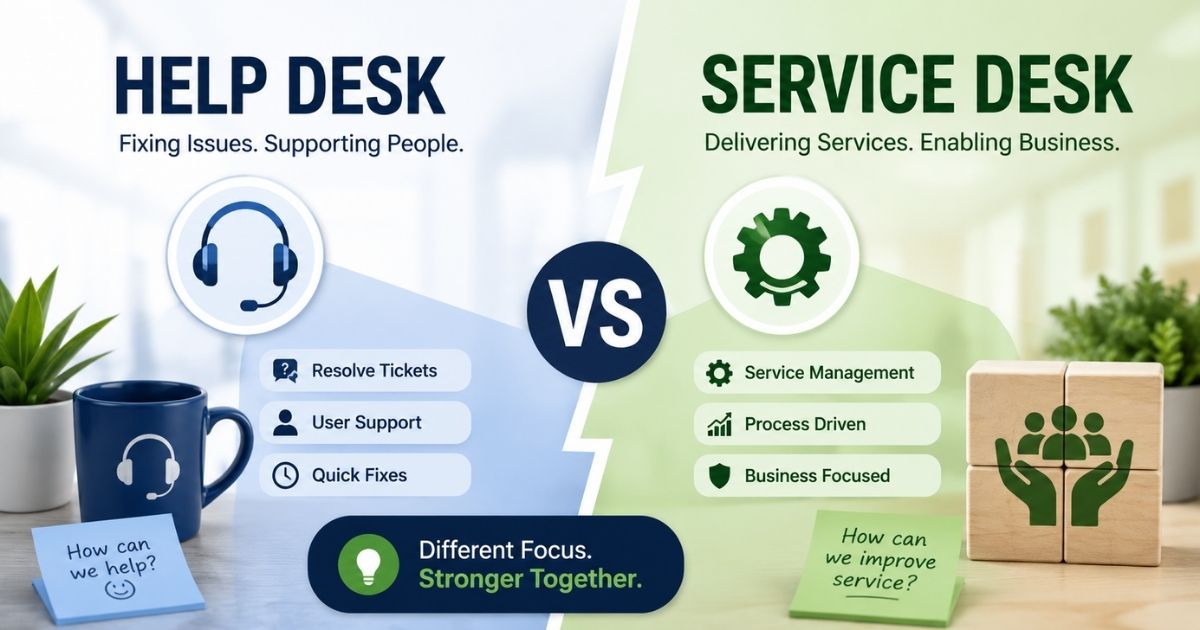
Open Source Helpdesk Vs SaaS Helpdesk Software remains a common comparison for teams evaluating how to manage customer support efficiently. Every help desk setup influences cost, control, scalability, and daily support workflows. Open source options appeal to teams that want flexibility and ownership, while SaaS help desk software attracts businesses that value speed, reliability, and minimal maintenance.
Choosing the right helpdesk tool depends on team size, technical resources, and long-term goals. Help desk software also shapes agent productivity, customer experience, and reporting quality. Desk software choices affect how quickly teams resolve tickets and adapt to growing demand. A practical comparison helps businesses understand real differences, trade-offs, and use cases before selecting a help desk solution that fits operational needs.
What Is Open Source Helpdesk Software
Open source helpdesk software refers to a help desk solution where the source code and underlying code remain publicly available. Businesses receive full access to the software, which allows teams to host it on their own server and maintain direct control over setup and configuration. Open source platforms support custom development and own modules, which makes them highly customizable for unique support workflows and internal processes.
Many teams choose open source helpdesk software for deep customization and flexibility. Community forums often play an important role by offering plugins, extensions, and shared solutions from other users. This approach suits organizations with technical resources that can manage updates, security, and performance internally.
What Is SaaS Helpdesk Software
SaaS help desk software is a cloud-based help desk platform designed and hosted by SaaS companies. Teams access the system through a browser without managing servers, installations, or infrastructure. SaaS help desk software includes built-in updates, security, and maintenance handled by the provider. Many businesses choose SaaS ticketing systems for faster setup and predictable performance.
A SaaS help desk focuses on ease of use and scalability. The desk platform designed by the provider supports ticket management, automation, and reporting out of the box. With a centralized help desk platform, support teams work from anywhere while maintaining consistent service quality and reliability.
Comparison Table: Open Source Helpdesk Vs SaaS Helpdesk Software
| Criteria | Open Source Helpdesk | SaaS Helpdesk Software |
|---|---|---|
| Ownership And Hosting | Hosted on own server with full control | Vendor-hosted cloud platform |
| Source Code Access | Full access to source code | No access to core code |
| Setup And Deployment | Manual setup and configuration | Quick setup with minimal effort |
| Technical Skills Needed | Requires development teams | Works well for non technical users |
| Ongoing Maintenance | Managed internally | Handled by provider |
| Customization Level | Deep customization through code | Limited to settings and add-ons |
| Integration Effort | Custom integration with existing software | Ready-made integrations |
| Scalability | Manual scaling required | Automatic scaling |
| Reporting And Analytics | Often limited or plugin-based | Built-in advanced reporting |
| Support Model | Community forums or paid support | Dedicated vendor support |
| Cost Structure | Low upfront, higher long-term effort | Predictable subscription pricing |
| Best Fit For | Teams needing full control | Teams seeking speed and simplicity |
Key Differences Between Open Source And SaaS Helpdesk
Open source and SaaS helpdesk solutions differ across control, usability, and operational effort. Understanding these differences helps businesses choose a desk system that aligns with technical capacity, team structure, and long-term support goals.
Ownership And Control Of The Desk Platform
Open source helpdesk software offers full ownership of the desk platform, which gives organizations direct control over how the system functions and evolves. Teams access the source code, host the desk system on their own server, and modify workflows, features, and data handling rules without vendor limits. This level of control suits businesses with experienced development teams and strict data governance needs. Full ownership also allows deep alignment with internal processes, integrations, and security policies, but it places long-term responsibility on internal teams.
SaaS helpdesk software provides limited control in exchange for convenience and stability. The desk platform stays managed by the provider, which removes infrastructure responsibility from the business. Configuration options exist, but core functionality remains standardized. Businesses gain reliability, faster updates, and vendor-managed security without handling system-level decisions.
Setup, Deployment, And Maintenance Effort
Open source desk systems require manual setup, server configuration, and ongoing maintenance. Development teams manage updates, security patches, backups, and performance monitoring. This approach demands time, planning, and technical expertise, especially as the desk solution grows.
SaaS desk solutions launch quickly with minimal setup. Providers handle hosting, updates, and maintenance automatically. Teams start using the help desk platform almost immediately, which reduces operational overhead and speeds up support readiness.
Ease Of Use For Non Technical Users
Open source helpdesk tools often focus on flexibility rather than usability. Interfaces may require customization before becoming intuitive. Non-technical users usually depend on IT teams for changes and issue resolution.
SaaS help desk software emphasizes usability from day one. Clean interfaces, guided workflows, and built-in automation support non-technical users. Support teams operate the desk system independently, which improves adoption, productivity, and overall efficiency.
Customization And Development Requirements
Open source helpdesk platforms allow extensive customization across the entire desk system. Development teams modify the desk solution at the code level, create custom workflows, and build features that match specific operational needs. This approach suits organizations with complex support structures or unique processes that standard tools cannot cover. Deep customization also allows tighter alignment with internal policies and data models. However, customization depends heavily on development teams, which increases long-term effort and technical ownership.
SaaS helpdesk platforms limit customization to configuration settings, apps, and approved extensions. The desk platform follows a standardized structure designed for broad use cases. While flexibility remains lower, teams avoid ongoing development work. Non-technical users adjust workflows through visual settings rather than code. SaaS customization focuses on speed and simplicity rather than deep system changes.
Integration With Existing Software
Open source desk systems integrate with existing software through custom APIs and development work. Teams must confirm compatibility manually, test integrations, and maintain connections over time. Integration flexibility remains high, but effort increases as systems change or scale. Development teams often manage these integrations, which adds dependency and maintenance overhead.
SaaS desk solutions provide prebuilt integrations with common CRM, accounting, and communication tools. Businesses confirm compatibility quickly through native connectors or marketplaces. Integration setup requires minimal technical effort, which benefits non-technical users. Ongoing maintenance stays handled by the provider, which reduces operational risk and complexity.
Scalability And Performance Management
Open source helpdesk scalability depends on how the helpdesk system gets designed and hosted. Performance management remains an internal responsibility. As ticket volume or users increase, development teams adjust infrastructure, optimize databases, and monitor uptime. Scalability offers flexibility but demands planning and resources.
SaaS desk platforms scale automatically. The provider manages performance, load balancing, and uptime across the desk solution. Teams add users or features without infrastructure changes. Predictable performance supports growing support operations without technical intervention.
Cost Structure And Long Term Resource Impact
Open source desk platforms reduce licensing fees but increase indirect costs. Server hosting, security, development time, and maintenance create ongoing expenses. Cost predictability depends on internal efficiency and workload.
SaaS desk solutions follow subscription pricing that bundles hosting, updates, and support. Costs remain predictable and easier to budget. Reduced dependency on development teams lowers long-term operational strain. This structure suits businesses that prioritize simplicity and controlled growth.
Pros And Cons Of Open Source Helpdesk Solutions
Open source helpdesk solutions offer flexibility and control, but they also introduce operational responsibilities. A clear view of advantages and limitations helps businesses evaluate long-term suitability.
Pros Of Open Source Helpdesk Solutions
- Lower Licensing Fees
Open source platforms usually reduce or eliminate licensing fees. Businesses avoid recurring subscription costs and compare favorably against competitors' pricing models. - Flexible Custom Pricing Options
Many solutions allow custom pricing based on hosting and development needs rather than fixed plans. This approach supports budget control for technical teams. - Deep Customization And Control
Development teams gain full access to the system for workflow changes, integrations, and feature expansion. Control extends across ticketing, automation, and asset management. - Custom Asset Management Capabilities
Open source tools support asset tracking through tailored modules. Teams design asset management processes that align with internal systems and policies.
Cons Of Open Source Helpdesk Solutions
- High Ongoing Maintenance Effort
Internal teams handle updates, security patches, backups, and performance monitoring. Ongoing maintenance increases operational workload over time. - Limited Reporting And Analytics
Many open source solutions offer basic reports only. Advanced reporting often requires custom development and additional resources. - Dependence On Technical Resources
Development teams remain essential for system stability and improvements. Limited technical capacity slows updates and issue resolution. - Support And Scalability Challenges
Community-based support replaces guaranteed vendor assistance. Scaling asset tracking and reporting features requires continued investment and expertise.
Pros And Cons Of SaaS Helpdesk Software
SaaS helpdesk software focuses on simplicity, speed, and predictable operations. Subscription-based models offer convenience, but pricing structure and feature access require careful evaluation.
Pros Of SaaS Helpdesk Software
- Fast Setup With Minimal Effort
SaaS helpdesk tools launch quickly without server setup or technical configuration. Teams access the help desk immediately through a browser, which shortens deployment time and speeds up support readiness. - Predictable Pricing Through Paid Plans
Most SaaS vendors offer structured paid plans with clear feature tiers. Paid plans start at entry-level pricing that suits small teams and scale through higher-tier plans as needs grow. Predictable billing simplifies budgeting. - Low Maintenance And Automatic Updates
SaaS providers manage hosting, updates, backups, and security. Businesses avoid ongoing system maintenance and reduce dependency on internal technical resources. - Ease Of Use For Non Technical Teams
SaaS desk platforms prioritize usability. Clean interfaces, built-in automation, and guided workflows support non-technical users without training overhead. - Access To Modern Features And Support
SaaS tools often include reporting, automation, integrations, and customer support within paid plans. Vendors provide consistent updates and professional assistance.
Cons Of SaaS Helpdesk Software
- Recurring Subscription Costs
SaaS helpdesk software relies on monthly or annual subscriptions. Paid plans increase in cost as teams add users or require advanced features. Long-term expenses may exceed open source alternatives. - Limited Features In Basic Or Free Plans
A free plan or basic plans often include restricted features, user limits, or branding. Businesses usually upgrade once ticket volume or reporting needs increase. - Higher Costs For Advanced Needs
Higher-tier plans unlock automation, analytics, and integrations. These plans raise overall spend, especially for growing support teams. - Limited Deep Customization
SaaS platforms restrict code-level customization. Teams adjust workflows through settings rather than building custom logic, which limits flexibility for unique processes. - Vendor Dependency
Businesses depend on the provider for uptime, roadmap decisions, and data policies. Changes to plans or pricing affect long-term planning.
Understanding these pros and cons helps teams choose SaaS helpdesk software that aligns with budget, scale, and operational expectations.
How Deployment And Maintenance Differ
Deployment and maintenance vary significantly between open source and SaaS helpdesk solutions. Open source helpdesk software requires teams to deploy the desk system on their own server. Initial setup includes server configuration, database setup, security controls, and network access. Features such as email integration, shared inbox, web forms, and custom fields require manual configuration.
Development or IT teams manage integrations and ensure every channel works correctly. Ongoing maintenance becomes a continuous responsibility that includes updates, patches, backups, and performance monitoring. System stability depends on internal expertise and available resources.
SaaS helpdesk software simplifies deployment through a cloud-based model. Teams access the desk platform instantly without server setup. Email integration, shared inbox, web forms, and custom fields come preconfigured or require minimal setup through the interface. Providers handle hosting, updates, security, and scaling automatically.
Ongoing maintenance remains invisible to users, which reduces operational workload. Businesses focus on support operations rather than system upkeep. Differences in deployment and maintenance often determine which helpdesk model fits technical capacity, time constraints, and long-term support goals.
Open Source Vs SaaS Helpdesk: Cost Considerations And Budget Impact
Cost plays a decisive role when small businesses, SaaS businesses, and e-commerce platforms choose between open source and SaaS helpdesk software. Budget impact goes beyond upfront pricing and directly affects customer support quality, scalability, and long-term customer experience.
Open source helpdesk software often appears cost-effective at the beginning. Licensing costs remain low or nonexistent, which attracts small businesses with limited budgets. However, infrastructure expenses quickly add up.
Hosting on an own server, security tools, backups, and development resources create hidden costs. Ongoing maintenance requires dedicated technical staff, which increases operational spend over time. For teams without in-house expertise, external consultants further raise expenses. Budget predictability becomes difficult as customer support needs grow.
SaaS helpdesk software follows a subscription-based pricing model. Costs remain transparent through monthly or annual plans. SaaS businesses and e-commerce platforms benefit from predictable budgeting, since hosting, updates, and security are included. While subscription fees may appear higher initially, the total cost of ownership often stays lower due to reduced maintenance and staffing needs. SaaS tools also scale easily as customer expectations increase, which protects customer experience during growth phases.
Customer support quality directly ties to budget decisions. Open source solutions may struggle to keep pace with rising ticket volume without additional investment. SaaS helpdesk platforms usually include automation, analytics, and omnichannel support that improve response times and satisfaction. For growing businesses, the ability to maintain a consistent customer experience often outweighs lower upfront costs.
Cost Comparison Table
| Cost Factor | Open Source Helpdesk | SaaS Helpdesk Software |
|---|---|---|
| Licensing Fees | Low or none | Recurring subscription |
| Infrastructure | Own server and hosting costs | Included in plans |
| Ongoing Maintenance | High internal effort | Vendor managed |
| Scalability Costs | Increases with growth | Predictable upgrades |
| Support Resources | Development team required | Built-in vendor support |
| Budget Predictability | Low | High |
How To Choose The Right Helpdesk Software For Your Business
Selecting the right helpdesk software shapes how effectively teams handle customer inquiries, manage support requests, and deliver consistent service. A strong decision balances usability, scalability, and automation with real business needs.
Evaluate Ticketing And Request Management
Ticketing systems form the core of any helpdesk solution. Effective platforms support smooth ticket creation, clear ticket categorization, and structured handling of every support ticket. A good system organizes support requests from multiple sources without confusion. Support agents should view, prioritize, and update tickets easily. Clear workflows reduce missed responses and speed up resolution time. Strong ticketing foundations help desk teams manage volume while maintaining accuracy and accountability across customer interactions.
Assess Support Channels And Customer Access
Modern customer support depends on multiple channels. The right helpdesk software supports multichannel support across email, live chat widget, in-app messaging, and web forms. Omnichannel support goes further by unifying conversations from every channel into one view. A customer portal allows users to submit tickets, track status, and access updates independently. Centralized channels improve response consistency and reduce duplicate support efforts for the support team.
Review Automation Capabilities And Workflow Efficiency
Automation capabilities directly affect team productivity. Strong helpdesk tools include automation tools that reduce repetitive tasks. Automated workflows handle ticket assignment, status updates, and notifications. Automated routing ensures support requests reach the right support agents based on rules and priorities. Advanced automation and automation rules remove manual steps and reduce response delays. Platforms that include powerful automation tools allow desk teams to scale support without increasing workload.
Check Knowledge Base And Self Service Features
A built-in knowledge base improves customer experience and reduces ticket volume. Customers find answers to common questions without waiting for support agents. Well-structured articles support faster issue resolution and empower users. Knowledge base access through a customer portal strengthens self service adoption. Reduced inbound tickets allow the support team to focus on complex customer inquiries that require direct assistance.
Analyze Reporting, Analytics, And Advanced Features
Advanced analytics support data driven improvements. The right helpdesk software provides advanced reporting on ticket volume, response time, and agent performance. Visibility into trends helps managers optimize workflows and staffing. Advanced features such as SLA tracking, performance dashboards, and integrations add long-term value. Platforms similar to Jira Service Management often appeal to teams that need structured reporting and scalability. Strong analytics ensure continuous improvement across support operations.
Choosing the right helpdesk software depends on aligning ticketing strength, automation depth, and support channels with customer expectations and internal capacity.
How EasyDesk Helps Teams Choose The Right Helpdesk Software
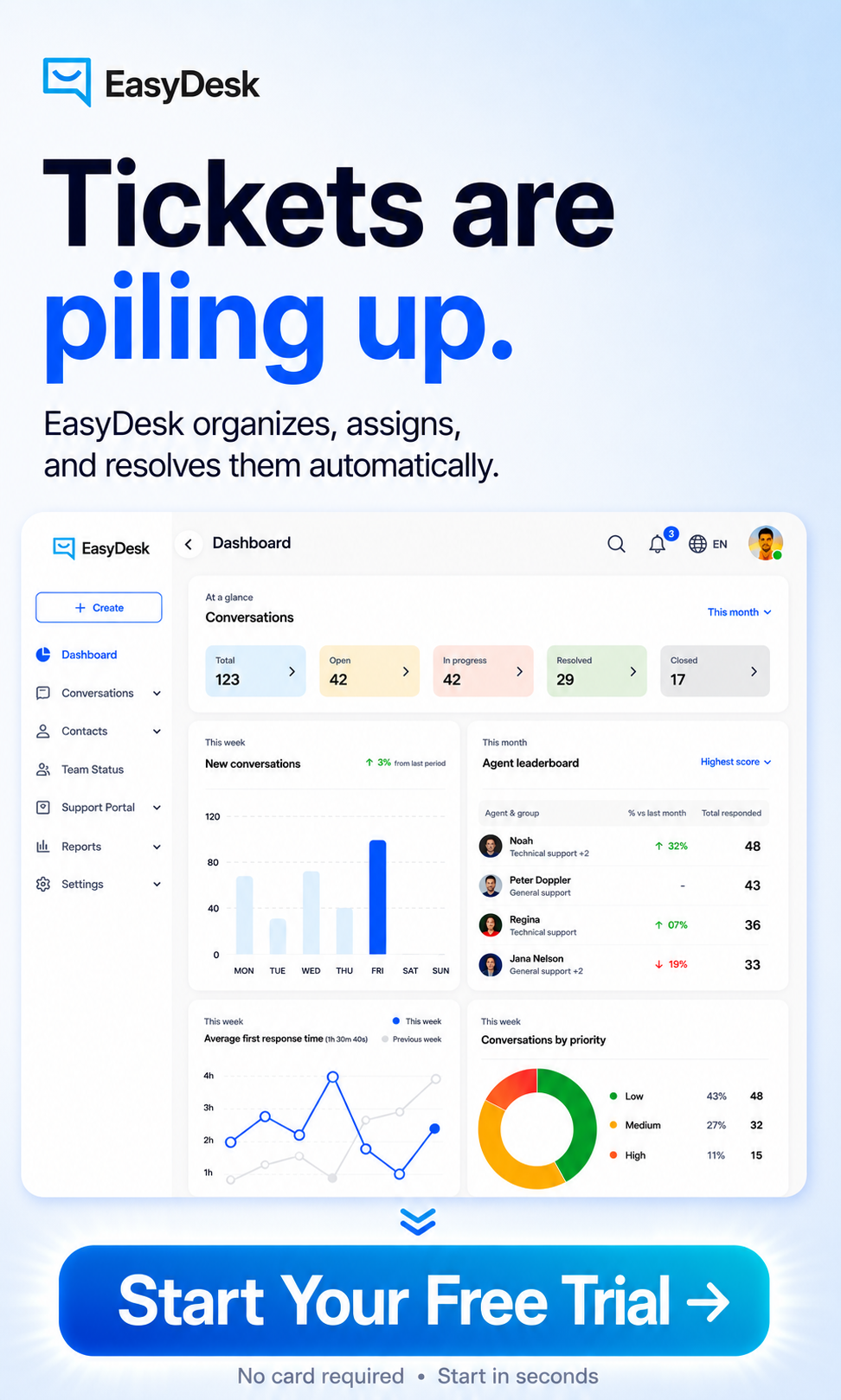
EasyDesk helps businesses avoid the complexity often found in open source helpdesk tools while delivering the flexibility teams expect from modern SaaS helpdesk software. The platform works as a complete help desk solution that centralizes customer inquiries from email, live chat, and other support channels into one desk platform. Support agents manage tickets, prioritize support requests, and collaborate easily without technical setup or ongoing maintenance.
EasyDesk suits non technical users and growing desk teams that need fast deployment and predictable costs. Built-in automation, reporting, and self service features support customer experience without custom development. EasyDesk also integrates smoothly with existing software, which helps teams confirm compatibility without added effort. For businesses that want simplicity, scalability, and control without managing infrastructure, EasyDesk offers a practical and balanced helpdesk platform.
FAQs
Is Open Source Helpdesk Software Better Than SaaS Helpdesk Software?
No, a better choice depends on business needs, technical resources, and long-term goals. Open source suits teams with development capacity, while SaaS fits teams that want speed, ease of use, and lower maintenance.
Can SaaS Helpdesk Software Support Growing Support Teams?
Yes, SaaS helpdesk software scales easily as ticket volume, agents, and support channels grow. Cloud infrastructure and built-in automation help teams maintain service quality during growth.
Does Open Source Helpdesk Require Technical Expertise?
Yes, open source helpdesk software usually requires development teams for setup, customization, integrations, and ongoing maintenance. Non-technical users often depend on IT support for changes.
What Is The Main Difference Between Open Source And SaaS Helpdesk Software?
The main difference lies in ownership and responsibility. Open source tools offer full control and customization, while SaaS helpdesk software provides vendor-managed hosting, updates, and support.
Which Option Works Better For Small Businesses?
SaaS helpdesk software often works better for small businesses due to faster setup, predictable pricing, and minimal technical effort. Open source tools may increase operational load for smaller teams.
How Do Both Models Affect Customer Support Experience?
Both models can support strong customer experience when configured well. SaaS platforms usually deliver faster response times and consistency, while open source tools depend heavily on internal system management and resources.