Self-service customer support has become the fastest-growing preference among modern consumers. Research shows that 81% of users want to resolve issues independently, yet only 15% feel satisfied with current self-service experiences. This gap creates a major opportunity for businesses willing to improve their support strategy.
Customer behavior continues to shift toward self-service, with 61% of users choosing it for simple issues. Industry leaders expect self-service interactions to increase fivefold, while 67% of companies already track case deflection through customer support automation and knowledge-based support. Today, nearly 85% of businesses offer some form of self-service.
The real challenge is not adoption but execution. A well-designed self-service strategy improves customer satisfaction, reduces support load, and enables agents to focus on high-value issues. This article explains how to build, optimize, and measure an effective self-service customer support system.
What Is Self Service Customer Support
Self-service customer support empowers customers to resolve issues independently through on-demand tools and resources. This approach reflects modern expectations for speed, convenience, and control while helping businesses scale support without sacrificing customer experience.
Definition And Core Concept
Self-service customer support lets customers find solutions on their own. People don't need to wait for help anymore. They have tools and resources to solve problems whenever they want, without talking to support staff. This support approach puts customers in charge of their experience.
Self-service customer support includes digital tools and platforms that help users find answers to common problems. Knowledge bases, FAQs, chatbots, community forums, and interactive systems point customers to the right answers. The idea behind self-service is simple but powerful. Customers get instant access to information right when they need it.
Research shows this matches what modern consumers want. About 67% of customers would rather use self-service than talk to a representative. Harvard Business Review found that 81% of customers try to fix things themselves before calling live support. These numbers show how people's expectations of business interactions have changed.
How It Is Different From Traditional Support
Traditional customer service relied on direct contact. People called support centers, visited stores, or sent emails that needed human responses. Self-service customer support changes this dynamic. Customers now have the power to find solutions themselves.
The biggest change is removing the middleman. Customers don't need to explain their problem to an agent anymore. They can find what they need through self-service channels. This creates faster results and eliminates the back-and-forth conversations typical of traditional support.
Availability marks another major difference. Traditional support teams work limited hours. Self-service options run all day, every day. Customers can solve problems at 3 AM just as easily as 3 PM. This 24/7 access has changed how support works.
Support teams see big benefits too. They don't handle every small question anymore. The core team can focus on complex issues that need human expertise. Support staff avoid burnout because they're not answering the same simple questions repeatedly.
Examples Of Self-service In Action
Self-service customer support works well in many industries. Amazon's self-service pages show this perfectly. Customers can troubleshoot specific items through organized content that guides them to detailed solutions. Each experience feels personal rather than generic.
Software companies like Squarespace blend complete support articles with active user communities. Customers share tips and help each other. These forums create helpful spaces that offer more support than companies could provide alone.
Mobile apps have become powerful self-service tools. Hilton's app shows what's possible. Guests control their entire stay, from picking rooms to checking out, without talking to staff. Banking apps let customers manage accounts, move money, and fix issues right from their phones.
AI has made self-service even better. Babylon Health's symptom checker analyzes what users tell it and suggests possible diagnoses and next steps. This saves time for patients and doctors alike. These smart systems keep getting better with each interaction, making self-service more useful.
Why Self Service Customer Support Is Important For Modern Businesses
Modern businesses are adopting self-service customer support faster as customer behavior changes. Research shows that 61% of customers prefer to self-serve online for simple issues. However, only 13% solve their problems using these tools. This gap creates both a challenge and a chance for companies that want to improve their customer support strategy.
Changing Customer Expectations
Today's consumers prefer to solve problems independently. Companies estimate that 60% of their customers want self-service options. The reality shows a much higher number, 81% of users want to self-serve. This difference emphasizes how customer expectations have evolved beyond what many organizations understand.
Customers just need 24/7 availability. They want immediate access to solutions whatever the business hours or time zones. About 50% of consumers choose multiple support channels based on how fast they can get help. Self-service support options are no longer optional, they're necessary.
Customers want both convenience and individual-specific experiences. Salesforce research shows that 81% of customer service professionals say their customers want more personalized service than before. Self-service solutions that use customer data to deliver tailored experiences meet these growing needs while creating stronger relationships.
Scalability And Cost-efficiency
Self-service customer support matters because it affects the bottom line. ServiceNow saved $167 million after implementing self-service solutions for employees and customers. The math makes sense: traditional support channels like emails and calls cost about $8.01 per contact. Self-service interactions cost just $0.10 per contact.
Self-service tools help businesses grow without hiring more support staff. Your customer base can expand while self-service channels handle increased volume without adding new employees. Small businesses find this especially valuable when they want to optimize limited resources while delivering consistent support.
To cite an instance, companies with complete self-service strategies see 30-50% fewer support tickets. Results can be even better, one company saw 34% fewer service tickets in the first month after launching their self-service portal.
Support Team Productivity
Self-service customer support changes how support teams work. ServiceNow freed up 1.2 million employee and technician hours after customers started using self-service options. Support professionals can now focus on complex cases that need creativity and critical thinking instead of repetitive tasks.
Support agents get great benefits from this change. Self-service channels handle routine questions, so agents can solve challenging problems that need human expertise. This improves efficiency and job satisfaction by eliminating burnout from answering the same simple questions repeatedly.
Zendesk's research confirms that self-service complements human support rather than replacing it. The best approach combines different support methods to create exceptional experiences that build customer loyalty. Teams can focus on higher-value activities, creating better interactions that benefit both customers and employees.
Key Benefits Of Self Service Customer Support For Customers And Teams
Self-service customer support offers more than just convenience. It changes both customer experience and internal operations in meaningful ways. A closer look at specific benefits shows why companies of all types now make these solutions a priority.
Faster Issue Resolution
Self-service tools eliminate customer wait times. Research shows 81% of consumers want immediate answers to their questions. This makes instant solutions through knowledge bases and AI-powered tools valuable. Customers no longer need to wait on hold or for email responses - they find answers right away.
The speed works both ways. Support teams that use AI-powered search report 60% faster resolution times when customers try self-service first. Customers come better prepared and have already tried basic troubleshooting steps.
24/7 Availability
Round-the-clock access stands out as a key benefit of self-service support. Customers can solve problems on their own at 3:00 a.m., during holidays, or even in snowstorms. This constant support meets customer needs across time zones without extra business hours.
Research proves that most customers want instant responses to their questions. Self-service options let businesses deliver non-stop support without adding staff or infrastructure.
Reduced Support Costs
Self-service cuts operational costs. Traditional customer service with live agents costs more than self-service options that handle multiple questions at once. Digital self-service interactions cost just pennies compared to agent support.
The financial benefits are clear:
- Ticket deflection: Companies with complete self-service strategies see 30-50% fewer support tickets
- Cost efficiency: Live agent calls cost $6-$12, while self-service interactions cost about $0.10
- Resource allocation: Unity saved $1.3 million by deflecting almost 8,000 tickets through self-service
Improved Customer Satisfaction
Most customers prefer solving problems on their own. A 2017 Harvard Business Review report found 81% of consumers want to fix product and purchase issues themselves before calling support. This independence builds loyalty.
Self-service lets customers control their experience. Quick answers and DIY solutions make users feel more in control and less frustrated. This sense of control promotes advocacy and builds positive brand perception.
Better Onboarding Experience
Self-service makes customer onboarding better by letting users learn at their own speed. Studies show 79% of customers expect companies to offer self-service support tools. These tools prove especially valuable during early customer interactions.
Self-service onboarding grows easily. Manual onboarding might work for five daily interactions, but becomes impossible at 50 or 500. Self-service removes most manual touchpoints so agents can focus on complex issues and account growth.
The cost savings are significant. U.S. customer service agents earn $44,000 per year on average. Companies that use self-service onboarding can invest these savings in growth while keeping customers happy.
Self-service onboarding helps users adopt products faster. When customers start using products sooner through self-guided experiences, they see benefits quickly and are more likely to become loyal customers.
Common Types Of Self Service Customer Support Channels
Businesses now use self-service channels to meet their customers' needs. These options help customers find answers without contacting support teams. Let me show you the most effective self-service customer support channels that successful businesses implement.
Knowledge Bases And Help Centers
Knowledge bases work as centralized, searchable collections of information about products, services, and common issues. These complete repositories do much more than simple FAQs by offering interconnected content that reduces support requests. A well-laid-out knowledge base links customers to detailed troubleshooting guides, how-to instructions, and product documentation that enables them to solve problems on their own.
Customers get 24/7 access to information through knowledge bases and find answers whenever needed. Knowledge bases create substantial value by capturing scattered information in one available location. To name just one example, NetApp saw a 20% reduction in cost-per-answer after expanding their knowledge base.
Faqs And Documentation
FAQ pages make an excellent starting point for self-service support efforts. These simple resources list common customer questions with brief answers and typically address basic issues that don't need lengthy explanation. FAQ pages prove remarkably effective at reducing support automated ticket volume despite their simplicity.
The best strategy uses FAQ pages to provide quick answers while linking to more detailed articles for those who want in-depth information. This approach meets different customer priorities – some want quick answers while others need thorough explanations.
Ai-powered Chatbots
AI-powered chatbots have changed self-service support by offering immediate, conversational help to customers. Chatbots use artificial intelligence to understand queries and deliver relevant information instantly, unlike live chat, which needs human agents.
Two main types of chatbot solutions exist today: rule-based chatbots that follow predefined scripts, and sophisticated AI chatbots that handle more unified conversations. The effectiveness gap between these options stands out – studies show 61% of users solve problems with conversational AI compared to just 35% with traditional chatbots.
Community Forums
Community forums create spaces where customers ask questions and help each other. These platforms work like a second knowledge base that comes from user experiences. Peer-to-peer platforms encourage a sense of belonging while customers share unique insights that formal support channels might miss.
Forums give businesses valuable chances to listen to customers and learn about priorities, pain points, and ground product usage. Forums also reduce support load since customers find answers from past discussions or start new conversations to get input from others who share similar experiences.
Mobile App Support
Mobile app support brings self-service capabilities to smartphones and tablets and provides consistent experiences across devices. Companies like Alloy have moved all features from their self-service portals to mobile apps. Users can easily switch between devices without learning new interfaces.
Mobile support lets customers complete tasks whatever their location. They can access knowledge bases, make equipment reservations, or manage accounts directly from their phones. This round-the-clock availability through mobile devices matches today's on-the-go customer expectations perfectly.
Automated Call Systems
Automated call systems have grown way beyond traditional voice response menus. Modern solutions combine interactive voice response (IVR) with AI capabilities to handle common queries without human help. These systems manage basic requests like checking order status, account management, and appointment scheduling effectively.
Automated call systems' effect shows in the numbers – 25-40% of callers choose visual IVR self-service solutions when given the option. These systems deliver results to callers in under two minutes, much faster than traditional IVR and live agent interactions.
How Self Service Customer Support Improves Customer Experience
Self-service customer support boosts customer experience in several measurable ways. Research shows that 73% of consumers would rather use self-service technologies than talk to staff members. These tools have transformed how customers interact with businesses.
Giving Users More Control
Customers feel accomplished when they use self-service support. Simple solutions help them find answers quickly, and they take pride in solving problems on their own. This sense of independence creates positive feelings and builds stronger brand connections.
The psychological effects are substantial. Customers want control over their experience. Tools that let people help themselves create a natural feeling of freedom and satisfaction. This need for independence matters more than ever, as 81% of users want additional self-service options.
Making Wait Times Shorter
Self-service customer support makes problem-solving faster. Customers get solutions right away instead of waiting on hold or for email replies. Speed matters because most customers choose support channels based on how quickly they can get help.
Digital tools and self-service kiosks help manage customer flow better, particularly during busy periods. Multiple visitors can check in at once while the system routes them to the right service. Lines become shorter, wait times decrease, and customers feel less frustrated.
Individual-specific And Proactive Support
Modern self-service has evolved beyond one-size-fits-all solutions. Current platforms create individual-specific experiences by studying user behavior and adapting content to specific needs. The systems can suggest relevant content based on customer profiles and issues when they start support tickets.
The future of self-service lies in proactive support. Systems detect potential issues before customers face them and offer solutions in advance. This approach solves problems faster and shows customers that businesses care about their success.
Smooth Experiences Everywhere
Good self-service support gives customers the same experience whatever way they connect with your business. This reliability builds trust as customers get consistent service at every touchpoint.
Self-service tools work naturally with other support channels. Users can switch between self-service and agent help without repeating themselves. The systems gather useful data from each interaction, which helps small businesses create better experiences and improve operations.
Essential Features Of An Effective Self Service Support System
Building a self-service customer support system needs more than a simple knowledge base. My research points to five essential features that make self-service experiences work well.
Searchable And Organized Content
Well-organized, easy-to-find content serves as the lifeblood of any self-service strategy. Users give up on self-service options when answers elude them. A semantic search engine that understands context and intent makes more sense than simple keyword matching. These advanced search capabilities help users find answers 60% faster than traditional methods.
Your self-service content needs clear categories like "Getting Started," "Troubleshooting," and "Advanced Features". This logical grouping helps users find their way through your knowledge base with ease.
Mobile Responsiveness
Smartphone users worldwide have crossed 7 billion, making mobile optimization essential for self-service systems. About 88% of users now expect self-service options to work on mobile. The interface must work smoothly on all devices.
Mobile self-service must have touchscreen controls, screen-size optimized layouts, and work the same way on every device. Most companies now pack their mobile apps with all the features from their self-service portals. Users can manage accounts and solve problems on the go.
Multilingual And Available Design
About 29% of Americans live with some form of disability, making accessibility essential. Plus, 70% of global consumers want brands to speak their language.
Supporting multiple languages goes beyond simple translation. You need to adapt to cultural nuances, local terms, and regional priorities. This attention to cultural details shows respect for diverse customers and expands your reach by a lot.
AI And Automation Integration
AI makes self-service better through natural language processing, smart chatbots, and contextual suggestions. Smart AI systems cut service interactions by 40-50% while creating tailored experiences that get better over time.
Advanced AI tools understand what customers ask, give accurate answers, and take action for users. These systems learn from each interaction and become smarter. That's why workflow automation is necessary.
Feedback And Rating Systems
Great self-service grows with user input. Your self-service portal should let customers rate articles, comment on solutions, and share their thoughts.
Looking at this feedback along with search patterns and usage data helps improve your self-service content. The best systems keep track of search success rates, content engagement, and customer satisfaction to spot areas for improvement.
Best Practices For Building Self Service Customer Support
Building a good self-service customer support system needs smart planning and constant updates. Success comes from proven methods that boost customer satisfaction and cut support costs.
Focus On Common Questions First
Customer service leaders know the hard truth - self-service support success rates hover at 14%, and 90% of them want to do better. Your best bet is to tackle your most common support issues. A pilot approach works better than trying to change everything at once. Look at your typical support requests and pick the straightforward, routine tasks that self-service could handle. Don't just look at support tickets - your users' search patterns and clickstream data tell you what they really need.
Make Content Simple And Fresh
Nobody likes outdated information. Regular content checks should be your top priority. Research shows 88% of employees stumble upon old product details in their documentation. Your content needs simple words, not technical jargon. Complex tasks should break down into easy steps. Good content stays brief but complete, with short paragraphs and clear headings that help readers scan quickly.
Create A User-friendly Design
A good interface lets users solve problems without getting stuck on how to use the tools. People find an interface natural when it works as expected. The secret lies in arranging information exactly where users expect to find it. Familiar design patterns help users direct themselves through your self-service portal without effort.
Let Data Guide Your Improvements
Think of self-service as an evolving product that needs dedicated attention. Key numbers like contact ratio, search success, user feedback, and cost per resolution tell the real story. These customer support metrics help spot gaps in your content and show where you can make things better. Evidence-based decisions ensure your self-service resources match what customers actually need.
Share Self-service Everywhere
Your knowledge base needs to show up wherever customers look for help. Put it on your website, in newsletters, and during support conversations. Support staff should link to helpful articles when they respond to customers. Self-service should blend naturally with human support options. Complex issues need an easy path to real people when self-help isn't enough.
Common Mistakes To Avoid In Self Service Customer Support
Companies often struggle to implement self-service customer support despite their good intentions. My analysis of many self-service systems reveals several critical mistakes that hurt effectiveness and customer satisfaction.
Outdated Or Missing Content
Outdated information makes customers abandon self-service options more than anything else. The numbers tell the story - 88% of employees keep finding outdated product information in documentation systems. Customers get frustrated when they waste time following the wrong instructions. Many businesses have incomplete knowledge bases that don't answer common questions, which forces customers to contact support directly. The data shows that 53% of customers skip straight to an agent because they don't trust self-service options anymore.
Overcomplicating The Interface
Organizations hurt their self-service strategy by creating complex interfaces without reason. Technical products need better knowledge base designs because the traditional ones assume users read articles linearly, which doesn't match how people solve problems. Companies make things worse by making customers download mobile apps, yet 91% of customers hate being forced to install apps for support. The best interfaces understand that technical complexity needs sophisticated but easy-to-use design approaches.
Ignoring Accessibility Needs
Not paying attention to accessibility fails both ethically and business-wise. About 29% of the US population lives with some form of disability, but many self-service systems lack basic accessibility features. Inaccessible self-service machines compromise privacy and security for people with disabilities while putting organizations at legal risk. These accessibility barriers leave customers exposed to serious privacy threats - from accidental overtipping to exposed credit card details.
Lack Of Performance Tracking
Organizations often rely only on customer surveys to check how well self-service works, which gives a limited viewpoint. Without complete analytics, finding ways to improve becomes impossible. Smart businesses track metrics like contact ratio to measure portal effectiveness, search engine performance, content feedback, self-service survey results, case deflection rates, and cost per resolution. Looking at these metrics along with customer feedback helps businesses make their self-service content better match what customers want.
How To Measure Self Service Customer Support Success
The right metrics are crucial to optimize your self-service customer support performance. Success measurements help identify areas that need improvement and prove the ROI of your self-service investments.
Case Deflection Rate
Case deflection shows how well customers solve problems without human assistance. This metric reveals the percentage of customers who wanted to contact support but found answers through self-service. Verizon became a game-changer with an 85% deflection rate that saved over one million dollars per contact center annually. The deflection calculation uses this formula: (Successful Deflections ÷ [Successful Deflections + Created Cases]) × 100.
Customer Satisfaction (CSAT)
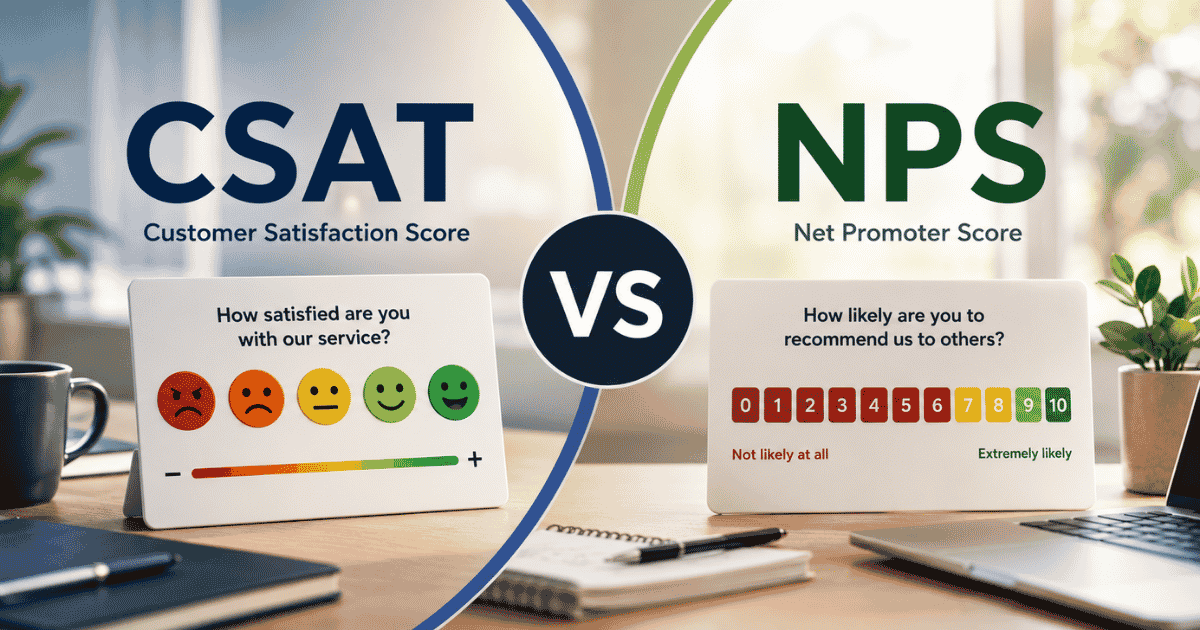
CSAT surveys give quick feedback after specific interactions. These surveys help measure your self-service tools' effectiveness and provide live insights into satisfaction levels. The sort of thing i love is that only 14% of customer service issues get fully resolved through self-service, which shows room for improvement.
Search Success Rate
Users find and click on relevant results in successful searches. Knowledge gaps become visible when you track searches with no results. Industry averages show 40-50% self-service success rates, while mature environments reach 80-85%.
Content Engagement Metrics
Most-read topics, user ratings per article, and average reading time are key metrics to track. Broken links, page ratings, and failed searches need monitoring, too.
Feedback And Improvement Loops
Support Fix meetings are a great way to get insights into recurring issues and identify next steps. These meetings create vital communication channels between support and product teams that ensure customer pain points shape feature updates.
How EasyDesk Helps Businesses With Self Service Customer Support
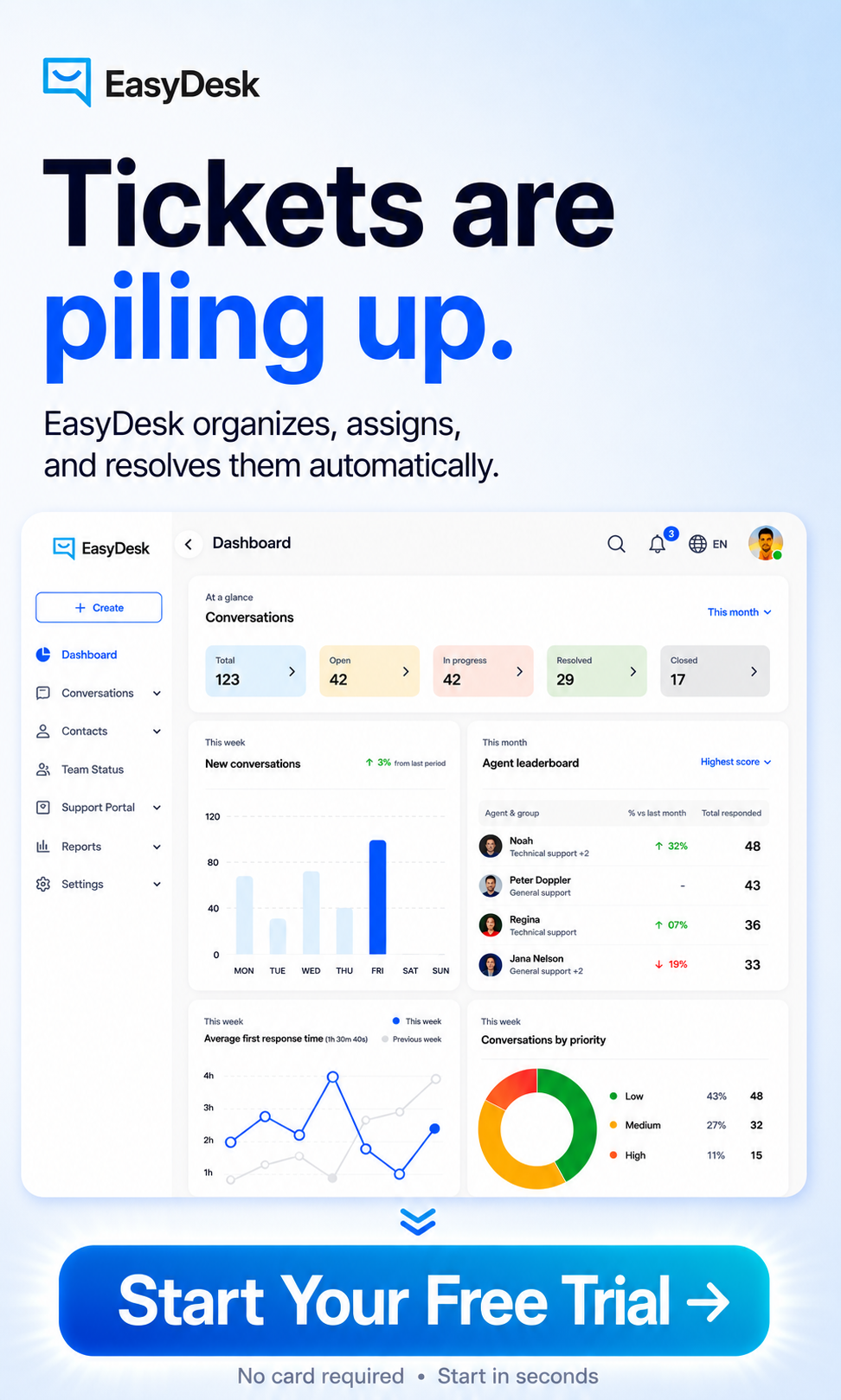
EasyDesk helps businesses deliver effective self-service customer support that matches how customers prefer to solve problems today. The platform combines powerful self-service tools, knowledge bases, and AI capabilities to help customers find solutions independently, without waiting for support agents or business hours. Centralized knowledge base articles, relevant self-service content, and instant answers across multiple self-service channels improve the overall self-service experience and increase customer satisfaction. Customers access relevant information through a secure customer self-service portal that supports the entire customer journey.
EasyDesk also enables customer support teams to reduce repetitive support tasks and focus on complex issues. AI-powered self-service support options handle common customer queries, support requests, and customer inquiries with natural language processing. Analytics and customer feedback help support leaders refine self-service strategy, enhance customer engagement, and improve support efficiency. As a result, businesses reduce support costs, control operational costs, and deliver successful self-service that benefits both your customers and support teams. You can enjoy these features at a suitable price.
FAQs
What Is Self-Service Customer Support, And Why Is It Important?
Self-service customer support allows customers to find solutions to their problems independently, without direct assistance from support representatives. It's important because it meets modern customer preferences for autonomy, provides 24/7 support, reduces costs for businesses, and improves overall customer satisfaction.
What Are Some Common Types Of Self-service Customer Support Channels?
Common self-service channels include knowledge bases, FAQs, AI-powered chatbots, community forums, mobile app support, and automated call systems. These tools empower customers to find answers quickly and efficiently across various platforms.
How Can Businesses Measure The Success Of Their Self-Service Customer Support?
Businesses can measure self-service success through metrics such as case deflection rate, customer satisfaction (CSAT) scores, search success rate, content engagement metrics, and feedback loops. These indicators help identify areas for improvement and demonstrate the ROI of self-service investments.
What Are Some Best Practices For Implementing Effective Self-service Customer Support?
Best practices include starting with the most common customer questions, keeping content clear and up-to-date, designing intuitive user interfaces, using analytics to improve content, and promoting self-service options across all customer touchpoints.
What Are The Benefits Of Self-service Customer Support For Both Customers And Support Teams?
Self-service support offers faster issue resolution and 24/7 availability for customers, while reducing support costs and improving customer satisfaction. For support teams, it increases productivity by allowing them to focus on complex issues, improves the onboarding experience, and provides valuable insights through customer interactions with self-service tools.
How Does Self-Service Customer Support Improve The Customer Experience?
Self-service customer support improves the customer experience by giving users immediate access to relevant information whenever they need it. Customers avoid wait times, resolve issues at their own pace, and feel more in control, which leads to higher trust, smoother journeys, and stronger long-term satisfaction.
When Should Customers Be Directed To Self-service Instead Of Live Support?
Customers should use self-service support for common, repetitive, or low-complexity issues such as account updates, basic troubleshooting, or product guidance. Live support works best for complex, sensitive, or high-impact issues that require human judgment and personalized assistance.