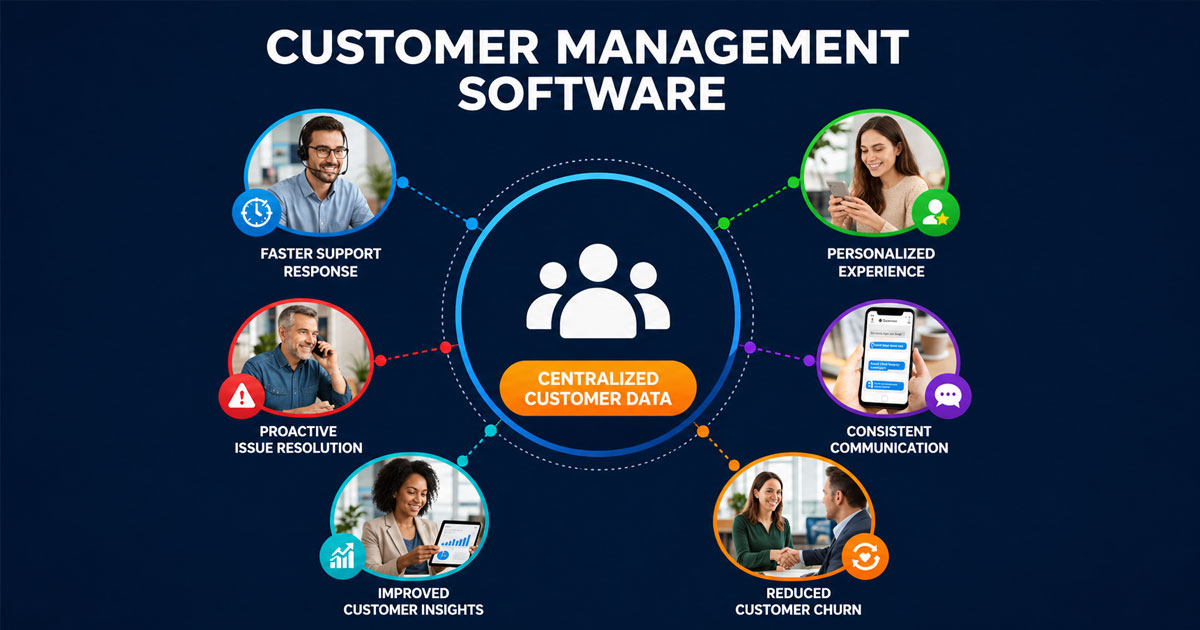
Customer management software has become essential for businesses of all sizes. According to Nucleus Research, 91% of US companies with 10 or more employees now use some form of CRM platform. This adoption makes sense when you look at the results. Businesses that implement customer relationship management software see 27% higher customer loyalty scores and reduce churn by 36% through better insights into customer behavior.
The shift to cloud-based solutions has slashed operational costs by 25 to 50 percent while boosting team productivity by half. In 2026, Gartner reports that 80% of new deployments include AI integration, directly addressing the reality that 82% of customers now expect personalized support. For companies focused on business growth, these tools have evolved from nice-to-haves into revenue engines that can increase customer lifetime value by up to 30%.
What Is Customer Management Software
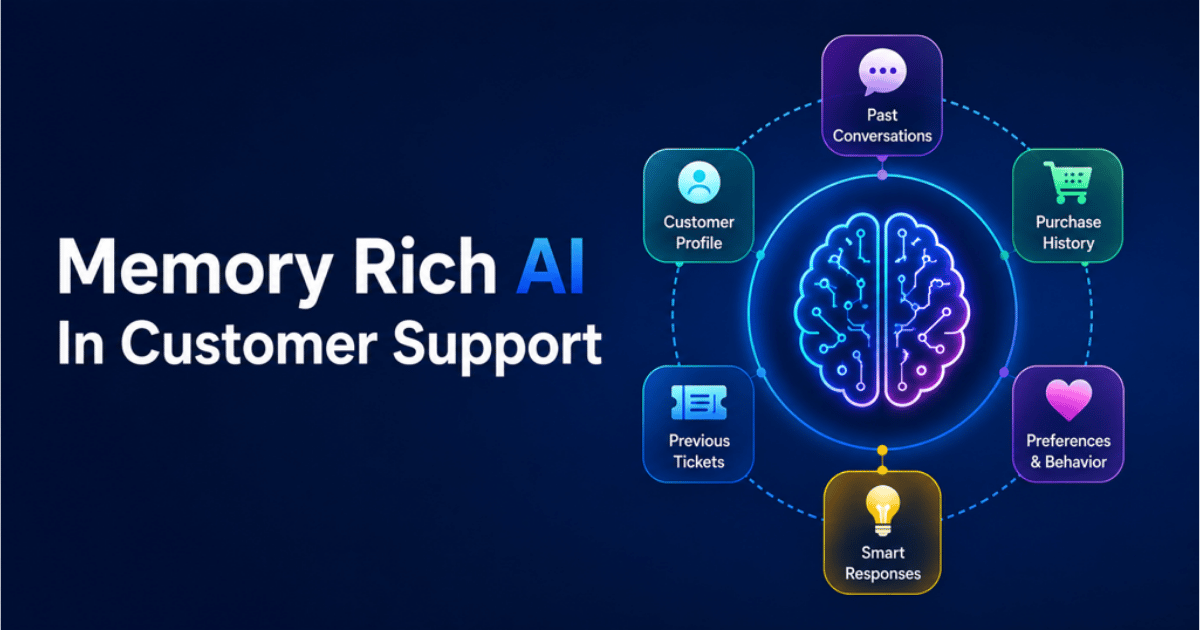
Customer management software goes far beyond simple contact management or spreadsheets. It serves as an active, AI-powered infrastructure that aligns your entire organization around customer relationships. Think of it as a unified CRM platform that consolidates every interaction, from emails and social media conversations to purchase history and support tickets, into secure, accessible records.
The statistics tell the story. About 99% of customer interactions now happen digitally, making omnichannel capture essential. Cloud CRM adoption has reached 70% globally, with 60% of 2026 systems featuring AI capabilities for real-time updates across devices. This evolution has moved CRM tools from reactive ticketing systems to proactive advisory platforms that merge sales psychology with data analysis to guide the entire customer journey.
7 Benefits Of Customer Management Software
Customer management software delivers measurable advantages that directly impact your bottom line. Forrester research shows that CRM software users experience a 47% revenue uplift compared to businesses without these systems. Here are seven core benefits that make these results possible.
1. Centralized Customer Data
When all your customer data lives in one place, everything changes. A 360-degree view eliminates the silos that slow down your sales teams and frustrate service reps. HubSpot reports that users with this unified view close deals 28% faster than those working with fragmented information.
Your sales reps can instantly access purchase history, previous support tickets, and communication preferences before any conversation. This context matters because 82% of customers expect representatives to know their history without repeating themselves. Contact management becomes effortless when everyone works from the same source of truth.
2. Faster Support Response
Speed defines modern customer support. CRM software helps service teams respond faster through intelligent ticketing and automated routing, and dedicated guides on how customer support software improves response time by 3X highlight just how transformative these tools can be. Case studies from platforms like Zendesk show 23% faster resolution times when teams use integrated customer management tools.
Omnichannel support systems cut wait times by 40% by routing inquiries to the right agent regardless of whether the customer reaches out via email, chat, or social media. Resources that explain the benefits of omnichannel support for customer experience show how seamless channel transitions directly impact satisfaction. Your service reps spend less time searching for information and more time solving problems when they rely on cloud-based helpdesk ticketing software that centralizes requests and streamlines workflows.
3. Personalized Customer Experience
Generic interactions no longer satisfy customers. Research from Epsilon reveals that 80% of consumers prefer tailored experiences, and businesses that deliver personalization see 20% higher purchase rates. CRM data makes this personalization possible at scale.
AI-powered segmentation analyzes customer behavior patterns to recommend relevant products, anticipate needs, and customize communications. When your marketing campaigns speak directly to individual preferences, engagement rises and customer satisfaction follows.
4. Proactive Issue Resolution
The best CRM solution identifies problems before they escalate. Predictive analytics powered by machine learning can flag at-risk accounts based on behavior patterns like decreased engagement or repeated minor complaints. This early warning system reduces escalations by 35% in documented cases.
Sales forecasting and customer health scores give your team visibility into potential churn risks. Instead of reacting to cancellations, you can intervene with targeted outreach when customers first show signs of dissatisfaction.
5. Consistent Customer Communication
Customers interact with your business across multiple channels, and they expect consistent experiences everywhere. Automated workflows ensure that no follow-up falls through the cracks and that every touchpoint reflects your brand standards.
Multi-channel consistency correlates with retention rates above 90%, according to industry benchmarks. Marketing automation handles routine tasks like appointment reminders, satisfaction surveys, and renewal notifications while maintaining a personal touch.
6. Improved Customer Insights
Understanding your customers requires more than gut feelings. Modern CRM tools include AI listening engines that perform real-time sentiment analysis across customer communications. This data analysis transforms raw interactions into actionable intelligence.
About 75% of businesses using advanced analytics report gaining insights that directly improve their offerings. These systems track patterns in support tickets, identify trending concerns, and highlight opportunities that might otherwise go unnoticed by even experienced sales teams.
7. Reduced Customer Churn
Retention costs less than acquisition, and CRM software users retain 27% more existing customers than businesses without these systems. Industry benchmarks show a 36% reduction in churn rates among companies that use retention workflows effectively.
Case studies demonstrate dramatic results. One retail firm using predictive CLV calculations cut churn by 42% by identifying and nurturing accounts at the highest risk of leaving. The key lies in turning CRM data into action before customers make the decision to leave.
How Customer Management Software Improves Customer Lifecycle Management
Your relationship with customers evolves through distinct stages, and CRM platforms help you optimize every phase. Businesses that manage the entire customer journey effectively see customer relationships lasting 30% longer on average.
Lifecycle Stage Visibility
Knowing exactly where each customer stands in their journey changes how your team operates. Dashboard views map customers across stages from awareness through advocacy, giving sales and service teams immediate context for every interaction.
This visibility improves stage progression rates by 25%. When a sales rep can see that a prospect attended a webinar, downloaded a whitepaper, and visited pricing pages, they approach conversations with relevant context rather than generic pitches.
Customer Journey Tracking
Full traceability of customer interactions reveals patterns that aggregate data cannot. Tracking customer interactions across touchpoints shows exactly where prospects drop off and where existing customers disengage.
This granular view leads to 15 to 20 percent improvements in conversion rates. You can identify that customers who receive onboarding calls within 48 hours have higher retention, then build workflows to ensure those calls happen consistently.
Engagement Across Touchpoints
Customers expect seamless experiences whether they contact you through email, phone, live chat, or social media. Unified engagement across these touchpoints boosts customer satisfaction by 20%, according to Gartner research and broader analyses of multi-channel customer support benefits and best practices.
Mobile CRM capabilities ensure your team can access and update records from anywhere, maintaining continuity even when working remotely. The sales process flows smoothly because information follows the customer, not the channel.
Retention Focused Workflows
Automated nurturing sequences keep customers engaged without manual effort. Drip campaigns targeted at at-risk customers retain 15% more accounts that would otherwise churn.
These workflows can trigger based on behavior signals like declining product usage, missed payments, or negative survey responses. Well-designed helpdesk configurations, such as smarter helpdesk setups for smoother support, make these triggers reliable at scale. Your team receives alerts for accounts that need personal attention while automation handles the rest.
Data Driven Lifecycle Decisions
Guesswork has no place in customer management strategy. Analytical CRM capabilities use historical patterns to predict outcomes with 85% accuracy on metrics like customer lifetime value.
Integration with tools like accounting software and marketing platforms creates a holistic view that supports strategic decisions. When you can forecast which segments will generate the most revenue, you allocate resources accordingly.
Types Of Customer Management Software And Deployment Options
Customer management software includes different types of CRM designed to support sales, service, and marketing goals. Choosing the right CRM solution depends on business processes, team structure, and growth plans. Understanding these options helps businesses manage customer relationships effectively and align tools with real operational needs.
Operational CRM Systems
Operational CRM focuses on daily execution across sales marketing and customer service functions. These systems help streamline sales activities, manage customer relationships, and organize workflows. Features like sales tracking, contact management, and pipeline visibility improve coordination across teams.
By using operational CRM, teams can reduce manual data entry and eliminate duplicate data entry issues. Automation helps handle routine tasks, allowing sales reps to focus on engaging with potential customers and closing deals. Moving from shared inboxes to streamlined customer support with ticket automation further reduces manual effort. This leads to better efficiency and improved sales growth over time.
Analytical CRM Platforms
Analytical CRM tools focus on turning CRM data into actionable insights. These platforms support data analysis by tracking customer behavior, campaign performance, and revenue trends. Businesses can use these insights to refine strategies and improve customer satisfaction.
These systems help teams understand customer expectations and identify opportunities to improve customer relationships. By analyzing patterns, companies can align marketing and customer strategies with real demand and optimize long term performance.
Collaborative CRM Systems
Collaborative CRM systems connect different departments to ensure consistent communication. They allow sales teams, service teams, and marketing teams to share information and align efforts. This improves coordination and reduces gaps in customer interactions.
With shared data, teams can build strong customer relationships and ensure consistent messaging across channels. Collaboration also supports better sales management and helps teams respond faster to customer needs. This improves overall efficiency and customer experience.
CRM Tools And Vendor Options
Businesses can choose from a wide range of CRM vendors offering different CRM apps and platforms. Some tools focus on sales tools and automation, while others emphasize customer support and communication. Selecting the right CRM platform depends on business size and requirements.
Top CRM vendors provide solutions that support sales pipeline management, automate workflows, and enhance productivity. These tools help businesses streamline sales processes and improve overall performance across teams.
Deployment Models And Flexibility
Deployment options include cloud-based, on premise, and hybrid models. Cloud CRM solutions dominate due to flexibility, mobile access, and lower infrastructure costs. These systems allow teams to work from anywhere and access real-time data.
On-premises systems offer more control but require higher maintenance. Hybrid models combine both approaches for flexibility. The right deployment ensures systems align with business processes and support long-term scalability.
Key Features That Directly Influence Customer Retention
Certain CRM platform capabilities have outsized impact on keeping customers loyal. AI-powered features lift retention scores by 25% compared to basic systems. Here are five that matter most.
Omnichannel Support System
Customers contact businesses through their preferred channels, and they expect consistent service everywhere. An omnichannel system consolidates email, chat, phone, and social media into a single interface for your service teams, following best practices outlined in an omnichannel communication guide for support teams.
The retention impact is significant. Companies with seamless cross-channel experiences achieve 90% or higher customer retention rates. When a customer starts a conversation on chat and continues via email, your rep sees the full history without asking repetitive questions.
Customer Data Management
Centralized profiles with secure storage and intelligent segmentation form the backbone of personalized service. Implementing a robust help desk that improves support behind the scenes, as described in guides on how a help desk improves support operations, ensures that effective data management reduces churn by 20% through better targeting and more relevant communications.
Essential CRM features include duplicate detection, data enrichment, and automated cleanup. Clean company data means your team trusts the system and uses it consistently, which amplifies every other benefit.
Automation And Workflows
Automation handles approximately 70% of routine tasks in well-configured systems, according to Salesforce data. This includes lead assignment, follow-up reminders, satisfaction surveys, and escalation alerts, all of which can be orchestrated through dedicated ticket automation software for modern support teams.
The time savings translate directly to retention. When your team spends less time on data entry and manual processes, they invest more energy in high-value customer interactions that build customer loyalty.
Reporting And Analytics
Dashboards that track retention metrics give leadership visibility into what matters. Predictive insights improve customer lifetime value by 30% when teams act on the recommendations.
Essential reports include cohort retention analysis, churn prediction scores, and engagement trend lines. The best CRM software surfaces these insights automatically rather than requiring manual report building.
Integration Capabilities
No CRM system operates in isolation. Integration with your existing tools prevents data silos and streamlines processes across departments. Seamless connections improve overall efficiency by 40%.
Look for native integrations with your email provider, help desk, accounting software, and marketing automation platform. API access matters for custom connections, especially as your tech stack evolves.
How To Choose Customer Management Software For Retention Goals
Selecting the right CRM delivers average ROI of 8.71x according to Nucleus Research. Following a structured evaluation process dramatically improves your chances of success.
Business Needs Alignment
Start by examining your current retention challenges. What does your churn rate look like? Where do customers typically disengage? Which workflows consume the most time?
Match software capabilities to these specific pain points rather than chasing feature lists. A platform excelling at sales automation might disappoint if your primary need is customer support optimization. Assess core CRM capabilities against your actual requirements.
Ease Of Use Evaluation
Intuitive interfaces correlate with 40% higher adoption rates. Complex systems that require weeks of training often gather dust while teams revert to spreadsheets and email.
Request hands-on trials with your actual users. Have sales reps test pipeline management, let service teams evaluate ticket handling, and watch how quickly new users become productive. The best CRM software feels natural within days, not months.
Integration Requirements
Check API compatibility with your existing tech stack before committing. Your email system, help desk, accounting software, and marketing tools all need to connect smoothly.
Data sync issues cause 25% of CRM implementation failures. Create a comprehensive list of systems that must integrate and verify native connections or available connectors during evaluation.
Scalability And Flexibility
Your business will grow, and your CRM platform needs to grow with it. Cloud solutions scale infinitely without infrastructure investment, but pricing structures vary significantly.
Consider how costs change as you add users or expand features. Some vendors offer transparent per-user pricing while others introduce complexity through tiered feature sets and add-on charges.
Pricing And ROI
Calculate total cost of ownership including subscription fees, implementation, training, and ongoing maintenance. Entry-level plans start around $14 per user monthly while enterprise solutions reach $150 or more.
Set clear success metrics before implementation. Track baseline retention rates, support response times, and sales cycle length so you can measure improvement against investment.
Metrics That Measure Customer Retention Success
Tracking the right metrics proves whether your CRM solution delivers results. CRM dashboards simplify ongoing measurement, giving you real-time visibility into performance.
Customer Retention Rate
This fundamental metric measures the percentage of customers you keep over a period. Calculate it by comparing customers at year end to those at the start, excluding new acquisitions.
Top-performing companies achieve 90% or higher retention rates. Your CRM should track this automatically and segment by customer type, acquisition channel, and other relevant factors.
Churn Rate Analysis
Churn represents the inverse of retention. A rate below 5% is considered healthy for most industries, though SaaS businesses average 5 to 7 percent annually.
CRM software users reduce churn by 36% compared to businesses without these systems. Beyond the headline number, analyze churn patterns by segment, tenure, and product to identify specific improvement opportunities.
Customer Lifetime Value
CLV calculates total expected revenue from a customer relationship. The formula multiplies average purchase value by purchase frequency and expected customer lifespan.
Personalization through CRM tools boosts CLV by up to 30%. Track this metric over time to ensure your retention efforts translate into tangible revenue growth from existing customers.
Net Promoter Score
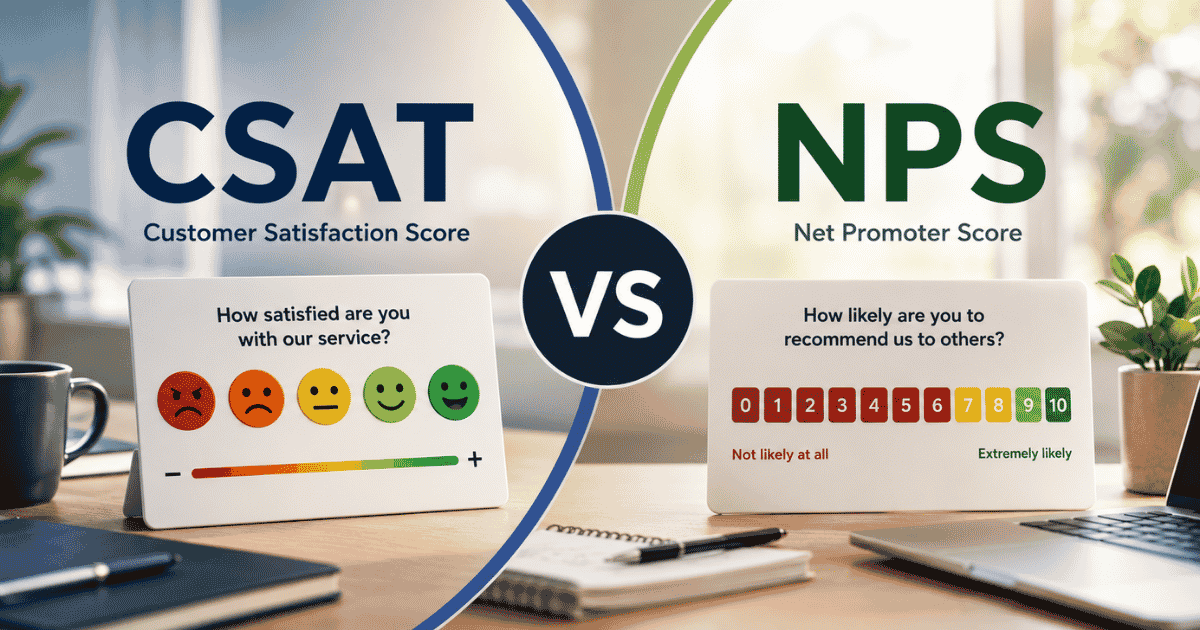
NPS measures customer loyalty by asking how likely customers are to recommend your business. Scores above 50 indicate excellent performance and correlate with 70% higher retention.
Your CRM should automate NPS surveys at key journey points and track score changes over time. Declining scores serve as early warning signals before churn occurs.
Repeat Purchase Rate
This metric shows what percentage of customers make additional purchases. Rates above 60% signal strong customer loyalty and effective retention strategies.
Segment this metric by customer cohort, product line, and acquisition source. Understanding which customers return most frequently helps focus marketing efforts and improve the entire sales cycle.
How EasyDesk Improves Customer Retention With Smart Support Workflows
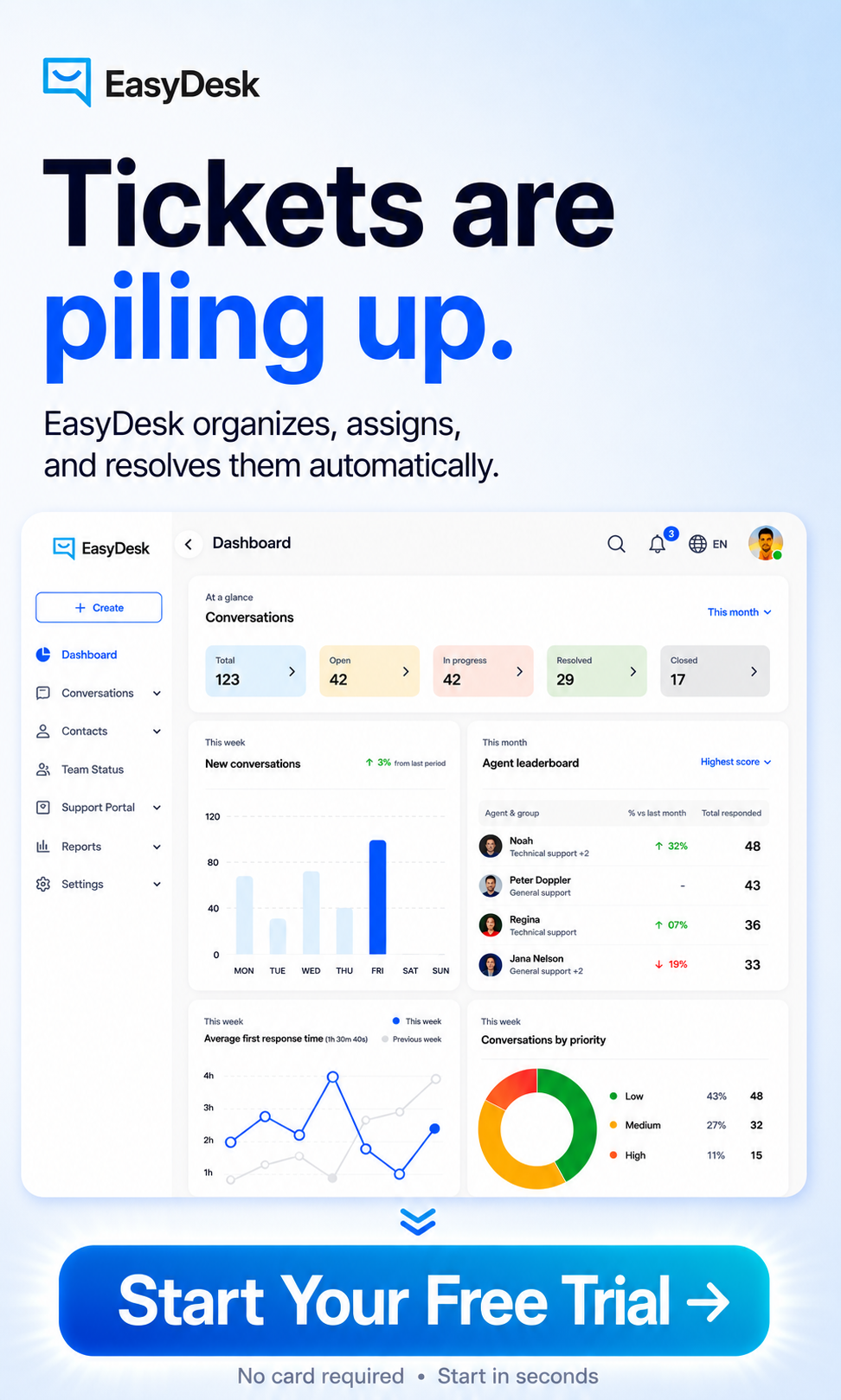
EasyDesk is a comprehensive customer support platform that delivers the retention benefits of customer management software through intelligent support workflows. The platform combines automated ticketing with omnichannel capabilities to help teams resolve issues faster and keep customers satisfied.
Smart workflows mirror the 30% resolution improvements documented in industry studies, and workflow automation in customer support plays a central role in these gains. EasyDesk reduces churn by proactively alerting on support patterns to flag at-risk accounts, enabling intervention before customers leave. The platform automates routine queries, freeing your team to focus on complex issues that require human attention, supported by a rich set of EasyDesk features for smarter, secure customer support.
Cloud deployment ensures mobile access for distributed teams while maintaining the unified customer view that drives 90% retention rates. For small and mid-sized support teams seeking ROI within months rather than years, EasyDesk’s secure, transparent customer support approach provides essential business tools without enterprise complexity.
FAQs
How Customer Management Software Reduces Churn
Customer management software reduces churn by centralizing data and enabling predictive insights. When your team sees complete customer histories, they identify dissatisfaction signals early. Industry benchmarks show a 36% churn reduction among CRM users because these systems flag at-risk accounts and trigger retention workflows automatically.
What Features Improve Customer Retention Most
Omnichannel support and AI-powered analytics have the greatest retention impact. Seamless cross-channel experiences drive 90% or higher retention rates, while predictive features identify churn risks before they materialize. Automation that handles routine tasks also contributes by ensuring consistent follow-up without manual effort.
How To Measure Retention Using Software
CRM dashboards track retention metrics in real-time without manual calculation. Monitor customer retention rate, churn percentage, lifetime value, and NPS scores through automated reports. Set up alerts when key indicators decline, and segment analysis by customer type to identify patterns.
Can Small Teams Benefit From Customer Management Software
Small teams often see the most dramatic improvements from CRM tools. Mobile CRM boosts productivity by 50%, and even teams with just a handful of active customers benefit from organized records and automated reminders. Platforms like Freshdesk and Zoho CRM offer affordable entry points that scale as you grow.
How Customer Data Impacts Retention Strategy
Complete customer data enables the personalization that modern buyers expect. 360-degree views allow teams to tailor interactions based on purchase history, support patterns, and engagement levels. This targeted approach lifts customer loyalty by 27% because customers feel understood rather than treated as anonymous transactions.