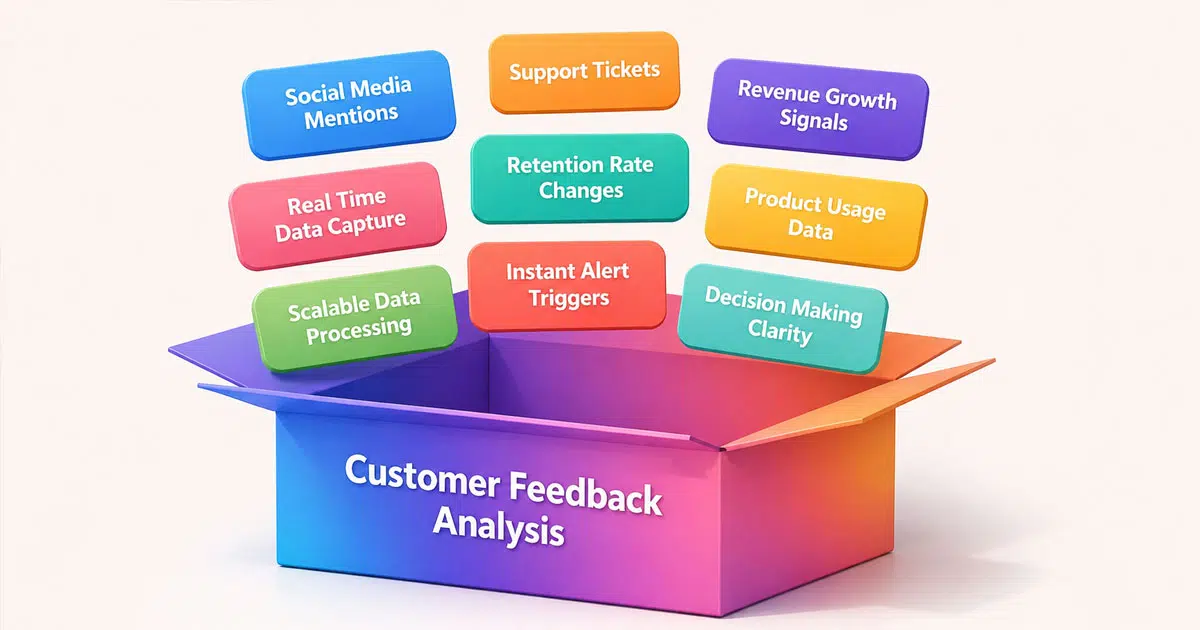
Customer feedback analysis transforms raw opinions from surveys, reviews, and support tickets into structured insights that drive product improvements and better customer experiences. When done right, this process helps support teams identify patterns, prioritize fixes, and make data driven decisions that reduce churn and boost satisfaction.
Businesses that systematically analyze customer feedback report 1.5x higher retention rates compared to those that rely on guesswork. Meanwhile, only 40% of companies have a consistent feedback analysis process in place, leaving significant room for competitive advantage.
Centralizing customer feedback data from multiple channels like email, chat, social media, and review platforms into a single system makes analysis faster and more reliable. Teams using automated tools combined with human review can process thousands of customer interactions monthly without losing important context or nuance.
The most effective approach combines quantitative feedback (NPS scores, CSAT ratings) with qualitative feedback (open-text comments, support conversations) to understand both what is happening and why customers feel the way they do.
What Is Customer Feedback Analysis
Customer feedback analysis is the structured process of collecting, organizing, and interpreting customer comments from various sources to extract actionable insights. This goes beyond casually reading reviews or skimming survey responses. The goal is to identify recurring themes, measure customer sentiment, and turn those findings into specific improvements for your product, support processes, or overall customer experience.
For support teams, feedback often hides inside everyday conversations. A customer might not fill out a formal survey but will mention frustration about response times in a chat message or describe a confusing workflow in a support ticket. Effective analysis captures these moments across customer support interactions, email threads, social media comments, and online reviews to build a complete picture of what customers need.
The practice has evolved significantly over the past decade. Before modern tools, teams relied on spreadsheets and manual review to analyze customer feedback manually. Today, natural language processing and machine learning enable platforms to automate customer feedback analysis at scale while still preserving the human judgment needed to interpret context and avoid misinterpretation.
Turning Feedback Insights Into Business Actions
Collecting customer feedback is only valuable when it leads to meaningful change. The real measure of a feedback analysis tool is how effectively it helps teams move from raw data to concrete improvements. Research shows that companies acting on feedback see customer satisfaction levels rise by up to 25 points, while those who collect but ignore feedback often watch customer loyalty decline.
Prioritized Issue Resolution
When support tickets pile up, knowing which issues to tackle first becomes critical. Feedback analysis reveals which problems affect the most customers and cause the greatest frustration. A team processing 1,500 tickets monthly might discover that 30% relate to a single billing confusion issue. Fixing that one problem reduces ticket volume by nearly a third, freeing agents to focus on complex cases.
Prioritization frameworks work best when they combine frequency with impact. An issue mentioned by 50 customers but causing each to consider canceling carries more weight than a minor annoyance mentioned by 200. By tagging support tickets with product areas and sentiment scores, teams can quickly identify where to invest their limited time and resources for maximum return.
Product Roadmap Alignment
Customer insights should directly inform product development. When dozens of enterprise customers request SSO authentication through support channels, that signal belongs on the product roadmap. Companies that leverage customer feedback for product decisions report that 60% of their most successful features originated from user suggestions.
The connection between feedback and roadmaps works both ways. After launching a new feature, tracking related support tickets and customer comments reveals whether the update solved the intended problem or created new confusion. This feedback loop ensures product teams stay connected to real customer needs rather than building features based on assumptions.
Service Quality Improvements
Support quality improves when teams understand exactly where they fall short. Feedback data might reveal that customers rate first-contact resolution highly but complain about wait times during peak hours. This specific insight points toward staffing adjustments or better queue management rather than a complete process overhaul.
Delta Airlines used topic modeling on 1.5 million TripAdvisor reviews to discover that gate wait times were a top complaint. Their response was targeted and practical: app notifications that kept travelers informed. The result was a 15-point CSAT improvement from addressing one specific pain point identified through systematic feedback analysis.
Cross Team Coordination
Customer feedback rarely belongs to just one department. A pricing complaint might require input from product, finance, and marketing to resolve properly. When feedback is centralized and categorized, handoffs between teams become smoother because everyone works from the same information.
Tagging feedback by responsible team ensures nothing falls through the cracks. Product engineering handles feature requests and bugs. Support owns response quality and knowledge base gaps. Marketing addresses messaging confusion that leads customers to expect something the product does not deliver. This clarity reduces internal confusion and accelerates resolution times.
Experience Optimization Steps
Turning insights into action follows a predictable pattern. First, identify the top three to five issues causing the most customer friction during a given period. Next, assign owners and deadlines for each issue. Then implement changes and communicate them back to customers through release notes, help center updates, or direct messages to those who reported the problem.
The feedback loop closes when teams measure results two to three months later. Did ticket volume on that topic decrease? Did CSAT scores improve? Companies that track these outcomes consistently report twice as fast insight-to-action cycles compared to those who treat feedback as a one-time project rather than an ongoing process.
How Businesses Collect Customer Feedback Data
The quality of your analysis depends entirely on the quality and completeness of your data sources. Most companies underutilize at least one major feedback channel, often overlooking the valuable insights buried in support tickets and customer service interactions.
Support Ticket Inputs
Support tickets represent one of the richest sources of customer feedback data, yet many teams treat them only as problems to solve rather than insights to mine. Every ticket contains information about what went wrong, how customers describe issues in their own words, and what they expected versus what they experienced.
According to industry research, 80-90% of feedback volume comes as unstructured data like ticket messages and chat transcripts. This qualitative data reveals the “why” behind satisfaction scores that quantitative surveys alone cannot explain. A customer might rate their experience a 3 out of 5, but their ticket message explains exactly which workflow step caused confusion.
Survey Response Channels
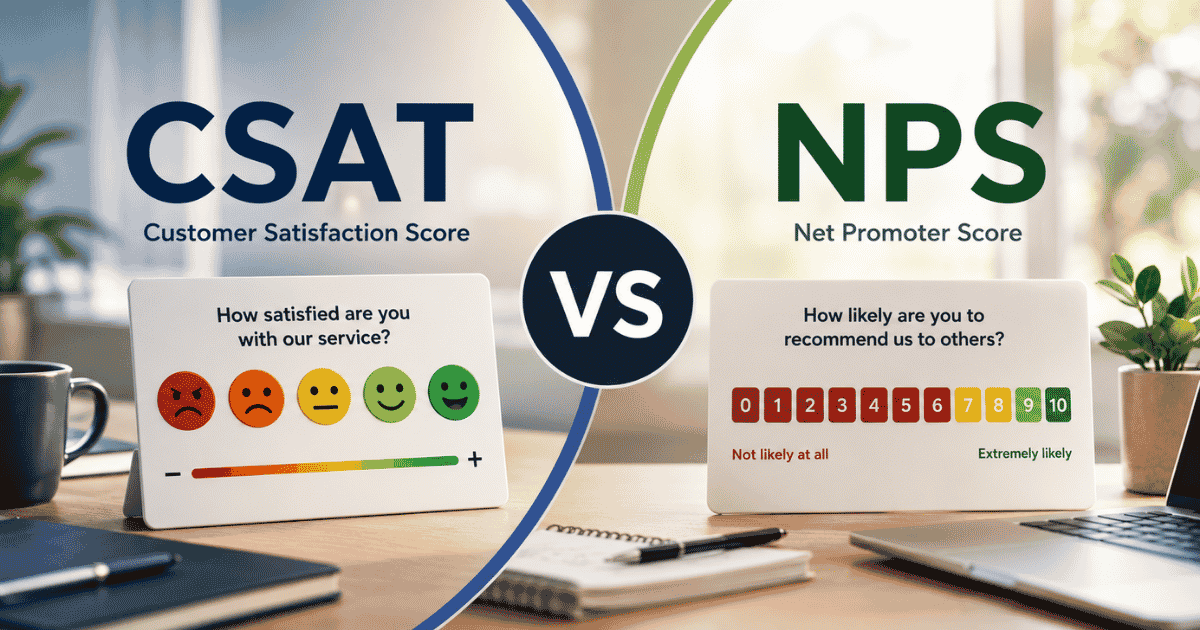
Customer satisfaction surveys remain fundamental to gathering customer feedback at scale. Net promoter score surveys measure loyalty by asking customers how likely they are to recommend your product, with scores above 9 indicating promoters who drive word-of-mouth growth. CSAT surveys capture satisfaction at specific touchpoints, typically using 1-5 ratings after support interactions.
The most effective survey strategies combine standardized metrics with open-text questions. A CSAT question tells you a customer rated their experience 4 out of 5. The follow-up question asking “What could we improve?” provides the context needed to act on that score meaningfully.
Social Media Mentions
Social media monitoring captures feedback from customers who share opinions publicly rather than submitting formal complaints. Platforms like X, LinkedIn, Facebook, and Instagram generate billions of interactions daily, with companies like Starbucks analyzing millions of social mentions yearly to identify trends.
Social media comments often surface issues before they appear in support channels. A frustrated customer might tweet about a problem hours before submitting a ticket, giving teams early warning about potential issues. Monitoring these channels also reveals how potential customers perceive your brand based on public conversations.
Online Review Platforms
Review sites like G2, Capterra, and app stores provide structured feedback from customers willing to share detailed opinions publicly. These platforms often include specific ratings for different product aspects, making it easier to identify areas for improvement without extensive text analysis.
Online reviews also influence potential customers researching solutions. Responding thoughtfully to reviews demonstrates that your team listens and acts on feedback, which builds trust with prospects evaluating your product against competitors.
Direct Customer Messages
Not all valuable feedback comes through official channels. Customers send direct messages to support teams, sales representatives, and even founders with suggestions, complaints, and feature requests. These one-on-one communications often contain the most candid and detailed feedback because customers feel they are speaking to a real person rather than submitting a form.
The challenge with direct customer messages is ensuring they reach the right teams and contribute to broader analysis. Without a system to capture and categorize these inputs, valuable customer insights remain trapped in individual inboxes rather than informing company-wide decisions.
Business Impact Of Customer Feedback Analysis
Understanding why customer feedback analysis matters requires looking at concrete business outcomes. The companies that invest in systematic feedback processes consistently outperform those that rely on intuition or react only when problems become obvious.
Revenue Growth Signals
Feedback data often contains early indicators of revenue opportunities. When multiple customers ask for features that would allow them to upgrade to higher pricing tiers, that signal points directly to expansion revenue potential. Companies tracking these patterns report identifying 30% more upsell opportunities compared to those who wait for sales teams to discover needs during renewal conversations.
Customer comments also reveal messaging gaps that affect conversion rates. When trial users express confusion about pricing or product capabilities, that feedback guides marketing improvements that help potential customers understand value faster.
Customer Churn Indicators
Negative sentiment in support interactions correlates strongly with churn risk. Research shows a 0.7 correlation coefficient between negative support themes and subsequent customer departures. Businesses monitoring sentiment across customer interactions can intervene before dissatisfied customers leave, reducing churn by 5-10%.
The warning signs appear in feedback data weeks or months before customers cancel. Repeated complaints about the same issue, declining engagement with support resources, or frustrated language in ticket messages all signal customers considering alternatives. Acting on these signals while customers are still invested in making your product work yields much better outcomes than exit surveys.
Product Improvement Insights
Customer feedback directly shapes product development for companies that systematically analyze it. About 60% of successful product features trace back to user suggestions captured through feedback channels. This connection ensures development teams build what customers need rather than what internal stakeholders assume they want.
Topic modeling across large feedback volumes reveals which product areas generate the most confusion or frustration. A SaaS company analyzing 1,000 support tickets might discover that usability issues account for 30% of complaints while pricing concerns represent 25%. These proportions guide where to invest product resources for maximum customer impact.
Competitive Advantage Opportunities
Only 40% of businesses systematically analyze feedback according to Gartner research. This gap creates significant opportunity for companies willing to invest in proper feedback analysis. Teams that understand customer needs more deeply than competitors can respond faster to market changes and build products that better address real pain points.
Feedback analysis also reveals how customers compare your product to alternatives. Comments mentioning competitor features or expressing surprise at missing capabilities provide intelligence that guides competitive positioning and product priorities.
Decision Making Clarity
Leaders increasingly expect customer experience metrics to be backed by qualitative insight, not just numbers. A declining NPS score demands explanation: Which customers are unhappy? About what? What would fix it? Feedback analysis provides the context that transforms abstract metrics into actionable priorities.
Companies with mature feedback processes report 2x faster insight-to-action cycles. When leadership asks why satisfaction dipped last quarter, teams with organized feedback data can answer specifically rather than speculating.
Customer Expectation Understanding
Customer behavior shifts constantly, and feedback analysis tracks those changes in near real-time. Expectations around response times, self-service options, and communication channels evolve quickly, especially for SaaS products serving tech-savvy audiences.
Monitoring feedback themes over time reveals when customer expectations change before satisfaction scores drop. A sudden increase in comments about mobile app functionality might indicate shifting usage patterns that warrant attention before they become widespread complaints.
What Methods Analyze Customer Feedback Effectively
Different customer feedback analysis methods suit different situations. The best approach depends on feedback volume, team resources, and the specific questions you need to answer. Understanding the strengths and limitations of each method helps teams choose appropriate techniques.
Sentiment Scoring Models
Sentiment analysis uses natural language processing to classify feedback as positive, negative, or neutral. Modern machine learning models like BERT fine-tuned for domain-specific content achieve 85-95% accuracy on review data. These scores help teams quickly gauge overall customer sentiment and track changes over time.
Sentiment scores work well for monitoring trends and identifying periods requiring attention. A sudden dip in average sentiment across support tickets signals potential issues worth investigating. However, sentiment alone does not explain why customers feel the way they do, which is why combining sentiment analysis with other methods yields better results.
Limitations exist, particularly around sarcasm and nuanced language. Sentiment analysis tools show error rates up to 20% on social media data where informal language and irony are common. Human review remains necessary to catch these cases and validate automated classifications.
Keyword Pattern Detection
Keyword analysis identifies specific terms and phrases that appear frequently in customer comments. This method helps teams understand what customers talk about most often and spot emerging concerns quickly. Automated detection can flag tickets mentioning specific product features, competitor names, or problem indicators.
Practical applications include setting up alerts when keywords like “cancel,” “frustrated,” or “bug” appear above normal frequency. These early warnings help teams address issues before they escalate into larger problems affecting many customers.
The challenge with keyword approaches is that customers describe the same problem using different words. Someone might say “slow loading,” “takes forever,” or “performance issues” to describe identical frustrations. Effective keyword systems need synonyms and related terms to capture the full picture.
Topic Categorization Systems
Topic modeling uses algorithms like Latent Dirichlet Allocation to automatically group feedback into themes. This technique assumes that documents contain mixtures of latent topics and outputs probability distributions showing how strongly each piece of feedback relates to discovered themes.
For example, analyzing 1,000 customer reviews might reveal clusters around “usability” (30%), “pricing” (25%), and “support quality” (20%). These proportions help teams understand what matters most to customers without manually reading every comment.
Topic categorization excels at handling large volumes where manual review is impractical. Teams processing thousands of monthly tickets can use topic modeling to identify recurring themes and allocate resources accordingly.
Behavioral Correlation Analysis
Root cause analysis connects feedback themes to customer behaviors and business outcomes. This method examines whether negative feedback about specific issues correlates with churn, reduced usage, or other measurable impacts. Studies show correlation coefficients of 0.7 or higher between certain negative support themes and customer departures.
Behavioral correlation helps prioritize which feedback to address first. An issue generating complaints but not affecting retention or revenue ranks lower than problems directly tied to customer loss. This connection ensures teams focus energy where business impact is highest.
Trend Identification Techniques
Tracking feedback themes over time reveals whether issues are growing, stable, or declining. Weekly or monthly comparisons show whether a particular complaint is spreading or represents an isolated incident. Trend analysis also surfaces seasonal patterns that might otherwise go unnoticed.
Effective trend identification requires consistent categorization over time. If tagging taxonomy changes frequently, comparing current feedback to historical data becomes unreliable. Establishing stable categories and maintaining them consistently enables meaningful longitudinal analysis.
Predictive Insight Modeling
Advanced analytics can predict future customer behavior based on feedback patterns. Predictive models analyzing sentiment trajectories and feedback frequency achieve AUC scores of 0.85 or higher for churn prediction. These forecasts help teams intervene proactively rather than reactively.
Predictions work best when combined with operational context. A customer showing declining sentiment who also has unresolved tickets open longer than SLA targets represents higher risk than one with negative feedback but quick resolutions. Layering multiple signals improves prediction accuracy.
Automation Role In Feedback Processing
Manual feedback analysis cannot scale beyond a few hundred comments monthly without overwhelming support teams. Automation handles volume while preserving the speed needed to act on time-sensitive issues. The key is finding the right balance between automated processing and human judgment.
Real Time Data Capture
Modern feedback processing captures customer comments as they arrive rather than waiting for periodic exports. Streaming tools like Apache Kafka enable instant data flow from support channels, social media, and survey platforms into central analysis systems.
Real-time capture matters because some feedback requires immediate attention. A customer reporting a critical bug or expressing extreme frustration benefits from rapid response rather than discovery during a weekly review cycle. Automation ensures these urgent cases surface quickly.
Automated Sentiment Tagging
AI powered sentiment classification processes incoming feedback instantly, assigning positive, negative, or neutral labels without manual effort. This automation means every ticket, chat message, and survey response includes sentiment context from the moment it arrives.
Automated sentiment tagging at scale enables dashboards showing real-time customer mood across the entire customer base. Teams can see when overall sentiment shifts and drill into specific time periods or topics driving change. This visibility was impossible when sentiment required manual review.
The accuracy of automated sentiment has improved dramatically with modern natural language processing. Where earlier tools struggled with industry-specific language, today’s models can be fine-tuned on domain-specific training data to achieve reliability suitable for business decisions.
Smart Feedback Routing
Automation routes feedback to appropriate teams based on content, sentiment, and priority. A complaint about billing issues goes directly to finance-related queues while feature requests flow to product teams. This routing happens without agents manually reading and forwarding each item.
Smart routing also considers urgency. High-value customers expressing negative sentiment might trigger escalation to senior support staff. Feedback mentioning competitor names could route to competitive intelligence channels. These rules ensure feedback reaches teams who can act on it without delay.
Instant Alert Triggers
Automated alerts notify teams when feedback patterns require attention. Thresholds can trigger notifications when negative sentiment spikes above normal levels, when specific keywords appear frequently, or when particular customers show signs of escalating frustration.
Alert systems transform feedback from passive data into active monitoring. Rather than discovering problems during periodic reviews, teams learn about emerging trends while they are still manageable. This proactive approach prevents small issues from growing into major customer satisfaction problems.
Scalable Data Processing
Automation enables analysis at volumes impossible for human review. A growing company might process 10,000 monthly customer interactions across email, chat, social media, and surveys. Without automated tools, this volume would require dedicated analysts working full-time just on categorization.
Scalable processing ensures feedback analysis keeps pace with business growth. Teams adding new support channels or expanding customer bases can maintain consistent analysis quality without proportionally increasing headcount. This efficiency makes systematic feedback analysis accessible to small and mid-sized businesses, not just enterprises.
Continuous Insight Updates
Automated systems provide continuously updated dashboards rather than static monthly reports. Leadership can check current customer sentiment any time rather than waiting for scheduled analysis cycles. This immediacy changes how organizations respond to customer feedback.
Continuous updates also reveal patterns that point-in-time reports miss. A problem appearing for three days might not show in monthly summaries but appears clearly on real-time dashboards. This granularity helps teams identify and address transient issues affecting smaller customer segments.
How Feedback Metrics Measure Business Performance
Metrics transform feedback into trackable indicators that show whether changes are working. The right combination of satisfaction scores, operational measures, and business outcomes creates a complete picture of customer experience health.
Satisfaction Score Trends
Customer satisfaction surveys provide standardized measures that enable comparison over time and against benchmarks. Net promoter score ranges from -100 to +100, with top performers achieving scores above 50. CSAT typically uses 1-5 scales with industry averages varying by sector.
Tracking these scores monthly reveals whether initiatives improve customer experience or problems worsen despite efforts. A 10% quarterly improvement in CSAT following a knowledge base expansion suggests the investment paid off. Declining scores despite stable operations might indicate changing customer expectations requiring new approaches.
The key is connecting score movements to specific feedback themes. When NPS drops, qualitative analysis reveals which topics drove the decline. This connection prevents teams from implementing generic improvements when targeted fixes would work better.
Retention Rate Changes
Customer retention directly measures whether feedback-driven improvements affect business outcomes. Companies that act on feedback consistently report 1.5x higher retention rates than those that collect without acting. This correlation makes retention a crucial metric for feedback program evaluation.
Tracking retention by customer segment reveals which groups benefit most from improvements. Enterprise customers might show stronger retention gains from reliability improvements while small business customers respond more to usability enhancements. These patterns guide future prioritization.
Resolution Time Improvements
Operational metrics like first response time and resolution time indicate whether feedback is reducing friction in support processes. A knowledge base article addressing common questions should decrease ticket volume and speed resolution for remaining cases.
Resolution time improvements often appear before satisfaction score changes. Customers experience faster service immediately while satisfaction scores require accumulation across many interactions. Tracking both gives early and lagging indicators of progress.
Revenue Impact Indicators
Ultimately, customer experience affects revenue through retention, expansion, and acquisition. Churn rate directly connects to revenue loss, with 70% negative sentiment correlating to 15-20% revenue impact if left unaddressed, according to research data.
Expansion revenue from existing customers often increases when feedback-driven improvements address barriers to upgrading. Trial-to-paid conversion rates improve when feedback reveals and resolves confusion blocking purchase decisions.
Experience Quality Metrics
Beyond individual touchpoints, overall experience quality measures capture how customers feel about their complete journey. Journey mapping overlays feedback on specific touchpoints to identify where drop-offs occur. E-commerce companies using this approach report 12% conversion improvements from addressing journey-specific friction.
Experience metrics require aggregating feedback across channels and touchpoints. A customer might interact via trial signup, onboarding emails, first support ticket, and renewal conversation. Understanding sentiment at each stage reveals experience patterns invisible in channel-specific analysis.
EasyDesk Role In Customer Feedback Analysis
EasyDesk centralizes multi-channel customer support and feedback tracking in one platform designed for growing teams. By bringing email, chat, social media, and contact forms into a shared inbox, EasyDesk eliminates the scattered tools and manual exports that slow down feedback analysis.
The platform includes feedback tracking and public roadmap features that connect customer requests directly to product planning. Automation rules can tag, assign, and escalate tickets based on content, ensuring feedback reaches the right teams without manual sorting. SLA tracking reveals where response times lag, while canned responses help teams respond consistently to common issues identified through feedback patterns.
Teams using EasyDesk report 30% faster response times and the ability to track customer satisfaction across all interactions without enterprise complexity. The 14-day free trial lets teams connect their main support channel, define initial tags, and run a first feedback report to see how centralized analysis changes their understanding of customer needs.
FAQs
What Is Customer Feedback Analysis?
Customer feedback analysis is the structured method businesses use to collect feedback, review customer data, and interpret raw feedback data to understand customer needs. A proper customer feedback analysis process includes user feedback analysis steps that help categorize customer feedback into themes across the customer journey. Using customer feedback analysis tools and customer service software, teams can analyze customer feedback data from feedback forms and other sources, combining qualitative input with quantitative data to gain valuable insights that strengthen customer engagement.
Why Customer Feedback Analysis Matters?
Customer feedback analysis helps companies track key metrics that reveal satisfaction trends, service gaps, and behavior patterns. When teams consistently gather feedback, they can identify issues early, improve customer satisfaction, and enhance customer satisfaction through targeted improvements. Reliable analysis supports better decisions because accurate customer data shows what drives loyalty and where experiences break down.
How Businesses Collect Customer Feedback?
Organizations collect feedback through surveys, feedback forms, support interactions, and digital channels. Inputs from these sources create raw feedback data that reflects real customer experiences across the customer journey. Continuous efforts to gather feedback ensure businesses maintain updated insight into expectations and engagement levels.
What Tools Help Analyze Feedback?
Customer feedback analysis tools and automated customer service software help analyze customer feedback data quickly. Such tools organize qualitative and quantitative data, track key metrics, and streamline the feedback analysis process so teams can work efficiently.
How Does Feedback Data Improve Decisions?
Structured analysis helps companies gain valuable insights, identify trends, and prioritize improvements. When teams categorize customer feedback accurately, they can strengthen customer engagement, resolve issues faster, and make decisions that directly improve customer satisfaction.