Teams that manage daily customer conversations often reach a point where their existing tools feel limited. As ticket volume grows and support requests come in from multiple channels, choosing the right customer service software becomes essential for smooth operations. EasyDesk stands out as a simple, powerful customer service platform, but many businesses still want to understand how it compares with other helpdesk alternatives in the market.
This guide breaks down how EasyDesk stacks up against popular solutions, what each tool does best, and which ticketing system features matter most for support teams. Whether you run a small startup or a mid-sized operation, you will find the clarity needed to decide which platform fits your specific support goals.
What Makes EasyDesk a Competitive Helpdesk Software
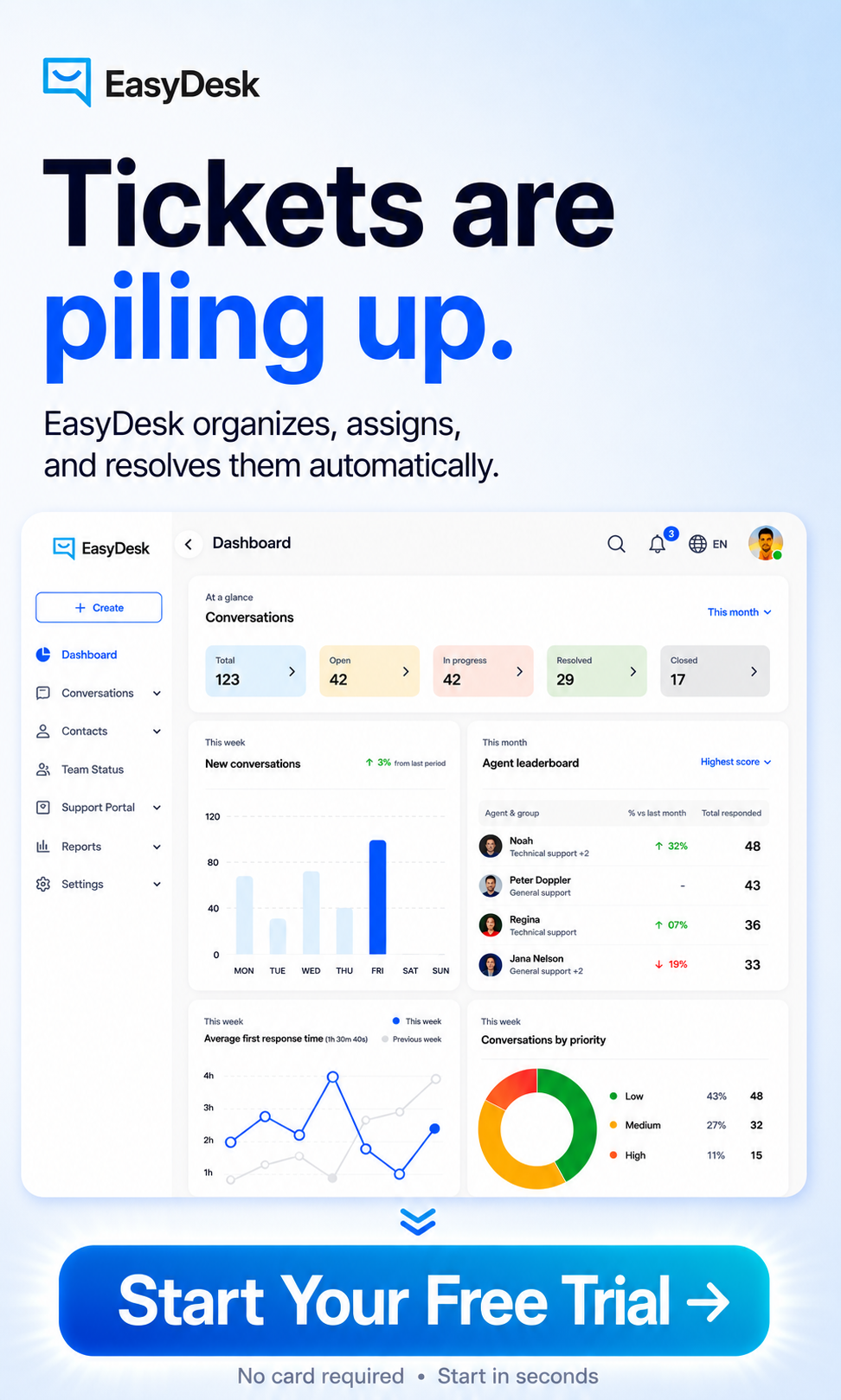
EasyDesk stands out as a modern help desk solution because it blends advanced automation, multi channel support, and structured workflows into a clean, user friendly interface. It helps support teams work faster, deliver consistent customer interactions, and maintain excellent customer support standards as the business grows. With EasyDesk, organizations reduce operational friction, improve customer satisfaction, and streamline support processes across departments.
Automated Workflow Management
EasyDesk uses automation rules to streamline ticket routing, assignment, and prioritization. When a support request arrives, the system automatically identifies its category, assigns it to the right agent, and sets the appropriate status. This prevents delays and reduces the manual workload for support teams. For example, billing-related tickets can be routed directly to the finance support group, while technical inquiries can be assigned to the engineering support team. These automated workflows help maintain faster response times and ensure tickets are handled by the most qualified agents.
Centralized Ticket Handling
EasyDesk centralizes all support tickets and customer interactions into a single dashboard. This gives agents a complete view of each case without switching between multiple tools. When a customer sends an email one day and follows up via chat the next, EasyDesk automatically links both conversations into one ticket thread. Having everything in one place ensures continuity, improves accuracy, and reduces the chances of duplicated work or missed responses. Support teams can review conversation history at a glance, improving both context and consistency in replies.
Smart Multi-Channel Support
Organizations often receive inquiries through email, chat, web forms, and social channels. EasyDesk brings these sources together so that all communication flows into the same help desk system. Every message becomes a structured, trackable ticket with a clear status and assigned owner. This unified approach helps support teams respond faster and reduces the risk of messages getting lost across platforms. It also improves overall customer experience by ensuring every channel receives the same quality of support.
SLA Tracking and Prioritization
Meeting service level agreements is essential for maintaining customer satisfaction. EasyDesk includes SLA tracking tools that monitor first response and resolution deadlines. Tickets automatically receive alerts when they are close to exceeding their SLA commitments, giving agents the chance to handle urgent cases before issues escalate. This feature helps teams maintain predictable service quality and reinforces trust with customers who expect timely resolution. By keeping SLA compliance visible, support managers gain a clearer picture of team performance and workload distribution.
Built-In Knowledge Base and Canned Responses
EasyDesk includes a knowledge base system that allows teams to publish articles, FAQs, and troubleshooting guides. Agents can share these resources directly when responding to support tickets, reducing the time spent typing repetitive explanations. Canned responses help agents handle common questions quickly and maintain consistent messaging. For instance, standard replies for password reset steps or setup instructions can be inserted instantly. This improves agent productivity and ensures the team delivers accurate, uniform answers across all interactions.
Live Chat Integration
Live chat support is built into EasyDesk through an embeddable chat widget that connects customers to agents in real time. These live interactions are automatically converted into support tickets, preserving message history for later reference. This ensures teams never lose context, even when conversations start as quick questions. The ability to manage chat sessions alongside email and web tickets enhances efficiency and aligns all communication under one unified system.
Feedback, Roadmaps, and Changelogs
EasyDesk extends beyond traditional help desk features by offering tools for customer satisfaction surveys, product feedback collection, public roadmaps, and changelogs. These features help teams understand user expectations, track improvement opportunities, and communicate updates transparently. Feedback insights guide product decisions, while public roadmaps show customers what improvements are coming next. Changelogs help maintain trust by clearly sharing new features, fixes, and updates. Together, these tools strengthen customer relationships and make EasyDesk a competitive choice in the helpdesk alternatives landscape.
Key EasyDesk Features To Compare
EasyDesk offers a focused set of desk features designed to simplify support operations while keeping everything organized and easy to manage. These capabilities help teams compare it confidently against other helpdesk alternatives and understand where it delivers the most value.
Ticket Management Precision
Ticket management in EasyDesk keeps every support ticket structured, prioritized, and traceable from start to finish. Agents can categorize issues, assign owners, add internal notes, and track progress without confusion. This structure ensures no ticket is overlooked and every request moves through a clear resolution path.
Live Chat and Real-Time Support
EasyDesk includes a live chat widget that lets customers reach support teams instantly. Messages appear directly inside the support workspace, reducing the need for external chat tools. Real-time replies help minimize delays, increase engagement, and make the support process feel more human and approachable.
Knowledge Base Articles
EasyDesk allows teams to publish helpful knowledge base articles that customers can access for self-service features. This reduces repetitive inquiries and empowers users to solve common issues on their own. Agents can also attach relevant articles directly inside replies to speed up resolution.
Automation Rules for Faster Processes
Automation rules streamline repetitive support tasks. Tickets can auto-assign to the right agent, apply labels, set priority levels, or trigger follow-up actions based on conditions. These automated operations reduce manual effort and keep workflows consistent without extra oversight.
Multi-Channel Support and SLAs
EasyDesk manages communication from email, chat, and web forms under one system through multi-channel support. All support tickets stay synchronized across channels, making responses faster and more organized. Service level agreements (SLAs) help teams maintain expected response times by flagging overdue tasks and highlighting urgent issues.
EasyDesk vs Zendesk: Features, Pricing, And Best For
EasyDesk and Zendesk both compete in the customer service software space, but they differ significantly in pricing, automation capabilities, and how support teams manage support tickets, customer interactions, and timely resolution. EasyDesk focuses on simplicity and cost efficiency, while Zendesk caters to large teams needing deep omnichannel support and enterprise-level customization.
Feature Comparison
EasyDesk provides core desk features such as support tickets, ticket management, live chat, multi channel support, and self service features. Its customer service platform gives support agents a unified view of customer communication through email, web forms, and live chat widget interactions. Automation rules help streamline workflows, assign tickets, and maintain service level agreements without heavy configuration. This user friendly interface enables businesses to operate smoothly with minimal onboarding time for support teams.
Zendesk offers more advanced features such as AI-powered routing, macros, automated resolution suggestions, and robust automation capabilities. It supports omnichannel support from email, chat, voice, SMS, and social media in one dashboard. Zendesk is also well-known for integrations with enterprise systems like Salesforce Service Cloud, making it suitable for organizations with complex support operations.
Multi-Channel Support and Communication
EasyDesk centralizes web forms, email messages, and live chat support into a single desk solution. This simplifies customer interactions for small teams and ensures faster response time. It also includes knowledge base articles and self-service features that help reduce incoming inquiries by enabling customers to find answers independently.
Zendesk expands this with multiple channels including WhatsApp, Instagram, Facebook Messaging, and voice support. Its conversation history is more extensive, allowing support agents to track customer conversations across various channels without losing context. This makes Zendesk ideal for high ticket volume and mid sized teams requiring omnichannel support.
Automation and Ticket Routing
EasyDesk includes automation rules for assigning support requests based on conditions such as keywords or priority. SLA tracking, events-based notifications, and workflow triggers make it easy to maintain timely resolution even with small teams.
Zendesk provides deeper automation capabilities and advanced routing logic. Support teams can create complex workflows, build custom reports, and use automated insights to reduce response time. Zendesk’s triggers and macros exceed what most small teams require but are powerful for large departments managing enterprise workloads.
Pricing Comparison
EasyDesk Pricing (Yearly Billing):
- Free Plan: $0/month – 2 users, 1 group, unlimited contacts, 1 brand, 1 max channel
- Starter Plan: $29/month – 3 users, 10 collaborators, 2 groups, 2 max channels, live chat support
- Pro Plan: $49/month – 5 users, 20 collaborators, 5 groups, 5 max channels, social media integration
- Enterprise Plan: $99/month – 10 users, 50 collaborators, unlimited groups, unlimited channels
EasyDesk’s pricing structure is transparent and highly cost-effective, especially for small businesses, small teams, and growing support teams looking for an affordable ticketing system without hidden custom pricing.
Zendesk Pricing (Annual Billing):
- Customer Service plans start around $19–$115 per agent/month
- Enterprise plans can exceed $169 per agent/month
- Many enterprise features require upgraded tiers or add-ons
Zendesk quickly becomes expensive at scale, especially when support agents require advanced reporting dashboards, robust automation, or extensive integrations.
Best Suited For
EasyDesk is best for:
- Small businesses and small teams needing an affordable help desk
- Companies wanting essential desk software without complexity
- Teams focused on customer satisfaction, timely resolution, and strong self service
- Organizations comparing helpdesk alternatives that are simpler than Zendesk
Zendesk is best for:
- Mid sized teams and enterprises requiring advanced features
- Companies handling high ticket volume or omnichannel support
- Teams needing deep automation capabilities and enterprise plan options
- Organizations relying on integrations such as Salesforce Service Cloud
EasyDesk stands out as a user friendly desk app and a strong Freshdesk alternative for teams prioritizing simplicity, cost efficiency, and excellent customer support. Zendesk excels for enterprises requiring extensive research, advanced features, and scalable infrastructure for customer experience management.
ZasyDesk vs Freshdesk: Capabilities And Support Experience
EasyDesk and Freshdesk offer two different approaches to customer service software. EasyDesk focuses on simplicity, predictable pricing, and efficient support operations, while Freshdesk is built for teams managing larger volumes of customer conversations and incoming inquiries. Both help support agents manage support tickets effectively, but they differ in depth, automation, and scalability.
Feature Comparison
EasyDesk provides streamlined desk features such as support tickets, ticket management, live chat support, web forms, conversation history, and self-service features. Its design gives support teams a clear, user-friendly interface where customer interactions stay organized without configuration complexity. This makes EasyDesk appealing to small teams that want reliable support operations without advanced setup.
Freshdesk delivers a more expansive customer service platform. Its features include built-in phone channels, WhatsApp messaging, community forums, collision detection, and AI-powered suggestions on higher plans. Freshdesk also includes stronger workflow tools such as custom ticket fields, advanced ticket routing, and robust automation. These capabilities make it suitable for mid-sized teams and fast-scaling businesses.
Multi-Channel Support and Communication
EasyDesk centralizes customer conversations from email, live chat support, and social messages into one unified desk solution. Support agents can track incoming inquiries across multiple channels and maintain timely responses without switching tools. Knowledge base articles and self-service features help reduce repetitive questions by allowing users to resolve issues themselves.
Freshdesk goes deeper with omnichannel communication. It supports voice calls, SMS, messaging apps, and community forums. Its conversation history covers more channels, allowing support agents to manage complex multi-channel environments and deliver a richer customer experience. This extended communication suite is one reason Freshdesk is often chosen by larger support operations.
Automation, Routing, and Efficiency
EasyDesk includes automation rules that assign support requests, notify agents, categorize tickets, and enforce service level agreements. These rules help teams maintain timely resolution even with smaller staff. Its workflow engine supports event-based notifications and basic ticket routing to streamline daily support operations.
Freshdesk provides more sophisticated automation capabilities. Higher-tier plans include AI-powered suggestions (Freddy AI), advanced SLAs, time-based and event-based automation, and structured workflow builders. These features help large teams manage heavy ticket volume, maintain consistency, and reduce manual effort.
Pricing Comparison
EasyDesk Pricing (Yearly Billing):
- Free Plan: $0/month – 2 users, 1 channel, unlimited contacts
- Starter Plan: $29/month – 3 users, 10 collaborators, 2 channels, live chat support
- Pro Plan: $49/month – 5 users, 20 collaborators, 5 channels, social media integration
- Enterprise Plan: $99/month – 10 users, 50 collaborators, unlimited channels
EasyDesk’s pricing is straightforward and includes essential features without hidden add-ons.
Freshdesk Pricing (Yearly Billing):
- Free: $0/agent – basic email ticketing
- Growth: $15/agent – automation, SLAs, workflow management
- Pro: $49/agent – custom roles, advanced automation, chat, multiple SLAs
- Enterprise: $79/agent – AI features, enterprise reports, custom objects
Freshdesk’s pricing is per agent, which can dramatically increase costs as support agents grow in number.
Best Suited For
EasyDesk is best for:
- Small businesses and small teams want a strong Freshdesk alternative
- Teams needing simple ticketing, live chat support, and customer conversations in one place
- Organizations focused on predictable pricing, user friendly tools, and essential support operations
Freshdesk is best for:
- Teams with high incoming inquiries across many channels
- Businesses requiring advanced routing, automation, and community forums
- Organizations that need broad scalability and an enterprise-level customer experience
EasyDesk stands out for small teams that value simplicity and cost control, while Freshdesk is better suited for companies seeking advanced features, deeper automations, and extensive multi-channel support.
EasyDesk vs Intercom: Messaging, Chat, And Automation
EasyDesk and Intercom approach customer communication very differently. EasyDesk focuses on simple, affordable live chat software and ticketing for support teams, while Intercom positions itself as an advanced conversational platform built for high-volume messaging, automation, and AI-driven customer relationships. Both can manage customer conversations across various channels, but the complexity, cost, and feature depth differ substantially.
Feature Comparison
EasyDesk delivers essential desk app functionality such as support tickets, live chat software, unified inbox, workflow rules, and the ability to share knowledge base articles. This makes it suitable for businesses that need reliable customer communication without managing dozens of advanced features. The interface remains straightforward and accessible, which helps support agents stay productive.
Intercom offers a much richer messaging ecosystem. Features include a real-time Messenger widget, shared inbox, automated chatbots, advanced routing, audience targeting, and proactive messages. Intercom’s Help Desk integrates with AI assistants that automatically answer questions and escalate conversations. These advanced features benefit companies prioritizing conversational engagement and personalized customer relationships across the entire lifecycle.
Multi-Channel Communication and Engagement
EasyDesk centralizes communication through live chat, email, and social channels, keeping all customer interactions in one organized view. Support agents can respond quickly, track conversation history, and maintain consistent service levels. The platform’s simplicity makes it ideal for teams who want multi-channel communication without configuration complexity.
Intercom handles communication across various channels, including email, website chat, mobile apps, and product tours. Its Messenger supports rich media, automated workflows, and targeted messages based on user behavior. This makes Intercom powerful for onboarding, retention campaigns, and in-product engagement—not just customer support.
Automation and Workflow Capabilities
EasyDesk includes practical automation rules that route support tickets, trigger notifications, and maintain consistency in daily operations. Teams can automate repetitive tasks without requiring additional setup or technical expertise. These capabilities support predictable customer communication and faster response times.
Intercom provides more advanced automation through bots, visual workflow builders, personalized triggers, and AI-driven responses. The Fin AI Agent answers customer questions, escalates complex issues, and integrates with existing systems. Businesses looking to automate large portions of their customer communication will benefit from Intercom’s deeper automation stack.
Pricing Comparison
EasyDesk Pricing (Billed Yearly):
- Free: $0/month – 2 users, 1 channel, unlimited contacts
- Starter: $29/month – 3 users, 10 collaborators, 2 channels, live chat
- Pro: $49/month – 5 users, 20 collaborators, 5 channels, social media integration
- Enterprise: $99/month – 10 users, 50 collaborators, unlimited channels
EasyDesk remains extremely cost-effective for small teams, especially compared to systems with per-seat pricing.
Intercom Pricing (Billed Yearly):
- Essential: $29 per seat/month + $0.99 per AI resolution – shared inbox, messenger, prebuilt reports
- Advanced: $85 per seat/month + $0.99 per AI resolution – workflow builder, round robin routing, multilingual help center
- Expert: $132 per seat/month + $0.99 per AI resolution – SSO, HIPAA support, SLAs, multibrand support
Intercom’s pricing rises quickly because it charges per seat + per AI resolution, which becomes expensive for support teams with high customer conversation volume.
Best Suited For
EasyDesk is best for:
- Small businesses and growing teams need a light, user-friendly desk app
- Businesses wanting reliable live chat software, simple automation, and easy customer communication
- Support agents who prioritize clean workflows over complex, advanced features
- Teams that want to share knowledge base articles and manage support from a budget-friendly platform
Intercom is best for:
- Companies want proactive messaging, product tours, and deep customer engagement
- Organizations focused on customer relationships across marketing, sales, and support
- Teams needing advanced features such as chatbots, targeted campaigns, and AI-driven automation
- Businesses that operate across various channels and want unified conversational experiences
EasyDesk offers simplicity, affordability, and dependable customer communication, while Intercom excels for companies seeking high-touch, engagement-driven workflows powered by automation and AI.
How To Choose Between EasyDesk And Other Top Helpdesk Tools
EasyDesk often appears as the best alternative when teams want a practical, technical helpdesk solution that balances functionality and simplicity. Extensive research into platform capabilities helps decide what matters most.
Technical Integration
Evaluate how EasyDesk connects with your existing systems. Check available APIs, webhook support, and ready-made connectors for CRMs, billing, and analytics. Integration quality affects data consistency across the stack and reduces manual syncing. Verify whether the platform supports two-way sync for contact records and tickets, and confirm how easy it is to map custom fields. A flexible integration layer shortens setup time and lets developers extend the desk solution without extensive engineering overhead.
Automation And Routing
Review automation capabilities to measure impact on agent efficiency. EasyDesk supports rule-based routing, SLA triggers, and event notifications that handle common workflows. Confirm whether the automation engine allows conditional rules, bulk updates, and scheduled tasks. Look for built-in features to auto-assign tickets by skill, priority, or workload so support agents spend less time triaging. Essential features such as canned responses, templates, and automated follow-ups further reduce repetitive work and improve throughput.
Scalability And Performance
Test performance under realistic loads to ensure steady response times as ticket volume grows. EasyDesk’s architecture should scale horizontally and provide predictable latency for API calls and UI interactions. Inspect limits on concurrent API requests, maximum collaborators, and channel throughput. Evaluate data retention policies and archive strategies for large conversation histories. A scalable desk solution prevents slowdowns during peak support hours and maintains dependable customer communication.
Security And Compliance
Confirm encryption standards for data in transit and at rest, plus available access controls. EasyDesk should provide role-based permissions, audit logs, and SSO options for enterprise security posture. Verify support for compliance frameworks relevant to your industry, such as GDPR or SOC 2, and examine how the platform handles data export and deletion. Strong security reduces risk and aligns support operations with corporate governance.
Reporting And Insights
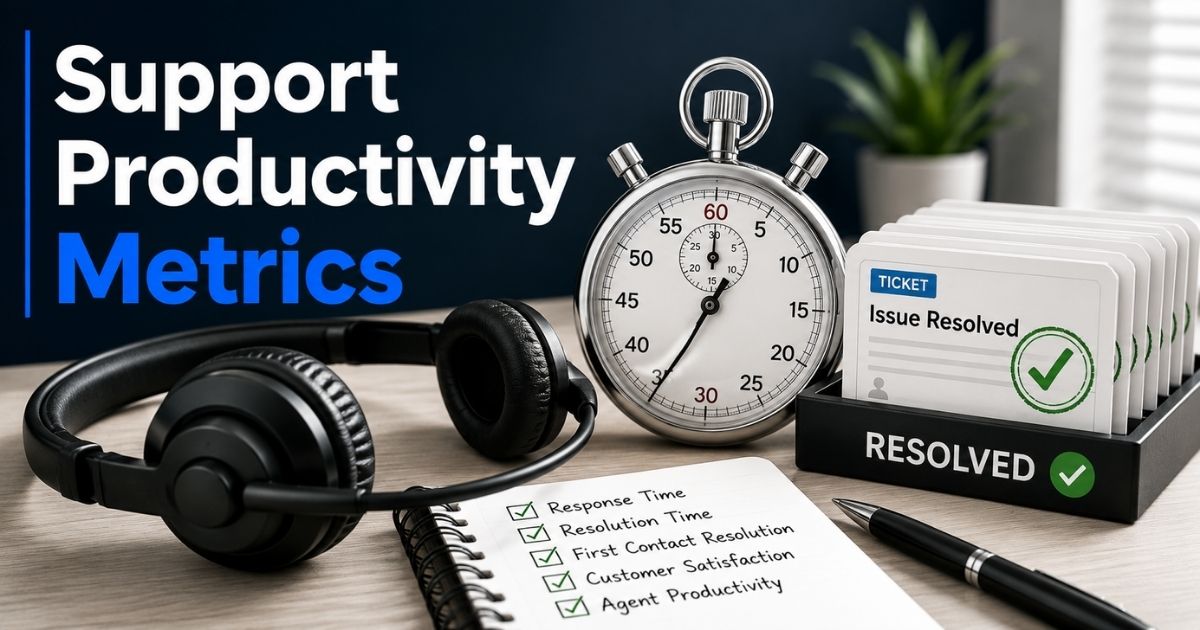
Measure how reporting dashboards surface agent performance and operational bottlenecks. EasyDesk should expose metrics like first response time, resolution time, SLA breaches, and ticket volume by channel. Look for customizable reports and exportable data to enable deeper analysis. Real-time dashboards help supervisors track agent efficiency and prioritize coaching where agent performance lags.
Total Cost And Support
Compare pricing structures, including per-user, per-agent, and channel fees. EasyDesk often provides predictable tiers that suit small to mid-sized teams, while enterprise platforms can require custom pricing. Factor in onboarding, integration, and maintenance costs. Evaluate vendor support SLAs, available training, and community resources. Choosing a helpdesk that pairs affordable pricing with responsive vendor support makes long-term operations sustainable.
Final recommendation: prioritize the elements that align with your support goals. When the priority is rapid deployment, low operational overhead, and strong core capabilities, EasyDesk represents a compelling desk solution and practical helpdesk alternative for teams focused on delivering consistent customer support.
Open Source vs SaaS Helpdesk Software: Pros And Cons
Open source and SaaS helpdesk platforms solve similar problems but operate with very different technical models. Understanding the tradeoffs helps teams choose the structure that best fits their support workflows.
Flexibility And Customization
Open source platforms offer deep customization. Teams can modify code, rebuild modules, and tailor features such as service catalog entries, ticket forms, and workflow logic to match internal processes. This level of control benefits organizations with strong engineering resources. SaaS platforms, however, provide structured configuration rather than code-level customization. Businesses get ready-to-use modules for self service, web forms, and knowledge base software without needing development time.
Maintenance And Updates
Open source tools require ongoing server management, security patching, and infrastructure upkeep. IT teams must handle version updates, dependencies, and performance tuning. SaaS systems outsource all maintenance; updates roll out automatically, ensuring stable performance without internal workload. This makes SaaS preferable for teams wanting reliable availability without maintaining infrastructure.
Total Cost And Resources
Open source platforms often reduce licensing costs but increase labor costs. Hosting, monitoring, backups, and engineering support add long-term overhead. SaaS helpdesk tools charge predictable monthly fees and remove the need for server administration. Costs stay stable, and teams can scale usage without provisioning new hardware.
Feature Depth And Usability
SaaS solutions typically offer polished UI, faster onboarding, and user friendly workflows. Features like asset management, service catalog modules, and self service portals work out of the box. Open source options vary widely; some require plugins or custom development to match comparable capabilities. Ease of use in SaaS accelerates agent adoption and enables quicker ticket resolution.
Security And Reliability
Open source security depends on internal expertise and timely patching. Misconfigurations increase exposure risks. SaaS platforms incorporate built-in compliance, encrypted storage, and professionally managed uptime. For teams lacking dedicated security staff, SaaS ensures a more predictable reliability model.
Open source fits organizations with strong technical capacity and a need for extensive customization. SaaS delivers convenience, consistency, and faster deployment for teams wanting a dependable, fully supported helpdesk system.
Helpdesk Alternatives For All Businesses
Many businesses look for helpdesk alternatives that match their size, workflow complexity, and support expectations. The right choice depends on team structure, pricing plan requirements, and how many customer conversations flow through multiple channels. Below are helpdesk options aligned with different business stages so every organization can evaluate what fits best.
Helpdesk Options For Small Businesses
Small businesses usually need simplicity, predictable costs, and fast setup. A platform with a free plan or low-cost basic plan helps small teams get started without overcommitting. Essential features such as email ticketing, web forms, shared inbox, and basic automation support smooth operations. Multi-channel handling may be limited, but enough for early customer needs. Businesses at this stage should choose tools that minimize admin time and offer clear onboarding steps. The focus remains on reducing overhead while maintaining reliable customer support.
Helpdesk Solutions For Growing Teams
When teams expand and ticket volume increases, the free plan becomes insufficient. A growth plan with stronger automation, live chat, knowledge base tools, and routing features fits this phase. Growing companies require multiple channels so customers can reach support via chat, email, social media, or embedded forms. The platform should support collaboration with internal notes, assignment rules, and clearer analytics. Many businesses in this stage start prioritizing response time and introducing SLAs, which require more robust workflows than entry-level systems provide.
Helpdesk Platforms For Mid-Sized Teams
Mid sized teams deal with higher operational complexity and diverse support requirements. They need stronger workflow automation, multi-brand support, deeper analytics, and integration with CRM systems or billing platforms. A growth plan is often too limited, so these teams look for pricing plans with advanced capabilities like dynamic ticket routing, expanded user roles, and reporting dashboards. Multi-channel communication becomes essential for maintaining consistent customer experience. Tools with customizable views, widgets, and modular support centers provide better structure for scaling operations.
Helpdesk Tools For Large Enterprises
Enterprises require a mix of stability, compliance, flexibility, and automation. An enterprise plan typically includes features like advanced SLAs, role-based access controls, audit logs, AI-driven assistance, and operational analytics. Supporting multiple channels at scale becomes a top priority, along with managing global support teams. Enterprise-level helpdesk alternatives must integrate with identity management tools, HR systems, and large data repositories. These businesses also expect dedicated account support, personalized implementation services, and guaranteed uptime commitments. The platform must handle complex workflows without compromising performance.
Cross-Industry Helpdesk Alternatives
Some helpdesk solutions work well across all business sizes by offering layered pricing plans. A flexible basic plan supports small teams, while upgrades serve mid sized teams and large organizations. These alternatives provide balanced functionality such as automation, shared inbox, chat, and integration libraries. They enable businesses to operate support centers that grow progressively rather than migrate systems at every milestone. Multi-channel communication and responsive mobile interfaces help teams stay productive across various work environments. Such tools give businesses of all sizes the ability to adopt helpdesk technology that evolves with their customer needs.
How To Evaluate Helpdesk Alternatives Based On Support Needs
Support teams must choose helpdesk alternatives that match their workflow, ticket volume, and support expectations. Understanding what the team truly needs before investing helps avoid costly migrations later.
Assess Support Request Volume
Support requests vary widely across businesses, and any platform must scale with incoming inquiries. Teams handling low daily volume may prioritize simplicity, while high-volume teams need routing rules, categorization options, and automated queues. Evaluate whether the system can manage spikes without slowing responses. Look for stability in handling large workloads so agents work efficiently even during peak hours.
Review Team Workflow Requirements
Support teams rely on structured workflows to resolve issues quickly. Examine whether the helpdesk supports organized pipelines, assignment rules, and standard operating procedures. Features like internal collaboration notes, response templates, and escalation logic improve consistency across support operations. Ensure the platform allows teams to optimize processes as workloads become more complex and customer expectations rise.
Compare Reporting Depth
Advanced reporting becomes crucial as support teams grow. Review whether the tool provides reporting dashboards that visualize trends clearly. Platforms with custom reports help track performance metrics aligned with business goals. Teams should look for insights on ticket volume, average response time, resolution patterns, and agent performance. The more flexible the reporting engine, the better teams can analyze support efficiency.
Evaluate Multi-Channel Coverage
Incoming inquiries may arrive from email, chat, social platforms, or integrated web forms. Choose a tool that handles channels your customers actively use. Unified views of customer conversations reduce confusion and help agents manage the full interaction history. Multi-channel capability ensures consistent service regardless of where the request originates, improving overall customer satisfaction.
Consider Scalability And Future Needs
Support needs evolve, so helpdesk alternatives must support long-term growth. Systems offering modular upgrades, automation enhancements, and deeper analytics make transitions smoother. The platform should accommodate larger support teams, more advanced reporting needs, and higher ticket volume without requiring process overhauls. Selecting a scalable solution ensures stability and continuity as the business extends its support operations.
Cost Comparison: EasyDesk And Major Helpdesk Solutions
Choosing the right helpdesk often comes down to understanding how pricing plans align with your team’s size, expected ticket volume, and desired advanced features. Below is a clear comparison of EasyDesk, Freshdesk, HubSpot Service Hub, Zendesk, and Zoho Desk across popular pricing tiers and feature expectations.
How Pricing Structures Work
Most helpdesk solutions charge based on agent seats, which increases cost as support teams grow. Enterprise plans typically include more advanced features like automation, reporting dashboards, and custom reports, but cost significantly more than entry-level tiers.
| Helpdesk Solution | Entry Pricing Plan | Mid-Tier Plan | High-Tier/Enterprise | Pricing Notes |
| EasyDesk | Free Plan: $0 (2 users, limited channels) | Starter: $29/mo (3 users, 2 channels) | Enterprise: $99/mo (10 users, unlimited channels) | Tiered pricing includes core features without per-agent fees |
| Freshdesk | Free Plan: $0 (basic ticketing) | Growth: ~$15/agent/mo | Pro: ~$49/agent/mo / Enterprise: ~$79/agent/mo | Pricing per agent; advanced automation at higher tiers |
| HubSpot Service Hub | Starts ~$90/seat/mo | Professional ~$500/mo (5 users) | Enterprise ~$1,500/mo (10 users) | Starter not always included; part of broader CRM suite |
| Zendesk | ~$19/agent/mo | ~$55/agent/mo professional | ~$115/agent/mo Enterprise | Per-agent pricing; advanced features at higher tiers |
| Zoho Desk | Free Plan (up to 3 agents) | Standard ~$14/agent/mo | Enterprise ~$40/agent/mo | Free tier and lower per-agent pricing for small teams |
How Pricing Reflects Features
EasyDesk keeps pricing simple and predictable, not charging per agent seat at standard bills but grouping users by plan. Even the mid-tier plan provides support channels, live chat support, basic automation, and reporting dashboards, making it a cost-effective helpdesk alternative for small to mid-sized teams. This pricing plan structure means EasyDesk scales without the steep per-agent cost typical of other enterprise solutions.
In contrast, Freshdesk charges per agent. Its free tier provides basic ticketing and reporting, but automation, SLA enforcement, and richer reporting dashboards only come in paid tiers. The per-agent model means teams with high ticket volume or numerous agents see costs rise quickly. Zendesk follows a similar per-agent model; its entry pricing appeals to small teams, but advanced features like custom reports and deep automations sit behind higher tiers, which significantly increase total cost as team size grows. Zoho Desk offers one of the lower per-agent price points among major helpdesk systems, including a free plan with basic ticket management.
HubSpot Service Hub blends helpdesk with CRM and customer experience tools, but its pricing starts higher than other helpdesk providers and reflects the broader suite of features beyond pure support operations. It’s generally more expensive than dedicated ticketing systems, especially for teams that only need core support workflows.
Why EasyDesk Remains a Reliable Choice for Modern Support Teams
EasyDesk gives support teams the structure they need to delight customers and maintain consistent service quality. Its built-in knowledge base tools help reduce repetitive questions, while customer satisfaction surveys provide clear insights into how well the team performs. Support agents can track issues efficiently and deliver timely resolution across every channel. EasyDesk’s reporting features also enable data-driven decisions, helping teams improve processes and refine the overall customer experience. For businesses seeking a dependable platform that balances simplicity, performance, and scalability without overwhelming complexity, EasyDesk remains a practical and reliable helpdesk solution.
FAQs
What Is Helpdesk Software Used For?
Helpdesk software centralizes customer inquiries, support tickets, and communication channels into one system. It helps support teams track issues, respond efficiently, and reduce manual work. By organizing customer interactions, businesses maintain consistent service quality and keep conversations structured, even when ticket volume increases. This ensures customers receive timely assistance and clear resolutions.
How Do I Know Which Helpdesk Alternative Is Right for My Business?
Choosing the right helpdesk tool depends on your team’s size, workload, and long-term support strategy. Small teams may need simple ticketing and communication tools, while mid-sized or enterprise teams benefit from automation, SLAs, routing rules, and detailed reporting dashboards. Evaluate response speed, ease of use, pricing plans, and scalability to find the most suitable helpdesk alternative for your needs.
Do Helpdesk Tools Support Multiple Communication Channels?
Most modern helpdesk platforms support multiple channels such as email, chat, web forms, and social messaging. This allows customers to contact your team through their preferred method. Multi-channel access ensures no incoming inquiry gets lost, while support agents can manage all conversations in a unified view, improving consistency and reducing confusion in customer communication.
Is a Free Helpdesk Plan Enough for Small Teams?
A free plan may be sufficient for small teams with limited ticket volume and straightforward workflows. However, growing businesses usually need features like automation rules, SLA tracking, and multi-channel support, which free plans rarely offer. As support operations expand, teams often upgrade to paid tiers to meet higher expectations and maintain efficiency.
What Features Should I Look for in a Helpdesk Alternative?
Look for essential features including ticket management, live chat, a knowledge base, automation workflows, reporting dashboards, and integration options. These capabilities help teams manage support requests more effectively, reduce manual tasks, and improve overall performance. Tools with strong collaboration features and customizable ticket views are also beneficial for daily operations.
Can Helpdesk Software Improve Customer Satisfaction?
Yes. Helpdesk platforms streamline communication, reduce wait times, and improve the accuracy of responses. Faster resolution and better organization lead to higher customer satisfaction. Clear escalation paths and consistent follow-ups further strengthen customer trust in your support process.
Do Helpdesk Platforms Offer Reporting and Analytics?
Most helpdesk systems include analytics features such as performance metrics, custom reports, and dashboard views. These insights help teams evaluate response times, track ticket trends, and make data driven decisions that improve support quality over time.