Running support during the winter season isn’t always easy, especially for small teams. When vacation time, sick days, and packed inboxes stack up, it’s easy for things to start slipping. That’s where a ticketing system really helps. It gives everyone one place to work from, helps manage replies, and keeps tasks organized even when staff rotates in and out.
Winter brings more requests just when fewer people are available to handle them. Sales ramp up, product issues spike, and delivery questions seem to increase overnight. If we don’t have a process that keeps things steady, it’s too easy to lose track of customer messages or forget to respond. A good system helps us stay calm even when the speed picks up.
Staying on Track When Schedules Shift
Holiday time off and cold-weather sick days make it hard for everyone to stay in sync. When people are out, the usual rhythm breaks, and that’s when mistakes happen. Requests get missed, replies come in late, and customers start to feel like no one’s listening.
When everyone works from the same queue, that kind of confusion gets cut way down. We can see what’s already been answered and what still needs attention. The note trail makes it simple to understand what happened, even if someone else started the job.
Shared visibility does a lot of the heavy lifting. Everyone can quickly glance at ticket status, read internal updates, and pick up where the last person left off. That way, work doesn’t pause just because someone’s out sick or off for the holidays.
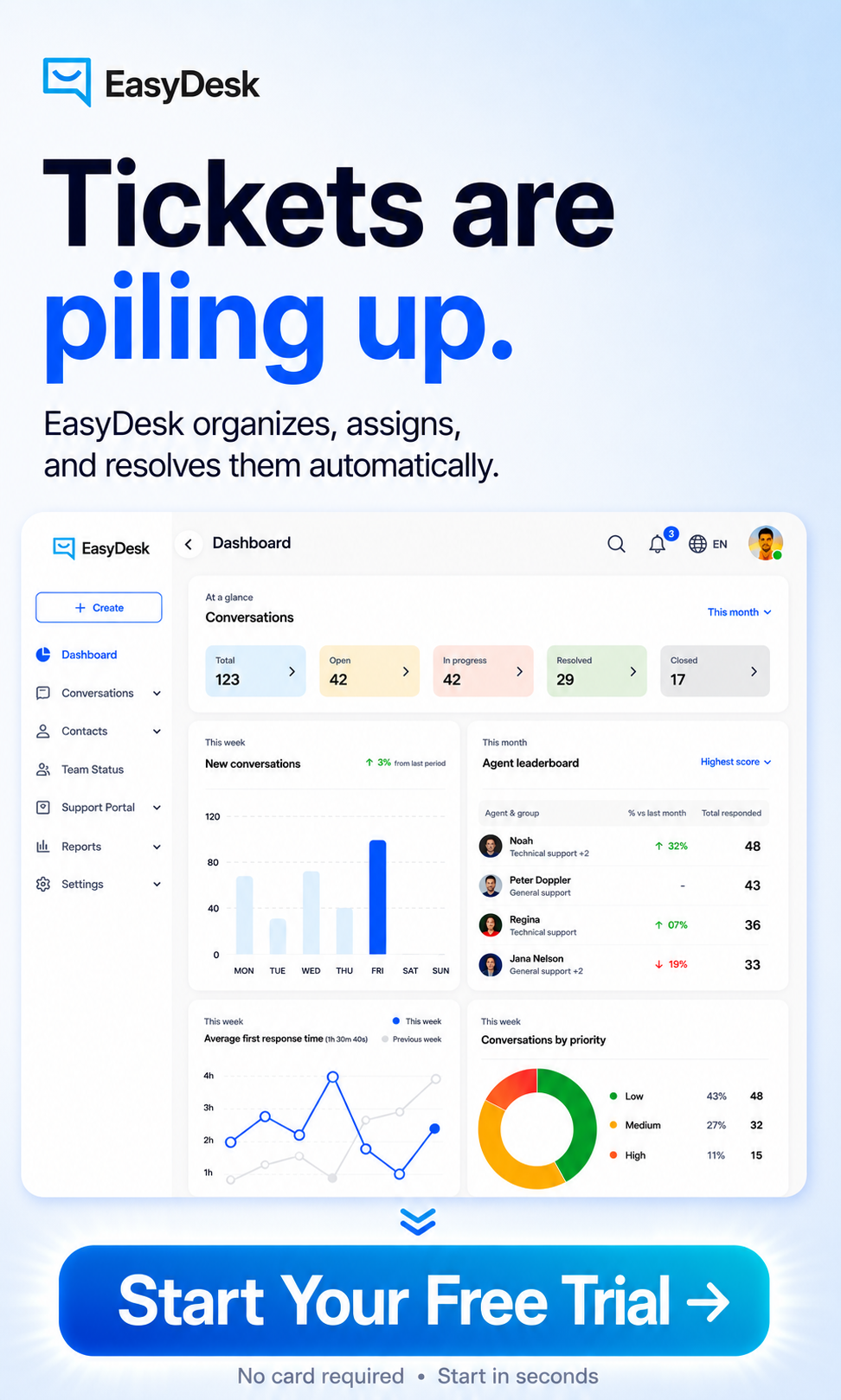
EasyDesk enables real-time collaboration by allowing all incoming requests, whether from email, chat, or forms, to flow directly into one central workspace. This makes it much simpler for teams to cover shifts and maintain continuity during busy or unpredictable weeks.
Making Inbox Overload Manageable
Winter often brings a wave of emails and messages, from shipping questions to refund requests to login issues. And if we're short on hands, those messages pile up fast. This is where converting everything into tickets starts to matter.
A ticketing system can pull incoming emails, form submissions, and live chat messages into one tidy list. Now we’re not jumping between tabs or missing a customer message locked in someone’s inbox. It’s all collected in one spot.
From there, we add tags or categories to group requests. That means returns can go in one bucket, orders into another, and technical problems into a third. With things sorted by topic or urgency, we work more efficiently and cut down on delays.
EasyDesk supports custom ticket tags and queue management, so teams can quickly categorize and prioritize winter support requests, making spikes easier to handle and track.
Saving Time With Smart Shortcuts
When things get busy, typing the same answers over and over gets tiring and time-wasting. Shortcuts and automations give us back some of that time so we can focus on helping instead of copy-pasting answers.
A few things make a difference right away:
- Ready-made templates for common questions like password resets or shipping delays
- Rules that route tickets to the right person or tag based on keywords
- Set responses or acknowledgments that go out as soon as a customer message comes in
When the system handles those little steps, we get a bit more breathing room. Every minute saved makes space for the harder requests that need extra care.
EasyDesk includes automation features for instant ticket assignment, templated replies, and time-saving triggers, helping small teams respond promptly even as volumes climb.
Keeping Quality High Without the Headcount
Being short-staffed doesn’t mean service takes a hit. It just means we have to work smarter. Tools inside our system help keep answers consistent no matter who’s replying.
When someone’s answering a ticket, they can see the full timeline of past replies, internal notes, and current status. If the last agent added a quick recap or update before logging off, the next person can grab the thread and pick it up without guessing.
These little details matter when tickets come back around later or when a shift changes mid-conversation. They help the customer feel heard and help us avoid sending the same question twice or missing a step. Less confusion means better service, even with fewer hands.
Planning Ahead With Better Info
Once the season slows down, it helps to look back at how things went, especially if certain problems came up more than once. A good system tracks all of that without us needing to dig for it.
By reviewing reports or ticket activity logs, we get a better picture of where things got stuck. We can see which days had the longest wait times, which categories spiked, or whether one request kept reappearing. That info helps us know where to fix things before the next busy period.
Instead of guessing, we have clear reminders of what the winter rush felt like in real time. It’s the kind of insight we can apply when setting schedules, updating help content, or adding new workflows that fix nagging slowdowns.
A Steady Support System for Winter Workdays
Winter keeps support teams on their toes. Fewer people, more requests, tighter deadlines. But that doesn’t mean things have to feel chaotic. With the right structure, we don’t lose sight of what matters.
A ticketing system lets us respond faster, stay organized, and keep track of messages that would otherwise slip through. When everyone’s tools connect and the process is clear, small teams can keep pace even on the busiest days. That steadiness helps us show up for our customers, no matter what the weather’s like outside.
At EasyDesk, we know how much smoother winter support can run when the right structure is already in place. When emails, chats, and form requests all flow into one shared workspace, teams spend less time juggling and more time helping. A thoughtful setup makes a real difference, especially when handling a higher volume of requests with fewer teammates available. See how a ticketing system can help keep your support team calm and coordinated, even in the busy season. We’re here to answer your questions, just reach out to us.