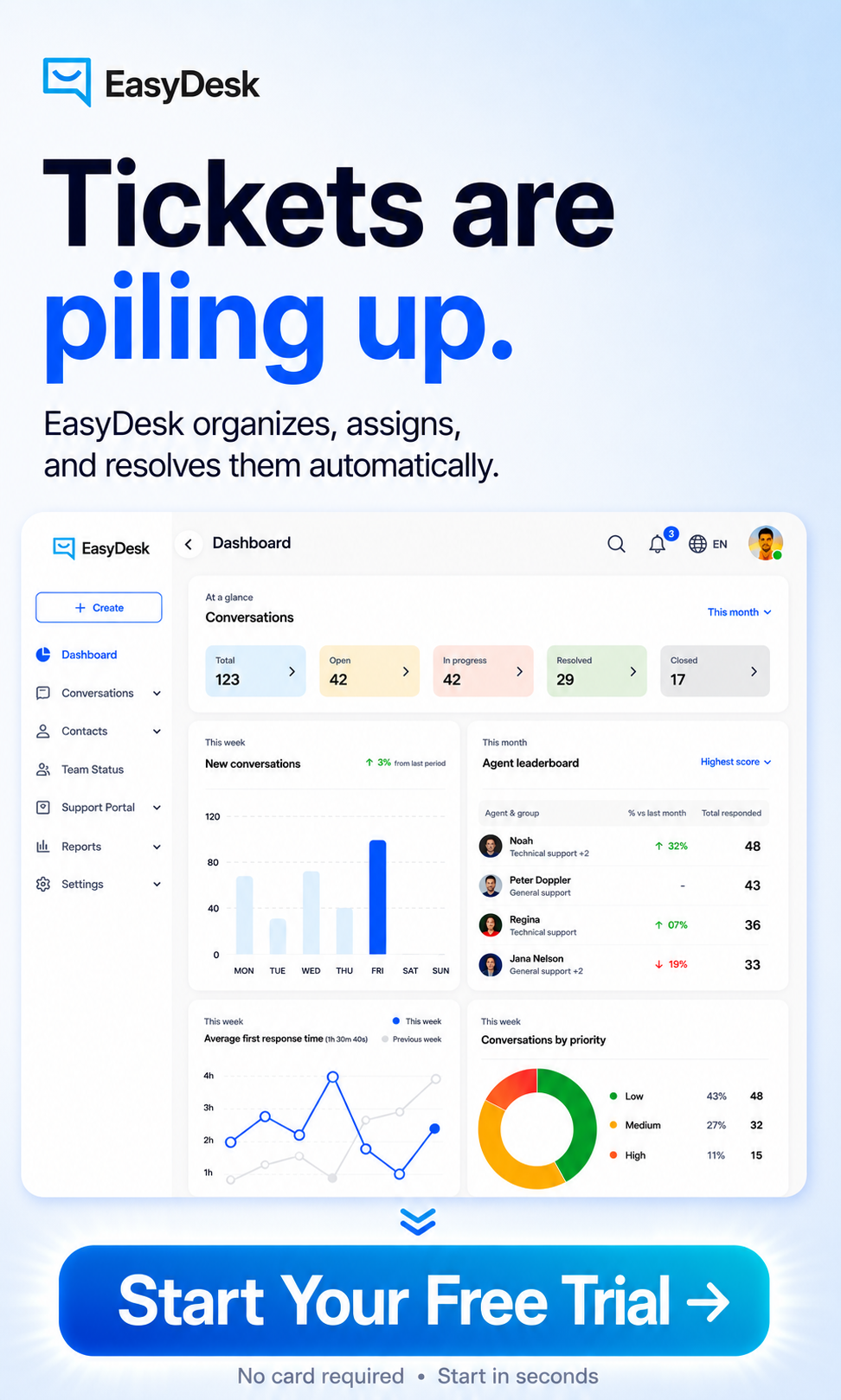
Managing customer support tickets can quickly become overwhelming when requests come from multiple channels and teams are juggling priorities. Without a structured system, important issues get delayed, conversations are lost, and customer experience suffers. EasyDesk helps support teams bring order to this chaos by turning every customer request into a trackable, manageable ticket.
With a centralized workspace, EasyDesk allows teams to receive, organize, assign, and resolve support tickets efficiently from one place. From the moment a ticket is created to the time it is resolved, EasyDesk provides the tools needed to stay organized, respond faster, and maintain consistent communication with customers. In this guide, we will explore how to manage support tickets effectively using EasyDesk and build a smoother support workflow.
What is EasyDesk?
EasyDesk is a customer support and ticket management platform that helps teams handle support requests in an organized way. It brings all customer conversations into one place, so nothing gets missed.
When a customer reaches out, EasyDesk turns that message into a ticket. Teams can view it, assign it, respond to it, and track its progress from start to finish. This makes daily support work easier and more predictable.
EasyDesk is built for startups, growing businesses, and support teams that want a clean and practical system. It works well for teams that manage support through multiple channels and need better visibility into their workload.
The platform focuses on simplicity, speed, and clarity. By keeping tickets structured and easy to manage, EasyDesk helps teams respond faster, stay organized, and deliver a better support experience for their customers.
What Are The Most Common Challenges Of Ticket Management?
Managing support tickets looks simply, but teams often face hidden problems that slow responses, confuse agents, and frustrate customers. These issues grow quickly without the right structure, clear ownership, and consistent processes across growing teams.
Tickets Getting Lost or Overlooked
One of the most common problems in ticket management is tickets slipping through the cracks. This usually happens when requests come from multiple channels and are not properly tracked. Without a clear system to capture and monitor every ticket, some issues stay open without follow ups. Customers then feel ignored, even when the support team is busy working on other requests. Over time, missed tickets damage trust and increase repeat messages.
Unclear Ownership of Tickets
When it is not clear who owns a ticket, progress slows down fast. Agents may assume someone else is handling the issue, or tickets may be passed around without real action. This creates delays and frustration inside the team. Clear ownership is critical, so every ticket has a responsible person pushing it toward resolution.
Poor Ticket Prioritization
Not all tickets are equally urgent, but many teams struggle to separate critical issues from routine questions. When everything feels important, agents may work on tickets in the order they appear instead of based on impact. This can leave high priority issues unresolved for too long and cause serious customer dissatisfaction.
Too Much Manual Work
Manual ticket handling takes time and energy. Assigning tickets one by one, writing the same responses repeatedly, and updating statuses manually slows teams down. As ticket volume grows, this workload becomes harder to manage. Agents spend more time on repetitive tasks and less time solving real customer problems.
Inconsistent Communication with Customers
Customers expect updates, even if their issue is still being worked on. A common issue in ticket management is failing to keep customers informed. When there are long gaps without responses or status updates, customers may feel forgotten. This often leads to follow up messages that increase ticket volume and create unnecessary pressure on the support team.
Overcomplicated Ticket Structures
Some teams create too many categories, tags, and rules to stay organized. Instead, this adds confusion. Agents may not know which options to choose, and tickets become harder to search or filter. Overcomplicated setups slow down daily work and make onboarding new team members more difficult in the modern companies.
Lack of Visibility Into Performance
Without clear visibility into ticket volume, response times, and resolution trends, teams struggle to improve. Managers may not know where bottlenecks exist, or which issues appear most often. This lack of insight makes it hard to adjust workflows, plan resources, or set realistic expectations for customers and internal teams.
How EasyDesk Manage Support Tickets Efficiently?
EasyDesk helps teams stay in control by keeping tickets organized, visible, and easy to work on without adding unnecessary complexity to daily support tasks.
Centralized Ticket Management Brings Clarity
EasyDesk keeps all support requests in one shared space. Every customer message becomes a ticket that is easy to track from start to finish. Agents do not need to search through inboxes or tools to find information. Everything related to a request life inside the ticket.
This clarity removes confusion. Agents instantly know which tickets are open, which ones are assigned, and which are already resolved. Managers get a clear picture of workload without asking for updates. When visibility improves, accountability follows naturally and fewer tickets are forgotten or delayed.
Automation Handles the Busy Work
Support teams spend a surprising amount of time on small repetitive actions. Assigning tickets, adding tags, and sending initial responses all take effort when done manually. EasyDesk reduces this load by letting teams set simple automation rules.
Once rules are in place, tickets flow to the right people without extra steps. Common requests can be categorized automatically, and customers receive timely acknowledgments without waiting. This keeps queues moving and allows agents to focus on solving problems instead of managing the system itself.
SLA Tracking Keeps Priorities Clear
When everything feels urgent, teams struggle to decide what to work on first. EasyDesk helps by making service deadlines visible. SLA tracking shows how much time remains to respond or resolve each ticket, so agents can act with confidence.
This visibility changes how teams work. Instead of guessing, agents focus on tickets that need attention now. Managers can step in before deadlines are missed. Over time, meeting response commitments becomes part of the routine, not a constant source of stress.
Canned Responses Save Time Without Losing Tone
Support work often includes answering the same questions again.EasyDesk makes this easier with canned responses that give agents a strong starting point. These replies can be edited before sending, so conversations still feel personal.
Using canned responses keeps replies consistent and accurate. It also helps new agents get up to speed faster. Instead of worrying about wording, they can focus on understanding the issue and helping the customer move forward.
Multi-Channel Support Keeps Context Together
Customers do not always stick to one channel. They might send an email, then follow up through chat later. EasyDesk keeps all those messages connected to the same ticket, so the full conversation stays in one place.
This prevents awkward back and forth. Agents see the entire history and do not ask customers to repeat themselves. Responses feel informed and thoughtful, which builds trust and reduces frustration on both sides.
Filters and Views Help Teams Focus
As ticket volume increases, a long list of requests can feel overwhelming. EasyDesk gives agents tools to narrow their focus using filters, tags, and saved views. Each agent can work from a view that matches their role.
This keeps work organized and manageable. Agents spend less time searching and more time solving. Managers can also use views to spot bottlenecks and balance workloads across the team.
Feedback Tied to Tickets Drives Improvement
Customer feedback is most useful when it is connected to real support experiences. EasyDesk allows teams to capture feedback alongside tickets, keeping it close to the conversations that generated it.
Over time, patterns start to emerge. Teams can see which issues come up most often and where customers struggle. This insight helps support teams share meaningful input with other teams and improve processes based on real customer needs, not assumptions.
How Can You Simply Migrate to EasyDesk?
Switching to a new support platform can feel stressful, especially when active tickets, customer history, and team workflows are involved. EasyDesk makes migration manageable by keeping the process structured and easy to follow.
Moving Support Mailboxes Without Disruption
The first step in migrating to EasyDesk is connecting your existing support mailboxes. Once connected, incoming emails automatically become tickets inside EasyDesk. Customers continue using the same email addresses, so there is no confusion on their end.
Teams can test the setup before going live to make sure replies, ticket creation, and notifications work as expected. This ensures support continues smoothly while the team adjusts to the new system.
Bringing Historical Tickets Into EasyDesk
Past tickets hold valuable context. They show previous issues, resolutions, and customer preferences. Migrating historical tickets into EasyDesk helps teams keep that information accessible.
With older conversations available, agents can respond with better understanding instead of asking customers to repeat themselves. Managers also benefit by maintaining visibility into long term support trends and performance data.
Preparing and Onboarding Support Agents
Onboarding agents is about more than teaching clicks and buttons. EasyDesk’s clean interface helps agents feel comfortable quickly, but clear processes make the biggest difference.
Start by assigning a small number of tickets so agents can learn the workflow naturally. Encourage the use of ticket statuses, internal notes, and ownership rules from the beginning. This builds consistency across the team.
Training Through Real Scenarios
Training works best when it reflects real support situations. Walking agents through common ticket types helps them understand how to respond, escalate, and close tickets properly.
Short training sessions combined with hands on practice help agents build confidence. As the team gets comfortable, workflows and automation can be adjusted to match real support needs. This approach keeps the transition smooth and sets the foundation for long term success in EasyDesk.
How To Optimize EasyDesk for Better Performance?
Optimizing EasyDesk is less about complex configuration and more about setting it up in a way that supports how your team works. Small improvements in structure, visibility, and habits can make a big difference in daily performance.
Set Clear Ticket Categories and Priorities
A clean ticket structure is the foundation of good performance. Start by defining a simple set of categories and priority levels that match real support scenarios. Avoid creating too many labels or priorities, as this often causes confusion instead of clarity.
When tickets are categorized properly, agents know what needs attention first. Managers can also spot patterns faster and understand where most support effort goes. Clear categories make reporting more useful and reduce time wasted deciding what to work on next.
Use Automation Where It Truly Helps
Automation works best when it supports the team instead of replacing judgment. In EasyDesk, use automation rules for tasks that happen repeatedly, such as assigning tickets to the right group or applying tags based on keywords.
This removes unnecessary manual work and keeps tickets moving smoothly. At the same time, avoid overloading the system with too many rules. Simple automation that reflects real workflows improves speed without making ticket handling feel rigid or impersonal.
Keep SLAs Visible and Realistic
SLAs help teams stay focused, but only when they are realistic and visible. Review your response and resolution targets and adjust them to match actual capacity. Unrealistic SLAs create pressure without improving outcomes.
In EasyDesk, monitoring SLA progress helps agents manage time better. Tickets that need urgent attention stand out, which reduces missed deadlines. When SLAs align with real workloads, teams stay consistent and customers receive more reliable support.
Build and Maintain Useful Canned Responses
Canned responses are most effective when they are well written and regularly updated. Review common questions and create responses that are clear, friendly, and easy to adjust before sending.
Encourage agents to personalize replies slightly instead of sending them as is. This keeps communication human while still saving time. Over time, refining canned responses improves response speed and ensures customers receive accurate information every time.
Organize Work with Filters and Views
As ticket volume grows, a single long list becomes hard to manage. EasyDesk filters and views help agents focus on the tickets that matter to them. Each agent or team can work from a view tailored to their responsibilities.
This reduces distractions and helps agents move through tickets more efficiently. Managers can also use views to monitor backlogs, spot delays, and balance workloads across the team. Good organization leads to smoother daily operations.
Review Feedback and Ticket Trends Regularly
Performance improves when teams learn from real data. Use ticket history and customer feedback to identify recurring issues and bottlenecks. Look for patterns such as repeated questions or delays in certain categories.
When insights are shared with the team, workflows can be adjusted to prevent the same issues from appearing again. Optimization is not a onetime setup task. Regular reviews help EasyDesk continue supporting the team as needs evolve.
FAQs
What is EasyDesk used for?
EasyDesk is used to manage customer support tickets in one place. It helps teams receive, organize, assign, and resolve support requests efficiently without relying on scattered inboxes or tools.
Can EasyDesk handle tickets from multiple channels?
Yes. EasyDesk collects support requests from connected channels into a single ticketing system. This keeps conversations organized and prevents important messages from being missed.
Is EasyDesk suitable for small teams?
EasyDesk works well for small and growing teams. Its simple interface and flexible setup make it easy to start without heavy configuration or long training sessions.
How does EasyDesk help reduce response time?
EasyDesk improves response time through ticket visibility, automation, and canned responses. Agents can quickly see what needs attention and respond without unnecessary manual steps.
Can teams track response and resolution time in EasyDesk?
Yes. EasyDesk supports SLA tracking so teams can monitor response and resolution targets. It also helps agents stay on schedule and maintain consistent service levels.
Does EasyDesk support team collaboration?
EasyDesk allows agents to collaborate using shared tickets and internal notes. This helps teams work together on complex issues without confusing the customer.
How long does it take to get started with EasyDesk?
Most teams can start using EasyDesk quickly. After connecting support inboxes and setting basic workflows, agents can begin handling tickets with minimal onboarding time.