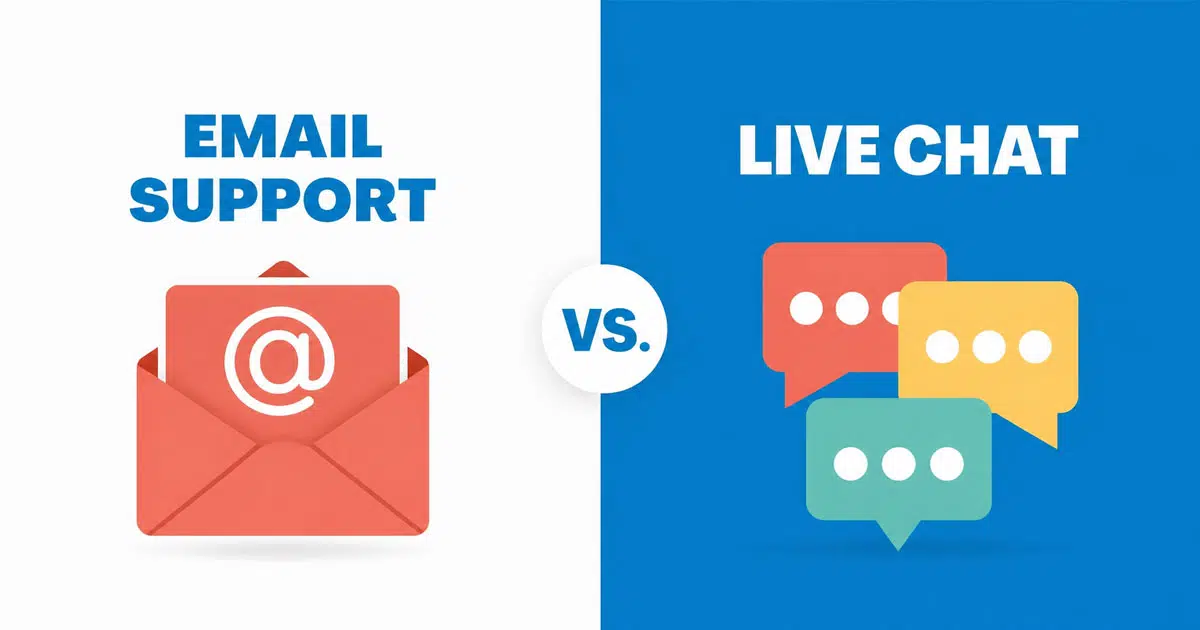
Choosing the right way to support customers matters more than ever as businesses compete in a fast-moving world. Companies now rely on a mix of customer service channels, but the debate around live chat vs email support continues to grow.
Customers expect faster help, clear communication, and a smooth overall experience, and each channel offers its own strengths. Live chat delivers real-time convenience, while email provides thoughtful, documented replies.
Understanding how these two compare helps a business decide which option aligns with customer needs and long-term goals. This guide breaks down the advantages, limitations, and ideal use cases to help companies make smarter support decisions and improve how they serve customers.
What Is Live Chat Support?
Live chat support allows customers to connect with a support team through a real time communication window on a website or app. It works through chat platforms that enable online chat and instant messaging between a customer and a live chat agent. Unlike slower channels, live chat creates a quick, uninterrupted chat thread where questions and issues get addressed immediately. The goal is to provide fast, convenient help without forcing a customer to wait or switch channels. Live chat gives businesses a flexible way to guide users, answer questions, and resolve concerns as they happen. This makes live chat support one of the most preferred options for customers who value speed, clarity, and smooth digital interaction.
What Is Email Support?
Email support is a customer service method where users send questions or issues through an email provider, allowing the support team to reply with clear, structured information. This channel is ideal when customers need detailed explanations or when the issue requires attachments, screenshots, or step-by-step guidance. Each message creates a reliable paper trail, which helps both sides track progress and refer back to previous communication. Customers simply write from their account, include their address and contact details, and wait for a response within the expected timeframe. Email support remains a dependable option for businesses handling complex cases, formal requests, or situations that benefit from thoughtful, well-documented resolutions.
Key Comparison Table: Live Chat vs Email Support
| Key Points | Live Chat | Email Support |
| Primary Communication Channel | A real-time communication channel where customers interact instantly through a chat window on a website or app. | An asynchronous communication channel where customers send messages and wait for replies through their inbox. |
| Response Time | Delivers immediate response time because agents reply live during the conversation. | Offers slower response time, as replies depend on queue length, workload, and internal support SLAs. |
| Service Levels | Provides higher service levels for quick issues because agents engage instantly and guide customers step by step. | Supports structured service levels suited for complex cases that need detailed, thoughtful responses. |
| Communication Tool | Uses a communication tool designed for live typing, quick prompts, and fast clarification. | Uses a traditional communication tool—email—ideal for longer explanations and documented threads. |
| Channels Used | Works smoothly across digital channels like websites, mobile apps, and in-product widgets. | Accessible across email channels on any device, making it easy to send or check messages at any time. |
Key Differences Between Live Chat & Email Support
A clear comparison of core functions helps companies understand how each support channel shapes customer experience. Below are five distinct differences, explained under separate topics.
1. Immediate Responses vs Structured Response Time
Live chat provides immediate responses because the interaction happens in real time. Customers type a question and see a reply appear almost instantly, creating a fast, uninterrupted flow. This speed reduces uncertainty and keeps the conversation focused on the issue. Email support works differently. Messages enter a queue, and each response follows a structured timeline set by internal processes or SLAs. Customers understand there will be a gap between sending and receiving a reply. This slower pace is acceptable for complex matters but feels limiting for users who expect fast clarity. The difference in response timing heavily influences how customers perceive service quality.
2. Immediate Feedback vs Step-By-Step Clarification
Live chat enables immediate feedback because both sides actively exchange short messages. If a customer misunderstands a step or instruction, the agent can correct it instantly. This fast adjustment process helps maintain accuracy throughout the conversation. Email relies on longer, more detailed replies that aim to cover every possible angle in a single message. The agent explains the issue, the solution, and extra steps the customer might need. If clarification is required, another message is sent, restarting the waiting cycle. Live chat thrives on rapid back-and-forth, while email excels at structured, comprehensive information delivery.
3. Fast Resolution Of Simple Questions vs Deep Handling Of Detailed Explanations
Live chat is ideal for resolving simple questions such as login issues, basic navigation, or quick troubleshooting. Real-time replies shorten the path to a solution and prevent the customer from getting stuck. Email support becomes more effective when a situation requires detailed explanations, attachments, or long messages. Customers can include screenshots, logs, order details, or multiple points in one email. The support team then reviews everything thoughtfully before responding. The nature of the issue determines which support channel delivers better results—speed favors chat, detail favors email.
4. Best For Urgent Matters vs Best For Non-Urgent Communication
Live chat is designed for urgent matters because it connects a customer to an agent instantly. Situations like payment errors, failed account actions, or time-sensitive setup issues need immediate attention to prevent escalation. The customer gains reassurance and quick guidance at critical moments. Email support fits non-urgent communication where timing is less critical. Customers can send information at their convenience and wait for a considered reply. Businesses also prefer email for matters requiring internal reviews, approvals, or coordinated responses. Each channel supports a distinct pace that aligns with different levels of urgency.
5. Quick Help For One Topic vs Clear Communication For Multi-Step Queries
Live chat works best when customers need quick help for one topic at a time. The real-time format keeps the conversation concise and targeted, making it easy to answer a single question and move forward. Email support handles multi-step queries more effectively because the customer can lay out all details in a single message. The agent can read through everything, analyze the context, and craft a comprehensive reply. This structure prevents confusion and ensures the customer receives a complete, well-organized solution. Each method excels at a different communication style, and choosing the right one improves overall support quality.
Common Features Of Live Chat & Email Support
Live chat and email support share several important qualities that make them reliable options for customer communication. Both channels help customers connect with a support team in a way that feels comfortable and easy to access. Each platform is designed to deliver helpful service by allowing a customer to speak with a trained person who understands their issues and guides them toward a solution. Whether through quick exchanges or structured messages, both methods collect valuable feedback that helps a business improve the way it supports users.
Another shared feature is the availability of chat histories or message records. These stored conversations make it easier for agents to review previous interactions and stay consistent across every tool used in the support process. Customers benefit from this continuity because they do not need to repeat information, and agents can address concerns faster with a clear understanding of past communication. Both methods rely on a platform that centralizes messages, assigns cases, and ensures nothing is missed.
Live chat and email also offer flexible access, allowing customers to reach out from computers, tablets, or phones. This versatility ensures customers can choose whatever method feels natural in the moment. Both allow the support team to provide accurate information, calm frustration, and speak in a tone that matches the customer's needs. While the pace and style differ, both channels share the same purpose: to deliver dependable service, maintain strong communication, and build trust between a customer and the business.
When To Use Live Chat
Live chat becomes the right channel whenever a customer needs fast clarity, real-time guidance, or a smoother digital experience. The format creates a sense of support that feels direct and reassuring.
Live chat works best when customers prefer live chat during moments that require immediate attention. It helps engage customers quickly because the agent joins the conversation at the exact moment the issue appears. This makes the interaction feel natural and builds a human connection without forcing the customer to switch platforms or wait for a reply.
Live chat is also ideal when an agent must manage multiple chats at the same time. Unlike phone calls, where one person handles only one conversation, a live chat setup allows the support team to balance several active customers efficiently. This increases speed across the board and keeps simple questions moving without delay.
Live chat becomes the strongest option when a situation feels urgent but does not require a quick call. Customers appreciate the ability to avoid phone calls while still receiving real-time guidance. The instant nature of chat suits problems like billing confusion, product setup help, minor errors, or navigation issues, where timing matters but the customer does not want to speak on the phone.
Live chat also works well when the goal is to guide a customer through a small task or single-screen action. It provides the right channel for moments where immediate reassurance prevents frustration. The simplicity, speed, and clarity of live chat help both the team and the customer move forward confidently.
When To Use Email Support
Email support becomes the better choice when a customer’s issue needs careful review, organized details, or supporting material such as screenshots, documents, or long explanations. It works well alongside phone and email support systems because it creates a structured space for slower, more thoughtful communication. Customers often prefer this format for topics that require clarity rather than urgency, and it also helps agents maintain a clean, trackable record of every conversation.
Email shines when phone support is not practical. Some customers want to avoid phone calls due to time constraints, quiet environments, or personal preference. Others face a language barrier that makes written communication easier than speaking directly. In these situations, email gives them the freedom to write clearly, check their words, and explain the issue in a way that feels comfortable.
Email support also fits naturally into a broader marketing strategy. Every message sent becomes part of a customer’s history, helping the business understand patterns, improve communication, and create long-term relationships through consistent follow-up. This archive of information is valuable for improving service quality and identifying areas where customers struggle most.
Email becomes the preferred choice when an issue needs step-by-step analysis, multiple checks, or internal reviews before resolving. It also works well when a customer wants formal documentation of a promise, agreement, or troubleshooting path. By allowing both sides to communicate clearly and thoughtfully, email support provides a dependable channel for handling complex, detailed, or sensitive matters without the pressure of real-time replies.
How To Use Both Live Chat & Email Support Effectively?
A combined approach helps a business deliver faster resolutions, deeper explanations, and smoother interactions. Using both channels strategically strengthens the customer experience and supports long-term gains in customer satisfaction.
Blend Real-Time Help With Detailed Follow-Ups
Live chat gives the customer service team a fast way to handle small questions or quick fixes. A human agent steps in instantly and clears confusion before it grows. Email becomes useful when the same issue needs detailed clarification. A customer service representative can send step-by-step instructions, attach files, or recap everything clearly. This blend ensures one customer gets the exact type of support needed at each stage.
Route Issues To The Channel That Fits Best
Smaller or time-sensitive questions fit naturally into live chat, while deeper problems move to email. This routing approach helps the team focus on the right tasks without overwhelming any channel. Customers feel guided instead of redirected. When the team labels issues properly, both live chat and email contribute to a smoother service flow.
Keep Communication Consistent Across Both Channels
A consistent tone, clear explanations, and unified messaging help increase customer satisfaction. Whether a customer speaks through chat or email, the service quality should feel the same. A shared knowledge base, prepared responses, and internal notes keep the support team aligned. Customers notice consistency quickly, and it strengthens trust across every interaction.
Use Both Channels To Support Sales And Long-Term Value
Live chat helps drive sales by answering pre-purchase questions in real time, while email supports long-term nurturing through helpful follow-ups. One customer may start in chat for quick clarity and continue in email for deeper details. This combination keeps the sales process smooth and removes friction that might block a purchase. Each channel plays a role in guiding customers toward confident decisions.
Build A Team Structure That Strengthens Performance
A strong team strategy ensures both live chat and email operate effectively. The customer service team should know when to choose each channel, how to escalate a problem, and how to track progress. Training helps every customer service representative understand the customer’s journey across multiple touchpoints. When the team coordinates well, both channels improve overall service, support better focus, and elevate the customer experience through clear communication and dependable follow-through.
How EasyDesk Improves Live Chat And Email Support Together
EasyDesk helps companies deliver stronger, faster, and more organized customer service by bringing both live chat and email into one unified platform. Its live chat tool gives customers the ability to communicate instantly, ask questions in real time, and receive clear guidance without switching screens. This immediate support helps reduce confusion, improves resolution speed, and creates a smoother experience for customers who expect quick answers.
EasyDesk also strengthens email support by organizing messages, tracking conversations, and keeping every thread visible to the team. This structure ensures that no issue gets lost and every customer receives a well-prepared reply. By combining both channels inside the same desk software, EasyDesk eliminates the gaps that happen when teams juggle multiple systems.
Cost efficiency becomes another benefit. The live chat cost stays manageable because EasyDesk lets companies scale at their own pace. Teams can handle more conversations without increasing workload, and email remains available for issues that need deeper explanation. This balance makes support operations more sustainable.
The platform also connects seamlessly with other channels, giving customers the freedom to choose how they want to reach the team. Whether they need fast chat support or a detailed email reply, EasyDesk ensures the business can serve them with clarity and consistency.
By improving communication, organizing workflows, and simplifying the support process, EasyDesk helps build stronger customer loyalty and ensures every interaction feels smooth, helpful, and well-managed.
FAQs
What Is The Main Difference Between Live Chat And Email Support?
The main difference lies in speed and communication style. Live chat gives customers real-time responses through a chat window, making it ideal for quick questions or urgent concerns. Email support works through asynchronous messaging, where customers send details and receive a structured reply later. This makes email better for lengthy explanations, attachments, and issues requiring deeper investigation.
Which Support Channel Works Best For Urgent Issues?
Live chat is the best option for urgent issues because customers receive immediate assistance from an agent. It helps reduce stress, prevents delays, and resolves problems before they escalate. Email, while reliable, introduces natural waiting time and is not ideal for situations requiring instant action.
When Should A Business Use Email Instead Of Live Chat?
A business should use email for cases needing detailed descriptions, multiple steps, legal or formal communication, or when the customer must attach files. Email also helps when an agent needs time to research a solution thoroughly without the pressure of responding in real time.
Does Live Chat Improve Customer Satisfaction?
Yes, live chat significantly boosts satisfaction because customers get quick answers and don’t need to switch channels. The convenience and speed create a smooth experience, especially for simple or time-sensitive questions. This immediacy builds trust and reduces frustration across the support journey.
Can A Business Use Both Live Chat And Email Together?
Absolutely. Using both provides balance. Live chat tohandles instant questions, while email manages complex requests. Together, they create a seamless support experience that adapts to different customer needs.