Customer support productivity directly shapes customer satisfaction, customer loyalty, and the overall customer experience across most organizations. Modern customer support teams manage growing volumes of customer inquiries across different channels while customer expectations continue to rise.
Customer support agents and customer service agents handle customer interaction, complex issues, post-call tasks, and new processes inside contact centers every day. Strong customer service productivity improves first call resolution, response times, resolution rates, and customer satisfaction scores. Easy access to customer data, customer profiles, knowledge base content, and self-service options allows agents to deliver exceptional customer service with higher productivity.
AI-powered tools, automated responses, and real-time collaboration reduce the time agents spend on common tasks. A positive work environment, continuous learning, training programs, and skill development improve agent engagement, work-life balance, and agent performance while reducing agent burnout and driving overall productivity.
What Is Customer Support Productivity
Customer support productivity refers to how effectively a customer support team handles customer inquiries while maintaining high customer satisfaction and a strong customer experience. It measures how well customer support agents and customer service agents use time, customer data, and tools to resolve customer issues across different channels. High customer service productivity means faster response times, improved first call resolution, better resolution rates, and consistent customer interaction that builds customer loyalty.
Customer support productivity also reflects agent productivity, agent performance, and overall efficiency inside contact centers. Easy access to customer profiles, a comprehensive knowledge base, self-service options, and ai powered tools allows agents to handle complex issues with confidence. Automated responses, clear key performance indicators, and continuous improvement help most organizations increase productivity, empower agents, and deliver outstanding customer experiences at scale.
Key Metrics Of Customer Support Productivity
Clear metrics provide a factual view of customer support productivity and help organizations align daily support operations with customer expectations and business goals. These key customer support metrics reveal how customer support teams, agents, and processes perform across multiple channels and customer interaction points.
First Call Resolution
First call resolution measures how often customer issues reach a solution during the first interaction without follow-ups. High first call resolution improves customer satisfaction, customer loyalty, and overall customer experience. Customer support agents with strong product knowledge, easy access to customer data, and a reliable knowledge base resolve issues faster and with more confidence.
Low first call resolution often signals gaps in training programs, unclear processes, or limited self-service options. Contact centers that track this metric identify areas where support agents need better tools, clearer customer profiles, or stronger collaboration. Better first call resolution reduces repeat calls, lowers agent burnout, and supports higher overall productivity.
Average Response Time
Average response time tracks how quickly customers receive an initial reply after customers reach out through different channels. Faster response times improve customer satisfaction scores and shape positive first impressions during customer interaction. Customer support teams that use automated responses and ai powered tools reduce delays without sacrificing service quality.
Long response times often indicate workflow issues, uneven agent engagement, or inefficient task distribution. Clear expectations, real-time collaboration, and easy access to customer inquiries help agents respond promptly. Shorter response times increase operational efficiency and support higher customer service productivity across contact centers.
Average Resolution Time
Average resolution time measures how long agents take to fully resolve customer issues from start to finish. Shorter resolution times reflect strong agent productivity, effective processes, and clear customer data access. Customer support productivity improves when agents avoid unnecessary post-call tasks and manual work.
Long resolution times may signal complex issues, poor documentation, or limited self-service portal usage. Organizations that invest in training programs, knowledge base improvements, and task automation reduce resolution delays. Lower average duration helps teams increase productivity while maintaining outstanding customer experiences.
Ticket Volume Per Agent
Ticket volume per agent shows how many customer inquiries each agent handles within a defined period. Balanced ticket volume supports agent performance, work-life balance, and a more positive work environment. High volume with stable resolution rates often reflects strong agent productivity and effective workflows.
Unbalanced ticket volume can lead to agent burnout and declining customer satisfaction. Support leaders use this metric to distribute workloads fairly and empower agents with better tools. Proper volume management helps improve productivity without sacrificing service quality or agent engagement.
Customer Satisfaction Score
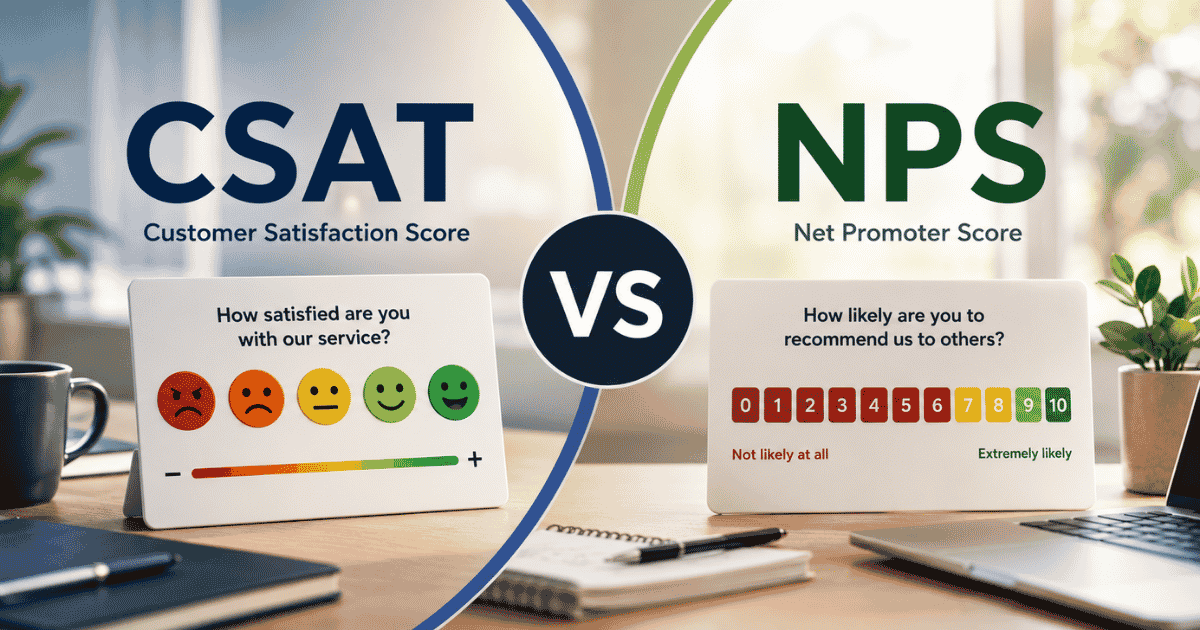
Customer satisfaction score captures how customers feel after interacting with the customer support team. High scores indicate exceptional customer service, clear communication, and successful issue resolution. Customer interaction leaves a lasting impression that directly impacts customer loyalty and brand trust.
Low satisfaction scores highlight gaps in agent performance, response times, or resolution quality. Customer support teams analyze this metric alongside customer feedback management and key performance indicators. Consistent improvement in satisfaction scores signals higher productivity and stronger alignment with the organization’s objectives.
Agent Utilization Rate
Agent utilization rate measures how effectively time agents spend on customer interaction versus idle or administrative tasks. Healthy utilization supports overall efficiency and sustainable productivity inside contact centers. Customer support productivity rises when agents focus on common tasks that directly impact customers.
Low utilization often points to inefficient processes or poor task allocation. Automating tasks, improving real-time collaboration, and offering quick access to customer data allow agents to use their time more effectively. Balanced utilization helps increase productivity while maintaining a positive work environment and long-term agent performance.
Common Barriers That Reduce Support Team Productivity
Several operational, technical, and human factors quietly reduce customer support productivity across contact centers. These barriers slow response times, affect agent performance, and limit the ability of customer support teams to deliver exceptional customer service at scale.
Fragmented Customer Data
Fragmented customer data prevents customer support agents from gaining a clear picture of customer issues. When customer profiles remain scattered across systems, agents waste time searching for context instead of resolving customer inquiries. Poor data visibility increases average resolution time and weakens customer interaction quality.
Disconnected customer data also limits first call resolution and frustrates customer service agents. A lack of a comprehensive view reduces agent productivity and affects customer satisfaction scores. Unified customer data allows agents to respond confidently and improves overall efficiency across different channels.
Manual And Repetitive Tasks
Manual processes reduce customer service productivity by pulling time away from high-value customer interaction. Post-call tasks, ticket tagging, and status updates consume valuable time that could support faster resolution rates and better customer experience.
Automating tasks through ai powered tools and automated responses allows agents to focus on complex issues. Fewer repetitive tasks improve agent engagement, reduce agent burnout, and help customer support teams increase productivity without sacrificing service quality.
Limited Self-Service Options
Limited self-service options increase ticket volume and strain customer support teams. Customers often prefer quick solutions through self-service portals, knowledge base articles, or automated responses. Without these options, simple customer issues reach support agents unnecessarily.
Strong self-service options reduce call volume and improve call center agent productivity. Easy access to accurate information allows customers to solve common tasks independently. Support teams gain more time for complex issues, which improves resolution rates and customer satisfaction.
Inadequate Training And Skill Development
Weak training programs limit agent performance and reduce confidence during customer interaction. Customer support agents without proper product knowledge struggle with complex issues and longer resolution times. Inconsistent training creates uneven individual contributions across the support team.
Continuous learning and structured professional development empower agents and improve overall productivity. Skill development strengthens first call resolution and supports higher customer satisfaction. Well-trained agents contribute to a more positive work environment and better long-term performance.
Unclear Processes And Expectations
Unclear workflows and expectations create confusion inside customer support teams. Agents spend extra time clarifying responsibilities instead of handling customer inquiries. Poorly defined processes increase average duration and reduce operational efficiency.
Clear expectations and documented new processes help agents work with confidence. Standardized workflows improve response times and allow agents to meet key performance indicators consistently. Process clarity supports continuous improvement and stronger customer support productivity.
Low Agent Engagement
Low agent engagement affects productivity, customer experience, and service consistency. Disengaged support agents handle fewer calls, show lower resolution rates, and struggle to meet customer expectations. A negative work environment often drives agent burnout and higher turnover.
A collaborative environment, real-time collaboration, and recognition programs improve agent engagement. Empower agents with better tools, clear metrics, and growth opportunities to build a more positive work environment. Higher engagement directly supports increased productivity and better customer outcomes.
Customer Support Productivity Tools And Software Stack
The right software stack plays a central role in customer support productivity by streamlining workflows, improving agent performance, and supporting a consistent customer experience across different channels. Modern tools help customer support teams manage customer inquiries efficiently while aligning daily operations with the organization’s objectives.
Ticket Management Systems
Ticket management systems organize customer inquiries into a structured workflow that improves customer support productivity. Centralized tickets give customer support agents a clear picture of customer issues, ticket priorities, and response timelines. Clear ownership and status visibility help teams maintain strong response times and resolution rates.
Well-configured ticket systems reduce manual follow-ups and post-call tasks. Support agents spend less time switching tools and more time on meaningful customer interaction. Better ticket visibility also improves first call resolution and supports higher overall efficiency inside contact centers.
Knowledge Base Platforms
Knowledge base platforms give support agents quick access to product knowledge, policies, and resolution steps. Easy access to accurate information improves agent productivity and reduces average resolution time. A strong knowledge base also supports consistent answers across different channels.
Self-service options built on the knowledge base reduce ticket volume and improve call center agent productivity. Customers solve common tasks independently, which allows agents to focus on complex issues. Knowledge base usage improves customer satisfaction scores and supports continuous improvement.
Self-Service Portals
Self-service portals empower customers to resolve issues without direct agent involvement. Portals improve customer experience by offering fast solutions while reducing pressure on the customer support team's productivity. Customers reach support less often for repetitive questions.
Strong self-service portals improve operational efficiency and customer service productivity. Reduced inbound volume supports better work-life balance for agents and lowers agent burnout. Portals also improve customer loyalty by meeting modern customer expectations for quick access.
AI-Powered Automation Tools
AI-powered tools support customer support productivity through automated responses, smart routing, and task automation. Automation reduces the time agents spend on repetitive activities and improves average response time. Faster initial replies shape positive customer interaction outcomes.
Automation also helps identify areas for improvement using customer data and key metrics. Support teams gain a comprehensive view of performance trends and resolution quality. AI-driven insights allow organizations to increase productivity while maintaining exceptional customer service standards.
Customer Data And CRM Systems
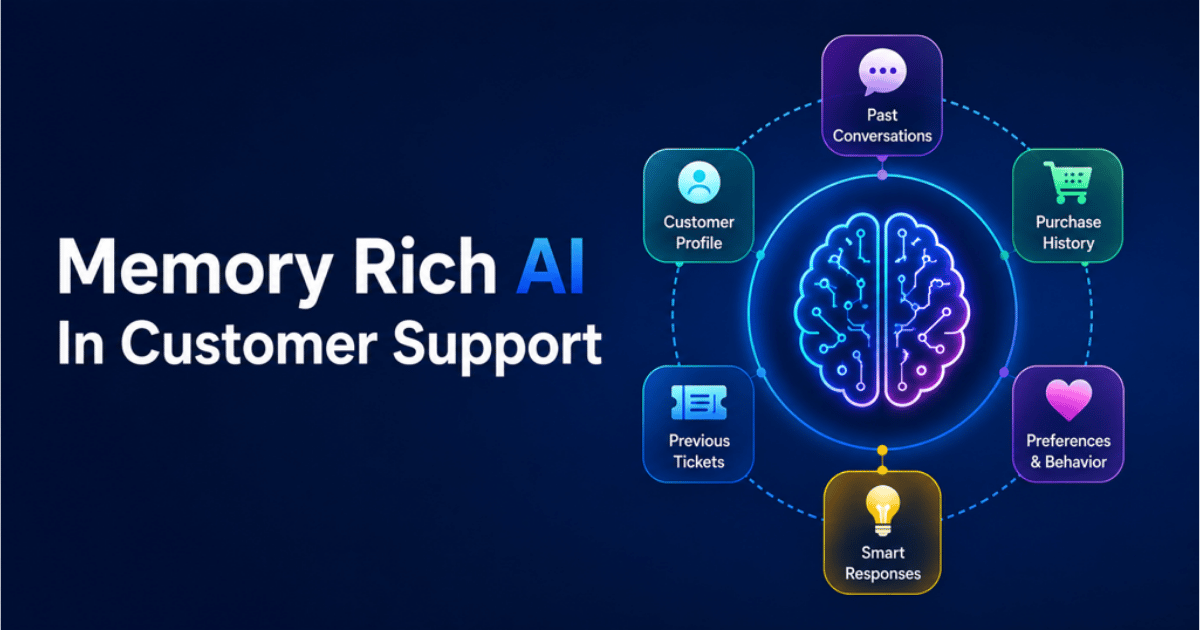
Customer data platforms and CRM systems give agents a unified view of customer profiles, history, and previous interactions. A clear picture of customer context improves agent performance and reduces resolution time. Accurate data supports better decision-making during live interactions.
Integrated customer data improves first call resolution and customer satisfaction. Agents handle customer issues with confidence and consistency. Strong data access supports higher productivity and aligns support operations with broader business goals.
Collaboration And Communication Tools
Collaboration tools support real-time communication across customer support teams. Shared dashboards, internal chat, and escalation workflows improve coordination and reduce delays. Teams resolve customer issues faster through collective knowledge and quick feedback loops.
A collaborative environment improves agent engagement and professional development. Clear communication supports skill development and positive work environment outcomes. Strong collaboration tools improve overall productivity and help support teams deliver outstanding customer experiences at scale.
Customer Support Agent Performance Optimization Best Practices
Agent performance directly influences customer support productivity, customer satisfaction, and overall efficiency across contact centers. Structured best practices help customer support teams improve agent productivity, reduce agent burnout, and deliver a consistent customer experience while meeting key performance indicators.
Clear Performance Expectations
Clear performance expectations give support agents a defined understanding of priorities, quality standards, and response goals. Well-documented key metrics such as first call resolution, average response time, and customer satisfaction scores guide daily work and reduce confusion. Agents perform better when expectations align with the organization’s objectives.
Transparent goals also support fair performance reviews and individual contributions. Agents gain confidence through clarity and accountability. Clear expectations improve agent engagement and support higher overall productivity without unnecessary pressure.
Continuous Training And Skill Development
Strong training programs improve agent performance by strengthening product knowledge and communication skills. Customer support agents with regular training handle customer inquiries more effectively and resolve complex issues with confidence. Continuous learning supports higher resolution rates and better customer interaction outcomes.
Ongoing professional development also improves adaptability to new processes and tools. Skill development reduces errors and improves average duration. Well-trained agents contribute to a positive work environment and long-term customer support productivity.
Access To Real Time Customer Data
Easy access to customer data allows agents to understand customer profiles, history, and context during live interactions. A comprehensive view of customer issues improves decision-making and supports first call resolution. Accurate data reduces repetitive questions and speeds up response times.
Customer data access also improves customer satisfaction and agent confidence. Agents spend less time searching for information and more time solving problems. Better data visibility supports operational efficiency across different channels.
Balanced Workloads And Scheduling
Balanced workloads protect agent productivity and work-life balance. Even distribution of customer inquiries reduces response time and supports consistent performance. Fair scheduling ensures agents maintain focus and energy during customer interaction.
Proper workload planning improves calls handled per agent without sacrificing quality. Balanced schedules also support agent engagement and retention. Healthy workloads lead to higher productivity and better customer experience outcomes.
Regular Performance Feedback
Regular feedback helps agents identify areas for improvement and reinforce positive behaviors. Data-driven feedback based on key performance indicators provides a clear picture of strengths and gaps. Constructive feedback supports continuous improvement and skill development.
Consistent coaching improves agent performance and customer service productivity. Agents feel supported rather than evaluated. Feedback loops strengthen individual contributions and drive higher overall efficiency.
Collaborative Work Environment
A collaborative environment encourages knowledge sharing and peer support among support agents. Real-time collaboration tools help resolve customer issues faster and improve resolution quality. Team collaboration reduces dependency on supervisors and speeds up decision-making.
Collaboration also improves agent engagement and morale. Shared problem-solving builds confidence and professional growth. Strong teamwork supports outstanding customer experiences and sustainable productivity across customer support teams. There are many fantastic guides to customer service etiquette available from business coaches, leaders, and software providers
Customer Support Productivity Improvement Framework
A structured framework helps organizations improve customer support productivity sustainably and measurably. This approach aligns people, processes, and technology to increase agent productivity, strengthen customer experience, and support consistent performance across contact centers.
Goal Alignment With Business Objectives
Clear alignment between customer support goals and the organization’s objectives creates focus and accountability. Defined priorities help customer support teams understand how daily actions support customer satisfaction, customer loyalty, and operational efficiency. Shared goals guide decision-making across different channels.
Aligned objectives also support clear key performance indicators. Support agents gain clarity on expectations, response times, and resolution quality. Strong alignment improves overall productivity and creates a clear direction for continuous improvement.
Data Driven Performance Analysis
Customer data and key metrics provide a clear picture of customer support performance. Metrics such as first call resolution, average duration, response times, and customer satisfaction scores help identify areas that limit productivity. Data-driven insights reduce guesswork and improve decision accuracy.
Regular analysis supports agent performance reviews and process refinement. Customer profiles and interaction history reveal patterns across customer issues. Strong analytics help teams increase productivity while maintaining outstanding customer experiences.
Process Standardization And Clarity
Standardized processes reduce confusion and improve consistency across the customer support team. Clear workflows help agents handle customer inquiries efficiently and reduce unnecessary post-call tasks. Defined processes support faster resolution rates and better customer interaction outcomes.
Process clarity also improves onboarding and training programs. Support agents follow best practices with confidence and accuracy. Consistent workflows strengthen operational efficiency and support higher overall productivity.
Smart Automation And Tool Adoption
Automation plays a key role in customer support productivity improvement. AI-powered tools, automated responses, and task automation reduce manual effort and improve average response time. Automation allows agents to focus on complex issues that require human judgment.
Smart tool adoption also improves call center agent productivity and work-life balance. Reducing repetitive work lowers agent burnout. Effective automation supports higher productivity without compromising service quality.
Agent Enablement And Skill Growth
Agent enablement focuses on empowering agents with training, knowledge, and resources. Continuous learning, skill development, and easy access to a knowledge base improve agent performance and confidence. Well-enabled agents resolve customer issues faster and more accurately.
Skill growth also improves agent engagement and professional development. Support agents contribute more consistently when supported with the right tools. Strong enablement drives long-term productivity gains.
Feedback And Continuous Improvement
Continuous improvement relies on regular feedback from customers and support agents. Customer satisfaction scores, surveys, and interaction reviews highlight service gaps and strengths. Feedback supports ongoing optimization of processes and training programs.
Agent feedback also improves collaboration and morale. A positive work environment encourages ownership and innovation. Consistent feedback cycles help organizations sustain higher productivity and overall efficiency over time.
How EasyDesk Improves Customer Support Productivity
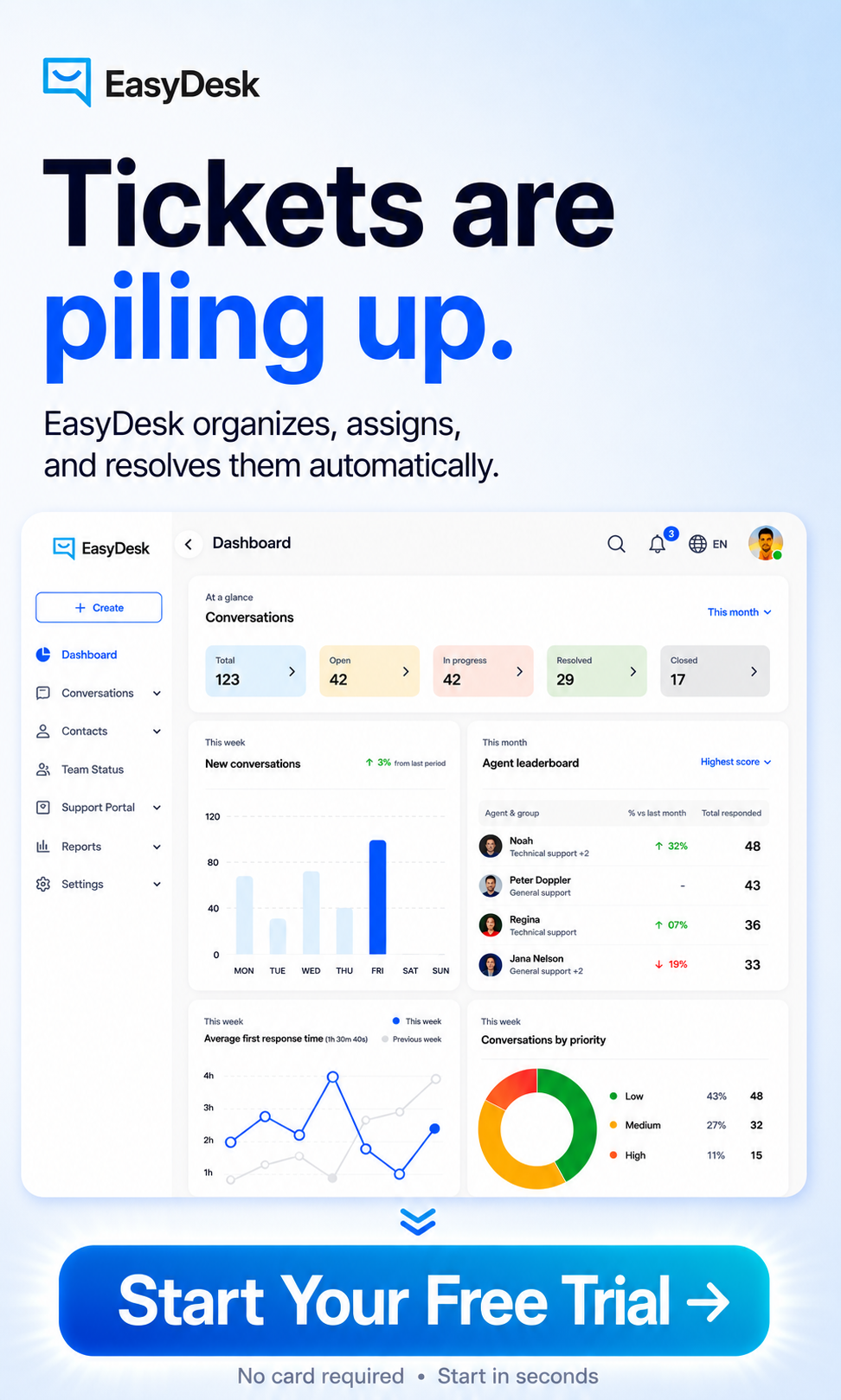
EasyDesk improves customer support productivity by giving support agents easy access to the tools and information they need to work faster across different channels. A unified workspace connects customer profiles, customer data, and interaction history in one place, which allows agents to understand customer issues without delays. EasyDesk has several key features that help your team to achieve faster average speed, improved calls handled per agent, and lower average duration, directly supporting higher productivity and better overall efficiency.
EasyDesk also enables real-time collaboration and quick access to shared resources, which helps teams identify areas for improvement and set clear expectations. Smart workflows allow agents to focus on individual contributions instead of repetitive tasks. As a result, customer support teams achieve stronger overall productivity, smoother operations, and more consistent customer experiences that scale with business growth. You can enjoy these features at a suitable price.
FAQs
Does Customer Support Productivity Affect Customer Loyalty?
Yes. Higher customer support productivity leads to faster resolutions, better customer interaction, and consistent service quality. These factors improve customer satisfaction and encourage long-term customer loyalty across different channels.
Can Customer Support Productivity Reduce Agent Burnout?
Yes. Improved workflows, balanced workloads, and automated responses reduce repetitive tasks and post-call tasks. These improvements support work-life balance, lower agent burnout, and create a more positive work environment.
Is Customer Support Productivity Only About Speed?
No. Speed matters, but productivity also includes resolution quality, first call resolution, agent performance, and customer experience. Strong productivity balances response times with accurate solutions and clear communication.
Do Different Channels Impact Customer Support Productivity?
Yes. Managing customer inquiries across chat, email, calls, and social platforms affects the time agents spend and the resolution rates. Unified tools help maintain overall productivity across different channels.
How Does Customer Support Productivity Impact Contact Centers?
Higher productivity improves operational efficiency, average duration, and calls handled per agent. Contact centers gain better visibility into key metrics and individual contributions while maintaining service quality.
Can Customer Support Productivity Improve Business Growth?
Yes. Efficient customer support teams improve customer satisfaction scores and customer loyalty. Positive experiences encourage repeat customers and support long-term business growth.
Why Do Most Organizations Track Customer Support Productivity Metrics?
Organizations track productivity metrics to identify areas for improvement, align support operations with the organization’s objectives, and improve overall efficiency. Clear metrics guide better decisions and continuous improvement.