Fast-growing businesses often face a surge in customer inquiries and high call volume. Leaders frequently ask how to handle high support volume without hurting customer satisfaction. A sudden spike in incoming calls, phone calls, and messages overwhelms any customer service team. When call volumes rise, average handling time and resolution times also increase. Agents working across multiple channels struggle with repeat contacts and complex issues.
Without the right tools, a single agent cannot manage more calls efficiently. Poor call routing and limited self-service options raise abandonment rate and employee burnout. Data-driven forecasts, real-time analytics, and tracking metrics support informed decisions. Strong processes, active listening, and a robust knowledge base help deliver quality service.
In this article, you will learn proven strategies for handling high support volume while protecting customer experience and team performance.
What Is High Support Volume
High support volume refers to a surge in customer inquiries across support channels. A call center may receive more calls than expected. High call volume often overwhelms the customer service team. Incoming calls, messages, and tickets increase within a short period. Seasonal spikes, product launches, or service outages trigger high volume.
When call volumes rise, average handling time usually increases. Resolution times extend, and first call resolution may decline. Agents struggle with repeat contacts and complex issues. Abandonment rate often increases during peak calls. Without proper call routing and the right tools, efficiency drops.
Data-driven forecasts and tracking metrics help manage handling high volume. Real-time analytics support informed decisions and better service outcomes.
What Are The Root Causes Of High Support Volume
High support volume rarely appears without warning signs. Fast growth, product gaps, and team operations often increase customer inquiries. Leaders must analyze data, call volumes, and support channels to identify patterns. Clear root cause analysis helps the support team reduce repeat contacts and protect customer satisfaction.
Rapid Business Growth
Rapid business expansion often leads to high support volume. More customers naturally generate more calls and tickets. A growing company may attract new segments quickly. New users ask more questions during onboarding. Customer inquiries increase across multiple channels. The customer service team may lack proper resources.
Without data-driven forecasts, leaders underestimate call volumes. A sudden spike creates pressure on agents. Average handling time and resolution times increase. High call volume also affects first call resolution. Proper workforce planning and the right tools help manage growth. Clear training supports better service and a stronger customer experience.
Product Or Service Issues
Product defects frequently trigger high call volume. Service outages push customers to contact center teams. Even minor bugs create repeat contacts. Customers expect fast resolution and clear communication. Poor quality service increases frustration and abandonment rate.
When the support system lacks real-time analytics, issues escalate. Other departments may not receive timely feedback. It's very important to manage customer support feedback management . The support team then handles more calls daily. Complex issues extend average handling time. Strong collaboration between product and support reduces volume. Data analysis helps identify common issues early.
Poor Onboarding And Education
Weak onboarding increases customer inquiries. Customers struggle to understand essential features and tools. Many users call because the instructions remain unclear. Lack of a strong knowledge base limits self-service options. The vast majority prefer quick answers online.
When self-service content lacks clarity, phone calls increase. Agents then face more calls about basic tasks. Repeat contacts rise, and efficiency declines. First call resolution becomes harder to achieve. Clear guides and proactive education reduce volume. Better communication improves customer satisfaction and protects resources.
Inefficient Call Routing
Inefficient call routing creates delays and confusion. Calls may reach the wrong agent repeatedly. A single agent cannot resolve every complex issue. Transfers increase average handling time significantly. Customers wait longer in the call center queue.
High call volume becomes harder to manage without automation. Poor routing also increases the abandonment rate. Agents working without structured processes feel pressure. Employee burnout becomes a real risk. Smart call routing systems improve resolution times. Real-time analytics support informed decisions and balanced workload.
Seasonal Spikes And Campaigns
Seasonal spikes often generate sudden high volume. Promotional campaigns attract more customers and leads. More calls follow each marketing push. A website update may also trigger customer inquiries.
Without data-driven forecasts, leaders misjudge how many calls arrive. The support team then struggles to stay calm. High call volumes stretch available resources. Agents face pressure across multiple channels. Proper forecasting tools prepare the center for demand. Cross-team coordination reduces overload during peak periods.
Limited Staffing And Training
Limited staffing directly affects handling high support volume. A small team cannot manage more calls effectively. Lack of proper training weakens resolution quality. Complex issues require skilled agents and structured team.
When agents lack product knowledge, repeat contacts increase. Resolution times grow longer than expected. Customer experience suffers due to slow response. Poor self-care practices also increase employee burnout. Investment in training improves performance. Strong workforce planning ensures better service during high-volume periods.
8 Tips On How To Handle High Support Volume
High support volume requires structure, clarity, and the right tools. A reactive approach increases average handling time and employee burnout. Leaders must balance efficiency with quality service. Clear processes, smart automation, and data-driven forecasts help teams manage high call volume without hurting customer satisfaction.
1. Strengthen Call Routing System
A smart call routing system reduces unnecessary transfers. Customers reach the right agent faster. Fewer transfers improve first call resolution rates. Proper routing lowers average handling time. Agents focus on complex issues instead of redirects.
Real-time analytics identify traffic patterns quickly. Data helps leaders adjust support channels. High call volume becomes easier to control. Efficient routing also reduces abandonment rate. Clear escalation paths protect service quality. Better distribution of calls improves team productivity and customer experience.
2. Expand Self-Service Options
A strong knowledge base reduces repeat contacts significantly. The vast majority of customers prefer quick answers online. Self-service portals reduce phone calls and incoming calls. Clear FAQs address common issues before ticket escalation.
Well-structured content lowers customer inquiries across multiple channels. Reduced call volumes ease pressure on the support team. Agents then focus on complex issues. Faster resolution times improve customer satisfaction. Self-service also supports better service without extra resources. Continuous updates keep the system relevant and useful.
3. Use Data-Driven Forecasts
Accurate forecasting prepares the call center for spikes. Data-driven forecasts predict how many calls may arrive. Leaders allocate resources based on real trends. Proper planning reduces chaos during seasonal spikes.
Tracking metrics such as call volumes guides informed decisions. Real-time analytics highlight sudden changes. Managers adjust staffing across support channels quickly. Balanced workload reduces employee burnout. Forecast accuracy improves average resolution time and response rates. Strong data analysis protects both team performance and customer experience.
4. Optimize Workforce Planning
Workforce planning ensures enough agents handle high volume. A single agent cannot manage more calls alone. Proper shift scheduling balances workload across the team. Cross-training strengthens operational flexibility.
Skilled agents resolve issues faster. Shorter resolution times improve first call resolution. Better staffing reduces the abandonment rate. Clear processes support consistent quality service. Coordination with other departments also helps reduce repeat contacts. Strong planning keeps the contact center stable during peak demand.
5. Automate Repetitive Tasks
Automation reduces manual workload significantly. Chatbots handle basic customer inquiries instantly. Automated ticket categorization speeds up call routing. Routine responses reduce average handling time.
Automation tools allow agents to focus on complex issues. Fewer repetitive calls lower stress levels. Balanced efficiency supports better service outcomes. Real-time systems track performance continuously. Automation also improves response consistency across multiple channels. Smart tools help the support team manage high call volume efficiently.
6. Improve Agent Training
Strong training improves confidence and performance. Agents learn active listening and problem resolution skills. Better product knowledge reduces repeat contacts. Skilled employees handle complex issues with clarity.
Training programs lower the average handling time gradually. Improved first call resolution boosts customer satisfaction. Leaders should focus on structured coaching sessions. Quality assurance reviews identify improvement areas. Investment in people reduces employee burnout. A prepared team delivers consistent service during high-volume periods.
7. Enhance Cross-Team Collaboration
High support volume often reflects product or process gaps. Other departments must address root causes quickly. Clear communication reduces recurring customer inquiries.
Shared data improves company-wide decision-making. Feedback loops strengthen collaboration between teams. Faster product fixes lower incoming calls. Coordinated efforts protect customer experience. Leaders align goals across the business. Strong collaboration reduces long-term call volumes and improves service quality.
8. Monitor Metrics In Real Time
Continuous metric tracking improves operational control. Leaders review call volumes and first response times daily. Real-time analytics reveal performance gaps instantly.
Tracking metrics such as abandonment rate supports informed decisions. Data helps adjust staffing and tools quickly. Focus on balancing efficiency and quality service remains essential. Transparent dashboards improve accountability across the team. Accurate reporting helps manage high support volume sustainably. Strong monitoring protects long-term customer satisfaction.
Impact Of High Support Volume On Customer Experience
High support volume directly shapes customer perception of a company. When call volumes rise, service quality often declines. Long wait times and unresolved issues reduce trust. Leaders must understand how managing high demand influences customer satisfaction and long-term loyalty.
Longer Wait Times
High call volume increases wait times across support channels. Customers stay on hold for extended periods. Incoming calls exceed available agents during peak hours. A busy call center struggles to answer quickly.
Long waits frustrate customers and reduce satisfaction. Some callers abandon the queue entirely. Abandonment rate rises during high-volume periods. Negative first impressions affect overall customer experience. Real-time analytics and better workforce planning reduce delays. Faster response supports better service and stronger trust.
Lower First Call Resolution
High volume affects first call resolution rates. Agents face pressure to handle more calls quickly. Short interactions reduce problem clarity. Complex issues require deeper analysis and focus.
Rushed conversations lead to repeat contacts later. Customers must call again for resolution. Average handling time may increase over time. Repeat calls overload the support team further. Proper training and active listening improve outcomes. Higher first call resolution strengthens customer satisfaction and loyalty.
Decline In Service Quality
A heavy workload impacts overall service quality. Agents may miss important details during calls. Quality service becomes harder during seasonal spikes. Limited resources affect response consistency. That's why the support team needs to understand the customer service workload management.
Stress reduces attention and empathy. Customers notice reduced personalization. Poor interactions damage the company's reputation. High support volume also weakens resolution times. Structured processes and the right tools improve consistency. Strong quality assurance programs protect customer experience even during high demand.
Increased Customer Frustration
High support volume often increases frustration levels. Long queues test customer patience quickly. Delayed responses reduce confidence in the business. Customers expect quick solutions across multiple channels.
Slow resolution leads to negative feedback. Dissatisfied callers may share poor experiences publicly. High call volumes amplify dissatisfaction rapidly. Frustration also reduces willingness to convert leads. Clear communication and proactive updates ease tension. Balanced efficiency supports better service and a positive perception.
Higher Abandonment Rate
A rising abandonment rate signals poor customer experience. Customers hang up before speaking to an agent. High call volume overloads the contact center capacity.
Missed calls represent lost opportunities and trust. Some customers switch to competitors immediately. Abandoned calls also distort tracking metrics. Real-time analytics help detect sudden spikes. Data-driven forecasts improve staffing decisions. Reduced abandonment supports long-term customer loyalty and retention.
Employee Burnout Impact
High support volume affects agents and customers alike. Employee burnout reduces morale within the team. Tired agents struggle with complex issues. Reduced focus increases errors during calls.
Lower motivation weakens service delivery. Customers sense a lack of enthusiasm. Poor interactions reduce overall customer satisfaction. Proper self-care policies and training help protect employees. Balanced workload improves performance and service consistency. A healthy support team delivers a stronger customer experience consistently.
Damage To Brand Trust
Consistent high volume without preparation harms brand trust. Customers judge reliability through service quality. Slow response times create negative perceptions quickly.
Poor customer experience affects long-term business growth. Negative reviews impact online reputation. High call volumes without improvement show weak processes. Data-driven decisions restore service standards gradually. Investment in systems and training rebuilds trust. Strong customer experience remains essential for sustainable success.
Key Support Metrics To Monitor During High Volume
High support volume demands close performance tracking. Leaders must rely on accurate data during high call volume periods. Clear metrics reveal service gaps quickly. Real-time analytics and data-driven forecasts guide informed decisions and protect customer satisfaction.
First Call Resolution Rate
First call resolution measures issue resolution during the first contact. High call volume often reduces this metric. Agents may rush conversations to handle more calls. Complex issues require deeper focus and clarity.
Low first call resolution increases repeat contacts. Customers call again for the same problem. Call volumes rise further due to unresolved cases. Proper training improves active listening skills. Skilled agents resolve more issues quickly. Strong first call resolution supports better customer experience and lower workload.
Average Handling Time
Average handling time tracks the total time per interaction. High volume usually increases this metric. Longer calls delay responses for other customers. A busy call center struggles to balance efficiency.
Very short calls may also signal poor service quality. Rushed conversations lead to incomplete resolution. Balanced average handling time improves outcomes. Leaders must analyze trends using real-time analytics. Data helps adjust staffing and tools quickly. Controlled handling time protects both efficiency and service standards.
Abandonment Rate
Abandonment rate measures callers who hang up early. High call volume often raises this percentage. Long wait times discourage customers quickly.
A rising abandonment rate indicates capacity problems. Missed calls represent lost trust and revenue. Real-time monitoring helps detect sudden spikes. Data-driven forecasts improve workforce planning decisions. Reduced abandonment improves customer satisfaction. Proper call routing and staffing keep queues manageable during peak periods.
Response And Resolution Times
Response time reflects how quickly agents reply. Resolution time measures the total time to solve issues. High support volume stretches both metrics significantly.
Delayed responses frustrate customers across support channels. Longer resolution times increase repeat contacts. Tracking these metrics highlights operational bottlenecks. Leaders adjust processes based on performance data. Faster resolution improves overall customer experience. Balanced efficiency supports sustainable service quality during high-volume periods.
Ticket Backlog And Volume Trends
The ticket backlog shows unresolved cases over time. High volume quickly increases pending requests. A growing backlog signals resource shortages.
Volume trends reveal patterns across seasons or campaigns. Data analysis helps forecast future spikes accurately. Leaders plan resources using informed decisions. Tracking metrics supports proactive management. Reduced backlog improves service quality. Stable ticket flow protects team morale and customer trust.
Role Of Automation In Managing High Support Volume
High support volume challenges even experienced teams. Manual processes increase average handling time and employee burnout. Automation introduces structure and speed into the support system. Smart tools help the call center manage high call volume while protecting customer satisfaction.
Automated Call Routing
Automated call routing directs callers to the right agent. The system uses predefined rules and customer data. Proper routing reduces unnecessary transfers. Customers reach qualified agents faster.
High call volume becomes easier to manage with automation. Shorter queues reduce abandonment rate. Faster connections improve first call resolution. Real-time analytics adjust routing during seasonal spikes. Balanced distribution protects agents from overload. Efficient routing strengthens overall customer experience.
Chatbots For Basic Inquiries
Chatbots handle simple customer inquiries instantly. Many customers prefer quick answers without phone calls. Automated replies reduce incoming calls significantly.
Self-service support lowers call volumes during peak hours. Agents focus on complex issues instead of common issues. Average handling time decreases across the team. Chatbots operate across multiple channels continuously. Consistent responses improve service reliability. Automation supports better service without adding extra resources.
Automated Ticket Categorization
Automation tools categorize tickets based on keywords and data. Proper classification speeds up internal workflows. Agents receive cases aligned with expertise.
Faster distribution reduces resolution times. Misrouted tickets decrease significantly. High volume no longer overwhelms the support team. Data-driven systems identify priority levels automatically. Efficient categorization improves tracking metrics. Structured workflows enhance service quality across the contact center.
Workflow Automation
Workflow automation standardizes repetitive processes. Routine approvals and follow-ups run automatically. Agents avoid manual administrative tasks.
Less repetitive work reduces employee burnout. Teams gain more time for complex issues. Resolution quality improves under structured processes. Automation maintains consistency during high call volume. Leaders monitor progress through real-time dashboards. Clear workflows protect customer satisfaction and operational stability.
Automated Responses And Templates
Predefined templates ensure consistent communication. Agents respond faster using structured replies. Automated acknowledgments confirm receipt of requests.
Quick confirmations reduce customer uncertainty. Faster response times improve perception of service. Templates also lower the average handling time. Standardized language protects brand tone. Automation keeps communication professional across multiple channels. Strong message consistency enhances overall customer experience.
Real-Time Analytics And Alerts
Automation systems provide real-time analytics instantly. Leaders track call volumes and abandonment rates live. Immediate alerts signal sudden spikes.
Data visibility supports informed decisions quickly. Managers adjust staffing and resources without delay. Proactive action reduces service disruption. High support volume becomes manageable with accurate data. Continuous monitoring improves long-term forecasting accuracy. Real-time insights strengthen efficiency and customer trust.
Self-Service Integration
Automation integrates knowledge base tools seamlessly. Customers access answers through self-service portals. Many issues are resolved without agent involvement.
Reduced repeat contacts lower overall volume pressure. Agents focus on complex tasks requiring expertise. Self-service improves resolution speed significantly. Automated updates keep information accurate and relevant. Data shows which topics drive most customer inquiries. Integrated systems create balanced efficiency and better service outcomes.
How EasyDesk Helps You Handle High Support Volume Efficiently
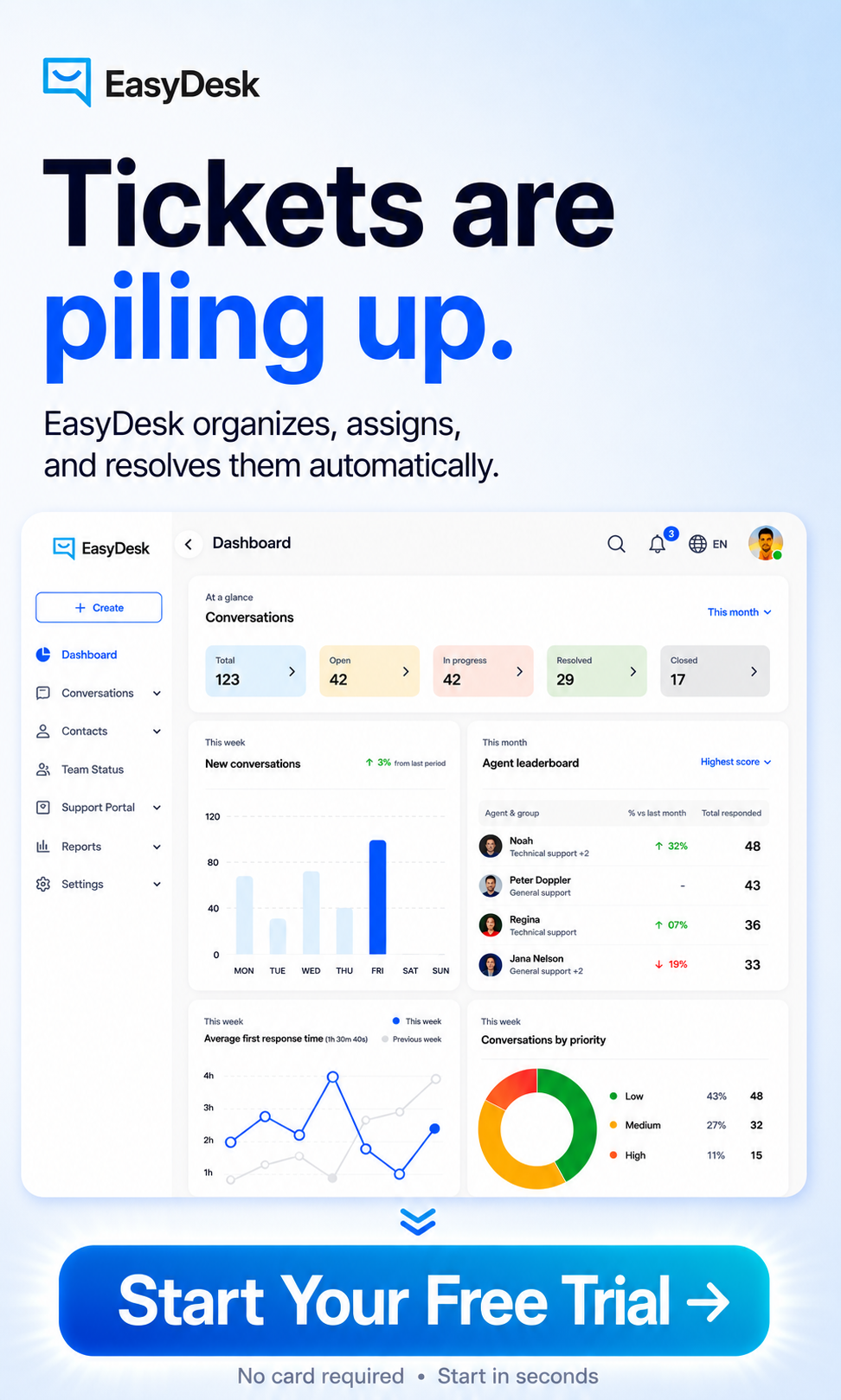
High support volume demands structure, speed, and accurate data. EasyDesk equips your customer service team with the right tools. Smart call routing distributes incoming calls across available agents. Automated workflows reduce average handling time and repeat contacts. Real-time analytics track call volumes, abandonment rate, and resolution times. Leaders use data-driven forecasts to make informed decisions during seasonal spikes. You can use these features at a suitable price.
EasyDesk supports multiple channels within a single system. Agents manage phone calls, tickets, and messages centrally. A built-in knowledge base strengthens self-service options. Fewer customer inquiries reach the call center unnecessarily. Strong tracking metrics improve first call resolution and customer satisfaction. Balanced efficiency helps teams manage high call volume without employee burnout.
FAQs
Can High Support Volume Affect Revenue Growth?
Yes, high support volume can impact revenue growth. Long wait times and poor resolution reduce customer satisfaction and trust. Frustrated customers may churn or avoid repeat purchases, which affects long-term business performance.
Is High Call Volume Always A Negative Sign?
No, high call volume is not always negative. Growth, product demand, or marketing campaigns can increase customer inquiries. Proper systems and data-driven forecasts help convert that volume into a better customer experience and stronger retention.
How Can Leaders Prepare For Sudden Call Volume Spikes?
Leaders should rely on real-time analytics and tracking metrics. Data reveals patterns behind seasonal spikes and campaigns. Workforce planning, automation tools, and structured processes help the support team respond quickly.
Does High Support Volume Increase Employee Burnout
Yes, unmanaged high volume increases employee burnout. Agents face pressure from incoming calls and repeat contacts. Balanced workload, training, and automation reduce stress while protecting service quality.
What Role Do Multiple Support Channels Play In Volume Management?
Multiple channels distribute customer inquiries efficiently. Phone calls, chat, and email reduce pressure on one contact center queue. Centralized systems improve visibility and help agents manage high call volume effectively.
Can Better Tracking Metrics Reduce Repeat Contacts?
Yes, accurate tracking metrics reduce repeat contacts. Monitoring first call resolution and resolution times highlights service gaps. Leaders make informed decisions to improve processes and reduce unnecessary calls.
Why Is Active Listening Important During High Volume Periods?
Active listening improves clarity during customer interactions. A clear understanding reduces errors and shortens resolution times. Strong communication helps maintain customer satisfaction even during high call volume periods.