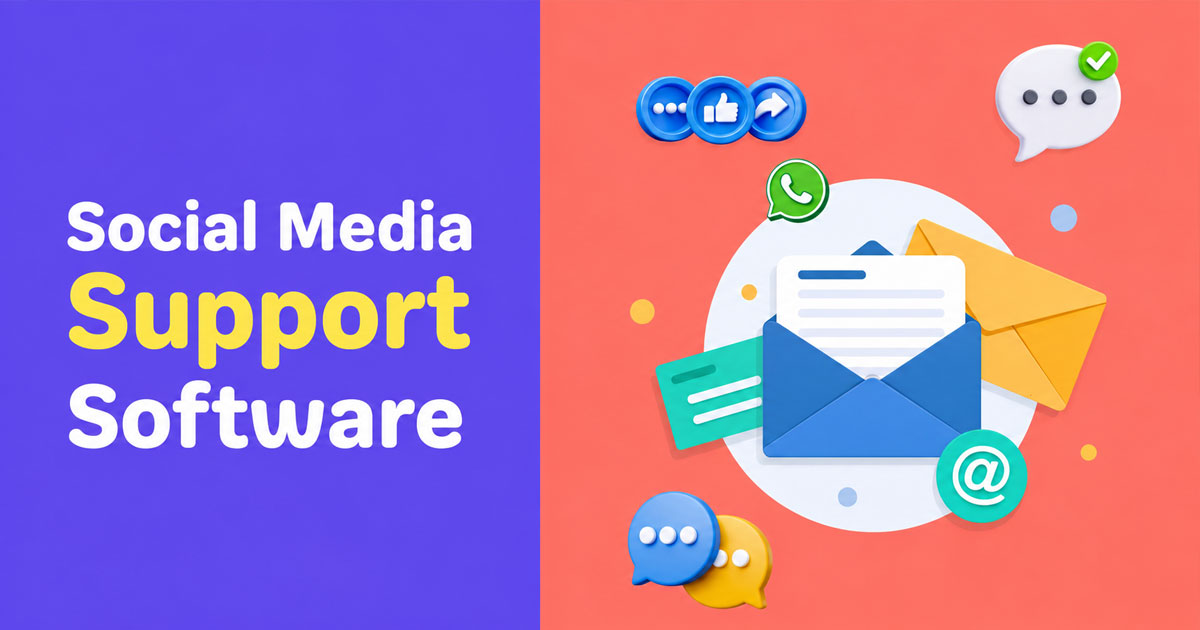
Social media support software has become essential as businesses handle more conversations across different channels. Support teams today deal with high volumes of customer questions across multiple social platforms, and manual management often slows response times and weakens the customer experience.
A centralized system gives teams a clear way to stay organized, work faster, and maintain consistent communication no matter where customers reach out. Instead of switching between accounts or losing important messages, teams gain a structured process to manage customer service inquiries across all social channels. This approach increases efficiency, improves customer satisfaction, and positions social media support software as a crucial asset for modern service operations.
What Social Media Support Software Is?
Social media support software refers to a centralized system that helps teams manage social media customer service in a more organized and efficient way. It brings every form of social media interactions into one place, making it easier to maintain a strong social media presence while responding to customers quickly. A platform like this simplifies social media monitoring across any social network and keeps customer information accessible for faster resolution. Teams use it as a comprehensive solution that connects key communication channels and ensures no message goes unnoticed. The goal is to provide essential features that support real-time responses, consistent service quality, and a seamless approach to handling conversations across social media.
How Social Media Support Software Centralizes Customer Conversations
Social media support software centralizes every customer interaction by bringing conversations from multiple social media platforms into one organized system, allowing teams to manage inquiries faster and more accurately across all social channels.
One Dashboard Unifies Communication
A platform designed for customer support brings conversations from multiple social media platforms into one dashboard, removing the need to switch between tabs or log in to different tools. It becomes easier to view every message from various social media platforms in a single interface, which reduces confusion and ensures teams never miss an important inquiry. Managing communication in one place gives support agents a clearer understanding of customer needs and allows leaders to monitor interactions without fragmentation. The one dashboard experience also enhances collaboration because all information is centralized, accessible, and well-structured.
Unified Inbox Simplifies Message Management
A unified inbox plays a critical role in centralizing conversations from social media channels by collecting messages across multiple platforms. When customer questions, complaints, or requests appear in separate apps, response delays are common. A unified inbox removes that problem by displaying every message in a consistent view. This structure supports faster replies and eliminates the risk of overlooking customer concerns. Support teams can filter, tag, and prioritize messages from different social media channels without losing context. The unified inbox also helps agents stay aware of ongoing conversations and maintain consistent service quality.
Single Interface Reduces Complexity
A single interface removes unnecessary complexity by gathering communication threads from social platforms in one place, giving teams a simplified overview of customer activity. Instead of jumping between apps used for different social channels, support agents work within a clean, organized environment. This setup decreases cognitive load and increases productivity because agents focus on customers rather than navigation tasks. Alerts, updates, and message histories appear within the single interface, ensuring long-term visibility and making it easier for teams to coordinate their efforts. As a result, support centers can handle more inquiries with less operational strain.
Better Tracking Across Multiple Platforms
Handling conversations across multiple platforms becomes significantly easier when all interactions are centralized. Support teams can monitor customer questions, view real-time notifications, and understand the flow of communication across channels through a structured system. Visibility into interactions across different social media platforms allows agents to identify patterns, track repeated issues, and respond more effectively. This cross-platform clarity ensures customers receive consistent service regardless of the social channels they use. Improved tracking also enables managers to measure performance and identify opportunities for training or workflow improvements.
Streamlined Workflows for Various Social Media Platforms
A centralized platform improves workflow management by organizing messages from various social media platforms into a cohesive layout. Agents can assign tasks, update conversation statuses, and manage interactions seamlessly across all relevant social platforms. This coordination eliminates confusion created by scattered communication tools. Workflows become more predictable, structured, and easier to scale, particularly for teams handling heavy volumes of customer inquiries. With a system that brings everything into a unified environment, support teams achieve smoother operations, faster turnaround times, and a more consistent experience for customers across all social media channels.
Why Support Teams Need Social Media Support Software Today
Support teams face rising volumes of customer service inquiries across multiple social platforms, making it difficult to stay organized and deliver instant support without a centralized system that manages communication efficiently.
Rising Volume of Customer Inquiries Across Channels
A modern support team manages a constant flow of customer inquiries coming from different directions, and the number continues to grow as social platforms become primary communication tools. Customers now expect brands to respond quickly on every channel, often using direct messages or public comments to request help. Without a dedicated system, messages easily slip through the cracks. Support teams must juggle multiple social media accounts, which creates complexity and slows down response processes. A centralized platform solves these challenges by giving agents structured visibility across all communication streams. With every inquiry recorded and organized, teams eliminate guesswork and maintain a high standard of service across every interaction.
Difficulty Managing Multiple Social Media Accounts Effectively
Many organizations operate multiple accounts, including brand accounts designed for different regions, products, or support functions. Each account receives its own set of customer service inquiries, and switching between them can be chaotic. Agents often lose context when moving from one inbox to another, leading to missed messages or slower resolutions. Managing multiple accounts without a centralized system is especially challenging during peak hours when message volume spikes. Social media support tools consolidate communication from formerly Twitter, Facebook pages, and every twitter account into one environment, helping teams work with clarity. This structured approach ensures all accounts stay monitored consistently, regardless of activity level or audience size.
Need for Instant Support in Real-Time Environments
Customers on social platforms expect instant support because the nature of social media encourages fast communication. When someone posts a question, makes a complaint, or sends a message, they anticipate a quick reply. Long delays reflect poorly on the brand and can damage trust. Support teams rely on social media support software to meet this real-time expectation by routing incoming social media messages directly to the right agent. With faster access to incoming data, agents can respond immediately, escalate urgent cases, and ensure customers feel heard. The ability to act quickly strengthens the relationship between brand and customer, helping companies maintain a positive public image.
Complexity of Handling Conversations Across Multiple Accounts
Managing communication from multiple accounts becomes overwhelming when inquiries appear in unrelated tools, different dashboards, and separate interfaces. Each account may serve a slightly different audience or purpose, increasing complexity. Without a unified system, support agents must track conversations manually, often risking duplicated work or inconsistent responses. A centralized platform reduces this friction by displaying all messages in one place, regardless of where they originate. Customer service inquiries become easier to categorize, assign, and resolve because everything stays visible and well-structured. The streamlined process improves efficiency and reduces stress on support agents who handle heavy workloads.
Growing Expectations Around Professional Social Media Management
Customers now expect brands to operate with professional-level responsiveness and clarity on social platforms. Whether a question arrives through formerly Twitter, a direct comment, or a message on a branded page, the expectation remains consistent. Social media support software helps organizations meet these demands by organizing all customer inquiries into manageable workflows. Support agents gain access to message history, account context, and reply tools tailored for social environments. With deeper insight into social interactions, teams can maintain a steady service level and avoid delays caused by scattered communication tools. As customer expectations continue to increase, social support systems become essential for delivering structured, reliable service across all social media channels.
Key Features Found In Leading Social Media Support Software
Leading platforms offer structured systems that help teams manage conversations, streamline workflows, and improve response quality by combining communication, automation, and analytics into one organized environment.
Support Efficient Communication
Key features in top platforms focus on organizing conversations, improving visibility, and supporting consistent customer service. Centralized message handling, collaboration tools, and workflow automation allow support teams to manage large volumes of inquiries without confusion. These features create a smooth experience for agents and customers, ensuring every message receives timely and accurate attention.
Social Media Management Platform Capabilities
A strong social media management platform brings together everything teams need to monitor and interact with customers across different networks. It consolidates comments, messages, and public posts into structured views that make daily tasks easier. Social inbox functionality, filtering options, and visibility into ongoing conversations help agents stay organized. This setup enables teams to handle high message volumes without losing context or missing important customer concerns.
Advanced Social Listening Capabilities
Social listening capabilities provide deeper insight into customer opinions and online conversations. Platforms use social listening tools to detect trends, spot potential issues early, and understand customer sentiment. Real-time monitoring of brand mentions, emerging topics, and customer feedback helps teams stay proactive rather than reactive. This level of awareness allows support agents to respond quickly and strengthen customer relationships through informed communication.
Strong Integration Capabilities and Workflow Features
Integration capabilities ensure the platform connects seamlessly with other tools used across support and marketing operations. By syncing data automatically, teams avoid manual entry and maintain accurate records. Features like approval workflows keep responses consistent and professional, allowing managers to review messages before they go live. A built-in ticketing system transforms inquiries into trackable tasks, helping teams prioritize cases, assign responsibilities, and maintain accountability across every interaction.
Scheduling Tools and Unified Management Features
Scheduling tools help teams coordinate communication more effectively, especially when managing high volumes of customer questions or time-sensitive announcements. Pre-planned replies, automated triggers, and scheduled messages ensure customers receive timely updates even during busy periods. Unified management features support multi-channel operations by connecting the social inbox with scheduling capabilities and other tools, enabling smooth collaboration. With everything aligned, teams gain a more organized and predictable workflow across all customer touchpoints.
How Social Media Support Software Improves Response Time
Social media support software improves response times by centralizing conversations, automating tasks, and giving support teams immediate access to customer history across all channels.
Faster Access to Previous Interactions
Support agents reduce delays when they can quickly review previous interactions before replying. A centralized system stores message history from direct messages, public comments, private channels, and Facebook Messenger so agents never waste time searching for context. When teams instantly understand customer background and past issues, they respond more confidently and resolve problems faster. This level of visibility helps prevent repeated questions, supports consistent communication, and minimizes back-and-forth exchanges that often slow down service.
Streamlined Ticket Creation and Assignment
Automated ticket creation ensures every inquiry is captured the moment it arrives, eliminating the risk of missed messages. Once a ticket is created, ticket assignment routes the conversation to the right agent or team based on expertise, workload, or urgency. This structured flow removes manual steps that traditionally slow support operations. Agents spend less time organizing and more time responding. The reduction in administrative tasks directly improves response times and creates a smoother service experience for customers reaching out through multiple channels.
Better Coordination Across Communication Channels
Handling conversations across different platforms becomes faster when everything is centralized. Direct messages, Facebook Messenger chats, and inquiries from private channels appear in one workspace, allowing agents to respond immediately without switching tools. Real-time alerts notify teams of new messages so they can act quickly. By managing interactions through a unified system, support teams eliminate delays caused by scattered interfaces. Faster coordination means customers receive help sooner, especially during high-volume periods.
Enhanced Visibility Through Brand Monitoring
Response speed increases when teams track brand mentions effectively. Support software helps agents track brand mentions and identify conversations that require attention, even if customers do not tag the company directly. Monitoring these discussions ensures no potential issue gets overlooked. When unanswered comments or complaints surface, teams can jump in quickly and provide timely assistance. Real-time awareness across platforms allows service teams to react to concerns before they escalate, strengthening customer perception and accelerating response efforts.
Ways Social Media Support Software Strengthens Customer Satisfaction
Social media support software strengthens customer satisfaction by helping teams deliver faster responses, maintain consistent communication, and understand customer needs more accurately across every social channel.
Enhances Understanding Through Sentiment Analysis
Sentiment analysis helps teams understand how customers feel about their interactions, questions, or complaints. By identifying positive, neutral, or negative tones, support agents adjust their communication style to improve the customer experience. This deeper awareness guides teams toward more empathetic and effective responses, ensuring customers feel heard and valued. With real-time emotional insights, support departments can resolve issues more thoughtfully and prevent small frustrations from growing into bigger problems.
Improves Visibility With Detailed Reports
Detailed reports give teams the clarity needed to monitor service performance and identify areas that influence customer satisfaction. Metrics such as response speed, ticket volume, recurring issues, and conversation trends help managers understand where improvements are needed. These insights support better decision-making and lead to more refined service processes. Marketing teams also benefit from understanding how customers interact across channels, allowing them to refine communication and support strategies based on real data.
Strengthens Overall Social Customer Service
Social customer service becomes stronger when conversations are centralized and easy to manage. A structured system helps agents stay organized and consistent, especially when managing social media for large or growing brands. Faster replies, clear ticket routing, and better message visibility all contribute to a more reliable service experience. Customers appreciate when their issues are handled efficiently, which naturally increases loyalty and satisfaction. The unified workflow also reduces errors that can occur when switching between tools.
Supports a More Consistent Social Media Strategy
A platform that brings every message and interaction into one system helps teams maintain a coordinated social media strategy. Support agents and marketing teams can work together more effectively, ensuring communication stays consistent across every channel. This alignment strengthens the customer experience because customers receive uniform messaging whether they ask a support question or respond to a social media marketing update. Clear coordination also helps brands maintain a professional image and reinforces customer trust.
Adds Value Through Engaging Visual Content
Visual content helps deliver information simply and engagingly, improving customer satisfaction by making communication more enjoyable. Support teams can share helpful images, guides, or updates that make solutions easier to understand. This approach is especially helpful for managing social media where visual content quickly captures attention and increases clarity. When customers receive responses that are easy to follow, their overall experience improves, contributing to stronger long-term satisfaction with the brand.
How Social Media Support Software Boosts Team Productivity
Social media support software boosts team productivity by streamlining workflows, centralizing communication, and reducing the manual effort required to manage high volumes of customer interactions across different channels.
Supports More Organized Social Media Management
Social media management becomes significantly easier when all conversations, tasks, and updates are handled within a single system. Teams avoid the constant switching between apps, reducing wasted time and confusion. With everything in one place, agents work more efficiently, maintain clarity over ongoing tasks, and handle higher volumes of requests without added stress. Clear visibility into interactions and responsibilities keeps productivity steady even during peak activity.
Helps Teams Publish and Schedule Posts Efficiently
The ability to publish social media posts directly from one platform speeds up content workflows and minimizes bottlenecks. Scheduling posts ahead of time ensures teams maintain consistent communication with audiences without needing to manually post throughout the day. This frees support agents to focus on customer inquiries rather than repetitive publishing tasks. A unified approach to social media scheduling keeps content organized and prevents overlapping or missed updates.
Enhances Planning Through Advanced Calendar Tools
Planning becomes more efficient with tools like a visual content calendar or a detailed content calendar that helps teams map upcoming posts, campaigns, and customer updates. This structured overview makes it easier to coordinate efforts between marketing and support teams. Everyone stays aligned on timing, goals, and responsibilities. When teams can see their entire communication plan visually, execution becomes faster, smoother, and far more predictable.
Reduces Workload Through Bulk Scheduling and Automation
Bulk scheduling allows teams to prepare multiple posts, replies, or updates at once, reducing repetitive tasks. Automating routine communication helps agents focus on more important customer interactions. This approach minimizes manual effort and ensures updates go out even when teams are busy handling support issues. By reducing repetitive work, support teams achieve higher productivity without increasing headcount.
Improves Collaboration With Internal Notes and Smart Tools
Internal notes help agents document context, share updates, and communicate seamlessly with teammates handling the same case. This eliminates guesswork and avoids repeated questions or duplicated work. Pairing this with time-saving social media tools creates an efficient environment where teams collaborate more effectively. Quick access to context, clear communication, and simplified workflows all contribute to stronger team productivity and a more organized support operation.
How Social Media Support Software Supports Multi-Channel Service Delivery
Social media support software supports multi-channel service delivery by bringing conversations, updates, and customer requests from different networks into one organized system that helps teams respond faster and more consistently.
Helps Multiple Brands Manage Communication at Scale
Organizations that manage multiple brands often struggle to maintain clarity across different social media accounts. A centralized platform allows teams to monitor every message, track social media interactions, and keep brand communication aligned. This structured approach makes multi-brand operations smoother and more efficient.
Supports Growing Businesses and Small Businesses Equally
Growing businesses and small businesses both benefit from tools that simplify daily communication. When support teams manage several channels at once, having one place to handle social media posts and customer requests creates a more reliable workflow. Consistency becomes easier to maintain regardless of business size.
Works Smoothly Across Most Platforms and Channels
Social support tools function well across most platforms, ensuring teams never miss conversations happening on different networks. Whether customers engage through comments, messages, or public posts, support teams keep everything organized. The platform integrates smoothly with popular tools so teams can maintain a unified communication process.
Provides Efficient Scheduling Tools for Better Coordination
Scheduling tools help teams plan communication across multiple channels without manual effort. Coordinated posting, structured planning, and controlled timing allow support teams to stay ahead of customer expectations. When updates are scheduled effectively, service quality stays consistent across all social media accounts, regardless of channel activity levels.
How Organizations Choose The Right Social Media Support Software
Organizations choose the right social media support software by evaluating features, workflows, analytics, and long-term flexibility to ensure the platform aligns with operational needs, customer expectations, and overall social media strategy.
Focus on Essential Features That Improve Daily Operations
Essential features guide most decisions because teams need tools that simplify communication management. A strong platform should handle social media messages efficiently, store customer information securely, and streamline workflows across channels. Approval workflows, message routing, and organized conversation tracking help teams stay consistent and professional. Organizations also look for platforms that integrate with other tools already used across support and marketing, ensuring smooth operations without adding complexity.
Evaluate Performance Metrics for Better Decision-Making
Performance metrics allow leaders to understand how well their social processes are working. Detailed visibility into response times, message volume, team efficiency, and customer sentiment helps organizations measure quality. With reliable analytics, teams can evaluate their social media strategy and identify areas needing improvement. Companies want software that presents data clearly, with dashboards and reporting features that support smarter decisions and faster optimization of support processes.
Compare Pricing Plans With Business Requirements
Pricing plans vary significantly across platforms, so organizations must match their budgets with feature requirements. Small teams may focus on affordability, while larger operations need more advanced functionality. Leaders also consider long-term scalability and the ability to expand as communication volume grows. Tools that offer flexible pricing and predictable cost structures usually become more attractive, especially for brands handling rapid growth or seasonal spikes in customer demand.
Look for Platforms That Support Strong Listening and Planning
Social listening plays an important role in understanding customer behavior, identifying trends, and improving brand engagement. Organizations need software that can track conversations and support strategic planning. Top features like a content calendar help teams coordinate posts, campaigns, and customer updates. These capabilities give companies more control over messaging and stronger alignment between support and marketing teams. EasyDesk supports these needs by offering structured workflows and clear visibility into customer conversations, helping teams maintain quality and consistency across every social channel.
How EasyDesk Helps Support Teams Use Social Media Support Software Effectively
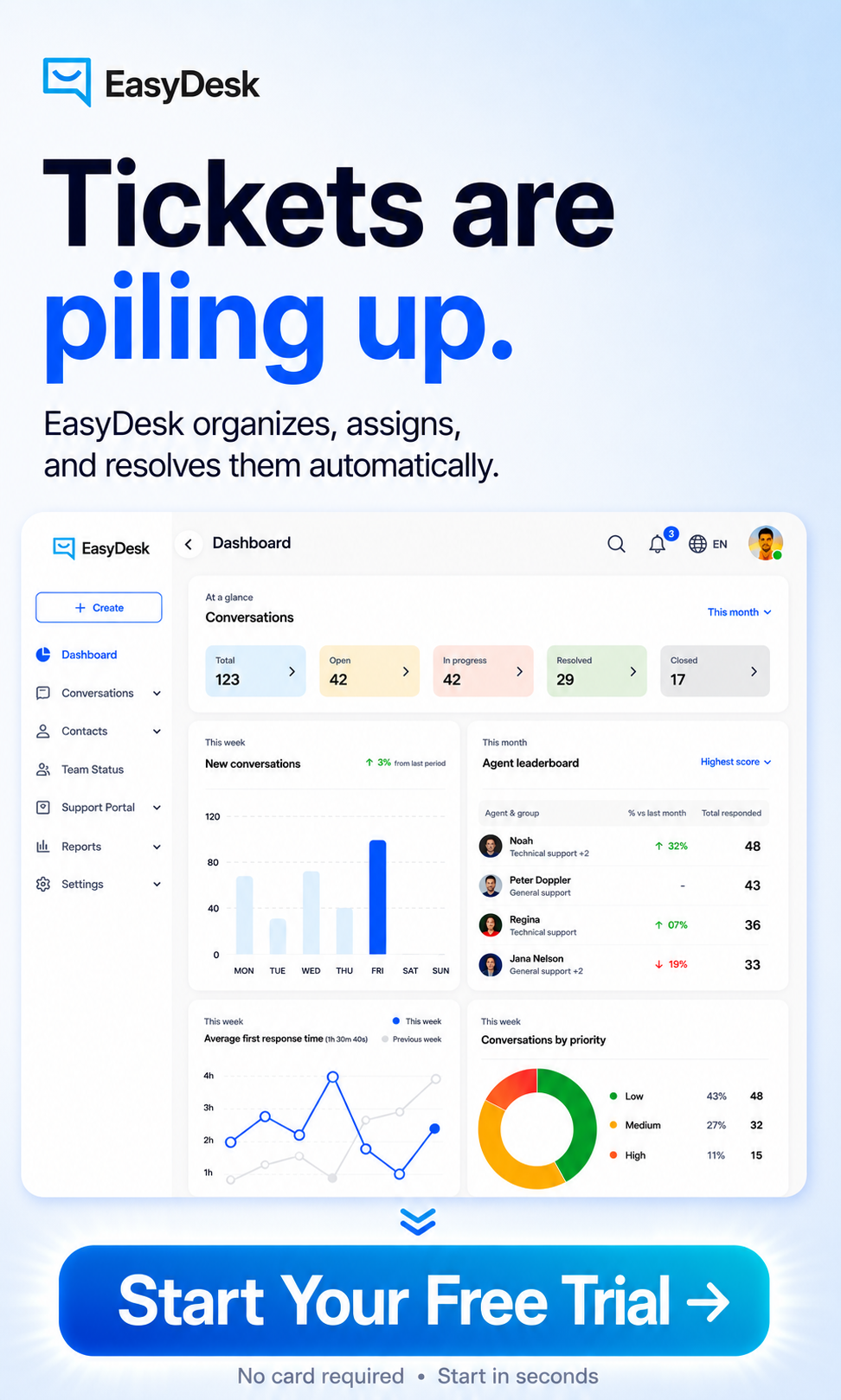
EasyDesk helps support teams use social media support software more effectively by centralizing conversations, organizing workflows, and reducing the effort required to manage customer inquiries across different channels. The platform brings messages from multiple social networks into one clean dashboard, making it easier for agents to stay focused and respond quickly. Teams gain clear visibility into customer history, message context, and ongoing cases, which helps them deliver accurate and timely support.
Automated ticket creation, smart assignment, and structured collaboration tools allow agents to work more efficiently, even during busy periods. EasyDesk also integrates with essential communication and workflow tools, helping organizations maintain consistent service quality while scaling smoothly. This streamlined environment allows support teams to improve performance without adding extra workload.
FAQs
Does Social Media Support Software Help Reduce Agent Workload
Yes, it reduces workload by automating routine tasks, organizing conversations, and removing the need to switch between multiple platforms.
Can Social Media Support Software Improve Team Collaboration
Yes, most platforms offer shared inboxes, notes, assignments, and workflow tools that help teams coordinate responses and avoid duplicated efforts.
Is Social Media Support Software Useful For Businesses With Low Message Volume
Yes, even smaller message volumes benefit from centralized tracking, faster replies, and better visibility into customer conversations.
Does Social Media Support Software Integrate With CRM Systems
Many platforms integrate with CRM systems, allowing teams to sync customer profiles, service history, and communication records automatically.
Can Social Media Support Software Manage Public Comments And Reviews
Yes, it typically supports public comments, posts, reviews, and mentions so teams can respond quickly and maintain a positive brand presence.
Does Social Media Support Software Help During Peak Seasons
Yes, automation and centralized workflows help teams manage high message spikes without reducing response quality.
Is Social Media Support Software Secure For Customer Data
Reputable platforms use encryption, access controls, and secure data practices to ensure customer information remains protected.