Delivering a strong omnichannel customer experience has become essential for modern support teams. Customers judge brands based on the overall customer experience, not on individual conversations. When interactions flow smoothly across channels, it creates a seamless customer experience that feels natural and uninterrupted. This kind of seamless experience reduces friction and makes it easier for customers to get help without repeating themselves.
Consistency is what turns good support into great support. A consistent experience builds trust and reliability at every touchpoint, creating a seamless and consistent experience across the journey. Businesses that focus on this approach see improved customer satisfaction as issues are handled faster and more accurately. Over time, this results in increased customer satisfaction and stronger customer satisfaction levels that positively impact long-term relationships.
What Is Omnichannel Customer Support?
Omnichannel customer support is a support model that connects all customer conversations across channels into one unified experience. Instead of handling messages separately, omnichannel customer service ensures context follows the customer wherever they reach out. This allows support teams to deliver omnichannel support that feels connected rather than fragmented. An effective omnichannel service removes the need for customers to repeat information across touchpoints.
At its core, this omnichannel approach is designed around the omnichannel customer, not the channel itself. Every interaction contributes to a complete omnichannel customer experience that feels continuous and personalized. To achieve this, businesses rely on a clear omnichannel strategy that aligns people, processes, and technology around the full support journey.
Benefits of Omnichannel Customer Support for Support Teams
Support teams today manage conversations across chat, email, phone, and social platforms. Omnichannel customer support helps teams handle this complexity by unifying context, reducing effort, and making daily support work more efficient and less stressful.
Complete customer context in one place
One of the biggest benefits for a customer service team is having full conversation history in a single view. When all interactions are connected, agents instantly understand the issue without searching across tools. This context improves accuracy and confidence during customer support interactions. It also reduces repetitive questions, making conversations feel more natural for both customers and agents.
Faster resolution and higher operational efficiency
Omnichannel systems remove the need to switch between platforms. Support agents respond from one interface instead of juggling multiple dashboards. This saves time on every ticket and improves operational efficiency across the team. Faster access to information leads to quicker resolutions, lower handling times, and a more manageable workload during peak periods.
Better collaboration across the support team
When conversations are shared and visible, collaboration becomes easier. The support team can reassign tickets, add internal notes, or escalate issues without losing context. This is especially helpful when shifts change or when multiple agents are involved. Clear visibility prevents duplicate responses and ensures customers receive consistent answers.
Reduced stress for agents and improved job satisfaction
Managing different tools and fragmented conversations increases mental load. Omnichannel customer support simplifies workflows so customer service agents can focus on solving problems rather than managing systems. With context readily available, human agents feel more in control and less rushed. This reduction in friction lowers burnout and improves overall job satisfaction.
Stronger call-based and real-time support
For teams handling voice support, omnichannel makes a major difference. A call center agent can see previous chats, emails, or tickets before answering a phone call. Starting a conversation with context improves confidence and reduces call duration. Customers feel understood immediately, which improves the quality of real-time interactions.
Consistent service quality across all channels
Consistency is critical for trust. Omnichannel support helps teams deliver the same level of service regardless of channel. Whether customers reach out via chat, email, or phone, support agents follow unified workflows and standards. This consistency improves outcomes and reduces confusion for both customers and agents.
Better performance insights and team improvement
In addition to daily efficiency, omnichannel support also improves long-term performance. Managers gain clearer visibility into workloads, response times, and agent performance across channels. This insight helps teams identify gaps, balance workloads, and improve processes. Better data leads to better coaching and stronger team performance over time.
Together, these benefits help support teams work faster, collaborate better, and deliver higher-quality service without increasing effort. Omnichannel customer support turns complex, multi-channel work into a more organized and sustainable operation for growing teams.
Omnichannel vs Multichannel Support: Key Differences
Omnichannel and multichannel support both allow businesses to serve customers across multiple channels, but they differ in how those channels work together. The key distinction lies in whether conversations are connected or handled separately.
Multichannel customer service focuses on availability. Businesses offer support through different channels such as email, chat, phone, and social platforms. However, in this model, channels operate independently. Each interaction is isolated, and context does not carry over when customers switch channels. While multichannel support increases reach, it often leads to repetition and slower resolutions.
Omnichannel support focuses on continuity. All interactions are connected through a unified system. This omnichannel approach allows conversations to move smoothly across channels without losing context. Support teams see a complete history instead of fragmented messages from various channels.
Key differences at a glance
Channel connection
- Multichannel support: Channels operate independently
- Omnichannel support: All channels are connected
Customer experience
- Multichannel: Customers repeat information across channels
- Omnichannel: Context follows the customer across various channels
Agent workflow
- Multichannel: Agents manage multiple tools
- Omnichannel: Agents work from a single interface
Operational impact
- Multichannel: Higher effort to manage different channels
- Omnichannel: Better efficiency through unified workflows
In summary, multichannel support is about being present on multiple channels, while omnichannel support is about delivering a connected, consistent experience across all customer interactions.
How Omnichannel Support Reduces Response Time and Effort
Customers expect quick, effortless help no matter where they reach out. Omnichannel support reduces delays by connecting conversations, tools, and teams into a single workflow, allowing support teams to respond faster with less manual effort.
One unified view of customer interactions
Omnichannel support brings all customer interactions into one shared timeline. Agents no longer need to search emails, chats, or tickets separately to understand the issue. With full context visible instantly, responses start faster and mistakes caused by missing information are reduced. This unified view removes guesswork and allows agents to focus on solving problems instead of gathering background details.
Faster contact resolution with full context
When conversations are connected, contact resolution improves naturally. Agents already know what the customer has tried, what was discussed previously, and what still needs attention. This reduces unnecessary follow-up questions and repeated explanations. Issues are resolved in fewer steps, saving time for both the customer and the support team while improving overall outcomes.
Less effort across multiple communication channels
Handling multiple communication channels separately increases workload and slows responses. Omnichannel support removes this friction by connecting channels into one system. Agents respond from a single workspace instead of switching tools. This reduces cognitive load, shortens response times, and keeps conversations flowing smoothly even as volume increases.
Smarter handling of calls and live conversations
For live interactions, context is critical. When a phone call comes in, agents can see previous conversations before answering. This prevents awkward pauses and repetitive questions. Customers feel understood immediately, and agents can move straight to problem-solving. This preparedness shortens calls and improves confidence on both sides.
Improved operational efficiency through automation and visibility
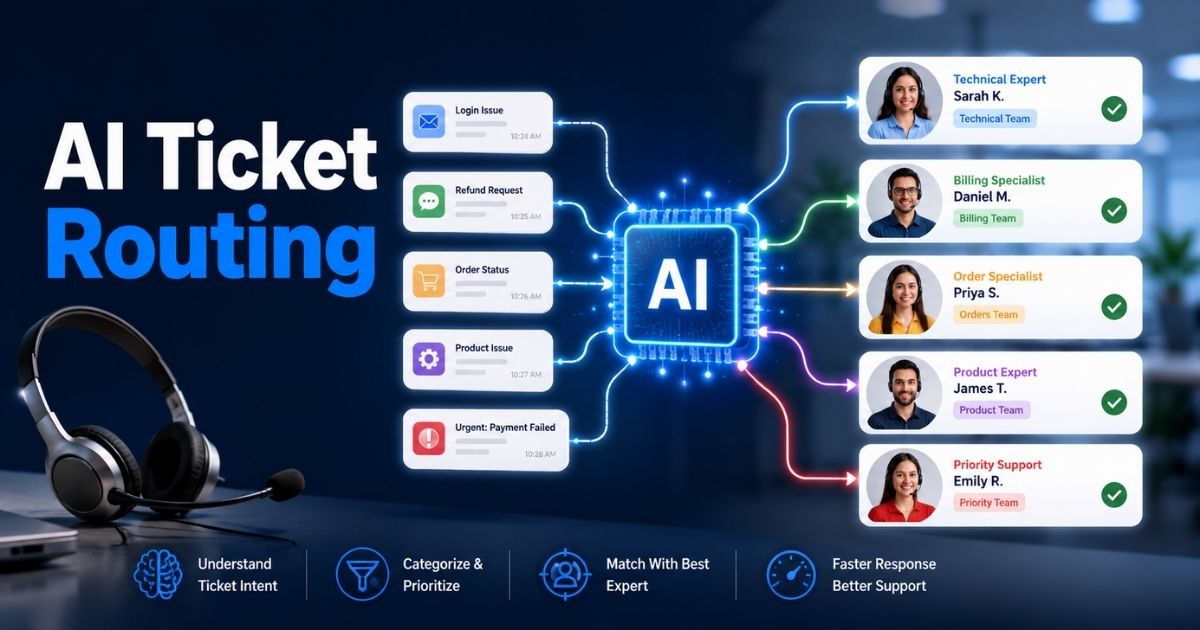
Omnichannel systems improve operational efficiency by automating routing, prioritization, and updates across support channels. The platform tracks customer interactions automatically, reducing manual logging and follow-ups. Clear visibility into workloads helps teams balance queues and respond faster across digital channels without increasing headcount.
Together, these improvements reduce response time and effort at every stage of the support process. Omnichannel support helps teams work faster, stay organized, and deliver quicker resolutions without adding complexity to daily operations.
Role of Omnichannel Support in Customer Retention and Loyalty
Omnichannel support plays a critical role in strengthening customer retention by creating consistent and reliable experiences across every interaction. When customers feel supported without friction, they are more likely to continue doing business with a brand. Connected conversations remove frustration and help customers resolve issues faster, which builds trust over time.
A seamless customer journey keeps customers engaged at every stage of the relationship. When support teams understand context and history, they can engage customers more meaningfully instead of treating each interaction as a one-off request. This level of continuity helps brands delight customers by anticipating needs rather than reacting late.
By supporting the entire customer journey across channels, omnichannel support encourages stronger customer loyalty. Customers who feel understood and valued are less likely to switch to competitors. Over time, consistent experiences and proactive support turn everyday interactions into long-term relationships that benefit both the business and the customer.
Common Challenges in Implementing Omnichannel Support
Implementing omnichannel support promises better experiences, but many teams face obstacles along the way. These challenges often come from technology gaps, process misalignment, and data complexity rather than intent.
Defining a clear strategy across teams
One of the first hurdles is the absence of a clear omnichannel support strategy. Without shared goals and ownership, teams implement tools in isolation, leading to fragmented execution. Aligning this with an omnichannel customer service strategy requires agreement on workflows, priorities, and success metrics across support, operations, and leadership. Misalignment at this stage creates confusion later.
Managing data security across connected channels
Connecting conversations and systems increases exposure risk if controls are weak. Data security becomes a concern when information flows across tools and teams. Ensuring proper access controls, encryption, and compliance is essential to protect sensitive records while still enabling agents to work efficiently.
Controlling operational costs as scale increases
Omnichannel implementations can drive up operational costs if channels are added without consolidation. Licensing multiple tools, maintaining integrations, and staffing redundantly across queues can negate efficiency gains. Cost control requires rationalizing platforms and automating routing to reduce duplication.
Unifying information from multiple channels
Support teams often struggle to unify customer information coming from multiple channels. When systems fail to synchronize, agents lack context, and customers repeat themselves. Bringing together customer data and the customer’s history into a single timeline is technically and operationally challenging, especially with legacy tools.
Driving adoption and consistent usage
Even with the right tools, success depends on adoption. Agents may revert to familiar workflows if training is insufficient or interfaces are complex. Ensuring consistent usage across channels requires change management, ongoing coaching, and clear standards so teams trust the system and rely on it daily.
Best Practices for Delivering Effective Omnichannel CX
Delivering a strong omnichannel experience requires more than adding new channels. It depends on how well teams design, connect, and optimize every interaction across the customer lifecycle. The following best practices help organizations deliver consistent, high-quality experiences at scale.
Build around a unified omnichannel approach
An effective omnichannel approach starts with treating all channels as part of one system rather than separate touchpoints. Support, sales, and service teams should work from shared workflows and data instead of isolated tools. When channels are unified, customers experience continuity instead of repetition. This foundation ensures that conversations move smoothly, regardless of where they begin or end.
Define a clear omnichannel strategy
Without a clear omnichannel strategy, efforts become reactive and fragmented. Teams should define goals, responsibilities, and success metrics upfront. This includes deciding which channels to prioritize, how handoffs should work, and how quality is measured. A documented strategy keeps teams aligned and ensures technology supports experience goals instead of driving them.
Design the experience using a customer journey map
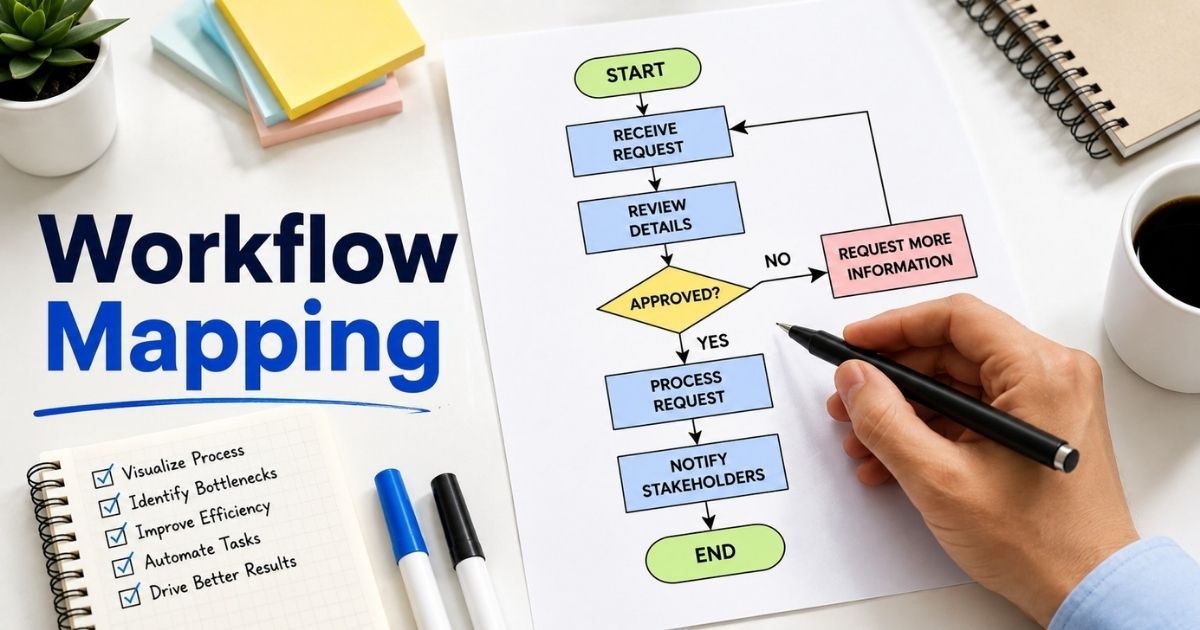
A customer journey map helps teams visualize how customers move across channels over time. Mapping the journey highlights gaps, delays, and friction points that are often missed when channels are managed separately. This clarity allows teams to design smoother transitions and ensure support is available when customers need it most. Journey mapping also helps prioritize improvements that have the biggest impact.
Optimize all customer touchpoints for consistency
Every interaction contributes to perception. Teams should review all customer touchpoints to ensure tone, response quality, and resolution standards are consistent. This includes chat, email, phone, and social channels. Consistency builds trust and reduces confusion, especially when customers switch channels mid-conversation.
Enable seamless interactions with shared context
Seamless interactions depend on context following the customer. Agents should be able to see previous conversations, actions, and outcomes without searching across systems. When context is readily available, interactions feel natural and efficient. Customers no longer need to repeat themselves, and agents can focus on solving problems instead of gathering background information.
Personalize experiences based on preferences
A personalized experience makes customers feel understood rather than processed. Teams should respect customer preferences by allowing them to use their preferred channels and tailoring responses based on history. Personalization does not require complexity. Simple adjustments, such as recognizing prior interactions or channel choice, significantly improve engagement and satisfaction.
Key Metrics to Measure Omnichannel Customer Support Success
Measuring success in omnichannel support requires looking beyond volume metrics. The right measurements show how well channels work together, how customers feel, and how support performance contributes to long-term outcomes.
Key performance indicators that reflect connected experiences
Clear key performance indicators help teams understand whether omnichannel workflows are effective. Metrics such as first response time across channels and resolution speed with context indicate how well conversations stay connected. Tracking these indicators consistently highlights gaps between channels and reveals where processes need improvement.
Customer satisfaction score across channels
A single customer satisfaction score should reflect the overall experience, not isolated interactions. Measuring satisfaction after cross-channel resolutions shows whether customers feel supported throughout their journey. This score helps teams identify friction caused by handoffs or repeated explanations and validates whether improvements are working.
Customer feedback for qualitative understanding
Numbers alone are not enough. Customer feedback adds context by revealing how people perceive support quality. Open comments highlight pain points, preferences, and expectations that metrics may miss. Regular review of feedback helps teams refine tone, workflows, and channel prioritization.
Workforce analytics and behavior patterns
Workforce analytics reveal how support teams perform across channels. These insights show workload distribution, efficiency trends, and training needs. When combined with customer behavior data, teams can understand how agent actions influence outcomes and adjust staffing or processes accordingly.
Linking insights to growth and advantage
The most effective teams turn data into valuable insights that guide decisions. Understanding trends supports business growth by improving retention and efficiency. Over time, consistent measurement creates a competitive advantage as organizations deliver better experiences faster than competitors.
How EasyDesk Enables Omnichannel Customer Support for CX
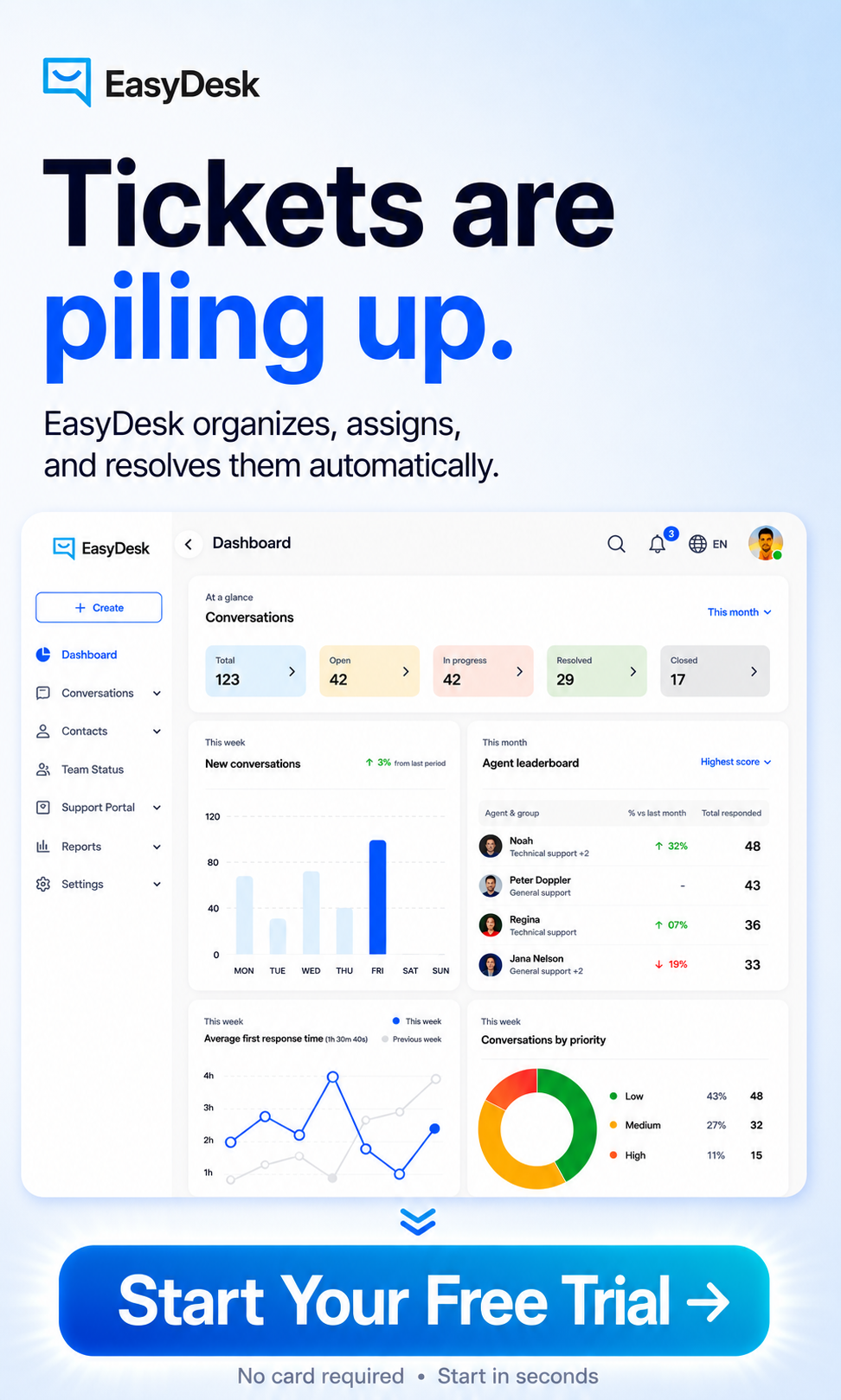
EasyDesk enables omnichannel customer service by bringing all support conversations into one connected workspace. Instead of managing channels separately, teams operate through a unified omnichannel contact center that keeps context intact across every interaction. This approach helps deliver faster, more consistent support without increasing complexity.
As a modern contact center solution, EasyDesk centralizes customer data so agents always have the full conversation history available. This visibility allows customer support teams to respond with confidence, accuracy, and continuity. When context follows the conversation, handoffs feel natural, and issues are resolved more efficiently.
EasyDesk also supports customer relationship management by organizing interactions, preferences, and past activity in one place. This shared understanding helps the support team collaborate better and maintain consistent service quality. By connecting channels, data, and workflows, EasyDesk helps businesses deliver a seamless customer experience that meets rising expectations and supports long-term CX goals.
FAQs
What do customers expect from omnichannel customer support today?
Customer expectations have changed significantly in recent years. Customers expect fast responses, consistent answers, and smooth transitions between channels. They no longer want to repeat information or wait for context to be rebuilt. Omnichannel support meets these expectations by connecting conversations and reducing friction across interactions.
How does omnichannel support address different customer needs?
Every customer has different preferences and urgency levels. Omnichannel support helps address customer needs by allowing them to reach out on the channel that feels most convenient at the moment. By keeping conversations connected, support teams can adapt responses based on context rather than treating each request in isolation.
Why is purchase history important in customer support?
Purchase history gives support teams valuable context about past transactions, products, or plans. When agents understand what a customer has bought before, they can resolve issues faster and provide more relevant help. This context improves accuracy and avoids unnecessary back-and-forth during support interactions.
What role does self service play in omnichannel support?
Self service allows customers to solve simple issues on their own without waiting for an agent. This reduces support volume and gives customers quick answers when they need them. Omnichannel systems ensure self service is connected to live support, so context is not lost if escalation is required.
How do self service options improve the overall experience?
Well-designed self service options empower customers to find answers through knowledge bases, FAQs, or portals. When these options are integrated into omnichannel support, customers can move from self-help to human assistance seamlessly, without starting over or repeating information.
Why is the customer journey important in omnichannel support?
Support interactions are part of a broader customer journey, not isolated events. Omnichannel support ensures continuity across stages, from initial inquiry to resolution. This consistency helps build trust and makes interactions feel more natural and less transactional.
How does omnichannel support handle multiple touchpoints effectively?
Modern customers interact through multiple touchpoints such as chat, email, phone, and social platforms. Omnichannel support connects these touchpoints into a single timeline. This unified view helps teams respond faster, maintain context, and deliver a smoother experience across channels.