Think back to 2015. Customer support meant checking one email inbox a few times a day. Maybe you had a contact form. That was it.
Fast forward to 2026. Your customers reach out via email, live chat, WhatsApp, Instagram DMs, Twitter mentions, and in-app messages. They expect quick replies on every channel. They expect you to remember their last conversation, even if it happened on a different platform three months ago.
The best multichannel helpdesk in 2026 means more than connecting communication channels. It means preserving context across every customer interaction. It means cutting handle time with smart routing and automated workflows. It means keeping SLAs under control without micromanagement.
This guide is for startups and SMBs that outgrew a shared Gmail inbox. You’re juggling email, Slack notifications, and separate chat widgets. You need a desk software designed to bring everything together without enterprise complexity.
What Is Multichannel Helpdesk Software?
A multichannel helpdesk is a single customer service platform where email, live chat, social media, contact forms, and sometimes phone are tracked and resolved as support tickets with full history. Instead of switching between tabs and tools, your support teams work from one unified workspace.
This differs from old-school email-only helpdesk software. It also differs from enterprise “true omnichannel” solutions that often come with heavy implementation and steep costs. For most SMBs, multichannel solves fragmentation without the complexity.
Here’s what this looks like in practice:
- A Twitter DM becomes a ticket with SLA tracking and clear ownership
- A website chat that needs investigation escalates to email without losing context
- A feedback form submission turns into a tracked service request that your team can prioritize
- A WhatsApp message about an order syncs with customer data from your eCommerce platform
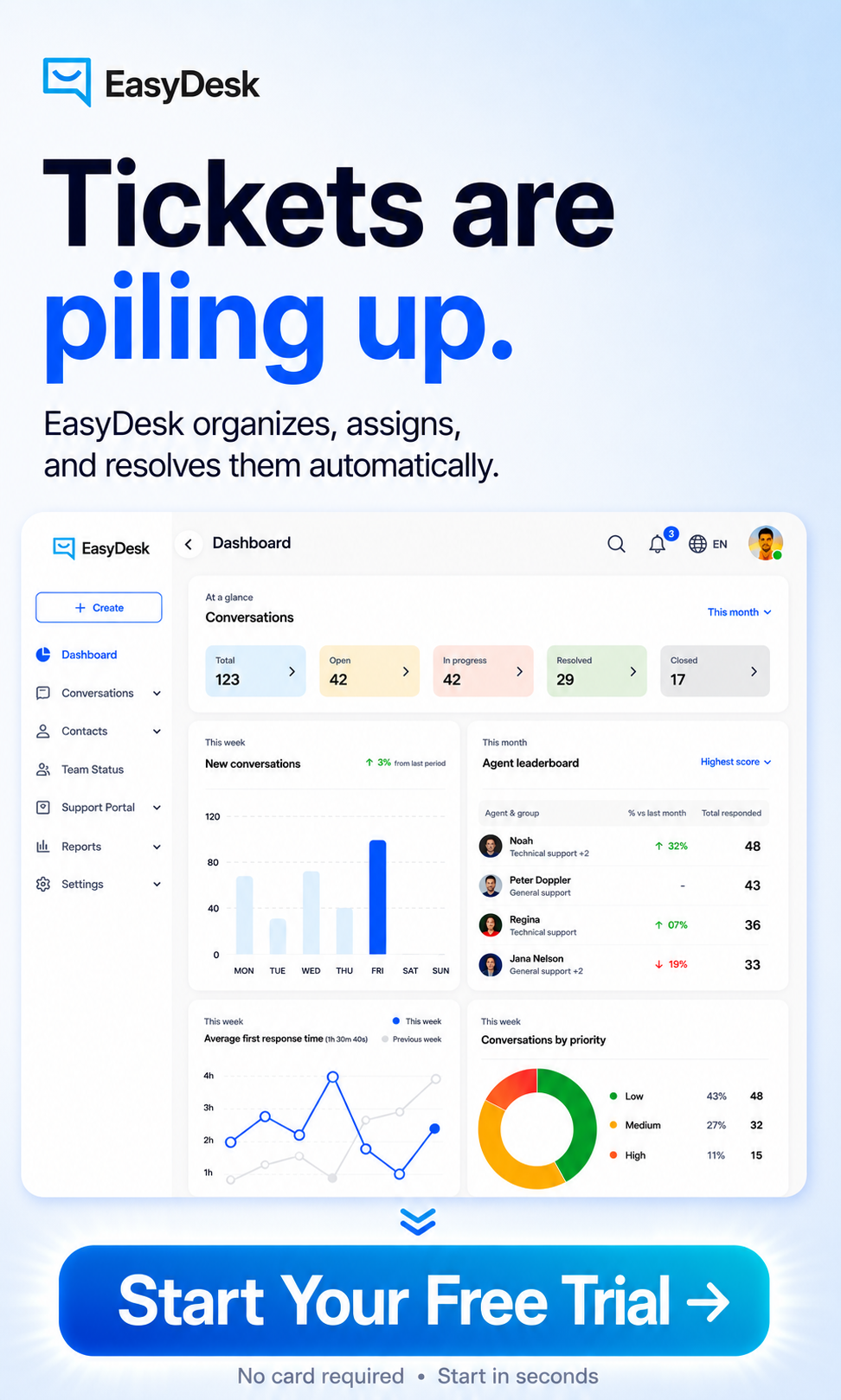
Modern tools like EasyDesk add automation, SLAs, a self-service knowledge base, and analytics tools on top of channel consolidation. The result is effective ticket management that helps teams deliver excellent customer service without drowning in complexity.
Core Features Of A Multichannel Helpdesk
Modern customer support demands speed, context, and consistency across multiple channels. A multichannel helpdesk brings all customer interactions into one place. It helps support teams manage support tickets, improve customer satisfaction, and deliver seamless service across every touchpoint.
Unified Inbox Across Multiple Channels
A multichannel helpdesk software centralizes customer conversations from email, chat, social, and web app forms. Support teams no longer switch between desk platforms. All customer requests appear in one unified inbox.
Studies show that 72% of customers expect consistent service across multiple channels. A help desk solution with omnichannel support ensures every interaction stays connected. Support agents get full customer data and context, which improves response quality. This structure helps streamline customer support operations and reduces missed support requests.
Smart Ticket Routing And Assignment
Ticket routing plays a key role in ticket management. A modern ticketing system can assign tickets based on priority, agent skill, or workload. It helps resolve customer requests faster and improves team performance.
Automation features allow instant ticket assignment without manual effort. Reports suggest that automated routing reduces resolution time by up to 35%. Support operations become smoother when service requests reach the right agent quickly. This also improves SLA management and ensures consistent service delivery across customer support teams.
Automation And Workflow Control
Workflow automation removes repetitive tasks from daily support operations. Help desk software uses automation tools to manage routine tasks like ticket updates, status changes, and follow ups.
Around 60% of support teams report higher efficiency with automation features. Customizable workflows allow teams to define rules that match business needs. This improves service delivery and reduces human error. Desk software solutions with advanced features help support agents focus on complex customer inquiries instead of manual processes.
Knowledge Base And Self Service Options
A self service knowledge base allows customers to solve issues without contacting support teams. It reduces ticket volume and improves customer satisfaction scores.
Data shows that 67% of customers prefer self service over direct support. A help desk with a strong knowledge base provides quick answers to common customer concerns. It also supports internal IT and service desk teams. This feature helps small businesses and enterprise software environments maintain efficient customer support operations.
Seamless Integration With Existing Tools
Integration capabilities define the best help desk software today. A strong desk solution connects with existing tools like CRM, analytics systems, and third party apps.
Platforms like jira service management highlight the value of seamless integration. Teams can manage service delivery and change management from one system. This approach improves collaboration tools and data flow across departments. It also ensures customer support teams work without disruption across all desk systems.
Advanced Reporting And Performance Metrics
Built-in reporting tools help teams track performance metrics and improve service quality. Customizable reporting gives insights into response time, ticket volume, and customer satisfaction.
Research shows that data-driven teams improve customer satisfaction by 20% or more. Advanced reporting allows managers to evaluate team performance and adjust strategies. Help desk software with comprehensive features supports better decision-making. This leads to enhanced customer satisfaction and long-term business growth.
10 Best Multichannel Helpdesk In 2026
| Tool | Best For | Starting Price | Key Strength |
|---|---|---|---|
| Zendesk | Enterprise support teams | $55 / user/month | Advanced enterprise integrations |
| ThriveDesk | SaaS and eCommerce startups | $15 / month | Lightweight helpdesk setup |
| EasyDesk | Scaling support teams | Free to $99 / month | Clean automation and workflows |
| Freshdesk | Omnichannel support teams | $15 / user/month | Built-in AI automation |
| Help Scout | Small customer support teams | $20 / user/month | Human-first shared inbox |
| Hesk | Self-hosted environments | Free | Full data ownership |
| HelpDesk | Email and chat support teams | $19 / agent/month | Native LiveChat integration |
| Zoho Desk | Zoho ecosystem users | $14 / user/month | Deep workflow customization |
| Intercom | SaaS customer engagement | $74 / month | Proactive in-app messaging |
| ProProfs Desk | SMB support teams | $19 / user/month | AI support with a knowledge base |
1. Zendesk
Zendesk dominates the enterprise helpdesk market with robust omnichannel capabilities. It handles email, chat, WhatsApp, phone, and social media support through one customer support platform designed for high-volume operations.
Key Features:
- Over 1,200 integrations with CRM, eCommerce, and IT services tools
- AI agents and copilot features for automated responses
- Advanced reporting and analytics tools for center management
- Customizable workflows with extensive customization options
- Workforce management add-ons for scheduling
- Multi-brand support for organizations with multiple products
Pros:
- Scales reliably for large customer support teams
- Deep customization for complex service desk operations
- Strong data security and compliance features
- Extensive marketplace for add-ons and apps
- Proven track record with enterprise clients
Cons:
- Steep learning curve for new admins
- Higher pricing tiers add up quickly
- E-commerce needs third-party apps for deep order sync
- Implementation demands significant admin time
- Can feel overwhelming for small businesses
2. ThriveDesk
ThriveDesk offers a streamlined desk solution focused on SaaS and eCommerce businesses. It emphasizes simplicity without sacrificing the features growing teams need for effective customer communication.
Key Features:
- Shared inbox for centralizing customer conversations
- Live chat widget with customizable design
- Basic automation for ticket routing and tagging
- WooCommerce and Shopify integration for customer data
- Reporting dashboard for agent performance tracking
- Canned responses for faster replies
Pros:
- Affordable starting price for budget-conscious teams
- Quick setup with minimal configuration
- Native eCommerce integrations work well
- Clean user interface that’s easy to learn
- Good value for small support teams
Cons:
- Fewer advanced features compared to larger platforms
- Limited AI-powered features for complex automation
- Smaller integration ecosystem
- Less suitable for enterprise-scale operations
- Reporting could be more detailed
3. EasyDesk
EasyDesk delivers a focused helpdesk software experience for startups and growing SMBs. It unifies multiple channels without the bloat that makes enterprise tools frustrating for smaller teams. The platform emphasizes quick setup and clean automation.
Key Features:
- Unified inbox across email, live chat, social media, and web forms
- Automated workflows for ticket routing and SLA management
- Built-in knowledge base for customer self-service
- Product feedback management and public roadmap features
- Mobile apps for agents handling service requests on the go
- Collision detection to prevent duplicate replies
Pros:
- 14-day free plan lets teams test everything before committing
- Goes live in days, not weeks or months
- Designed for non-technical support teams
- Transparent pricing without hidden add-ons
- Combines ticketing with customer feedback management and roadmap tools
Cons:
- Smaller than enterprise competitors in marketplace integrations
- Best suited for SMBs rather than large enterprises
- Newer platform compared to established players
- Some advanced features are still expanding
4. Freshdesk
Freshdesk powers customer support teams with Freddy AI for intelligent automation. It balances ease of use with powerful features, making it popular for mid-sized businesses managing customer inquiries across channels.
Key Features:
- Freddy AI for auto-responses and ticket categorization
- Gamification features to boost agent productivity
- Team collaboration tools, including huddles
- Bot builder for custom automated workflows
- Marketplace with hundreds of integrations
- Self-service portals with customizable themes
Pros:
- Intuitive setup for teams new to desk ticketing software
- Growth plan at $18/agent includes solid features
- AI capabilities reduce manual workload
- Good balance of power and simplicity
- Strong parent company (Freshworks) backing
Cons:
- Lower tiers limit customization options
- Advanced features require add-on purchases
- Can become expensive as teams scale
- Some AI features have learning curves
- Collision detection only on higher plans
5. Help Scout
Help Scout takes a human-first approach to customer support software. It’s designed for small teams that want to resolve customer requests without feeling like they’re operating an impersonal call center.
Key Features:
- Beacon widget for live chat and knowledge base access
- Docs for building a self-service knowledge base
- Customer history sidebar showing all the data agents need
- Saved replies for consistent service delivery
- Workflows for basic automation
- Satisfaction ratings to track customer satisfaction
Pros:
- Feels like email, not enterprise software
- Excellent for teams prioritizing personalized support
- Clean, distraction-free, user-friendly interface
- Great documentation and support resources
- Affordable for small businesses
Cons:
- Limited channel support compared to competitors
- Fewer automation capabilities
- Not ideal for complex ticketing solution needs
- Reporting less robust than enterprise tools
- May need additional tools as teams grow
6. Hesk
Hesk offers a self-hosted ticketing system for organizations needing complete control over their customer data. It’s popular with IT teams and businesses with strict data security requirements.
Key Features:
- Full self-hosted deployment for asset management
- Free core version with essential features
- Customizable ticket forms and fields
- Knowledge base for reducing repeat customer questions
- Email piping for automatic ticket creation
- No per-agent pricing for budget flexibility
Pros:
- The free version works for basic service management
- Complete control over data hosting
- No recurring subscription costs for core features
- Good for organizations with compliance needs
- Active community and documentation
Cons:
- Requires technical expertise to install and maintain
- Self-hosting means managing your own updates
- No cloud option for teams wanting simplicity
- Limited multi-brand support
- Fewer modern integrations
7. HelpDesk (LiveChat)
HelpDesk from LiveChat focuses on email and chat as primary support channels. It integrates seamlessly with LiveChat for businesses already using that platform for customer conversations.
Key Features:
- Deep LiveChat integration for a unified chat experience
- Team collaboration through ticket assignments
- Automated workflows for routing and tagging
- Canned responses to deliver personalized yet fast replies
- Reporting on ticket volume and resolution times
- Multiple mailbox support for different tools or brands
Pros:
- Perfect companion to LiveChat users
- Clean interface focused on essential features
- Reasonable pricing at $19/agent
- Easy migration from email-only support
- Good for teams growing into multichannel
Cons:
- Limited to email and chat primarily
- Fewer social media integrations
- Less suitable for complex service desk operations
- Depends on LiveChat ecosystem
- Missing some advanced features larger teams need
8. Zoho Desk
Zoho Desk fits naturally into the Zoho ecosystem with deep customization options. Zia AI helps teams auto-suggest knowledge base articles and streamline customer interactions.
Key Features:
- Zia AI for suggesting articles based on ticket keywords
- Multi-channel support, including email, chat, phone,and social
- Deep integration with Zoho CRM for customer information
- Extensive customization for workflows and fields
- Blueprint for guided ticket resolution processes
- Affordable starting price at $14/user
Pros:
- Excellent value for Zoho users
- Strong customization without complexity
- Zia AI helps facilitate communication faster
- Good for teams needing inventory management integrations
- Solid reporting and analytics
Cons:
- Best value within Zoho ecosystem
- Can feel complex for new users
- Mobile app could be smoother
- Some features require higher tiers
- Less intuitive than simpler alternatives
9. Intercom
Intercom focuses on conversational support with proactive messaging capabilities. Its Fin AI agent handles customer inquiries through a pay-per-resolution model that suits SaaS companies prioritizing engagement.
Key Features:
- Fin AI agent for automated customer conversations
- Proactive messaging based on user behavior
- Product tours and onboarding tools
- Custom bots for qualifying and routing
- Integration with popular SaaS tools
- Resolution reports for tracking AI effectiveness
Pros:
- Strong for SaaS companies wanting engagement focus
- Fin AI handles routine queries effectively
- Beautiful chat widget and user interface
- Good for teams wanting proactive support approach
- Combines support with marketing capabilities
Cons:
- Higher starting price at $74/month
- Pay-per-resolution can get expensive at scale
- Less focused on traditional ticketing
- May need additional tools for email-heavy teams
- Complexity in setup for full capabilities
10. ProProfs Desk
ProProfs Desk combines AI-powered features with a strong knowledge base focus. It serves SMBs wanting straightforward desk software with built-in self-service capabilities.
Key Features:
- AI for ticket routing and suggestions
- Built-in survey tools for customer satisfaction scores
- Parent-child ticketing for complex issues
- Knowledge base with article analytics
- Collaboration tools for internal notes and assignments
- Multi-channel support for common channels
Pros:
- Good value at $19/user for SMBs
- Strong knowledge base integration
- Easy to set up and start using
- Helpful for teams building self-service
- Includes survey capabilities
Cons:
- Less well-known than major competitors
- Fewer third-party integrations
- Advanced features are limited compared to enterprise tools
- The user interface could be more modern
- Limited AI-powered features compared to leaders
How To Choose The Best Help Desk Software For Your Business
Picking the right desk software means matching capabilities to your actual needs, not chasing feature lists. Here’s how to evaluate options without getting overwhelmed by marketing promises.
Assess Your Current Support Channels
Start by mapping where your customers reach you today. Email is likely the foundation. But do you also handle chat, social DMs, WhatsApp, or in-app messages?
List your active channels and estimate volume for each. A tool might excel at email and chat but lack native WhatsApp support. If WhatsApp drives significant customer requests, that gap matters. Prioritize platforms that cover your must-have channels without requiring complex workarounds.
Match Features to Team Size
A 3-person support team needs different tools than a 25-person department. Smaller teams benefit from simple setup and intuitive workflows. Enterprise features often create overhead without adding value.
Look for desk software designed for your current size with room to grow. EasyDesk works well for growing teams because it avoids enterprise bloat while including essential features. Zendesk makes more sense for large organizations with dedicated admins.
Evaluate Total Cost of Ownership
The starting price tells only part of the story. Check what’s included at each tier. Some platforms charge extra for SLA management systems, automation, reporting, or additional channels.
Calculate the cost for your expected team size over 12-24 months. Factor in implementation time and training. A $15/user tool with expensive add-ons might cost more than a $25/user platform that includes everything.
Test Automation Capabilities
Automation separates adequate tools from great ones. Can you create rules for routing, tagging, and auto-responses without developer help?
Look for readable, editable workflows that support managers can adjust. Test whether the system handles your common scenarios: routing billing issues to specific agents, auto-closing inactive tickets, and sending follow-up reminders. Even simple automated workflows save hours weekly.
Check Integration Options
Your helpdesk doesn’t exist in isolation. It needs to connect with your CRM, payment processor, eCommerce platform, and team communication tools.
Review the integration marketplace. Native integrations work better than generic webhooks for critical connections. If you use Shopify, check whether order data appears in tickets automatically. If you use Slack, verify notifications work the way your team expects.
Prioritize User Experience
Your agents will spend most of their day inside this tool. A confusing user interface slows everyone down. A clean, user-friendly interface helps new hires become productive faster.
Request demos or start free trials with your actual team. Watch how quickly agents find what they need. Check mobile apps if on-call coverage matters. The best desk solution feels intuitive, not like wrestling with enterprise software.
Plan for Reporting Needs
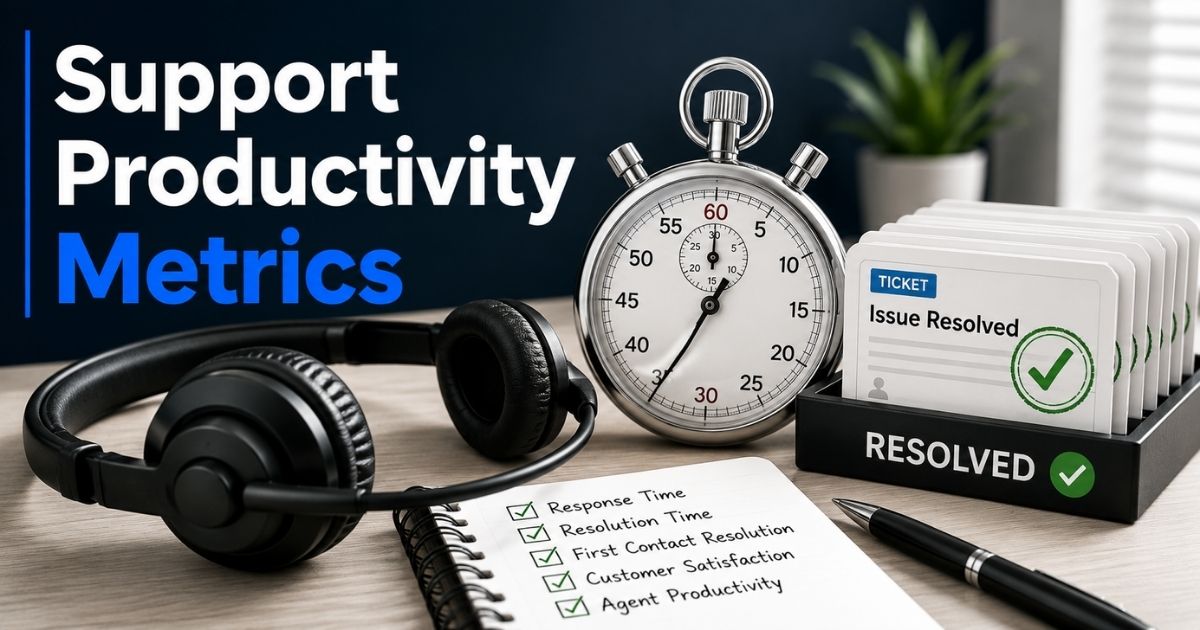
Think about what metrics you’ll track. At a minimum, you need first response time, resolution time, and volume by channel. CSAT tracking helps measure customer satisfaction over time.
Check whether built-in analytics tools cover your needs or require exporting to spreadsheets. Good reporting helps identify patterns, coach agents, and justify staffing decisions without manual data work.
How EasyDesk Helps You Build a Best-in-Class Multichannel Helpdesk
EasyDesk is built for startups and growing SMBs that want power without complexity. If you’ve outgrown a shared inbox but don’t need enterprise overhead, EasyDesk fits that middle ground.
The platform pulls email, live chat, social media, and web forms into one unified inbox. Every customer interaction appears in the same clean workspace. Agents see full conversation history, customer history, and internal notes in one view. No more switching between tabs or losing context when customers change channels.
Automation in EasyDesk stays practical. Set up routing rules, auto-tagging, and SLA alerts without needing a developer. Support leads can manage workflows directly. SLA timers display right in the ticket list, so agents know what needs attention first.
The built-in knowledge base reduces ticket volume by helping customers find answers themselves. Agents can search and insert articles while replying, maintaining consistent service delivery across all responses.
What sets EasyDesk apart is the integration of feedback tracking and public roadmaps. When customers submit feature requests, you can track them, let others vote, and show what’s planned. This closes the loop between customer support teams and product decisions, something most helpdesks don’t offer natively.
Setup takes days, not months. The 14-day free trial lets your team test everything before committing. Mobile apps keep agents connected for urgent tickets outside office hours. Pricing stays transparent without surprise add-ons.
Visit EasyDesk to start your free trial and see how quickly your team can consolidate scattered support channels into one focused workspace.
FAQs
When is the right time to move from a shared inbox to a multichannel helpdesk?
Key signals include missed messages on chat or social channels, agents stepping on each other’s replies, difficulty tracking basic metrics, and confusion about who owns which conversation. Once your team exceeds 2-3 agents or handles multiple real-time channels beyond email, a multichannel helpdesk pays off quickly. Even very small teams benefit if they run live chat plus email and want clear SLAs and ownership.
How hard is it to migrate from another tool into EasyDesk or a similar helpdesk?
Migration typically involves redirecting support email addresses, connecting chat widgets, and optionally importing historical tickets via CSV. Teams can start small by routing new tickets through the helpdesk while leaving legacy history in the old tool. EasyDesk offers onboarding guidance, and most SMB teams complete initial setup within a few days without dedicated technical resources.
Can a multichannel helpdesk support fully remote or distributed support teams?
Modern helpdesk software runs in the cloud, letting agents work from any location while sharing the same queues, notes, and dashboards. Features like time zone-aware SLAs, web and mobile access, and integrations with collaboration tools like Slack make remote work seamless. EasyDesk is designed with remote-friendly workflows, making it practical for global or hybrid teams to maintain consistent service quality.
How does data security work in multichannel helpdesks?
Standard expectations include encryption in transit, role-based access controls, audit logs, and regular backups. For EU customers, GDPR compliance matters; check where vendors host data and how they handle customer data. EasyDesk commits to the secure handling of tickets and customer information. Review the security documentation on any platform before committing, especially if your industry has specific regulatory requirements.
What metrics should we track once we adopt a multichannel helpdesk?
Start with core metrics: first response time, resolution time, CSAT, ticket volume by channel, and percentage of tickets resolved with one reply. These reveal how well your team handles service requests. Add more advanced metrics later, like feature request volume, bug frequency by product area, or NPS by support interaction. EasyDesk’s reporting helps teams build these dashboards without exporting everything into spreadsheets.