Customer service workload management stands at the core of modern customer service management and business success. As customers expect fast answers across multiple channels, customer service teams and customer support teams must manage workload with precision and clarity. Workload management important decisions directly influence customer satisfaction, consistent service quality, and overall customer experience.
A strong customer service management strategy supported by advanced technology, productivity tools, and customer service management tools allows support agents to handle routine tasks, automate tasks, and focus on critical tasks that enhance customer interactions. With real-time access to customer data, predictive analytics, and machine learning, service teams can improve workload distribution, optimize resource allocation, and reduce average response time.
Effective workload management drives operational efficiency, personalized support, proactive support, and sustainable growth. When teams provide service aligned with customer needs and customer expectations, customers feel valued, share positive reviews, boost net promoter score, and strengthen customer loyalty, customer retention, and customer success.
What Is Customer Service Workload Management
Customer service workload management refers to the structured approach businesses use to manage workload across customer service teams and customer support teams. It focuses on balancing the team's workload, handling customer queries, customer inquiries, and customer questions efficiently across multiple channels, and maintaining consistent service quality. Since workload management is important, decisions affect customer satisfaction and customer experience, organizations rely on customer service management tools and advanced technology to support service delivery and operational efficiency.
Effective workload management aligns resource allocation, workload distribution, and key metrics such as average response time and net promoter score. With real-time access to customer data, customer insights, and predictive analytics, support agents can prioritize critical tasks, automate routine tasks, and enhance customer interactions. A strong customer service management strategy ensures customers feel valued, strengthens customer loyalty, and drives customer retention and sustainable growth.
Why Customer Service Workload Management Is Important
Customer service workload management plays a direct role in shaping customer satisfaction, operational efficiency, and long-term business success. When customer service teams manage workload strategically, they maintain consistent service quality, meet customer expectations, and deliver high-quality customer service across multiple channels without overwhelming support agents.
Protect Customer Satisfaction And Loyalty
Customer service workload management ensures customers receive timely responses to their queries and customer inquiries. When support teams maintain balanced workload distribution, customers experience shorter average response times and more personalized interactions. As a result, improving customer satisfaction becomes a measurable outcome rather than a vague objective.
Effective workload management also strengthens customer loyalty and customer retention. Customers feel valued when service teams provide service with clarity, empathy, and consistency. Positive reviews, higher net promoter score, and stronger customer success metrics reflect how customer service management's important decisions directly influence brand reputation and customer experience.
Improve Operational Efficiency Across Teams
Workload management important practices enhance operational efficiency within customer service teams and cross-functional teams. Clear resource allocation allows service teams to focus on critical tasks instead of reacting to sudden spikes in customer interactions. Proper training, productivity tools, and customer service management tools support structured service delivery.
Advanced technology, machine learning, and predictive analytics help identify trends in customer behavior and customer needs. Data-driven decisions based on customer data and customer insights reduce unnecessary pressure on contact centers and improve the team's workload balance.
Enhance Service Quality Across Multiple Channels
Modern customers expect consistent support across email, chat, phone, and self-service options. Customer service workload management ensures service delivery remains stable across multiple channels without compromising quality. Balanced workload distribution allows support agents to provide personalized support rather than rushed responses.
A customer service management strategy backed by real-time access to customer information strengthens the overall customer journey. When customer expectations align with consistent support and proactive support, the customer service experience improves, and customers trust the brand.
Strengthen Team Productivity And Collaboration
Effective workload management empowers support agents to handle routine tasks efficiently while prioritizing complex customer questions. Automate tasks through virtual assistants and self-service tools so teams can dedicate attention to high-impact interactions.
Clear workload distribution encourages team collaboration and improves communication between support teams and the project manager roles. When customer service teams operate with structured processes and advanced technology, customer support productivity rises without sacrificing high-quality customer service.
Drive Sustainable Growth And Business Success
Customer service workload management directly influences business growth and sustainable growth strategies. Balanced resource allocation ensures customer support teams provide service that meets customer expectations while maintaining consistent service quality.
Data-driven decisions based on key metrics such as net promoter score, average response time, and product feedback guide customer service management improvements. As new customers join and customer needs evolve, strong workload management protects brand reputation, supports customer retention, and secures long-term business success.
Core Features Of Customer Service Workload Management Software
Customer service workload management software equips customer service teams with the structure and visibility required to manage workload effectively. A modern customer service management strategy depends on advanced technology, real-time access to customer data, and smart resource allocation to maintain consistent service quality across multiple channels.
Smart Ticket Distribution
Smart ticket distribution ensures balanced workload distribution across support agents and customer support teams. The system assigns customer queries and customer inquiries based on skill set, availability, and priority level. Such precision protects the team's workload and prevents service gaps.
Customer service workload management platforms rely on automation rules and customer information to route tickets accurately. Balanced allocation reduces average response time, improves operational efficiency, and ensures customers expect fast and reliable service delivery from every service team.
Real Time Workload Visibility
Real-time access to dashboards provides customer insights into workload management and important metrics. Managers can monitor customer interactions, customer questions, and critical tasks across contact centers and digital channels. Clear visibility allows proactive support instead of reactive ticket escalation.
Customer service management tools display key metrics such as net promoter score, first response time, and service performance. Data-driven decisions improve customer experience, strengthen customer satisfaction, and maintain consistent support even during peak demand.
Automation And Task Management
Automation capabilities help support agents handle routine tasks and automate tasks that do not require manual intervention. Self-service options and virtual assistants resolve common customer inquiries, freeing the service team to focus on complex customer needs.
Effective workload management software integrates machine learning and predictive analytics to identify trends in customer behavior. Automated workflows streamline service delivery, enhance productivity tools usage, and ensure high-quality customer service across multiple channels.
Performance Tracking And Analytics
Performance analytics provide deep customer insights through structured customer data. Managers evaluate workload distribution, customer feedback, and average response time to refine the customer service management strategy. Clear measurement connects operational efficiency with business success.
Advanced dashboards track customer success indicators, customer retention rates, and service delivery performance. Predictive analytics supports proactive support planning, allowing cross-functional teams and project manager roles to align workload management with sustainable growth goals.
Resource Allocation And Capacity Planning
Resource allocation tools help customer service teams manage workload during fluctuating demand. Capacity planning ensures proper training, balanced shift schedules, and efficient workload distribution across support teams.
Customer service workload management software forecasts ticket volume using customer information and historical customer interactions. Accurate projections protect consistent service quality, reduce pressure on support agents, and enhance customer loyalty through dependable service.
Collaboration And Knowledge Management
Collaboration features strengthen team collaboration between customer support teams and cross-functional teams. Shared dashboards, internal notes, and centralized customer data allow personalized support and personalized interactions throughout the customer journey.
Knowledge bases and self-service platforms empower customers feel valued by offering instant answers. Consistent service quality, supported by structured customer service management, reinforces brand reputation, positive reviews, and long-term customer retention.
Benefits Of Customer Service Workload Management
Customer service workload management delivers measurable value across customer support, operations, and long-term strategy. When customer service teams manage workload with clarity and structure, they protect consistent service quality, improve operational efficiency, and strengthen customer satisfaction across multiple channels.
Higher Customer Satisfaction Scores
Customer service workload management directly influences customer satisfaction by reducing average response time and ensuring balanced workload distribution. When support agents receive a manageable team’s workload, they respond to customer queries and customer inquiries with accuracy and empathy. Customers expect timely answers, and structured service delivery meets those expectations consistently.
Effective workload management improves net promoter score and supports improving customer satisfaction initiatives. A customer feedback management system reflects a better customer experience, stronger customer loyalty, and increased customer retention. High-quality customer service builds trust and turns new customers into long-term advocates.
Improved Operational Efficiency
Operational efficiency increases when customer service management tools provide real-time access to customer data and key metrics. Clear resource allocation and smart workload distribution reduce bottlenecks across contact centers and digital support channels. Service teams gain clarity on critical tasks and priorities.
Data-driven decisions based on customer insights and predictive analytics help identify trends in customer behavior. Customer service management important strategy to streamline service delivery, reduce repetitive manual work, and allow support teams to focus on customer success.
Balanced Team Workload And Productivity
Balanced workload protects support agents from burnout and performance decline. Customer service workload management software distributes customer interactions evenly, ensuring the team’s workload remains realistic and sustainable. Proper training and productivity tools empower agents to handle routine tasks with confidence.
Automation, self-service options, and virtual assistants help automate tasks that consume time. Support teams can dedicate effort to complex customer questions and personalized interactions. Structured workload management strengthens team collaboration and improves overall productivity.
Consistent Service Quality Across Channels
Customers expect consistent support across email, chat, phone, and self-service platforms. Effective workload management ensures service delivery remains stable across multiple channels without sacrificing personalized support.
Real-time monitoring of customer information and workload distribution allows customer service teams to maintain consistent service quality. When customers feel valued through reliable and responsive support, customer loyalty and brand reputation improve significantly.
Stronger Customer Retention And Loyalty
Customer retention depends on reliable service and proactive support. Customer service workload management aligns the customer service management strategy with customer needs and customer expectations. Balanced resource allocation ensures every service team can provide service without delay.
Customer insights derived from customer data allow personalized support throughout the customer journey. As customers experience efficient and thoughtful interactions, customer loyalty increases, positive reviews grow, and sustainable growth becomes achievable.
Scalable Growth And Business Success
Business growth requires a structured approach to workload management. As new customers enter the pipeline, customer support teams must adapt workload distribution without compromising quality. Advanced technology and machine learning help forecast demand and adjust capacity.
Customer service management supported by predictive analytics and real-time access to metrics strengthens business success. Efficient workload planning supports sustainable growth, protects operational efficiency, and ensures customers receive the best service at every stage of their journey.
Key Challenges In Customer Service Workload Management
Customer service workload distribution often becomes complex as customer interactions increase across multiple channels. Without structured customer service workload management, customer service teams struggle to manage workload effectively, which affects customer satisfaction, service delivery, and overall operational efficiency.
Uneven Ticket Allocation
Uneven workload distribution creates immediate pressure on specific support agents while others remain underutilized. When customer queries and customer inquiries concentrate on a few team members, average response time increases, and consistent service quality declines. Customers expect fast and accurate answers, yet imbalance disrupts the customer service experience.
Customer service management tools without smart routing rules fail to align resource allocation with agent capacity. Effective workload management requires real-time access to customer data and clear workload visibility to protect customer satisfaction and customer loyalty.
Limited Real Time Visibility
Limited visibility into the team’s workload prevents proactive support. Managers cannot identify critical tasks or sudden spikes in customer questions without reliable dashboards and customer insights. As a result, service teams react late and struggle to maintain consistent support.
Customer service workload management software should provide real-time access to key metrics such as net promoter score and average response time. Data-driven decisions improve operational efficiency and help customer support teams protect high-quality customer service.
High Volume Across Multiple Channels
Multiple channels increase complexity in workload distribution. Email, chat, phone, and self-service platforms generate customer interactions that require structured coordination. Customers expect seamless service delivery regardless of the channel they choose.
Without advanced technology and predictive analytics, customer service teams cannot forecast demand accurately. Poor coordination across contact centers reduces personalized support and affects customer experience throughout the customer journey.
Skill Gaps And Training Issues
Skill gaps within a service team create uneven performance levels. When support agents lack proper training or access to productivity tools, they require more time to resolve customer inquiries. That delay affects customer satisfaction and overall customer service management performance.
Customer service management's important initiatives must include structured training and team collaboration across cross-functional teams. Proper resource allocation ensures agents handle customer needs based on expertise, which strengthens customer success and customer retention.
Manual Processes And Routine Tasks
Manual processes slow service delivery and reduce operational efficiency. When support teams handle routine tasks without automation, the team’s workload expands unnecessarily. Automate tasks through virtual assistants and self-service options to reduce pressure.
Machine learning and workflow automation improve workload management and important processes. Automated routing and case prioritization help identify trends in customer behavior and allow support agents to focus on critical tasks and personalized interactions.
Inaccurate Forecasting And Planning
Inaccurate forecasting creates resource shortages or idle capacity. Without predictive analytics and access to customer information, managers cannot anticipate workload fluctuations or adjust staffing levels effectively. Poor planning affects consistent service quality and customer expectations.
Customer insights derived from historical customer data support better workload distribution strategies. Structured planning improves sustainable growth, protects brand reputation, and ensures customers feel valued through reliable service delivery.
Weak Collaboration Across Teams
Weak collaboration between customer support teams and cross-functional teams disrupts service coordination. Customer service workload management requires alignment between project manager roles, support agents, and leadership to ensure consistent support.
Clear communication channels and shared dashboards improve team collaboration. Strong coordination enhances personalized support, protects business success, and strengthens customer loyalty through a seamless customer service experience.
How EasyDesk Simplifies Customer Service Workload Management
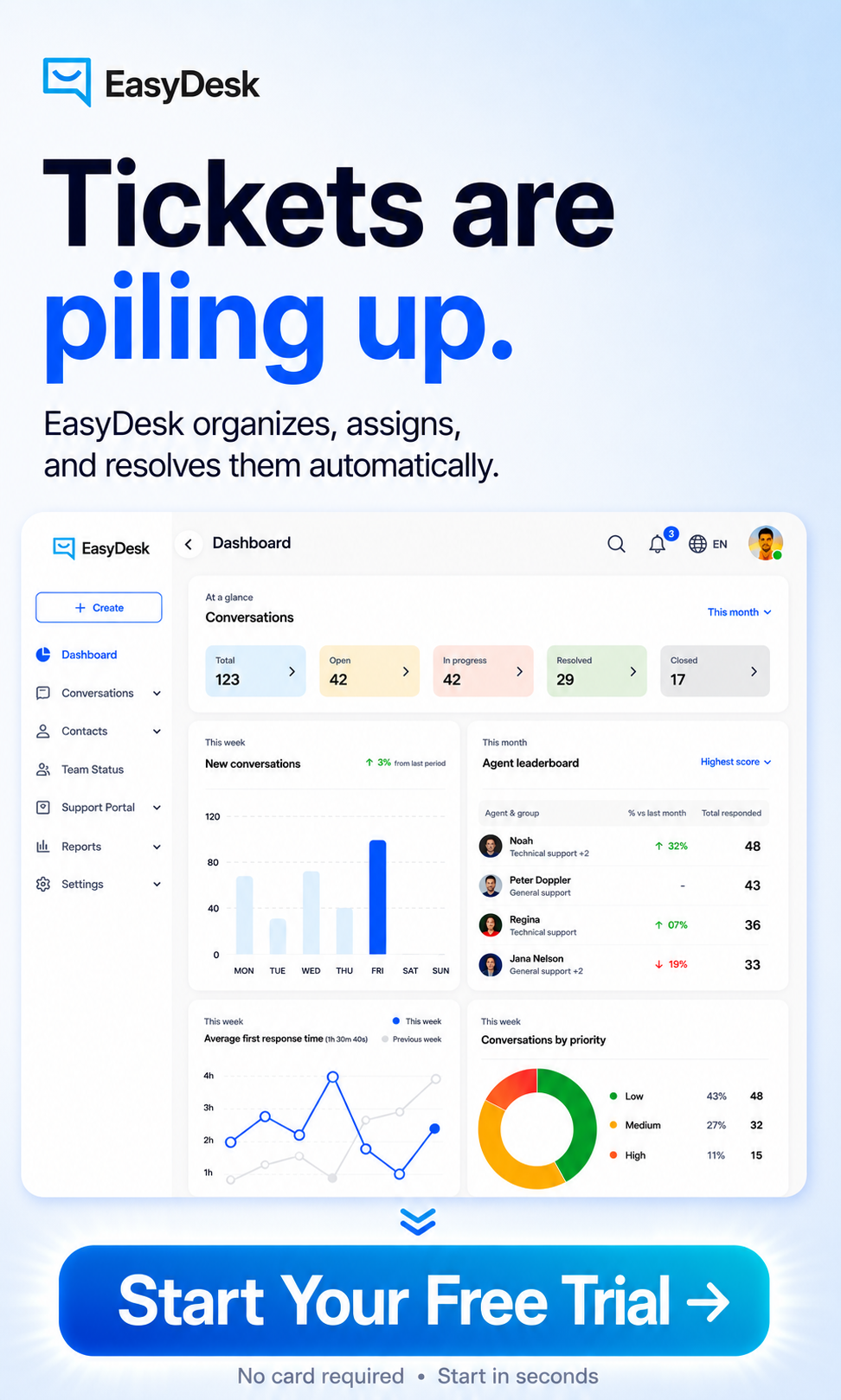
EasyDesk streamlines customer service workload management with smart automation, real-time access to customer data, and structured workload distribution. They have several features that customer service teams and customer support teams use centralized dashboards to manage workload across multiple channels while maintaining consistent service quality. Balanced resource allocation ensures support agents handle customer queries, customer inquiries, and critical tasks without overwhelming the team’s workload.
Advanced technology, machine learning, and predictive analytics provide customer insights that strengthen data-driven decisions and improve operational efficiency. Customer service management tools within EasyDesk automate routine tasks, reduce average response time, and enhance customer interactions. As customers expect fast and personalized support, EasyDesk helps service teams provide service that improves customer satisfaction, customer loyalty, and customer retention while supporting sustainable growth and overall business success. You can use these features at a suitable price.
FAQs
Is Customer Service Workload Management Suitable For Small Businesses?
Yes, customer service workload management benefits small businesses as much as large enterprises. Structured workload distribution, smart resource allocation, and customer service management tools help small customer service teams manage workload efficiently while maintaining consistent service quality and improving customer satisfaction.
Can Customer Service Workload Management Reduce Agent Burnout?
Yes, effective workload management balances the team’s workload and prevents uneven ticket allocation. Clear visibility, automation for routine tasks, and structured service delivery protect support agents from overload while improving operational efficiency and customer experience.
Does Customer Service Workload Management Improve First Contact Resolution?
Yes, customer service workload management supports better prioritization of customer queries and customer inquiries. With real-time access to customer data and customer insights, support teams resolve customer questions faster, which improves customer satisfaction and customer retention.
How Does Customer Service Workload Management Support Data-Driven Decisions?
Customer service workload management uses customer data, predictive analytics, and key metrics such as average response time and net promoter score. Managers gain actionable customer insights that guide resource allocation, workload distribution, and overall customer service management strategy.
Is Automation Necessary In Customer Service Workload Management?
Yes, automation plays a critical role in handling routine tasks and repetitive customer interactions. Tools such as self-service options and virtual assistants allow service teams to focus on critical tasks, personalized support, and proactive support that enhance customer interactions.
Can Workload Management Improve Customer Retention Rates?
Yes, balanced workload distribution ensures customers receive timely and consistent support. When customers feel valued through reliable service delivery and high-quality customer service, customer loyalty strengthens and customer retention increases.
How Does Workload Management Contribute To Long Term Business Growth?
Customer service workload management aligns operational efficiency with customer success. Structured planning, sustainable growth strategies, and continuous monitoring of customer expectations help businesses protect brand reputation, attract new customers, and secure long-term business success.