Running a customer support team operation is not easy. Tickets pile up. Customer inquiries come from email, chat, and social media all at once. Without the right structure, things get messy fast. Your support team ends up scrambling instead of helping. Customers wait too long. Agents burn out.
But it does not have to be this way. When you build solid customer service operations, everything changes. Your team knows who owns what. Tickets move smoothly through the right hands. Customers get faster, better answers. And your business grows because satisfied customers stick around.
This guide walks you through how to build scalable support operations. From team structure to shared inbox software, you will find practical steps that work for startups and growing SaaS companies alike.
Customer Support Team Structure
Building the right customer support team structure is the foundation of everything else. Without it, you will struggle with unclear responsibilities, missed handoffs, and frustrated customers. A good structure grows with your business and keeps customer interactions organized from day one.
Tiered Support Model
The tiered support model is one of the most common approaches for growing teams. It works by dividing support agents into levels based on complexity. Tier 1 handles common customer queries like password resets and basic how-to questions. Tier 2 tackles more complex customer issues like billing disputes or technical bugs. Tier 3 deals with critical problems that need engineering involvement.
This model makes sense when your team grows past two or three people. It lets junior agents handle high volumes while senior agents focus on tough cases. Most teams find this structure useful once they hit 500 to 1000 monthly support tickets.
Centralized Vs Distributed Teams
Some companies keep their entire support team in one location. Others spread agents across regions or time zones. Both approaches have trade-offs.
Centralized teams are easier to train and manage. Streamlines communication happens naturally. But they struggle to provide support outside business hours. Distributed teams can offer coverage around the clock. However, they need stronger documentation and communication platforms to stay aligned. The right choice depends on where your customers are and what response times they expect.
Role Based Team Segmentation
As your team grows, you may want to segment by specialty instead of just tiers. One group might focus on billing and accounts. Another handles onboarding questions. A third tackles API and integration issues.
This approach works well for product-led SaaS companies. Agents develop deep expertise in their area. Customers get better answers faster. The downside is that you need enough volume in each category to justify dedicated people.
Ownership And Accountability Setup
Every ticket needs a clear owner. Without ownership, tickets bounce between multiple team members. Customers repeat themselves. Problems fall through the cracks.
Set up your ticket system so each conversation has a primary owner from the start. That person is responsible until the issue is resolved or formally handed off. This simple rule prevents most of the confusion that creates dissatisfied customers.
Cross Functional Support Alignment
Your support team does not work in isolation. They need regular connections with product, sales, and potential customers' business success. Weekly syncs between support leads and product managers help surface recurring customer pain points. Shared goals like reducing repeat tickets on a specific feature keep everyone rowing in the same direction.
When support feeds structured customer feedback to product teams, you close the loop faster. Bugs get fixed. Features improve and your customer experience gets better with each release.
Customer Service Roles And Responsibilities
Clear roles make everything run smoother. When the customer service team knows exactly what they own, they spend less time confused and more time helping customers. Here is how different roles typically break down in a well-organized support team.
Frontline Support Agents
Frontline support agents are the first point of contact for most customer inquiries. They handle the bulk of incoming tickets across multiple communication channels. Their day might include answering emails in the morning, running live chat shifts in the afternoon, and cleaning up backlog before end of day.
Good frontline agents aim for 80% first-contact resolution. They follow established workflows, use canned responses for common questions, and know when to escalate. They also maintain a friendly, helpful tone that shapes how customers feel about your brand.
Technical Support Specialists
Technical specialists step in when issues need deeper investigation. They reproduce bugs, gather logs and screenshots, and coordinate with engineering. These agents often own queues for integration issues or priority customer accounts, similar to how IT teams work inside a modern IT help desk software.
Their work requires patience and problem-solving skills. They also mentor newer agents by reviewing tricky tickets and leading incident postmortems after major outages.
Team Leads And Supervisors
Team leads keep daily operations running. They monitor queues, help with escalations, and run one-on-one meetings with agents. They own metrics like SLA adherence, backlog size, and customer satisfaction scores.
Supervisors also handle scheduling changes, approve time-off requests, and spot coaching opportunities. They use reporting tools to identify bottlenecks and improve processes before small problems become big ones.
Quality Assurance Roles
Quality assurance focuses on maintaining consistency across customer conversations. QA specialists sample tickets each week to check for accuracy, tone, and policy compliance. They identify training gaps and work with team leads to address them.
In smaller teams, this might be part of a supervisor's job. In larger operations, dedicated QA roles ensure every customer gets the same high-quality experience regardless of which agent helps them.
Support Operations Managers
Support operations managers are the system owners. They configure workflows, maintain automation rules, and manage the helpdesk ticketing software. They build reports, track key performance indicators, and test new processes before rolling them out.
This role becomes essential once teams reach six to eight agents or handle 3000 monthly tickets. Operations managers free frontline agents to focus on customer interactions instead of system administration.
How To Design A Support Workflow
A clear workflow turns chaos into order. It defines what happens from the moment a customer reaches out until their issue is fully resolved. Good workflows reduce errors, speed up response times, and create a consistent customer service experience.
Ticket Intake And Categorization
Every workflow starts with intake. When a customer sends a message through any channel, it becomes a ticket in a dedicated ticketing system. The first step is categorization. Is this a billing question, a technical issue, or a feature request?
Tagging tickets correctly at intake makes everything downstream easier. It enables smart routing, accurate reporting, and faster resolution. Many teams use automation to tag tickets based on keywords or the channel they came from.
Priority And SLA Definition
Not all tickets are equal. A customer locked out of their account needs help faster than someone asking about a future feature. Priority levels help agents know what to tackle first.
Common priority tiers include critical, high, normal, and low. Each tier gets its own SLA target. Chat might need a first response in five minutes. Email might allow up to 24 hours. Clear SLAs set expectations for both customers and agents.
Assignment And Ownership Rules
Once a ticket is categorized and prioritized, it needs an owner. Round-robin assignment distributes work evenly. Skills-based routing matches tickets to agents with the right expertise.
The key is making sure every ticket has exactly one primary owner. This prevents confusion and ensures accountability. If ownership changes, the handoff should be explicit with full context passed along.
Resolution And Customer Follow Up
Resolution is the goal, but how you get there matters. Agents should document their steps, communicate clearly with customers, and set accurate expectations. If an issue needs investigation, proactive updates keep customers informed while you work to cut average resolution time.
Good agents do not just solve problems. They confirm the solution worked and check if the customer has any other concerns. This follow-up builds customer loyalty and reduces repeat tickets.
Closure And Feedback Loop
Closing a ticket is not the end. It is a chance to analyze customer feedback and learn. A simple satisfaction survey after resolution tells you how you are doing. Trends in that feedback highlight areas for improvement.
Closed tickets also feed your knowledge base. Common questions become help articles. Recurring issues become process improvements. This feedback loop turns every customer interaction into an opportunity to get better.
Ticket Escalation Process For Customer Support Team Operations
Even the best frontline agents cannot solve everything. The ticket escalation process ensures tough issues reach the right people without frustrating customers or creating angry customers who feel ignored, directly impacting company’s success. A well-defined ticket escalation process guide helps you design these handoffs deliberately.
Clear Escalation Triggers
Escalation should never be a guessing game. Document exactly when a ticket needs to move up. Common triggers include breached SLAs, security concerns, VIP accounts, and repeated failures on the same issue, helping identify potential issues early.
When agents know the criteria, they escalate confidently. No second-guessing. No delays. Customers get to the right expert faster with clear insights and relevant details.
Defined Escalation Levels
Most teams use three or four levels. Level 0 covers simple how-to questions that rarely escalate. Level 1 is frontline handling. Level 2 involves senior agents or specialists. Level 3 reaches engineering or security for critical incidents supported by advanced technology.
Each level should have clear ownership and response time expectations. A Level 2 agent might need to acknowledge within two working hours. Level 3 might have different rules for production outages versus feature bugs depending on the nature of the issue and related risk factors.
Internal Handoff Standards
Poor handoffs waste time and frustrate customers. Before escalating, agents should document what they tried, attach screenshots or logs, and describe the customer impact. Proper preparing ensures smoother transitions and reduces fear of miscommunication.
Required fields in your ticket system can enforce this. The receiving agent should not need to ask basic questions. They should be able to pick up right where the previous agent left off without additional assistance.
Communication During Escalation
Customers hate silence. When you escalate a ticket, tell the customer. Give them a specific timeframe for the next update. Something like “We will update you by 4 PM tomorrow” is much better than “We will get back to you soon,” improving your service presence.
Use templates to ensure timely responses and consistent messaging. Always include next steps and a point of contact so customers know who owns their case, especially during high-demand events.
Post Escalation Review
After serious escalations, run a quick review. What failed? What worked? What should change in workflows, training, or documentation? These improvements can influence long-term revenue and operational efficiency.
Capture learnings in your knowledge base and internal playbooks. Track how many escalations lead to process changes each month. This metric shows your team is learning and improving rather than repeating the same mistakes.
Best Practices For Customer Service Workload Management
Workload management keeps your team healthy and your customers happy. Poor workload practices lead to burnout, backlogs, and slow response times. Good practices keep everything balanced and ensure users stay informed without facing endless pressure.
Ticket Distribution Balance
Fair distribution prevents some agents from drowning while others coast. Round-robin assignment is the simplest approach. Skills-based routing adds intelligence by matching tickets to expertise, supported by ai and teamsupport ai capabilities.
Monitor distribution regularly. Some agents naturally work faster. Others handle more complex tickets that take longer. Balance should account for both volume and effort, helping managers learn from real patterns.
Capacity Planning Methods
Capacity planning uses historical data to predict future needs. Look at your last 90 days. Identify patterns by day of week, time of day, and channel. Note spikes after product releases or during renewal periods, and track each date carefully across reports and pages.
A simple formula helps: divide monthly tickets by agents and working days to get tickets per agent per day. Target 70 to 80 percent utilization. Higher than that leads to burnout. Lower means wasted capacity, especially if you still rely on purely manual vs automated ticketing approaches.
Backlog Control Techniques
Define what counts as backlog for your team. Maybe it is tickets older than 24 hours or those breaching SLAs. Track it daily on a dashboard everyone can see, ensuring teamsupport systems keep all users aligned.
When spikes hit, have tactics ready. All-hands support days. Temporary priority changes. Pausing non-urgent projects. Bulk actions in your ticket system can help clear backlog quickly when needed without endless delays.
Burnout Prevention Practices
Agent burnout causes turnover rates of 40 percent or higher in poorly managed teams. Prevention starts with reasonable workloads and clear boundaries. Rotate agents off high-stress queues after incidents while recognizing early warning signs.
Regular one-on-ones catch early warning signs like increased errors or irritability. Mental health days and flexible scheduling show your team you value their wellbeing. A healthy team delivers exceptional service while maintaining strong dialogue between teams and managers.
Productivity Monitoring Approach
Track metrics that matter without micromanaging. Average handle time, tickets per day, and reopen rates tell you how agents are performing. But numbers alone miss context, and developers often need deeper insights.
Use data for coaching, not punishment. When metrics dip, investigate causes. Maybe training is needed. Maybe a product issue is creating extra work. Transparency helps teams improve similarly across roles while ai tools support better decisions.
Customer Support Scheduling Strategies
Good scheduling ensures customers get help when they need it while keeping agents from burning out. It balances coverage requirements with human needs.
Demand Based Shift Planning
Start with demand data. When do most tickets arrive? When does chat volume peak? Schedule your strongest coverage during high-demand windows.
Most teams see spikes on Monday and slower weekends. Product releases create temporary surges. Build your schedule around these patterns rather than arbitrary office hours.
Peak Hour Coverage Planning
Peak hours need more agents. That might mean overlapping shifts during lunch when chat volume jumps. It might mean extra coverage on the first Monday after a major release.
Track peak periods monthly. They shift over time as your customer base grows or moves to new time zones. Adjust scheduling to match current reality rather than old assumptions.
Time Zone Support Alignment
Global customers need global support. If your customers span 12 time zones, you need coverage that matches. This might mean hiring remote agents in different regions or running rotating shifts.
For smaller teams, clear published hours work better than thin coverage pretending to be 24/7. Customers prefer knowing when to expect a response over getting slow replies at all hours.
Flexible Shift Models
Rigid schedules cause friction. Agent preferences vary. Some prefer mornings. Others work better late. Capturing preferences and building them into scheduling improves retention.
Flexible models might include shift swapping, compressed weeks, or part-time options during known peaks. The goal is meeting coverage needs while respecting individual situations.
Leave And Absence Management
Time-off requests need clear policies. How much notice is required? Who approves requests? What happens during blackout periods around major launches?
Document these policies and share them with the team. Have backup plans for unexpected absences. Cross-training ensures coverage even when key people are out.
Shared Inbox Software For Support Teams
Shared inbox software transforms how support teams work. It replaces scattered email accounts and spreadsheets with a unified messaging workspace where everyone sees what is happening.
Centralized Customer Communication
A shared inbox brings messages from multiple brands communication channels into one place. Email, chat, social media, and contact forms all flow into a single queue. No more switching between different communication platforms when you leverage key shared inbox benefits.
This centralization means no message gets lost. Every customer conversation is visible to the team. Agents can see the full history before responding, which leads to better answers and happier customers.
Team Visibility And Transparency
When everyone works from the same inbox, visibility improves. Team leads see queue health at a glance. Agents know what their colleagues are handling. No more “I thought you had that” confusion.
This transparency builds trust and accountability. It also makes it easier to balance workloads and spot problems early before they affect customers.
Ownership And Collision Control
Good shared inbox software prevents two agents from replying to the same message. Collision detection shows when someone else is already working on a ticket. Assignment features make ownership explicit.
These controls eliminate duplicate replies and conflicting answers. Customers get one clear response instead of two different ones from multiple customers.
Internal Notes And Mentions
Not everything needs to go to the customer. Internal comments let agents discuss tricky situations privately. Mentions notify specific teammates when their input is needed.
These features reduce side conversations in Slack or email. Everything stays attached to the ticket where it belongs. Future agents can see the full context if the issue comes up again.
Response Time Improvement
Shared inbox software directly improves response times. Agents spend less time searching for information. Canned responses handle repetitive tasks quickly. Automation routes tickets to the right people instantly, especially when you follow a modern shared inbox software guide.
Teams using shared inbox tools consistently resolve more tickets per day. Faster responses lead to higher customer satisfaction and stronger customer and brand loyalty.
How To Integrate Shared Inbox With Ticketing Tools
Integration between your shared inbox and ticket system creates a seamless support workflow. Information flows automatically instead of requiring manual copy-paste between tools when you manage support tickets efficiently.
Unified Ticket Creation
Every incoming message should create a ticket automatically. Whether a customer emails, chats, or sends a social DM, the result is the same: a tracked ticket with full context through automated ticket creation.
Unified creation eliminates the gap between conversations and tickets. Nothing slips through because someone forgot to log it. Every customer interaction becomes part of your support record.
Automated Message Routing
Integration enables smart routing. Keywords trigger automatic tagging. Product mentions send tickets to specialist queues. VIP customers get priority treatment without manual intervention.
This automation reduces the sorting work that consumes agent time. Tickets arrive pre-categorized and ready for action when you implement ticket automation workflows.
Context Sync Across Tools
When your inbox connects to your CRM, agents see customer data alongside messages. Account type, subscription status, previous tickets, and usage metrics appear without searching.
This context enables personalized interactions. Agents understand who they are helping and can tailor responses accordingly. It also reduces handling time because agents do not need to look things up manually.
Status And Priority Mapping
Ticket status should sync automatically between tools. When an agent resolves a conversation in the inbox, the linked ticket closes. Priority changes in one system reflect in the other.
This sync prevents confusion about where tickets stand. Everyone sees the same status regardless of which tool they prefer.
Reporting And Visibility Setup
Integrated tools feed unified reports. You see response times, resolution rates, and customer satisfaction across all channels in one dashboard. No more combining spreadsheets from different sources.
Unified reporting makes it easier to identify bottlenecks and track improvement over time. Decisions get based on complete data rather than partial views.
Effective Ways To Handle Multichannel Support Efficiently
Customers reach out through multiple channels. Email, chat, phone, social media, and in-app messages all demand attention. Managing multi-channel support efficiently requires strategy and the right tools, such as a ticketing software solution that unifies channels.
Channel Prioritization Strategy
Not all channels need the same response speed. Live chat expects near-instant replies. Email can wait a few hours. Social media varies by customer expectations and visibility.
Set clear priorities for each channel. Assign agent capacity accordingly. During high-volume periods, focus resources on channels where delays cause the most damage.
Unified Customer History
Customers hate repeating themselves. When someone emails after chatting, agents need to see that chat history. Unified customer data makes this possible.
A single customer profile collects interactions across all channels. Agents see the full picture before responding. This reduces frustration and speeds up resolution.
Consistent Response Standards
Answers should be consistent regardless of channel. A policy question should get the same response whether asked via email or Twitter DM.
Canned responses help maintain this consistency. Regular training ensures all agents understand current policies. QA reviews catch inconsistencies before they become patterns.
Channel Specific SLAs
Different channels need different SLAs. Chat might target first response in under 5 minutes. Email might allow 24 hours. Social media might need responses within 1 hour due to public visibility.
Configure your desk software to track SLAs by channel. This gives agents clear priorities and helps managers spot where performance needs improvement.
Tool Consolidation Approach
Managing five different tools for five channels creates chaos. Consolidating into one platform that handles all channels simplifies everything and makes it easier to streamline customer support with ticket automation.
Fewer tools mean less context switching, easier training, and unified reporting. Agents focus on helping customers rather than juggling interfaces. This consolidation is one of the biggest efficiency gains teams can make.
Training And Development For Support Teams
Great multilingual support does not happen by accident. It requires ongoing training and development. Investing in your team pays back through better performance and lower turnover.
Structured Onboarding Programs
New agents need structured onboarding rather than sink-or-swim approaches. Cover product knowledge, tools, policies, and tone in a planned sequence. Pair new hires with experienced mentors for their first weeks.
Good onboarding reduces time to productivity. It also improves retention because agents feel supported rather than overwhelmed.
Product Knowledge Enablement
Agents cannot help customers if they do not understand the product. Regular product training keeps knowledge current. Access to internal documentation helps agents find answers quickly.
Involve agents in new feature launches. They should understand changes before customers ask about them. This preparation prevents confused responses and builds confidence.
Soft Skill Development
Technical knowledge is not enough. Agents need empathy, patience, and clear communication. These soft skills determine whether customer concerns get resolved smoothly or escalate into complaints.
Role-playing exercises help agents practice difficult scenarios. Reviewing past tickets highlights what works and what does not. Make soft skills part of ongoing development, not just initial training.
Continuous Coaching Framework
One-time training fades. Continuous coaching keeps skills sharp. Team leads should provide regular feedback based on real ticket reviews.
Short weekly coaching sessions work better than occasional long trainings. Focus on specific behaviors agents can improve. Celebrate wins to reinforce good habits.
Performance Feedback Culture
Agents need to know how they are doing. Regular performance feedback prevents surprises and guides improvement. Share metrics openly so agents can track their own progress.
Balance constructive criticism with recognition. Highlight what agents do well while helping them grow in weak areas. A supportive feedback culture builds engagement and reduces turnover.
Customer Service Challenges And Solutions
Every support team faces challenges. Knowing common customer service challenges and how to address them helps you build resilience before problems become crises.
High Ticket Volume Pressure
Rising volumes outpace staffing by 15 to 20 percent annually in many growing companies. Without adjustment, backlogs grow and response times slip.
Solutions include automation for repetitive tasks, knowledge bases that enable self-service, and proactive capacity planning. Track volume trends monthly so you can hire before breaking points rather than after.
Inconsistent Response Quality
Different agents giving different answers erodes trust. Inconsistency happens when documentation is weak or training is inconsistent.
Build a single source of truth for policies and answers. Use canned responses for common questions. Regular QA reviews catch inconsistencies early. Quarterly policy reviews keep everyone aligned.
Tool Fragmentation Issues
Support tools multiply over time. One for email. Another for chat. A spreadsheet for tracking escalations. This fragmentation wastes time and creates communication gaps that a unified ticketing software system can eliminate.
Audit your tool stack regularly. Consolidate where possible. The goal is fewer tools that work well together rather than many tools that barely talk to each other. Integration between existing tools helps when full consolidation is not possible.
Agent Burnout Risks
Burnout causes turnover rates approaching 40 to 50 percent in poorly managed teams. Constant pressure, emotional labor, and unclear career paths all contribute.
Prevention requires reasonable workloads, supportive management, and growth opportunities. Monitor warning signs like increased errors or rising sick days. Act early before you lose good people.
Scaling Support Operations
Growth creates challenges. What worked for 500 tickets per month breaks at 5000. Processes need to evolve as you scale.
Document workflows so they can be taught to new hires. Automate where possible. Add operations roles when the team grows large enough. Scaling intentionally is much smoother than reacting to constant crises.
How To Measure Support Team Success
You cannot improve what you do not measure. The right key performance indicators show whether your support operations are working and where to focus improvement efforts.
First Response Time Tracking
First response time measures how quickly customers get an initial reply. It directly impacts customer satisfaction. Slow initial responses set a negative tone even if eventual resolution is good.
Track first response time by channel since expectations differ. Compare against your SLAs. Look for patterns like slower responses on Mondays or during shift transitions.
Resolution Time Metrics
Resolution time tracks how long issues take from open to close. Faster resolution generally means happier customers. But context matters. Complex issues legitimately take longer.
Segment resolution time by ticket category. Compare similar issues over time. Improvements in average resolution indicate better processes, training, or tools.
Customer Satisfaction Scores
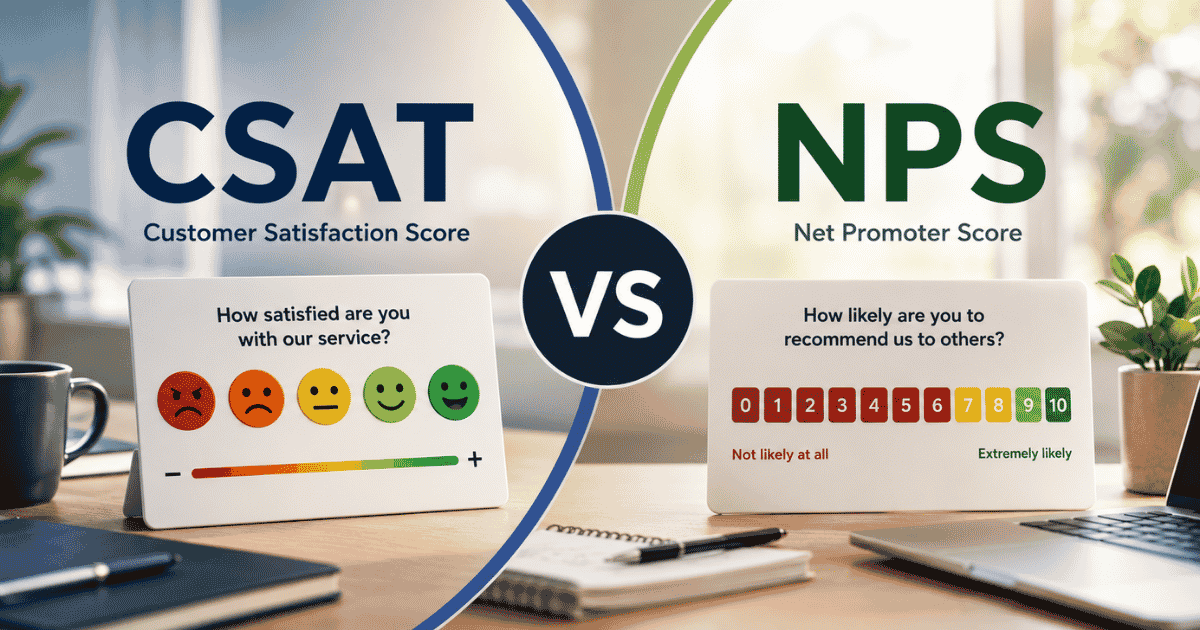
CSAT surveys after resolution capture how customers feel about the experience. Scores around 85 to 90 percent indicate healthy support. Lower scores signal problems.
Analyze customer survey feedback to understand what drives satisfaction or frustration. Look for patterns by agent, issue type, or channel. Address root causes rather than just chasing the number.
Agent Performance Indicators
Individual agent metrics help with coaching and workload management. Track tickets handled, handle time, CSAT, and reopen rates. Use these for development conversations rather than punishment.
High performers can mentor others. Struggling agents might need training or workload adjustment. The goal is helping everyone improve, not ranking people against each other.
Operational Efficiency Metrics
Beyond individual performance, track team-level efficiency. Cost per ticket, self-service deflection rate, and automation usage show how efficiently your operations run.
Improving efficiency means you can handle more volume without proportional headcount increases. This efficiency enables business growth without support becoming a bottleneck.
How EasyDesk Enhances Support Team Operations
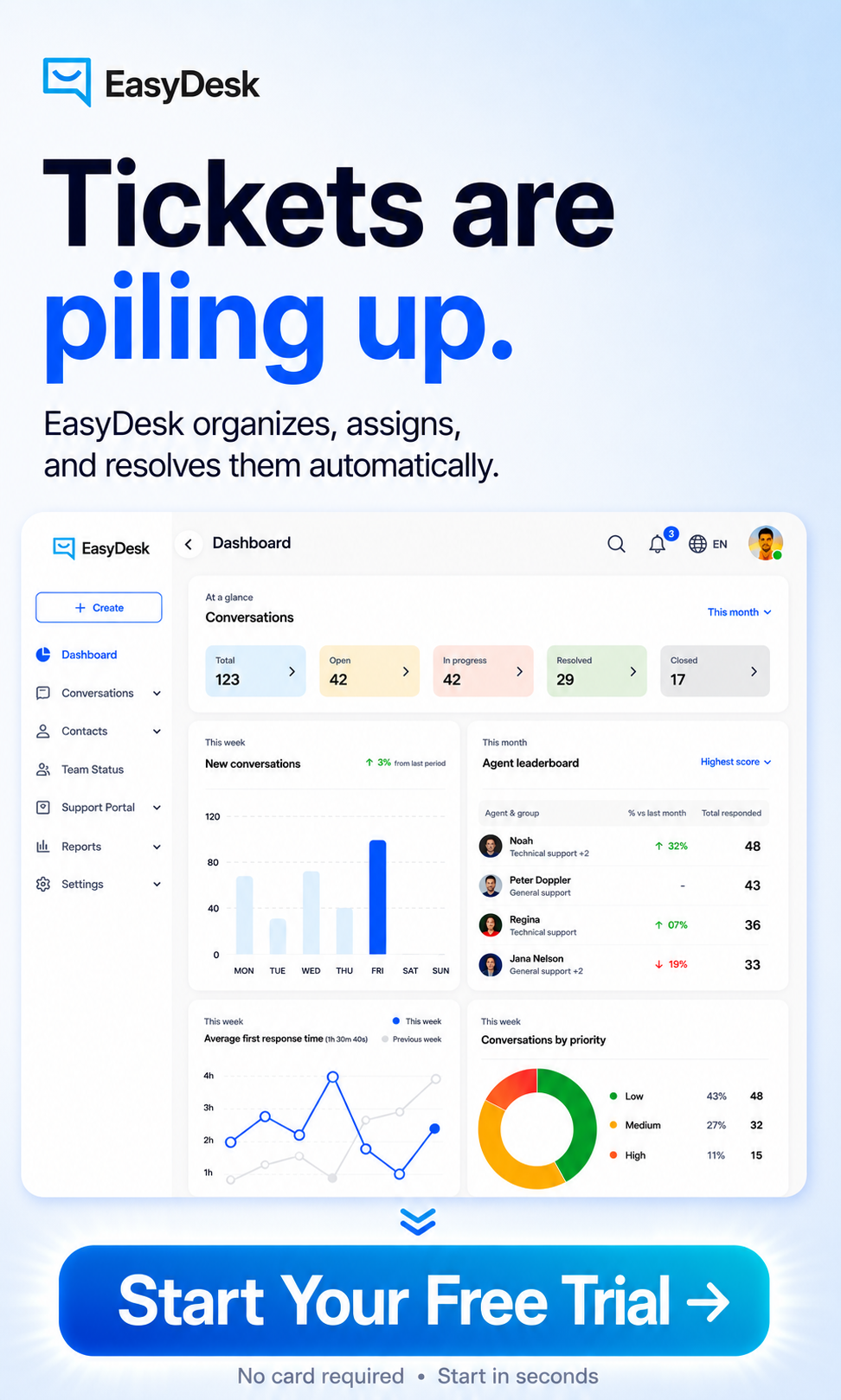
EasyDesk brings everything together in one platform built for support teams. It centralizes customer communications, streamlines ticket management, and gives your team the visibility they need. With EasyDesk, you spend less time managing tools and more time delivering exceptional service. The platform is designed for fast startup, easy adoption, and immediate impact on your support operations while maintaining secure, transparent customer support.
Unified Shared Inbox Experience
EasyDesk combines email, chat, and social media into a single inbox. Every customer conversation lands in one place. Your team sees the full picture without switching between apps or losing track of messages.
Smart Ticket Management
Tickets get created automatically from incoming messages. Categorization, prioritization, and assignment happen through configurable rules in a ticket management system. Agents know exactly what needs attention and what they own.
Automated Workflow Controls
Workflows automate repetitive tasks like tagging, routing, and status updates. SLA tracking ensures nothing slips through the cracks. Your team works smarter with less manual effort when you adopt robust ticket automation software.
Team Collaboration Features
Internal comments and mentions keep discussions attached to tickets. Collision detection prevents duplicate responses. Permissions control who can do what, maintaining order as your team grows.
Actionable Support Analytics
Dashboards show response times, resolution rates, and satisfaction scores in real time. Managers spot trends and identify bottlenecks before they affect customers. Data drives continuous improvement.
FAQs
How Does Customer Support Operations Impact Customer Retention
Strong support operations directly affect whether customers stay or leave. When customers get quick, accurate help, they trust your business more. That trust leads to repeat purchases and long-term loyalty. Poor support pushes customers toward competitors. Studies show 35 percent of customers abandon a business after just one bad experience. Investing in operations pays back through higher retention and lifetime value.
When Should A Business Scale Its Support Team Operations
Scale when you see consistent warning signs. Three months of breached SLAs is a clear signal. So is it regular agent overtime or a rising backlog that never clears? Growth in ticket volume of 15 to 20 percent annually is typical. Plan rather than react. Use historical data to forecast needs for the next quarter so you can hire and train before breaking points.
What Tools Help Standardize Customer Support Processes
Helpdesk platforms like EasyDesk provide the foundation. They offer ticketing, workflow automation, canned responses, and knowledge bases in one place, showing how a help desk improves support behind the scenes. CRM integrations add customer context. Analytics tools track performance. The goal is a connected stack where information flows automatically. Fewer disconnected tools mean more consistency.
How Does Automation Fit Into Support Team Operations
Automation handles routine tasks so agents focus on complex issues. Auto-tagging, routing, and responses for common questions reduce manual work. Workflow rules enforce processes consistently. The key is balance. Over-automation feels robotic. Start with your top five repetitive ticket types. Automate those and measure impact before expanding.
What Causes Inefficiency In Customer Support Teams
Common causes include unclear ownership, fragmented tools, weak documentation, and poor workload management. When agents do not know who handles what, tickets bounce. When tools do not connect, context gets lost. When knowledge bases are outdated, agents waste time searching. When workloads are unbalanced, some agents drown while others coast. Addressing these fundamentals unlocks efficiency gains.
How Can Small Teams Build Enterprise-Level Support Operations
Start with structure and process, not headcount. Define roles clearly, even if one person fills multiple roles. Document workflows so they can be taught. Use automation to multiply your capacity. Choose tools that scale with you. Track the right metrics to guide decisions. Small teams with good operations outperform larger teams with chaos. Focus on doing the basics exceptionally well before adding complexity.