Every Monday morning, the same scene plays out. You open your support inbox and find dozens of unread messages piled up from the weekend. Some are urgent billing questions. Others are simple password resets buried under complaints about shipping delays. Without a system, you start scrolling, copying, pasting, and hoping nothing slips through.
Ticket automation software changes that routine. Instead of chaos, every customer message becomes a structured ticket with an owner, priority, and due date. Routing happens instantly. Urgent issues surface first. Your support team knows exactly what to tackle next.
This article explains what ticket automation software does, which features matter most, and how platforms like EasyDesk help growing teams deliver consistent, timely support without the overhead of complex enterprise tools.
What Is Ticket Automation Software?
Ticket automation software is a help desk ticketing system that captures, organizes, and tracks support requests from multiple support channels such as email, live chat, and web forms. Instead of a shared inbox, a ticketing system converts customer messages into structured support tickets with clear ticket status, ownership, and deadlines. This approach helps support teams efficiently manage customer requests while maintaining full visibility across customer conversations.
Each support ticket includes requester details, priority, ticket history, and assigned support agents. Advanced automation and ticket routing rules handle ticket creation and routine tasks without manual effort. As a result, support operations become faster, more consistent, and easier to scale, while real-time data supports better agent performance and higher customer satisfaction.
Unlike basic inbox tools, ticket automation software adds service management features such as support workflows, SLA tracking, collaboration tools, and custom reports. Many ticketing systems also offer a unified inbox, user-friendly interface, mobile accessibility, and a knowledge base or self-service portal to empower customers and deliver personalized support as business needs grow.
Key Features In A Ticket Automation Software
The value of ticket automation software depends on how effectively it removes manual effort from daily support operations. Strong automation helps a support team manage high ticket volumes, maintain consistent service management standards, and improve customer satisfaction without adding headcount or operational complexity.
Automatic Ticket Creation
Automatic ticket creation forms the backbone of any modern help desk ticketing system. Customer messages from email, web forms, live chat, and other multiple support channels should flow directly into a unified inbox. Each message converts into a structured support ticket with requester details, ticket status, and timestamps already in place.
This automation eliminates manual data entry and ensures no customer requests remain overlooked. A reliable desk ticketing system also preserves full ticket history from the first interaction. Tools like EasyDesk connect existing support emails quickly, allowing teams to efficiently manage incoming tickets while maintaining a familiar, intuitive interface for daily work.
Routing And Assignment Rules
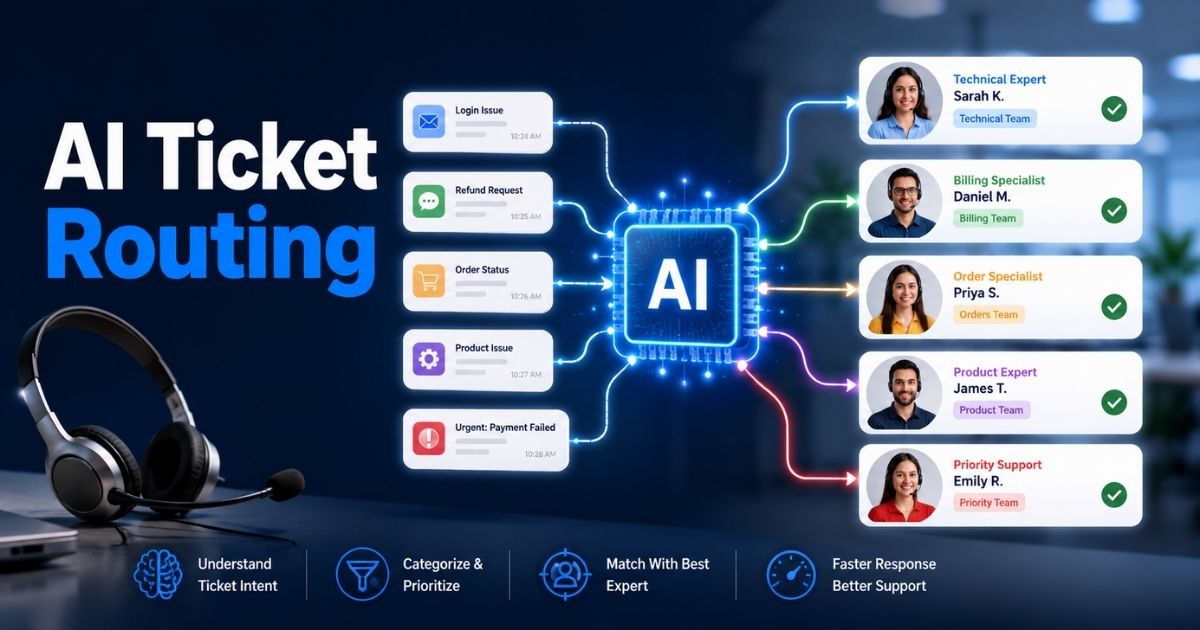
Smart ticket routing ensures every issue reaches appropriate agents without manual review. Rules based on keywords, tags, customer type, or product category automatically assign tickets to the right queue or support agents. This approach keeps desk management organized and reduces response delays across multiple channels.
Balanced ticket assignments protect agent performance by preventing overload on a single team member. Round robin distribution and priority-based routing help support workflows that remain predictable during peak demand. As a result, customer support teams handle support tickets faster, avoid duplicate replies, and maintain consistent service quality across the desk system.
SLA And Priority Automation
SLA automation enforces response and resolution commitments without constant monitoring. Ticketing software tracks deadlines in real time and applies priority rules based on urgency, customer tier, or issue type. High-risk tickets receive attention before service levels suffer. It improves support performance.
Escalation rules protect support operations during busy periods. A system can notify managers, reassign tickets, or change ticket status when thresholds approach. This level of advanced automation prevents missed deadlines, protects customer satisfaction, and gives IT teams and service desk leaders confidence that critical customer interactions receive proper focus.
Canned Responses And Templates
Canned responses reduce repetitive tasks while preserving personalized support. Common customer requests such as password resets or access issues trigger prebuilt replies with accurate, consistent information. Customers receive fast confirmation without waiting for a manual response.
Templates also help new support agents follow best practices from day one. A user-friendly interface allows teams to adjust language based on ticket context or customer history. This balance of automation and flexibility improves first response time while keeping customer conversations helpful and human.
Reporting Automation
Automated reporting replaces manual spreadsheets with real-time data dashboards. Managers track ticket volume, response times, agent workload, and channel performance without extra effort. These insights support scalable support decisions as business needs evolve.
Historical reports reveal trends across customer interactions and support workflows. Leaders identify recurring issues, SLA risks, and training gaps early. With advanced reporting built into the ticketing system, teams improve team performance, justify resource allocation, and refine customer support strategies with confidence.
EasyDesk bundles all of these features into a clean user interface. A new admin can set up rules in minutes without scripts or development work. The no-code automation builder lets you create conditions like “if subject contains ‘invoice’ then tag as Billing and assign to Finance” using simple dropdown menus.
How Ticket Automation Software Improves Customer Support
Ticket automation software strengthens customer support by standardizing service management, reducing response delays, and removing operational friction. Over time, automation improves support workflows, elevates agent performance, and creates a more reliable experience across customer interactions and multiple support channels.
Faster First Response Times
Automation acknowledges incoming tickets the moment customer messages arrive through email, chat, or other multiple channels. Customers receive instant confirmation that their support requests have entered the ticketing system, even outside office hours. This immediate feedback reduces uncertainty and builds early trust.
Canned responses within help desk software provide clear next steps for common customer requests. When support agents begin work, support tickets already appear sorted by priority and ticket status. This structure allows the support team to efficiently manage urgent issues first, shorten response times, and improve overall customer satisfaction.
Consistent Classification And Routing
Manual ticket management often leads to inconsistent tags and delayed resolutions. Ticket automation software applies predefined rules that classify customer requests uniformly across the desk system. Each ticket enters the correct queue based on subject, keywords, or custom fields.
Accurate ticket routing ensures tickets reach appropriate agents without delays. This consistency prevents customer conversations from stalling in the wrong inbox. Over time, standardized classification improves reporting accuracy, strengthens support workflows, and helps service desk teams maintain predictable service levels across growing volumes of incoming tickets.
Reduced Agent Burnout
Automation removes repetitive tasks such as acknowledgments, tagging, and ticket assignments from daily workloads. Support agents spend less time on administrative work and more time resolving complex customer issues that require judgment and empathy.
Clear ownership and visible deadlines within the desk ticketing system reduce confusion and context switching. Agents understand priorities at a glance, which improves employee satisfaction and reduces stress and burnout. Healthier workloads also lead to better agent performance, stronger collaboration, and higher-quality customer interactions across the support team.
Measurable Business Impact
Consistent and timely customer support produces measurable business outcomes. Faster resolutions reduce churn, lower refund requests, and protect long-term revenue. Customers who receive reliable help through a structured ticketing system remain more loyal.
Advanced reporting inside modern ticketing software tracks key metrics such as response time, resolution rate, and ticket volume. These insights help teams refine support operations, justify investments, and demonstrate clear improvements in customer satisfaction within months of adopting automation.
Consider a SaaS startup that moved from a shared Gmail inbox to EasyDesk automations. Before the switch, response times averaged over 24 hours on weekends. After implementing routing rules and auto-acknowledgments, the average first response dropped below four hours across all days. Ticket backlog cleared faster, and the team could handle 40% more volume without adding headcount.
Best Use Cases For Ticket Automation Software
Ticket automation software supports a wide range of business models by standardizing ticket management and support workflows. As request volumes rise, automation helps teams maintain consistency, improve customer satisfaction, and scale support operations across multiple channels without increasing operational strain.
Customer Support For SaaS And Ecommerce
SaaS and e-commerce businesses handle large volumes of repetitive customer requests such as order status checks, password resets, billing updates, and onboarding questions. Ticket automation software converts customer messages from email, chat, and forms into structured support tickets inside a unified inbox.
Automation applies tags, ticket status, and priority rules automatically. Billing issues route to finance, while technical queries reach product specialists or engineering support agents. Canned responses handle common questions, while advanced automation escalates complex cases. This structure allows the support team to efficiently manage incoming tickets, deliver personalized support, and maintain fast response times through a user-friendly interface.
Internal IT And Operations Teams
Internal IT teams rely on a service desk to manage employee support requests such as device repairs, software access, and account setup. A desk ticketing system brings order and accountability to internal customer support across departments.
Automation assigns tickets based on device type, issue category, or department. SLAs adjust based on employee role or urgency, ensuring critical requests receive faster attention. Clear ticket history and real-time data improve collaboration between technicians. This structured desk system increases employee satisfaction, reduces downtime, and allows IT teams to track metrics and improve service management efficiency.
Professional Services And Agencies
Agencies and consulting firms manage client change requests, approvals, and feedback through support tickets. Ticket automation software creates dedicated queues for each client, ensuring contractual SLAs and priorities remain visible throughout project lifecycles.
Custom fields capture project codes, approval status, and contract values. Automated ticket routing ensures requests reach the right account managers or delivery teams. Advanced reporting tracks response times and client satisfaction trends. This approach helps agencies maintain consistent service quality, avoid missed deliverables, and support scalable support as client portfolios grow.
Customer Success And Account Management
Customer success teams use ticketing software to track onboarding questions, feature requests, and account-related issues. Automation categorizes customer interactions based on lifecycle stage or account tier, helping teams focus on high-value relationships.
Priority rules highlight renewal risks or escalations, while ticket assignments ensure appropriate agents manage strategic accounts. Visibility into ticket history allows teams to personalize responses and anticipate customer needs. This structured approach improves retention, strengthens customer conversations, and aligns customer support efforts with long-term business needs.
HR And Employee Support Functions
HR teams handle employee inquiries related to payroll, benefits, leave requests, and policy clarification. A help desk ticketing system centralizes these requests into a secure, organized desk system.
Automation assigns tickets based on request type and applies deadlines aligned with internal policies. Knowledge base articles and self-service portals resolve routine questions before escalation. This reduces repetitive tasks for HR staff, improves response consistency, and creates a clear record of employee interactions. As organizations scale, ticket automation software ensures internal support remains efficient and compliant.
EasyDesk fits each scenario through flexible queues, custom fields, and automation rules that adapt without requiring development work. Whether you manage external customer conversations or internal support workflows, the same platform scales to your needs. It gives you advanced security and smart routing
How To Choose The Right Ticket Automation Software
The right ticket automation platform aligns with current support operations while supporting future growth. A careful evaluation of channels, automation depth, and flexible pricing tiers ensures the ticketing system delivers long-term value without unnecessary complexity or hidden cost increases.
Assess Channels And Ticket Volume
Every support team handles customer requests differently. Some teams rely on email only, while others manage live chat, web forms, and social platforms across multiple channels. Multi-channel support becomes essential when customers expect consistent responses regardless of where they reach out.
Ticket volume also shapes platform requirements. A team processing dozens of support tickets per week needs basic workflows, while high-volume environments demand advanced automation, ticket routing, and performance tracking. Accurate volume estimates help teams choose a scalable solution that supports efficient ticket management and protects customer satisfaction as demand grows.
Prioritize Ease Of Setup
Fast setup reduces disruption and accelerates value. Platforms with guided onboarding, in-app configuration, and prebuilt templates allow teams to launch support workflows without external consultants or long implementation cycles.
A user-friendly interface helps support agents adapt quickly. A simple setup also encourages experimentation with automation rules and desk management practices. When configuration feels intuitive, teams spend less time on technical setup and more time improving customer interactions and service management outcomes.
Evaluate Automation Depth
Automation capabilities vary widely across ticketing software. Some platforms handle basic ticket creation and assignment, while others support advanced automation across departments. Strong rules engines allow ticket routing based on multiple conditions, such as priority, category, or customer type.
Time-based escalations and multi-step workflows improve accountability across support operations. Platforms that restrict advanced features to expensive pricing tiers limit long-term scalability. A balanced solution should automate repetitive tasks, support complex workflows, and adapt as business needs evolve.
Review Reporting And Integrations
Effective reporting turns support data into insight. Dashboards should display response times, resolution rates, SLA compliance, and ticket volume by channel. Clear visibility into agent performance supports continuous improvement across the support team.
Integrations also matter. Connections with collaboration tools, CRM systems, and knowledge base platforms enrich customer conversations and reduce context switching. Seamless integration strengthens the ticketing system as a central hub for customer support and internal service desk operations.
Validate With Real Support Tickets
Trials reveal realities that demos cannot. Routing real customer messages through a test environment highlights workflow gaps, automation errors, and usability issues. A free plan or trial period provides a safe way to evaluate real-world performance.
Observation during testing matters. Watch how support agents interact with the system, adjust ticket status, and respond to edge cases. This hands-on validation ensures the selected platform supports efficient ticket management, consistent service delivery, and future scalability.
EasyDesk offers a straightforward trial process. You can connect your existing support email, import a sample of tickets, and experience automation under real conditions before committing. The shared inbox feature excels by converting emails into tasks with assigned owners, right inside your familiar Gmail interface.
Best Practices For Effective Ticket Automation
Ticket automation delivers strong results when strategy, structure, and execution stay aligned. Clear goals, disciplined ticket management, and consistent optimization help support teams streamline support operations, improve customer satisfaction, and scale service management without sacrificing quality.
Define Clear Automation Goals
Clear objectives give direction to every automation decision. Teams should identify whether success means faster response times, higher resolution rates, or improved customer satisfaction. These priorities shape how ticketing software rules, workflows, and reports take form.
Measurable goals also support accountability. Benchmarks such as first response time or SLA compliance allow teams to track progress over time. With defined targets, support operations remain focused, and automation efforts deliver visible business impact.
Standardize Ticket Categorization
Consistent ticket management starts with accurate categorization. Each support ticket should follow clear rules for ticket status, priority, and ownership. This structure allows the desk system to route tickets correctly and maintain visibility across customer interactions.
Standard categories also improve reporting accuracy. When customer requests follow uniform labels, teams gain reliable insights into trends and recurring issues. This clarity supports better decision-making and reduces the risk of tickets falling through gaps.
Use Automation For Repetitive Tasks
Repetitive tasks slow down even the most capable support team. Automated ticket routing, acknowledgments, and basic replies remove unnecessary manual work from daily workflows. Support agents gain time to focus on complex customer conversations.
Advanced automation features also reduce errors caused by manual handling. Reliable rules ensure incoming tickets reach appropriate agents every time. This balance improves agent performance while maintaining personalized support across multiple channels.
Maintain A Strong Knowledge Base
A well-maintained knowledge base supports both customers and support agents. Clear articles answer common customer requests before a support ticket ever forms. This reduces ticket volume and improves self-service success.
Internal teams also benefit from updated documentation. Quick access to accurate answers improves resolution speed and consistency. Over time, a strong knowledge base becomes a core feature of scalable support and efficient desk management.
Track Metrics With Real-Time Data
Real-time data reveals how automation performs in daily operations. Dashboards should highlight response time, resolution speed, ticket volume, and agent workload. These insights show whether support workflows deliver expected results.
Trends across customer interactions guide optimization efforts. Data-driven reviews help teams refine automation rules, adjust priorities, and improve service quality. Continuous measurement ensures ticketing software evolves with business needs.
Support Ongoing Team Enablement
Automation succeeds when support agents understand and trust the system. Regular training ensures teams use the ticketing system correctly and adapt to new workflows with confidence. Clear processes reduce friction and resistance to change.
A culture of continuous improvement strengthens long-term results. Teams that review outcomes, share feedback, and refine practices deliver better customer support. This approach improves employee satisfaction while protecting service consistency as operations scale.
Common Challenges In Ticket Automation Projects
Ticket automation software improves support operations, yet implementation often introduces operational and human challenges. Awareness of these risks helps teams protect customer satisfaction, maintain service quality, and build a ticketing system that supports long-term growth without disrupting customer interactions.
Team Adoption And Change
Support agents often rely on familiar processes. New ticketing software can create uncertainty around daily workflows and responsibilities. Clear communication about automation goals helps reduce resistance and builds confidence across the support team.
Training plays a critical role in adoption. Hands-on guidance shows agents how automation reduces repetitive tasks and improves ticket management. When teams understand personal benefits such as reduced workload and clearer priorities, acceptance rises, and agent performance improves.
Over Automation Risks
Excessive automation can harm customer support quality. Automated responses that feel generic or poorly timed reduce trust and damage customer satisfaction. Automation should assist agents, not replace meaningful customer conversations.
Balanced service management allows support agents to intervene when context or empathy matters. Clear rules for escalation and manual overrides preserve personalized support. This balance ensures automation improves efficiency without sacrificing human connection.
Integration And Technical Barriers
Technical challenges often appear during setup. Integration gaps between the ticketing system and existing tools slow workflows and reduce visibility across customer interactions. Early planning helps prevent fragmented support operations.
Collaboration with the IT team simplifies configuration. A user-friendly interface and clear documentation reduce errors during automation setup. Reliable integrations strengthen desk management and keep the ticketing system central to daily support work.
Data Quality And AI Accuracy
Automation relies on accurate data. Poorly labeled support tickets and inconsistent ticket history reduce the effectiveness of AI-powered features. Clean data allows advanced automation to classify and route tickets correctly.
Clear documentation standards improve results. Consistent categories, priorities, and fields support reliable ticket routing and reporting. Over time, strong data hygiene improves automation accuracy and strengthens service management decisions.
Scalability And Future Growth
Support operations change as organizations grow. A ticket automation platform must handle rising ticket volume without workflow disruption. Limited features or rigid pricing tiers can restrict scalability.
Early planning prevents rework. Flexible automation, scalable reporting, and adaptable support workflows protect long-term efficiency. A scalable solution ensures the support team continues to deliver consistent service quality as business needs evolve.
How EasyDesk Helps Teams Automate Tickets
EasyDesk helps teams automate tickets through a simple, focused help desk ticketing system built for fast setup and daily usability. It centralizes customer messages from email, chat, and forms into a unified inbox, where every request becomes a structured support ticket with clear ticket status, ownership, and priority. This structure allows support teams to efficiently manage customer requests across multiple channels while maintaining visibility into ticket history and deadlines.
Automation works through a no-code rules builder that handles ticket routing, tagging, and ticket assignments based on conditions such as keywords or customer type. SLA tracking monitors response and resolution targets, while automated escalations protect service levels during peak demand. These features streamline support operations and remove repetitive tasks from agents’ workloads.
EasyDesk also includes a knowledge base and self-service portal that deflects routine inquiries and provides personalized support. Flexible pricing tiers, a basic plan with core features, and an intuitive interface help teams achieve scalable support without complex setup. You can also enjoy a custom pricing option based on your team size. That's why it's one of the best ticketing software for growing businesses.
FAQs
What Is The Purpose Of A Ticketing System?
The purpose of a ticketing system is to capture, prioritize, and manage customer issues from start to resolution. It converts each request into a trackable support ticket, ensuring clear ownership, visibility, and timely resolution.
How Long Does It Take To Set Up Basic Automation?
Basic automation setup usually takes two to four hours. Teams can connect support channels, configure ticket routing, add canned responses, and define SLA targets within the same day, with refinements added gradually.
Can Ticket Automation Support Multilingual Customers?
Yes. Ticketing systems can route customer requests by language using tags, queues, or custom fields. This approach ensures multilingual tickets reach appropriate agents and maintains consistent customer support across regions.
How Can Teams Measure Customer Experience Improvements?
Key indicators include first response time, resolution time, SLA compliance, and customer satisfaction scores. Improvement across these metrics alongside stable or rising ticket volume confirms automation success.
What Mistakes Should Teams Avoid Early On?
Common issues include complex rules too early, missing fallback queues, and outdated automation logic. Simple rules, default routing, and regular reviews help teams maintain reliable support workflows.
Does Ticket Automation Replace Support Agents?
No. Automation handles repetitive tasks and ticket routing, while support agents focus on complex customer interactions. This balance improves agent performance without removing human judgment from customer support.
Is Ticket Automation Suitable For Small Teams?
Yes. Small teams benefit from faster responses, clearer ownership, and reduced manual work. Even low ticket volumes gain structure and scalability through a simple ticketing system.