In 2026, IT help desk software matters because work no longer happens in one office, on one network, or during one fixed schedule. Hybrid teams expect fast support from laptops, mobile devices, and shared workspaces, while AI-driven ticket management is now used for routing, summaries, and response suggestions. Buying existing helpdesk software can reduce launch time, but it may limit workflow control, data rules, and long-term customization.
Building from scratch gives you ownership over the ticketing system, ticket management, service management, and multi-channel support that fit your organization. Help desk software centralizes IT support requests from both employees and customers, making it easier to log, track, and resolve issues efficiently. This guide gives you a practical roadmap from discovery to launch, including self-service portal and customer portal design.
Concepts Of IT Help Desk Systems
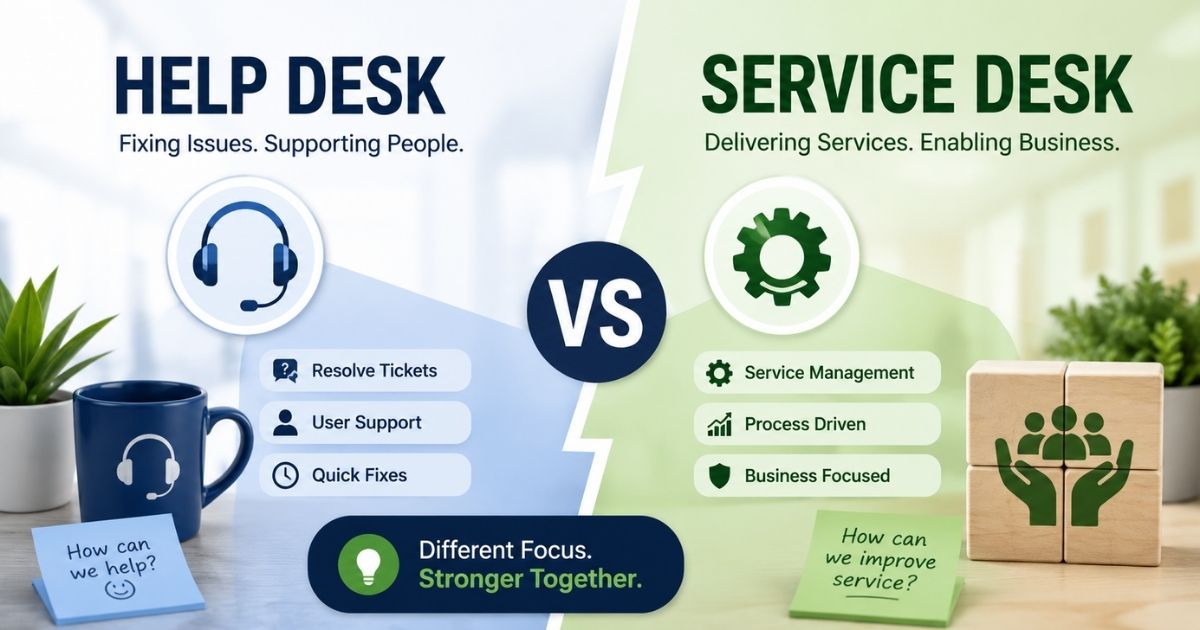
IT help desk software is a central hub for internal employees and external users who need help. IT support help desks focus on resolving internal staff issues, while customer service help desks are designed to assist external customers with product-related inquiries and troubleshooting. In both cases, the platform turns support requests into trackable records.
A ticketing system logs each request, assigns ownership, stores messages, and keeps status clear. Ticket routing rules then move relevant tickets to the right person or team based on priority, category, location, or skill. Help desk software centralizes all support requests into a single system, allowing teams to respond more quickly and resolve issues faster, which leads to improved customer satisfaction and fewer escalations.
Key Components Every Help Desk Platform Needs
Ticket creation, ticket categorization, and status tracking are the foundation of any helpdesk software. Ticket Management automatically converts emails, chats, and forms into trackable support tickets, so customer inquiries and internal issues do not disappear in inboxes.
Automation features reduce manual work. Automation in help desk software boosts team productivity by handling repetitive tasks like ticket assignment and follow-ups, allowing agents to focus on more complex interactions. Automated ticket assignment rules route tickets to specific agents and send automatic updates to users.
A searchable knowledge base and self-service portal lower support effort. Self-Service Portal offers a user-facing library of articles to resolve common issues independently. Lower Support Costs come from self-service portals deflecting simple questions, reducing total ticket volume.
Non-Functional Requirements To Consider
Performance matters from day one. If your ticket volume grows to thousands per day, the user interface must stay fast for agents, managers, and requesters. High ticket volume also requires server-side filtering, fast search, and background processing that does not block the main workflow.
Security features are baseline requirements in 2026. Role-based access control, audit logs, encryption in transit, and encryption at rest should be part of the core design. Data security is especially important because help desk systems often include personal details, device data, screenshots, access problems, and customer data.
Compliance depends on your region and industry. GDPR may apply in the EU, while healthcare, finance, and payment workflows may require stricter controls in the US and other markets. Design retention, anonymization, and export logs early instead of treating them as afterthoughts.
Planning The Architecture Of Your Custom Help Desk Software
Architecture choices made in the first month can shape cost, speed, and flexibility for years. A practical help desk solution usually separates the ticketing engine, user portal, agent workspace, notification service, reporting layer, and integration layer.
A monolith can work for a small company that needs quick delivery and simple operations. A microservice model may suit larger organizations with many integrations, high load, and separate teams managing different parts of the desk software, so understanding modern help desk solutions in 2026 helps you choose the right direction. The best help desk solution is not always the most complex one. It is the one that fits your business requirements, team size, budget, and existing technology stack.
Choose a web-first design with responsive layouts. Agents may work from large monitors, while requesters may open tickets from mobile devices using a weak internet connection. A clear and intuitive interface keeps support simple across both situations.
Data Model For Tickets And Users
Start with core entities: tickets, requesters, agents, teams, departments, organizations, and assets. Each ticket should have a requester, status, priority, impact, SLA due time, channel source, comments, attachments, and assignment history. Ticket assignment history helps managers understand who handled the issue and when. Channel source shows whether the request came from email, chat, web forms, phone, or monitoring alerts. SLA fields support SLA management for support teams and make accountability visible.
Custom fields and tags give teams flexibility. For example, an IT team may track location, device type, application version, or business impact. These fields also support future AI features by giving models cleaner training signals. Plan soft deletes, versioning, and audit history. They help with investigations, compliance reviews, and recovery when a record is changed by mistake.
Technology Stack Choices
A common stack uses a TypeScript-based frontend with a RESTful or GraphQL backend. The frontend should make ticket management fast, while the backend enforces permissions, workflows, automation rules, and data validation. Relational databases are strong for structured ticket data, users, teams, and SLA policies. Search engines or document stores help with full-text queries across tickets, comments, and knowledge base articles.
Real-time updates improve the agent experience. WebSockets or server-sent events can show new messages, SLA warnings, and status changes without constant refreshes. Ticket automation software builds on this foundation to keep queues moving without constant manual checks. Containerization helps with repeatable deployment. Containers and orchestration tools make it easier to separate development, staging, and production while supporting future growth.
Integration Strategy For Existing IT Ecosystems
Most organizations already use email, identity providers, chat, monitoring tools, and business software. Your integration capabilities should bring those existing tools into one support flow instead of forcing users to copy information manually. Use webhooks for outbound events, such as ticket closed, ticket escalated, or SLA breached. Use inbound connectors for alerts, forms, and chat messages that create tickets automatically.
Design a consistent connector framework rather than scattered one-off scripts. Such tools are easier to maintain when integrations change. Plan future readiness for asset management, CMDB data, and asset lifecycle management. Asset Management links hardware and software data directly to user support tickets. It also links specific hardware, software, and vendor information directly to user tickets, simplifying auditing and tracking device lifecycle, and illustrates how a help desk improves support behind the scenes.
Design Of Ticketing System And User Experience
Imagine March 2026. A remote employee cannot connect to the VPN. She opens a chat widget from her laptop, describes the issue, and includes her location and device. The system suggests a knowledge base article first. If that does not solve the issue, the request becomes a ticket, receives a priority, starts an SLA timer, and moves to the right queue.
Good user experience keeps the journey clear. The requester should know whether the issue is new, in progress, waiting for the user, or resolved. The agent should see context, history, and next action without hunting across tabs.
A few UX rules matter most for designing multi-channel support software:
- Keep search and ticket creation easy to find.
- Show status, priority, and SLA risk clearly.
- Use plain language for customer queries and internal notes.
- Consolidate requests across all communication channels into a unified inbox, eliminating lost requests and bouncing tickets.
- Make customer interactions visible in one conversation history.
Ticket Lifecycle Design
Define stages such as new, in progress, waiting for user, on hold, resolved, and closed. Clear transitions prevent tickets from drifting without ownership.
Automation can enforce lifecycle rules. For example, a ticket waiting for user can trigger reminders, then auto-close after a defined period. Automated workflow software tracks strict target response and resolution times, alerting managers if deadlines are missed, enforcing clear accountability for the IT team.
Internal notes, attachments, and change history help IT teams collaborate safely. Agents can share logs, screenshots, and troubleshooting notes without exposing private comments to requesters.
Linked tickets and parent-child relationships are useful during outages. A major network issue can connect many related user reports under one parent incident.
Agent Workspace Design
An effective agent workspace shows priority queues, SLA countdowns, personal workload, and pending reassignment. Higher Productivity is achieved when agents resolve issues faster by eliminating manual sorting and repetitive tasks, especially when they use support ticket management with EasyDesk to keep work organized.
Canned responses, shortcuts, quick filters, and saved searches reduce repetitive effort. Keyboard-friendly workflows help experienced agents move quickly through common tasks.
Inline knowledge base suggestions save time. Previous tickets from the same requester or similar issues can help agents solve problems without starting from zero.
Collaboration tools also matter. Agents may need to consult another team, connect with Microsoft Teams, or link work to project management tools when a ticket becomes a larger task.
Self Service Portal And Customer Portal Design
A self-service portal should be organized around real user needs, such as access issues, hardware problems, software requests, and account questions. Provides an internal hub where users can access FAQs, how-to guides, and automated chatbots to resolve common issues themselves.
Search should be central. The portal should surface FAQs, troubleshooting guides, and how-to articles before users submit a ticket. Strong knowledge base management keeps content accurate and useful.
A customer portal should let users view ticket history, add comments, upload attachments, and check real-time status. Self-service options reduce repetitive questions and improve service quality.
After resolution, a simple rating prompt can measure customer satisfaction. Those scores help leaders see which workflows need attention.
Support For Multi-Channel Request Intake
Support requests may arrive through email, web forms, chat widgets, phone calls, social media, product prompts, or monitoring alerts. Each channel should create standardized records with consistent metadata, similar to how dedicated multi-channel support software centralizes conversations.
Unified conversation history gives agents the full story. A user may begin with chat, reply by email, and call later. The agent should not need to piece together the case manually.
Visible SLAs set clear expectations by channel. A live chat may require faster first response than email, while critical incidents may trigger urgent alerts.
Duplicate detection protects queue quality. If the same user reports the same outage through several paths, the system should merge or link those records.
Implementation Of Core Features And Automations
Build in phases. Phase one covers core ticket CRUD, statuses, assignment, and basic dashboards. Phase two adds ticket routing, notifications, canned responses, and SLA tracking. Phase three adds analytics, smarter suggestions, and advanced AI features once there is enough data.
Help desk software can significantly improve response times and ticket resolution rates, with companies using such tools resolving tickets 23% faster on average compared to those without them. That improvement depends on clean workflows, not only technology.
According to an IT service desk optimization report, many tech leaders already use AI for ticket routing and support assistance, with 72% reporting AI use for ticket routing and 63% for other AI-assisted features in the research.
Ticket Management And Views
Different support teams work differently. Some prefer list views for speed, board views for visual workflow, or detail views for complex cases.
Saved filters, team views, and bulk actions reduce daily friction. Managers may want queues by department, priority, or SLA risk. Agents may want personal views for assigned work.
Large queues need pagination, server-side filtering, and fast search. Without these basics, high ticket volume turns the system into a bottleneck.
Role-based visibility protects sensitive records. Only authorized agents should see confidential HR, security, or executive support tickets.
Ticket Routing And Automation Rules
Automatically categorizes, prioritizes, and routes tickets to the correct agent based on predefined rules, reducing manual administrative work. Routing can use category, requester department, language, location, workload, or business hours.
Escalation flows protect SLA commitments. SLA Tracking monitors Service Level Agreements to ensure timely responses and resolutions. If a response deadline is close, the system can notify a lead or move the ticket to an urgent queue.
Auto-closing stale tickets after reminders keeps queues clean. Auto updates reassure users that their request is still being handled, demonstrating the value of robust ticket automation software in day-to-day operations.
Well-designed ticket routing reduces manual triage and improves resolution times. It also helps managers keep service desk operations consistent across teams.
Knowledge Base And Internal Documentation
Organize the knowledge base by product, department, issue type, or service catalog category. A service catalog is especially useful when users need standard requests such as laptop access, software installation, or account changes, mirroring the practices described in guides on how the right helpdesk setup boosts customer support.
Versioning and review workflows prevent outdated content from causing mistakes. Add expiry dates for articles about temporary workarounds, vendor changes, or policy updates.
Use real ticket data to identify frequent issues. If password resets, VPN problems, or device setup questions appear often, write or update articles for those topics.
Measure deflection and search success. Data-Driven Decisions are enabled by analytics that pinpoint weak spots in an infrastructure to guide IT spending.
Notification Templates And Communication
Notifications should cover ticket creation, assignment, comments, status changes, escalation, and resolution. Templates can use placeholders for ticket ID, requester name, department, and due date.
Configurable templates help global teams support different languages and departments. Keep messages short and action-oriented.
Avoid notification overload. Let users choose preferences where possible, while keeping urgent incident alerts mandatory.
SMS or push messages may be suitable for critical incidents. Routine updates can stay in email or in-app notifications.
Reporting Dashboards And SLA Tracking
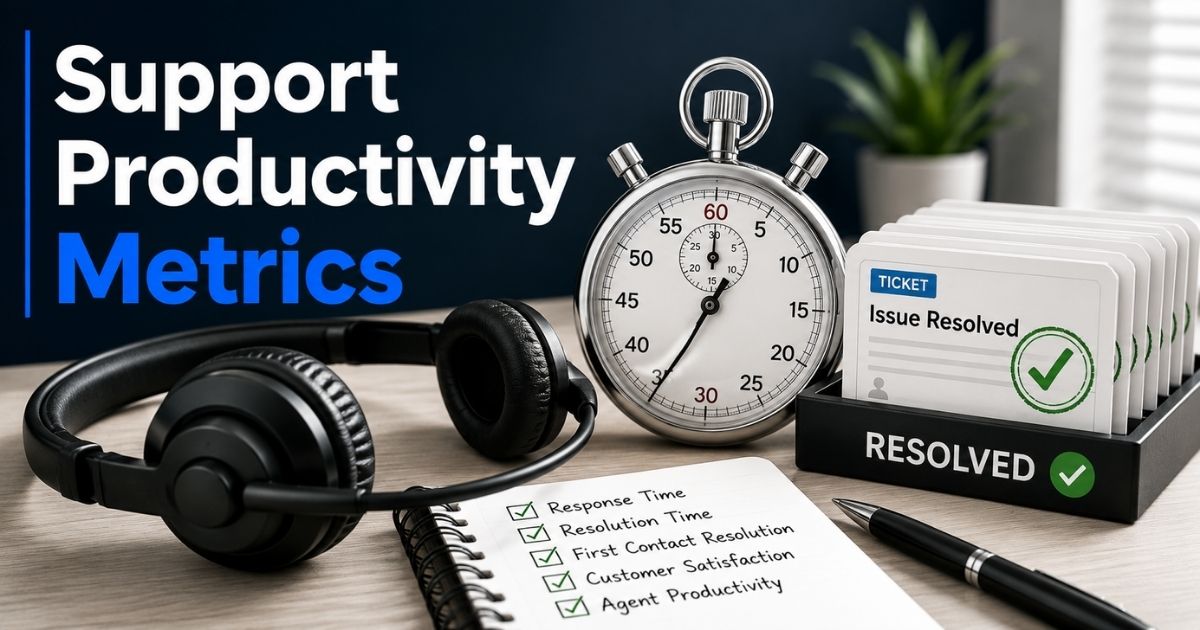
Track first response time, resolution time, backlog age, ticket volume, SLA breaches, recurring incidents, workload, and satisfaction scores. Help desk software provides actionable insights and reporting on metrics such as response time, resolution time, and ticket volume, helping managers identify bottlenecks and improve processes, and these are core benefits of using a ticketing system.
Build dashboards for different roles. Agents need daily queue visibility, team leads need workload and risk, and executives need service quality trends.
Export options help connect reporting to external analytics platforms. Still, the core reporting layer should be built into the help desk systems so managers are not dependent on another tool for basic decisions.
SLA policies should include working hours, holidays, priorities, and incident types. This keeps expectations realistic and measurable.
Security, Compliance, And Reliability Of Help Desk Software
Help desk systems are attractive targets because they contain employee records, device details, customer data, access requests, and private conversations. Phishing, credential leaks, and insider threats can turn a weak desk management process into a serious business risk.
Security and reliability must be practical. The platform should protect data, stay available, and give administrators enough visibility to investigate issues quickly.
Authentication, Authorization, And Access Control
Single sign-on helps companies manage access through existing identity systems. Support common enterprise identity standards so users can join and leave through normal IT processes.
Role-based access separates agents, administrators, managers, and external requesters. Each role should see only what it needs.
Strong password rules, session controls, and multifactor authentication reduce account takeover risk. These controls are especially important for administrator accounts.
Run access reviews regularly. Remove inactive users, adjust permissions after team changes, and audit privileged accounts.
Data Protection And Privacy Controls
Encrypt databases, backups, and network traffic between services. Sensitive fields such as personal identifiers, tokens, and payment references need stricter controls.
Data retention schedules define how long tickets, logs, and attachments remain available. Anonymization or pseudonymization can help meet privacy requirements after business use ends.
Log data exports and administrative actions. Traceability helps during audits, investigations, and compliance checks.
For privacy laws, document where data is stored and how it flows through the platform. GDPR guidance from the European Commission is a useful starting point for EU-related planning.
High Availability Monitoring And Incident Response
Design for minimal downtime with load balancing, health checks, backups, and automatic failover where budget allows. Background jobs for email ingestion, notifications, and automations need their own monitoring. Track response times, error rates, queue delays, and failed integrations. A platform can look healthy while hidden jobs are falling behind.
Create incident runbooks for the help desk platform itself. Define who responds, how users are informed, and how service is restored. Test backups and disaster recovery at least twice per year. A backup that has never been restored is only an assumption.
Regulatory And Industry Compliance Considerations
Organizations may align with ISO style controls, SOC 2, PCI DSS, HIPAA, or sector-specific rules. The exact requirement depends on the data handled and the industries served. Document data flows, subprocessors, storage locations, and access paths. This makes audits faster and reduces confusion during vendor reviews.
Regional data residency may be required for certain users or industries. Plan it before the system is live, because moving data later is expensive. Involve legal and compliance teams early. Their input can prevent costly redesigns after launch.
Testing, Deployment, And Continuous Improvement Cycles
A prototype is not enough. To become reliable business software, the help desk platform needs realistic test data, a staging environment, automated test suites, and a controlled rollout plan. Start with one department or pilot group before company-wide release. This exposes workflow gaps while the risk is still manageable.
Functional Performance And Security Testing
Cover critical flows with unit, integration, and end-to-end tests. Ticket creation, ticket updates, comments, status transitions, automation rules, and permissions should be tested repeatedly.
Load testing should reflect expected 2026 usage patterns. Include concurrent agents, large search queries, email bursts, and thousands of tickets per day.
Security testing should include vulnerability scanning and periodic penetration testing. New features can introduce new risks, so following a structured helpdesk implementation guide keeps rollouts controlled. Regression testing after each release protects stable workflows. Automated pipelines make this much easier to maintain.
Release Management And Deployment Pipelines
Release management should use continuous integration and continuous delivery pipelines with automated checks, approvals, and rollback options. Feature flags let teams launch risky changes gradually. If a new automation confuses, it can be disabled without a full rollback.
Blue-green or canary deployment strategies reduce update risk. They allow a smaller group to test production behavior before full traffic moves over. Release notes and internal communication matter. Agents need to know what changed before users ask questions.
User Training Documentation And Change Management
Training should be role-specific. Agents need ticket workflows, managers need dashboards, and requesters need portal basics. Documentation should be concise, searchable, and updated alongside product changes. Outdated guidance creates avoidable support requests.
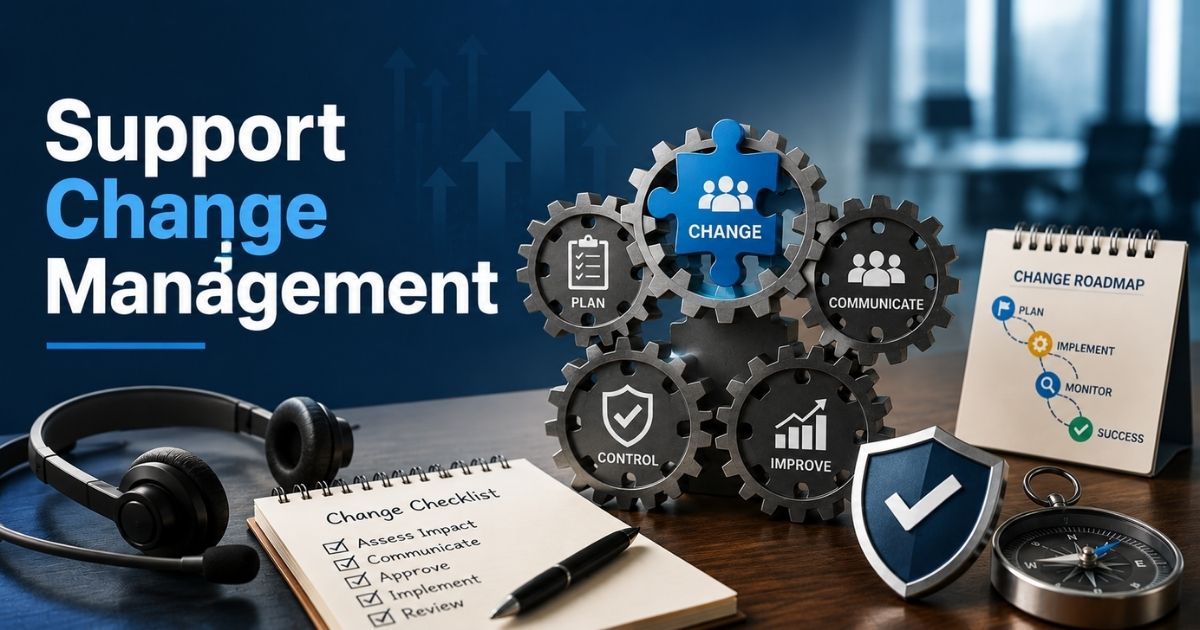
Internal champions help adoption. A few confident users can answer questions and model better workflows for others. Change management should include feedback during the first three months. Surveys, short interviews, and usage data reveal where the platform needs refinement.
Product Roadmap And Iterative Feature Enhancements
Prioritize improvements using analytics, ticket volume patterns, and user feedback. The roadmap should reflect real work, not only ideas from planning meetings. Quarterly reviews help teams adjust to business changes, new tools, and support trends. A help desk platform is an ongoing product, not a one-time project.
Measure each feature against response time, resolution time, backlog, deflection, and customer satisfaction. If a feature does not improve outcomes, refine it or remove it. AI-powered ticket management features streamline support requests by providing intelligent ticket summarization and context-aware response suggestions, reducing manual effort for agents. Add these only after core workflows and data quality are stable.
Build Your IT Help Desk Platform With EasyDesk
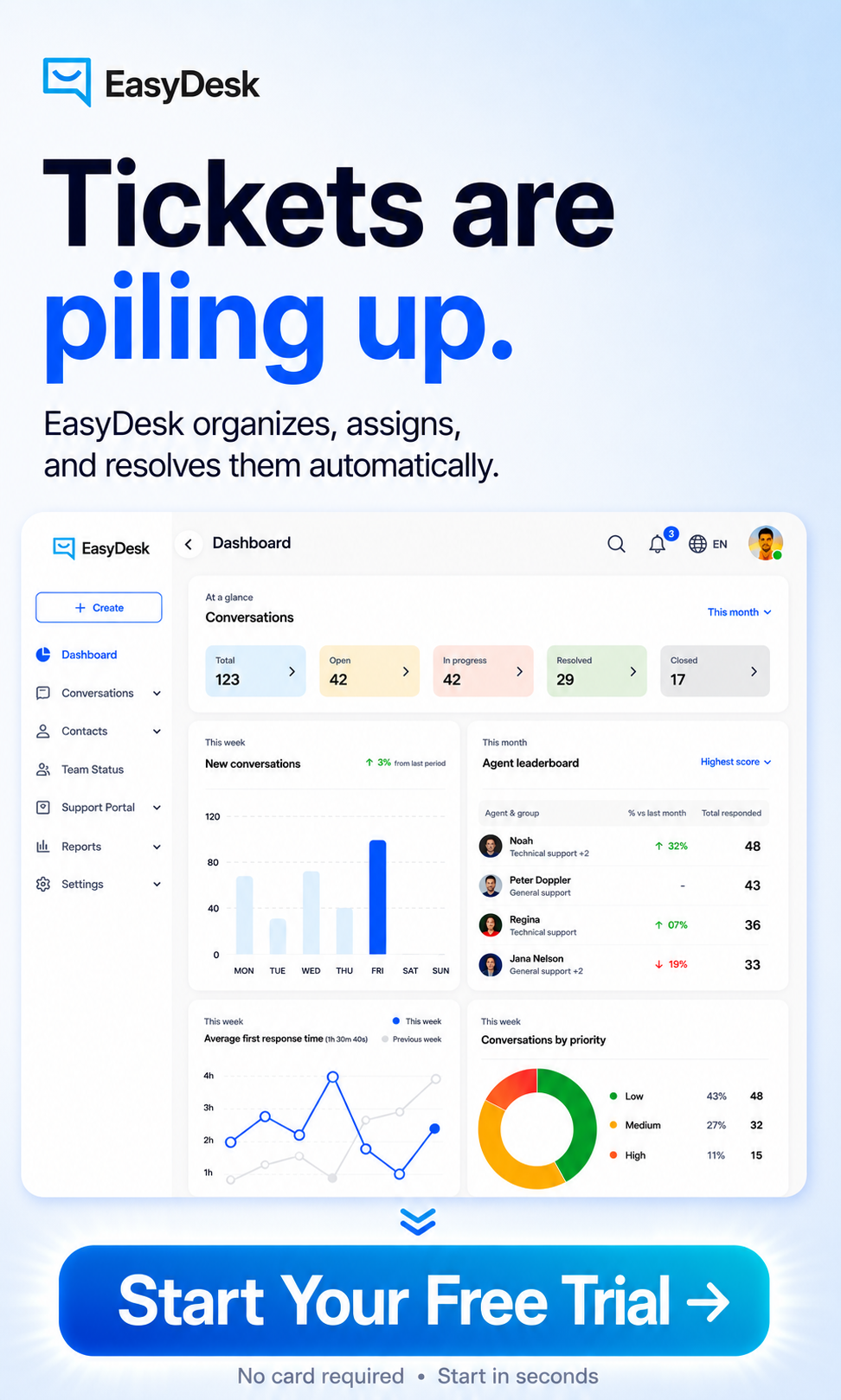
EasyDesk gives teams a practical shortcut when they want the control of a custom help desk solution without carrying the full cost and maintenance burden of building everything from scratch. The EasyDesk helpdesk ticketing software brings core desk systems into one streamlined platform, including ticket creation, ticket management, canned responses, built-in knowledge base, live chat, social media integration, feedback tracking, roadmaps, changelogs, and SLA management.
EasyDesk supports configurable workflows, automation rules, multi-channel support, a self-service portal, and a customer portal, aligning with the principles covered in this guide. Its broader EasyDesk features for smarter, secure support help teams centralize customer support, manage customer queries, improve customer interactions, and keep support requests visible from one place.
Organizations can start with core help desk workflows, then extend EasyDesk as a secure, efficient customer support platform through integrations and customizations instead of writing every module internally. This helps it teams onboard faster, reduce scattered work, and maintain service quality as support volumes grow.
EasyDesk can serve as a complete help desk solution or as a foundation for more tailored service management experiences. Many teams now look for the best IT help desk software for modern teams when comparing paid plans, evaluating a team plan, or replacing tools such as jira service desk, jira service management, solarwinds service desk, manageengine service desk, zoho desk, or hubspot service hub, so evaluate each option based on your workflows rather than brand familiarity.
Frequently Asked Questions
How Long Does It Typically Take To Build An IT Help Desk From Scratch
A minimum viable product usually takes three to six months with an experienced full-time team. That version may include core ticketing, user accounts, assignment, basic notifications, and simple reporting. A mature platform can take nine to twelve months or longer. Integrations, compliance, analytics, security reviews, and polished workflows add time.
What Budget Range Should A Company Expect For A Custom Help Desk
A small in-house build may start around USD 10,000 to USD 50,000 when the scope is limited. Enterprise-grade builds can reach hundreds of thousands or low millions in the first year. Budget for hosting, monitoring, security reviews, documentation, training, and ongoing maintenance. Custom software continues to need care after launch, so some organizations compare top help desk software in 2026 before deciding to build.
How Can Existing Email Or Spreadsheet Based Support Be Migrated
Start with data export, cleanup, and field mapping. Standardize categories, remove duplicates, and decide which history must move into the new model. Use a structured ticket creation and management system to map old requests into your new model. Run old and new workflows in parallel for a short transition. Keep searchable archives available for compliance and reporting, even if not every old record is migrated on day one.
What Is The Best Way To Involve IT Teams During Development
Interview agents, team leads, and managers early. Ask where work gets stuck, which manual steps repeat daily, and where search or routing fails. Use pilot groups for real work. Their feedback will reveal usability issues that planning documents rarely catch and point to opportunities for smarter helpdesk setups.
When Should AI Features Be Added To A New Help Desk Platform
Add AI after the core ticketing system, ticket routing, SLA tracking, reporting, and knowledge base are stable. Without clean data, AI can create confusion instead of speed. Start with simple AI features such as ticket summaries, suggested replies, and knowledge base recommendations. Monitor quality closely to ensure advanced ai features improve resolution quality and customer satisfaction, especially for distributed teams that must keep remote support teams aligned.