Employees waste hours every week searching for answers, chasing approvals, or waiting for someone to fix a problem. A locked account, software issue, payroll question, or missing access can quickly slow down an entire workday. As companies grow, scattered emails, chat messages, and manual requests make internal support harder to manage.
An internal help desk solves that problem. It gives employees one place to ask for help and gives support teams a clear way to manage requests. Issues reach the right people faster, response times improve, and work keeps moving without unnecessary delays. Modern internal help desks also support automation, self-service, knowledge bases, and AI-powered assistance, making employee support faster and more efficient than ever.
This guide covers everything you need to know about an internal help desk, from how it works and why it matters to best practices, software features, automation strategies, and future trends. Whether you manage IT, HR, operations, or workplace support, you will learn how to build a system that improves productivity and creates a better employee experience.
What Is An Internal Help Desk?
An internal help desk is a central point where employees submit requests for support, access, resources, or workplace issues. It helps internal teams manage requests from multiple departments through the same system. Employees submit requests for software access, office equipment, password resets, onboarding tasks, and other internal requests. A good internal help desk system routes support tickets to the right team and improves service delivery across the organization.
Modern internal help desk software works as a complete support system. It includes a ticketing system, workflow automation, assignment rules, asset management, asset tracking, self-service tools, and a knowledge base, allowing teams to move from manual to automated ticketing workflows as support volume grows. Support teams can prioritize requests based on urgency, automate simple requests, and reduce manual effort. The desk system also provides status updates, ticket routing, and resolution performance tracking.
An internal help desk focuses on faster it service delivery, better employee experience, and higher employee satisfaction. It helps support staff handle requests coming from HR, admin teams, and the IT team without unclear ownership or manual triage. With predefined rules, automation rules, single sign-on, Microsoft Teams integration, and support tools, businesses can reduce average resolution time and improve desk performance.
Internal Help Desk Vs IT Help Desk
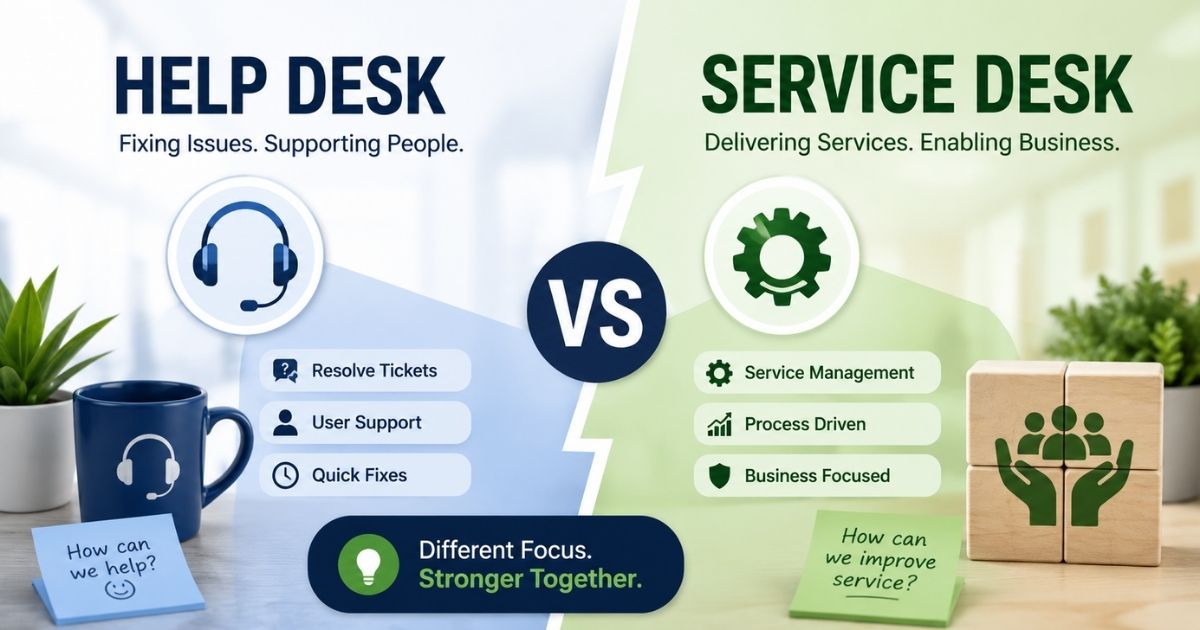
An internal help desk and an IT help desk both support employees, but they focus on different areas. An internal help desk handles requests across multiple departments like HR, finance, facilities, and operations. An IT help desk mainly focuses on technical issues, software, hardware, and IT services.
Feature | Internal Help Desk | IT Help Desk |
|---|---|---|
Main Purpose | Manages employee requests across the organization | Resolves technical and IT-related issues |
Departments Supported | HR, Finance, Admin, Facilities, Operations, IT | Primarily IT departments |
Request Types | Access requests, onboarding tasks, payroll questions, office equipment, policy support | Password resets, software issues, network problems, device support |
Users | All employees | Employees needing IT support |
Scope | Broad internal support | Technical support only |
Ticket Volume | Covers multiple business functions | Focuses on IT service requests |
Tools Used | Internal help desk software with cross-department workflows | IT help desk software and service desk tools |
Automation | Supports HR, admin, and operational workflows | Supports IT automation and incident management |
Goal | Improve employee experience and service delivery | Improve IT service delivery and system performance |
Example Teams | HR team, admin teams, facilities team, support staff | IT team, system administrators, technical support teams |
Why An Internal Help Desk Is Important For Modern Businesses
Every business relies on fast internal support to keep work moving. Employees expect quick answers, smooth access to tools, and fewer delays. A strong internal help desk creates a central system for support requests, improves service delivery, and helps teams stay productive across the organization.
Faster Issue Resolution
Employees lose valuable time when problems stay unresolved. A delayed software access request or password reset can stop work for hours. An internal help desk helps support teams track, assign, and resolve issues faster.
Recent reports show employees lose more than three hours every week because of technical problems. Companies with structured help desk support can improve productivity by up to 25% through faster resolution and reduced downtime.
Better Employee Experience
Employees want support that feels simple and reliable. Long email chains and unclear ownership often create frustration. An internal help desk gives employees one place to submit requests and receive updates.
A strong support experience also affects morale. Research shows 55% of office workers say ongoing technology issues negatively affect their mood and job satisfaction. Faster support creates a smoother employee experience and improves workplace engagement.
Less Manual Work Across Teams
HR, IT, finance, and admin teams handle hundreds of repetitive requests every month. Manual processes slow response times and increase mistakes. An internal help desk automates routine tasks and reduces unnecessary workload.
Automation helps route tickets, approve access requests, and manage onboarding tasks. Studies show HR teams spend up to 57% of their time on administrative work. Workflow automation gives teams more time for strategic priorities.
Stronger Visibility And Accountability
Support requests often get lost when teams rely on emails, spreadsheets, or chat messages. Managers struggle to track progress and measure performance. An internal help desk creates visibility across every request.
Ticket tracking, status updates, and reporting tools help leaders monitor response times and resolution performance. Clear ownership also reduces confusion and prevents requests from falling through the cracks. A centralized system improves accountability across multiple departments.
Support For Business Growth
Business growth increases ticket volume, employee requests, and operational complexity. Manual support processes rarely scale well. Internal help desks help organizations handle growing demand without creating support bottlenecks.
Modern platforms support self-service portals, knowledge bases, AI automation, and workflow management. Many businesses now use help desks to support hybrid work, remote employees, and cross-functional operations. This flexibility helps companies maintain service quality as they expand.
How An Internal Help Desk Works Step By Step
An internal help desk follows a structured workflow from request submission to resolution. Every step helps support teams stay organized and improve response times. A clear process also reduces delays, improves employee satisfaction, and keeps business operations running smoothly.
Step 1: Employees Submit A Request
The process starts when an employee submits a request through a help desk portal, email, chat platform, or self-service portal. Common requests include software access, password resets, office equipment, onboarding tasks, and HR support.
A central support system gives employees one place to ask for help. Recent workplace reports show employees spend nearly 19% of their workweek searching for information or support. A structured internal help desk reduces that wasted time and improves employee experience across departments.
Step 2: The System Creates A Ticket
After submission, the internal help desk software automatically creates a support ticket. The ticket stores employee data, request details, priority level, and department information.
Modern help desk software uses automation rules and predefined workflows to categorize requests. Many platforms now use AI-powered ticket classification to reduce manual effort. According to 2026 service management trends, automated ticket classification can reduce manual triage work by more than 40% in high-volume support environments.
Step 3: Requests Reach The Right Team
The desk system reviews the request and routes it to the right person or department. Assignment rules help prevent delays and improve accountability.
Software access requests often go to the IT team, while onboarding tasks may reach the HR team. Modern teams rely on automated ticket assignment to keep these requests moving without manual triage. Recent industry data shows businesses using intelligent routing can improve average resolution time by up to 35% compared to manual assignment processes.
Step 4: Support Teams Resolve The Issue
Support staff review the request and work toward a solution. Some issues take only a few minutes, while complex requests may require collaboration across multiple departments.
The help desk system provides status updates throughout the process. Employees can track progress without sending repeated follow-up emails. Recent support benchmarks show organizations with self-service portals and knowledge bases can reduce support tickets by nearly 30%, allowing teams to focus on higher-priority issues.
Step 5: Performance Data Improves Future Support
The final step closes the ticket after resolution. The system stores records, updates reports, and collects feedback when needed.
Managers use performance data to monitor ticket volume, response times, service delivery, and resolution performance. Recent 2026 service desk benchmarks show organizations that regularly track support metrics achieve up to 20% higher employee satisfaction scores. This data helps internal teams improve workflows, reduce bottlenecks, and deliver more consistent support.
Core Functions Of An Internal Help Desk
An internal help desk does much more than answer employee questions. It helps teams organize requests, automate support, manage resources, and improve service delivery. Each function supports smoother business operations and creates a better employee experience across the organization.
Centralized Request Management
Employees contact different departments every day for support. Without a structured process, requests often get lost across emails, chats, and spreadsheets. An internal help desk creates one central place to manage requests.
Employees can submit support tickets for IT issues, HR questions, access requests, and workplace services through the same system. Recent workplace studies show organizations with centralized support platforms reduce request handling delays by up to 35%. A unified support system also improves visibility across multiple departments.
Automated Ticket Routing
Manual ticket assignment wastes time and creates confusion. Support teams often struggle when requests reach the wrong department. Automated routing solves that problem.
Modern internal help desk software uses assignment rules, workflows, and AI-based categorization to send tickets directly to the right team. Many organizations now implement dedicated ticket automation software to manage routing, prioritization, and tracking at scale. Industry reports from 2026 show intelligent ticket routing can reduce average resolution time by nearly 40%. Faster assignment improves service delivery and helps employees get support sooner.
Self-Service And Knowledge Access
Many employees prefer finding answers without opening a support ticket. Self-service tools help reduce ticket volume and improve support efficiency.
Knowledge bases, FAQ portals, and internal documentation give employees quick access to information. Many of the same self-service customer support best practices used for external customers also apply to internal teams. Password resets, onboarding guides, software instructions, and policy documents often become part of the self-service experience. Recent support benchmarks show organizations with mature knowledge bases can reduce incoming tickets by nearly 30%.
Asset And Access Management
Businesses rely on software, devices, licenses, and workplace resources every day. Internal help desks help track and manage those assets through one support platform.
Support teams can manage software access, office equipment requests, device assignments, and asset tracking from a central dashboard. Asset management also improves security and compliance. Recent IT operations reports show companies with structured asset tracking reduce unauthorized software usage and resource waste by more than 25%.
Performance Tracking And Reporting
Support quality becomes difficult to improve without clear data. Internal help desks collect performance metrics across every request and workflow.
Managers track ticket volume, response times, service level targets, resolution performance, and employee satisfaction through reporting tools. Recent service management research shows organizations that actively monitor support metrics achieve up to 22% higher service efficiency. Performance insights help teams identify bottlenecks, improve workflows, and deliver more consistent internal support.
Major Benefits Of An Internal Help Desk
A modern internal help desk does more than manage support tickets. It helps employees work faster, improves communication, and reduces operational delays. Businesses also gain better visibility, stronger service delivery, and more control over internal support processes.
Faster Employee Support
Employees often lose time when requests sit in inboxes or move between departments. A structured help desk system helps support teams respond faster and resolve issues without unnecessary delays.
Automated ticket routing, assignment rules, and workflow automation speed up request handling. Recent 2026 workplace support reports show companies with automated service workflows reduce average resolution time by up to 37%. Faster support helps employees stay productive and reduces workplace frustration.
Higher Employee Satisfaction
Employees expect quick answers and clear communication when they need help. Delayed responses often create frustration and affect workplace morale.
An internal help desk gives employees a central place to submit requests, track progress, and receive updates. Recent employee experience studies show nearly 73% of workers rate internal support quality as an important factor in workplace satisfaction. Better support experiences help businesses improve employee retention and engagement.
Lower Operational Costs
Manual support processes consume time and resources. Teams often spend hours sorting requests, forwarding emails, and tracking updates through spreadsheets.
Help desk software reduces manual effort through automation, self-service tools, and knowledge bases. Applying workflow automation best practices helps businesses lower support-related administrative costs by up to 30% after implementing automation. Lower operational costs allow teams to focus on higher-value work instead of repetitive tasks.
Better Team Collaboration
Many support requests involve multiple departments. HR, IT, finance, and operations teams often need shared visibility to resolve employee issues efficiently.
An internal help desk keeps conversations, updates, files, and ticket history inside one support system. Shared workflows reduce confusion and improve accountability. Recent workplace collaboration studies show organizations with centralized service platforms improve cross-functional response efficiency by more than 25%. Better coordination leads to smoother service delivery.
Stronger Business Scalability
Support demands increase as businesses grow. More employees create more requests, larger ticket volumes, and greater operational complexity.
A scalable internal help desk helps organizations handle growth without overwhelming support teams. Self-service portals, AI automation, and knowledge management reduce pressure on support staff. Recent 2026 service desk benchmarks show organizations with mature self-service systems can deflect nearly 35% of routine support requests. This allows businesses to scale internal support more efficiently.
Key Features Every Internal Help Desk Should Have
A modern internal help desk needs more than basic ticket management. Employees expect fast support, clear communication, and easy access to information. The right features help teams reduce delays, improve service delivery, and handle growing support demands more efficiently.
Smart Ticket Management
Ticket management is the foundation of every internal help desk. A structured ticketing system helps support teams track requests from submission to resolution.
Employees can submit requests through one central platform instead of relying on emails or chat messages. Modern help desk software also supports ticket prioritization, categorization, status tracking, and escalation rules. Recent 2026 service desk benchmarks and the broader benefits of using a ticketing system show organizations with advanced ticket management systems resolve issues up to 34% faster than teams using manual processes.
Automated Workflow Routing
Support requests often move across multiple departments. Manual assignment creates delays and increases the risk of human error.
Workflow automation helps route tickets to the right team based on predefined rules. Requests for software access, onboarding tasks, payroll support, or office equipment automatically reach the correct department. Recent workplace support studies show automated routing can reduce ticket handling time by nearly 40% while improving response consistency across support teams.
Self-Service And Knowledge Base
Employees prefer solving simple issues without opening a support ticket. Self-service tools help reduce support workload and improve employee satisfaction.
A knowledge base gives employees access to guides, policies, troubleshooting steps, and onboarding resources. Password resets and software setup instructions often become common self-service resources. Recent 2026 support data shows organizations with mature self-service portals can reduce incoming support tickets by up to 35%.
Asset And Access Control
Internal support teams manage software licenses, devices, office resources, and employee access every day. Without proper tracking, businesses face security and operational risks.
Asset management features help track hardware, software, and workplace resources from one support system. Access management tools also support approval workflows and permission controls. Recent IT operations reports show organizations with centralized asset tracking reduce resource waste and unauthorized software usage by more than 25%.
Analytics And Performance Reporting
Support quality becomes difficult to improve without measurable data. Reporting tools help managers understand what happens across the help desk system.
Teams can track ticket volume, response times, employee satisfaction, service level targets, and resolution performance through dashboards and reports. Recent 2026 service management research shows organizations that actively monitor support metrics improve service efficiency by more than 20%. Clear reporting helps businesses identify bottlenecks and improve internal support processes over time.
Internal Help Desk Workflow And Ticket Lifecycle
Every support request follows a lifecycle inside an internal help desk. A structured workflow helps teams manage requests faster, reduce confusion, and improve service delivery. Clear ticket stages also help employees track progress and receive support without unnecessary delays.
Request Submission Stage
The ticket lifecycle starts when an employee submits a request through a help desk portal, email, chat tool, or self-service platform. Common requests include software access, password resets, onboarding support, and workplace services.
A centralized support system keeps requests organized from the beginning. Recent 2026 workplace productivity reports show employees lose nearly five hours each week due to delayed support and information access. A structured intake process helps reduce that lost time and improves employee experience.
Ticket Classification Stage
After submission, the internal help desk software creates and categorizes the ticket automatically. The system reviews request type, urgency level, department, and employee information.
Modern help desk platforms use AI-powered classification and automation rules to reduce manual triage. Industry data from 2026 shows automated categorization improves ticket accuracy by more than 40% compared to manual sorting. Better classification helps support teams prioritize requests and improve response times.
Assignment And Escalation Stage
The system routes tickets to the right team based on predefined workflows and assignment rules. This step helps avoid delays caused by unclear ownership.
Simple requests may go directly to support staff, while complex issues move through escalation paths. Recent service management benchmarks show organizations with automated routing and escalation workflows reduce average resolution time by up to 38%. Faster assignment improves accountability across IT, HR, finance, and operations teams.
Resolution And Communication Stage
Support teams review the issue, provide assistance, and work toward resolution. Employees receive status updates throughout the process without needing constant follow-ups.
Knowledge bases, workflow automation, and collaboration tools help teams resolve requests more efficiently. Recent 2026 support research shows organizations with mature self-service systems resolve routine requests nearly 30% faster than companies without structured knowledge management. Better communication also improves employee satisfaction.
Closure And Performance Review Stage
The lifecycle ends after issue resolution and ticket closure. Support teams document actions, update records, and collect feedback when needed.
Help desk software tracks ticket volume, resolution performance, response times, and service level targets after closure. Recent 2026 service desk studies show organizations that review support metrics regularly improve operational efficiency by more than 20%. Performance data helps teams identify recurring issues and strengthen future support workflows, especially when combined with structured SLA management with EasyDesk.
How To Build An Internal Help Desk From Scratch
A successful internal help desk does not start with software alone. Businesses need clear goals, structured workflows, and the right support processes. A strong foundation helps teams manage employee requests efficiently and deliver consistent internal support as the company grows.
Define Support Goals First
Every help desk needs a clear purpose before implementation. Businesses should identify the types of employee requests they want to manage and the departments involved.
Many organizations support IT, HR, finance, facilities, and operations through one internal help desk system. Recent 2026 workplace service reports show companies with clearly defined service goals improve support efficiency by more than 25%. Clear objectives help teams build better workflows and service standards from the beginning.
Choose The Right Help Desk Platform
The next step is selecting software that matches business needs. A good internal help desk platform should support ticket management, workflow automation, self-service tools, and reporting features, similar to the capabilities outlined in guides to fast and scalable helpdesk software.
Scalability also matters. Support demands increase as businesses grow. Recent 2026 service management research shows nearly 68% of organizations now prioritize automation and self-service capabilities when selecting help desk software. Flexible platforms help businesses adapt without replacing systems later.
Build Request Workflows And Rules
Workflows determine how requests move through the support system. Without structure, tickets often face delays, confusion, and inconsistent handling.
Businesses should create assignment rules, escalation paths, approval processes, and service categories. Software access requests may follow one workflow, while HR onboarding tasks follow another. Recent service desk benchmarks show organizations with documented workflows reduce average resolution time by nearly 35% compared to teams using manual processes.
Create A Self-Service Knowledge Base
Employees should not need a support ticket for every simple question. A knowledge base helps employees find answers independently and reduces ticket volume.
Common resources include onboarding guides, password reset instructions, workplace policies, and software tutorials. Recent 2026 support studies show organizations with mature self-service systems can deflect up to 36% of routine employee requests. Self-service also improves employee satisfaction by providing faster access to information.
Track Performance And Improve Continuously
A help desk should evolve as support needs change. Performance tracking helps businesses identify gaps, bottlenecks, and recurring problems.
Managers should monitor ticket volume, response times, resolution rates, employee satisfaction scores, and service level targets. Recent workplace support benchmarks show organizations that review support metrics regularly improve service efficiency by more than 20%. Continuous improvement helps maintain strong service delivery as employee needs grow.
Best Practices For Running An Internal Help Desk
A well-managed internal help desk needs more than software and ticket tracking. Strong processes, clear communication, and consistent service standards make a major difference. The right practices help support teams improve response times, reduce workload, and deliver a better employee experience.
Set Clear Service Standards
Employees expect predictable support when they submit requests. Clear service standards help teams respond consistently and avoid confusion.
Businesses should define response times, resolution targets, escalation rules, and service priorities. Employees also need visibility into what support teams can handle. Recent 2026 service management research shows organizations with documented service level targets improve customer and employee satisfaction by more than 20%. Clear expectations create stronger accountability across support operations.
Use Automation For Routine Tasks
Manual support processes slow teams down and increase operational costs. Repetitive requests often consume valuable time that teams could spend on complex issues.
Workflow automation helps manage password resets, software access approvals, onboarding tasks, and ticket routing. Recent 2026 workplace support studies show automation can reduce manual support workloads by nearly 45%. Automated workflows also improve consistency and reduce human errors across internal support processes, especially in smarter helpdesk setups for smoother support.
Maintain A Strong Knowledge Base
Employees often need quick answers instead of opening a support ticket. A well-organized knowledge base helps employees solve common issues independently.
Support teams should regularly update guides, troubleshooting steps, policy documents, and onboarding resources. Recent service desk benchmarks show organizations with mature self-service programs reduce incoming ticket volume by up to 35%. Better knowledge access improves employee satisfaction and reduces pressure on support staff.
Monitor Performance Metrics Regularly
Support teams cannot improve service quality without reliable data. Performance tracking helps managers understand where delays and bottlenecks happen.
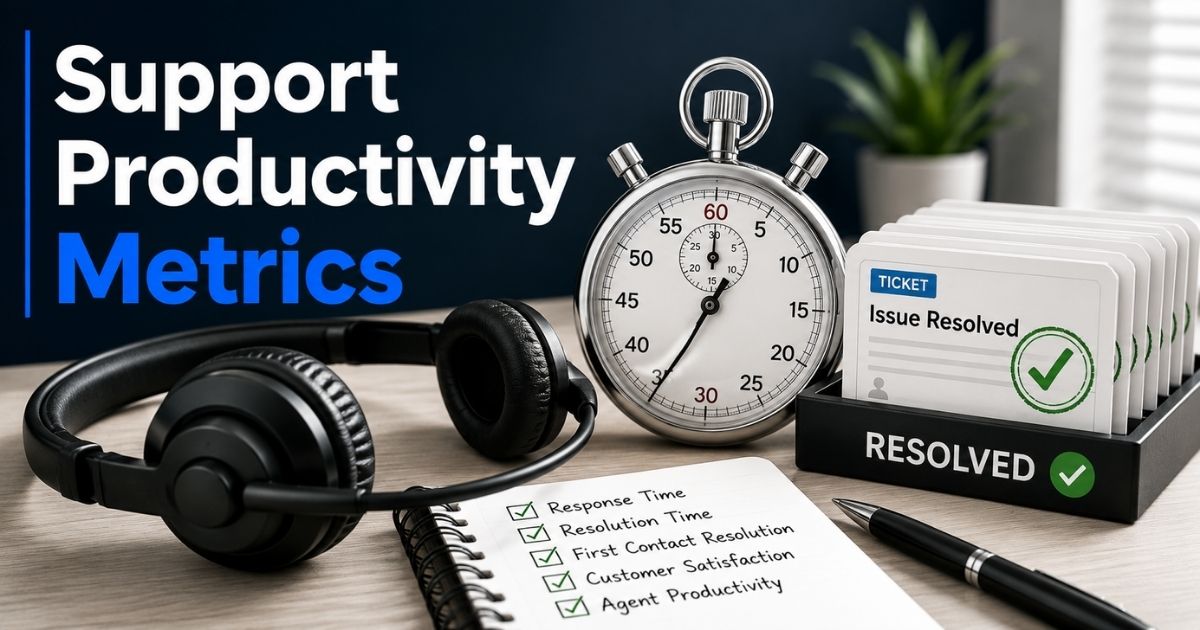
Key metrics include ticket volume, first response time, average resolution time, employee satisfaction scores, and service level performance. Recent 2026 support analytics reports show organizations that review help desk metrics monthly improve operational efficiency by more than 22%. Performance insights help teams make smarter support decisions.
Focus On Employee Experience
Support quality directly affects how employees feel about workplace operations. Slow responses and poor communication often create frustration and reduce productivity.
Employees want clear updates, simple request processes, and faster resolutions. Internal help desks should focus on transparency throughout the ticket lifecycle. Recent workplace experience studies show nearly 74% of employees consider internal service quality important to overall job satisfaction. Better support experiences help businesses improve engagement, retention, and workplace productivity.
How Internal Help Desk Automation Improves Efficiency
Automation has become a major part of modern internal help desk operations. Support teams handle large ticket volumes every day, and manual processes slow everything down. Automated workflows help businesses reduce delays, improve service delivery, and support employees more efficiently.
Faster Ticket Routing
Manual ticket assignment often creates bottlenecks. Requests may sit in queues or reach the wrong department before someone takes action.
Automation rules route support tickets based on request type, urgency, department, or employee role. Software access requests can go directly to the IT team, while onboarding tasks reach HR automatically, especially when teams implement ticket automation for multi-channel support. Recent 2026 service desk reports show automated ticket routing can reduce ticket handling time by nearly 40% and improve response consistency across teams.
Quicker Resolution For Routine Requests
Support teams spend a large part of their day handling repetitive requests. Password resets, access approvals, and common employee questions often follow the same process.
Automation helps complete simple requests without manual intervention. Employees receive faster support while support staff focus on complex issues. Recent workplace service studies show automated request fulfillment can reduce resolution times for routine tickets by more than 50%. Faster resolutions improve employee satisfaction and workplace productivity.
Lower Administrative Workload
Manual support work creates unnecessary pressure on internal teams. Sorting requests, assigning tickets, and updating records consume valuable time every day, especially when requests sit in shared inboxes instead of systems that turn emails into trackable tickets.
Workflow automation reduces repetitive administrative tasks across IT, HR, finance, and operations departments. Recent 2026 support management benchmarks show organizations using automated workflows reduce manual support workloads by up to 45%. Lower administrative effort helps teams handle larger ticket volumes without increasing headcount.
Better Accuracy And Consistency
Human error becomes more common when support teams manage large numbers of requests manually. Missed approvals, incorrect assignments, and delayed responses often affect service quality.
Automation follows predefined rules for ticket routing, approval workflows, and request categorization. Every request moves through a consistent process. Recent service management research shows automated workflows improve process accuracy by more than 30% compared to manual support operations. Consistent service delivery improves trust across the organization.
Stronger Performance Visibility
Support teams need clear data to improve service quality. Automation helps collect performance metrics without requiring manual tracking.
Modern help desk platforms automatically track ticket volume, response times, resolution performance, service level targets, and employee satisfaction scores. With automated ticket management software, organizations using automated reporting improve operational efficiency by more than 20%. Better visibility helps managers identify bottlenecks and make faster support decisions.
How AI Improves Internal Help Desk Performance And Support Quality
AI has become a major part of modern internal help desk operations. Support teams face growing ticket volumes, faster response expectations, and increasing service demands. AI helps businesses automate routine work, improve support speed, and deliver a better employee experience across departments.
Smarter Ticket Classification
Support teams often spend valuable time sorting and categorizing requests. Manual triage slows response times and increases the risk of errors.
AI helps identify ticket type, urgency, department, and intent automatically. The system can route requests to the right team without human intervention. Recent 2026 service management reports show AI-powered ticket classification improves routing accuracy by more than 45% and significantly reduces manual support effort across large organizations.
Faster Employee Support
Employees expect quick answers when they face workplace issues. Delayed support often affects productivity and creates frustration.
AI-powered virtual assistants and chatbots can handle common employee requests instantly. Password resets, software access guidance, policy questions, and onboarding support often become automated workflows. Recent 2026 workplace support studies show AI assistants can resolve up to 60% of routine service requests without agent involvement, helping reduce ticket backlogs.
Better Knowledge Recommendations
Employees often struggle to find the right information inside large knowledge bases. Traditional search tools may return outdated or irrelevant results.
AI improves knowledge discovery by recommending relevant articles based on employee questions and ticket history. Employees receive faster answers without opening support tickets. Recent service desk research shows AI-powered knowledge suggestions can reduce self-service search time by nearly 50%, helping employees solve simple issues more efficiently.
Stronger Agent Productivity
Support teams handle large numbers of tickets every day. Repetitive work often limits how much time agents can spend on complex issues.
AI helps generate ticket summaries, suggest responses, identify similar incidents, and recommend next actions. Recent 2026 support operations benchmarks show organizations using AI-assisted workflows improve agent productivity by more than 35%. Faster support workflows allow teams to handle larger ticket volumes without increasing staffing costs, as seen when EasyDesk improved response time for a growing team.
Deeper Performance Insights
Support leaders need accurate data to improve service quality. Traditional reporting often focuses only on ticket counts and response times.
AI analyzes ticket trends, recurring issues, employee feedback, and support bottlenecks across the help desk system. Predictive insights help teams prevent future problems before they affect employees. Recent 2026 service management studies show organizations using AI-powered analytics improve operational efficiency by nearly 25% through better decision-making and workflow optimization.
Why Self-Service Portals And Knowledge Bases Matter For Internal Support
Employees want quick answers without waiting for support teams. Self-service portals and knowledge bases help employees solve common issues on their own. These tools reduce ticket volume, improve support efficiency, and create a faster internal support experience across departments.
Faster Access To Information
Employees often need answers immediately. Waiting for a support ticket response can slow work and reduce productivity.
A self-service portal gives employees instant access to policies, troubleshooting guides, onboarding resources, and workplace information, especially when it’s powered by robust knowledge base software features and benefits. When combined with automated ticket creation workflows, recent 2026 workplace support studies show employees can resolve simple issues up to 45% faster through self-service resources compared to traditional support channels. Faster access improves employee experience and reduces workplace interruptions.
Lower Support Ticket Volume
Support teams spend large amounts of time handling repetitive requests. Password resets, software setup questions, and policy inquiries often create unnecessary ticket volume.
A well-structured knowledge base helps employees find answers independently before submitting a request. As shown in many studies of how a help desk improves support behind the scenes, organizations with mature self-service programs reduce incoming support tickets by nearly 35%. Lower ticket volume allows support staff to focus on complex issues that require direct assistance.
Better Employee Experience
Employees prefer support systems that are simple and easy to use. Long response times often create frustration and reduce satisfaction with internal services.
Self service portals provide 24/7 access to information without requiring employees to wait for support teams. Recent workplace experience reports show nearly 70% of employees prefer solving routine issues through self service tools when accurate information is available. Better accessibility creates a smoother support experience across the organization.
Consistent Knowledge Sharing
Support quality often depends on how information is shared across departments. Outdated documents and scattered resources create confusion for employees and support teams.
A centralized knowledge base keeps support information organized in one location. Teams can maintain standard procedures, troubleshooting steps, and company policies through a structured system. Recent 2026 knowledge management research shows organizations with centralized documentation improve support consistency by more than 30% across multiple departments.
Stronger Team Efficiency
Support teams work more efficiently when employees can handle routine requests independently. Less time spent on repetitive questions allows teams to focus on higher-priority work.
Knowledge management also helps new support agents find accurate information faster. Recent workplace service studies show organizations with strong knowledge base management improve support team productivity by more than 25%. Better efficiency supports faster service delivery without increasing operational workload.
Essential Internal Help Desk Metrics Every Team Should Monitor
Support teams need clear data to improve service quality and operational efficiency. Without measurable performance indicators, it becomes difficult to identify delays or support gaps. Internal help desk metrics help businesses track performance, improve workflows, and deliver better employee support.
First Response Time
First response time measures how quickly support teams reply after an employee submits a request. Fast responses help employees feel supported even before the issue gets resolved.
Delayed responses often create frustration and increase follow-up requests. Recent 2026 service desk benchmarks show organizations with faster first response times achieve significantly higher employee satisfaction scores. Many high-performing support teams now target first responses within one hour for standard internal requests.
Average Resolution Time
Average resolution time tracks how long support teams take to fully resolve a ticket. This metric helps businesses understand overall service efficiency and highlights where teams can apply proven ways to cut resolution time fast.
Long resolution times often signal workflow issues, staffing gaps, or process bottlenecks. Recent 2026 workplace support studies show organizations that automate ticket routing and approvals reduce average resolution times by more than 35%. Faster resolutions improve productivity and reduce employee downtime across departments.
Ticket Volume Trends
Ticket volume measures the number of requests support teams receive during a specific period. This KPI helps managers understand workload patterns and resource needs.
Support leaders can identify seasonal spikes, recurring issues, and department-specific trends through ticket volume analysis. Platforms that centralize and streamline ticket handling, such as those that show how to manage support tickets efficiently and streamline customer support with ticket automation, help organizations that monitor ticket trends regularly improve workforce planning and reduce support bottlenecks by nearly 25%. Better visibility supports smarter operational decisions.
Employee Satisfaction Score
Employee satisfaction scores measure how employees feel about the support experience after ticket resolution. This KPI helps evaluate service quality beyond speed alone.
Many help desk systems collect feedback through post-resolution surveys. Recent 2026 employee experience research shows nearly 75% of workers consider internal support quality important to workplace satisfaction. High satisfaction scores often indicate stronger communication, faster resolutions, and better service consistency.
SLA Compliance Rate
Service level agreement compliance tracks whether support teams meet defined response and resolution targets. This metric helps businesses maintain service standards across departments and is easier to manage with dedicated SLA management software.
Low SLA compliance often points to workflow inefficiencies or resource limitations. Recent 2026 support operations benchmarks show organizations with strong SLA performance achieve more consistent service delivery and higher employee trust. Regular SLA monitoring helps managers improve accountability and maintain reliable internal support.
Common Internal Help Desk Problems And How To Fix Them
Internal help desks support employees across multiple departments, but daily operations often come with challenges. High ticket volume, slow responses, and unclear workflows can affect service quality. The right processes and tools help businesses solve these issues before they impact productivity.
High Ticket Volume
Support teams often receive more requests than they can handle efficiently. Large ticket backlogs slow response times and create frustration for employees, making effective ticket prioritization in support operations essential.
Self-service portals, knowledge bases, and workflow automation help reduce unnecessary requests. Following proven self-service customer support strategies, recent 2026 service desk benchmarks show organizations with mature self service programs can lower incoming ticket volume by nearly 35%. Lower ticket volume allows support teams to focus on higher-priority issues and complex requests.
Slow Response Times
Employees expect fast support when workplace issues affect their daily tasks. Delayed responses often reduce productivity and create repeated follow-up requests.
Automated ticket routing and service level targets help support teams respond faster. Clear prioritization also ensures urgent requests receive immediate attention, especially when teams adopt automated workflow software for support. Recent 2026 workplace support reports show organizations using automated workflows improve first response times by more than 30% compared to manual support environments.
Unclear Ticket Ownership
Requests often move between departments without clear responsibility. Employees may not know who handles the issue, while support teams struggle with accountability.
Assignment rules and escalation workflows help route requests directly to the right team. Clear ownership improves visibility throughout the ticket lifecycle. Recent service management studies show organizations with structured ticket ownership models reduce average resolution times by nearly 25% and improve support consistency.
Outdated Knowledge Resources
Employees and support staff rely on knowledge bases for answers and troubleshooting guidance. Outdated content often leads to confusion, repeated tickets, and inaccurate support.
Regular content reviews help maintain accurate documentation. Businesses should update policies, onboarding guides, and technical resources consistently. Recent 2026 knowledge management research shows organizations with actively maintained knowledge bases improve self-service success rates by more than 30% compared to outdated systems.
Limited Performance Visibility
Many support teams struggle to improve service quality because they lack reliable performance data. Without clear metrics, managers cannot identify bottlenecks or recurring issues.
Help desk reporting tools provide visibility into ticket volume, response times, resolution performance, and employee satisfaction. Recent 2026 support operations studies show organizations that monitor help desk KPIs regularly improve operational efficiency by more than 20%. Better visibility supports stronger decision-making and long-term service improvements.
How To Choose The Right Internal Help Desk Software
The right internal help desk software can improve service delivery, employee satisfaction, and operational efficiency. A poor software choice creates workflow issues and support delays. Businesses should evaluate features, scalability, automation, and usability before making a decision.
Ease Of Use And Adoption
Employees and support teams use the help desk every day. A complex interface often creates confusion and lowers adoption rates across departments.
The software should make it easy to submit requests, track tickets, and access support resources. Recent 2026 workplace technology reports show nearly 64% of employees prefer workplace tools with simple and intuitive user experiences. Better usability improves employee engagement and reduces training requirements for support teams.
Workflow Automation Capabilities
Manual processes slow down support operations and increase administrative work. Automation has become a major requirement for modern internal help desk systems.
Businesses should look for features like ticket routing, approval workflows, assignment rules, escalation paths, and automated notifications. Recent 2026 service management research shows organizations using advanced workflow automation reduce support handling time by more than 40%. Strong automation improves consistency and helps teams manage larger ticket volumes efficiently, including during peak seasons when teams rely on tips to simplify holiday support with a helpdesk app.
Self-Service And Knowledge Management
Employees often prefer solving simple issues without waiting for support staff. Strong self-service tools reduce ticket volume and improve employee experience.
A good help desk platform should include knowledge bases, employee portals, FAQs, and searchable documentation. Recent workplace support studies show organizations with mature self-service systems reduce routine support requests by nearly 35%. Better knowledge access helps employees find answers faster and lowers pressure on support teams.
Integration With Existing Systems
Internal support often depends on multiple business platforms. Disconnected systems create delays and force teams to switch between tools constantly.
The help desk should integrate with HR platforms, identity management tools, project management software, communication platforms, and business applications. Cloud-based tools like EasyDesk helpdesk ticketing software emphasize these integrations. Recent 2026 workplace technology surveys show more than 70% of organizations prioritize software integrations when selecting service management platforms. Better integration improves workflow efficiency and data accuracy.
Reporting And Scalability
Support needs change as businesses grow. Software should provide performance visibility while supporting future operational demands.
Reporting tools help managers track ticket volume, response times, employee satisfaction, and service level performance. Modern platforms, including ticketing software built for better customer support, also ensure the system can support more employees, departments, and workflows over time. Recent 2026 service desk benchmarks show organizations using scalable support platforms improve long-term operational efficiency by more than 25% compared to businesses using limited systems, particularly when they adopt modern cloud-based help desk solutions.
Internal Help Desk Cost And ROI Analysis
An internal help desk requires investment in software, setup, training, and support operations. Businesses often focus on upfront costs, but long-term value matters more. A well-managed help desk improves productivity, reduces downtime, and creates measurable operational savings over time.
Software And Implementation Costs
Internal help desk costs depend on business size, features, and deployment requirements. Most organizations spend on software licenses, setup, integrations, training, and ongoing support.
Cloud-based help desk platforms usually reduce infrastructure expenses compared to on-premise systems. When comparing cloud-based vs on-premise helpdesk approaches, solutions like the best ticket management system often price per agent, and recent 2026 service management reports show many mid-sized businesses spend between $20 and $100 per agent each month for help desk software. Costs increase when businesses add AI automation, advanced reporting, or enterprise integrations.
Productivity Gains And Time Savings
Employees lose valuable work hours when support requests take too long to resolve. Delayed access, technical issues, and manual workflows often reduce productivity across departments.
A structured internal help desk helps employees receive faster support and quicker issue resolution. Recent 2026 workplace efficiency studies show employees can recover up to five productive hours per month through improved support workflows and faster service delivery. Productivity gains often become one of the largest ROI drivers for help desk investments.
Lower Operational Expenses
Manual support processes increase labor costs and create unnecessary administrative work. Teams spend hours sorting tickets, forwarding requests, and managing repetitive tasks.
Automation, self-service portals, and knowledge bases help reduce operational workload. Modern ticketing platforms promoted as providing the best customer support with ticketing software show that organizations using workflow automation lower support-related administrative costs by more than 30%. Reduced manual effort allows businesses to handle higher ticket volumes without significantly increasing staffing costs.
Long-Term Business Value
ROI extends beyond direct cost savings. Internal help desks also improve employee satisfaction, service consistency, and operational visibility across the organization.
Performance reporting helps managers identify inefficiencies and improve support processes over time. Recent 2026 workplace support research shows organizations with mature internal service management systems achieve more than 20% higher operational efficiency compared to businesses using fragmented support processes. Long-term value often grows as automation, self-service adoption, and workflow optimization increase.
Future Trends In Internal Help Desk Management
Internal help desk operations continue to change as workplace technology evolves. Businesses now expect faster support, smarter automation, and better employee experiences. Future help desk strategies will focus on efficiency, personalization, and proactive service delivery across departments.
AI-Powered Employee Support
AI has become one of the biggest changes in internal support operations. Businesses now use AI to reduce manual workloads and improve response speed.
AI tools can classify tickets, suggest solutions, automate workflows, and assist employees through virtual support agents. Modern ticket creation and management platforms increasingly embed these capabilities. Recent 2026 workplace technology reports show more than 70% of enterprise service teams already use AI in some part of their support operations. AI helps organizations handle larger ticket volumes without significantly increasing staffing costs.
Predictive Service Management
Traditional help desks often react after employees report problems. Predictive support focuses on identifying issues before they affect productivity.
AI analytics can detect recurring incidents, service risks, and operational bottlenecks through historical support data. Recent 2026 service management studies show predictive support models reduce recurring service disruptions by nearly 30%. Early issue detection helps businesses prevent downtime and improve workplace efficiency.
Hyperautomation Across Workflows
Automation no longer focuses only on ticket routing. Modern help desks now automate approvals, access management, onboarding processes, and cross-department workflows.
Hyperautomation combines workflow automation, AI, integrations, and business rules across the entire support ecosystem. Recent 2026 digital workplace reports show organizations using advanced automation reduce manual support effort by more than 45%. Broader automation helps teams improve consistency and scale support operations faster.
Unified Employee Service Platforms
Employees often interact with multiple departments for support. Separate systems create delays and fragmented service experiences.
Future internal help desks will increasingly operate through unified employee service platforms. IT, HR, finance, facilities, and workplace operations can manage requests through one centralized system. Recent workplace experience research shows organizations using unified service platforms improve employee satisfaction by more than 25% compared to businesses using disconnected support tools.
Personalized Support Experiences
Employees now expect workplace support to feel more personalized and responsive. Generic workflows often fail to meet growing service expectations.
Modern help desk platforms use employee data, role information, and support history to deliver customized experiences. Personalized knowledge recommendations, automated guidance, and role-based service catalogs improve support quality. Recent 2026 employee experience studies show personalized internal support can improve employee satisfaction scores by nearly 20% while reducing service friction across departments.
How EasyDesk Helps Teams Manage Internal Support Requests
EasyDesk helps businesses organize and manage internal support requests through one centralized platform. Employees can submit requests, track ticket status, and receive updates without relying on scattered emails or chat messages. Support teams get better visibility into every request and can manage workloads more efficiently.
EasyDesk includes features like ticket management, workflow automation, SLA tracking, ticket routing, knowledge base management, and reporting tools. As outlined in the full overview of EasyDesk features for smarter support, teams can automatically assign requests, prioritize urgent issues, and reduce manual effort through predefined workflows. The platform also supports integrations and structured service management processes that improve response consistency across departments.
As ticket volume grows, EasyDesk helps organizations maintain faster response times and stronger service delivery, similar to how a smart ticketing tool helps small teams keep up in high-volume periods. Internal teams can manage employee support requests more efficiently while improving accountability, productivity, and overall employee experience through a centralized support system.
FAQ
Can Small Businesses Use An Internal Help Desk Effectively?
Yes, small businesses can benefit from an internal help desk. A centralized support system helps manage employee requests, reduce manual work, and improve response times without needing a large support team. Many help desk software platforms also offer scalable plans for growing businesses.
Does An Internal Help Desk Only Support IT Requests?
No, an internal help desk supports much more than internal IT issues. Businesses often use the same help desk system for HR requests, onboarding tasks, payroll questions, access requests, facilities management, and employee support across multiple departments.
What Types Of Employee Requests Go Through An Internal Help Desk?
Employees submit requests for software access, password resets, office equipment, onboarding support, policy questions, account updates, and workplace services. A structured ticketing system helps support teams track and manage requests from one central platform.
Can An Internal Help Desk Improve Remote Employee Support?
Yes, remote teams often rely heavily on internal help desk software. Employees can submit requests, access self service resources, track ticket status, and receive support from anywhere without depending on in-person assistance.
How Long Does It Take To Implement An Internal Help Desk System?
Implementation time depends on business size, workflows, integrations, and support requirements. Small organizations may launch a help desk system within days, while larger businesses often need several weeks for setup, automation rules, and employee training.