Last month, a SaaS company noticed unusual login failures for a handful of users. Before any of those users could contact support, the team sent a quick email explaining the issue and sharing a fix. One customer replied simply: “I was about to write in.
Thanks for being ahead of me.” That small moment captures exactly what proactive customer support looks like in practice. In 2025, customers expect first-contact resolution and instant clarity on outages, billing, and shipping. They compare every interaction to the best apps they use daily. The promise of proactive support is straightforward: fewer surprises, fewer tickets, calmer teams, and more loyal customers. This article breaks down what proactive support means, how it works in real scenarios, and how EasyDesk helps teams deliver it.
What Is Proactive Customer Support?
Proactive customer support means anticipating and solving problems before customers feel the need to open a ticket. Instead of waiting for someone to write in frustration, your team reaches out first with helpful information, solutions, or resources.
Think of it this way: sending a billing reminder three days before a renewal fails is proactive. Warning users about planned downtime 24 hours in advance is proactive. Notifying customers about a delayed shipment before they check tracking is proactive.
But proactive customer care is not only about emergencies or problems. It includes onboarding nudges that help new customers get value from your product faster. It includes educational content that teaches users about features they might not know exist. It includes timely communication about updates, tips, and best practices.
Modern support teams use customer data from past tickets, product usage patterns, and customer journey touchpoints to decide when to reach out first. When you understand customer behavior and analyze customer sentiment through analytics tools, you can address customer issues before they become frustrations.
The goal is simple: provide customers with what they need before they realize they need it.
Proactive vs Reactive Support: How They Work Together
Reactive customer service follows a familiar pattern. A customer writes in, an agent responds. This model handles unexpected or unique customer issues well. When someone has a specific question about their account or encounters a rare bug, reactive service provides the personal attention they need.
Proactive support works differently. It involves outbound messages, in-app notifications, status pages, and pre-emptive guidance. You notify customers about potential problems, alert customers to changes, and provide proactive customer support before friction appears.
The best customer service strategy blends both approaches. Here is how they compare:
Aspect | Reactive Support | Proactive Support |
|---|---|---|
Trigger | Customer contacts support | Team initiates contact |
Timing | After problem occurs | Before problem surfaces |
Volume impact | Higher ticket volume | Reduces ticket volume |
Customer feeling | “I had to ask” | “They were ahead of me” |
Best for | Complex, unique issues | Recurring, predictable issues |
A blended strategy typically deflects 60-70% of recurring questions through proactive flows. This lets a smaller customer support team handle more complex inquiries with full attention. Reactive customer support remains essential for situations that cannot be predicted, but proactive measures handle the patterns you can see coming.
Why Proactive Customer Support Matters in 2025
Customers in 2025 compare every interaction to the best apps they use. Banking apps that warn about unusual transactions. Food delivery apps that update in real time. Streaming services that suggest content before you search. These experiences set customer expectations across every industry.
Stronger Loyalty and Lower Churn
Catching an issue before renewal keeps a customer from quietly churning. Imagine a software company notices a customer has not used a key feature they are paying for. A quick check-in email asking if they need help getting started can save that relationship.
One tech firm started sending proactive firmware updates to its devices after tracking support patterns. Instead of waiting for customers to report bugs, they pushed fixes automatically. Customer retention improved because users experienced fewer problems in the first place.
Customers who feel looked after become loyal customers. They upgrade to higher plans, refer friends, and forgive occasional mistakes. This is how proactive customer service examples translate into real business value. When you exceed customer expectations by solving problems they did not know they had, you build stronger customer relationships that last.
Lower Support Costs Without Cutting Quality
The math is straightforward. Preventing 20% of repetitive tickets through self-service and alerts means fewer agents are needed for the same customer base. Studies show proactive strategies can reduce ticket volume by 25-40% and cut support costs by 20-30%.
Proactive support also shortens conversation length. When customers arrive better informed because they read a help article or received helpful notifications, agents spend less time explaining context. A five-person team can handle the volume that previously required seven or eight people.
This is not about replacing your customer service team with automation. It is about letting automation handle the predictable work so your team can focus on valuable insights and meaningful customer interactions.
Happier, More Focused Support Teams
Fewer repetitive “Where is my order?” or “Is there an outage?” tickets allow free agents to work on interesting problems. When your team is not drowning in the same questions day after day, they can bring creativity and care to the situations that need it.
Reduced burnout follows naturally. Support teams with a predictable, proactive playbook experience less chaos. Onboarding new team members becomes easier when there are clear processes for common scenarios.
Leaders gain clearer patterns to coach on instead of firefighting all day. When proactive flows handle the noise, managers can focus on developing their team’s skills and improving the overall customer experience.
Core Principles of Proactive Customer Support
Before diving into tools and channels, teams need clear principles to guide proactive decisions. These foundations shape how you approach every customer touchpoint.
Anticipating Customer Needs with Real Data
Start by analyzing ticket tags, search queries, and peak contact times from the last six to twelve months. What questions keep appearing? When do customer inquiries spike?
Look for patterns like recurring questions after a new feature launch or spikes in contact volume every Monday after weekend outages. Each pattern represents an opportunity to address customer concerns before they write in.
Turn each pattern into a proactive action. If customers always ask how to connect an integration after signing up, add that to your onboarding flow. If billing questions surge on the first of each month, send payment reminders a few days earlier.
Pre-emptive Communication and Transparency
Communicate maintenance windows, policy changes, or shipping delays at least 24 hours in advance when possible. Customers can handle inconvenience much better when they know about it ahead of time.
Use clear, friendly language instead of technical jargon. Status updates should tell customers what is happening, what it means for them, and when they can expect resolution. “Our payment system is undergoing scheduled maintenance from 2-4 AM EST. No action needed from you” works better than “System downtime for backend updates.”
Own mistakes quickly. When something goes wrong, explain what happened and what will happen next. Proactive communication during problems builds customer trust more effectively than perfect service during easy times.
Helpful, Timely Notifications
The right notification at the right time prevents problems. Consider these common scenarios:
- Renewal reminders sent five days before a subscription charge
- Payment failure alerts with a direct link to update billing
- Order status updates at each shipping milestone
- Upcoming training sessions or webinar reminders
- Expiring trial warnings with information about next steps
Timing matters. Send reminders far enough ahead that customers can act without stress. A renewal reminder the day before charges is too late. Three to five days gives people time to make decisions.
Limit volume so customers do not feel spammed. Let users choose their preferred channels through preferences. Some prefer email, others want in-app messages, and some appreciate SMS for urgent matters.
Listening Loops: Feedback and Constant Improvement
Short, targeted surveys after support interactions capture customer feedback at the moment it matters most. A simple “Did this solve your problem?” after closing a ticket provides immediate data insights.
Survey key lifecycle moments too: after onboarding completion, after the first month, after a major feature update. These touchpoints reveal where proactive support is working and where gaps exist.
Close the loop by sharing what changed based on feedback. A quick note in your newsletter or an in-app message saying “You asked, we listened” builds positive brand reputation. When customers see their input leads to improvements, they provide more feedback and stay engaged.
Use feedback forms and CSAT surveys to monitor customer sentiment continuously. This listening loop becomes the engine that drives your proactive customer service approach forward.
Practical Ways to Deliver Proactive Customer Support
This section covers concrete tactics that small and mid-sized support teams can implement within a quarter. The focus is on real workflows that deliver proactive support without requiring enterprise budgets or complex setups.
Build and Maintain a Self-Service Knowledge Base
Structure your help center into five to eight clear categories, not dozens of scattered articles. Customers should find answers within two or three clicks. Category names should match how customers think about their problems, not how your product is organized internally.
Create different content types for different needs. Step-by-step guides with screenshots walk users through complex processes. Short FAQs answer quick questions. Troubleshooting checklists help customers diagnose issues before contacting support.
Update articles after each major product release or when a pattern of confusion emerges in tickets. If agents keep answering the same question, that question needs a better help article. A well-maintained knowledge base deflects customer inquiries before they become tickets.
Use In-App Guidance and Onboarding Flows
Tooltips, checklists, and guided flows help new customers before they get stuck. A “first seven days” sequence can transform activation rates and reduce early churn.
Consider a simple onboarding journey:
- Day 1: Welcome message with a quick-start checklist
- Day 3: Feature tip highlighting something they have not tried
- Day 7: Usage review prompt asking about their experience
Keep in-app prompts light and unobtrusive. Users should be able to dismiss them easily. Full-screen popups that interrupt workflow create frustration. Small tooltips that appear at relevant moments create value.
Automate Recurring, Time-Sensitive Messages
Event-triggered messages feel personal because they respond to specific customer actions. Sending an alert because an invoice failed is helpful. Sending a generic “just checking in” blast is noise.
Scenarios for automation include low account balance alerts, upcoming subscription renewals, expiring trial warnings, shipping delays, and service outages affecting specific users. Each message should include clear next steps so customers know exactly what to do.
Write a message copy that sounds human. “Hi Sarah, your subscription renews in 5 days. Everything looks good, but if you need to make changes, here’s how” works better than “RENEWAL NOTICE: Action required within 5 days.”
Surface Full Customer Context to Agents
Proactive support depends on seeing the full picture when a conversation starts. Recent orders, pages visited, open issues, account status, and previous interactions should all be visible when a ticket appears.
A clean agent view puts the conversation on one side and the customer timeline on the other. This context lets agents say “I see your shipment from last Tuesday is delayed. Here’s the latest update and what we’re doing to fix it.” That kind of response resolves issues before customers have to explain their entire history.
Customer relationship management becomes seamless when agents have the data they need at their fingertips. They can identify patterns, spot potential problems, and provide personalized service without digging through multiple systems.
Monitor Real-Time Support Data and Act Fast
Track key metrics in real time: live queue length, average first response time, and trending tags from the last 24 hours. Sudden spikes in a specific tag signal indicate emerging issues.
If “login issue” tickets surge on a Monday morning, that pattern should trigger a status banner or proactive email to affected users. If “billing question” spikes after a pricing change, that signals a need for better documentation.
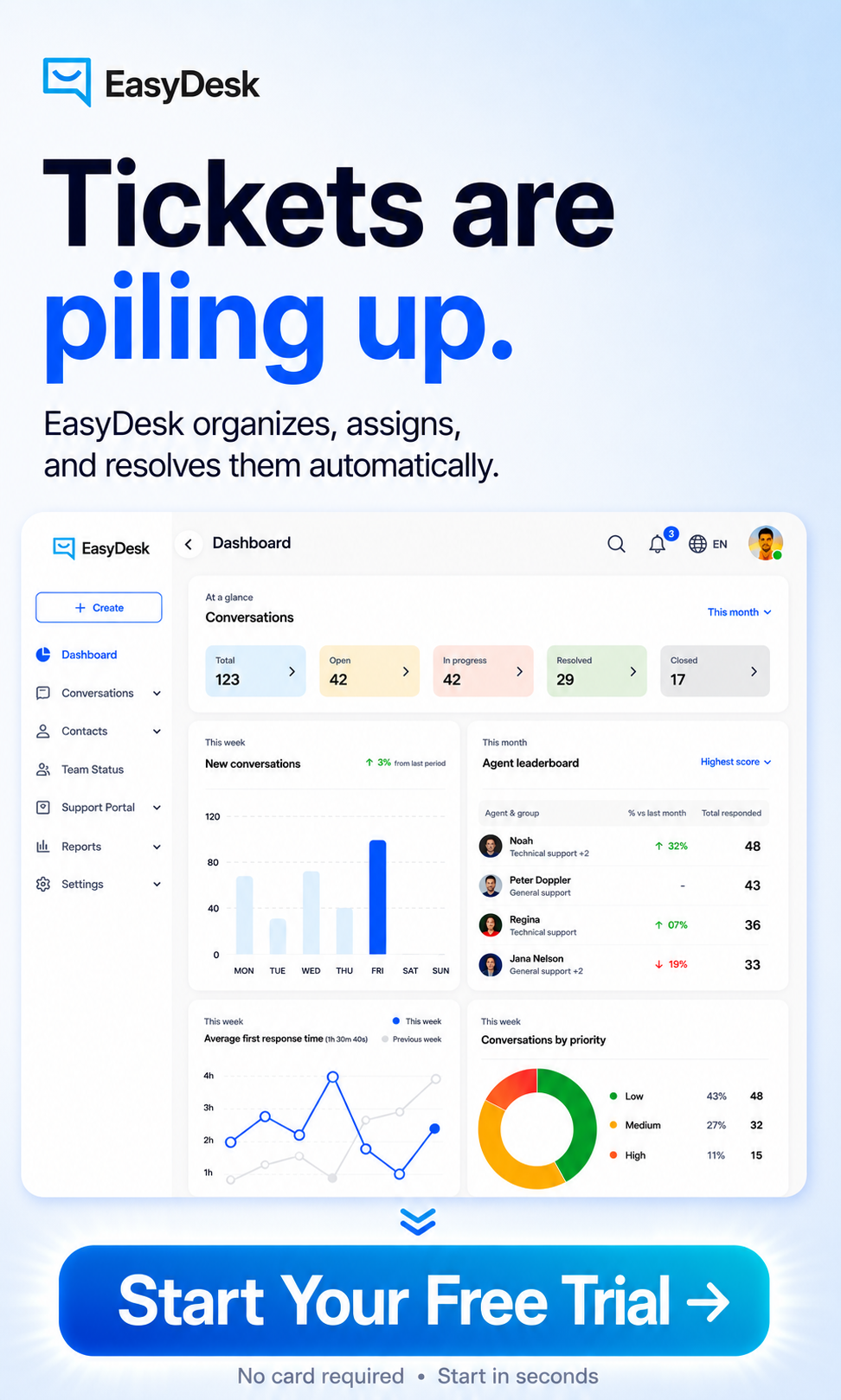
A simple dashboard showing current queue state and trending topics gives your team the visibility to act before small issues become big ones. This is how support teams foster loyalty through responsiveness.
Step-by-Step: How to Shift from Reactive to Proactive
This roadmap helps any support lead move toward proactive support over 60 to 90 days. Each step builds on the previous one, creating sustainable change without overwhelming your team.
Step 1: Audit Your Current Tickets and Journeys
Review the last three months of tickets and chat transcripts. What questions appear most often? At what points in the customer journey do people reach out?
Identify the top ten repeat questions by volume. Tag them by category: billing, shipping, product usage, account issues, and so on. Note the moments when these questions typically appear, such as after signup, before renewal, or after a purchase.
These insights determine which two or three areas to tackle first with proactive measures. Start where the impact will be most visible.
Step 2: Design Small, Focused Proactive Experiments
Set up simple tests rather than trying to transform everything at once. Create one new help article for your most common question. Add one in-app banner for a known friction point. Build one automated email flow for a recurring problem.
Choose metrics ahead of time. You might measure reduction in tickets on that topic, improved time-to-resolution, or better CSAT scores. Having clear success criteria makes it easy to know what is working.
Start with a small slice of customers or a single product line before a full rollout. This lets you refine your approach without risking your entire customer base.
Step 3: Measure, Learn, and Expand
Compare data from the 30 days before and after each change. Did tickets on that topic decrease? Did resolution time improve? Did customer frustration around that issue go down?
Keep wins and roll them out wider. Iterate on changes that do not show results. Some experiments will fail, and that is fine. The goal is learning what works for your specific customers.
Document each play in an internal runbook so future hires can use it. This creates a library of proactive tactics that grows over time, making your team more effective with every quarter.
Common Challenges In Implementing Proactive Customer Support
Adopting proactive customer support helps businesses prevent issues and strengthen relationships, but implementation often presents operational, technological, and strategic challenges that require structured planning, the right tools, and consistent team alignment.
Limited Visibility Into Customer Needs
One of the biggest challenges in providing proactive service is understanding customer needs before problems occur. Many organizations lack unified data systems that reveal customer behavior patterns across channels. Without predictive analytics and actionable insights, support teams struggle to anticipate issues or notify customers early. This limitation weakens a proactive approach and reduces the ability to improve customer satisfaction consistently. Companies must invest in analytics tools and integrate customer data sources to gain full visibility across the customer journey.
Difficulty In Managing Multiple Support Channels
Modern support environments include chat, email, phone calls, social media, and contact center platforms. Coordinating proactive customer support across these communication channels can be complex. Support teams often face delays in responding consistently, which affects customer experience and reduces trust. Providing proactive service requires streamlined workflows and centralized communication systems to ensure timely engagement and accurate information delivery.
Lack Of Self Service Infrastructure
Organizations often struggle to implement effective self service resources that allow customers to resolve issues independently. Without strong knowledge bases, automated notifications, and guided support tools, proactive service becomes reactive. Self service systems play a crucial role in reducing customer frustration, lowering support workloads, and preventing unnecessary escalation of simple inquiries.
Resource And Training Constraints
Providing proactive customer support demands skilled teams, advanced tools, and ongoing training. Many support departments lack sufficient staffing or expertise to implement predictive strategies effectively. Inconsistent processes also limit the benefits of proactive customer initiatives. Businesses must align internal resources, define clear workflows, and train support teams to maintain service quality at scale.
Measuring Impact And Demonstrating Value
Another major challenge involves proving the business value of proactive customer support. Organizations often struggle to track how proactive actions influence customer loyalty, retention, and reduced customer churn. Without clear metrics, leadership may hesitate to invest in proactive systems despite their competitive advantage. Establishing performance indicators that measure customer outcomes, engagement levels, and long term satisfaction helps demonstrate the benefits of proactive customer strategies.
How EasyDesk Enables Proactive Customer Support
EasyDesk is a modern, unified helpdesk platform that brings email, chat, and social messages into a single, simple workspace. For small and mid-sized teams that want to provide proactive customer service without complex setup, EasyDesk offers the tools to make it happen.
The interface is clean and minimal. Agents see only what they need to act fast. There is no clutter, no confusion, and no switching between disconnected tools.
Unified Inbox with Fast, Context-Rich Responses
EasyDesk combines conversations from multiple communication channels and attaches customer context to each thread. When a ticket arrives, agents see the customer’s history, recent activity, and any open issues immediately. This visibility lets teams identify patterns early. If several customers report similar issues, the team can reach out to affected users before more tickets pile up. The inbox shows tags, priorities, and customer timeline at a glance, making it easy to spot trends and deliver proactive support.
Automation Rules and Workflows for Early Intervention
EasyDesk’s automation rules tag, route, and auto-respond based on keywords, channels, or customer segments. These rules handle the predictable work so your team can focus on what requires human attention. Use cases include automatic replies when a known incident occurs, routing VIP customers to a senior queue, closing resolved tickets with a review request, and escalating high-priority issues based on specific criteria. The rules editor is straightforward, with clear conditions and actions instead of code.
Knowledge Base and Smart Self-Service
EasyDesk includes tools to publish a branded help center so customers can find answers without opening tickets. Articles are organized into clear categories, and search functionality helps users find what they need quickly. Search analytics show what customers look for, revealing gaps your team can fill proactively. If users keep searching for something that does not exist, that is a clear signal to create content.
Collaboration and Visibility for the Whole Company
Internal notes, mentions, and shared views help product and operations teams see emerging issues early. When support notices a spike in a specific topic, they can tag the product team, investigate together, and publish an update within an hour. This cross-team visibility is central to a proactive culture. It turns support into a sensor for the entire organization, providing valuable insights about customer needs and product improvements.
FAQ
How can a small team start with proactive support without extra headcount?
Small teams should begin by documenting their top repeat questions and publishing five to ten core help articles addressing them. Set up one or two automation rules for common scenarios like order status updates or payment reminders. Focus on low-effort, high-impact tactics rather than building complex bots on day one.
Which metrics show that proactive support is working?
Track ticket volume per active customer, repeat contact rate, CSAT scores after incidents, and time to resolve recurring issues. A team that adds shipping notifications might see a 30% drop in “Where is my order?” tickets within a month. Compare these numbers before and after implementing proactive measures to see clear impact.
Can proactive support feel too intrusive for customers?
It can, if messages are too frequent or irrelevant. Offer clear preferences and easy unsubscribe options for all proactive communications. Focus on relevance and timing by only sending messages when they help customers make a decision or avoid a problem. A well-timed renewal reminder is helpful. Daily promotional emails are spam. Let customer behavior guide what you send and when.
Do you still need live agents if you have strong proactive support?
Proactive support reduces volume but does not replace humans. Sensitive situations, complex troubleshooting, and high-value customer relationships all require personal attention. Proactive work lets a smaller, more skilled team deliver a better experience by handling routine questions through automation and self-service.
How often should proactive flows and content be reviewed?
Conduct a quarterly review of key automations, notifications, and knowledge base articles. Add a quick check after each major product release or pricing change. Link reviews to data by monitoring ticket patterns. If a topic’s volume spikes after being quiet, it is time to adjust the proactive content around it.