SLA management software has become essential for support teams that want to deliver reliable, consistent service without delays or confusion. As customer expectations rise, businesses need tools that help them meet agreed service levels, track performance, and respond quickly when issues occur.
A strong SLA system provides structure, visibility, and real-time insights so teams can manage requests with confidence. It helps organizations set clear service expectations, reduce resolution time, and prevent SLA breaches before they happen. For IT service management and customer support teams, SLA software brings automation, accountability, and better control over daily operations. With the right platform in place, businesses can maintain strong service delivery and build long-term trust with every customer they support.
What Is SLA Management Software
SLA management software is a digital system designed to help organizations create, track, and manage service level agreements across their support operations. It ensures that support teams follow agreed service levels for response time, resolution time, and overall service delivery. Instead of relying on manual tracking or scattered spreadsheets, the software provides a structured platform where teams can define SLA policies, monitor performance, and receive alerts when deadlines are at risk. It also offers clear visibility into workloads, due dates, business hours, and multiple SLA rules for different types of service requests. By centralizing all SLA-related data, the software helps organizations maintain consistency, improve accountability, and deliver reliable service that meets customer expectations.
How It Supports Service Level Management
SLA management software plays a central role in helping organizations maintain structured, consistent, and reliable service delivery. As a dedicated software platform, it simplifies how teams manage SLAs, track commitments, and follow agreed service levels without relying on manual tools. The system provides clear rules, automated workflows, and real-time insights that allow support teams to meet expectations with accuracy and confidence.
Centralized Control Of Service Levels
A modern management software platform brings all service-level rules into one place. Instead of scattered documents or spreadsheets, support teams can view every SLA policy directly inside the system. This centralized control ensures that service level management remains unified, organized, and easy to maintain.
Clear Rules For Every Service Request
SLA management software allows organizations to assign specific targets and response rules to different request types. Each ticket or request follows defined service levels, whether it requires faster handling or standard response time. This structure helps teams manage SLAs consistently and avoid confusion across support channels.
Automated Workflows That Reduce Manual Effort
Automation is one of the core strengths of SLA management software. It triggers actions based on due dates, time limits, and business hours. When deadlines approach, the platform alerts the team, helping them act quickly and prevent SLA breaches. Automation also ensures that every request follows the correct workflow.
Real-Time Visibility Into SLA Performance
Service level management relies heavily on real-time monitoring. The software provides dashboards and insights that show which SLAs are on track, which ones are at risk, and where teams need to act immediately. This visibility helps organizations make informed decisions and address issues before they escalate.
Consistent Processes Across Teams
An SLA software platform ensures that internal teams follow the same standards and service rules. Whether the request comes from IT, customer support, or operations, the system guarantees consistent handling and clear accountability. This unified process improves reliability and strengthens customer trust.
Easier Compliance And Reporting
With built-in reporting tools, SLA management software simplifies compliance and recordkeeping. Organizations can generate reports, review performance trends, and use insights to improve service level management over time. This makes audits easier and supports long-term operational improvements.
By combining automation, structure, and real-time insights, SLA management software gives organizations the tools they need to manage SLAs effectively and maintain dependable service delivery.
Role Of SLAs In Consistent Service Delivery
Service level agreements create the foundation for reliable service delivery by defining clear expectations, measurable performance standards, and agreed-upon terms between support teams and customers. They ensure every interaction follows consistent service levels and predictable response and resolution timelines.
Clear Agreed Terms For Better Alignment
SLAs begin with well-defined and mutually agreed terms that outline what the service provider is responsible for and what the customer should expect. These terms eliminate confusion by clarifying responsibilities, timelines, communication methods, and escalation paths. When both parties understand these commitments, support teams can operate with structure, and customers gain confidence in the service relationship.
The clarity created by agreed terms also reduces unnecessary back-and-forth, prevents disputes, and helps teams remain accountable. This alignment ensures every request receives consistent treatment and that service delivery always matches expectations documented in the SLA.
Defined Service Levels For All Request Types
Every SLA includes specific service levels that determine how different categories of requests should be handled. High-impact or time-sensitive issues may require rapid response times, while general inquiries follow standard timelines. These defined levels help support teams prioritize efficiently, distribute workload properly, and ensure critical issues get immediate attention. By establishing detailed response and resolution targets, organizations maintain consistent service delivery regardless of volume fluctuations. Customers also benefit from transparency, as they know how long it should take for their issue to be addressed. Defined service levels keep the entire support process fair, predictable, and structured.
Standardized Processes For Reliable Service Delivery
SLAs act as a blueprint for how tickets and service requests move through the support lifecycle. Standardized processes ensure that everyone on the support team follows the same steps when acknowledging, escalating, or resolving issues. This consistency reduces variations in handling similar requests and prevents gaps caused by personal judgment or inconsistent decision-making.
Standardization also ensures new team members quickly adapt to service delivery requirements. Whether requests are handled by different agents, shifts, or locations, SLAs ensure customers receive the same quality of service. The result is predictable, dependable support across every interaction.
Preventing Delays Through Measurable Targets
Measurable response and resolution targets are at the heart of every SLA. These targets help support teams stay accountable and ensure tickets are never overlooked or delayed. Support platforms highlight approaching deadlines, send reminders, or trigger escalations when an SLA threshold is at risk. This proactive structure helps teams stay focused and prevents last-minute pressure.
Clear targets also help managers understand performance levels, identify bottlenecks, and adjust staffing when necessary. By working with defined metrics instead of estimates, organizations consistently meet their service obligations and minimize SLA breaches.
Improved Coordination Across Internal Teams
SLAs strengthen coordination by clearly outlining each team’s responsibilities during the service process. When multiple internal teams are involved, such as IT, operations, or engineering, the SLA defines who handles which part of the request and within what timeframe. This clarity prevents delays caused by miscommunication or uncertainty about ownership.
Better coordination leads to smoother handoffs, more efficient workflows, and faster resolution times. Customers benefit because their issues are handled seamlessly, regardless of how many internal teams are involved. With everyone aligned to the same service levels, collaboration becomes easier and more reliable.
Ensuring Consistency Across Customer Interactions
One of the most important benefits of SLAs is the consistency they bring to customer interactions. With clearly defined rules and standardized workflows, customers receive uniform support regardless of the time of day, the channel they use, or the agent assigned. This consistency builds trust and reinforces the organization’s reputation for dependable service delivery.
Even during high-volume periods, SLAs ensure requests are prioritized fairly and processed according to established guidelines. Over time, this predictable experience strengthens customer satisfaction and loyalty, making SLAs essential for consistent, high-quality service delivery.
Why SLAs Are Essential In Customer Support And IT Service Management
SLAs give support teams structure, clarity, and measurable standards. They help teams deliver predictable service, strengthen customer satisfaction, and maintain reliable performance across customer support and IT service management functions.
Clear Expectations For Customers And Support Teams
SLAs set clear expectations that guide how support teams operate. They outline response time, resolution time, service scope, and escalation paths so customers know exactly what to expect. Without this clarity, misunderstandings are common. For support teams, these expectations reduce uncertainty and keep work aligned. Everyone follows the same rules, which leads to more organized and professional service delivery.
Stronger Customer Satisfaction Through Predictable Service
Customers value reliability. SLAs ensure predictable service by committing the support team to consistent timeframes and communication standards. When customers see that issues are handled within agreed timelines, their confidence increases. Predictability also reduces frustration and uncertainty during the resolution process. Over time, these consistent experiences build stronger trust and higher customer satisfaction.
Improved Accountability Across Support Operations
SLAs introduce measurable responsibilities that make accountability easier. Each request has a target the support team must meet, allowing managers to see whether service commitments are fulfilled. This accountability motivates teams to maintain high standards and quickly identify areas that require improvement. In IT service management, SLAs also clarify which internal team owns each part of the process, reducing confusion and strengthening performance across departments.
Better Coordination Across IT and Support Teams
Support operations often involve multiple internal teams, especially for technical or system-related issues. SLAs outline who handles each step, ensuring smooth coordination between customer support, IT teams, and specialized departments. Clear responsibilities and documented timelines help prevent delays caused by miscommunication. By following the same SLA framework, all teams work in sync, resolve problems faster, and maintain service quality across complex workflows.
Consistency In Service Management Processes
SLAs create standardized processes that keep service delivery consistent across all channels. Whether a request comes through email, chat, phone, or a support portal, it follows the same SLA-driven workflow. This consistency eliminates guesswork and helps teams deliver stable performance even during peak periods. For organizations supporting customers across regions or time zones, SLAs ensure equal treatment and consistent service experiences.
Enhanced Measurement And Performance Tracking
SLAs give organizations clear metrics to measure performance. Tracking response time, resolution time, and fulfillment rates helps teams understand how well they meet commitments. These insights reveal bottlenecks, show patterns in support volume, and highlight areas that need additional resources. In IT service management, SLA reports are essential for compliance, forecasting, and improvement planning. With accurate metrics, organizations can make informed decisions and refine processes to deliver better support.
How SLA Tracking Improves Response Time and Resolution Time
SLA tracking plays a critical role in improving how quickly support teams respond to and resolve customer issues. By giving teams a structured way to monitor SLA performance and view real time insights, it ensures deadlines are met, priorities stay clear, and no request gets overlooked. When organizations track SLAs consistently, both response time and resolution time naturally improve, creating a smoother and more reliable support experience for customers.
Clear Visibility Into Priority Levels
SLA tracking helps teams understand which requests require immediate attention. Tickets tied to shorter response time targets rise to the top of the queue, ensuring urgent issues are handled first. Without this visibility, teams often guess priorities or rely on manual sorting, which leads to delays. With automated tracking, the system highlights what matters most, helping support agents move quickly and confidently.
Real Time Insights For Better Decision-Making
Real time insights are essential for improving service performance. SLA tracking tools show which tickets are approaching deadlines, which agents have heavy workloads, and where bottlenecks may occur. With this information, support leaders can redistribute tasks, allocate resources, and escalate issues before time runs out. These proactive adjustments help keep response and resolution times on track.
Automated Alerts That Prevent Missed Deadlines
When a ticket is close to breaching its SLA, automated alerts notify the team instantly. These reminders reduce the risk of missed deadlines and ensure agents stay aware of their responsibilities. Alerts also improve team coordination, especially when multiple agents or departments are involved in resolving a single request. With timely notifications, teams maintain consistent performance even during high-volume periods.
Faster Escalation Through Structured SLA Rules
SLA tracking systems define clear escalation paths. When an issue is not resolved within the initial timeframe, it automatically moves to the next level of support. This prevents delays caused by stalled tickets or unclear responsibilities. Structured escalations ensure the right people step in at the right time, reducing resolution time significantly.
Continuous Monitoring For Performance Improvement
By monitoring SLA performance regularly, organizations can identify recurring delays and fix underlying problems. Maybe response time is slow during certain hours, or technical issues take too long to escalate. These insights guide process improvements that lead to faster responses and quicker resolutions over time. SLA tracking ensures teams evolve based on data instead of assumptions.
How Do You Set Effective SLA Targets and Policies for Your Business?
Effective SLA targets and policies help support teams deliver reliable service, set clear expectations, and align performance with actual business needs. Well-structured SLAs guide workflows, prioritize requests, and ensure consistent outcomes across every customer interaction.
Understand Core Business Needs
Creating meaningful SLA targets begins with understanding what your business requires and what customers expect. Some organizations need fast responses for technical issues, while others focus on high-quality resolutions over speed. Evaluating service volume, common request types, peak hours, and team capacity helps define SLAs that match real operational conditions. When SLA policies fit your business needs, teams can perform confidently without feeling pressured or overwhelmed. This alignment ensures that service delivery remains consistent, realistic, and supportive of long-term goals.
Establish Clear Expectations For Each Request Type
Different types of service requests demand different handling times. High-impact incidents may require urgent attention, while low-priority inquiries can follow longer timelines. Defining clear expectations for response and resolution ensures customers understand how their requests will be treated. Support teams benefit from structured guidance that prevents confusion and creates predictable workflows. These expectations reduce ambiguity, prevent missed deadlines, and strengthen trust between the organization and its users. Clear, documented expectations ultimately create a smoother service experience for everyone involved.
Build Multiple SLA Policies For Different Scenarios
A single SLA policy cannot support every situation. Businesses often serve various customer groups, time zones, and service categories, each requiring different levels of attention. Creating multiple SLA policies helps address these differences in a controlled and organized way. For example, premium customers may receive faster resolution times, while internal teams follow standard SLAs. Multi-level policies also support emergency cases, recurring issues, or specialized services. This flexibility ensures your SLA targets remain effective without sacrificing structure or consistency.
Balance Ambitious Goals With Practical Delivery
SLA targets should be challenging enough to encourage improvement but realistic enough to achieve consistently. Setting goals that are too aggressive leads to burnout, missed deadlines, and frustrated teams. Targets that are too lenient lower service quality. Finding the right balance requires reviewing historical performance, team workload, and customer expectations. When targets reflect actual capability, service delivery remains stable, reliable, and sustainable. Balanced SLAs motivate the team while preserving quality and efficiency.
Continuously Review SLA Policies For Improvement
SLA targets and policies must evolve as your business grows. New services, higher ticket volumes, or changing customer expectations require updates to keep SLAs relevant. Regular reviews help identify bottlenecks, refine response times, and improve overall performance. Monitoring SLA data, analyzing patterns, and gathering feedback from the support team ensures your policies remain aligned with current needs. Continuous improvement keeps SLA management strong and ensures your organization delivers dependable service over the long term.
SLA Workflows For Ticket And Service Request Priority
SLA workflows help support teams prioritize tickets and service requests with clarity and consistency. Instead of sorting issues manually, the system assigns priority based on defined rules, business impact, and expected response or resolution times. This ensures that urgent requests move to the top automatically while standard issues follow regular schedules.
SLA workflows begin at ticket creation. As soon as a request enters the system, the SLA determines its due dates, required actions, and escalation path. This removes guesswork and prevents delays caused by manual classification. Time zones are also taken into account, ensuring global teams handle tickets fairly and accurately based on local business hours.
Email notifications and alerts keep agents informed about upcoming deadlines and at-risk tickets. These reminders help prevent SLA breaches and ensure no request goes unnoticed. When a ticket requires escalation, the workflow routes it to the right person instantly, maintaining momentum and reducing resolution time.
By combining automated prioritization, accurate due dates, and consistent notifications, SLA workflows give support teams full control over ticket management. This structure improves efficiency, reduces delays, and ensures every service request receives attention based on its true urgency and impact.
Key Metrics And Reporting Tools For SLA Performance
SLA performance depends on accurate tracking, clear visibility, and reliable data. Key SLA metrics and reporting tools give support teams the insight they need to maintain consistent service, prevent SLA breaches, and detect risks before they escalate. With the right measurement framework, organizations can understand how well they meet commitments and where improvements are needed.
Core Key SLA Metrics That Matter
Key SLA metrics help teams understand how effectively they meet response and resolution commitments. These metrics often include first response time, average resolution time, on-time completion rate, and SLA compliance percentage. Tracking these numbers shows whether service levels are consistently met or frequently missed. When teams monitor these metrics daily, they gain control over performance and identify early signs of delays. Clear metrics also guide team priorities and resource allocation, ensuring that support remains aligned with customer expectations.
Performance Metrics For Deeper Insight
Beyond basic SLA metrics, broader performance metrics help reveal trends in team productivity and service delivery quality. These may include backlog growth, ticket aging, agent workload, and escalation frequency. By viewing these indicators together, managers can understand the real causes behind SLA breaches and slowdowns. For example, rising backlog may signal understaffing, while frequent escalations may indicate unclear responsibilities. These performance metrics give leaders a deeper understanding of throughput and operational health.
Key Performance Indicators For Strategic Decisions
Key performance indicators provide a high-level view of how support operations contribute to overall service success. KPIs such as customer satisfaction scores, resolution quality, and service availability help organizations evaluate whether their SLA policies support long-term goals. These indicators influence decisions about staffing, training, process adjustments, and technology investments. When KPIs align with SLA performance, organizations gain a complete picture of both day-to-day execution and strategic outcomes.
Comprehensive Reports That Improve Visibility
Reporting tools consolidate SLA data into easy-to-read dashboards and comprehensive reports. These reports highlight compliance trends, recurring issues, and time periods with frequent delays. To evaluate these visual performance summaries, teams often rely on flipbook statistics and analytics to track reader engagement, dwell time, and document interaction rates in real time. Comprehensive reports also support audits and help demonstrate accountability to stakeholders. Clear reporting transforms raw SLA metrics into meaningful, actionable insights that drive improvement.
SLA Monitoring Tools For Real-Time Control
SLA monitoring tools track every active ticket and its SLA status in real time. These tools show countdown timers, highlight at-risk tasks, and surface bottlenecks immediately. Real-time monitoring enables teams to adjust workloads quickly, shift priorities, or escalate before deadlines are missed. This immediate visibility prevents surprises and helps maintain consistent service delivery, even during volume spikes or staffing challenges.
Automated Alerts To Prevent SLA Breaches
Automated alerts are essential for reducing SLA breaches. When a ticket is close to missing its deadline, the system sends alerts to the responsible agent or team. These alerts ensure tasks remain visible and urgent issues receive immediate attention. Alerts also notify managers when patterns of delays emerge, helping them detect risks early and take corrective action. With automated reminders and escalation triggers, teams stay aligned and proactive.
Detecting Risks And Improving Future Performance
The combination of metrics, monitoring, and reporting tools helps organizations detect risks before they affect customers. High-risk indicators such as repeated breaches, long ticket aging, or overloaded agents signal the need for process changes or staffing adjustments. By identifying risks early, teams can strengthen their service delivery and refine SLA policies. Continuous improvement becomes easier when decisions are driven by data rather than assumptions.
Together, key SLA metrics and advanced reporting tools create a complete performance framework that keeps SLA commitments on track, prevents breaches, and supports long-term service excellence.
Measuring Support Team Performance and Ensuring Accountability
Measuring support team performance is essential for maintaining service quality, improving workflows, and ensuring accountability across the organization. With real-time insights, better visibility, and structured evaluation methods, support leaders can identify strengths, address gaps, and create a culture of continuous improvement that benefits both teams and customers.
Real-Time Insights For Accurate Performance Evaluation
Real-time insights help managers understand how the support team is performing at any given moment. Dashboards display active tickets, response times, workload distribution, and progress toward SLA commitments. This level of visibility allows leaders to quickly spot delays, overloaded agents, or stalled tasks. When performance can be monitored as it happens, teams can adapt quickly, shift workload, and maintain consistency. Real-time data ensures evaluation is based on facts rather than assumptions, making performance management more fair and transparent.
Better Visibility Across Tasks And Workflows
Visibility across support workflows is essential for understanding how effectively issues move through the system. Detailed views of ticket status, queue volume, and team activity reveal where processes lag or where resources may be missing. High visibility helps managers see how long tasks stay in each stage, whether escalations follow the right path, and how effectively the team collaborates. This clarity supports better planning, faster decision-making, and smoother operations overall.
Ensuring Accountability Through Defined Expectations
Accountability becomes stronger when performance expectations are clearly documented. When response targets, behavior standards, and communication guidelines are well defined, every support agent understands what they are responsible for. Tracking performance against these expectations makes it easier to identify who needs support, who consistently meets goals, and where improvements are required. Accountability encourages discipline, motivates high performance, and ensures the support team follows established processes consistently.
Identifying Trends And Recurring Issues
Performance measurement tools help teams identify trends in customer issues, recurring problems, and areas where support processes may not be working effectively. For example, repeated delays for a certain request type may indicate unclear workflows or missing resources. Trend analysis reveals hidden inefficiencies and illustrates how daily operations impact long-term service quality. When organizations identify trends early, they can adjust processes, add training, or implement new tools to improve efficiency and reduce future errors.
Supporting Continuous Improvement Through Data
Continuous improvement becomes easier when decisions are driven by reliable data. Performance dashboards, SLA reports, and workload statistics show where the team is performing well and where adjustments are needed. By reviewing these insights regularly, managers can refine priorities, improve scheduling, and redesign workflows. Continuous improvement helps teams adapt to increasing demand, expanding services, and evolving customer expectations. Data-driven evolution keeps performance stable and prevents recurring issues from resurfacing.
Strengthening Processes With Performance Insights
Performance insights are not just for evaluation; they directly strengthen internal processes. When teams understand how long tasks take, where communication breaks down, or which issues cause delays, they can redesign workflows to eliminate friction. Clear processes reduce stress on the support team and create more predictable experiences for customers. Improved processes also support better onboarding for new agents, allowing them to ramp up quickly and follow best practices from day one.
A More Reliable And Accountable Support Operation
By combining performance measurement, visibility, accountability, and continuous improvement, organizations create a support team that operates with consistency and confidence. Real-time insights ensure quick action, trend analysis supports better planning, and clear expectations keep everyone aligned. This strong performance framework leads to faster resolutions, higher customer satisfaction, and a more dependable service operation overall.
How SLA Management Software Enhances Operational Efficiency Across Teams
SLA management software plays a crucial role in improving operational efficiency across internal teams by creating structure, clarity, and accountability in how service requests are handled. It ensures every part of the organization follows consistent processes, meets defined timelines, and collaborates effectively to deliver reliable service.
Clear Workflows That Guide Every Team
Operational efficiency improves when teams follow predictable workflows. SLA management software defines how tickets move from one team to another, ensuring handoffs are smooth and responsibilities are clear. Instead of relying on manual coordination, the platform guides every request through structured steps. This reduces confusion, prevents delays, and ensures each team knows exactly what needs to be done at each stage.
Better Coordination Across Internal Teams
Support often involves multiple departments such as IT, operations, engineering, or customer service. SLA management software aligns these internal teams by assigning ownership, defining escalation levels, and setting deadlines for each group. With a shared view of priorities and due dates, teams can coordinate more efficiently. This unified approach eliminates unnecessary back-and-forth and keeps everyone working toward the same service goals.
Effective Management Through Real-Time Visibility
Managers gain real-time visibility into workloads, bottlenecks, and performance across all teams. They can see which requests are progressing smoothly, which ones are at risk, and where additional support may be needed. This level of transparency allows leaders to redistribute tasks, adjust staffing, or escalate issues before they impact operations. Real-time insights ensure decisions are fast, informed, and aligned with the organization’s service commitments.
Reduced Operational Delays
When teams operate without clear priorities or deadlines, delays become common. SLA management software eliminates this risk by defining response and resolution timelines for every request. Automated alerts notify teams when deadlines approach, preventing missed targets. With fewer delays, the organization maintains a smoother flow of work and delivers services more consistently.
Stronger Organizational Alignment
Operational efficiency improves when the entire organization works in sync. SLA management software standardizes expectations, processes, and timelines across all teams. This alignment reduces duplication, avoids miscommunication, and ensures everyone contributes effectively to the company’s service goals. Over time, the organization benefits from faster resolutions, clearer accountability, and a more disciplined approach to service delivery.
SLA Management Integration With ITSM And Asset Management
Integrating SLA management with IT service management (ITSM) and asset management helps organizations deliver consistent, reliable services. When these systems work together, teams gain better visibility, smoother workflows, and more accurate control over service timelines, asset performance, and operational priorities.
Unified Control Across IT Services
SLA management and ITSM complement each other naturally. ITSM tools organize incidents, service requests, and change activities, while SLAs define the timelines and expectations for handling them. When integrated, SLAs automatically apply to the right request type without manual effort. This ensures response and resolution targets are met consistently. Support teams can see high-priority issues in real time and adjust their workload to avoid SLA breaches.
Asset-Driven SLA Rules
In asset management, every device, license, or component has a different impact on operations. Integration allows SLA rules to adjust automatically based on asset type or criticality. A high-impact server may require faster response times, while a low-risk device may receive standard SLAs. This alignment ensures service levels accurately reflect business importance. It also helps teams prioritize tasks more intelligently and reduces delays caused by misclassified requests.
Seamless Data Sharing Between Systems
When SLA management tools connect directly with ITSM and asset management platforms, data flows automatically across all systems. Teams no longer need to update multiple tools manually, which reduces errors and eliminates duplicate work. Service requests instantly display accurate asset details, user information, and SLA timelines. This seamless data exchange helps teams act quickly, resolve issues faster, and maintain a clean, consistent information structure across the organization.
Comprehensive Insight And Reporting
Integrated reporting provides a complete view of service performance. Leaders can analyze SLA performance, review service trends, and track asset-related issues from one place. These comprehensive reports highlight recurring problems, identify slow points in workflows, and reveal which assets frequently contribute to delays. With these insights, organizations can make smarter decisions about repairs, upgrades, staffing, and workflow improvements. Integration also helps teams detect risks early and refine processes for better reliability.
Stronger Compliance And Operational Governance
ITSM frameworks and asset management policies often require complete documentation and structured service processes. Integrated SLA management supports these governance requirements by enforcing timelines, logging actions, and providing full audit trails. Every escalation, missed deadline, or service update is automatically recorded. This strengthens accountability and prepares the organization for compliance checks without extra administrative effort.
EasyDesk SLA Management Features: Real-Time Monitoring and Consistent Service Delivery
EasyDesk is a help desk and customer support platform that helps teams manage service requests efficiently while maintaining consistent service delivery. It combines ticketing, automation, real-time insights, and SLA monitoring in one system so support teams can stay organized and meet service expectations without juggling multiple tools.
Centralized Ticketing With SLA Tracking
EasyDesk unifies tickets from different channels into a single view so support agents never miss a request. SLA tracking is built into this system, automatically assigning due dates and priority levels based on preconfigured rules. As a result, support teams always kFnow which tickets require immediate attention and which have upcoming deadlines. This structure reduces manual work and helps teams meet response and resolution targets consistently.
Real-Time Visibility And Alerts
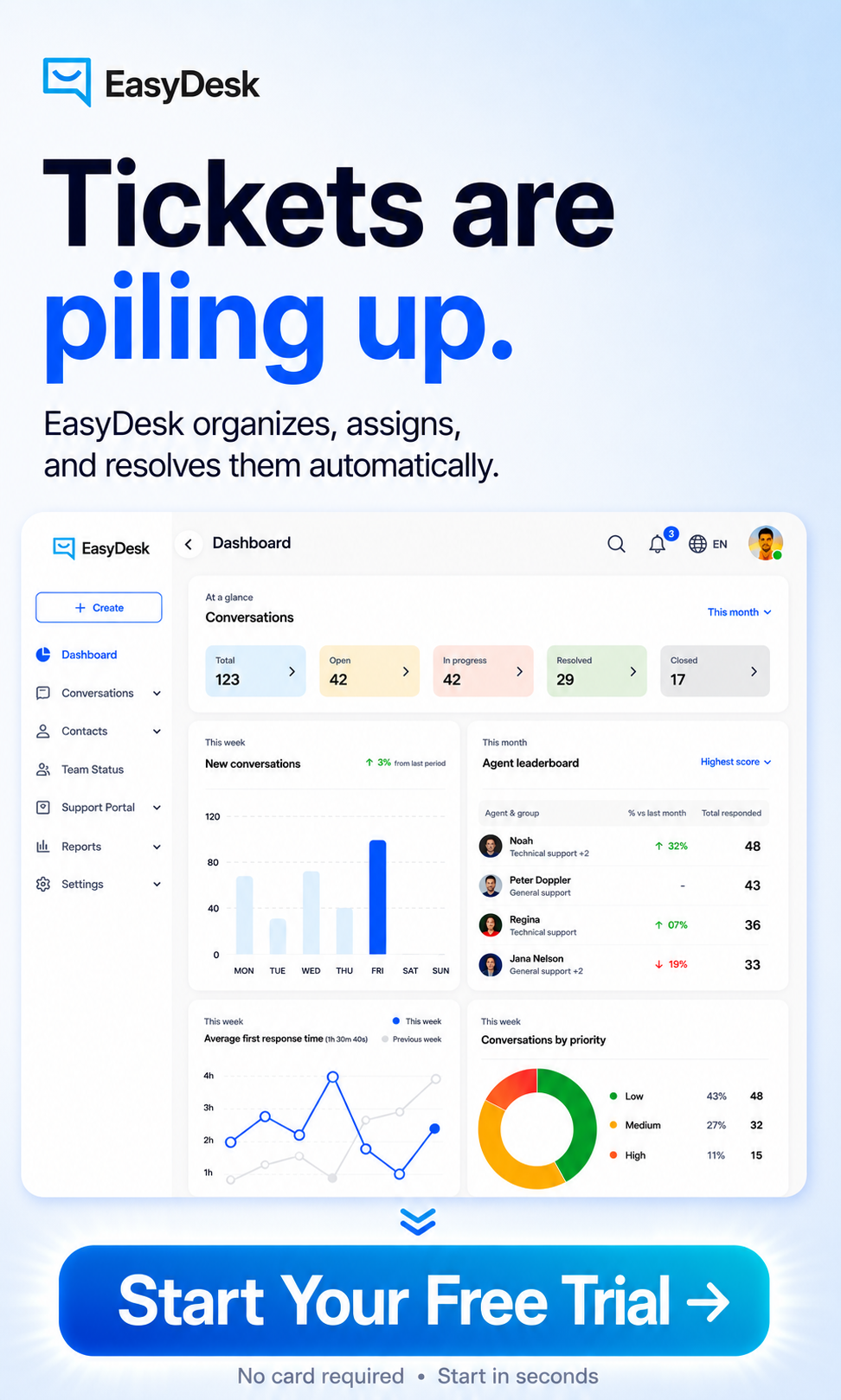
One of EasyDesk’s strengths is its ability to provide real-time visibility into SLA performance. Dashboards show active tickets, time remaining to meet SLA targets, and tickets at risk of breach. These insights help teams stay on top of workloads and adjust plans before issues escalate. Automated alerts notify agents and managers when SLA deadlines are close, reducing missed commitments and improving service reliability across the support operation.
Automated Workflows And Priority Routing
EasyDesk lets organizations define automated workflows that route service requests to the right agents based on type, priority, or SLA requirements. This not only speeds up initial response time, but also ensures that higher-priority issues are addressed within the correct timeframes. Workflow automation helps streamline common processes such as ticket assignment, escalation, and SLA adjustments, allowing teams to focus more on solving problems rather than coordinating tasks manually.
Collaboration And Consistency Tools
Supporting a team becomes easier when communication and context stay intact. EasyDesk offers internal notes, tags, and team assignments so agents can collaborate seamlessly on complex tickets. Canned responses and shared knowledge resources help maintain consistent replies for frequent queries and reduce resolution time. These tools support clear communication and help teams deliver a uniform service experience with every customer interaction.
Reporting And Performance Insights
EasyDesk includes reporting features that combine SLA performance data with overall support trends. These reports reveal patterns such as recurring issues, peak support times, and areas where SLA targets are consistently met or missed. With these insights, support leaders can refine SLA policies, adjust staffing, and improve workflows. Regular performance monitoring supports ongoing improvement and helps teams align their efforts with organizational growth and customer expectations.
EasyDesk’s combination of centralized ticketing, SLA monitoring, automated workflows, collaboration features, and performance reporting helps support teams deliver reliable, timely, and consistent service that meets the unique needs of users and customers.
FAQs
What Is SLA Management Software?
SLA management software helps organizations define, track, and manage service level agreements by automating deadlines, monitoring performance, and ensuring support teams meet response and resolution targets.
Why Are SLAs Important For Support Teams?
SLAs set clear expectations for response and resolution times, helping support teams stay organized, prioritize requests, and deliver consistent service that improves customer satisfaction.
How Does SLA Tracking Reduce Delays?
SLA tracking highlights priority tickets, sends automated alerts before deadlines, and gives teams real-time visibility into approaching risks, which prevents missed commitments and improves response time.
Can SLA Software Support Multiple Service Types?
Yes. Modern SLA software supports multiple SLA policies for different request types, customer tiers, time zones, or business hours, ensuring flexible and accurate service delivery.
What Metrics Are Used To Measure SLA Performance?
Key SLA metrics include first response time, resolution time, compliance percentage, ticket backlog, escalation rates, and on-time completion. These metrics help teams evaluate performance and identify improvement areas.
How Does SLA Management Integrate With ITSM?
SLA management integrates with ITSM by applying SLA rules to incidents, service requests, and changes. It ensures every ticket follows defined timelines and escalations, improving service reliability.
Does SLA Software Help Prevent SLA Breaches?
Yes. Automated alerts, timers, escalation rules, and real-time monitoring all help teams act before deadlines are missed, reducing SLA breaches and improving overall service consistency.