Customer expectations rise every year, and a small business cannot afford slow replies. A ticketing system for small business brings structure to customer support by turning every email, web form submission, or social media message into organized support tickets. Instead of scattered conversations across other apps, desk software centralizes customer data and helps support teams manage tickets from multiple channels on one intuitive platform.
Modern help desk software and desk ticketing systems include automation tools, smart rules, and automated workflows that reduce ticket volume pressure. With advanced analytics, customizable reports, and integration options, small teams gain full control. Free plan options, paid plans, and advanced features make it easier to deliver consistent service and drive customer success.
In this article, you will see how the right ticketing system improves response time, strengthens customer relationships, and helps small teams deliver exceptional customer support without wasting valuable time.
What Is A Small Business Ticketing System
A small business ticketing system is help desk software that organizes and tracks support requests from multiple channels in one desk system. Instead of scattered emails or missed social media message alerts, ticketing software converts every query into structured support tickets. Support teams and small teams can manage tickets, track tickets, and manage communication from a single intuitive platform. Customer data stays centralized, which helps the customer support team deliver consistent service and maintain a strong customer relationship.
Modern desk ticketing systems often run on a cloud-based platform and include essential features like automated workflows, smart rules, knowledge base access, and reporting features. Free ticketing system options and free plan or paid plans allow small business owners to start with basic features and upgrade to more advanced capabilities. Advanced analytics, integration options with CRM systems, and collaboration tools help support staff, development teams, and internal departments stay on the same page while improving agent performance and customer success.
Why Response Time Is Important For Small Businesses
Response speed shapes every customer interaction. Your support team faces mounting pressure as customers expect faster resolutions across multiple channels. Understanding how response time affects your business helps you prioritize the right desk software investments and support strategies.
Customer Expectations In 2026
Customer patience has shrunk. Research shows that 82% of customers expect a response within 10 minutes. This expectation holds true across service channels and puts immense pressure on support teams to deliver immediate answers.
The gap between expectation and reality remains substantial. While 46% of customers expect email responses within 4 hours, the industry average sits at 12 hours. Only 36% of companies meet the 4-hour standard. Most small business ticketing systems deliver responses averaging over 12 hours, yet 90% of customers think an immediate response is vital at the time they reach out to customer support.
The Cost Of Slow Responses
Delayed responses drain revenue in multiple ways. Studies reveal that 60% of customers have abandoned a purchase owing to poor service, with slow response times being a primary factor. Bad customer experiences could cost organizations throughout the world $3.70 trillion each year, representing a 19% increase from previous projections.
The financial effect scales with your business size. Mid-sized companies can translate improving response times by just 10% to hundreds of thousands of dollars in retained revenue each year. Companies with longer response times earn 45% less revenue per customer than those responding promptly. Research from Forrester shows that poor customer service costs businesses $75 billion each year.
Customer Loyalty
Speed drives satisfaction and retention in measurable ways. Research shows that a 10% improvement in first response time can lead to a 3% increase in customer satisfaction. The CMO Council found that the most vital attribute leading to customer satisfaction is quick response time to requests and complaints.
Retention delivers exponential value. A study by Bain & Company expresses that a 5% increase in customer retention can lead to a profit increase of 25% to 95%. Companies with strong omnichannel engagement retain 89% of their customers, while businesses with weak strategies retain only 33%. This expresses the value of consistent service across channels.
How A Ticketing System For Small Business Reduces Response Time
Support teams gain speed through automation and intelligent workflows. A help desk ticketing system for small business changes how you handle incoming requests. It reduces manual tasks and the right person addresses each issue right away, which is how customer support software can improve response time by up to 3X.
Automatic Ticket Creation From Multiple Channels
An automated ticketing system captures every customer interaction and turns it into a trackable ticket whatever channel customers use to reach out. Emails, live chats, social media messages and web forms all flow into one centralized platform, making it far easier to turn emails into trackable tickets with the right tools. Support staff manually copied information from different channels into spreadsheets or forwarded emails between team members before implementing desk software.
Automated ticket creation eliminates this manual data entry. The system generates a unique ticket with contextual information attached when customers send messages through any channel. This omnichannel approach will give you no overlooked requests while support teams manage communication from a single dashboard. Customers can submit tickets through their preferred channel and the system converts those messages into trackable records.
Smart Ticket Assignment And Routing
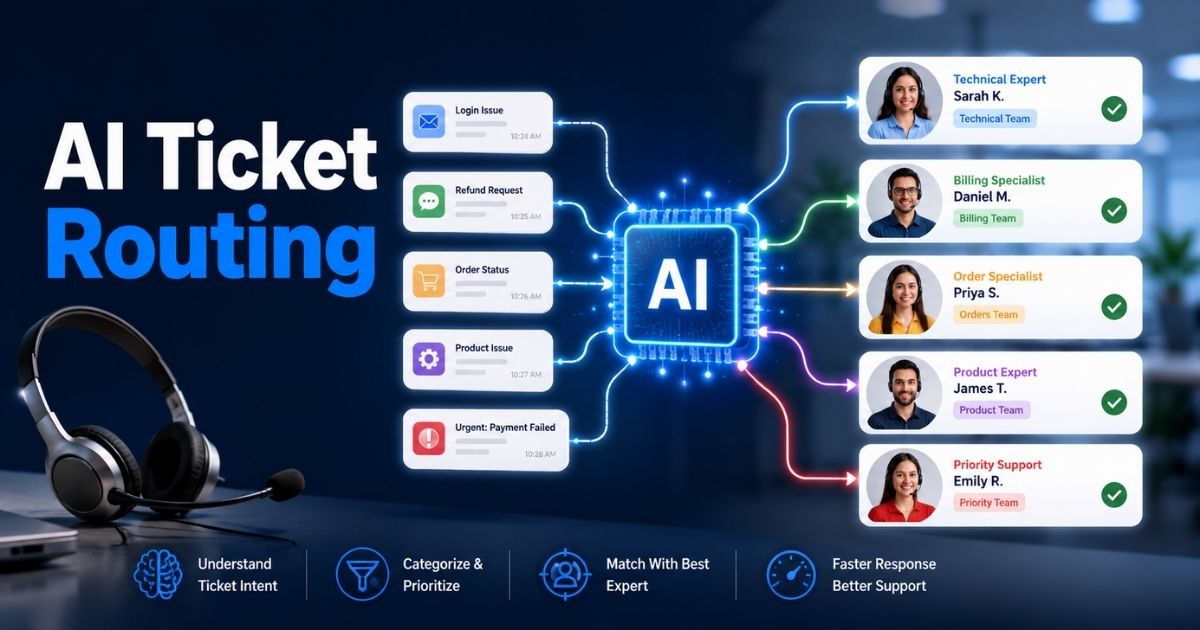
Intelligent routing directs tickets to the most appropriate agent based on skills, experience and priority. Smart ticket routing connects support tickets with the agents best equipped to handle them. This boosts first contact resolution rates by a lot. Automation streamlines this process and uses AI to direct tickets to the right agents based on skills, past interactions or ticket type.
The system analyzes incoming tickets and compares them with historical data. This approach handles them more efficiently. Automated workflows instantly route tickets to the appropriate team based on type, urgency or customer history as opposed to manual assignment that creates delays. Omnichannel routing can route requests based on agent skill, capacity, status and ticket priority.
60% of IT tickets get miscategorized and need to be reassigned multiple times for eventual service. Smart routing prevents this waste. It correctly categorizes and assigns tickets the first time. Agents don't waste time gathering missed details when tickets come in complete and ready to be serviced. This results in fast efficient service.
Priority Tagging For Urgent Issues
Priority levels mark urgent conversations appropriately. You can assign one of four priority levels (Low, Normal, High or Critical) based on any ticket condition you choose. Priority-based assignment means tickets labeled as priority will be assigned ahead of non-priority tickets. Your team tackles the most pressing issues first.
Automated workflows tag high-priority support tickets so your team can prioritize them. A payment issue may require immediate attention. General inquiries can follow standard SLAs. Support teams create grading systems that include contact information, issue descriptions and how greatly the issue affects the customer. This prioritization strategy proves useful if you have a large influx of tickets.
Canned Responses For Common Questions
Canned responses are pre-written messages that customer service agents use to answer common questions fast. LiveHelpNow contact center software found that they can cut down response times by up to 40%. High-performing teams respond up to 50% faster using canned responses and macros.
These quick replies reduce average first response time by 30% or more. Support agents save time to handle more complex issues. Quick replies boost productivity and make their responses sound professional. Canned responses should be personalized and show empathy so they don't lose that human touch. AI can suggest pre-written responses to automate based on ticket context.
Internal Notes To Speed Up Collaboration
Internal notes allow team members to leave handy messages on customer tickets for their own reference or to help out teammates. These notes remain invisible to customers while keeping your entire support staff informed. You can @mention teammates in internal notes. The mentioned person will see the ticket in the mentioned section of their mailbox, especially in a ticketing software built for better customer support with strong collaboration features.
Pinned notes can be displayed at the top of the ticket view. Critical information stays visible. All teams involved with a ticket can view it and communicate through internal notes. This speeds up collaboration across your organization. You can change the ticket status or reassign it before the note is added when adding a note. This feature eliminates confusion about ticket ownership and smooth handoffs between support staff happen.
Key Features Of A Ticketing System
Several key features within desk software determine how fast your support team responds to customer issues. These capabilities work together to eliminate delays and keep your customer support team operating at peak efficiency.
Shared Inbox Visibility Across The Team
Shared inboxes ensure multiple team members monitor incoming emails simultaneously, reducing the likelihood of any email slipping through the cracks. This centralized platform provides complete visibility where all support staff access and manage customer emails from one location. Agents consult colleagues directly within the shared inbox when they need guidance on complex queries. This speeds up response times and ensures customers receive accurate information, especially when you streamline customer support with ticket automation layered on top of shared inboxes.
Internal notes and tagging features improve collaboration further. Support staff leave context for teammates and ensure everyone stays informed without creating additional email threads. All teams view the same unified inbox, so ticket ownership becomes clear and handoffs happen smoothly.
Mobile Apps For On-The-Go Responses
Mobile customer service software enables support teams to deliver fast help directly from phones and tablets. These apps support offline ticketing so field representatives log issues and upload photos even when signal drops. Push alerts keep agents informed with immediate updates and ensure no update gets lost during network transitions.
Voice note recording captures quick updates hands-free, with automatic transcription making recordings searchable inside your desk system. Quick-action buttons automate repetitive workflows like marking tickets resolved or escalating issues. This shortens response time and prevents manual entry errors. 74% of service leaders say tool-switching slows resolution times, so mobile platforms eliminate app-switching by consolidating communication in one connected interface.
Automation Rules To Handle Routine Tasks
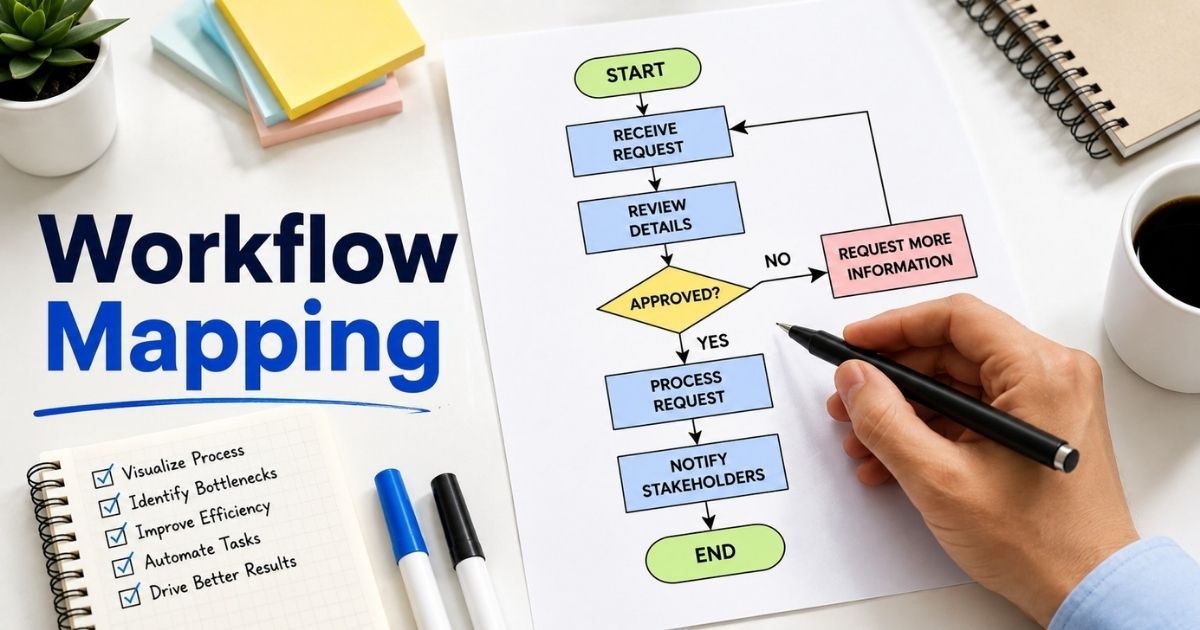
Automation absorbs repetitive tasks that previously kept agents busy. Workflow automators check databases, update records, and process refunds without human intervention. Automated support acknowledges every request instantly, even when your team is unavailable, and ticket automation software can orchestrate ticket creation, routing, prioritization, and reporting at scale.
Automation removes randomness from customer support. Policies apply consistently, answers remain uniform, and service quality stays independent of which agent handles the shift. Every automated interaction leaves traces that reveal patterns and expose product friction.
Knowledge Base Integration For Self-Service
A self-service knowledge base strengthens customers to resolve issues without contacting support agents. Research shows 67% of customers prefer self-service over speaking to representatives for simple inquiries. Companies implementing knowledge bases see approximately a 23% reduction in customer support tickets.
Knowledge bases contain searchable articles, how-to guides, and FAQs accessible from one centralized location. Integration with desk ticketing systems means agents reference previous resolutions when handling comparable tickets. This builds institutional memory that improves with each resolved issue.
Immediate Notifications And Alerts
Immediate alerts provide instant notifications when problems occur. These alerts notify teams the moment issues get detected and enable immediate action. Automated ticketing systems create support tickets automatically when alerts trigger and eliminate delays between detection and response. Smart systems rank alerts by severity and escalate automatically when critical issues remain unaddressed.
How To Measure Response Time Improvements
Clear metrics show whether your ticketing system for small business truly improves customer support. Numbers remove guesswork. A modern desk system with advanced analytics and reporting features gives small teams the visibility they need to refine workflows and raise service standards.
First Response Time
First Response Time (FRT) tracks how fast your customer support team replies after a ticket arrives. The clock starts when customers submit support requests through web forms, email, or social media message. It stops at the first human reply.
HubSpot research shows 90% of customers rate an immediate response as important, and 60% define immediate as under 10 minutes. Help desk software calculates FRT automatically. Median response time also matters because outliers can distort averages. A strong ticketing system highlights both values for accurate performance tracking.
Average Resolution Time
Average Resolution Time measures how long support staff take to close support tickets. You divide total resolution hours by the number of resolved cases in the same period. That number reflects operational efficiency, and smarter helpdesk setups can make a measurable impact on this metric by streamlining workflows for smoother support.
Industry benchmarks vary, but many SaaS teams target resolution within 24 hours for standard issues. Desk ticketing systems track first resolution time and full resolution time separately. A small gap between the two shows your support teams solve customer issues without reopen cycles.
Ticket Volume Trends
Ticket volume reveals pressure points. Sudden spikes may signal product defects, service trends, or gaps in communication. Without proper tracking, your team reacts too late.
A cloud based platform with advanced analytics visualizes daily, weekly, and monthly ticket volume. Gartner reports that organizations using analytics in service operations reduce incident escalation by up to 30%. Clear data helps small business owners adjust staffing, improve automation tools, and maintain consistent service.
Customer Satisfaction Score
Customer Satisfaction Score (CSAT) reflects how customers feel after interaction. Most industries consider 75–85% a solid score. Scores above 90% indicate exceptional customer support.
Best help desk software sends automated surveys after ticket closure. Customer data connects CSAT results to agent performance and resolution speed. If your CSAT rises after deploying a ticketing system for small business, the improvement is measurable. Strong scores also strengthen long-term customer relationship and customer success.
Reopen And Escalation Rate
Reopen rate tracks how often solved tickets return. High reopen rates mean incomplete solutions. Escalation rate measures how many cases move to senior agents or the IT team.
According to industry reports, high-performing support teams maintain reopen rates below 5%. A desk system with smart rules and automated workflows reduces unnecessary escalations. Clear ownership and collaboration tools keep internal departments aligned and reduce friction inside development teams.
Automation Impact Metrics
Automation reduces manual effort. McKinsey estimates automation tools can free up 30–45% of routine service tasks. That time directly affects response speed.
Modern ticketing software measures how many tickets close through advanced automation or AI tools. Integration options with CRM systems such as HubSpot Service Hub and Jira Service Management show workflow efficiency across other tools. When automation handles repetitive steps, your small teams gain full control and respond faster without adding technical expertise.
Common Response Time Bottlenecks A Simple Ticketing System Solves
Slow response time rarely comes from lazy support staff. Most delays start with broken processes and scattered tools. A ticketing system for small business removes hidden friction inside customer support and helps small teams deliver consistent service without chaos, especially when you follow best practices for how the right helpdesk setup boosts customer support.
Duplicate Tickets Across Channels
Customers reach out through email, web forms, and social media message when they do not hear back fast. Without a unified desk system, every message becomes a new case. Support teams then handle the same issue twice.
Research shows 56% of customers repeat information during support conversations. Duplicate support tickets can account for 10–15% of total ticket volume. A ticketing system with multiple channels under one intuitive platform merges conversations into a single thread. Your customer support team sees full customer data in one place and avoids wasted effort.
Lost Support Requests
Verbal requests, Slack notes, or quick emails often disappear before formal tracking. Customer issues remain unresolved because no official ticket exists. That gap hurts customer relationship and trust.
A cloud-based platform with automated workflows converts every request into structured support tickets. Even internal departments and the IT department stay aligned. Desk ticketing systems ensure no support request slips through cracks, which creates consistent service across small teams.
Time Lost Searching For Answers
Employees spend 1.8 hours per day searching for information. McKinsey reports workers use 21% of their time to search for knowledge and 14% to recreate lost data. That is valuable time gone.
Help desk software with a built-in knowledge base and advanced analytics reduces that waste. Agents access past conversations, service trends, and documentation inside one user-friendly interface. Smart rules surface relevant customer data instantly. Faster access means faster response and better customer success, especially when you understand how a help desk improves support behind the scenes.
Unclear Ticket Ownership
Confusion over who owns a ticket slows resolution. Support staff transfer cases back and forth. Customers feel frustrated when they explain the same issue again.
A proper ticketing system assigns clear ownership. Role-based access and collaboration tools keep everyone on the same page. Agent performance improves because accountability becomes visible. Desk software also tracks ticket status, so support teams maintain full control over every interaction.
Manual Data Entry Tasks
More than 40% of workers say at least a quarter of their job involves data entry. Nearly 45% of work time goes to manual tasks that automation tools can handle. That affects response time directly.
Modern ticketing software uses advanced automation and AI tools to reduce repetitive tasks. Automated workflows capture customer data, update CRM systems, and trigger notifications. Small business teams focus on solving real problems instead of copying information between other tools.
Limited Reporting And Insights
Poor reporting hides service gaps. Without reporting features, managers cannot track tickets, monitor ticket volume, or measure service quality. Decisions rely on guesswork.
The best help desk software offers customizable reports and advanced analytics. Free versions provide basic features, while paid plans unlock more advanced capabilities. Clear insights make a huge difference in response speed and overall customer support quality, and a fast & scalable helpdesk software guide helps you compare leading options in 2026.
How EasyDesk Improves Response Time For Small Business
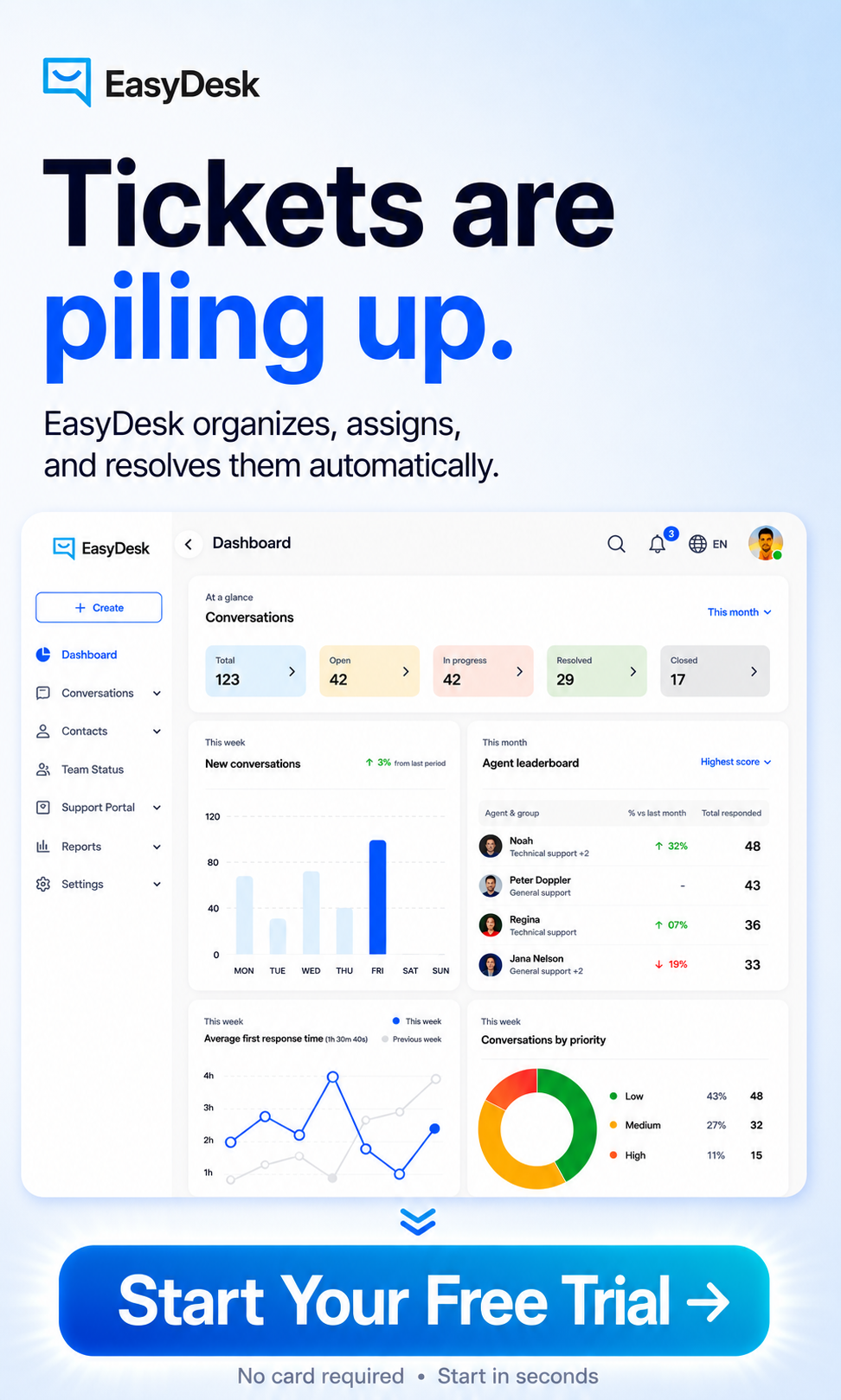
EasyDesk acts as a powerful ticketing system for small business that centralizes customer support across multiple channels. Every email, web forms entry, and social media message converts into structured support tickets inside one intuitive platform. Support teams can manage tickets, track tickets, and access complete customer data without switching between other apps. That clarity reduces ticket volume confusion and keeps small teams focused on resolution, aligning with its positioning as the best customer support ticketing software system for streamlined service.
Its help desk software includes automation tools, smart rules, and automated workflows that remove manual steps. Advanced analytics, reporting features, and customizable reports give full control over agent performance and service trends. With integration options for CRM systems and collaboration tools for internal departments, EasyDesk ensures consistent service, faster first response time, and measurable customer success.
FAQs
Is A Ticketing System For Small Business Worth It For A Two Person Team?
Yes, a ticketing system for small business works even for very small teams. It helps small teams manage tickets, track tickets, and organize customer data without chaos. Even basic features in a free ticketing system improve response time and consistent service.
Can A Free Ticketing System Handle Multiple Channels Efficiently?
Yes, many free versions support email, web forms, and social media message tracking in one desk system. As ticket volume grows, paid plans unlock more advanced features like automation tools and advanced analytics for stronger customer support.
Does Help Desk Software Improve Agent Performance Over Time?
Yes, help desk software tracks agent performance through reporting features and customizable reports. Clear metrics help support teams refine workflows, reduce resolution time, and strengthen customer success without adding technical expertise.
Do Automation Tools Reduce Manual Work For Support Staff?
Yes, automation tools and automated workflows remove repetitive data entry tasks. Smart rules assign support tickets, update CRM systems, and manage communication automatically. That saves valuable time and improves response speed across internal departments.
What Features Should Small Business Owners Look For In Desk Software?
Look for essential features like knowledge base access, integration options, collaboration tools, and advanced analytics. A cloud-based platform with an intuitive interface ensures your customer support team handles customer issues across multiple channels with full control.