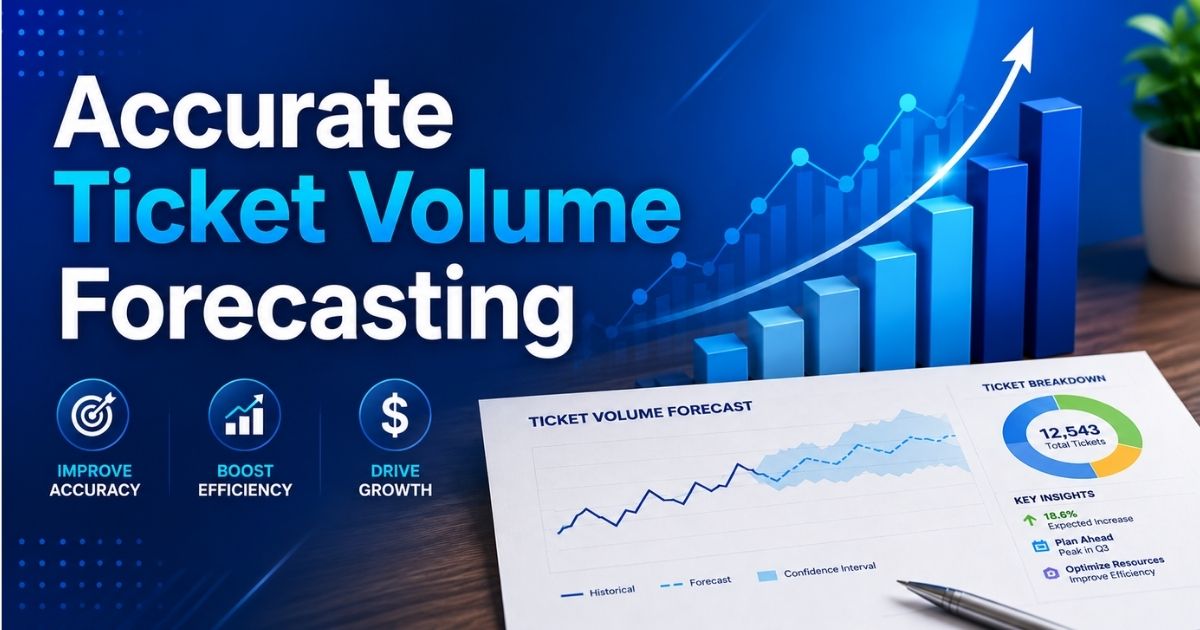
Customer support teams rarely struggle because of too many tickets alone. The real challenge is knowing how many tickets to expect and preparing resources accordingly. Without proper forecasting, sudden spikes in customer inquiries and support requests can overwhelm agents, increase response times, and hurt service quality.
Data-driven forecasting helps teams identify patterns, calculate average ticket volume, and predict future demand with greater confidence. Various factors such as seasonality, product updates, and marketing campaigns can significantly impact ticket volume, making historical data analysis and ticket automation software essential.
An accurate ticket volume forecasting strategy not only improves staffing decisions but also helps businesses meet rising customer expectations. By using the right metrics and data sources, support teams can build a reliable forecast that ensures better planning, smoother operations, and consistently excellent customer experiences.
What Is Ticket Volume Forecasting
Ticket volume forecasting is the process of predicting future support volume based on past data and customer behavior. Support teams analyze historical trends, seasonal patterns, and key metrics to estimate incoming requests. Accurate forecasts help businesses determine staffing needs and maintain optimal staffing levels during peak periods. Teams can also track accuracy over time to improve predictions. Effective forecasting strengthens support operations, identifies knowledge gaps, and highlights repetitive inquiries that can be reduced through self-service portals and knowledge bases.
Which Data Sources Improve Ticket Volume Forecast Accuracy
Accurate ticket forecasting depends on the quality and variety of data available to support teams. Looking beyond ticket counts helps businesses anticipate demand, allocate resources effectively, and prepare for expected changes in customer behavior. The following data sources significantly improve forecast accuracy.
Historical Ticket Data
Historical ticket data is the foundation of reliable forecasting. By analyzing support trends over a specific time period or a given period, teams can identify patterns in customer requests. Historical records reveal busy periods, peak hours, and recurring issues that affect support demand. Forecasting helps organizations estimate future workloads based on previous performance and prepare for the worst case when demand unexpectedly rises.
Customer Interaction Trends
Customer interactions across email, chat, phone, and social media provide valuable insights into changing behavior. Monitoring these channels helps teams identify unusual spikes in inquiries and understand what drives support demand. Tracking customer activity also improves response time because teams can anticipate periods of higher volume and allocate resources accordingly. Such insights are especially useful for workforce planning and staffing decisions.
Business And Operational Events
Internal business activities often influence ticket volume. Product launches frequently generate customer questions, bug reports, and onboarding requests. Similarly, policy shifts, pricing updates, and service changes can lead to sudden increases in support requests. Recording known events and one-off events in forecasting models allows businesses to anticipate changes before they occur rather than reacting after the fact.
Marketing And Seasonal Data
Marketing campaigns can significantly affect customer engagement and support demand. Promotions, discounts, and advertisements often attract new users who require assistance. Seasonal factors, holidays, and special events may also create temporary increases in ticket volume. Analyzing data across multiple periods helps teams recognize recurring trends and better prepare for predictable demand fluctuations.
Workforce And Performance Metrics
Forecast accuracy improves when operational data is included alongside ticket history. Metrics such as agent availability, ticket resolution rates, and average response time provide context for support capacity. Effective workforce planning relies on understanding both customer demand and team capability. Combining performance data with historical trends and the right customer support metrics enables support leaders to build more resilient forecasting models and prepare for both normal operations and worst-case scenarios.
How Do Support Teams Calculate And Analyze Ticket Volume Trends
Support teams rely on data to understand ticket patterns and prepare for future demand. Proper trend analysis helps organizations allocate resources efficiently, balance workloads, and maintain high service quality. By using the right metrics and tools, teams can make more informed decisions.
Track Total Ticket Volume
The first step in ticket volume analysis is measuring the total number of tickets received during a specific period. Teams often calculate daily, weekly, or monthly ticket counts to identify changes in demand. Tracking trends over time helps businesses estimate future support requirements and determine whether ticket volumes are rising or declining. Such analysis is essential for long-term planning and operational stability, and highlights the broader benefits of using a ticketing system to organize and manage growing request volumes.
Measure Key Support Metrics
Support teams rely on several metrics to understand performance and demand. Common examples include first response time, resolution time, and average handle time, often managed through structured SLA management to keep service standards consistent. Monitoring these indicators helps managers evaluate how efficiently agents resolve issues. For example, an increase in average handle time may indicate more complex customer requests or insufficient training. Combining multiple metrics creates a clearer picture of support operations.
Analyze Workload Distribution
Examining how tickets are distributed across teams and channels helps organizations manage workload more effectively. Structured ticket creation and management makes it easier to see where demand is coming from. Teams can identify peak hours, high-demand days, and categories that generate the most requests. Balanced workloads allow agents to maintain productivity while preventing burnout. Better workload management also ensures customers receive timely assistance, even during busy periods.
Use Historical Data To Predict Demand
Historical support data enables businesses to predict future ticket volumes with greater accuracy. By identifying recurring patterns and seasonal fluctuations, teams can estimate staffing requirements in advance. For example, an e-commerce company may experience higher support demand during holiday sales. Predictive analysis helps organizations prepare adequate resources before ticket volumes increase and avoid service disruptions.
Improve Forecasting With Automation
Modern support platforms use automation to simplify ticket analysis and forecasting. Automated workflow software such as automated support workflows collects data, generates reports, and identifies trends without requiring extensive manual effort. Automation also helps managers monitor performance in real time and adjust staffing levels when necessary. By combining automation with historical data, support teams can make faster decisions, optimize resources, and deliver better experiences for customers.
How To Use Data For Accurate Ticket Volume Forecasting
Accurate ticket forecasting requires more than intuition. Support teams must analyze historical data, identify patterns, and build reliable predictions to prepare for future demand. A structured approach helps businesses optimize staffing, reduce costs, and improve customer experiences.
Gather Historical Data
Historical support data forms the foundation of forecasting. Teams should collect ticket records across daily, weekly, and monthly periods to understand demand fluctuations. Data such as ticket count, channel usage, and resolution times provides valuable insights into customer behavior.
Maintaining clean datasets is essential for accurate predictions. Businesses should document major changes in products, pricing, or support processes that may have affected ticket volume. Historical information allows teams to estimate future demand with greater confidence and prepare for recurring trends.
Segment Support Tickets
Grouping tickets into categories improves forecasting precision. Support requests can be segmented by issue type, customer tier, region, or communication channel. Such segmentation, supported by a well-structured help desk system, helps businesses identify which areas generate the highest workload.
For example, billing issues may spike at the end of each month, while technical problems could rise after software updates. Segmenting data helps teams focus on specific trends instead of relying on overall averages. Better categorization also supports resource allocation and staffing decisions.
Analyze Seasonal Trends
Many businesses experience predictable changes in support demand throughout the year. Seasonal patterns, holidays, and promotions often affect ticket volume. Reviewing monthly and yearly trends helps teams identify recurring cycles.
Trend analysis enables support leaders to prepare for high-demand periods before they occur. Businesses that understand seasonality can schedule staff more effectively and reduce service disruptions. Historical trends also improve long-term predictions and strategic planning.
Identify Peak Periods
Support demand rarely remains constant throughout the day. Teams should analyze ticket patterns to identify peak hours and high-volume days, which is especially important for small teams that rely on a smart ticketing tool to keep up during busy stretches. Understanding when customers contact support helps managers allocate resources more efficiently.
Metrics such as average handle time provide additional context for planning. If ticket complexity increases during certain periods, teams may need additional staffing to maintain service quality. Identifying peak periods allows businesses to balance workload and improve operational efficiency.
Factor External Events
External events often influence support demand. Marketing campaigns, product launches, and industry changes can create sudden spikes in customer inquiries. Businesses should document these events to improve future forecasting accuracy.
Unexpected circumstances may also affect support volumes. Tracking external factors enables teams to adjust forecasts and prepare contingency plans. Proactive planning reduces operational risks and minimizes unnecessary costs.
Apply Forecasting Models
Forecasting models convert historical data into actionable insights. Teams can use moving averages, trend analysis, or predictive algorithms to estimate future ticket volumes. Selecting the right model depends on business size and data availability.
Advanced systems often use automation to process large datasets and generate predictions faster. Platforms that help you manage support tickets efficiently reduce manual tasks, improve consistency, and help teams focus on strategic decisions rather than repetitive analysis.
Measure Forecast Accuracy
Forecasting is an ongoing process that requires regular evaluation. Teams should compare predicted ticket volumes with actual results and identify gaps. Measuring accuracy ensures forecasts remain reliable as customer behavior changes.
Reviewing performance metrics helps organizations refine their methods and determine next steps for improvement. Continuous optimization allows businesses to adapt to future changes, improve staffing decisions, and deliver better customer support over time.
Common Challenges And Mistakes In Ticket Volume Forecasting
Accurate ticket forecasting can significantly improve support operations, but many teams struggle to predict demand consistently. Data gaps, unexpected events, and poor forecasting practices often lead to staffing issues and service delays. Understanding common mistakes helps organizations build more reliable forecasts.
Relying On Limited Historical Data
One of the biggest forecasting mistakes is using too little historical data. Short datasets rarely capture seasonal trends, recurring events, or changes in customer behavior. Support teams that analyze only a few weeks of ticket history may miss larger patterns that affect demand.
Longer datasets provide a clearer picture of support trends across different periods. Historical data should include ticket volume, channel performance, and customer interactions. Comprehensive records improve forecast accuracy and help teams prepare for future fluctuations more effectively.
Ignoring External Business Factors
Support demand is influenced by more than customer activity alone. Product launches, pricing changes, marketing campaigns, and service updates can dramatically increase ticket volume. Ignoring such factors often leads to inaccurate forecasts and resource shortages.
Unexpected events can also create sudden spikes in support requests. Teams that fail to account for external changes may struggle to maintain service levels during busy periods. Forecasting models should include business events alongside historical data for better accuracy.
Failing To Segment Ticket Data
Many organizations forecast total ticket volume without segmenting requests by category, channel, or customer type. Such an approach overlooks important trends and reduces forecast precision.
Different support categories often follow different patterns. Technical issues, billing inquiries, and onboarding requests may each experience unique demand cycles. Segmenting ticket data helps teams identify high-volume areas and allocate resources more efficiently.
Neglecting Continuous Forecast Reviews
Forecasting is not a one-time activity. Customer behavior, products, and support channels evolve constantly. Teams that create forecasts without reviewing results regularly often see declining accuracy over time.
Comparing predicted ticket volumes with actual outcomes allows organizations to refine their methods. Continuous monitoring helps support leaders identify errors, adjust assumptions, and improve future predictions. Regular reviews also ensure staffing plans remain aligned with changing demand.
Overlooking Team Capacity Constraints
Even accurate forecasts can fail when workforce capacity is ignored. Many teams focus on ticket volume while overlooking agent availability, skill levels, and productivity. As a result, support operations may become overwhelmed during high-demand periods.
Effective forecasting should align expected ticket volume with staffing capabilities. Metrics such as response time, resolution rates, and workload distribution provide valuable context for workforce planning. Using the best ticket management system to track these signals makes it easier to balance demand with available resources so organizations can maintain service quality and deliver consistent customer experiences.
Benefits Of Accurate Ticket Volume Forecasting
Accurate ticket volume forecasting helps support teams prepare for changing customer demand and maintain consistent service quality. By predicting future workloads, businesses can allocate resources effectively, reduce operational costs, and improve customer satisfaction across all support channels.
Improve Staffing Efficiency
One of the biggest benefits of ticket forecasting is better staffing management. Support leaders can anticipate busy periods and schedule the right number of agents at the right time. Proper staffing prevents both understaffing and overstaffing, ensuring resources are used efficiently.
Balanced staffing also reduces employee burnout and improves productivity. When teams have manageable workloads, they can respond to customer inquiries faster and maintain consistent service quality, as shown when EasyDesk helped a growing team dramatically improve response time and SLA adherence. Better workforce planning leads to stronger support performance and higher employee satisfaction.
Enhance Customer Experience
Customers expect quick responses and timely resolutions. Accurate forecasting enables support teams to prepare for increases in ticket volume before they occur. As a result, businesses can maintain service levels even during peak demand periods.
Faster response times directly impact customer satisfaction and loyalty. When support teams can resolve issues efficiently using a robust ticketing software system, customers are more likely to trust the brand and continue using its products or services. Consistent support experiences contribute to long-term business growth.
Reduce Operational Costs
Unexpected spikes in ticket volume often force organizations to hire temporary staff or pay overtime costs. Accurate forecasting minimizes such situations by helping managers allocate resources more strategically.
Businesses can optimize budgets by matching staffing levels with expected demand. Better planning reduces unnecessary expenses while ensuring sufficient coverage during high-volume periods, especially when paired with a smarter helpdesk setup that streamlines everyday work. Efficient resource management allows organizations to maintain quality support without increasing operational costs.
Strengthen Strategic Planning
Ticket forecasting provides valuable insights that support long-term decision-making. By analyzing historical trends and customer behavior, businesses can identify recurring patterns and prepare for future changes.
Forecasting data also helps leaders evaluate the impact of product launches, marketing campaigns, and seasonal events. Such insights enable organizations to make informed decisions about staffing, technology investments, and when to modernize failing desk support systems. Better planning reduces uncertainty and improves business resilience.
Increase Team Productivity
Accurate forecasts help support teams work more effectively. Agents can manage workloads efficiently when ticket volumes are predictable and resources are distributed appropriately. Organized operations reduce stress and improve overall performance.
Predictable workloads also allow teams to focus on higher-value activities such as customer engagement and process improvements. With fewer operational disruptions, support departments can maintain productivity while delivering better service experiences. Over time, improved efficiency contributes to stronger business outcomes and sustainable growth.
How EasyDesk Helps Teams Forecast Ticket Volume
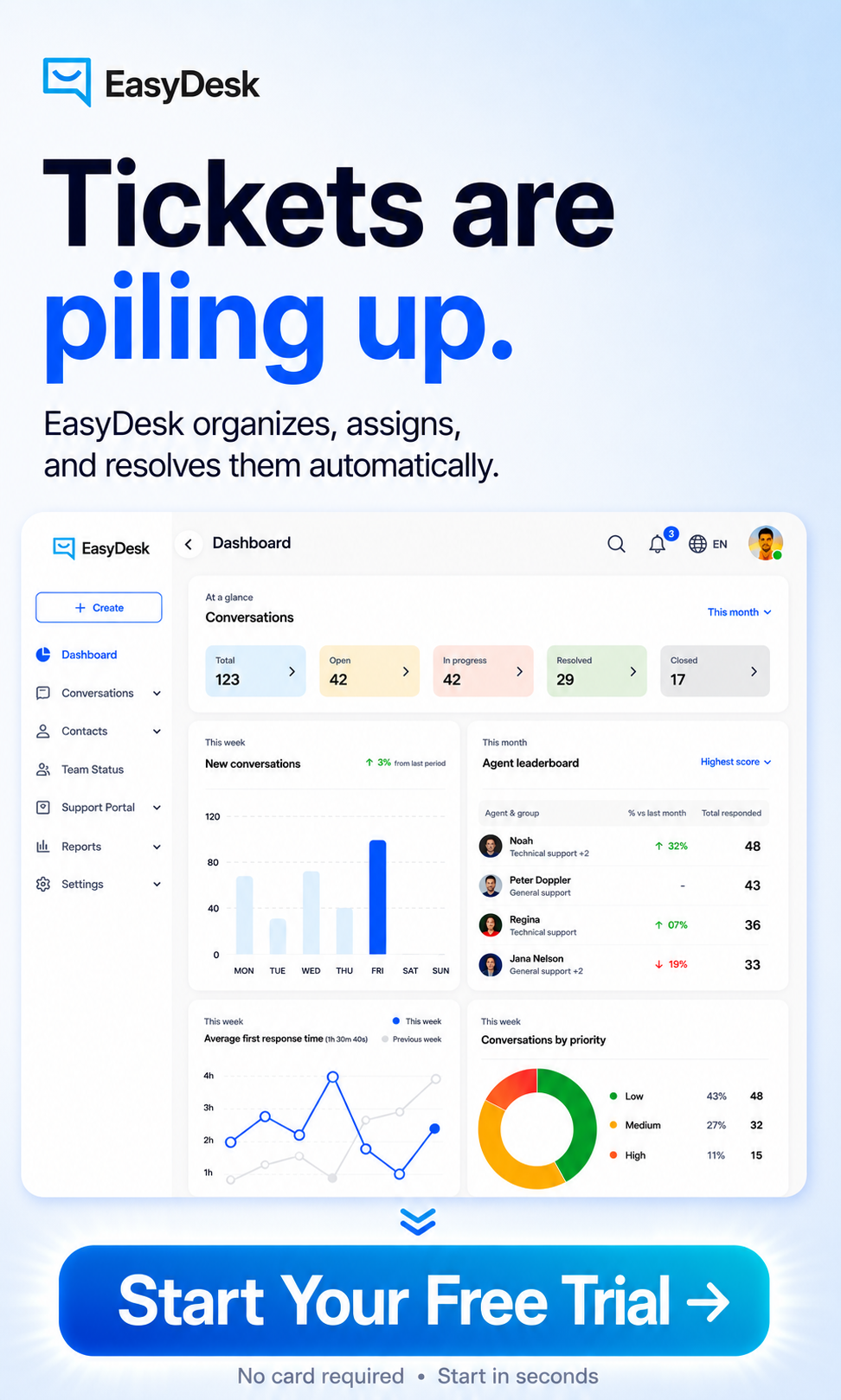
Accurate ticket forecasting becomes easier when support teams have access to the right tools and data. EasyDesk ticketing software helps businesses monitor ticket trends, track support performance, and analyze historical data from a single platform. With centralized reporting and real-time analytics, teams can identify recurring patterns, peak support hours, and seasonal demand changes.
EasyDesk also enables managers to categorize tickets by channel, priority, and issue type, making forecasting more precise. Its broader customer support features and built-in automation reduce manual work and ensure support data remains organized and accessible. Teams can use insights from dashboards and reports to make smarter staffing decisions and allocate resources efficiently.
By providing clear visibility into support operations and acting as the core ticketing software for better support, EasyDesk helps businesses prepare for future demand, maintain service quality, and deliver better customer experiences at scale.
Frequently Asked Questions
How Often Should Businesses Update Their Ticket Forecasts?
Forecasts should be reviewed regularly to remain accurate. Many support teams update forecasts weekly or monthly, depending on ticket volume and business changes. Frequent reviews help organizations adjust to changing customer behavior, seasonal trends, and unexpected events that affect support demand.
Can Small Businesses Benefit From Ticket Forecasting?
Yes, ticket forecasting benefits businesses of all sizes. Small teams often have limited resources, making accurate planning even more important. A secure, efficient customer support platform can help them turn forecasts into action. Forecasting helps managers schedule staff efficiently, avoid service delays, and maintain customer satisfaction without significantly increasing operational costs.
Which Departments Can Contribute To Better Forecast Accuracy?
Support teams are not the only source of valuable forecasting data. Marketing, sales, product, and operations teams often have insights into campaigns, launches, and customer trends. Understanding how a platform is built for secure, transparent customer relationships, as described in the About EasyDesk overview, also reinforces collaboration around shared support goals. Cross-functional collaboration improves forecasting accuracy and helps organizations prepare for future demand more effectively.
How Does Remote Work Affect Ticket Volume Planning?
Remote and distributed teams may experience different support patterns due to varying customer locations and working hours. Businesses should account for time zones, staffing availability, and communication channels when planning support capacity to ensure consistent service quality.
What Happens When Forecasts Are Consistently Inaccurate?
Repeated forecasting errors can lead to staffing shortages, higher costs, and reduced customer satisfaction. Organizations should regularly compare forecasts with actual ticket volumes, identify gaps in data collection, and refine forecasting models to improve long-term accuracy and decision-making.