Customer emails scatter across multiple email accounts, social media messages, and messaging apps every day. Chaos grows fast when multiple team members reply from shared email accounts without clarity. Shared inbox software brings structure to customer communication and helps support teams manage customer conversations efficiently from a unified inbox.
A powerful shared inbox tool centralizes incoming messages from multiple channels into one collaborative inbox. Team members can assign messages, assign emails, tag conversations, leave internal notes, and add internal comments without confusion. Shared inbox management prevents duplicate replies, reduces response time, and keeps everyone on the same page. With the right shared inbox software, businesses automate repetitive tasks, use email templates and canned responses, track conversations, and improve customer relationships. Modern inbox solutions go beyond basic shared inboxes and shared mailbox software to drive real customer success and stronger team collaboration.
In this guide, you will discover how to choose the best shared inbox software and use it to improve team performance, customer experience, and long-term customer success.
What Is Shared Inbox Software
Shared inbox software is a centralized inbox solution that allows multiple team members to access and manage conversations from a single shared inbox. Instead of juggling multiple email accounts or shared email accounts with separate login credentials, teams use a shared inbox tool to handle incoming messages from one team inbox. A collaborative inbox helps support teams assign emails, assign messages, tag conversations, and track conversations without confusion or duplicate replies.
Modern shared inbox solutions go beyond basic shared mailbox software. A unified inbox collects customer conversations from multiple channels, including email, social media messages, and messaging apps. With features like internal notes, internal comments, canned responses, and email templates, teams manage customer interactions efficiently, reduce response time, and improve customer satisfaction while keeping everyone on the same page.
Why Modern Teams Need Shared Inbox Software
Customer communication now flows across email, social media messages, messaging apps, and other communication channels. Without structured inbox management, support teams struggle with duplicate replies, missed follow-ups, and slow response time. Shared email inbox software brings clarity, accountability, and team collaboration into one unified inbox while improving team email management.
Handle Multiple Channels In One Place
Customer conversations no longer stay inside a single shared mailbox. Incoming messages arrive from shared email accounts, social media messages, messaging apps, and even phone calls across multiple channels. A shared inbox tool collects all inbound messages inside one place so teams manage conversations without confusion.
A shared team inbox helps multiple people manage conversations efficiently. Teams track conversations, assign emails, and manage incoming tickets from one dashboard. A shared address connects all communication points, including support email, into a single flow that improves visibility.
Improve Team Collaboration
A collaborative inbox helps teams collaborate efficiently without stepping on replies. Internal notes and private notes keep discussions aligned. Teams can mention teammates directly inside conversations to keep everyone informed and simplify team collaboration.
Clear ownership helps teams stay organized. Managers set clear ownership rules so the right person handles each request. This structure reduces missed messages and creates seamless communication across team members.
Reduce Response Time
Slow replies damage customer experience. Shared inbox software helps teams assign messages quickly and deliver timely resolutions. Routing ensures every message reaches the right person without delays.
Automation features help teams boost productivity. Teams handle repetitive tasks faster and focus on high-value work during business hours. This approach helps small businesses manage growing demand without adding complexity.
Eliminate Duplicate Replies
Duplicate replies create confusion and weaken trust. Shared inbox tools prevent multiple people from replying to the same conversation. Clear ownership and visibility reduce errors and keep responses consistent.
Conversation tracking ensures no request gets lost. Teams manage follow-ups efficiently and avoid overlap across communication channels.
Strengthen Accountability And Visibility
Modern inbox software gives full visibility into communication flow. Teams can easily track conversations, monitor performance, and review follow-ups. Managers use insights to improve workflows and maintain consistency.
Detailed tracking ensures accountability across team members. Clear processes help teams manage their workload and consistently deliver better outcomes.
Scale With Automation And Integration
Growth increases message volume across channels. Shared inbox software integrates with existing tools to maintain smooth operations. Automation supports faster handling and reduces manual effort.
Flexible systems support scaling without disruption. Teams manage higher demand while maintaining quality and efficiency through structured workflows and connected systems.
Key Features Of Shared Inbox Software
Modern customer support depends on structure, speed, and visibility. Shared inbox software delivers those capabilities through automation, collaboration tools, and multi-channel support. The right shared inbox software helps support teams manage customer conversations efficiently while improving response time, accountability, and customer satisfaction using the right tool to save time and stay organized.
Unified Inbox Across Channels
A unified inbox centralizes incoming messages from multiple channels such as email, social media messages, and messaging apps. Research shows that over 70% of customers expect consistent support across communication channels. Shared inbox solutions eliminate the need to switch between traditional inboxes or existing tools.
A shared team inbox collects customer conversations into one inbox. Team members manage group emails, track new messages, and handle email volume inside a single interface. This shared space ensures conversations stay organized while maintaining a personal touch in responses.
Smart Assignment And Ownership
Clear ownership prevents confusion in shared email accounts. Shared inbox software allows teams to assign tickets and route emails to the right person. Ownership tools reduce overlap and prevent stepping on other's toes.
Structured assignment improves accountability and helps teams manage workload efficiently. Proper routing ensures every message reaches the right team member quickly.
Internal Notes And Team Chat
Internal notes and internal comments allow collaboration without exposing conversations to customers. A collaborative inbox supports internal communication so teams resolve complex issues faster.
Teams manage repetitive questions more effectively by sharing context internally. This reduces duplication and improves coordination across team members.
Automation And Canned Responses
Automation transforms inbox management. Shared inbox software allows teams to automate repetitive tasks such as routing incoming requests and sending canned responses. Email templates help maintain consistency across communication.
Automation reduces manual effort and improves efficiency. Teams respond faster while maintaining quality and consistency in customer communication.
User Permissions And Access Control
User permissions protect sensitive data in shared mailbox software. Each team member can access the system securely while maintaining structured collaboration.
Role-based access ensures accountability and prevents misuse. Teams maintain control while delivering consistent service quality.
Additional Capabilities And Flexibility
Modern platforms offer flexibility through options like free trial access for evaluation. Integration with knowledge base systems helps teams handle complex issues more efficiently.
These capabilities ensure teams scale operations smoothly while maintaining high performance and consistency across all communication channels.
Reporting And Performance Tracking
Advanced inbox solutions provide analytics to track conversations, monitor response time, and measure user monthly activity. Managers evaluate performance data to improve support team operations
Reports help identify bottlenecks and optimize the team properly. Performance metrics directly influence customer experience and customer satisfaction. Shared inbox management with real-time insights supports data-driven decisions and long-term customer relationships.
Integration With Existing Tools
Shared inbox software integrates with desk software, knowledge base systems, CRM platforms, and HubSpot Service Hub. Integration ensures seamless data flow across existing tools and communication channels.
Multi-channel support becomes stronger when shared inbox solutions connect with CRM and customer success platforms. Teams manage customer conversations efficiently while maintaining context. Integrated inbox solutions improve personalized responses and deliver more personalized interactions across every customer touchpoint.
Benefits Of Using Shared Inbox Software
Customer expectations continue to rise across multiple channels. Businesses that rely on scattered email threads and shared email accounts struggle with delays, duplicate replies, and missed follow-ups. Shared inbox software delivers structure, accountability, and measurable performance improvements for modern support teams.
Faster Response Time
Response speed directly affects customer satisfaction. Industry research shows that nearly 90% of customers expect a response within the same day, while many expect replies within hours. Shared inbox software helps support teams assign messages quickly and track conversations inside a unified inbox.
Clear ownership inside a shared team inbox reduces confusion between multiple team members. Automation features such as canned responses and email templates shorten reply cycles. Faster response time improves customer experience and strengthens customer relationships.
Better Team Collaboration
A collaborative inbox keeps team members on the same page. Internal notes, internal comments, and internal team chat allow coordination without exposing internal discussions to customers. Shared inbox management ensures specific team members handle complex customer interactions with clarity.
When multiple users work inside one team inbox, duplicate responses decrease significantly. Structured inbox management improves team performance and reduces friction across shared email accounts. Strong team collaboration leads to consistent and more personalized interactions.
Reduced Duplicate Replies
Duplicate replies frustrate customers and damage trust. Shared mailbox software prevents multiple recipients from responding to the same email threads simultaneously. Visibility into conversation status ensures accountability.
Assignment rules allow teams to assign emails clearly and tag conversations for transparency. Data from support operations shows structured ownership can reduce duplicate responses by over 25%. Organized shared inbox solutions protect customer communication quality.
Higher Productivity Through Automation
Automation eliminates repetitive tasks that slow down support teams' productivity. Shared inbox tools route incoming requests, assign messages automatically, and send canned responses in just a few clicks. Automation can reduce manual workload by up to 40% in high-volume environments.
Inbox solutions that automate repetitive tasks allow team members to focus on complex customer conversations. Efficient email management increases output per user month and improves overall customer success outcomes.
Improved Visibility And Accountability
Modern inbox software provides real-time reporting across multiple channels. Managers track conversations, monitor response time, and identify bottlenecks within a universal inbox. Performance visibility supports smarter resource allocation.
Clear user permissions and activity logs ensure every team member uses their own credentials instead of shared login credentials. Structured oversight improves team performance and enhances customer satisfaction. Transparent shared inbox management drives long-term customer experience improvements.
Shared Inbox Software Vs Traditional Email Systems
Modern customer support requires visibility, accountability, and speed across multiple channels. Traditional email systems were not designed for multiple team members managing shared email accounts. Shared inbox software introduces structure, automation, and collaboration that traditional inbox tools cannot provide.
| Feature | Shared Inbox Software | Traditional Email Systems |
|---|---|---|
| Access Control | Multiple users with their own credentials and user permissions | Shared login credentials or forwarded emails |
| Collaboration | Internal notes, internal comments, internal team chat | No native collaboration tools |
| Message Assignment | Assign messages to specific team members | No structured ownership |
| Duplicate Prevention | Prevent duplicate replies with status visibility | High risk of duplicate responses |
| Multi-Channel Support | Unified inbox for email, social media messages, and messaging apps | Email only |
| Automation | Automate repetitive tasks, canned responses, and email templates | Limited or no automation |
| Performance Tracking | Track conversations, response time, user month metrics | Minimal reporting |
| Accountability | Clear ownership across the shared team inbox | Limited visibility across multiple recipients |
| Customer Experience | Faster response time and personalized responses | Delays and inconsistent communication |
Shared inbox solutions provide better inbox management, improved team collaboration, and measurable gains in customer satisfaction compared to basic shared mailbox systems.
How To Choose The Right Shared Inbox Software
Every business handles customer conversations differently. Some manage high volumes of incoming messages across multiple channels, while others focus on email management and follow-ups. The right shared inbox software should align with your workflow, team structure, automation needs, and long-term customer success goals.
Assess Multi-Channel Capabilities
Customer communication now spans email, social media messages, messaging apps, and other communication channels. Research shows that over 75% of customers expect consistent multi-channel support. A strong shared inbox tool should provide a unified inbox that centralizes incoming requests from every channel.
Shared inbox solutions that support multi-channel support help support teams manage conversations efficiently. A universal inbox prevents scattered shared email accounts and improves visibility across customer interactions. Centralization strengthens customer experience and reduces missed follow-ups.
Evaluate Collaboration Features
Team collaboration defines the effectiveness of a shared team inbox. Look for internal notes, internal comments, and internal team chat that allow multiple team members to coordinate without exposing internal context to customers.
Clear assignment features help assign messages and emails to specific team members. Visibility into email threads reduces duplicate replies and duplicate responses. Strong collaborative inbox features ensure teams stay on the same page and protect customer satisfaction.
Check Automation And Workflow Tools
Automation improves inbox management and reduces repetitive tasks. Industry data shows automation can lower manual workload by up to 40% in customer support environments. The best shared inbox software includes rules to route incoming messages automatically.
Features such as canned responses, email templates, and smart tagging allow teams to automate repetitive tasks in just a few clicks. Automated workflows reduce response time and help support teams focus on complex customer conversations that require personalized responses.
Review Reporting And Performance Metrics
Performance tracking ensures continuous improvement. Shared inbox software should allow managers to track conversations, measure response time, and identify bottlenecks across multiple users. Data visibility supports better decision-making.
Reports per user month reveal workload distribution and team performance gaps. A customer success manager can analyze customer interactions and improve processes accordingly. Transparent reporting strengthens accountability and drives long-term customer success.
Verify Security And User Permissions
Security remains critical when multiple team members access shared email accounts. The right shared mailbox software should offer user permissions, role-based access, and login credentials for each team member.
Access through own credentials protects sensitive customer communication. Controlled permissions ensure only authorized users manage conversations or edit internal comments. Strong security safeguards customer relationships and protects overall customer experience while maintaining efficient shared inbox management.
Best Practices For Implementing Shared Inbox Software
Successful adoption of shared inbox software requires more than activation and access. Clear workflows, defined ownership, and structured inbox management ensure long-term value. Support teams that plan implementation carefully achieve faster response time, stronger team collaboration, and improved customer satisfaction.
Define Clear Ownership Rules
Ownership clarity prevents confusion inside a shared inbox. Each incoming message should have a designated owner among multiple team members. Structured rules to assign messages and assign emails reduce duplicate replies and protect customer communication quality.
A shared team inbox works best when specific team members handle defined categories of customer conversations. Clear accountability keeps everyone on the same page and strengthens customer relationships. Ownership transparency also improves team performance across shared email accounts.
Standardize Communication Workflows
Consistent workflows improve inbox management across multiple channels. Teams should define response standards, follow-ups, and ticket escalation process paths for incoming requests. Standardization ensures that customer interactions remain consistent regardless of who responds.
Email templates and canned responses support structured communication while allowing personalized responses when needed. A unified inbox with documented processes reduces response time and strengthens overall customer experience.
Use Internal Collaboration Tools
Internal notes, internal comments, and internal team chat improve coordination inside a collaborative inbox. Team members can discuss complex email threads without exposing internal context to customers.
Shared inbox management becomes smoother when internal collaboration replaces external messaging apps for support coordination. Clear documentation inside the shared mailbox software reduces duplicate responses and enhances customer satisfaction. Strong collaboration tools improve customer success outcomes.
Leverage Automation Strategically
Automation enhances efficiency but requires thoughtful configuration. Teams should automate repetitive tasks such as routing incoming messages and tagging conversations. Smart rules inside inbox tools reduce manual workload.
Automation helps manage conversations efficiently across multiple email accounts and communication channels. Balanced use of canned responses and workflow automation improves response time while maintaining authentic customer interactions.
Monitor Performance And Optimize
Performance tracking ensures continuous improvement after implementation. Managers should track conversations, measure response time, and identify bottlenecks inside the universal inbox. Data visibility supports smarter decisions.
Reports per user month reveal productivity trends and customer service workload imbalances. Regular review of shared inbox solutions ensures support teams operate efficiently and maintain high customer satisfaction. Continuous optimization protects long-term customer experience and strengthens overall team collaboration.
Why EasyDesk Is The Smart Choice For Shared Inbox Software
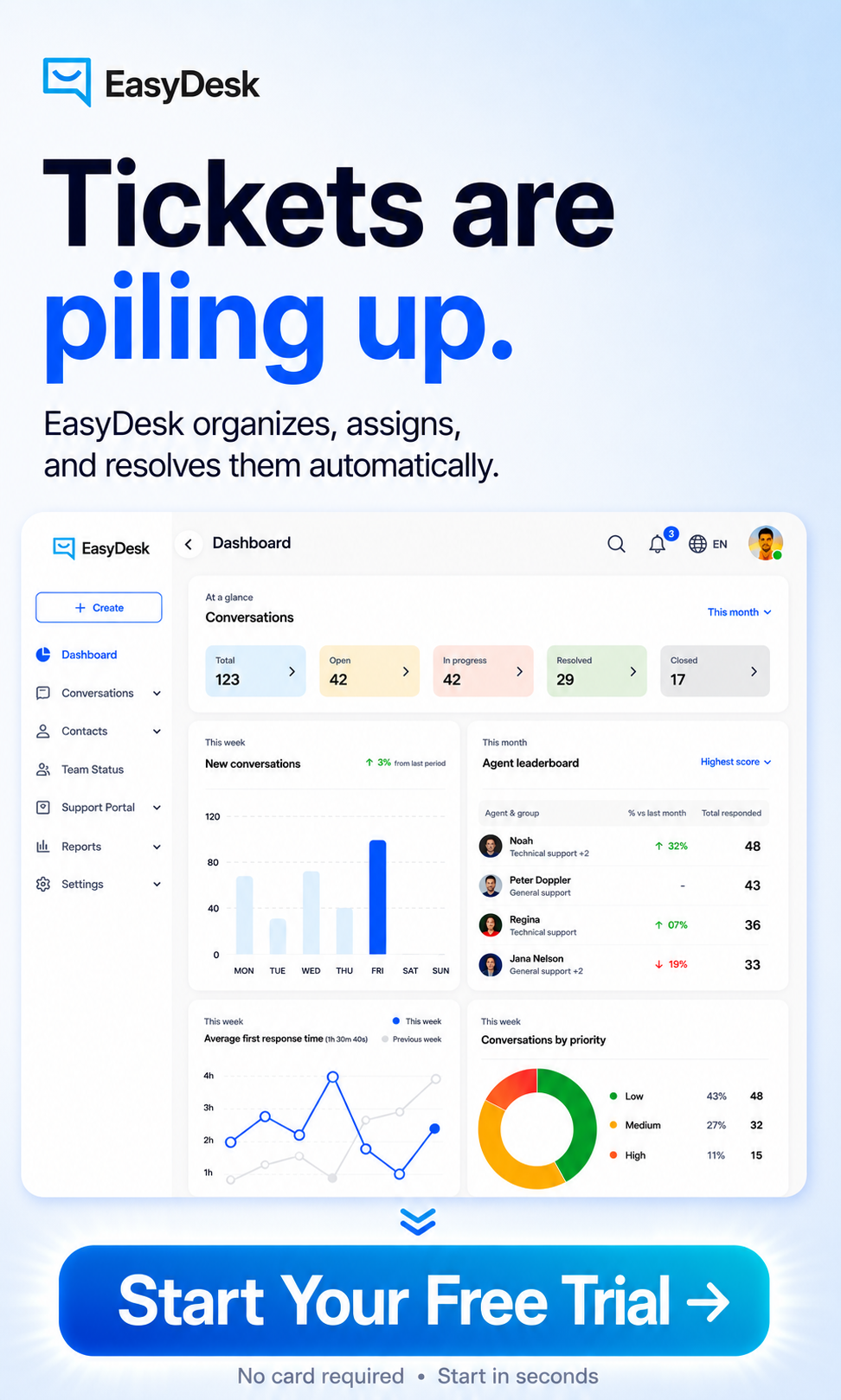
EasyDesk delivers powerful shared inbox software designed for modern support teams that manage customer communication across multiple channels. The platform centralizes incoming messages from shared email accounts, social media messages, and messaging apps into one unified inbox. Multiple team members can assign messages, tag conversations, leave internal notes, and track conversations without confusion. Clear user permissions and own credentials protect shared inbox management while preventing duplicate replies and duplicate responses.
EasyDesk goes beyond basic shared mailbox software with automation, canned responses, email templates, and smart inbox tools that automate repetitive tasks. A collaborative inbox keeps team members on the same page and improves team performance. With strong inbox management, multi-channel support, and faster response time, EasyDesk helps businesses improve customer experience, customer satisfaction, and long-term customer success.
FAQs
Can Shared Inbox Software Work For Small Teams With Limited Budgets?
Yes, shared inbox software works well for small teams that manage customer conversations across multiple channels. A shared inbox tool reduces duplicate replies, improves response time, and strengthens team collaboration without requiring complex infrastructure. Many inbox solutions, like EasyDesk offers scalable pricing per user per month.
Is Shared Inbox Software Suitable For Remote Teams?
Yes, remote support teams benefit from a unified inbox and shared team inbox access through own credentials. Internal notes, internal comments, and internal team chat keep multiple team members aligned even when working from different locations.
Does Shared Inbox Software Replace A Traditional Help Desk?
No, shared inbox software does not always replace full desk software, but it can complement or simplify it. Businesses that mainly handle incoming messages via email and social media messages often prefer shared inbox solutions for streamlined inbox management and faster customer support.
Can Shared Inbox Software Integrate With CRM Systems?
Yes, most modern shared inbox software connects with CRM platforms and existing tools. Integration allows teams to track conversations, access customer data, and deliver more personalized interactions across customer communication channels.
How Does Shared Inbox Software Improve Customer Relationships?
Structured shared inbox management ensures consistent follow ups, faster response time, and accurate assignment to specific team members. Clear visibility across shared email accounts helps support teams manage conversations efficiently and deliver a better customer experience.
Is Data Secure In Shared Mailbox Software?
Yes, reputable shared mailbox software provides user permissions and role-based access control. Each team member uses their own credentials instead of shared login credentials, which protects customer interactions and sensitive communication.
Can Shared Inbox Software Handle High Message Volume?
Yes, advanced shared inbox solutions support multi-channel support, automation, and message routing rules. Teams can automate repetitive tasks, assign messages instantly, and manage large volumes of incoming requests without losing visibility or accountability.