SLA tracking software has become essential for modern service management, where speed, accuracy, and accountability shape how customers perceive service quality. In fast-moving digital service environments, organizations rely on structured SLA tracking to manage service commitments across multiple channels, internal teams, and service providers without losing visibility or control.
Response time directly affects customer satisfaction and service expectations. Delayed or inconsistent responses weaken trust and impact long-term brand value. Effective SLA management helps businesses deliver reliable, predictable, and consistent service while ensuring every service request meets defined service levels and performance commitments. In this article, we will explore how SLA tracking software improves the response time for businesses.
What Is SLA Tracking Software
SLA tracking software is a service management tool that monitors, measures, and enforces service level agreements to ensure response time and resolution commitments are met. It provides real-time visibility into SLA performance across all service requests and support operations.
As a core component of service level management, SLA tracking software allows organizations to define SLA targets, monitor service delivery, and maintain accountability throughout the entire service lifecycle. It centralizes SLA management within a single software platform, making it easier to track service performance across incident management, problem management, and request services workflows.
Service level agreements convert business expectations into measurable key SLA metrics such as response time, resolution time, service availability, and compliance rates. SLA tracking software aligns service providers and internal teams with agreed-upon service levels by offering real-time insights, automated tracking, and performance metrics that support consistent service delivery and reliable services at scale.
Key Features To Expect From SLA Tracking Software
Modern SLA tracking software supports effective service level management by combining visibility, automation, and analytics within a single service management tool. The right solution helps organizations monitor SLA performance, ensure accountability, and maintain consistent service delivery across internal teams, service providers, and complex service environments.
Real-Time SLA Monitoring Capabilities
Real-time SLA monitoring provides immediate insight into service requests, response time status, and SLA progress. Teams gain real-time visibility into service health across incident management, problem management, and request services workflows.
Continuous monitoring enables faster decisions and better control over service expectations. Extensive monitoring capabilities help organizations track service levels accurately, reduce blind spots, and maintain reliable services even as service demand increases.
Automated Alerts And Escalation Controls
Automated alerts play a critical role in preventing SLA breaches. SLA monitoring tools trigger alerts when SLA thresholds approach risk, allowing teams to act before violations occur.
Escalation rules support multi-level SLA environments by routing issues to the appropriate internal teams or service providers. Alert-driven workflows improve response time consistency and strengthen service level agreement monitoring without manual intervention.
Configurable SLA Targets And Metrics
Effective SLA software supports customizable SLA targets aligned with business needs. Organizations define response time, resolution time, and key SLA metrics based on service priorities and operational requirements.
Configurable performance metrics ensure SLA management reflects real service expectations. Clear SLA targets help teams monitor SLA performance accurately and maintain accountability across service management processes.
Integrated Service Management Platform
A unified service management platform combines SLA tracking, asset management, and reporting within a single helpdesk system. Integration reduces tool fragmentation and improves operational efficiency.
Connection with existing tools and monitoring tools ensures data consistency across IT operations. Seamless workflows improve service delivery and support consistent service quality across departments.
Collaboration And Communication Integration
Strong SLA management software integrates with collaboration platforms such as Microsoft Teams to improve communication speed and transparency. Alerts, updates, and escalations reach teams within familiar workspaces.
Integrated communication supports faster response handling and clearer accountability. Collaboration features improve coordination between internal teams and service providers across complex environments.
Reporting And Performance Insights
Built-in reports and comprehensive reports provide detailed views of SLA performance, service quality, and compliance levels. Real-time analytics deliver actionable insights through accurate performance metrics.
Reporting capabilities help teams identify trends, recurring issues, and service bottlenecks. Data-driven insights support continuous improvement and stronger service delivery planning.
Support For Operational Level Agreements
Support for operational-level agreements ensures accountability across internal teams and vendors. SLA tracking software aligns service providers with defined responsibilities and service levels.
Clear agreement monitoring improves service performance and ensures vendors deliver consistent service outcomes. Operational alignment strengthens service management processes and long-term service reliability.
How SLA Tracking Software Improves Response Time
SLA tracking software transforms how organizations manage response time by replacing manual follow-ups with real-time control and automation. Through visibility, alerts, prioritization, and analytics, teams gain the structure needed to meet SLA targets while maintaining consistent service delivery across complex service environments.
Real-Time Monitoring And Visibility
Real-time monitoring gives service teams immediate visibility into service requests, ticket status, and SLA progress across all service management processes. Every request appears instantly within the service desk, allowing teams to acknowledge issues without delay and maintain control over response time expectations.
Clear visibility into SLA timers and service health removes guesswork from daily operations. Timer indication thresholds show how much time remains before SLA targets approach risk. This transparency supports faster acknowledgment, improves service quality, and strengthens customer satisfaction by ensuring no request remains unnoticed.
SLA Timers And Proactive Response Control
SLA timers provide a structured way to manage response time and resolution time against agreed-upon service levels. Each service request carries a visible countdown, which helps teams prioritize actions based on urgency and SLA performance.
Timer indication thresholds enable proactive response control by highlighting SLA risks before violations occur. Teams gain the ability to adjust workloads, reassign tasks, and act early. This approach protects service performance, improves service expectations, and supports reliable services without constant manual tracking.
Automated Alerts And Breach Prevention
Automated alerts notify teams when SLA thresholds reach predefined limits. Trigger alerts ensure immediate awareness of response time or resolution time risks, allowing corrective action before SLA breaches occur.
Alert-based workflows reduce dependency on manual follow-ups and strengthen service level agreement monitoring. Escalation rules support multi-level SLA structures by routing issues to appropriate internal teams or service providers. This proactive approach helps organizations prevent SLA breaches and maintain consistent service delivery.
Intelligent Request Prioritization
SLA tracking software enables structured request categorization based on urgency, impact, and key SLA metrics. Prioritization rules ensure critical service requests receive attention ahead of lower-impact tasks.
Balanced workloads across IT service providers and internal teams reduce response delays and resolution time. Prioritized workflows improve service performance while supporting operational efficiency in complex environments with high request volumes and diverse service levels.
Workflow Automation And Operational Efficiency
Workflow automation reduces repetitive tasks such as SLA updates, manual follow-ups, and status checks. Automated service management processes streamline IT operations and support effective management across the entire service lifecycle.
Seamless coordination between service desk operations, incident management, problem management, and asset management improves service delivery speed. Automation allows teams to focus on service quality and customer needs rather than administrative overhead.
Performance Reports And Real Time Analytics
Built-in reports and comprehensive reports provide accurate insights into SLA performance across services and departments. Real-time analytics enable teams to monitor SLA performance using reliable performance metrics and key performance indicators.
Access to real-time visibility helps service managers evaluate response time trends, service health, and compliance status. Data-driven reporting strengthens decision-making and supports consistent service performance.
Trend Identification And Continuous Improvement
Trend identification allows organizations to detect recurring issues, workload imbalances, and service bottlenecks. SLA monitoring tools reveal patterns that manual tracking often misses.
These insights support continuous improvement by aligning service management processes with business needs. Long-term service delivery planning becomes more effective when teams rely on accurate data, clear service expectations, and measurable SLA performance outcomes.
How SLA Tracking Software Improves Service Performance
SLA tracking software strengthens overall service performance by creating structure, visibility, and accountability across service management processes. Beyond response time, it helps organizations maintain consistent service quality, meet service expectations, and ensure reliable services across teams, vendors, and complex operational environments.
Consistent Service Delivery Across Teams
SLA tracking software supports consistent service delivery by standardizing how service levels are defined and enforced. Clear SLA targets ensure every service request follows the same performance rules, regardless of team or channel.
Consistency reduces service variation and improves customer satisfaction. Internal teams and service providers align around shared service levels, which helps vendors deliver predictable outcomes and strengthens trust across the entire service ecosystem.
Stronger Accountability And Ownership
Clear SLA ownership improves service performance by assigning responsibility at every stage of the service lifecycle. Service level management tools associate service requests with defined service levels, teams, and escalation paths.
Accountability reduces delays and prevents unresolved issues from circulating between teams. Transparent SLA tracking ensures accountability remains visible through performance metrics, reports, and service level agreement monitoring.
Improved Service Quality And Reliability
Service quality improves when SLA tracking software provides real-time visibility into service health and compliance. Teams identify performance gaps early and correct issues before service expectations suffer.
Reliable services emerge from consistent SLA monitoring and clear performance benchmarks. SLA software helps organizations maintain high service standards across incident management, problem management, and request services workflows.
Better Vendor And Service Provider Performance
SLA tracking software strengthens vendor management by enforcing operational-level agreements and performance commitments. Service providers gain clear visibility into expectations, deadlines, and accountability requirements.
Performance transparency ensures vendors deliver according to agreed service levels. Clear monitoring reduces disputes, improves collaboration, and supports long-term service performance across outsourced and internal service models.
Data Driven Service Improvement
Built-in reports and comprehensive reports provide insight into service performance trends and recurring issues. Performance metrics and key SLA metrics reveal where service delivery improves or declines over time.
Trend analysis supports continuous improvement by guiding service management decisions with accurate data. Organizations refine service management processes based on measurable outcomes rather than assumptions.
Operational Efficiency And Process Maturity
SLA tracking software improves operational efficiency by reducing manual oversight and repetitive tasks. Automated workflows align service management processes across IT operations and service desks.
Process maturity grows as teams rely on structured SLA management instead of ad hoc practices. Efficient operations enable scalable service delivery while maintaining consistent service performance and compliance.
Alignment With Business Needs
Service performance improves when SLA targets align with business needs and customer expectations. SLA management software helps organizations adjust service levels based on priority, impact, and operational capacity.
Alignment ensures service delivery supports business goals rather than isolated metrics. Clear service expectations strengthen decision-making and long-term service management strategy.
Core Challenges Of Manual SLA Monitoring
Manual SLA monitoring creates structural gaps in service management that become more visible as service volume and complexity grow. Without automated SLA tracking, organizations struggle to maintain response time commitments, enforce accountability, and deliver consistent service across teams, tools, and service levels.
Limited Visibility Across Service Requests
Limited visibility remains one of the most common challenges in manual SLA monitoring. Service requests often arrive through multiple channels, which makes tracking response time difficult without centralized SLA tracking software. Teams lack real-time visibility into request status, SLA timers, and service health.
Without clear oversight, service desk teams miss critical priorities and fail to act within agreed-upon service levels. This fragmented view weakens service performance, increases response delays, and reduces customer satisfaction across service delivery workflows.
Delayed Response Due To Manual Tracking
Manual tracking relies heavily on spreadsheets, emails, or disconnected management software. These approaches slow response time and create dependency on human intervention. Teams spend valuable time checking deadlines instead of addressing service issues.
Delayed response handling impacts service quality and service expectations, especially in high-volume environments. Without automated SLA monitoring tools, internal teams struggle to meet SLA targets consistently, resulting in poor service performance and recurring escalations.
Higher Risk Of SLA Breaches
Manual SLA monitoring significantly increases the risk of SLA breaches. Missed reminders, inaccurate calculations, and inconsistent follow-ups make it difficult to monitor SLA performance reliably. Teams often discover SLA violations only after service level agreements fail.
Frequent SLA breaches damage trust between service providers and customers. Without automated alerts and real-time monitoring, organizations fail to prevent SLA breaches proactively, affecting service delivery reliability and compliance.
Weak Accountability Across Teams
Manual processes create unclear ownership across incident management, problem management, and request services. Without a centralized SLA management tool, accountability becomes difficult to enforce across internal teams and service providers.
Lack of transparency leads to finger-pointing rather than resolution. Clear SLA tracking ensures responsibility aligns with service levels, performance metrics, and operational expectations, which manual methods often fail to support.
Inefficient Service Management Processes
Manual SLA monitoring adds friction to service management processes. Repetitive tasks such as status updates, deadline checks, and manual reporting consume time and reduce operational efficiency.
Inefficient workflows slow service delivery and distract teams from high-impact service requests. Without automation, service management processes struggle to scale, especially in complex environments with multi-level SLA structures.
Poor Reporting And Performance Insights
Manual SLA tracking limits access to accurate performance metrics and key SLA metrics. Reporting often lacks depth, consistency, and real-time insights required for effective management.
Without comprehensive reports, organizations cannot identify trends, recurring issues, or service gaps. This absence of data-driven insight prevents continuous improvement and weakens long-term service level management strategies.
How EasyDesk Helps Businesses Improve SLA Response Time
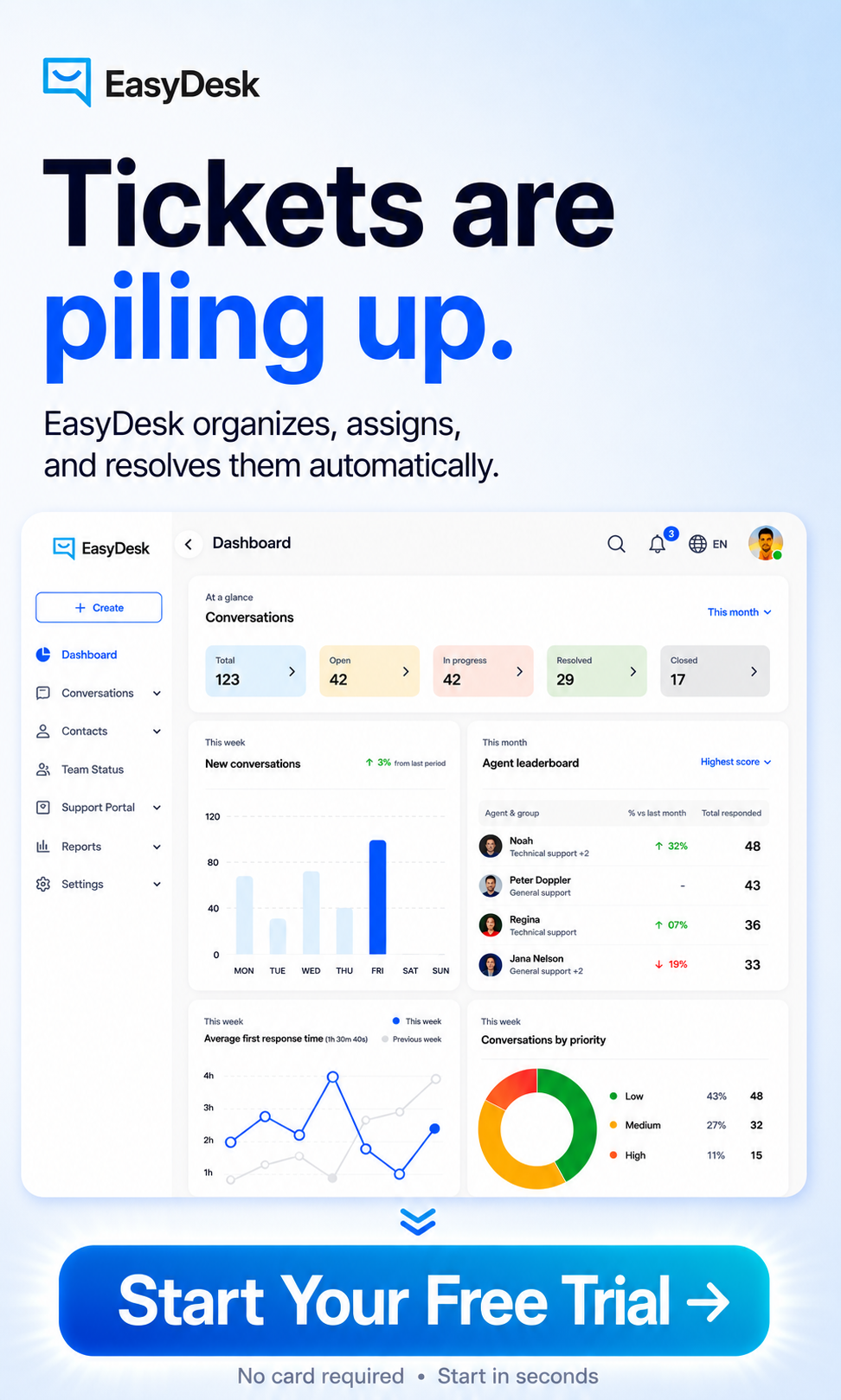
EasyDesk helps businesses improve SLA response time through a centralized SLA management software designed for speed, clarity, and accountability. The platform allows teams to define SLA targets, apply multi-level SLA rules, and track response time and resolution time across all service requests from a single service desk.
Real-time SLA tracking, visual SLA timers, and automated alerts ensure teams maintain control over SLA performance and prevent SLA breaches before deadlines approach. Built-in reports and real-time analytics provide actionable insights into key SLA metrics, service health, and service quality, supporting continuous improvement and compliance. With platforms like monday service, you can automate the entire process with dashboards that give every team real-time updates, which eliminates human error and breaks down those frustrating silos.
EasyDesk also integrates asset management, incident management, multi-channel customer support, and request services within a unified software platform. Flexible features and transparent pricing allow organizations to scale SLA management based on business needs while maintaining consistent service delivery and customer trust.
FAQs
What Is SLA Tracking Software?
SLA tracking software tracks response time and resolution time defined within service level agreements. It monitors service levels in real time and ensures compliance across service management processes and service delivery workflows.
How SLA Tracking Software Improves Response Time?
Real-time monitoring, automated alerts, and intelligent prioritization help teams respond faster to service requests. Immediate visibility ensures critical issues receive attention without delay.
Which Teams Benefit Most From SLA Management Software?
IT teams, service providers, customer support teams, and internal operations teams benefit from improved accountability, clear service expectations, and stronger service performance.
How SLA Monitoring Tools Prevent SLA Breaches?
SLA monitoring tools use alerts, timer thresholds, and escalation workflows to notify teams before SLA targets fail. Proactive actions help prevent SLA breaches and service disruptions.
What Metrics Matter Most In SLA Performance?
Key SLA metrics include response time, resolution time, key performance indicators, service availability, and overall service quality measurements.
Can SLA Tracking Software Support Complex Environments?
SLA tracking software supports complex environments with multi-service operations, multiple vendors, and enterprise-scale service management through configurable SLA rules.
How SLA Management Software Ensures Accountability?
SLA management software ensures accountability through real time visibility, automated tracking, and performance reports that align teams with agreed upon service levels.
How SLA Tracking Software Supports Customer Satisfaction?
SLA tracking software improves customer satisfaction by ensuring faster response time and consistent service delivery across all service requests. Clear SLA monitoring helps teams meet service expectations, reduce delays, and build trust through reliable and predictable service performance.