SaaS companies in 2026 face a demanding support landscape. Mid-stage B2B firms managing $10M to $50M ARR routinely handle 5,000 to 10,000 monthly tickets flowing through email, chat, and in-app messaging.
Without operational discipline, this volume overwhelms customer service agents and drives subscription cancellations. Research shows poor support correlates with 20 to 30 percent higher attrition rates. This article explains how SaaS teams build customer support operations that scale efficiently while keeping customers satisfied.
What Is Customer Support Operations
Customer support operations refer to the specialized function that equips frontline support teams with optimized processes, tools, technologies, and data-driven insights. Unlike direct customer interactions handled by customer service representatives, customer service operations focus on backend enablement. The support operations team works like a pit crew, maintaining the systems and workflows that allow customer-facing agents to focus entirely on resolving customer issues. This includes workflow design, tool maintenance, reporting, and continuous process improvement, all of which become far easier with a modern help desk that improves support behind the scenes through centralization and automation. As companies scale beyond ad hoc responses, typically around 300 to 500 monthly tickets, dedicated support operations become critical to prevent churn and deliver great customer service consistently.
How SaaS Teams Manage Customer Support Operations Efficiently
A typical 2026 B2B SaaS company manages thousands of monthly customer inquiries across various channels, so leaders increasingly rely on a comprehensive customer support team operations guide for 2026 to structure teams, workflows, and multichannel management. Email accounts for roughly 40 percent of volume, chat handles 35 percent, and in-app messaging covers the remaining 25 percent. Handling this complexity requires structured approaches across six key areas that form the backbone of efficient customer support operations.
Designing A Support Operating Model For SaaS
Every effective customer support team starts with a clear operating model. This means defining support tiers: Tier 1 handles initial triage with an 80 percent deflection goal, Tier 2 resolves complex technical issues, and engineering escalations address P0 outages within 4 hours.
Service level agreements establish accountability. Common targets include P0 outages requiring 15-minute response and 1-hour resolution, P1 security issues at 30 minutes and 4 hours, P2 bugs at 2 hours and 24 hours, and P3 how-to questions at 4 hours and 48 hours.
Ownership boundaries matter equally. Use a RACI framework where Tier 1 agents hold responsibility for initial response, the support operations manager maintains accountability for SLA adherence, customer success receives consultation on retention risks, and product teams receive information for feedback loops. Written policies documented in runbooks reduce onboarding time from weeks to days.
Building A Data Driven Support Operations Culture
SaaS support must be data-centric because manual tracking fails at scale. When omnichannel data flows constantly, only unified dashboards provide the complete view needed for decisions. Operations teams review these weekly alongside product leads.
Core performance metrics include first response time targeting under 30 minutes for P1 tickets, average handle time benchmarked at 15 to 20 minutes, backlog size below 5 percent of monthly volume, reopen rate under 5 percent, and CSAT above 4.5 out of 5, and dedicated customer support software that improves response time by 3X helps teams consistently hit these goals. Deflection rate targets range from 30 to 50 percent through self service tools.
Tagging conversations by feature, sentiment, and root cause enables strategic analysis. When tickets about a February 2026 feature release spike 15 percent, teams know to update documentation or flag UX problems for product teams. This shifts support from reactive firefighting to strategic product input.
Leveraging Automation And AI Without Losing The Human Touch
Automation delivers significant efficiency gains when applied correctly. AI-powered chatbots handle 60 to 70 percent of repetitive tasks like password resets and billing queries through natural language processing, especially when backed by robust workflow automation in customer support that standardizes routing, SLAs, and self-service flows. Automated triage classifies incoming tickets by intent, language, and priority with 90 percent accuracy in modern systems, and mature ticket automation software for modern support teams extends this to creation, prioritization, and reporting.
AI reply suggestions pull from knowledge bases, cutting drafting time by 50 percent while keeping final responses reviewed by support agents. Tools like Intercom’s Fin AI resolve 25 percent of tickets autonomously in SaaS setups.
However, over-automation risks customer satisfaction drops. Guardrails include mandatory escalate-to-human options and 10 percent sampling for quality. Teams maintain empathy through personalized follow-ups, ensuring customers always receive direct assistance when needed.
Structuring Support Teams For Scale
Team structures evolve with company growth. Early-stage startups under $5M ARR use 5 to 10 generalists. At $20M ARR and beyond, specialized pods emerge by segment, region, or product line. SMB pods focus on self-serve, while enterprise pods handle dedicated SLAs.
Key roles expand with scale, and clearly defined customer service roles and responsibilities ensure each function contributes predictably to performance and customer satisfaction. Frontline agents comprise 70 percent of headcount. Team leads maintain a 1:10 ratio with agents. Support operations analysts handle data and automation, often owning decisions between manual vs automated ticketing approaches as volume and complexity increase. QA specialists conduct monthly reviews sampling 5 percent of conversations. Knowledge managers curate self-service content.
Global follow-the-sun scheduling ensures 95 percent SLA attainment across North America, EMEA, and APAC, especially when combined with platforms like EasyDesk that have already improved response time for a growing team through centralized routing and SLA tracking. Career paths from frontline support into operations, product, or success retain 80 percent of strong talent, preserving valuable product knowledge and domain expertise.
Aligning Support Operations With Product Development
Strong alignment between support and product teams reduces duplicate tickets by 40 percent and prevents silent churn. Support tags issues systematically, and product reviews them in monthly voice of customer meetings. Decisions flow back to the support team, closing the loop.
Integrating support data into backlog tools guides roadmap prioritization. Approximately 30 percent of product roadmap items can originate from support signals. Support participates in release planning by reviewing release notes, preparing help center updates, and forecasting ticket impact.
Pre-launch beta tests predict volume changes within 10 percent accuracy. Post-launch documentation updates reduce related tickets by 25 percent. This collaboration transforms support from cost center to strategic asset.
Ensuring Quality, Compliance, And Reliability In Support
Quality assurance practices include monthly conversation reviews using scorecards weighted across empathy (30 percent), accuracy (40 percent), and efficiency (30 percent). Coaching sessions based on these reviews yield 10 to 15 percent CSAT improvements.
For industries facing GDPR, HIPAA, or SOC2 requirements, compliance-aware customer service processes mandate encrypted data handling, audit logs with 99.9 percent uptime, and role-based access controls. Incident playbooks for outages include status page updates within 15 minutes and templated communications.
Disaster recovery testing quarterly ensures backup communication channels activate within one hour during platform incidents. Annual playbook reviews after any major incident maintain reliability standards.
Foundations Of Customer Support Operations In SaaS
Understanding the foundations helps teams build systems that scale. These core concepts establish the groundwork before implementing advanced processes and technologies.
Distinguishing Frontline Support From Operations
Frontline customer support handles direct customer conversations and resolutions, representing 80 percent of support volume. Support operations designs the activities processes and strategies that enable frontline efficiency, representing indirect impact on the remaining 20 percent. This distinction clarifies responsibilities and prevents role confusion.
A structured customer support operations team works alongside the customer service team to define customer support processes and refine support workflows. This alignment ensures effective customer service delivery, while the customer service operations team focuses on systems, tools, and performance consistency.
Recognizing When To Transition From Ad Hoc Support
SaaS companies typically need structured operations once monthly ticket volume exceeds 300 to 500 and monthly recurring revenue passes $1M. Ad hoc email management fails when subscription sensitivity means support issues cause 23 percent of cancellations.
At this stage, a customer service operations manager helps formalize customer support processes and introduces scalable support workflows. The customer service operations team ensures that the customer service team can maintain effective customer service standards even as ticket volume and operational complexity increase.
Handling SaaS-Specific Complexities
Recurring subscriptions, versioned releases, and multi-tenant architecture introduce unique challenges, making it crucial to adopt the best ticket management system to keep inquiries organized across products, tenants, and billing cycles. A bug in one release might affect 10 percent of users across different account types. Billing questions alone generate 40 percent of tickets in many SaaS companies.
To manage this complexity, the customer support operations team builds structured support workflows tailored to different issue types, often leaning on guides that show how to manage support tickets efficiently using EasyDesk across channels and priority levels. The customer service operations team ensures that customer support processes remain consistent, enabling the customer service team to deliver effective customer service across varied scenarios.
Establishing Foundational Elements
Core foundations include documented workflows in internal runbooks, a central help desk platform, ownership of metrics through SLA dashboards, and clear escalation paths to engineering and security teams; adopting a dedicated ticketing system brings additional benefits like better organization, collaboration, and scalability. These elements form the infrastructure supporting all customer service functions.
A customer service operations manager ensures these systems align with defined customer support processes. The customer support operations team continuously refines support workflows so the customer service team can operate efficiently while maintaining effective customer service across all touchpoints.
Creating Ownership And Accountability
Defined ownership prevents gaps. Support operations owns tooling and process design. Frontline owns resolution quality. Product owns feature fixes. Security owns incident response. This clarity enables team members across other departments to collaborate without confusion.
Clear ownership allows the customer service operations team to enforce structured customer support processes while guiding support workflows, which pairs naturally with adopting the best customer support ticketing software system to operationalize those processes in a single platform. The customer service team and customer support operations team collaborate under a unified framework, ensuring accountability and delivering consistent, effective customer service outcomes.
Key Roles And Responsibilities Within SaaS Support Operations
Clearly defined roles drive efficiency, especially when companies operate across multiple time zones with 12-hour overlaps between regional teams. Each role contributes distinct value to the support ecosystem.
Support Operations Manager
The support operations manager oversees strategy including tooling decisions, workflow design, cross-team alignment, and reporting to senior management. Core duties include maintaining 95 percent SLA attainment and managing 15 to 20 percent of total support budget. This support ops manager bridges day to day activities with company-wide objectives.
Beyond oversight, this role ensures alignment between the customer service team and the customer support operations team. By refining support workflows and standardizing customer support processes, the manager enables effective customer service while guiding the customer service operations team toward consistent performance.
Systems Analyst And Tooling Specialists
The systems analyst maintains help desk integrations, automation rules, and routing logic. Responsibilities include ensuring CRM sync latency stays under 5 seconds and maintaining 70 percent triage accuracy. These specialists keep technical systems running smoothly.
They also collaborate closely with the customer service operations manager to optimize customer support processes and improve system reliability. By refining support workflows, they ensure the customer service team can operate efficiently, supporting the customer support operations team in delivering effective customer service.
Support Trainer And Enablement Specialists
A support trainer delivers 2-week onboarding programs achieving 90 percent ramp-up and quarterly upskilling sessions. They maintain training documentation and ensure all support team members understand product updates and customer service processes.
Trainers reinforce structured customer support processes and ensure every customer service team member follows consistent support workflows. By aligning with the customer support operations team, they help maintain effective customer service standards while enabling the customer service operations team to scale knowledge across teams.
Knowledge Managers
Knowledge managers curate help center content that drives deflection improvements of 25 percent or more. They identify areas where documentation gaps create recurring tickets and update content proactively before product launches.
They work alongside the customer service operations team to ensure documentation reflects current customer support processes. By supporting structured support workflows, they enable the customer service team to deliver effective customer service while reducing dependency on direct assistance from the customer support operations team.
QA Reviewers And Data Analysts
QA reviewers score 500 conversations monthly, providing coaching feedback. Data analysts forecast volumes with mean absolute error under 10 percent, using 12-month ticket history and product roadmap forecasts to inform hiring and automation decisions.
Their insights help the customer service operations manager refine customer support processes and improve support workflows. By aligning performance data with team execution, they support both the customer service team and customer support operations team in delivering effective customer service at scale.
Tools And Technology Stack For Efficient SaaS Support Operations
Selecting and integrating the right tools determines whether support scales effectively, and understanding how the right helpdesk setup boosts customer support is essential for making informed platform choices. The technology stack should provide a unified view of the customer while reducing manual effort.
Core categories include help desk platforms like Zendesk, Intercom, or EasyDesk helpdesk ticketing software (80 percent adoption), live chat and in-app messaging via tools like Drift, knowledge bases, call and video support through Zoom, and automation tools like Zapier for orchestration.
Integrations with Salesforce (contextual account views), Stripe (one-click billing lookups), and Amplitude (usage data) unify information into single panes, slashing lookups by 50 percent, particularly when leveraging EasyDesk features for smarter, secure customer support such as centralized ticket management and multi-channel views. Agents see complete customer context without tab switching.
Modern trends for 2026 include AI conversation summaries with 95 percent accuracy, intent detection improving routing speed by 30 percent, and predictive staffing analytics. Teams implement tools that support macros for standardized replies, reducing handle time by 40 percent, and structured tagging enabling analytics. This approach helps improve efficiency while maintaining high quality service.
Metrics And Continuous Improvement In SaaS Support Operations
Efficient operations rely on continuous measurement, experimentation, and iteration rather than one-time setup. Regular review cycles ensure customer expectations are consistently met.
Tracking Operational Metrics
Primary operational metrics include response time under 20 minutes, resolution under 8 hours, queue size below 50, and SLA attainment at 98 percent. These key performance indicators reveal system health and identify bottlenecks.
Clear tracking allows the customer service team and support operations team to align on priorities. A customer service operations manager uses these metrics to refine customer support processes, improve support workflows, and maintain effective customer service across all daily operations.
Measuring Customer Experience
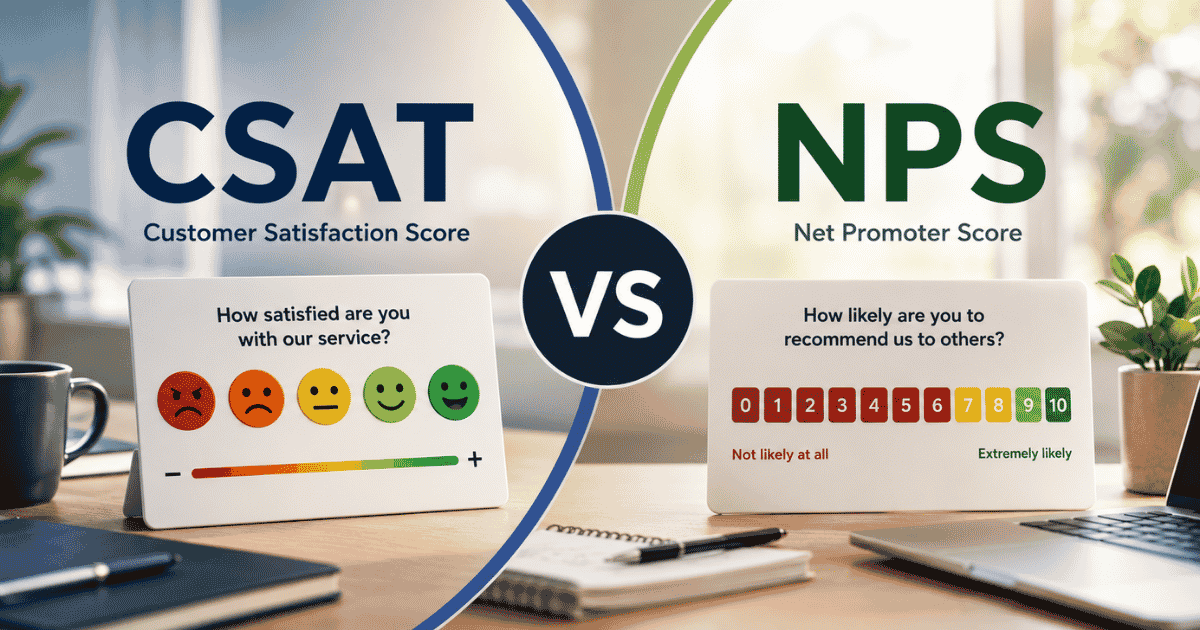
Experience metrics capture satisfaction: CSAT targeting 4.6, customer effort score at 2.5, and NPS above 60. Together with operational data, these show whether efficiency translates to satisfied customers.
The customer support operations team connects these insights with real customer feedback to enhance customer experience. By aligning support workflows with expectations, the customer service operations team ensures effective customer service while continuously adapting to evolving customer needs.
Setting Stage-Appropriate Targets
Targets adjust based on company stage and customer segment. Enterprise contracts require stricter SLAs, perhaps under 10-minute first response time, while self-serve plans might allow 1-hour targets. Analyzing data reveals appropriate benchmarks.
A customer service operations manager evaluates these benchmarks to adjust customer support processes. This ensures the customer service team delivers effective customer service while the customer support operations team maintains scalable support workflows suited to different business stages.
Establishing Review Rituals
Weekly performance standups surface blockers. Monthly deep-dive retrospectives test changes like A/B testing escalation rules, yielding 12 percent resolution improvements. Quarterly strategy reviews align operations with business growth objectives.
Regular reviews help the customer service operations team identify gaps in customer support processes. The customer support operations team refines support workflows based on findings, enabling the customer service team to consistently deliver effective customer service aligned with performance goals.
Implementing Iterative Improvements
Specific improvements drive results. Rewriting a macro cut average handle time by 18 percent. A new self-service article deflected 22 percent of related tickets. Pre and post-measurements validate each change against customer needs.
Continuous iteration allows the customer service team and customer support operations team to evolve together. By improving customer support processes and optimizing support workflows, organizations sustain effective customer service while meeting changing customer expectations and scaling efficiently.
How To Measure Customer Support Operations As SaaS Companies Grow
In 2023, a 5-person startup might handle 200 monthly tickets through shared Slack queues and Gmail. By 2026, that same company at scale manages 10,000 tickets through 50-person pods achieving 99 percent SLA attainment. The journey requires deliberate scaling strategies.
Handling Volume Spikes
High volumes during product launches or seasonal peaks require flexible responses. Options include flex agents adding 50 percent capacity during peaks, contracted vendors handling 20 percent overflow, and AI auto-resolving 30 percent of routine tasks. These tactics maintain quality during surges.
Evolving Queue Structures
Single generalist queues evolve into specialized queues by product area, language, or customer segment. Enterprise pods resolve issues twice as fast because agents develop deeper expertise. SMB pods emphasize self-serve guidance and automating routine tasks.
Maintaining Global Consistency
Distributed teams across regions need shared knowledge bases, playbooks, and unified quality standards, achieving 95 percent adherence. This consistency ensures customers receive an identical experience regardless of which regional team responds.
Managing Change Effectively
New tool rollouts and process changes require careful management. Best practice involves pilot programs with 20 percent of the team for 4-week feedback periods before full deployment. This reduces disruption and surfaces issues early.
Balancing Automation And Headcount
Capacity planning uses forecasting models based on 12-month ticket history plus roadmap projections. Rules of thumb include adding 1 agent per 1,500 tickets or deploying bots for more sales support volume. Data drives these decisions rather than reactive hiring.
Post-Launch Product Optimization Strategy Driven By Support Operations
Support operations transform into a strategic feedback engine when connected to product development. Post-launch optimization uses customer feedback to improve products systematically.
Preparing Before Launch
Pre-launch preparation includes training all support agents on new features, achieving 100 percent coverage, updating the help center with 50 articles per major feature, and using beta feedback to predict ticket categories within 10 percent accuracy. This groundwork reduces post-launch chaos.
Early alignment between support and product ensures readiness across all customer-facing functions. Well-prepared teams handle initial ticket spikes efficiently, maintain service quality, and deliver consistent guidance to customers exploring new features.
Collecting Structured Feedback
During the first 30 to 90 days after launch, support teams tag issues systematically, deploy targeted surveys, and analyze trends. When 25 percent of tickets flag usability concerns, that signal reaches product teams immediately.
Structured tagging creates clarity around recurring problems and emerging patterns. Organized feedback enables faster prioritization, helping teams respond quickly to customer needs while maintaining accuracy in identifying product gaps.
Collaborating With Product Teams
Recurring voice of customer meetings prioritize fixes. The top 5 bugs identified through support data enter the sprint planning. UX tweaks and documentation improvements follow based on actual customer demands rather than assumptions.
Close collaboration ensures that product updates reflect real user challenges. Continuous communication between teams reduces misalignment, shortens feedback loops, and accelerates improvements that directly impact customer satisfaction.
Measuring Optimization Success
Success criteria include a reduction in tickets per active user for new features, CSAT improvements of 0.5 points within 60 days, and a decline in ticket volume by 30 percent over the optimization period. These demonstrate an effective customer-centric approach.
Clear measurement validates whether improvements deliver real impact. Consistent tracking helps teams refine strategies, adjust priorities, and ensure that optimization efforts align with both customer expectations and business goals.
Preventing Silent Churn
Users who struggle with new features often cancel without complaining. Strong feedback loops identify friction points before customers leave. This proactive stance drives customer satisfaction and retention across the customer base.
Early detection of friction helps teams intervene before dissatisfaction escalates. Proactive support and targeted improvements reduce churn risk, strengthen trust, and create a smoother experience that encourages long-term product adoption.
How EasyDesk Helps SaaS Teams Run Efficient Support Operations
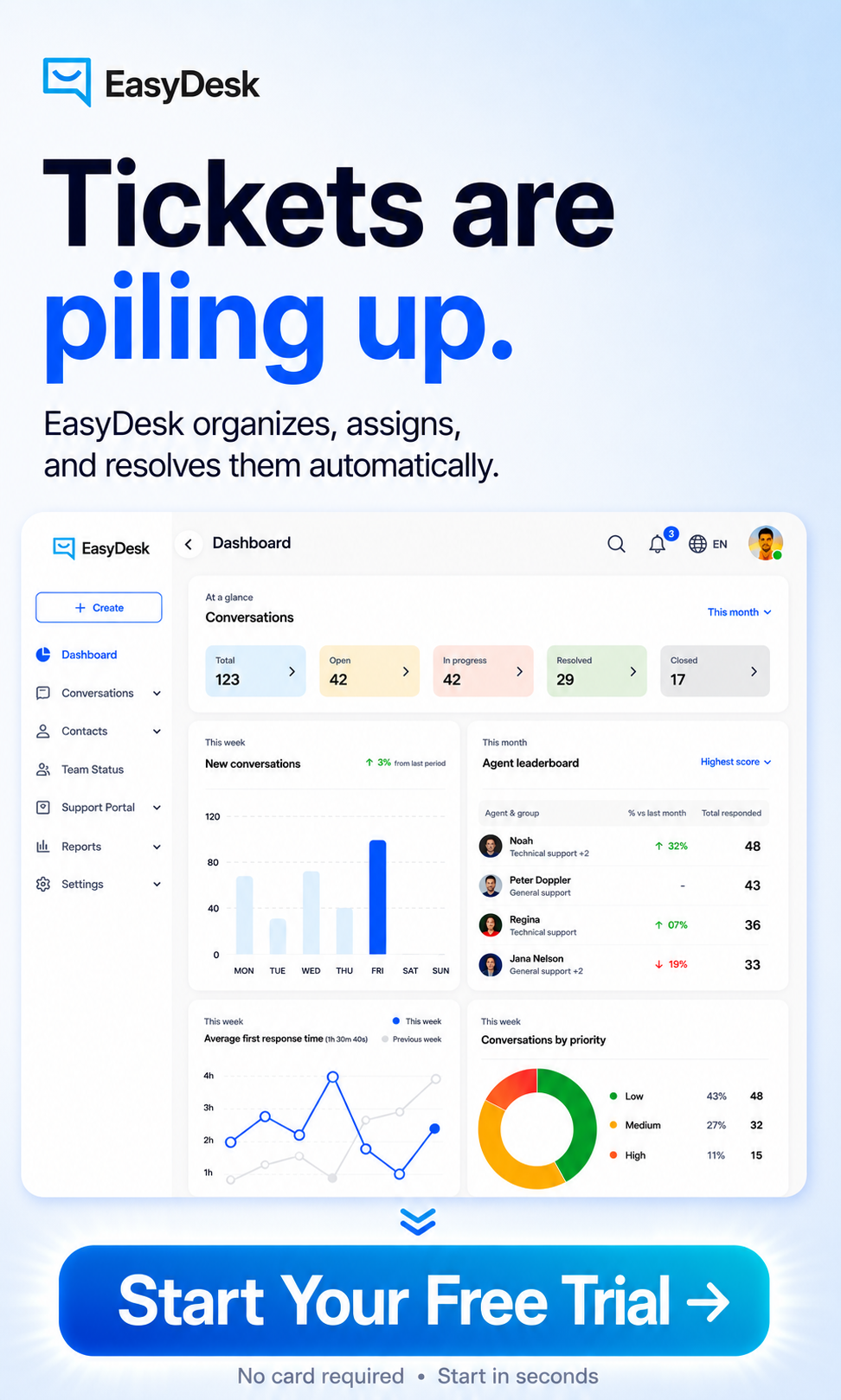
EasyDesk brings essential customer support features together in one streamlined platform designed for SaaS teams managing growing ticket volumes across support channels, positioning it as a secure and efficient customer support platform for modern organizations.
EasyDesk centralizes email, chat, and in-app messages into a single workspace with full customer context, eliminating tab switching and reducing manual lookups by 70 percent, while its focus on secure, transparent customer support helps teams maintain trust and compliance. Customer service leaders gain visibility into all customer conversations without piecing together information from multiple systems.
Support ops team leaders rely on customizable workflows, SLAs, routing rules, and real-time dashboards, similar to what the best IT help desk software for modern teams provides for internal and external support environments. These features enable consistent routing to the right person and automated enforcement of response targets.
EasyDesk automation and AI capabilities include automated triage, conversation summaries, and suggested replies that keep customer support agents fast while maintaining human control. Integration with CRMs, billing platforms, and product analytics ensures that support data feeds directly into product and revenue decisions. Teams improve customer service operations while delivering the high-quality service customers expect.
Frequently Asked Questions
When Should A SaaS Startup Form A Dedicated Support Operations Function?
Very early-stage teams share responsibilities informally. Once monthly ticket volume regularly exceeds 300 to 500 and multiple tools create complexity, a dedicated support operations role typically pays off through 25 percent efficiency gains.
How Do Support Operations Differ From Customer Success In SaaS?
Customer success focuses on proactive relationship management and value realization for specific accounts. Support operations designs systems, tools, and processes enabling the entire support organization to assist customers efficiently across all accounts.
What Skills Should A Support Operations Manager In A SaaS Company Have?
Core skills include data analysis (SQL appears in 20 percent of job postings), workflow design, tool administration, cross-team communication, project management (21 percent of postings), and understanding of SaaS business metrics. Process improvement capabilities (21 percent of postings) round out the profile.
How Can SaaS Teams Reduce Support Volume Without Hurting Customer Experience?
Build a high-quality knowledge base deflecting 40 percent of queries. Improve in-product guidance through tours and tooltips. Deploy AI assistants for common repetitive tasks. Feed recurring issue patterns back to product teams to eliminate friction at the source.
What Is The Best Way To Start Improving Support Operations With Limited Budget?
Begin by mapping current workflows to identify 30 percent waste. Clean up existing tool configurations and standardize macros and tags. Create simple dashboards using free tools like Google Sheets before investing in platforms or headcount. These examples of customer service improvement require process discipline rather than budget.