Customer expectations continue to rise in 2026. Faster replies, consistent answers, and smooth support across channels now define good customer experience. A basic inbox or scattered tools can no longer handle growing ticket volume and complex customer issues.
The best help desk software helps support teams manage customer interactions from a centralized platform. It improves service quality, boosts agent productivity, and creates better customer satisfaction. Whether you handle customer support tickets, internal requests, or IT services, the right desk solution directly impacts how your business performs.
This guide covers the top 10 best help desk software options for 2026, with clear comparisons to help you choose confidently.
What Is Help Desk Software?
Help Desk Software is a centralized system that helps businesses manage customer inquiries, support requests, and internal employee requests in a structured way. Instead of scattered emails and missed messages, a help desk solution converts every request into a support ticket that can be tracked, prioritized, and resolved efficiently. This approach improves service quality, reduces response times, and gives support teams full visibility into customer interactions and ongoing issues.
What do these tools actually do?
- Convert incoming emails, chats, and social messages into support tickets using a structured ticketing system
- Centralize customer inquiries and customer conversations in one desk system to manage customer interactions more effectively
- Automate ticket assignment, ticket categorization, and routing to the right agent, reducing repetitive tasks
- Provide analytics tools and reports to monitor ticket volume, response times, service level agreements, and customer satisfaction
What Features To Look For When Choosing A Help Desk Software
The right help desk software in 2026 goes beyond basic ticketing. Support teams manage higher ticket volume, multiple support channels, and complex customer issues, which makes strong desk software essential for service quality.
Ticket Management And Categorization
A strong help desk system must offer efficient ticket management at its core. Every customer inquiry should convert into a support ticket with clear status, priority, and ownership. Ticket categorization helps support teams group similar customer queries, route service requests correctly, and handle incident management without confusion. This structure allows teams to resolve customer issues faster and maintain consistent service level agreements even as ticket volume grows.
Automation And Workflow Control
Automation features play a major role in modern helpdesk software. Automated ticket assignment, priority rules, and status updates reduce repetitive tasks that slow down desk operations. Automation also improves agent productivity by allowing the support team to focus on complex customer interactions instead of manual sorting. A well-designed help desk solution uses automation to maintain speed without sacrificing customer experience.
Self Service And Knowledge Management
Self service options are no longer optional. A self service portal combined with a searchable knowledge base helps customers find answers without opening support tickets. Knowledge management reduces support requests, improves service quality, and provides consistent answers across support channels. Strong help desk software allows teams to update articles easily and use customer feedback to improve documentation over time.
Analytics And Service Insights
Analytics tools provide valuable insights into support performance. A good desk software system tracks response times, ticket volume, customer satisfaction, and service level agreements. These insights help teams identify bottlenecks, improve support processes, and make better staffing decisions. Clear reporting also helps managers measure service management success and improve customer experience using real customer data.
Integrations And User Experience
Seamless integration with project management software, CRM platforms, Jira Service Management, and other business tools keeps workflows connected. Integration capabilities prevent data silos and help teams manage customer interactions across systems. A user friendly interface ensures faster onboarding, smoother collaboration, and a team focused environment that supports both customer support and internal service requests.
How We Selected The Top 10 Best Help Desk Software
Choosing the best help desk software for 2026 required a practical and research-driven approach. We evaluated each help desk solution based on real usage, feature depth, scalability, and value. Our goal was to highlight desk software options that truly support modern customer support teams.
- Real-World Adoption By Modern Support Teams
- Ability To Manage Customer Interactions And Conversations
- Support For Service Level Agreements And Ticket Volume Growth
- Integration Capabilities With Business Tools
- User Friendly Interface And Team Focused Design
- Pricing Clarity And Scalable Software Packages
Quick Comparison: Top 10 Best Help Desk Software
| Tool | Best For | Starting Price | Best For |
| Zendesk | Large teams | $55/user/month | Enterprise integrations |
| ThriveDesk | SaaS & e-commerce | $15/month | Simple desk operations |
| EasyDesk | Growing teams | Free–$99/month | Clean automation |
| Freshdesk | Omnichannel support | $15/user/month | AI automation |
| Help Scout | Small teams | $20/user/month | Human-first design |
| Hesk | Self-hosted | Free | Full data control |
| HelpDesk | Email & chat | $19/agent/month | LiveChat integration |
| Zoho Desk | Zoho users | $14/user/month | Deep customization |
| Intercom | SaaS chat | $74/month | Proactive messaging |
| ProProfs Desk | SMBs | $19/user/month | AI + knowledge base |
1. Zendesk – Enterprise-Grade Help Desk & Service Management
Zendesk is one of the most established help desk and service desk platforms used by organizations of all sizes. It provides robust omnichannel support, advanced automation, and deep analytics tools that help teams manage high ticket volume and complex workflows.
Key Features
- Centralized ticketing system with SLA tracking and escalation
- Asset management and incident management support
- Self service portal and knowledge base builder
- Advanced workforce management and reporting dashboards
- Rich integrations with CRM, project, and analytics tools
Pros
- Extremely scalable for enterprise use
- Strong analytics tools with customizable dashboards
- Omnichannel ticket management (email, chat, voice, social)
- Large marketplace with hundreds of integrations
- AI-assisted automation to reduce repetitive tasks
Cons
- Higher pricing compared with smaller tools
- Complexity during setup and customization
- Can feel overwhelming for small support teams
2. ThriveDesk – Simple Desk Software Solution For SaaS & E-commerce
ThriveDesk is a straightforward help desk software designed for SaaS and e-commerce teams that want reliable ticket management without enterprise complexity. It combines email, live chat, and a shared inbox into one desk system, making customer conversations easy to track and resolve. Its clean interface and quick setup help support teams stay productive from day one.
Key Features
- Unified inbox for email, live chat, and contact form support tickets
- Built-in live chat widget for real-time customer interactions
- Automation rules for ticket assignment, tagging, and priority handling
- Basic analytics tools to track response time, ticket volume, and service quality
- Internal notes and collaboration features for support teams
- Knowledge base for simple self service and faster issue resolution
Pros
- Intuitive user friendly interface with fast onboarding
- Shared inbox, live chat, and ticketing in one desk software solution
- Solid automation basics for handling repetitive tasks
- Affordable flat pricing starting around $15 per month with a free trial
- Responsive customer support and active user community
Cons
- Advanced analytics and deeper reporting features are limited
- Extended integration capabilities are not as broad as enterprise tools
- Social media support may not be available on all plans
- Custom workflows and reporting options continue to evolve
3. EasyDesk – Smart Help Desk Software For Growing Teams
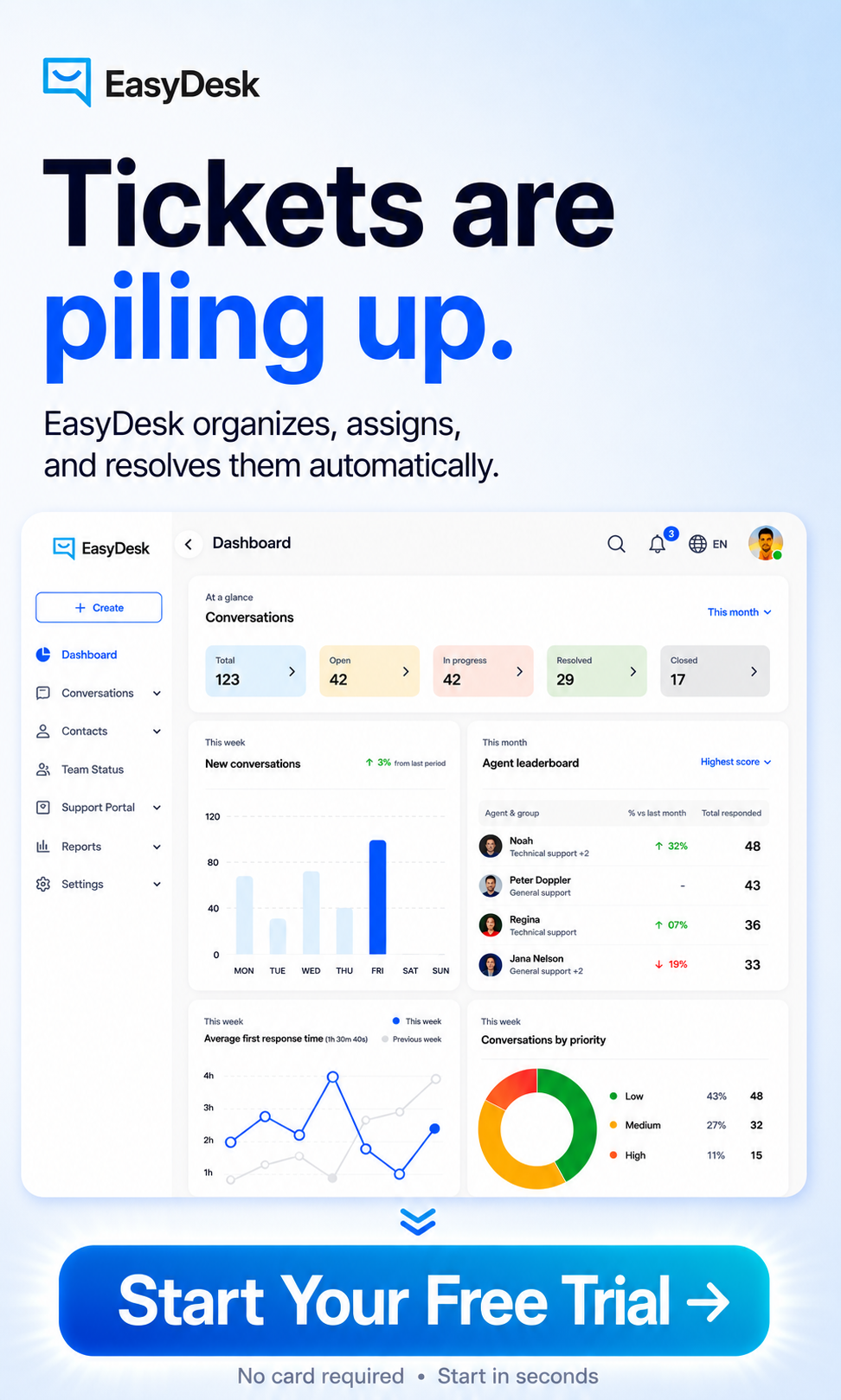
EasyDesk is a modern help desk software solution focused on simplicity and practical automation. It centralizes customer interactions, support requests, and internal tickets into one platform that teams can adopt quickly. Unlike heavy enterprise suites, EasyDesk emphasizes clean workflows, fast setup, and clear visibility into support performance. This help desk software brings the ultimate solution for your business.It includes all the tools you need to resolve incidents quickly, including logging, analysis and resolution.
Key Features
- Unified inbox for email and contact form tickets
- Smart automation rules to route and prioritize support tickets
- SLA tracking and priority management is one of the best key functions
- Internal notes and agent collaboration tools
- Basic dashboards and reporting
- Multi-channel support (email, forms, chat)
- Mobile app for remote support teams
- 24/7 support across all plans with no hidden fees
Pros
- Fast initial setup and beginner-friendly interface
- Practical automation that reduces repetitive tasks
- Improves agent productivity and response times
- Affordable pricing with clear tiers and no extra onboarding fees
- Includes round-the-clock support even on lower plans
Cons
- Lacks deep omnichannel capabilities like social and voice
- Reporting is valuable but not as advanced as enterprise analytics
- Fewer integrations compared to older help desk ecosystems
4. Freshdesk – Omnichannel Help Desk Software With AI Automation
Freshdesk combines ticketing, multi-channel support, and AI tools to handle incoming customer inquiries at scale. It is popular with small and midsize businesses for its clean interface and strong automation capabilities.
Key Features
- Omnichannel ticketing across email, chat, voice, and social support channels
- Freddy AI for ticket prioritization, suggested replies, and automated responses
- Self service portal with a customizable knowledge base
- SLA management and escalation rules for service level agreements
- Automation rules for ticket assignment, categorization, and workflows
- Integration capabilities with CRM systems, project management tools, and business apps
Pros
- Omnichannel ticketing (email, chat, voice, social)
- Freddy AI for suggested responses and ticket sorting
- Good integration support with CRM and business apps
- Scales well from small teams to larger operations
- Free or low-cost entry plans available
Cons
- Advanced analytics and features often require higher tiers
- Users sometimes report performance lag under very high loads
5. Help Scout – Human-Centered Help Desk Software
Help Scout brings a shared inbox feel to help desk software while still offering ticketing, knowledge base, and collaboration tools. Its focus is on customer experience rather than strict IT workflows.
Key Features
- Shared inbox for email-based customer support tickets
- Built-in knowledge base with Docs for self service options
- Collision detection to prevent duplicate agent replies
- Customer profiles with conversation history and customer data
- Internal notes and team collaboration tools
- Reporting and analytics for response time and service quality
Pros
- Shared inbox that feels familiar to agents
- Built-in knowledge base and Docs support
- Great for conversational customer support
- Simple collaboration tools and proactive messaging
Cons
- Lacks deep enterprise features like asset management
- Reporting tools are useful but limited compared with competitors
6. Hesk – Free And Self-Hosted Help Desk System
Hesk is a lightweight, self-hosted help desk ticketing system that works well for teams needing control over their customer data. It’s less feature-rich than cloud counterparts but valuable for low-cost deployment. With dedicated incident management, problem management, cloud management, and project management tools to boot, Hesk truly covers every aspect of your organization's IT operations.
Key Features
- Self-hosted help desk system with full data ownership
- Ticketing system for customer inquiries and internal support requests
- Incident management and problem tracking tools
- Asset management and basic project management support
- Cloud management controls for IT services
- Customizable ticket fields, priorities, and workflows
Pros
- Free self-hosted option with basic ticketing
- Full data control and simple installation
- Lightweight and fast for small teams
Cons
- Limited native integrations
- UI is more basic than modern SaaS tools
- Less support for automation and analytics
7. HelpDesk (LiveChat) – Email & Chat-Focused Help Desk Software
HelpDesk by LiveChat focuses on combining email ticketing with live chat and collaboration. It’s valuable for teams that rely heavily on chat and customer email.
Key Features
- Centralized ticketing system for email and live chat conversations
- Native integration with LiveChat for real-time customer support
- Ticket status, priority, and assignment management
- Automation rules for basic ticket routing and follow-ups
Pros
- Centralizes ticketing from email and chat
- Good collaboration features like internal notes
- Solid reporting on response time and volume
Cons
- Analytics are basic compared with full enterprise suites
- Some users find the interface less modern than newer tools
8. Zoho Desk – Flexible Service Desk Software For Zoho Users
Zoho Desk stands out for its deep integration with the larger Zoho ecosystem and its AI assistant, Zia, which enhances automation and performance insights.
Key Features
- Omnichannel ticketing across email, chat, phone, and social channels
- Zia AI for sentiment analysis, ticket suggestions, and automation actions
- Deep integration with Zoho CRM, Zoho Projects, and other Zoho business tools
- Self service portal with customizable knowledge base
- Analytics and reporting dashboards for service quality and agent productivity
Pros
- Strong omnichannel support and automation
- Deep integration with Zoho CRM and other Zoho apps
- Competitive pricing and flexible plans
- Powerful AI features for sentiment analysis and actions
Cons
- Interface can feel busy or overwhelming
- Advanced features often require higher tier plans
9. Intercom – Conversational Help Desk Software For SaaS
Intercom blends customer support with proactive messaging and marketing automation, making it a strong choice for SaaS teams focused on real-time engagement.
Key Features
- In-app messaging for real-time customer conversations
- Automated bots and behavior-based triggers for instant responses
- Shared inbox for managing customer support tickets and chats
- Customer data profiles with full conversation history
- Integration capabilities with CRM, analytics, and other business tools
Pros
- Excellent for in-app messaging and proactive support
- Built-in bots and behavior-based triggers
- Strong for customer onboarding and product support
Cons
- Costs can grow quickly as your user base expands
- Not as strong for traditional ticketing or IT service workflows
10. ProProfs Desk – AI-Powered Help Desk Software Solution
ProProfs Desk combines ticketing with automation and knowledge management in a package that’s easy for small and mid-sized teams to adopt. User reviews highlight its usability and customer support features.
Key Features
- Shared inbox for managing customer support tickets across channels
- Automation rules for ticket assignment, prioritization, and follow-ups
- Built-in knowledge base and self service portal
- Customer satisfaction surveys and feedback collection
- Basic analytics tools for response time and ticket volume
Pros
- User-friendly ticketing and shared inbox
- Built-in knowledge base and self-service options
- Customization of workflows, fields, and automation rules
- Affordable with free trial and flexible plans
Cons
- Integration options are more limited than some competitors
- Advanced analytics features are less extensive
How To Choose The Best Help Desk Software For Your Business
The best help desk software in 2026 depends on how your team handles customer support today and how it plans to scale over time. A strong desk solution should match your support channels, ticket volume, team structure, and long-term service management goals without adding unnecessary complexity.
Match Support Channels
Different help desk software options serve different communication needs. Teams that rely only on email often succeed with lightweight ticketing systems that focus on inbox management and response tracking. Businesses that support customers through live chat, social media, and voice channels need omnichannel help desk software that centralizes all customer conversations in one place.
A unified interface prevents missed messages and reduces context switching for agents. Omnichannel desk software also helps maintain consistent service quality across support channels. Before selecting a platform, teams should confirm the desk system supports current channels and future expansion without expensive add-ons.
Customer Support Vs Internal Requests
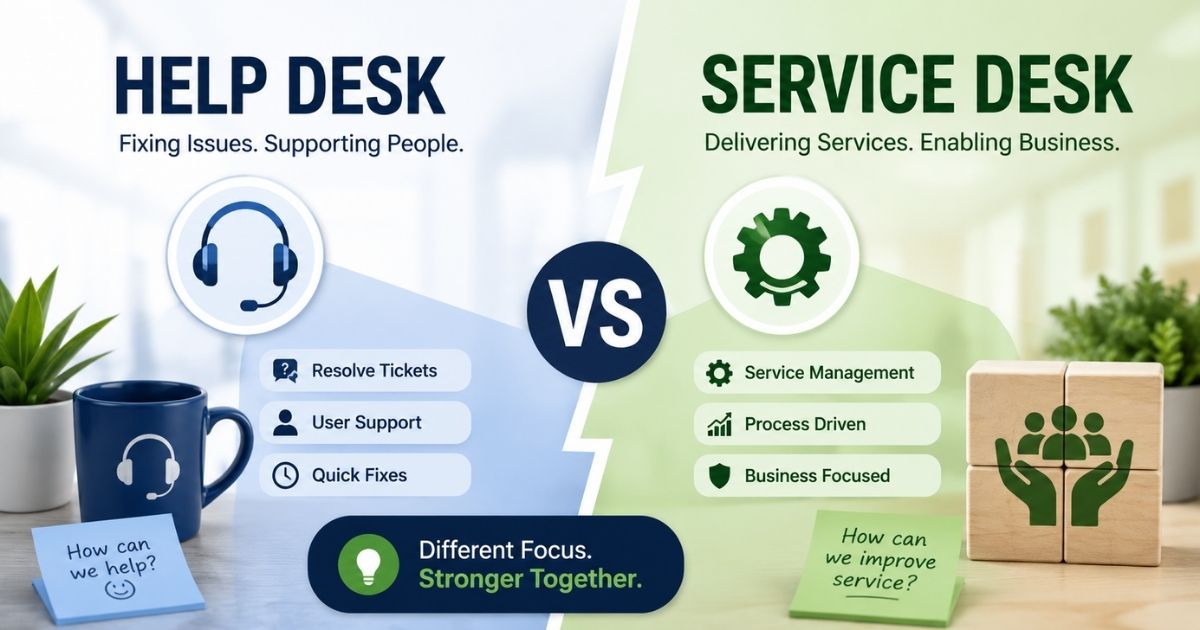
Some help desk solutions focus on external customer support, while others work better for internal service desk needs such as IT services and employee requests. Customer-focused tools prioritize fast responses, self service options, and customer satisfaction tracking. Internal service desk software emphasizes asset management, incident management, and structured internal workflows.
Businesses that handle both should choose flexible desk software that separates customer issues from internal service requests. Clear ticket categorization and automation rules help support teams manage different request types efficiently while maintaining service level agreements.
Ticket Volume And Team Size
Ticket volume and team size directly affect which help desk software fits best. Small teams with low ticket volume often benefit from simple desk systems with essential automation and reporting. Larger support teams require advanced ticket management, SLA tracking, and analytics tools to monitor agent productivity and workload distribution. Moreover, it lets you proactively convey service level agreements (SLAs) and resolution time while automating routine tasks, such as notifying managers about high-priority cases.
Automation plays a critical role as ticket volume grows. Auto-assignment, priority rules, and predefined workflows reduce repetitive tasks and improve response times. Analytics tools also provide valuable insights that help managers refine support processes and improve customer experience.
Budget And Growth Plans
Budget considerations matter, but long-term value matters more. Startups often prefer affordable help desk software with transparent pricing and core features. Enterprise teams require scalable service management platforms that support complex workflows, integrations, and high ticket volume.
Software packages should offer clear upgrade paths without hidden costs. A help desk solution that scales smoothly helps businesses avoid costly migrations and supports consistent service quality as customer support operations expand.
Use Case Recommendations
Every business handles customer support differently, so the best help desk software depends on specific use cases. The recommendations below map common business scenarios to desk software options that balance service quality, scalability, automation features, and team workflows.
| Use Case | Recommended Tools |
| E-commerce | EasyDesk, ThriveDesk, Freshdesk |
| SaaS | Intercom, EasyDesk, Help Scout |
| IT services | Zendesk, Zoho Desk |
| Internal service desk | Zoho Desk, Hesk |
| Small teams | Help Scout, ThriveDesk |
| Large teams | Zendesk, Freshdesk |
FAQ
What Is The Best Help Desk Software In 2026?
The best help desk software depends on your team size, budget, and support channels. Zendesk, EasyDesk, and Freshdesk stand out for flexible desk software options, strong automation features, and reliable service management capabilities.
Can Help Desk Software Improve Customer Satisfaction?
Yes. Faster responses, efficient ticket management, and clear customer conversations improve service quality. Self service options and knowledge bases also help resolve customer issues without delays.
Does Help Desk Software Support Internal Requests?
Many service desk software platforms support internal service requests, IT services, and employee requests. Features like incident management and asset management make them suitable for internal service desk operations.
How Much Does Help Desk Software Cost?
Pricing ranges from free help desk systems to $75 or more per agent per month. Cost depends on advanced features, automation tools, analytics, and integration capabilities.
Is Self Service Important In 2026?
Yes. Self service portals and knowledge bases reduce ticket volume and help customers resolve common queries faster. This approach improves customer experience and reduces workload on support teams.
Can Help Desk Software Integrate With Other Business Tools?
Most modern helpdesk software offers seamless integration with CRM platforms, project management tools, marketing automation, and other business tools to keep workflows connected.
How Long Does Setup Usually Take?
Cloud-based help desk software often works within a few hours. Advanced service management platforms with custom workflows and integrations may require several days for full setup.