Every support team faces moments when an issue goes beyond control. A delayed response. A missed update. A frustrated customer waiting for answers. Without a clear path, problems grow fast and damage trust.
An escalation matrix solves that confusion. It defines who takes charge, when to act, and how to move issues forward. Teams stay aligned. Decisions happen faster. Customers get timely responses without repeated follow-ups.
This guide breaks down everything you need to know. From basics to best practices, you will learn how to build a system that keeps operations smooth and customers satisfied. If your team wants clarity and control, an escalation matrix is the starting point.
What Is An Escalation Matrix
An escalation matrix is a structured framework that defines how teams escalate issues and handle customer complaints. It maps clear escalation paths, escalation levels, and the right person responsible at each escalation stage. A well-designed escalation matrix supports the escalation process by linking service level agreements and severity levels with defined actions. When an issue remains unresolved, escalation occurs through a structured process that moves from initial support to higher authority. This ensures customer service teams address customer service issues in a timely manner.
An effective escalation matrix improves escalation management and the overall resolution process. It helps customer service representatives and support teams resolve issues efficiently, even for complex issues or critical problems. With clear escalation triggers and communication channels, teams maintain operational efficiency and service quality. A simple escalation matrix template also supports project management, incident management, and risk management by assigning responsibilities and ensuring timely resolution.
How An Escalation Matrix Works In Customer Support
An escalation matrix creates a clear path for handling customer issues. It defines who acts, when to act, and how to move cases forward. Teams follow a structured process, reduce delays, and resolve issues in a timely manner while meeting service level agreements.
Issue Intake And Initial Support
A customer service representative receives a support ticket through the service desk. The first step focuses on initial support and quick issue management. Teams assess severity levels and identify escalation triggers early. Simple issues move through a fast resolution process without delay.
Data shows nearly 70% of customer issues resolve at first contact when processes stay clear. A well structured matrix helps customer service teams assign responsibilities and avoid confusion. This step improves response times and supports better customer satisfaction from the start.
Escalation Levels And Clear Paths
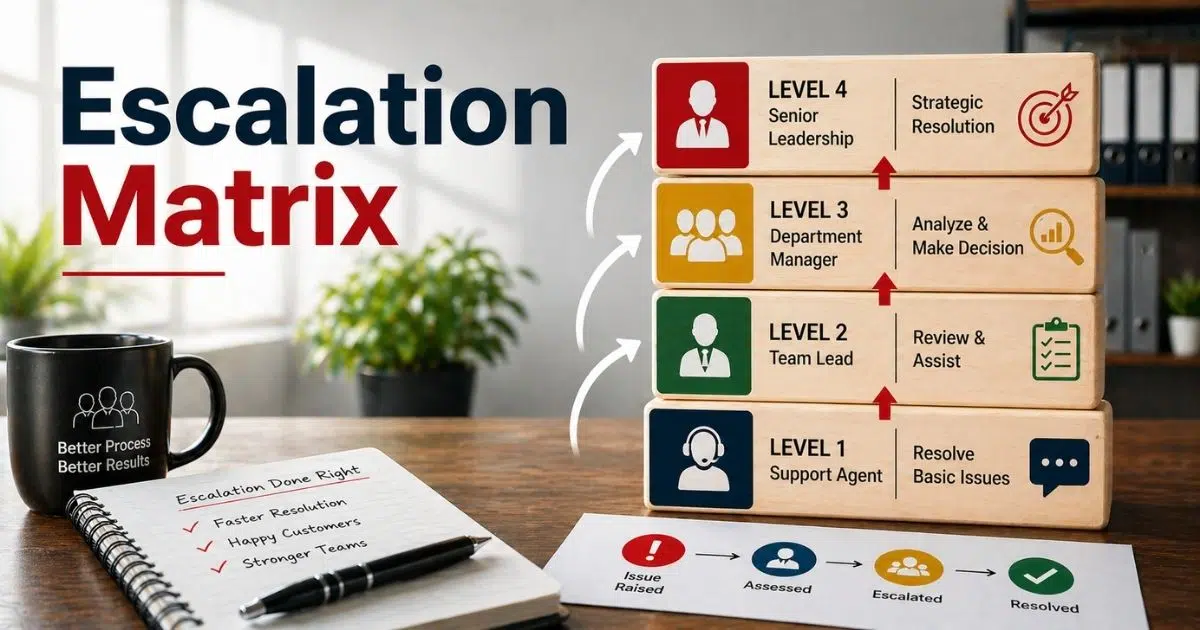
An escalation matrix defines escalation levels and clear escalation paths. Each escalation stage links to appropriate personnel, such as a team lead or account manager. When escalation occurs, issues move step by step without confusion.
Research indicates that companies with defined escalation tiers improve resolution speed by over 30%. A structured escalation path reduces delays and ensures critical issues reach the right person. This keeps the escalation management process efficient and avoids further complications.
Automatic And Priority Escalation
Automatic escalation activates when service level agreements SLAs risk breach. The system flags high-priority issues and triggers priority escalation. This removes manual delays and supports timely resolution for critical problems.
Studies show automated workflows can reduce response delays by up to 40%. An effective escalation framework ensures urgent cases reach higher authority without waiting. This improves operational efficiency and helps teams resolve issues efficiently under pressure.
Functional And Hierarchical Escalation
Functional escalation routes complex issues to specialized teams like the engineering team or human resources. Hierarchical escalation moves issues to senior leadership when decisions require authority. Both types support a structured approach to escalation management.
Reports suggest that clear escalation policy improves issue resolution success rates significantly. A well-designed escalation matrix ensures each escalation stage matches the right expertise. This keeps communication channels clear and avoids delays in addressing issues.
Resolution And Feedback Loop
The final escalation stage focuses on issue resolution and feedback. Teams confirm the problem is addressed promptly and update the escalation matrix template if needed. This strengthens the escalation management process and improves future performance.
Customer support data shows that strong follow-ups can boost customer satisfaction by over 20%. A well-structured matrix ensures continuous improvement and better service quality. Each resolved case helps refine the escalation process and maintain operational efficiency.
Key Components Of A High-Impact Escalation Matrix
A strong escalation matrix depends on clear structure and defined roles. It supports the escalation process, reduces delays, and improves customer support outcomes. Each component ensures issues move through clear escalation paths and reach the right person at the right time.
Clear Escalation Levels And Tiers
An effective escalation matrix defines clear escalation levels and escalation tiers. Each escalation stage connects to severity levels and priority escalation rules. Teams understand when escalation occurs and how to move forward without confusion.
Studies show that structured escalation tiers can improve response times by up to 25%. A well-structured matrix reduces delays in addressing issues. It also ensures critical issues reach higher authority quickly. This clarity supports operational efficiency and helps resolve issues efficiently.
Defined Roles And Responsibilities
A strong escalation matrix assigns responsibilities to appropriate personnel. It includes roles such as customer service representative, team lead, project manager, and account manager. Each role handles a specific part of the escalation management process.
Research shows clear role definition can reduce resolution time by nearly 30%. Teams avoid confusion and make faster decisions. This improves issue management and ensures customer issues get addressed promptly. Clear ownership also strengthens accountability across customer service teams.
Service Level Agreements And Timelines
Service level agreements set clear expectations for response and resolution times. The escalation matrix aligns service level agreements SLAs with each escalation stage. This ensures teams act within a defined timeframe.
Data shows companies that follow SLAs improve customer satisfaction by over 20%. A structured process ensures timely resolution and avoids further complications. Teams can track support tickets and maintain service quality while handling high-priority issues and complex issues.
Escalation Triggers And Communication Channels
Escalation triggers define when issues move to the next level. These triggers include SLA breaches, unresolved customer complaints, or critical problems. Clear communication channels ensure smooth coordination during escalation.
Studies indicate that poor communication causes nearly 60% of service delays. A well-designed escalation matrix ensures teams share updates quickly. This helps maintain operational efficiency and supports better collaboration between support team members and senior leadership.
Templates And Structured Framework
A simple escalation matrix template provides a consistent structure. It defines escalation paths, key components, and key elements of the escalation management process. Teams follow a structured framework to handle issues without confusion.
Reports suggest standardized templates improve efficiency by up to 35%. A well-structured matrix supports incident management, risk management, and project management. It also helps teams escalate issues properly and ensure a timely manner for issue resolution.
Types Of Escalation Matrix Every Team Should Know
Different situations need different escalation matrix types. A single model does not fit all customer support or project management needs. Each type supports a specific escalation process and helps teams resolve issues efficiently with clear escalation paths.
Hierarchical Escalation Matrix
A hierarchical escalation matrix follows a chain of command. Issues move from a customer service representative to a team lead, then to senior leadership or higher authority. Each escalation level reflects authority and decision power.
Research shows structured hierarchy can reduce resolution delays by up to 28%. This model works well for critical issues and high-priority issues. It ensures customer complaints reach the right person without confusion. A well-structured matrix also supports accountability and better escalation management.
Functional Escalation Matrix
A functional escalation matrix routes issues based on expertise. Complex issues move to specialized teams such as the engineering team or human resources. This ensures the right skill set handles each escalation stage.
Reports suggest that functional escalation improves issue resolution success by over 35%. Teams avoid delays caused by wrong assignments. Clear escalation triggers and communication channels help maintain service quality. This approach supports efficient issue management and faster resolution process.
Automatic Escalation Matrix
An automatic escalation matrix uses predefined rules and service level agreements SLAs. When escalation occurs, the system moves issues forward without manual steps. Priority escalation happens when response times exceed limits.
Studies show automation can improve response times by up to 40%. This model supports operational efficiency and reduces manual errors. It helps customer service teams manage support tickets and ensure timely resolution. Automatic escalation also prevents issues from remaining unresolved.
Priority-Based Escalation Matrix
A priority-based escalation matrix focuses on severity levels. High-priority issues and critical problems receive faster attention. Lower priority cases follow a different escalation path with extended timelines.
Data shows companies using priority escalation improve customer satisfaction by nearly 20%. This model ensures resources focus on urgent cases first. It supports risk management and helps maintain operational efficiency. Teams can resolve issues efficiently while balancing workload across the support team.
Hybrid Escalation Matrix
A hybrid escalation matrix combines multiple models. It may use hierarchical escalation for authority and functional escalation for expertise. Automatic escalation can also support faster movement across escalation tiers.
Research indicates hybrid models improve overall service quality and flexibility. Teams adapt to different customer service issues without delays. A well-designed escalation matrix ensures clear escalation paths and better coordination. This approach strengthens the escalation management process and improves timely resolution.
Step-by-Step Process To Create An Escalation Matrix
A clear escalation matrix does not happen by chance. It needs a structured approach and defined actions. Each step ensures the escalation process stays smooth, supports service level agreements, and helps teams resolve issues efficiently without delays.
Step 1: Identify Issues And Escalation Triggers
Start with a full review of customer issues and common customer complaints. Map out when escalation occurs and define clear escalation triggers. Include factors like unresolved support tickets, SLA breaches, and critical problems.
Studies show that 60% of delays happen due to unclear triggers. A structured process helps teams act fast. Clear escalation paths reduce confusion and support timely resolution. This step builds the base for an effective escalation framework and improves issue management.
Step 2: Define Escalation Levels And Severity
Set clear escalation levels and severity levels for each issue type. Link each escalation stage to priority escalation rules and service level agreements SLAs. High-priority issues must follow a faster escalation path.
Research shows that companies using defined escalation tiers improve response times by over 30%. This structure ensures complex issues reach higher authority quickly. It also helps maintain operational efficiency and supports a smooth resolution process.
Step 3: Assign Roles And Responsibilities
Define appropriate personnel for each escalation level. Include roles such as customer service representative, team lead, project manager, and account manager. Each role must handle specific tasks within the escalation management process.
Data shows clear ownership can reduce issue resolution time by up to 25%. Teams avoid confusion and make faster decisions. A well-structured matrix ensures issues reach the right person. This improves accountability and strengthens customer support performance.
Step 4: Establish Communication Channels And Workflow
Set clear communication channels for every escalation stage. Define how the support team shares updates and tracks progress. Use tools within the service desk to manage the escalation management process.
Reports suggest poor communication leads to 50% of service delays. A structured framework improves coordination across customer service teams. It ensures addressing issues happens without delay and prevents further complications in the resolution process.
Step 5: Create Template And Monitor Performance
Build a simple escalation matrix template that includes key components and key elements. Document escalation paths, escalation policy, and response times. This creates a consistent structure for incident management and project management.
Studies show standardized templates can improve operational efficiency by up to 35%. Regular review helps refine the escalation process and improve service quality. A well-designed escalation matrix ensures issues get addressed promptly and supports long-term customer satisfaction.
Real World Escalation Matrix Examples And Use Cases
Real scenarios make an escalation matrix easier to understand. Different industries use different escalation paths based on needs. Each example shows how a structured process helps teams resolve issues efficiently and maintain strong customer support performance.
Customer Support Ticket Escalation
A customer service representative handles a support ticket at the service desk. If the issue remains unresolved, escalation occurs to a team lead, then to senior leadership. Clear escalation levels and escalation tiers, backed by automated ticket management, guide the resolution process.
Reports show that 68% of customers expect fast issue resolution within hours. A well-designed escalation matrix ensures timely resolution and better response times. It helps customer service teams manage customer complaints and improve customer satisfaction without delays.
IT Incident Management Escalation
An IT team uses an escalation matrix for incident management. Critical issues move through functional escalation to the engineering team. High-priority issues follow a defined escalation path based on severity levels.
Studies suggest that strong escalation management can reduce downtime by up to 40%. Clear escalation triggers and communication channels, supported by modern IT help desk software, help teams address issues quickly. This improves operational efficiency and ensures service quality remains stable during system failures.
Project Management Escalation
A project manager uses an escalation matrix to handle risks and delays. When project issues remain unresolved, hierarchical escalation sends them to higher authority. This ensures faster decision-making and avoids further complications.
Data shows that nearly 30% of project delays occur due to poor escalation management. A structured framework helps assign responsibilities and supports risk management. It also ensures critical problems get addressed promptly and keeps projects on track, especially when built on a clear ticket escalation process.
SLA Based Escalation In Service Teams
Service level agreements define response times and escalation triggers. When SLAs are at risk, automatic escalation moves issues to appropriate personnel. Priority escalation ensures urgent customer issues receive immediate attention, which is why well-structured SLAs are critical for service success.
Research shows companies that follow service level agreements SLAs improve service quality by over 25%. A structured escalation process helps customer service teams resolve issues efficiently. It also ensures a timely manner for handling high-priority issues.
Account Management And Client Escalation
An account manager handles key client concerns and customer complaints. If escalation occurs, issues move to senior leadership or specialized teams. Functional escalation ensures the right expertise handles complex issues.
Studies show that proactive escalation management can increase customer retention by up to 20%. A well-structured matrix supports clear escalation paths and better communication channels. This improves customer satisfaction and helps maintain long-term client relationships.
Benefits Of Using An Escalation Matrix In Business Operations
A well-designed escalation matrix brings structure to daily operations. It defines clear escalation paths and supports the escalation management process. Teams handle customer issues faster, reduce confusion, and maintain operational efficiency across customer support and project management.
Faster Response And Resolution Times
An escalation matrix improves response times by defining escalation levels and escalation triggers. Teams know when escalation occurs and how to act without delay. This ensures issues move through the resolution process in a timely manner.
Studies show that companies with structured escalation processes can reduce response delays by up to 35%. Clear escalation tiers help resolve issues efficiently, even for high-priority issues and critical problems. Faster action improves customer satisfaction and strengthens service quality, as seen when EasyDesk improved response time for a growing team.
Better Accountability Across Teams
A structured escalation framework assigns responsibilities to appropriate personnel. Roles such as customer service representative, team lead, and project manager follow clear escalation paths. Each escalation stage connects to a specific owner.
Research shows that clear role ownership improves issue resolution success by nearly 30%. Teams avoid confusion and ensure customer issues get addressed promptly. This improves escalation management and supports stronger collaboration across customer service teams.
Improved Customer Satisfaction And Trust
An effective escalation matrix ensures customer complaints receive proper attention. Priority escalation routes urgent issues to the right person, supported by automated ticket assignment. Customers receive faster updates through defined communication channels.
Data shows that 73% of customers value quick resolution over brand loyalty. A well-structured matrix helps customer service teams maintain service quality and resolve issues efficiently. This builds trust and improves long-term customer relationships.
Stronger Risk And Incident Management
An escalation matrix supports risk management and incident management by defining escalation triggers and severity levels. Complex issues move through functional escalation to the engineering team or higher authority.
Reports indicate that businesses with strong escalation policies reduce operational risks by up to 25%. A structured process helps avoid further complications and ensures critical issues get handled properly; choosing between manual vs automated ticketing is a key part of that design. This protects business operations and maintains stability.
Higher Operational Efficiency And Control
A simple escalation matrix template creates a structured process for handling support tickets and customer service issues. Teams follow a consistent escalation path and avoid unnecessary delays.
Studies show standardized workflows can improve operational efficiency by over 30%. Ticket automation software and a well-structured matrix help maintain operational efficiency and support resource reallocation when needed. This ensures better issue management and smooth business operations.
Best Practices To Optimize Escalation Matrix Strategy
A strong escalation matrix needs regular improvement. Clear rules alone are not enough. Teams must refine the escalation process, adjust escalation paths, and align with service level agreements to maintain operational efficiency and deliver consistent customer support.
Define Clear Escalation Policies
A clear escalation policy sets the base for an effective escalation matrix. It defines escalation triggers, escalation levels, and escalation tiers. Teams know when escalation occurs and how to act without confusion.
Research shows that companies with defined policies improve resolution rates by up to 30%. A structured framework ensures customer issues move through clear escalation paths. This reduces delays and helps resolve issues efficiently across customer service teams.
Align With Service Level Agreements
Service level agreements guide response times and the resolution process. Each escalation stage must align with service level agreements SLAs. High-priority issues should follow strict timelines.
Studies show that 75% of customers expect resolution within agreed SLAs. A well-structured matrix helps teams meet deadlines and avoid SLA breaches. This improves customer satisfaction and ensures timely resolution for critical problems.
Use Automation For Priority Escalation
Automation improves the escalation management process. Automatic escalation moves issues when escalation triggers activate. Priority escalation ensures urgent cases reach the right person fast.
Data shows automation can reduce response delays by up to 40%. It supports operational efficiency and, combined with response-time-focused automation strategies, helps customer service teams manage support tickets better. This ensures issues do not remain unresolved and improves overall service quality.
Train Teams And Assign Responsibilities
Teams must understand their roles in the escalation process. Assign responsibilities to appropriate personnel such as customer service representative, team lead, and project manager. Each role should know their escalation path.
Reports show trained teams improve issue resolution success by over 25%. Clear role definition helps address issues in a timely manner. It also strengthens communication channels and ensures better coordination across support teams using a centralized customer support platform.
Monitor Performance And Improve Continuously
Regular review helps improve escalation management. Track response times, resolution process, and customer complaints. Use insights to refine the escalation matrix template and structured process.
Studies show continuous improvement can boost operational efficiency by up to 35%. A well-designed escalation matrix, combined with feature-rich support tools, adapts to new challenges. This ensures better issue management, reduces further complications, and maintains high service quality.
How EasyDesk Optimizes Ticket Escalation Strategy
EasyDesk uses a well-designed escalation matrix to streamline the ticket escalation strategy. It defines clear escalation paths, escalation levels, and escalation triggers. A support ticket moves through a structured process based on severity levels and service level agreements. When escalation occurs, issues reach the right person without delay.
The platform supports automatic escalation and priority escalation for high-priority issues and critical problems. Customer service teams follow a clear escalation management process with defined roles like customer service representative, team lead, and account manager, powered by advanced ticketing software. This helps resolve issues efficiently and maintain operational efficiency.
EasyDesk also improves communication channels and response times, similar to how customer support software accelerates responses. It ensures timely resolution and better service quality. Teams handle customer complaints with confidence and improve overall customer satisfaction.
FAQs
Can Small Businesses Benefit From An Escalation Matrix?
Yes. A simple escalation matrix template helps small teams manage customer issues with a structured process. It improves response times, assigns responsibilities, and ensures timely resolution without adding complexity.
Does An Escalation Matrix Reduce Customer Churn?
Yes. A well-designed escalation matrix improves customer satisfaction by resolving customer complaints faster. Clear escalation paths and priority escalation help address high-priority issues before they impact trust.
Is Automation Necessary In The Escalation Process?
No. Manual escalation management can still work with clear escalation levels and defined roles. However, automatic escalation improves operational efficiency and ensures issues do not remain unresolved.
How Often Should Teams Update An Escalation Matrix?
Teams should review the escalation matrix regularly based on performance data and service level agreements. Updates help refine escalation triggers, improve communication channels, and maintain service quality.
What Happens If Escalation Paths Are Not Clearly Defined?
Unclear escalation paths create delays and confusion in the resolution process. Issues may reach the wrong person, causing further complications and poor customer support outcomes.