Cost per ticket has become one of the most-watched service desk metrics for SaaS companies, e-commerce platforms, and IT service desk teams in 2025. This metric shows exactly how much your organization spends to resolve a single support request, connecting your operational costs directly to measurable outcomes like resolution rates and customer retention.
Typical North American benchmarks range from $6 to $40 per ticket, depending on channel and complexity. In 2021, the cost per ticket in North America varied widely, ranging from as low as $0.74 to as high as $104.68, depending on the support channel. The real challenge lies in reducing costs without damaging the customer experience. The goal is efficient service delivery, not simply cheap service. This article walks through how to calculate cost per ticket accurately, what drives it, how it connects to customer satisfaction, and how EasyDesk helps teams monitor and improve this essential metric.
What Is Cost Per Ticket In Customer Support
Cost per ticket represents the average expense incurred to fully resolve a single customer support request. This includes all direct and indirect costs tied to that resolution, from service desk agents salaries and benefits to software licensing fees, office space, and shared overhead.
It differs from cost per contact, which measures expense per individual interaction. Since one ticket often spans multiple customer contacts, true resolution cost is typically higher than per-contact figures suggest. For instance, if issues average 2.3 contacts to resolve, the actual ticket cost is 2.3 times your per-contact expense.
The average cost per ticket across various industries is approximately $22, but this figure can vary significantly depending on the sector. In the retail industry, the cost per ticket typically ranges from $5 to $15, making it one of the less expensive sectors for customer support operations. The technology sector has one of the highest costs per ticket, ranging from $25 to $35, with some companies spending as much as $100 per ticket due to the need for advanced technology and skilled labor. Healthcare has the highest average cost per ticket, estimated between $50 to $60, with some large hospitals and clinics incurring costs as high as $100 per ticket due to the need for specialized labor and technology. The telecommunications industry typically sees a cost per ticket ranging from $20 to $25, influenced by outsourcing labor costs and third-party vendor fees.
A simple 2025 example: a mid-sized SaaS company with $50,000 in monthly support costs, resolving 2,500 tickets, yields a cost per ticket of $20. What counts as “good” depends on your industry, channel mix, and issue complexity.
How Cost Per Ticket Relates To The IT Service Desk
IT service desk tickets focus on internal employee requests, including hardware repairs, software installations, access issues, and system incidents. This differs from external customer support, which centers on product questions, billing, and service requests from paying customers.
Service desk cost for internal IT typically includes desk cost, device management (averaging $200 to $500 per endpoint annually), on-site support overhead, and remote access tools. Common IT service desk channels include walk-up desks, phone support, chat, and self-service portals. Each channel impacts cost per ticket differently. Walk-up desks often cost $20 to $30 per ticket due to immediate presence requirements, while portal-based self-service typically runs under $5.
IT leaders commonly track cost per ticket alongside mean time to resolve, first contact resolution rates, and agent utilization to guide budgeting decisions. HDI benchmarks place North American IT help desk cost per ticket between $6 and $40, with Tier 1 support averaging $10 to $15 and Tier 3 escalations reaching $50 or more.
How To Calculate Cost Per Ticket Accurately
Calculating cost per ticket requires gathering all relevant expenses and dividing by your resolved ticket volume. This section walks through a step-by-step method using concrete numbers for a typical month.
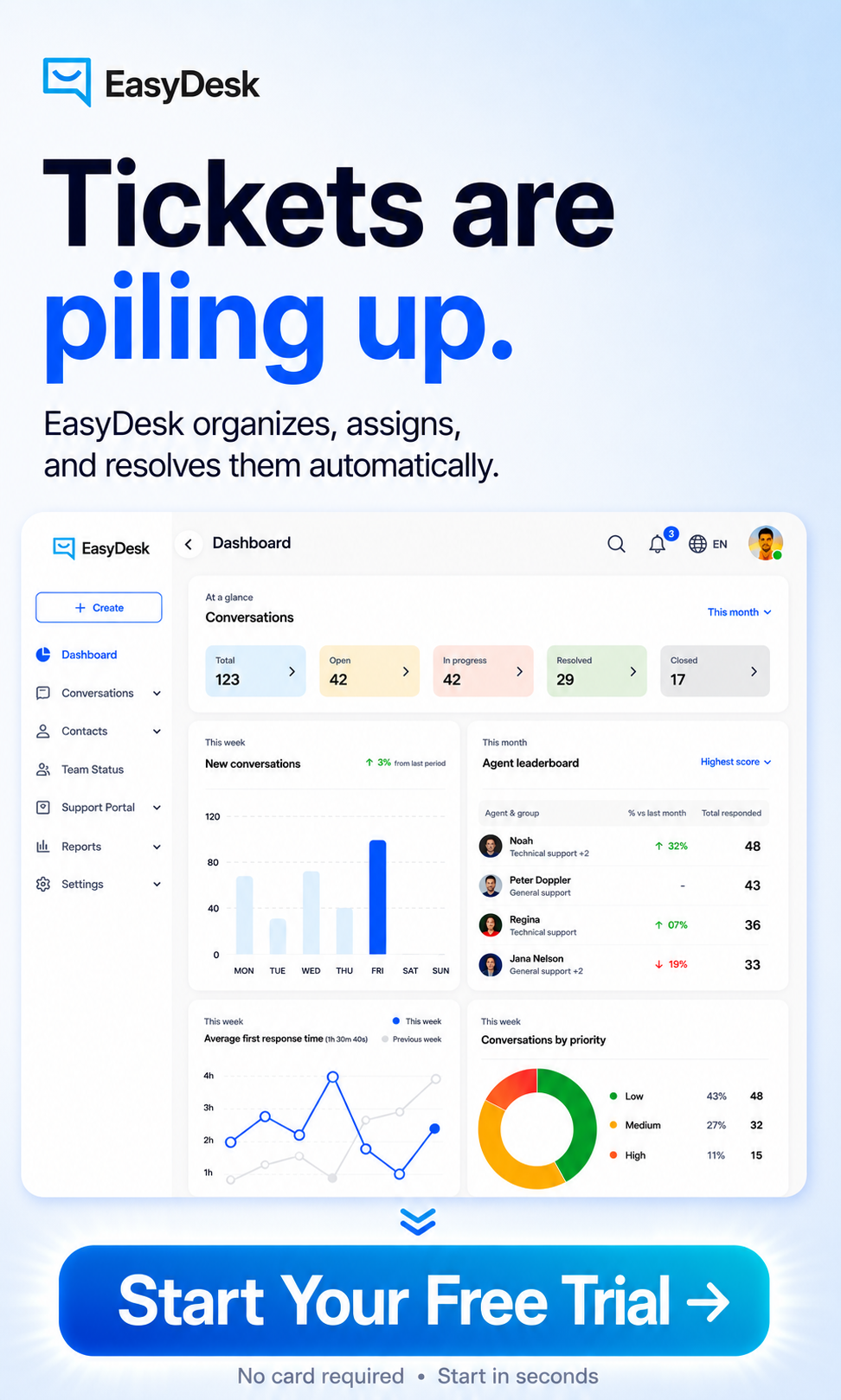
The approach covers every major cost category: direct agents, indirect personnel, software, facilities expense, and shared overhead. EasyDesk helpdesk ticketing software reporting makes this process straightforward by providing ticket counts, time tracking, and exportable data for finance integration.
Defining The Time Period And Ticket Scope
Choose a specific, recent period such as April 2025. Count only tickets resolved (status closed, not pending) during that timeframe to avoid inflating your volume artificially.
Define what counts as a service desk ticket: email, chat, phone, and portal submissions related to support. Exclude marketing inquiries, sales demos, and unrelated contacts. EasyDesk reporting can filter by status, channel, or queue to create a clean dataset for accurate calculations.
Use identical periods for both costs and ticket counts. Mismatched timeframes distort your cost per ticket values and make trend analysis unreliable.
Identifying Direct Support Labor Costs
Direct labor includes salaries, benefits (typically 20 to 30 percent add-on), and payroll taxes for frontline agents and team leads working tickets during the period.
Example calculation: 8 agents at $4,000 monthly salary each equals $32,000. Add 1 team lead at $5,500 for a subtotal of $37,500. Include overtime pay and temporary contractor costs from that month.
Wage rates significantly influence the cost per ticket, as operating a service desk in areas with higher average wages results in a higher cost per ticket compared to locations with lower wage rates. EasyDesk time tracking helps estimate how much of each role’s paid time goes toward ticket-related work.
Including Indirect Personnel And Management
Indirect personnel include QA specialists, workforce schedulers, trainers, and service desk managers who support the function but do not own tickets directly.
Allocate a reasonable percentage of their cost to support operations. For example, if a manager spends 70 percent of their time on support activities, include 70 percent of their $7,000 monthly salary ($4,900) in your cost pool. Adding full QA costs of $3,000 brings the indirect personnel total to approximately $10,000.
The ratio of agents to total service desk headcount is a measure of managerial efficiency, with an average of about 78% of personnel in direct customer-facing roles. Deviations from this can impact cost per ticket. Ignoring too many indirect personnel costs typically leads to underestimating the true help desk cost per ticket by 20 to 40 percent.
Accounting For Software, Desk Cost, And Office Supplies
List common software and operational expenses: EasyDesk licenses ($50 per agent monthly, $400 for 8 agents), telephony systems ($1,000), CRM integrations ($500), and analytics tools.
Desk cost covers the per-seat expense of office space, utilities, furniture, and shared equipment, averaging $60 per seat monthly ($480 for 8 agents). Include telecom headsets, office supplies service costs, and replacement peripherals.
Convert annual contracts to monthly values. If annual software costs $12,000, that adds $1,000 monthly to your cost pool. A typical monthly total for software, desk costs, and office supplies might reach $6,000.
Allocating Shared Overhead To Customer Support
Shared overhead includes HR, finance, legal, and general IT infrastructure that partially serves the support team. These facilities' expense items need proportional allocation.
A common method assigns overhead as a fixed percentage of direct support labor. Using 15 percent of $37,500 direct labor yields $5,625 in allocated overhead. Apply consistent overhead rules so cost per ticket comparisons from quarter to quarter remain meaningful.
EasyDesk analytics can export data to finance tools for more granular overhead allocation when needed.
Applying The Cost Per Ticket Formula
Sum all categories: $37,500 direct labor plus $10,000 indirect personnel plus $6,000 software and desk cost plus $5,625 overhead equals $59,125 total monthly support costs.
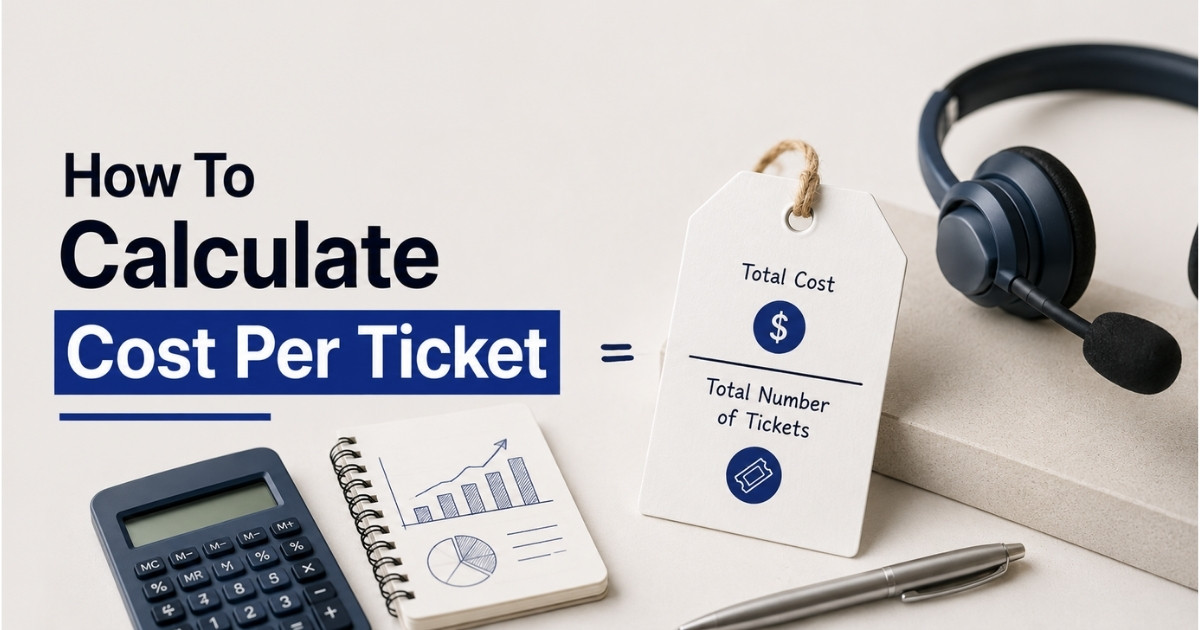
Cost per ticket is calculated by dividing the total operating expense of a service desk by the number of tickets resolved during a specific period. For this example: $59,125 divided by 3,000 resolved tickets equals $19.71 per ticket.
The cost per ticket includes all costs associated with resolving a ticket, such as labor costs and any related expenses. This $19.71 figure falls below the $20 target for many SaaS operations, indicating reasonable operational efficiency.
Separating Cost Per Ticket By Channel And Tier
Splitting the cost per ticket by phone, chat, email, and self-service provides deeper operational visibility. Phone tickets typically average a higher cost per ticket ($25) than chat ($12) because of longer handle times.
Breaking out Tier 1, Tier 2, and Tier 3 IT service desk tickets reveals where complex escalations might mask Tier 1 support efficiency. Tier 1 might average $15 while Tier 3 reaches $55.
EasyDesk can tag tickets by channel and tier automatically, supporting these per-segment calculations without manual effort.
Comparing Monthly Trends And Benchmarks
Compare cost per ticket month over month to identify impacts from staffing changes, new tools, or policy updates. Plot April at $20 versus May at $18 following the new training to see a measurable improvement.
External benchmarks provide context, but internal trends matter most for your service delivery organization. Plot cost per ticket against average customer satisfaction and first contact resolution to see trade-offs clearly.
EasyDesk dashboards display trend cost lines and threshold alerts when cost per ticket drifts outside target ranges, helping teams catch issues early.
Cost Drivers Behind Customer Support Cost Per Ticket
Cost per ticket reflects many underlying drivers beyond salaries or monthly ticket volume. Understanding these drivers helps teams make focused improvements rather than blanket cuts that harm service quality.
Just as ticket prices for events like concerts, sports, and theater are determined by a mix of organizer costs, market demand, and timing strategies, support costs depend on multiple interacting factors. Costs such as venue rental, staff wages, insurance, security, and equipment influence base prices in entertainment, similar to how labor, technology, and facilities shape support expenses.
Ticket Volume And Issue Complexity
Rising volume can either dilute fixed costs (lowering cost per ticket) or overload agents (raising it), depending on capacity. Simple questions like password resets might cost $5 each, while complex multi-system issues reach $40.
Differentiating by as many ticket types as possible helps teams understand how the mix affects overall support costs. EasyDesk categorizes tickets by complexity, revealing that 1,000 simple tickets cost $5,000 while 500 complex ones cost $20,000.
Agent Utilization And Productivity
Agent utilization measures the share of paid time spent actively working on tickets or customer contacts. The optimal range falls between 65 and 75 percent.
Agent utilization and ticket handle time are key drivers of cost per ticket, with higher utilization leading to lower costs and longer handle times resulting in increased costs. Very low utilization (50 percent) inflates help desk cost per ticket, while extremely high utilization can hurt customer satisfaction through rushed interactions.
Optimizing agent utilization by providing the right tools and creating a conducive workspace can improve productivity, which in turn helps to lower the cost per ticket. EasyDesk reports highlight idle time, backlog growth, and average handle time to help fine-tune utilization levels.
Customer Satisfaction And First Contact Resolution
Low customer satisfaction rates can lead to increased ticket volume and handling times, which in turn drives up the cost per ticket. Each repeat contact multiplies your effective cost per resolution.
First contact resolution directly impacts cost per ticket. High FCR (80 percent or above) typically lowers costs by avoiding follow-up work. Training investments that raise cost per ticket short-term often lift CSAT and FCR, improving customer satisfaction and overall value.
Customer Satisfaction and Cost per Ticket are foundational metrics in service and support, as they reflect the balance between cost containment and service quality. EasyDesk correlates these metrics to help teams balance support efficiency with excellent customer service.
Channel Mix And Contact Resolution Paths
Customer choices between phone, chat, email, and self-service options affect both per-ticket cost and resolution speed. A live phone typically costs more per ticket than asynchronous channels handled concurrently.
Multi-channel resolutions (email followed by phone) can triple the effective costs. EasyDesk multi-channel support workflows gently steer low-cost, low-complexity issues toward preferred channels without frustrating customers seeking human intervention.
Technology Stack, Automation, And Self-Service
Knowledge bases, AI-powered chat, and automated workflow software reduce manual effort and lower average cost per ticket. Many platforms use AI algorithms to adjust prices in real-time based on current demand, and similar intelligence now drives support automation.
Automation technologies, including robotic process automation and intelligent ticket routing, can streamline support tasks, reducing the need for human intervention and allowing agents to focus on more complex issues. Modern ticket automation software adds subscription costs to your pool, so investments must show measurable returns.
Self service customer support tools typically cost $0.50 to $2.37 per resolution compared to $15 or more for agent-assisted contacts.
Staffing Stability, Absenteeism, And Turnover
High turnover creates recruitment, onboarding, and training costs that increase cost per ticket across the year. Absenteeism and turnover rates can increase service desk costs, as higher absenteeism necessitates overtime or additional staffing, while turnover incurs recruitment and training expenses.
Stabilizing staffing often reduces cost per ticket even when wages increase moderately. EasyDesk performance insights support coaching and recognition programs that improve retention and ultimately lowering costs over time, especially when combined with structured support ticket management practices.
Indirect Personnel Ratios And Managerial Overhead
Indirect personnel ratio compares non-customer-facing roles to frontline agents in the service delivery organization. Too many indirect roles raise cost per ticket without equivalent value, while too few hurt quality control.
A healthy ratio keeps approximately 78 percent of the total service desk headcount in direct customer-facing roles. EasyDesk data reveals where service desk managers and analysts add value through improved process outcomes.
Cost Per Ticket And Customer Satisfaction Balance
Cost per ticket alone can mislead if it ignores customer satisfaction and high-quality service. EasyDesk’s customer support philosophy means customers track cost per ticket alongside CSAT, NPS, and first contact resolution scores to maintain perspective.
A higher Cost per Ticket can be justified if it correlates with higher customer satisfaction and service levels, while a lower Cost per Ticket may indicate compromised service quality. The goal is the lowest sustainable cost per ticket that still supports brand-level experience standards.
Identifying The Point Of Diminishing Returns
Analyze historical EasyDesk data to find when further cost reductions start damaging CSAT or retention rates. Plot cost per ticket against satisfaction scores over several quarters to identify inflection points.
For example, cutting staffing too far might save money short-term but raise churn by 10 percent. Set threshold ranges for acceptable cost and average customer satisfaction rather than single static targets.
Market demand for popular artists or elite sporting events often sees “inelastic demand,” where high prices do not deter buyers. Similarly, customers often accept higher cost service when quality justifies the expense.
Prioritizing High Value Contacts And Customers
Segment customers by value (enterprise versus small business) to justify different cost per ticket targets. Enterprise accounts generating high lifetime value may warrant more agent time and higher cost per customer interaction.
EasyDesk tags identify high-value accounts requiring deeper service. This approach can raise average cost per ticket slightly while improving customer satisfaction and retention, driving overall profitability.
Aligning Support Goals With Business Outcomes
Cost per ticket targets should connect to broader business goals like renewal rates and expansion revenue. Work with finance and operations teams to agree on acceptable cost ranges at current growth stages.
EasyDesk reporting and SLA management capabilities show executives how investments in support impact revenue and churn. Present narratives alongside data when discussing cost per ticket trade-offs with leadership.
Measuring Contact Resolution Quality, Not Just Speed
Very fast handling times sometimes mask poor root cause analysis, leading to repeat tickets and hidden operating costs. Training and coaching customer service representatives can enhance their effectiveness, leading to quicker resolutions and reduced costs per ticket by empowering agents to handle a wider range of issues on the first contact.
Capture short post-resolution surveys asking if issues were fully resolved. Slightly longer average handle time that lowers follow-up tickets reduces total cost per resolution. Tie agent incentives to contact resolution quality outcomes alongside volume handled.
Designing Service Levels Around Customer Expectations
Set different SLAs for channels like chat and email based on actual customer expectations. Realistic SLAs avoid overstaffing, which raises cost per ticket without noticeably improving customer satisfaction.
Events during peak times, such as school holidays or weekends, often cost more due to demand. Support teams face similar dynamics during product launches or seasonal peaks. Use EasyDesk historical SLA compliance data to fine-tune response and resolution targets appropriately.
Strategies That Lower Cost Per Ticket Without Hurting Quality
This section provides a practical playbook for teams ready to reduce costs sensibly. Examples draw on tactics EasyDesk customers implement, and on capabilities from ticketing software designed for best-in-class customer support, from self-service to workflow automation.
In 2024, the average concert ticket cost approximately $135.92, a 41% jump from 2019. Concert ticket prices are generally higher and rise faster than sports tickets because they are unique, one-time performances. Unlike entertainment pricing, support teams can control costs through smart resource allocation and process improvement.
Expanding Self-Service And Knowledge Resources
Creating a searchable knowledge base and FAQ center deflects repetitive tickets like password resets and account questions. Implementing self-service options, such as FAQs, knowledge bases, and chatbots, can significantly lower ticket volume by allowing customers to resolve their issues without contacting support agents.
Use EasyDesk article analytics to identify gaps where customers still open tickets despite existing content. A well-run help desk that centralizes knowledge and follow-up, like a modern support help desk system, helps teams often see monthly ticket volume drop by 25 percent within six months of expanding self service resources.
Automating Routine Workflows And Routing
EasyDesk automation rules triage tickets by category, priority, and customer type automatically. This kind of workflow automation in customer support reduces manual data entry, misrouting, and wait times that contribute to higher cost per ticket.
Specific workflows like auto-closing dormant tickets after clear follow-up attempts save significant agent time. Comparing manual vs automated ticketing approaches helps you test automation carefully to avoid errors creating more work.
Improving Agent Training And Specialization
Targeted training on common products or systems shortens handle times and raises first contact resolution rates. For small and growing teams, a smart ticketing tool plus cross-training allows more team members to handle complex tickets without escalations.
Training and coaching customer service representatives can enhance their effectiveness, leading to quicker resolutions and reduced costs per ticket. EasyDesk performance reports tailor coaching plans around real knowledge gaps identified through customer service performance data.
Optimizing Workforce Management And Scheduling
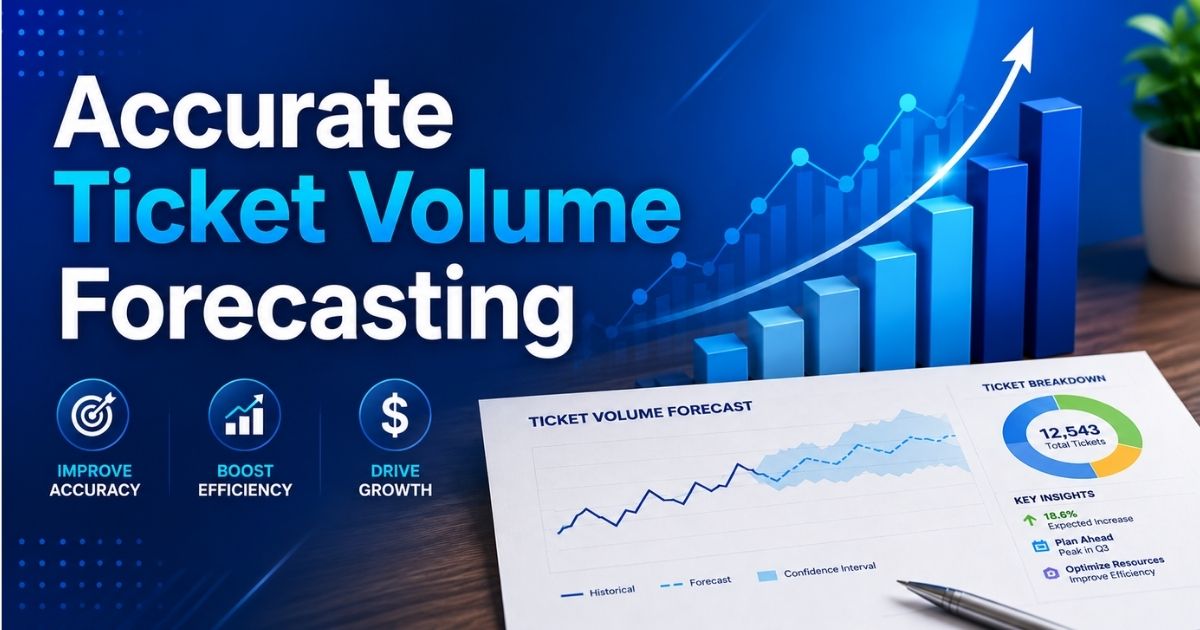
Forecast seasonal peaks and align service desk personnel to expected ticket volume rather than fixed headcount. Use historical EasyDesk data by hour and day, along with structured SLA management, to adjust shift patterns.
Better alignment reduces overtime costs and idle time, both of which affect cost per ticket. Flexible work arrangements help cover extended hours efficiently without excessive labor costs.
Standardizing Processes And Templates
Consistent ticket categories, macros, and response templates speed up work and improve data quality. Implementing the broader benefits of using a ticketing system and documenting clear runbooks for recurring issues helps service and support professionals follow proven steps.
EasyDesk stores and surfaces templates contextually inside the ticket view. Standardization makes it easier to measure changes in average cost breakdown after process updates.
Shaping Channel Strategy And Deflection
Guide low-risk issues to email or chat while reserving phone for complex cases. Dynamic pricing is a major factor driving up costs for both concerts and sports, and similar economics apply to support channels. Investing in ticketing software built for better customer support helps ensure phone, which consumes more resources than concurrent chat sessions, is used for the right types of issues.
EasyDesk built-in widgets on websites promote preferred channels at appropriate moments, while SLA tracking software ensures response commitments stay on track. Shifting volume from phone to chat improves agent concurrency and utilization while maintaining service quality.
Collaborating With Product And Operations Teams
Many high-cost tickets stem from preventable product issues, unclear instructions, or recurring bugs. Use EasyDesk tags and reports to show product teams which defects create the most support workload.
Fixing one usability problem can remove hundreds of tickets per month permanently. Cross-functional improvements lower cost per ticket more effectively than staffing cuts alone. Both concert and sports industries are moving toward premium experiences over volume, and support teams can similarly focus on prevention over volume management.
Final Discussion
Calculating cost per ticket accurately requires including all direct labor costs, indirect personnel, software licensing fees, desk cost, office supplies, and allocated overhead. This more accurately unit cost view reveals true operational expenses rather than surface-level estimates.
Understanding cost drivers helps teams make targeted improvements that reduce costs without harming service quality. The balance between cost containment and customer satisfaction determines long-term success. Low Customer Satisfaction rates increase ticket volume and handling times, creating a negative cycle.
EasyDesk’s secure customer support platform provides the reporting, automation, and self service tools teams need to monitor and improve this essential metric. Service desks worldwide benefit from having all support capabilities in one streamlined platform, and EasyDesk’s feature set spans automated workflows, centralized ticket management, knowledge bases, and multi-channel support.
The goal remains clear: achieve the lowest sustainable cost per ticket that still delivers the excellent customer service your customers expect. Start measuring today to make smarter staffing, tooling, and process decisions for your service desk operations.
Frequently Asked Questions
How Often Should A Support Team Recalculate Cost Per Ticket
Recalculate monthly for most teams, with weekly snapshots during rapid growth or major operational changes. Quarterly reviews may hide short-term issues such as seasonal spikes or staffing gaps. EasyDesk automates recurring reports so finance and operations receive updated figures without manual work, tracking data centers and service desk conducts patterns consistently.
What Costs Are Most Commonly Forgotten In Cost Per Ticket Calculations
Teams commonly overlook indirect personnel like trainers, QA specialists, and workforce planners. Software purchased by other departments but used by support, desk cost, office supplies, and shared IT infrastructure also get missed. Build a checklist and revisit it with finance annually to keep the cost breakdown remains accurate and your own cost calculations complete.
How Should Remote And Hybrid Work Affect Cost Per Ticket
Remote work may reduce physical desk cost significantly but increase spending on home office stipends and collaboration tools. Separate on-site and remote cost structures when they differ, then blend into an overall figure. EasyDesk tracks performance and utilization across locations to inform adjustments to your total cost calculations.
Is There A Single Ideal Target For Cost Per Ticket Across Industries
No universal target exists because sectors face different complexity levels and risk profiles. Retail might target $3 to $6 while SaaS aims for $10 to $20 and IT service desk operations target $10 to $30. Use external benchmarks as reference points, then set internal goals based on historical performance. EasyDesk helps one key performance indicator tracking against custom targets.
How Can Small Teams Use Cost Per Ticket Without Dedicated Analysts
Use a lightweight approach with a simple spreadsheet alongside EasyDesk’s built-in ticket and time reports. Start with direct labor and main software costs, then gradually layer in overhead as data matures. Even approximate figures updated regularly guide smarter staffing, tooling, and process decisions for support professionals worldwide seeking to reduce costs while maintaining service excellence.