Customer expectations keep rising. People want fast replies, accurate answers, and smooth support across every channel. Long wait times and repetitive tickets frustrate both customers and support teams. That is why more businesses now rely on AI customer support tools to handle everyday service tasks.
AI no longer supports only large enterprises. Small and growing businesses also use it to automate replies, route tickets, assist agents, and improve customer experience. Smart automation helps teams save time without losing the human touch.
This guide covers the most effective AI customer support use cases, real business examples, key benefits, common challenges, and future trends. You will also learn how AI changes modern customer service operations step by step.
What Is AI Customer Support
AI customer service refers to the use of AI tools, machine learning, and natural language processing to manage customer interactions and improve customer service operations. Businesses use customer service AI to answer customer inquiries, automate routine tasks, and deliver immediate answers across multiple channels. AI customer support use cases now include customer service chatbots, intelligent routing, self-service portals, and virtual customer assistants. Advanced natural language processing and natural language understanding also help AI systems understand customer sentiment, customer behavior, and customer needs.
AI in customer service helps support teams reduce operational costs and improve service quality without replacing human agents. Support agents can focus on more complex tasks and complex issues while AI-assist tools handle repetitive customer questions and support tickets. Customer service automation also improves response times, customer engagement, operational efficiency, and customer satisfaction through personalized support and proactive support.
Top AI Customer Support Use Cases Businesses Already Use
Businesses now use AI customer service tools far beyond basic chatbots. Modern AI systems support customer interactions, automate support operations, and improve service quality across multiple channels. Recent reports show over 80% of customer service teams already use or plan to use AI-powered support tools in daily operations.
AI Chatbots For Instant Support
AI customer service chatbots now handle thousands of customer queries every day. They provide immediate answers, resolve routine tasks, and reduce pressure on support teams. Modern bots use natural language processing and machine learning to understand customer input more accurately.
Many businesses now rely on automated customer service to improve response times and customer satisfaction. Reports show 70% of customer interactions can now be handled without human agents in many industries. Fast replies also improve customer engagement and build stronger customer relationships.
Smart Ticket Routing
AI tools now route support tickets based on urgency, customer sentiment, and issue type. Intelligent routing and automated ticket assignment help customer service teams send complex issues to the right support agents without delays. That reduces wait times and improves operational efficiency.
Customer service operations become smoother when AI-assist tools sort tickets automatically. Human customer service agents spend less time on manual sorting and more time solving customer issues. Some businesses also use predictive analytics to anticipate customer needs before tickets escalate. Faster routing often leads to increased customer satisfaction and more consistent service.
AI Agent Assist Tools
AI assist tools support agents during live customer service interactions. They suggest replies, summarize customer history, and recommend solutions in real time. That helps support agents handle more complex tasks with less stress.
Customer service AI also improves agent productivity by reducing repetitive work. Salesforce reported its AI systems handled customer inquiries with 93% accuracy in 2025. Human agents still play a major role, especially during sensitive service interactions. AI simply helps them respond faster and with better context.
Self-Service Portals
Many businesses now use self-service portals powered by customer service automation. Customers can check order updates, reset passwords, or find answers without contacting support teams by relying on self-service customer support systems. That improves cost efficiency and reduces operational costs.
Self-service also supports a diverse customer base that expects fast support at any hour. Studies show 69% of consumers prefer AI-powered self-service for quick issue resolution. Better self-service experiences improve customer loyalty and reduce support workload across customer service functions.
Customer Sentiment Analysis
AI in customer service can now understand customer sentiment during chats, emails, and calls. Advanced natural language processing helps businesses detect frustration, urgency, or satisfaction from customer interactions. Support teams can respond more carefully when emotions run high.
Customer feedback and customer behavior data also help businesses improve customer service strategies over time. AI systems track service interactions and identify patterns that affect customer experience. Many companies use workflow automation in customer support to optimize support workflows and improve service quality through continuous improvement.
How AI Chatbots Handle Customer Queries Around The Clock
AI customer service chatbots now handle customer queries at any hour without breaks. Businesses use customer service AI to provide faster support, reduce response times, and improve customer satisfaction. Around-the-clock support also helps companies manage customer interactions across global markets more efficiently.
Instant Replies For Common Questions
AI chatbots answer customer questions within seconds. They handle routine tasks like order tracking, password resets, refund policies, and account updates. Fast responses improve customer experience and reduce frustration during busy hours.
Modern AI systems use natural language processing and natural language understanding to understand customer input more accurately. Reports show nearly 62% of consumers prefer chatbots for simple customer service interactions because of faster replies. Immediate answers also reduce pressure on support teams and improve operational efficiency.
Support Across Multiple Channels
Customer service chatbots now work across websites, mobile apps, email, and social media. Businesses can manage customer interactions from one system instead of handling separate support operations manually. That creates more consistent service across every platform.
AI customer service tools also help support teams maintain customer relationships across a diverse customer base. Customers often switch channels during service interactions. Multi-channel customer support tools keep track of customer history and customer behavior to provide personalized support without repeating information. Better channel support often leads to increased customer satisfaction and stronger customer loyalty.
Smart Escalation To Human Agents
AI in customer service does not replace human agents completely. Customer service AI identifies complex issues and transfers them to the right support agents when needed. Intelligent routing ensures faster resolution for urgent customer inquiries.
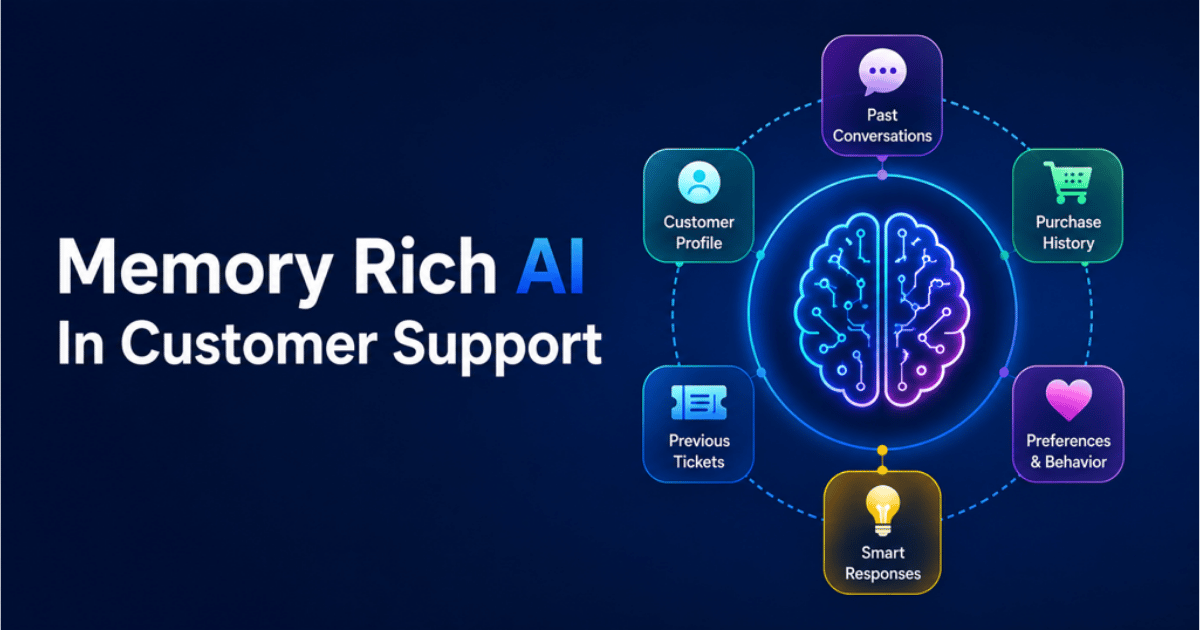
Human customer service agents receive customer data, past conversations, and suggested replies before joining the chat. That improves agent productivity and reduces handling time. Gartner reported businesses using AI-assist tools reduced average service time by nearly 30% in 2025. Faster escalation also helps improve service quality and customer engagement during difficult situations.
Personalized Customer Conversations
Modern AI chatbots analyze customer history, customer sentiment, and customer behavior to personalize conversations. Machine learning helps AI systems understand customer needs and recommend relevant solutions. Customers receive more useful and accurate support instead of generic replies.
Personalized support improves customer satisfaction and strengthens long-term customer relationships. AI agents can also anticipate customer requests based on previous service interactions. Businesses now use predictive analytics and customer feedback to optimize support workflows and improve customer service strategies over time.
Lower Costs And Better Efficiency
Automated customer service helps businesses reduce operational costs while handling more support tickets. AI customer support use cases now cover customer inquiries that once required large customer service teams. Smaller teams can now support larger audiences with better cost efficiency.
IBM reported AI-powered customer service automation can reduce support costs by up to 30%. AI tools also improve operational efficiency by handling repetitive customer queries automatically. Human agents can then focus on more complex tasks that require empathy, judgment, and deeper problem-solving.
AI Ticket Routing And Smart Case Prioritization Explained
AI-powered ticket routing helps customer service teams handle support tickets faster and with fewer mistakes. Modern customer service AI can analyze customer inquiries, urgency, and customer sentiment in seconds. Smart prioritization also helps support operations improve response times and service quality.
Automatic Ticket Classification
AI systems can classify customer queries based on topic, urgency, and issue type. Automated ticket management software removes the need for manual sorting by support agents. That saves time and improves operational efficiency across customer service operations.
Natural language processing and machine learning help AI tools understand customer input more accurately. Businesses use advanced natural language processing to detect billing issues, technical problems, or urgent customer requests automatically. Zendesk reported AI-driven ticket classification can reduce manual workload by nearly 35% in support teams. Faster classification also helps improve customer satisfaction and customer engagement.
Priority Detection For Urgent Issues
Customer service AI can identify high-priority customer issues within seconds. AI tools analyze customer sentiment, keywords, and customer history to determine urgency levels. Angry customers or business-critical problems move to the front of the queue automatically.
Predictive analytics also help support teams anticipate customer needs before problems escalate. Human agents can focus on more complex tasks while AI systems manage routine ticket prioritization. Faster case handling improves customer experience and reduces delays during customer service interactions. Better prioritization also leads to increased customer satisfaction and stronger customer loyalty.
Intelligent Agent Assignment
Smart routing systems send support tickets to the right human agents based on skills, availability, and expertise. Modern ticket automation software matches customer issues with agents who can solve them faster. That improves service interactions and shortens resolution times.
Customer service teams no longer waste time transferring tickets between departments. AI assist tools also provide customer data and previous customer interactions before agents respond. According to Salesforce, businesses using intelligent routing improved first-contact resolution rates by over 25% in 2025. Better routing helps optimize support workflows and improve service quality across customer service functions.
Balanced Workload Across Teams
AI in customer service also helps balance workloads between support teams. Some agents receive fewer tickets while others handle high volumes. Customer service automation distributes work more evenly to avoid delays and burnout.
Balanced workloads improve agent productivity and support consistent service during busy periods. AI agents monitor queue sizes, response times, and support operations in real time. Businesses can maintain better customer experience without increasing operational costs. More balanced support operations also help customer service teams deliver personalized support more consistently.
Real Time Performance Insights
Modern AI tools provide live insights into customer service operations. Managers can track response times, unresolved support tickets, and customer feedback from one dashboard. Real-time visibility helps businesses improve customer service strategies faster.
AI systems also analyze customer behavior and customer sentiment trends across service interactions. Support teams can identify weak areas and improve customer engagement through continuous improvement. Real-world examples show companies using AI-powered analytics improve operational efficiency by up to 40%. Better insights help businesses improve customer satisfaction and support long-term business growth.
Ways AI Improves Agent Productivity And Support Efficiency
AI customer service tools now help support teams work faster without lowering service quality. Businesses use customer service AI to automate routine tasks, improve response times, and reduce pressure on human agents. Better efficiency also helps companies improve customer satisfaction while controlling operational costs.
Faster Access To Customer Data
AI-assist tools give support agents quick access to customer history, customer behavior, and past customer interactions. Agents no longer need to search through multiple systems during live conversations. Faster access improves customer experience and reduces handling time.
Customer service operations become smoother when AI systems organize customer data automatically. Automated workflow software for smarter support helps teams understand customer needs faster and provide personalized support with better accuracy. According to HubSpot, nearly 79% of support agents say AI tools help them spend less time searching for information in 2025. Faster access also improves customer engagement and service quality.
Automated Reply Suggestions
Customer service AI can suggest replies during customer service interactions. AI agents analyze customer queries and recommend accurate responses in real time. Support agents can respond faster while maintaining consistent service across channels.
Natural language processing and machine learning help AI tools understand customer sentiment and customer input more effectively. Human customer service agents still review and personalize replies before sending them. Businesses using AI-powered response suggestions report higher agent productivity and shorter response times. Faster replies also help improve customer satisfaction and strengthen customer relationships.
Reduced Manual Work
AI customer support use cases often focus on reducing repetitive work. Customer service automation handles routine tasks like ticket tagging, status updates, and follow-up reminders automatically. Support teams can focus on more complex tasks that require human judgment.
Operational efficiency improves when AI systems manage repetitive support operations behind the scenes. Businesses also reduce operational costs because fewer manual processes slow down customer service functions. Comparisons of manual vs automated ticketing show AI automation can save customer service teams thousands of work hours each year. Lower workload pressure helps support agents maintain better performance and customer engagement.
Better Support During Peak Hours
Customer service teams often struggle during high-ticket periods. AI tools help businesses manage customer inquiries without overwhelming support agents. Structured ticket creation and management ensures automated customer service systems can handle simple customer questions while human agents focus on complex issues.
AI in customer service also supports intelligent routing during busy hours. Customer requests move to the right departments faster, which improves response times and service interactions. Businesses can maintain consistent service even during sudden spikes in support tickets. Better traffic management also helps improve service quality and customer loyalty across a diverse customer base.
Real Time Coaching For Agents
Modern AI systems now provide live recommendations during customer interactions. AI assist tools guide support agents with troubleshooting steps, policy suggestions, and best-response options. That improves confidence and helps newer agents handle customer issues more effectively.
Predictive analytics and advanced natural language processing also help businesses understand customer sentiment during conversations. Managers can identify weak areas and improve customer service strategies through continuous improvement. Salesforce reported AI-powered agent assist tools improved average support efficiency by nearly 30% in 2025. Better coaching supports business growth and helps optimize support workflows over time.
Real Examples Of AI Customer Support Use Cases Across Industries
AI customer support use cases now appear across almost every industry. Businesses use customer service AI to improve customer interactions, reduce operational costs, and deliver faster support. Modern AI systems also help support teams manage large volumes of customer inquiries without sacrificing service quality.
E-commerce Support Automation
E-commerce brands use AI customer service tools to handle order updates, refund requests, and customer questions around the clock. Customer service chatbots provide immediate answers and reduce pressure on support teams during sales periods.
AI in customer service also helps e-commerce companies personalize support based on customer history and customer behavior. Machine learning systems recommend products and detect customer sentiment during conversations. Shopify reported AI-powered support automation helped merchants reduce first-response times by over 40% in 2025. Faster support improves customer satisfaction and strengthens customer loyalty.
Banking And Financial Services
Banks now use customer service AI to manage customer interactions securely and quickly. AI agents assist customers with balance checks, transaction alerts, and fraud-related customer inquiries. Automated customer service also improves response times during peak traffic hours.
Natural language processing and advanced natural language processing help AI systems understand customer input more accurately. Human agents still handle complex issues and sensitive service interactions. Financial companies also use predictive analytics to anticipate customer needs and improve customer engagement. Better support operations help financial brands improve service quality while maintaining cost efficiency.
Healthcare Support Systems
Healthcare providers use AI tools to schedule appointments, answer patient questions, and manage support tickets faster. Virtual customer assistants also help patients access medical information without long wait times. Faster support improves customer experience and operational efficiency.
Customer service automation supports healthcare staff by reducing repetitive routine tasks. AI-assist tools can also route urgent customer requests to the right departments through intelligent routing. Reports show healthcare organizations using AI-powered support systems reduced administrative workload by nearly 30% in 2025. Better workflows help support teams focus more on patient care and personalized support.
Travel And Hospitality Services
Travel companies use AI customer service to manage booking changes, cancellations, and customer feedback across multiple channels. Live chat support for real-time conversations helps customers receive immediate answers during flight delays or hotel issues. That improves customer satisfaction during stressful situations.
Customer service operations also become smoother when AI systems track customer history and customer preferences. Businesses can provide proactive support and personalized recommendations based on previous service interactions. Hilton and other global hotel brands now use AI tools to improve customer engagement and optimize support workflows. Better service strategies often lead to increased customer satisfaction and repeat bookings.
Telecom Customer Support
Telecom companies receive massive volumes of customer queries every day. AI customer support use cases help support agents manage billing problems, service outages, and technical support requests more efficiently. Automated customer service also reduces long waiting times.
AI systems use customer sentiment analysis to identify frustrated customers before issues escalate. Support teams can then prioritize urgent customer issues faster. According to Juniper Research, telecom AI chatbots are expected to save businesses more than $11 billion annually by 2026. Lower operational costs and faster service interactions help telecom providers maintain consistent service across a diverse customer base.
Best Practices For AI Customer Support Adoption
AI customer service delivers strong results when businesses follow the right strategy from the start. Customer service teams need proper planning, clear goals, and continuous improvement to make customer service AI effective. Smart adoption also helps businesses improve customer satisfaction and operational efficiency faster.
Start With Clear Support Goals
Businesses should define clear customer service goals before implementing AI tools. Some companies want faster response times, while others focus on reducing operational costs or improving customer engagement. Clear targets help support teams measure success more accurately.
Customer service operations become easier to optimize when businesses track specific metrics like support tickets, customer satisfaction, and service quality. AI customer support use cases work best when companies solve real customer issues instead of chasing trends. Gartner reported businesses with defined AI strategies achieve higher operational efficiency than companies without structured plans.
Use AI For Repetitive Tasks First
Customer service automation works best when businesses start with routine tasks. AI systems can handle password resets, order tracking, appointment scheduling, and simple customer inquiries without human agents, especially when built on the benefits of using a ticketing system. That reduces workload across support operations quickly.
Support agents can then focus on more complex tasks that require empathy and decision-making. AI assist tools also improve agent productivity by reducing repetitive manual work. Businesses that automate common customer queries often see faster response times and improved customer experience within the first few months of adoption.
Keep Human Agents In The Loop
AI in customer service should support human agents instead of replacing them completely. Modern customer service management systems ensure customer service AI handles repetitive customer interactions well, but complex issues still require human customer service agents. Customers often expect empathy during sensitive service interactions.
Support teams should create smooth escalation paths between AI agents and live support agents. The #1 ticketing software built for better customer support uses intelligent routing to help businesses transfer difficult customer requests faster without frustrating customers. According to Salesforce, 75% of consumers still prefer human support for complex issues in 2025. Balanced support strategies help improve customer satisfaction and customer loyalty over time.
Train AI With Quality Customer Data
AI systems perform better when businesses use accurate customer data and customer history. Poor data quality can lead to weak responses and inconsistent service. Customer service teams should regularly update knowledge bases and support workflows.
Natural language processing and machine learning models improve over time through better customer input and customer feedback. Businesses should also monitor customer sentiment and customer behavior patterns to improve customer service functions continuously. Strong data management helps AI customer service tools provide more personalized support and improve service quality across customer interactions.
Monitor Performance And Improve Regularly
Customer service AI needs continuous improvement to stay effective. Businesses should track response times, support tickets, customer feedback, and customer engagement regularly using the #1 ticketing software system. Real-time analytics help support teams identify weak areas before they affect customer experience.
Predictive analytics and advanced natural language processing also help businesses anticipate customer needs more accurately over time. Companies that review AI performance regularly often achieve better cost efficiency and increased customer satisfaction. McKinsey reported businesses with ongoing AI optimization improve productivity by up to 40% compared to static systems.
Future Trends Shaping AI Customer Support Use Cases And Automation
AI customer support use cases continue to evolve as businesses demand faster, smarter, and more personalized customer service operations. Modern AI systems now go beyond basic automation. Future customer service AI trends will focus more on customer experience, predictive support, and smarter human-agent collaboration.
Hyper Personalized Customer Support
AI customer service tools now analyze customer behavior, customer history, and customer sentiment more deeply than before. Businesses use machine learning and predictive analytics to deliver personalized support during every customer interaction. Customers increasingly expect support tailored to their specific needs.
Customer service AI can recommend products, predict customer issues, and adjust responses based on previous service interactions. AI systems also help support teams understand customer input faster through advanced natural language processing. Accenture reported 91% of consumers prefer brands that provide relevant and personalized experiences. Better personalization helps improve customer satisfaction and customer loyalty.
Voice AI And Conversational Support
Voice-based AI agents are becoming more common across customer service operations. Businesses now use AI tools to handle customer inquiries through phone support with natural conversations instead of robotic menus. Natural language understanding improves the quality of voice service interactions.
Customer service chatbots also continue evolving into more human-like virtual customer assistants. Customers can explain problems naturally without following strict commands. AI in customer service helps reduce response times and improve customer engagement through smoother conversations. Gartner predicts conversational AI will handle most customer service functions for large businesses within the next few years.
Predictive Customer Service
Future customer service strategies will rely heavily on proactive support instead of reactive support. AI systems can anticipate customer needs before customers submit support tickets. Predictive analytics already help businesses detect service risks, payment issues, or product problems early.
Support teams can contact customers first and resolve customer issues before frustration grows. That improves customer relationships and creates more consistent service experiences. Customer service automation also helps businesses reduce operational costs tied to repeated customer requests. Proactive support often leads to increased customer satisfaction and stronger business growth over time.
Smarter AI Assist Tools For Agents
AI-assist tools will continue improving agent productivity across support operations. Future AI systems will provide real-time coaching, automated summaries, and suggested actions during customer service interactions. Human agents will receive better guidance for more complex tasks.
Support agents will also spend less time handling repetitive routine tasks. Customer service teams can then focus more on empathy, problem-solving, and high-value customer interactions. Salesforce reported generative AI tools could save support teams nearly three hours of work daily by 2026. Better support workflows help businesses improve service quality and operational efficiency simultaneously.
Stronger AI And Human Collaboration
Human customer service agents will remain essential even as customer service AI grows more advanced. Businesses now focus on balanced customer service strategies where AI handles automation while human agents manage sensitive or complex issues. Hybrid support models already show strong results across many industries.
AI customer support use cases will continue supporting support teams instead of replacing them fully. Intelligent routing, customer sentiment analysis, and automated customer service will improve speed and cost efficiency. Human oversight will still matter for trust, emotional understanding, and customer engagement. Strong collaboration between AI and humans will shape the future of customer experience.
How EasyDesk Simplifies AI Customer Support And Automation
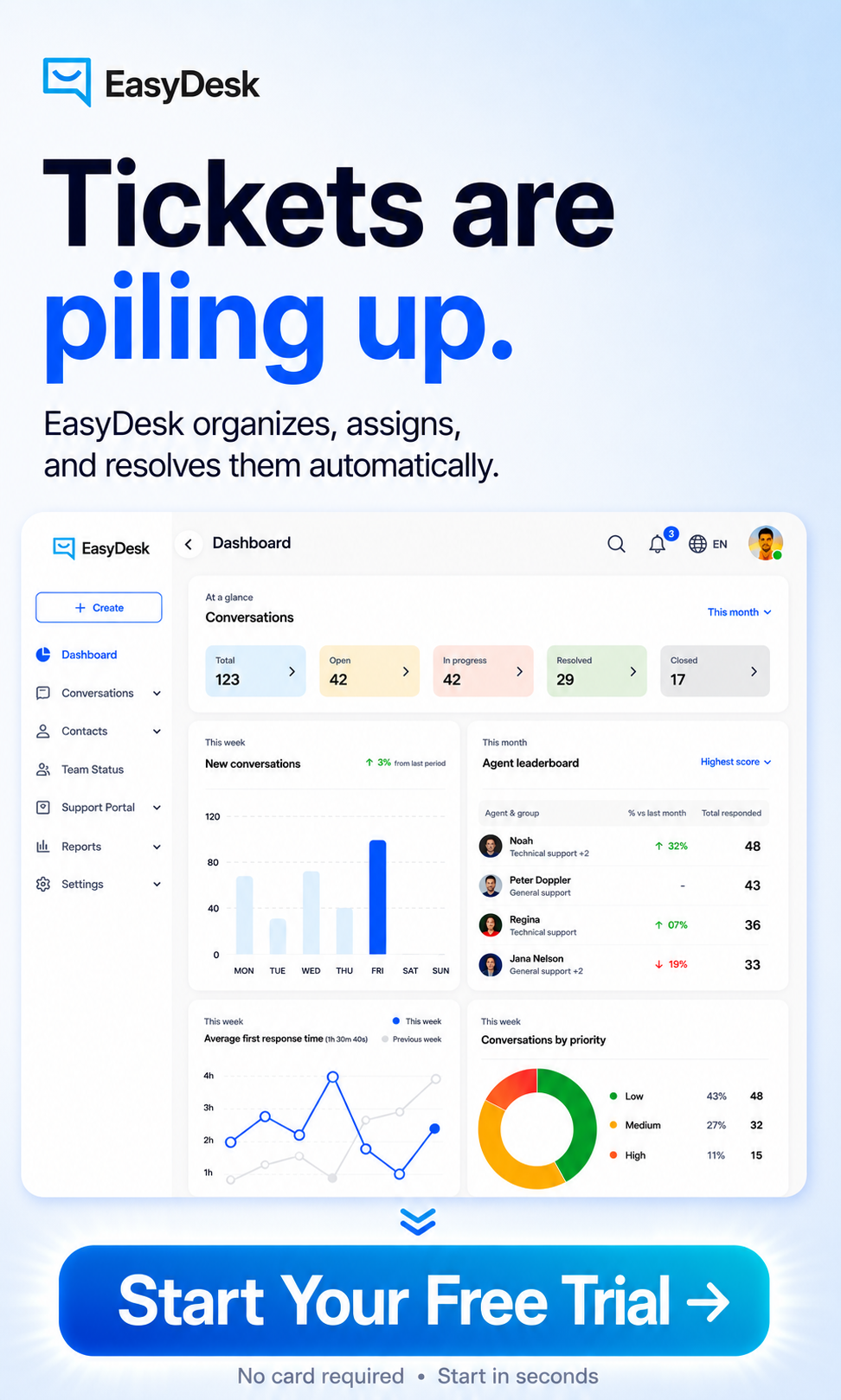
EasyDesk helps businesses simplify customer service operations with smart automation, organized ticket management, and faster customer interactions. The cloud-based helpdesk ticketing software centralizes support tickets, customer inquiries, and customer data into one workspace. That helps support teams improve response times, service quality, and overall customer experience.
EasyDesk also supports customer service automation through automated workflows, intelligent routing, SLA tracking, and multi-channel support. Its smarter, secure customer support features help customer service teams manage routine tasks, optimize support workflows, and reduce operational costs without losing the human touch. Human agents can focus on more complex tasks while AI-assist tools handle repetitive customer requests and support operations more efficiently.
Customer service AI inside EasyDesk also improves customer satisfaction with faster resolutions, personalized support, and better ticket visibility. Businesses can manage customer interactions across email, chat, and other channels while maintaining consistent service and stronger customer relationships by using a secure, efficient customer support platform.
FAQs
Can AI Customer Service Work Without Human Agents?
No, AI customer service still needs human agents for complex issues and emotional customer interactions. AI systems handle routine tasks and customer queries well, but human customer service agents provide empathy, judgment, and personalized support when situations become sensitive.
Does AI Customer Support Improve Customer Satisfaction?
Yes, customer service AI can improve customer satisfaction through faster response times, immediate answers, and better service quality. AI tools also help support teams deliver consistent service and personalized support across multiple customer service interactions.
Can Small Businesses Use AI Customer Support Tools?
Yes, small businesses can use AI customer service tools to automate customer inquiries, manage support tickets, and reduce operational costs. Modern AI tools now offer affordable customer service automation features for growing support teams and startups.
How Does AI Understand Customer Sentiment?
AI systems use natural language processing and machine learning to analyze customer input, tone, and language patterns. Customer sentiment analysis helps support teams identify frustrated customers, prioritize urgent customer issues, and improve customer engagement across service interactions.
What Industries Benefit Most From AI Customer Support?
Industries like e-commerce, banking, healthcare, telecom, and travel benefit heavily from AI customer support use cases. Businesses in these sectors often handle large volumes of customer requests, routine tasks, and support operations that require fast and scalable customer service automation.