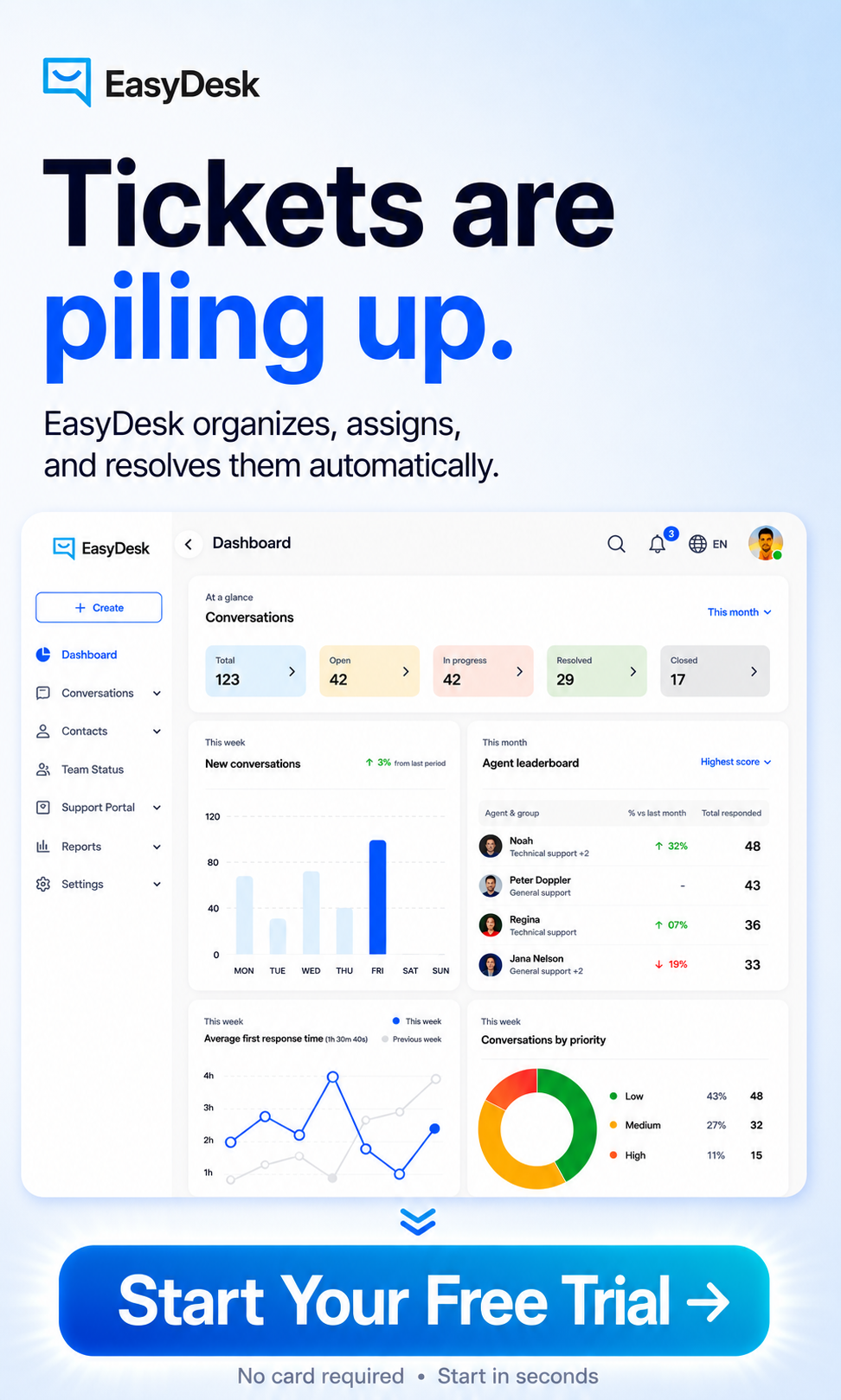
Customer support teams often struggle when ticket requests start piling up faster than agents can respond. Long wait times, missed messages, and frustrated customers quickly become daily problems. High ticket volume does not just slow support operations. It also affects customer trust, team morale, and business growth.
Many companies assume more agents will solve the problem. In reality, poor workflows, repetitive issues, and lack of automation usually create the biggest pressure. Businesses that understand the real causes behind high ticket volume can reduce support load, improve response times, and deliver a better customer experience without exhausting their teams.
What High Ticket Volume Means In Customer Support
High ticket volume refers to a large number of support tickets created within a given period. Many businesses face this problem when customer inquiries increase across digital channels like chat, phone, email, and website forms. A growing customer base, product launches, or repetitive inquiries often raise ticket volume quickly. When customers expect fast answers and quality service, support operations become harder to manage.
A support team dealing with high volume must handle both common questions and complex issues at the same time. Without the right support software, knowledge base, and self-service options, agents spend more time answering unnecessary tickets. A robust knowledge base and FAQ page help customers find answers without live support. That helps reduce ticket volume, improve customer experience, allocate resources better, and let agents focus on high-value conversations that increase revenue and customer satisfaction scores.
Common Causes Behind High Ticket Volume Growth
High ticket volume rarely happens because of one problem alone. Most support teams deal with several issues at the same time. Poor self-service, product bugs, slow support operations, and rapid business growth often push ticket volume higher and increase pressure on agents.
Poor Self-Service Access
Many customers prefer self-service before they contact live support. Recent reports show nearly 70% of customers first search a help center or FAQ page before creating support tickets. When they cannot find answers, ticket volume rises fast.
A weak knowledge base creates unnecessary tickets and repetitive inquiries. Customers expect quick solutions without waiting for an agent. A robust knowledge base with updated answers, guides, and search tools helps reduce ticket volume. Better self-service options also save agent time and improve customer satisfaction scores.
Product Bugs And Technical Issues
Product issues remain one of the biggest causes of high ticket volume. A small bug can create thousands of support requests within a week. SaaS businesses often see ticket spikes after software updates or product launches.
Support teams must identify patterns early through ticket data and issue type reports. Fast action prevents tickets from spreading across the customer base. Companies with strong quality checks and monitoring systems usually face lower support costs. Better product performance also protects customer experience and revenue.
Growth Across Digital Channels
Modern customers contact support through chat, email, phone, social media, and websites. More digital channels create more customer inquiries every day. Research shows companies now manage customer requests across at least 6 support channels on average.
Many businesses fail to allocate resources properly when support volume grows. Agents switch between tools and lose focus on complex issues. Support software with automation and shared access helps teams manage high volume more efficiently. Centralized systems, especially modern ticketing systems for organized customer support, also help identify duplicate tickets and reduce delays.
Lack Of Team Capacity
Many support teams struggle because staffing needs do not match ticket volume. More customers and sales naturally increase the total number of support requests. Yet some companies delay hiring or rely on too few agents.
Limited team capacity hurts customer satisfaction quickly. Customers expect faster replies, especially for premium service issues. Long wait times also lower customer satisfaction scores and increase pressure on the support team. Extra agents, better workload management, and strong ticket prioritization practices help businesses manage volume without hurting service quality.
Repeated Customer Questions
Common questions create a large share of support tickets. Customers often contact support for password resets, billing details, account access, or simple setup help. Gartner reports that repetitive inquiries make up a major portion of customer service volume.
Clear answers inside a help center can prevent tickets before they reach agents. Companies that create step-by-step guides and expert guidance reduce live support pressure significantly. Better self-service also lets agents focus on high-value conversations instead of repetitive support requests.
How High Ticket Volume Impacts Customer Experience And Team Productivity
High ticket volume affects more than response time. It creates pressure across the entire support operation. Customers face delays, while agents handle constant workloads and repetitive support requests. Over time, service quality drops, customer trust weakens, and team productivity suffers.
Longer Response Times
High ticket volume often leads to slower first response and resolution times. Zendesk reports that over 60% of customers expect a reply within one hour. Many support teams fail to meet that expectation during high-volume periods.
Long wait times frustrate customers quickly. Some leave before agents even respond. Delayed support also increases follow-up tickets and repeated customer inquiries. Better ticket routing, automation, and self-service tools help reduce pressure on support operations and improve customer satisfaction.
Lower Customer Satisfaction
Customer satisfaction scores usually drop when support requests pile up. Customers expect fast answers, clear communication, and smooth service across every channel. Poor support experiences damage trust and loyalty very quickly.
Research from HubSpot shows that 93% of customers may return after excellent customer service. The opposite also happens when service quality falls. Missed replies, unresolved issues, and inconsistent communication create negative customer experience. Strong support software and a well-trained support team help businesses protect customer satisfaction during high ticket volume periods.
Agent Burnout And Stress
Heavy ticket volume creates serious pressure on support agents. Many teams handle hundreds of customer inquiries every day without enough staffing support. Constant workload and repetitive issues often reduce focus and motivation.
Burnout also affects service quality. Agents under pressure may rush conversations or miss important details. Gallup reports that burned-out employees are far more likely to leave their jobs. High turnover increases hiring costs and creates more staffing gaps. Better workload balance and automation tools help support teams manage volume more efficiently.
Reduced Productivity Across Teams
High volume support requests do not only affect customer service departments. Product, sales, and technical teams often get involved when ticket escalation rises. Internal productivity slows when multiple departments spend time handling unresolved issues.
Support agents also lose time switching between systems and channels. Poor workflows create duplicate tickets and manual tasks. Companies that use customer support software to improve response time by 3X and centralized data systems usually improve team productivity faster. Better organization helps agents focus on complex issues instead of repetitive administrative work.
Revenue And Retention Risks
Poor customer support directly affects business revenue. Customers who face delayed service or unresolved issues may cancel subscriptions or stop future purchases. Research from PwC shows many customers leave brands after just one bad experience.
High ticket volume also affects upselling and premium service opportunities. Agents spend more time managing backlog instead of having high-value conversations. Businesses that reduce ticket volume often improve customer retention and increase revenue over time. Faster support operations also strengthen brand reputation in competitive markets.
Key Metrics And KPIs To Track High Ticket Volume Performance
Support teams cannot improve high ticket volume management without accurate data. The right KPIs help businesses track service quality, agent workload, and customer experience. Strong reporting also helps identify patterns, reduce delays, and make smarter staffing and support decisions.
First Response Time
First response time measures how quickly agents reply after customers create support tickets. Fast replies matter because customers expect immediate acknowledgment, even when complex issues take longer to solve. Recent surveys show nearly 70% of customers judge service quality based on response speed.
Slow response times often signal overloaded support operations or poor ticket routing. High ticket volume usually increases waiting periods across chat, phone, and email channels. Support software with automation and priority rules helps teams reduce delays. Faster replies also improve customer satisfaction scores and trust.
Ticket Resolution Time
Resolution time tracks how long support teams take to fully solve customer issues. This KPI gives a clearer picture of support efficiency than response time alone. A quick reply means little if customers wait days for answers.
Long resolution times usually point to workflow problems, staffing gaps, or repetitive support requests. Gartner reports that customers value issue resolution more than speed alone. Better internal systems, knowledge base access, and proven strategies to cut average resolution time help agents close tickets faster. Lower resolution time also reduces support costs and improves customer experience.
Ticket Backlog Size
Ticket backlog measures the number of unresolved support requests waiting in the queue. Large backlogs create pressure across the entire support team. Customers often submit duplicate tickets when they do not receive quick updates.
A growing backlog also affects team productivity and service quality. Businesses should monitor ticket volume trends daily or weekly to identify problems early. Proper resource allocation and automation tools help manage high volume periods more effectively. Lower backlog numbers usually mean healthier support operations and better customer satisfaction.
Customer Satisfaction Scores
Customer satisfaction scores, often called CSAT, show how customers feel after receiving support. Many companies collect ratings through short surveys after ticket resolution. Recent industry reports place average customer service CSAT scores between 75% and 85%.
Low scores usually reflect delayed responses, poor communication, or unresolved issues. High ticket volume often pushes satisfaction downward when agents rush conversations. Strong training, faster support systems, and better self-service options improve service quality significantly. Businesses that track customer satisfaction consistently can identify weak areas before larger problems appear.
Ticket Volume By Issue Type
Issue type reporting helps support teams understand why customers contact them most often. Businesses can group tickets into categories like billing, account access, product bugs, or setup problems. This data helps identify repetitive inquiries and prevent unnecessary tickets.
Pattern analysis also supports smarter business decisions. For example, repeated product complaints may reveal quality issues or confusing features. Companies that track issue type data often improve product performance faster. Better reporting also helps teams allocate resources properly and reduce future support volume.
Proven Strategies To Reduce High Ticket Volume Without Hiring More Agents
Many businesses assume more agents are the only solution for high ticket volume. In reality, smarter workflows and better support systems often reduce ticket volume faster. Strong automation, self-service, and proactive support help teams handle more requests without increasing staffing costs.
Build A Strong Self-Service Center
Most customers prefer finding answers on their own before contacting support. Microsoft reports that nearly 90% of customers expect companies to offer a self-service help center. A weak knowledge base often creates unnecessary support tickets and repetitive customer inquiries.
Clear guides, FAQs, and troubleshooting articles help customers solve simple issues quickly. Better self-service options also reduce pressure on live support channels like chat and phone. Companies that maintain updated help center content usually improve customer satisfaction while lowering ticket volume significantly.
Use Automation For Repetitive Tasks
Automation helps support teams handle high volume without exhausting agents. Modern ticket automation software for support teams can automate ticket routing, status updates, tagging, and common replies. This reduces manual work and saves valuable agent time.
AI-powered tools also identify repetitive inquiries and suggest quick solutions automatically. According to Salesforce, service teams using automation report major productivity improvements. Automated workflow software for smarter support creates faster workflows that help businesses manage support requests more efficiently. Automation also allows agents to focus on complex issues and high-value conversations instead of routine tasks.
Improve Product And Service Quality
Many support tickets happen because of preventable product or service problems. Billing errors, software bugs, confusing interfaces, and failed updates often create sudden ticket spikes. Workflow automation in customer support combined with better product performance reduces customer frustration before issues reach support teams.
Customer feedback and ticket data help identify recurring problems early. Businesses that review issue type trends regularly can prevent tickets before volume increases. Faster fixes and clearer onboarding also improve customer experience. Lower ticket volume often starts with fewer customer problems in the first place.
Offer Proactive Customer Support
Proactive support solves problems before customers contact the support team. Simple updates, outage alerts, onboarding emails, and product tutorials or ticket automation for streamlined email support reduce confusion and support requests. Many customers only create tickets because they lack clear communication.
Support teams can also use customer data to predict common issues. For example, companies often send guidance emails after product launches or major system changes. Proactive communication builds trust and reduces repetitive inquiries. Better preparation also helps businesses manage high ticket volume during busy periods.
Optimize Ticket Routing Systems
Poor ticket routing slows support operations and creates longer queues. Some customers get transferred between departments multiple times before reaching the right agent. That wastes time for both customers and support teams.
Smart routing systems send tickets to the correct department based on issue type, priority, or customer category. Automated ticket assignment in support software helps reduce delays and duplicate work. Faster routing improves first response time and customer satisfaction scores. Better organization also helps agents manage support volume without extra hiring.
AI Automation, Chatbots, And Self-Service Tools For High Ticket Volume Management
Modern support teams rely heavily on automation to manage growing ticket volume. AI tools, chatbots, and self-service systems reduce repetitive support requests and improve response speed. Businesses also use them to lower support costs while maintaining better customer experience at scale.
AI Chatbots For Instant Support
AI chatbots now handle a large share of customer inquiries before agents step in. IBM reports that businesses can resolve up to 80% of routine questions through AI-powered chat systems. Customers also prefer fast answers instead of waiting in support queues.
Chatbots work well for simple tasks like account access, order updates, and password resets. They reduce unnecessary tickets and free agents for complex issues. Better chatbot automation also improves response time across digital channels like websites, apps, and live chat support systems.
Smart Ticket Routing Automation
AI-powered routing systems help support teams manage high ticket volume more efficiently. Traditional routing often sends tickets to the wrong department, which delays resolution and frustrates customers. Comparing manual vs automated ticketing approaches shows how automation reduces those mistakes significantly.
Modern automated ticket management software analyzes issue type, urgency, and customer history automatically. Tickets then move directly to the right agents or departments. Faster routing improves workflow efficiency and customer satisfaction scores. It also reduces workload pressure because agents spend less time forwarding support requests manually.
Knowledge Bases And Help Centers
Strong self-service systems remain one of the best ways to reduce ticket volume. Zendesk research shows many customers prefer solving issues themselves instead of contacting live support. A detailed knowledge base helps customers find answers faster.
Help centers often include FAQs, tutorials, troubleshooting guides, and setup instructions. Clear articles prevent repetitive inquiries and lower support costs over time. Businesses that update knowledge base content regularly usually improve customer experience and reduce support requests across multiple channels.
AI Suggestions For Support Agents
AI tools also support agents during live customer conversations. Modern systems suggest replies, recommend knowledge base articles, and identify similar past tickets automatically. This helps agents respond faster without sacrificing service quality.
Salesforce reports that many support teams now use AI assistance daily to improve productivity. Faster access to relevant answers reduces resolution time and agent stress. AI suggestions also help newer agents handle customer issues more confidently, especially during high-volume support periods.
Predictive Support And Analytics
Predictive analytics helps businesses identify support problems before ticket volume spikes. AI systems analyze customer behavior, issue trends, and product performance data in real time. That allows support teams to act early instead of reacting later.
For example, businesses can detect sudden error patterns after product launches or system updates. Early alerts help teams prevent tickets before customers flood support channels. Predictive tools also improve resource planning and staffing decisions. Better forecasting keeps support operations stable during periods of rapid growth.
How Support Teams Prioritize, Route, And Resolve High Ticket Volume Efficiently
Support teams need more than extra agents to manage high ticket volume successfully. Fast prioritization, smart routing, and structured ticket creation and management help teams resolve support requests without overwhelming operations. Strong systems also improve customer satisfaction while keeping response times and backlog under control.
Priority-Based Ticket Handling
Not every support ticket requires the same level of urgency. Smart support teams sort tickets based on issue type, customer impact, and service level agreements. Critical issues often move ahead of low-priority requests.
Priority systems help agents focus on problems that affect revenue, system access, or premium customers first. Research from HubSpot shows customers value quick action during urgent situations more than generic fast replies. Better prioritization also reduces confusion inside support operations and helps teams manage high ticket volume more efficiently.
Automated Ticket Routing
Manual ticket assignment slows support teams during high-volume periods. Automated routing and efficient support ticket management systems reduce delays by sending support requests directly to the right department or agent. That improves resolution speed and reduces internal workload.
Modern support software uses AI and ticket data to identify the best routing path automatically. Tickets may route based on issue type, language, customer plan, or product category. Faster routing also reduces ticket transfers, which improves customer experience and satisfaction scores significantly.
Dedicated Queues For Complex Issues
Many businesses separate simple requests from technical or high-value issues. Dedicated support queues help agents handle different workloads more effectively. Helpdesk ticketing software like EasyDesk ensures basic questions move quickly, while experienced agents focus on complex cases.
This structure improves productivity across the entire support team. Junior agents can solve repetitive inquiries faster without slowing technical specialists. Dedicated queues supported by the #1 ticketing software for better customer support also help businesses allocate resources properly during high ticket volume periods. Better organization reduces backlog growth and improves overall service quality.
Shared Access To Customer Data
Support teams work faster when agents can access complete customer information in one place. Scattered systems force agents to switch between tools, which increases delays and mistakes. Centralized support software solves this problem.
Shared customer data helps agents understand past conversations, account history, and previous tickets immediately. Faster access improves resolution time and customer satisfaction. According to Salesforce, connected service systems help support teams improve productivity significantly. Better visibility also reduces duplicate work and unnecessary follow-up requests.
Regular Workflow Reviews
Efficient support operations require constant review and adjustment. Ticket volume trends, resolution time, and customer feedback often reveal workflow problems early. Support leaders use this data to improve routing rules and staffing decisions.
Regular audits also help identify repetitive inquiries and weak self-service content. Small workflow improvements can reduce support costs and save large amounts of agent time. Businesses that review support performance consistently usually adapt faster during periods of rapid customer growth or product changes.
Future Trends In High Ticket Volume Management And AI-Driven Support
Customer support continues to change rapidly as ticket volume grows across digital channels. Businesses now rely more on AI-driven support, predictive analytics, feature-rich customer support platforms, and smarter automation tools. Future support operations will focus heavily on faster service, lower costs, and better customer experience at scale.
AI Agents Will Handle More Tickets
AI support systems are becoming far more advanced than basic chatbots. Modern AI agents can understand customer intent, analyze conversations, and resolve support requests with minimal human help. Gartner predicts AI could manage a large portion of customer interactions within the next few years.
Businesses already use AI to answer common questions, process refunds, and manage account access issues. Faster AI responses help reduce ticket volume and improve customer satisfaction. Human agents will focus more on complex issues and high-value conversations that require expert guidance.
Predictive Support Will Grow Faster
Future support teams will rely heavily on predictive analytics. AI systems can already identify patterns from customer behavior, ticket data, and product performance. That allows businesses to prevent support problems before customers create tickets.
Predictive support helps companies reduce repetitive inquiries and improve service quality. For example, systems may detect failed product updates or payment issues early. Support teams can then notify customers before complaints rise. Better forecasting also improves staffing needs and resource allocation during high-volume periods.
Voice And Conversational AI Expansion
Voice-based support tools are growing quickly across customer service operations. Customers now expect natural conversations through phone systems, apps, and smart devices. AI voice assistants help businesses manage large support volumes without increasing hiring costs.
Advanced conversational AI also improves multilingual support and faster call routing. Customers receive answers faster without long wait times. Reports from Salesforce show many service leaders plan to expand AI-powered voice support significantly. Better voice automation also improves accessibility and customer convenience across digital channels.
Hyper-Personalized Customer Support
Future AI systems will deliver more personalized customer experiences. Support software already uses customer history, behavior, and preferences to recommend tailored solutions. Personalized service reduces frustration and improves customer satisfaction scores.
Customers no longer want generic responses. They expect businesses to understand past issues and account details immediately. AI-driven personalization also helps agents respond faster with relevant answers. Companies that provide tailored support experiences often improve retention, loyalty, and long-term revenue growth.
Unified Support Platforms Will Dominate
Many businesses still manage support operations through disconnected systems. Future support environments will move toward unified platforms that combine chat, email, phone, automation, analytics, and ticketing software for best-in-class customer support in one place.
Centralized platforms improve workflow visibility and reduce agent workload. Shared access to customer data also speeds up ticket resolution and reduces duplicate support requests. Businesses that adopt connected support systems usually manage high ticket volume more efficiently. Unified platforms will likely become a standard part of modern customer service operations.
How EasyDesk Helps Businesses Manage High Ticket Volume Efficiently
High ticket volume becomes difficult to manage when support teams rely on scattered tools and manual workflows. EasyDesk helps businesses organize support operations from one centralized platform. Teams can manage support tickets across chat, email, website forms, and other digital channels without losing visibility. Faster ticket routing and automation reduce repetitive tasks and save valuable agent time.
EasyDesk also helps reduce ticket volume through self-service tools, automation, and a robust knowledge base. Customers can find answers through FAQ pages and a well-structured knowledge base with canned responses before contacting live support. Smart workflows help agents focus on complex issues and high-value conversations instead of repetitive inquiries. Better access to customer data, faster response times, and organized support systems improve customer satisfaction while helping businesses control support costs and scale service more efficiently.
FAQs
Can High Ticket Volume Hurt Customer Retention?
Yes, high ticket volume can reduce customer satisfaction and damage retention when support teams fail to respond quickly. Long wait times, unresolved support tickets, and poor service quality often push customers toward competitors. Fast support operations and better self-service tools help protect customer experience.
Does Automation Reduce Support Costs?
Yes, automation helps businesses reduce support costs by handling repetitive inquiries and common support requests automatically. AI chatbots, ticket routing, and self-service systems also save agent time and improve workflow efficiency. Many companies now use automation to manage high volume without hiring more agents.
What Causes Sudden Increases In Ticket Volume?
Product launches, system outages, billing issues, and software bugs often create sudden spikes in ticket volume. Growth across digital channels like chat and email also increases customer inquiries quickly. Businesses usually identify patterns faster through ticket data and issue type tracking.
Can A Knowledge Base Prevent Support Tickets?
No, a knowledge base cannot prevent every support ticket, but it can reduce unnecessary tickets significantly. Customers often prefer finding answers themselves through FAQs, tutorials, and help center articles. A robust knowledge base also helps support teams focus on complex issues and high-value conversations.
Why Do Businesses Use AI For High Ticket Volume Management?
Businesses use AI because customers expect faster answers across every support channel. AI tools improve ticket routing, automate repetitive tasks, and help agents resolve issues more efficiently. Recent industry reports also show AI-powered support helps companies manage growing support volume while improving productivity and customer satisfaction.