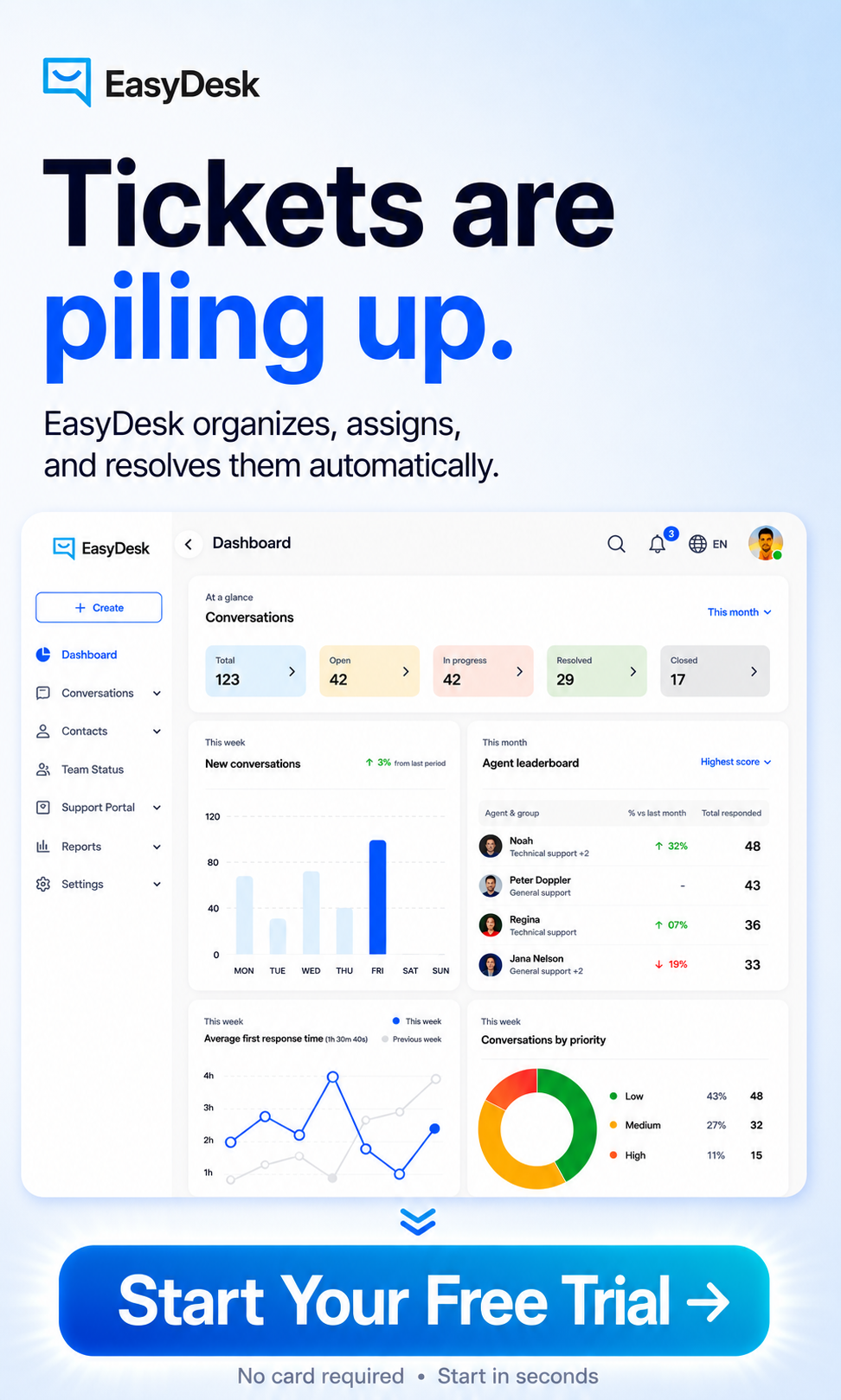
Customer support becomes chaotic when tickets reach the wrong agents. A billing issue lands with the technical team. A high-priority request waits in a general queue. Customers wait longer, agents feel frustrated, and response quality drops fast. That is where ticket routing changes everything.
A smart ticket routing system sends every request to the right person at the right time. Support teams can reduce response delays, improve resolution time, and handle larger ticket volumes without creating confusion. Modern help desks now use automation, AI, skill-based routing, and workflow rules to manage support more efficiently.
This guide covers everything you need to know about ticket routing, including workflows, routing methods, automation strategies, common mistakes, and best practices for better customer support operations.
What Is Ticket Routing
Ticket routing is the process of sending customer support tickets to the right agent or right team based on predefined rules, required expertise, or ticket priority. A ticketing system can automatically route incoming tickets through skill-based routing, round robin, ticket triage, or assignment rules. Some support teams still use manual ticket routing, but that process becomes time-consuming as customer requests grow. Efficient ticket routing helps correctly route tickets without leaving customer issues unattended.
Modern customer support operations rely on automated ticket routing to improve response times and customer satisfaction. Support requests reach the most appropriate agent or next available agent faster. IT teams and help desk teams can assign tickets based routing conditions like technical issues, service level agreements, customer queries, or available agents. When implemented correctly with adequate training and automation, support ticket routing helps avoid bottlenecks, reduce agent burnout, and improve customer experience across all customer inquiries.
How Ticket Routing Works Inside Modern Help Desk Systems
Modern help desk platforms use automation, routing rules, and AI to move tickets faster across support teams. By implementing automated ticket creation and routing, a good ticket routing process reduces delays, improves response time, and helps customer support teams handle large ticket volumes without confusion or missed requests.
Ticket Creation And Request Capture
Every support ticket starts when customers submit requests through email, live chat, web forms, phone calls, or self-service portals. The ticketing system collects customer data, issue type, priority level, and service details automatically. That information helps the system understand where the request should go next.
A 2025 Zendesk report shows over 72% of customers expect fast support within minutes. Modern help desk tools reduce manual work by centralizing incoming requests in one dashboard. Support teams can access customer inquiries quickly and avoid lost or left unattended tickets.
Routing Rules And Ticket Assignment
Help desk systems use predefined rules to assign tickets automatically. Routing rules can check ticket priority, language, customer type, department, or technical issues before ticket assignment. Some systems also use round robin methods to distribute workloads evenly across available agents.
Automated ticket routing helps support teams reduce response delays and avoid bottlenecks. Research from HubSpot shows automated workflows improve response times by nearly 37%. A well-defined routing process also supports service level agreements and keeps customer support operations organized.
Skill-Based Agent Matching
Skill-based routing sends customer support tickets to agents with the right expertise. Billing problems go to finance teams. Technical issues move to IT teams. Product-related questions reach trained specialists. This process improves first contact resolution and customer satisfaction.
Support ticket routing becomes more efficient when tickets reach the most appropriate agent immediately. Salesforce reports nearly 79% of customers expect support agents to understand their needs without repeated explanations. Correctly route tickets help reduce frustration for both customers and support teams.
AI And Automated Decision Making
Modern systems now use artificial intelligence to analyze customer queries and automatically route tickets. AI tools can detect urgency, sentiment, keywords, and issue categories within seconds. Some platforms also predict the next available agent based on workload and availability.
AI-powered routing reduces time-consuming manual ticket triage. According to Freshworks, businesses that use AI support automation reduce average handling time by up to 45%. Automation also helps support teams manage high ticket volumes without increasing agent burnout or staffing pressure.
Tracking Performance And Workflow Efficiency
Help desk systems track key metrics like response time, ticket resolution rate, reassignment frequency, and SLA compliance. Managers use those key indicators to highlight areas that need improvement. Better visibility helps teams improve the routing process over time.
A strong support system keeps the process running smoothly across departments. Teams can monitor tickets assigned, customer experience scores, and overall service quality from one place. When implemented correctly, efficient ticket routing creates faster support, better team performance, and happier end users.
Different Types Of Ticket Routing Methods
Every support team handles customer requests differently. Some businesses focus on speed, while others prioritize expertise or workload balance. The right ticket routing method helps support teams reduce delays, improve customer satisfaction, and manage customer support operations more efficiently.
Round Robin Routing
Round robin routing assigns tickets evenly across available agents. Each new support ticket moves to the next agent in line. This method helps distribute workloads fairly and prevents a few agents from handling most incoming requests.
Small and mid-sized support teams often use this routing process because it is simple and easy to manage. According to HubSpot, balanced workloads improve team productivity by nearly 25%. Round robin routing also helps reduce agent burnout and keeps response times more consistent during high ticket volumes.
Skill-Based Routing
Skill-based routing sends customer support tickets to agents with the required expertise. Technical issues go to IT teams, while billing or account requests move to the correct department. This method helps correctly route tickets without unnecessary transfers.
A Salesforce study found that 83% of customers expect support agents to understand their issues immediately. Skill-based routing improves first contact resolution and customer experience because customers reach the most appropriate agent faster. Support teams also spend less time reassigning tickets across departments.
Priority-Based Routing
Priority-based routing focuses on ticket urgency and business impact. High-priority customer inquiries move ahead of general support requests. Tickets related to outages, payment failures, or service disruptions receive immediate attention from the right team.
This routing system supports service level agreements and prevents critical tickets from being left unattended. Research from Freshdesk shows businesses that prioritize urgent customer issues reduce average resolution time by over 30%. Priority routing also helps teams avoid bottlenecks during peak support hours.
Rule-Based Routing
Rule-based routing uses predefined rules and assignment rules to automatically route tickets. The system checks ticket details like language, location, product type, or customer category before ticket assignment. Help desk teams can customize workflows based on support goals.
Automated ticket routing through predefined conditions reduces manual ticket triage and repetitive tasks. Zendesk reports that automation can handle nearly 65% of routine support workflows. A well-defined routing structure keeps the process running smoothly and improves overall support efficiency.
AI-Powered Routing
AI-powered routing uses artificial intelligence to analyze customer queries and route tickets automatically. The system reviews keywords, urgency, customer history, and sentiment before assigning tickets to the next available agent or specialist.
Modern AI systems improve routing accuracy and response time significantly. Gartner predicts that AI-assisted customer support operations will handle most first-level service requests within the next few years. AI routing also helps support teams scale faster without adding large numbers of agents or increasing operational pressure.
How Automated Ticket Routing Improves Response Time And SLA Performance
Fast support response is now a major customer expectation. Manual ticket assignment slows down support operations and creates delays during busy hours. Automated ticket routing helps support teams route tickets faster, meet SLA targets, and improve customer satisfaction without increasing workload pressure.
Faster Ticket Assignment
Automated ticket routing assigns tickets immediately after customers submit support requests. The ticketing system checks predefined rules, customer data, and issue categories before sending tickets to the right agent or right team. This process removes delays caused by manual ticket routing.
Quick ticket assignment improves response time across customer support operations. According to Zendesk, nearly 70% of customers expect support within five minutes for urgent issues. Automatically routed tickets help support teams respond faster and prevent customer inquiries from sitting in queues too long.
Better SLA Compliance
Service level agreements depend heavily on response speed and resolution time. Automated workflows help support teams prioritize urgent customer issues before SLA deadlines are missed. High-priority support tickets move directly to available agents with the required expertise.
A 2025 Freshworks report found that automation improves SLA compliance rates by more than 35% in high-volume support environments. A structured ticket SLA management approach combined with efficient ticket routing also reduces the number of tickets left unattended. Better SLA performance creates stronger customer trust and improves long-term service quality.
Reduced Manual Workloads
Manual ticket triage becomes difficult when customer requests increase quickly. Support teams waste time checking ticket details, assigning requests, and transferring customer support tickets between departments. Dedicated ticket automation software and automated ticket routing remove much of that repetitive work.
Automation helps customer support teams focus on solving problems instead of managing workflows. Platforms with automated workflows for smarter support show that HubSpot reports automated support processes reduce repetitive tasks by nearly 40%. Lower manual workloads also help reduce agent burnout and improve productivity across help desk operations.
Smarter Agent Distribution
Automated systems use assignment rules, round robin methods, and skill-based routing to distribute tickets evenly. The system can route customer queries to the next available agent or the most appropriate agent based on expertise, workload, or ticket priority.
Balanced ticket distribution helps avoid bottlenecks during peak support periods. Support teams can maintain stable response times even with large numbers of incoming tickets. Better workload management also improves team morale and keeps the support process running smoothly.
Higher Customer Satisfaction
Customers expect quick answers and accurate support. Automated ticket routing improves customer experience because support requests reach the correct team faster. Customers spend less time waiting for transfers or repeated explanations.
Salesforce research shows that 88% of customers value customer service as much as products or pricing. Fast ticket routing directly impacts customer satisfaction and retention. When implemented correctly, automation creates smoother support experiences for end users while improving overall service performance.
Common Ticket Routing Challenges And How To Fix Them
Ticket routing can improve support efficiency, but poor setup often creates new problems. Wrong ticket assignment, slow response times, and overloaded agents can hurt customer satisfaction quickly. Support teams need clear routing rules and smart workflows to keep customer support operations stable and efficient.
Wrong Ticket Assignment
Customer support tickets often reach the wrong department because of weak routing rules or incomplete ticket data. Billing issues may go to technical teams, while product questions land with general agents. That confusion slows the support process and increases ticket transfers.
Incorrect ticket assignment also affects customer experience. According to Salesforce, 78% of customers become frustrated when they repeat the same issue multiple times. Skill-based routing and better ticket triage help correctly route tickets to the most appropriate agent faster. Clear categories and predefined rules also improve routing accuracy.
Overloaded Support Agents
Some support teams face uneven ticket distribution. A few agents receive most incoming requests while others remain underutilized. Poor workload balance increases response time and creates agent burnout during busy periods.
Round robin routing and automated ticket routing help distribute support requests more evenly across available agents. Purpose-built automated ticket management software supports these models, and Zendesk reports balanced workloads improve team efficiency by over 25%. Managers should also track key metrics like ticket volume, resolution time, and reassignment rates to highlight areas that need improvement.
Slow Response Times
Manual ticket routing becomes time-consuming when ticket volumes rise quickly. Delays happen because agents manually check customer queries before assigning tickets. Slow response times can break service level agreements and leave customer issues unattended.
Automation helps route tickets instantly after ticket creation. Automated ticket assignment systems analyze incoming requests and assign tickets based on urgency, expertise, or department rules. Freshdesk research shows automation reduces average response times by nearly 37%. Faster ticket assignment improves customer satisfaction and keeps the process running smoothly.
Poor Routing Rule Setup
Many businesses implement routing systems without well-defined assignment rules. Weak workflows create duplicate tickets, incorrect routing, and unnecessary escalations. Complex issues may also reach agents without the required expertise.
Support teams should review routing logic regularly and update workflows as services change. Artificial intelligence can also improve routing decisions by analyzing customer inquiries and ticket patterns automatically. Adequate training for help desk teams ensures routing rules remain accurate and effective over time.
Limited System Visibility
Some ticketing systems provide limited access to routing performance data. Managers struggle to monitor SLA compliance, customer support operations, and ticket resolution trends. Without visibility, support teams cannot identify bottlenecks or improve workflows properly.
Modern help desk platforms track key indicators like first response time, ticket reassignment, and customer satisfaction scores. Better reporting helps teams improve routing efficiency and customer service quality. Businesses that monitor routing performance consistently often deliver faster and more reliable support experiences for end users.
Best Practices To Build An Efficient Ticket Routing Workflow
A strong ticket routing workflow helps support teams manage customer requests faster and more accurately. Poor routing creates delays, overloaded agents, and missed SLA targets. Clear workflows, smart automation, and regular performance reviews help customer support operations stay organized and scalable.
Set Clear Routing Rules
Well-defined routing rules are the foundation of efficient ticket routing. The ticketing system should route tickets based on priority, department, issue type, customer category, or required expertise. Clear assignment rules reduce confusion and improve ticket assignment accuracy.
Support teams should avoid overly complex workflows. Simple routing structures are easier to manage and update over time. Comparing manual vs automated ticketing approaches, HubSpot notes that businesses with structured support workflows improve response times by nearly 30%. Clear routing logic also helps correctly route tickets without unnecessary transfers between teams.
Use Skill-Based Routing
Skill-based routing helps customer support tickets reach the most appropriate agent quickly. Technical issues should move directly to IT teams, while billing or service requests go to specialized departments. This process improves customer experience and first contact resolution and is one of several proven ways to cut average resolution time significantly.
Salesforce research shows 79% of customers expect agents to understand their issues immediately. Support ticket routing becomes more effective when agents handle requests that match their expertise. Better alignment between tickets and support agents also reduces time-consuming escalations and repeated customer explanations.
Automate Repetitive Tasks
Manual ticket routing slows down support operations during busy hours. Automated ticket routing helps assign tickets instantly through predefined rules, artificial intelligence, and workload balancing. Automation reduces repetitive work and improves response time consistency.
Zendesk reports automation can manage nearly two-thirds of routine support workflows. Shifting from shared inboxes to automated email-to-ticket systems and automatically routed tickets helps support teams focus more on customer issues instead of administrative tasks. Automation also reduces agent burnout and keeps the support process running smoothly during high ticket volumes.
Monitor Key Performance Metrics
Support managers should track key metrics regularly to improve routing efficiency. Important key indicators include response times, ticket reassignment rates, SLA compliance, and customer satisfaction scores. Those numbers highlight areas where routing problems may exist.
Modern help desk systems provide real-time access to workflow data and support performance. Robust ticket creation and management tools mean teams that monitor customer support operations consistently often resolve tickets faster and avoid bottlenecks. Regular reporting also helps managers improve routing rules before service quality declines.
Train Support Teams Regularly
Adequate training helps support teams understand routing processes, ticket triage rules, and escalation workflows. Even advanced ticketing systems fail when teams do not follow routing standards correctly. Training improves workflow consistency and ticket handling accuracy.
Customer support operations change constantly as products, services, and customer expectations evolve. Ongoing team education helps agents adapt to new workflows and automation tools. Freshworks reports companies with regular support training improve customer satisfaction rates significantly compared to teams with limited coaching.
AI-Powered Ticket Routing And The Future Of Smart Support Operations
Artificial intelligence is changing how support teams manage customer requests. Traditional routing methods often struggle with high ticket volumes and complex workflows. AI-powered ticket routing helps businesses route tickets faster, improve response times, and deliver more accurate customer support experiences.
Smarter Ticket Classification
AI systems can analyze customer inquiries within seconds. The ticketing system checks keywords, sentiment, urgency, and previous customer interactions before ticket assignment. That process helps correctly route tickets without heavy manual involvement from support teams.
Modern AI tools improve support ticket routing accuracy significantly. According to IBM, AI-powered automation can reduce ticket classification errors by more than 50%. Faster classification also helps customer support operations manage incoming requests more efficiently and avoid delays during peak service periods.
Faster Response And Resolution
AI-powered routing helps automatically route support requests to the most appropriate agent immediately. The system reviews agent expertise, workload, and ticket priority before assigning tickets. Customers receive faster responses because tickets reach the right team quickly.
Zendesk reports businesses that use artificial intelligence in customer support reduce average response time by nearly 35%. Shorter wait times improve customer satisfaction and help support teams meet service level agreements more consistently. Better routing also prevents customer issues from remaining left unattended.
Predictive Workload Management
AI tools can predict ticket volume trends and balance workloads across available agents. The system identifies overloaded support teams early and redirects tickets automatically. That approach helps avoid bottlenecks and improves workflow stability during high-demand periods.
Balanced ticket distribution also reduces agent burnout. Freshworks research shows workload automation improves support team productivity by over 25%. Case studies where EasyDesk improved response time for a growing team show how AI-based routing creates smoother customer support operations because teams spend less time managing ticket queues manually.
Better Customer Experience
AI-powered ticket routing improves customer experience through faster and more accurate support. Customers no longer wait through multiple transfers before reaching agents with the required expertise. Support requests move directly to agents who can solve problems quickly.
Salesforce data shows 88% of customers consider customer service as important as products or pricing. Efficient ticket routing helps businesses build stronger trust and retention. Personalized support experiences also become easier because AI systems can access customer history and previous tickets instantly.
Future Of Intelligent Support Systems
Future help desk platforms will rely more on artificial intelligence, automation, and predictive analytics. AI systems will continue improving ticket triage, customer query analysis, and routing decisions with minimal human involvement. Advanced workflows built on modern ticketing systems will also support self-service and proactive customer support.
Gartner predicts AI will assist most customer service interactions within the next few years. Businesses that adopt smart routing systems early can scale support operations faster while controlling costs. Modern customer support teams now view AI-powered routing as a key step toward long-term service efficiency and growth.
Key Metrics To Measure Ticket Routing Performance And Support Efficiency
Ticket routing performance affects response time, customer satisfaction, and overall support quality. Without proper tracking, support teams cannot identify routing problems or workflow gaps. Using platforms that centralize tickets and metrics, such as those that explain how to manage support tickets efficiently, helps businesses improve customer support operations and create faster, more reliable service experiences.
First Response Time
First response time measures how quickly support teams reply after ticket creation. This metric shows whether customer support tickets reach the right agent fast enough. Slow first responses often indicate poor routing rules or overloaded support teams.
Zendesk reports that nearly 60% of customers expect a response within one hour. Efficient ticket routing helps automatically route incoming requests without delays. Faster response times improve customer satisfaction and reduce the risk of customer issues remaining left unattended inside the ticketing system.
Ticket Resolution Time
Ticket resolution time tracks how long support teams take to solve customer inquiries completely. Long resolution periods usually point to incorrect ticket assignment, repeated transfers, or lack of required expertise within the support process.
Skill-based routing and automated ticket routing help reduce unnecessary escalations. According to Freshdesk, businesses with strong routing workflows improve resolution speed by more than 30%. Faster resolutions also help customer support teams meet service level agreements and maintain smoother support operations.
Ticket Reassignment Rate
Ticket reassignment rate measures how often tickets move between agents or departments. High reassignment numbers often mean support ticket routing rules are weak or customer requests are not categorized properly during ticket triage.
Repeated ticket transfers frustrate customers and increase workload pressure on support teams. Salesforce research shows customers lose trust quickly after multiple support handoffs. Well-defined assignment rules help correctly route tickets to the most appropriate agent from the beginning and improve overall customer experience.
SLA Compliance Rate
SLA compliance rate tracks whether support teams meet agreed response and resolution targets. Businesses use this metric to evaluate routing efficiency, workflow stability, and service quality across customer support operations.
Automated workflows and predefined rules help teams prioritize urgent support requests more effectively. HubSpot reports automation improves SLA compliance by nearly 35% in high-volume support environments. Better SLA performance also helps businesses strengthen customer trust and maintain consistent service standards.
Customer Satisfaction Score
Customer satisfaction score measures how customers feel after support interactions. This metric directly reflects the quality of ticket routing, response speed, and overall customer support experience. Poor routing often leads to lower satisfaction scores and negative service feedback.
Modern help desk systems collect customer feedback automatically after ticket closure. Businesses that monitor customer satisfaction regularly can highlight areas that need workflow improvement. According to Microsoft, over 90% of customers consider customer service a major factor when choosing brands and services.
How EasyDesk Improves Ticket Routing And Support Efficiency
EasyDesk helps support teams simplify ticket routing through automation, smart workflows, and centralized ticket management. The EasyDesk helpdesk ticketing software platform can automatically route incoming tickets based on predefined rules, ticket priority, department, and agent expertise. Support teams spend less time on manual ticket routing and more time solving customer issues. EasyDesk also supports SLA tracking and advanced features, workload balancing, and faster ticket assignment across customer support operations.
The system improves response times by helping customer support tickets reach the right team quickly. Automated ticket routing reduces delays, avoids bottlenecks, and improves customer satisfaction, which is why many consider it the best ticket management system for growing teams. EasyDesk also gives managers access to key metrics like resolution time, SLA compliance, and ticket reassignment trends, positioning it among the best ticketing software systems for customer support. With AI-powered automation, workflow tracking, and real-time visibility, the EasyDesk customer support platform and its #1 ticketing software capabilities help support teams maintain efficient ticket routing while improving customer experience and overall service quality.
FAQs
Can Small Support Teams Use Automated Ticket Routing?
Yes, small support teams can benefit greatly from automated ticket routing. A ticketing system can automatically route incoming requests based on predefined rules, ticket priority, or agent availability. This process saves time and improves response times for growing customer support operations.
Does Ticket Routing Help Reduce Agent Burnout?
Yes, efficient ticket routing helps distribute customer support tickets more evenly across available agents. Balanced workloads reduce pressure on support teams and prevent repetitive manual ticket assignment during high ticket volumes.
Can AI Improve Ticket Routing Accuracy?
Yes, artificial intelligence can analyze customer queries, ticket history, urgency, and keywords to correctly route tickets faster. AI-powered automation also improves ticket triage and helps customer issues reach the most appropriate agent without delays.
What Happens When Tickets Reach The Wrong Team?
Wrong ticket assignment creates delays, repeated transfers, and slower response time across customer support operations. Customers often become frustrated when support requests move between departments multiple times. Clear routing rules and skill-based routing help avoid those problems.
Why Does Self-Service Matter In Ticket Routing?
Self-service portals reduce incoming tickets by helping users solve simple customer issues without agent support. Support teams can then focus more on complex issues and high-priority support requests. This improves workflow efficiency and customer satisfaction.