Customer support becomes more difficult to manage as SaaS companies grow. Higher ticket volumes, multiple support channels, increasing customer expectations, and expanding teams often create inconsistencies in service quality. Without clear ownership, standardized processes, and defined escalation procedures, support teams can struggle to maintain efficiency and deliver consistent customer experiences.
Customer support governance provides the structure needed to keep operations organized and accountable. It establishes clear responsibilities, service standards, communication guidelines, and performance metrics that help support teams work effectively at scale.
This guide explains how to set up customer support governance in a SaaS company, including governance frameworks, SLA policies, escalation processes, documentation standards, and performance management practices.
What Is Customer Support Governance?
Customer support governance is the system of policies, responsibilities, and decision-making rules that guide support operations. A strong governance framework establishes consistent governance processes, supports regulatory compliance, and promotes collaborative governance across support, product, and customer success teams. It also includes data governance, measurable key performance indicators, and standardized governance practices that improve service quality. A well-defined strategic plan helps organizations maintain accountability, monitor performance, and deliver consistent customer experiences while supporting long-term business growth.
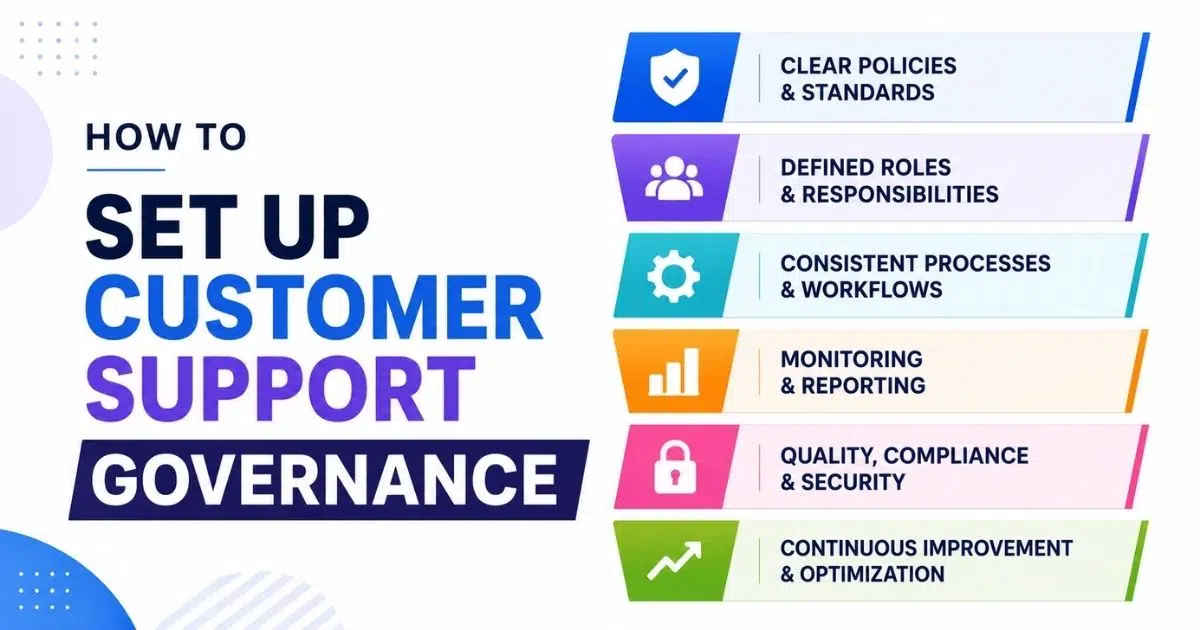
The Four Pillars Of Support Governance

Strong customer support governance depends on four core pillars that create consistency, accountability, and long-term operational success. Together, these pillars establish a robust framework that improves business operations, strengthens decision-making, and supports good governance across the organization.
Accountability
Accountability ensures that every support task, decision, and outcome has a clear owner. Support leaders, managers, and agents must understand their responsibilities to reduce confusion and improve performance. Clear ownership also supports risk management by identifying who is responsible for escalations, service failures, and customer issues. Similar to how board members oversee organizational direction, support leaders must monitor responsibilities and maintain alignment with company goals and customer expectations.
Standardization
Standardization creates consistent workflows, policies, and procedures across the support organization. Documented processes help teams improve internal systems, maintain service quality, and support legal compliance requirements. Standard operating procedures also help organizations ensure compliance with company policies and industry regulations. Consistent processes reduce operational errors and make it easier for support teams to scale effectively.
Visibility
Visibility provides access to operational insights and performance data. Support teams can track key performance indicators, evaluate data quality, and identify trends that affect service delivery. Effective data governance helps organizations protect data assets while ensuring accurate reporting and informed decision-making. Greater visibility allows managers to detect issues early and improve overall support performance.
Continuous Improvement
Continuous improvement focuses on reviewing results, identifying gaps, and optimizing support operations over time. Regular audits, customer feedback, and performance reviews strengthen governance practices and support a long-term strategic plan. This ongoing approach helps organizations adapt to changing customer expectations while maintaining efficient business operations and sustainable governance standards.
Why SaaS Companies Need Governance
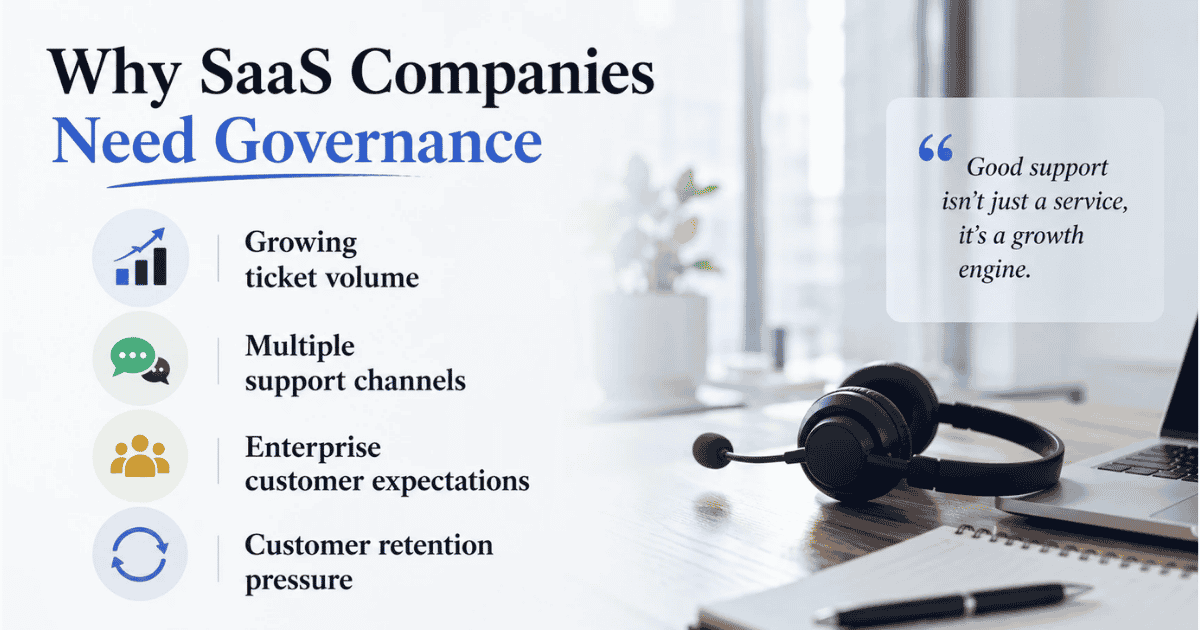
Customer support becomes more complex as a SaaS business expands. Higher ticket volumes, multiple communication channels, and increasing customer demands create operational challenges that require structured governance. A clear governance model helps organizations maintain consistency, reduce risks, and improve long-term service performance.
Growing Ticket Volume
As an organization grows, support teams receive more customer requests, issues, and inquiries. Without clear processes, rising ticket volumes can create delays and reduce service quality. Governance helps teams maintain sound performance by assigning responsibilities, establishing workflows, and supporting informed decisions. It also allows managers to identify emerging risks before they affect customer satisfaction.
Multiple Support Channels
Modern customers expect support through email, live chat, social media, phone, and self-service portals. Managing multiple channels without clear guidelines often creates inconsistent service delivery. Governance establishes standard procedures and ethical standards that ensure customers receive the same level of support across every communication channel.
Enterprise Customer Expectations
Enterprise clients expect fast responses, reliable service, and strong accountability. Many organizations must meet specific regulatory requirements and fulfill compliance obligations when serving larger customers. Governance frameworks help support teams maintain service quality while reducing compliance risks through documented processes and clear responsibilities.
Customer Retention Pressure
Retaining existing customers remains critical for SaaS growth. Poor support experiences can damage company culture, increase churn, and weaken customer relationships. Governance helps teams monitor performance, improve service delivery, and address customer concerns before they become larger problems.
Long-Term Business Stability
Governance creates the structure needed to scale support operations successfully. It enables better decision-making, supports compliance obligations, and ensures teams can adapt as the organization grows. A strong governance strategy allows SaaS companies to maintain consistency, manage risks, and deliver reliable customer experiences over time, especially when paired with a secure, transparent customer support platform like EasyDesk.
Identify The Governance Structure For Your Support Team
A strong governance structure provides clear accountability, improves collaboration, and ensures support teams can operate efficiently as the company grows. Defining responsibilities, ownership, and decision-making authority helps eliminate confusion and creates a consistent support experience.
Define Support Leadership Responsibilities
Every support role should have clearly defined responsibilities to maintain accountability and improve operational efficiency. The Head of Support oversees strategy, performance, and customer experience goals. Support Managers supervise daily operations, resource planning, and team performance.
Team Leads provide guidance to agents, handle escalations, and support daily workflows. Quality Managers monitor service standards, conduct audits, and identify improvement opportunities. Operations Managers focus on processes, reporting, automation, and workflow optimization. Clearly defined leadership roles prevent overlapping responsibilities and improve decision-making across the support organization.
Establish Ownership Across Teams
Customer support governance extends beyond the support department. Several teams contribute to customer success and service delivery.
The support team manages customer interactions and issue resolution. Customer Success focuses on retention and account health. Product teams address feature requests and usability concerns. Engineering handles technical issues, bugs, and platform stability. DevOps teams support infrastructure reliability and system availability.
Clear ownership between departments reduces delays, improves communication, and ensures that customer issues reach the appropriate team without confusion.
Create A RACI Matrix For Support Operations
A RACI matrix helps define roles and responsibilities for support activities and operational processes.
Responsible individuals complete assigned tasks and execute support activities. Accountable stakeholders approve decisions and own final outcomes. Consulted team members provide expertise and recommendations before decisions are made. Informed stakeholders receive updates and remain aware of important developments.
Using a RACI model helps eliminate duplicate work, improves accountability, and ensures every support process has clear ownership.
Define Decision-Making Authority
Support teams must understand who has authority to make operational decisions. Organizations should clearly define who approves service level agreements, who owns escalations, and who manages major incidents.
Decision-making authority should also determine who approves process changes, workflow updates, and policy modifications. Clear governance prevents delays during critical situations and allows teams to respond quickly to customer issues while maintaining consistent support operations.
Create Support Policies And Operating Standards
Support governance becomes effective when clear policies and operating standards guide daily activities. Well-defined rules improve consistency, reduce confusion, and help teams deliver reliable customer experiences. A strong governance model allows support teams to follow established practices while maintaining service quality across the organization.
Build A Ticket Handling Policy
A ticket handling policy establishes how support requests move through the system. Teams should define response expectations, resolution expectations, reassignment rules, and closure policies to maintain consistency. Clear guidelines help agents answer pointed questions and manage customer issues efficiently, especially when paired with tools for managing support tickets efficiently using EasyDesk.
For example, organizations may establish specific response times for different ticket priorities and create procedures for transferring tickets between departments. Such best practices improve accountability and increase the value of support operations.
Define Customer Communication Standards
Customer communication standards ensure that every interaction reflects the company’s expectations. Tone guidelines, update frequency, escalation communication, and customer expectations should be clearly documented.
Support teams should focus on providing accurate information, timely updates, and professional responses. Consistent communication also helps stakeholders remain informed during service disruptions or complex cases. An effective communication framework strengthens trust and improves customer satisfaction.
Develop Support Availability Policies
Availability policies define when and how customers can access support services. Business hours, after-hours support, holiday coverage, and global support coverage should align with customer needs and business goals, particularly when coordinating remote support teams spread across time zones.
Organizations operating across multiple regions often require extended support coverage to meet customer demands. Similar to government service standards, support teams must establish reliable service availability and maintain consistent support experiences regardless of location or time zone.
Standardize Documentation Requirements
Documentation remains essential for effective support governance. Ticket notes, internal comments, resolution documentation, and customer updates create a reliable knowledge base for future reference.
Standardized documentation supports compliance with internal regulations and improves collaboration across teams. Accurate records also help stakeholders review decisions, monitor performance, and identify improvement opportunities. A centralized documentation platform ensures information remains accessible and consistent throughout the organization.
Clear policies and operating standards create a foundation for scalable support operations and long-term governance success.
Establish Service Level Agreements And Priorities
Service level agreements provide a structured approach for managing customer expectations and improving support performance. Clear SLAs help support teams prioritize requests, reduce delays, and maintain consistent service quality. Effective implementation of SLA policies also supports sustainability by creating predictable workflows and measurable performance standards, and understanding what SLAs are and why they matter for service success is essential when designing these agreements.
Create Ticket Priority Levels
Ticket prioritization allows support teams to allocate resources based on urgency and business impact. Critical issues often involve system outages, security incidents, or major service disruptions. High-priority tickets affect important functions but may not stop business operations completely, so having a clear understanding of what ticket prioritization is in customer support helps teams apply these levels consistently.
Medium-priority requests usually involve non-urgent problems, while low-priority tickets often include general inquiries or minor issues. Properly managing priority levels helps teams reduce costs, improve customer satisfaction, and prevent service backlogs. Clear prioritization systems also enable support groups to handle increasing ticket volumes efficiently.
Define Response And Resolution Targets
Organizations should establish measurable goals for first response times, resolution times, and escalation procedures. First response SLAs determine how quickly agents acknowledge customer requests. Resolution SLAs define expected completion times, while escalation SLAs specify when issues should move to higher support levels.
These targets help teams monitor data, improve accountability, and maintain service consistency. Similar to compliance frameworks such as Sarbanes Oxley, documented service standards provide clear expectations and improve operational transparency.
Choose The Right SLA Structure
Different organizations require different SLA models depending on customer needs and service complexity. Service-based SLAs apply the same standards to all customers. Customer-based SLAs provide customized agreements for specific accounts or customer groups, and a dedicated service level agreement helpdesk guide for support teams can clarify which structure fits your environment.
Multi-level SLAs combine company-wide standards with customer-specific requirements. Such systems support innovation by allowing businesses to deliver flexible service experiences while maintaining consistent operational standards.
Monitor SLA Compliance
Regular SLA monitoring helps organizations identify issues before they affect customers. Breach tracking, SLA reports, and team accountability provide valuable insights into service performance, and SLA tracking software that improves response time makes this monitoring more proactive and reliable.
Performance reports allow managers to evaluate implementation effectiveness and identify improvement opportunities. Continuous monitoring also helps support teams maintain service quality, optimize systems, and ensure long-term operational success, particularly when they use a robust SLA management system with automation and reporting.
Build A Formal Support Escalation Framework
A formal escalation framework helps support teams resolve complex issues quickly and consistently. Clear escalation procedures improve transparency, reduce delays, and ensure that the right people become involved at the right time. As support operations scale, a structured framework helps organizations make better decisions while protecting customer relationships and business outcomes.
Define Functional Escalations
Functional escalations occur when issues move between support levels based on technical complexity. Tier 1 agents handle basic requests and common problems. More complicated cases move from Tier 1 to Tier 2, where experienced specialists provide additional expertise.
Certain issues may require Tier 2 to Engineering escalation when technical investigation or product fixes become necessary. Engineering involvement becomes essential for software defects, infrastructure problems, or system failures. Clear escalation paths provide faster solutions and prevent tickets from remaining unresolved for long periods, especially when supported by a help desk that improves support behind the scenes.
Define Hierarchical Escalations
Hierarchical escalations involve management and leadership teams when issues affect customers, revenue, or business operations. Team leads often manage daily escalations and support agents during difficult cases.
Managers become involved when customer satisfaction, service quality, or operational performance is at risk. Executives and directors may participate when issues create significant business impact or affect enterprise customers. Similar to a corporate board structure, leadership involvement provides accountability and helps organizations make informed decisions during critical situations.
Establish Escalation Triggers
Support teams should establish clear conditions that activate escalation procedures. SLA breach risk often requires immediate attention to prevent service failures. Customer frustration can indicate declining satisfaction and increased churn risk.
Revenue risk, such as issues affecting major accounts, should receive priority attention. Security incidents and legal concerns may also require immediate escalation to specialized teams. Defined triggers help teams monitor progress and respond consistently to high-risk situations.
Create Escalation Playbooks
Escalation playbooks provide step-by-step guidance for handling major incidents, service outages, enterprise account issues, and product defects. Documented procedures improve transparency and reduce uncertainty during stressful situations.
Playbooks also help support teams maintain consistency as operations scale. Clear instructions enable faster resolutions, improve communication, and ensure that everyone involved understands their responsibilities during critical events.
Develop A Knowledge Management Governance Strategy
A knowledge management governance strategy helps support teams organize, maintain, and distribute information effectively. Well-structured knowledge resources improve agent productivity, reduce repetitive tickets, and provide customers with faster answers. Governance ensures that information remains accurate, accessible, and aligned with support objectives.
Create Internal Knowledge Standards
Internal knowledge standards provide a consistent approach to documenting information. Troubleshooting guides help agents resolve common issues quickly, while process documentation explains internal workflows and responsibilities. Resolution templates create consistency in handling recurring problems.
Standardized documentation reduces confusion and allows support teams to deliver more accurate and efficient service. Clear knowledge standards also improve onboarding and help new agents become productive faster.
Build Customer Self-Service Resources
Self-service resources allow customers to find answers without contacting support. A help center, FAQs, tutorials, and product documentation provide valuable information that improves the customer experience, especially when designed using self-service customer support best practices.
Well-organized self-service content reduces ticket volume and enables support teams to focus on more complex issues. Customers can access information at any time, which improves convenience and increases satisfaction. Effective self-service resources also support scalable support operations when they’re connected to helpdesk ticketing software that centralizes requests.
Assign Knowledge Ownership
Knowledge management requires clear ownership and accountability. Content owners should be responsible for maintaining documentation accuracy and relevance. Review cycles help teams update outdated information, while approval workflows ensure content quality before publication.
Defined ownership prevents knowledge gaps and keeps documentation aligned with product changes and business requirements. Regular reviews also improve collaboration between support, product, and operations teams.
Measure Knowledge Effectiveness
Organizations should track knowledge performance to identify improvement opportunities. Article views indicate content usage, while deflection rates measure how effectively self-service resources reduce support tickets.
Search success helps teams understand whether customers can find relevant information, and content gap analysis identifies missing topics. Measuring knowledge effectiveness enables continuous improvement and ensures that support resources remain valuable for both customers and internal teams.
Implement Support Performance Governance
Support performance governance helps organizations measure service quality, identify operational issues, and improve customer experiences. Regular monitoring allows leaders to evaluate team effectiveness, maintain accountability, and make data-driven decisions. A structured performance framework also ensures that support operations remain aligned with business objectives, and it depends on well-defined customer support metrics, KPIs, and best practices.
Track Operational KPIs
Operational key performance indicators provide visibility into the efficiency of support teams. First response time measures how quickly agents acknowledge customer requests, while resolution time tracks how long it takes to solve issues.
Backlog volume helps managers identify workload challenges and staffing needs. Reopen rate indicates whether problems are being resolved the first time effectively. Monitoring these metrics enables support leaders to identify bottlenecks, improve workflows, and maintain consistent service delivery.
Measure Customer Experience Metrics
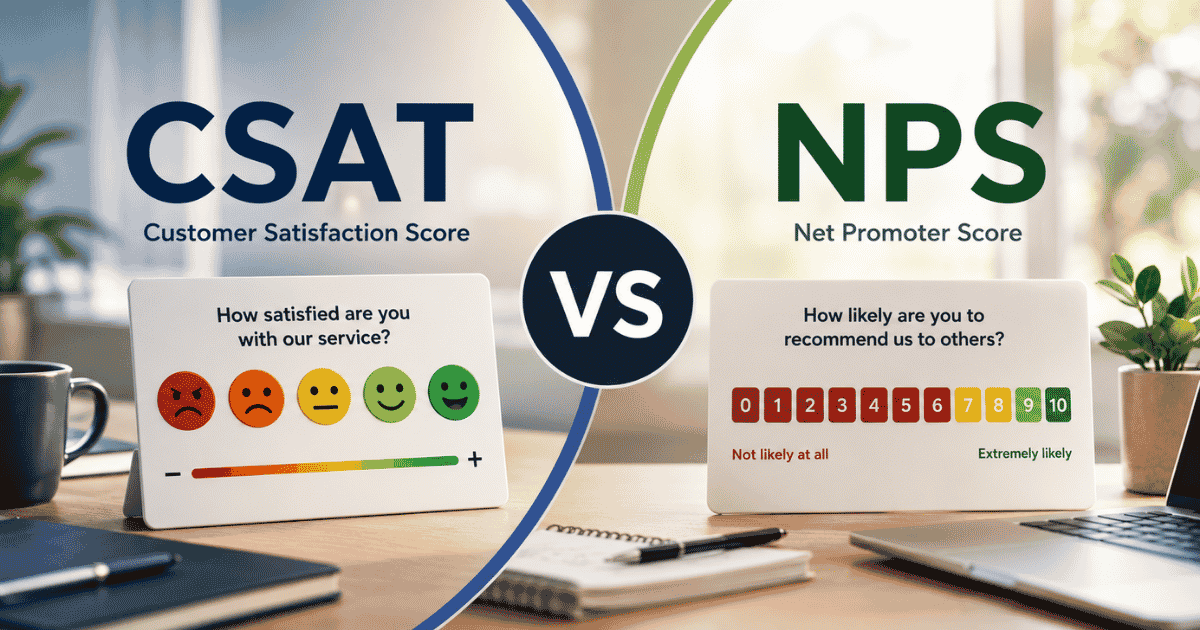
Customer experience metrics reveal how customers perceive the quality of support services. Customer Satisfaction Score (CSAT) measures overall satisfaction after interactions. Customer Effort Score (CES) evaluates how easy it is for customers to resolve issues, and specialized guidance on measuring customer satisfaction metrics for support teams can help leaders interpret these signals effectively.
Net Promoter Score (NPS) measures customer loyalty and willingness to recommend the company. Escalation rate indicates how often issues require additional support levels. Tracking these metrics helps organizations understand customer expectations and identify areas that require improvement.
Conduct Quality Assurance Reviews
Quality assurance reviews ensure that support teams follow established standards and policies. Ticket audits evaluate the accuracy and completeness of support cases. Conversation reviews assess communication quality, professionalism, and problem-solving effectiveness.
Compliance checks verify that agents follow internal procedures and service guidelines. Regular quality reviews help identify coaching opportunities, improve consistency, and maintain high support standards across the organization.
Build Governance Dashboards
Governance dashboards provide leaders with a centralized view of support performance. SLA compliance metrics help teams monitor service commitments and identify potential risks. Team performance reports highlight productivity and operational trends, and integrated SLA management with EasyDesk for support teams can feed these dashboards with real-time data.
Customer satisfaction scores provide insight into service quality, while escalation trends reveal recurring issues and potential process gaps. Well-designed dashboards allow managers to monitor performance in real time, improve accountability, and support continuous improvement initiatives.
Create A Support Governance Review Process
Support governance requires regular reviews to maintain service quality, improve operational performance, and address changing business needs. A structured review process helps support teams identify issues early, evaluate results, and implement improvements. Consistent reviews also ensure that governance policies remain aligned with customer expectations and organizational goals.
Conduct Weekly Operational Reviews
Weekly operational reviews help support leaders monitor day-to-day performance and address immediate concerns. SLA performance reports reveal whether teams are meeting response and resolution targets. Escalation reviews identify recurring issues that require additional attention.
Backlog analysis helps managers understand workload distribution and resource requirements. Weekly reviews allow teams to make quick adjustments, improve efficiency, and prevent small problems from becoming larger operational issues.
Hold Monthly Governance Meetings
Monthly governance meetings provide an opportunity to evaluate broader operational performance. Teams can discuss policy updates, review process improvements, and address cross-team issues that affect service delivery.
Support, customer success, product, and technical teams should participate in these meetings to improve collaboration and align business objectives. Regular governance discussions also help leadership teams make informed decisions and maintain accountability across departments.
Perform Quarterly Service Reviews
Quarterly service reviews focus on long-term performance and strategic planning. Customer feedback provides valuable insights into service quality and customer satisfaction. Support trends help organizations identify recurring issues and opportunities for improvement.
Staffing needs should also be reviewed to ensure teams have the resources required to maintain service standards. Quarterly reviews help organizations evaluate progress and adjust support strategies based on changing business conditions.
Review Governance Policies Annually
Annual policy reviews ensure that governance frameworks remain effective as the business evolves. Service changes, business growth, and changing customer expectations may require updates to support policies and operational procedures.
Regular policy evaluations help organizations maintain consistency, improve service quality, and ensure that support governance continues to support long-term business goals.
Common Customer Support Governance Challenges
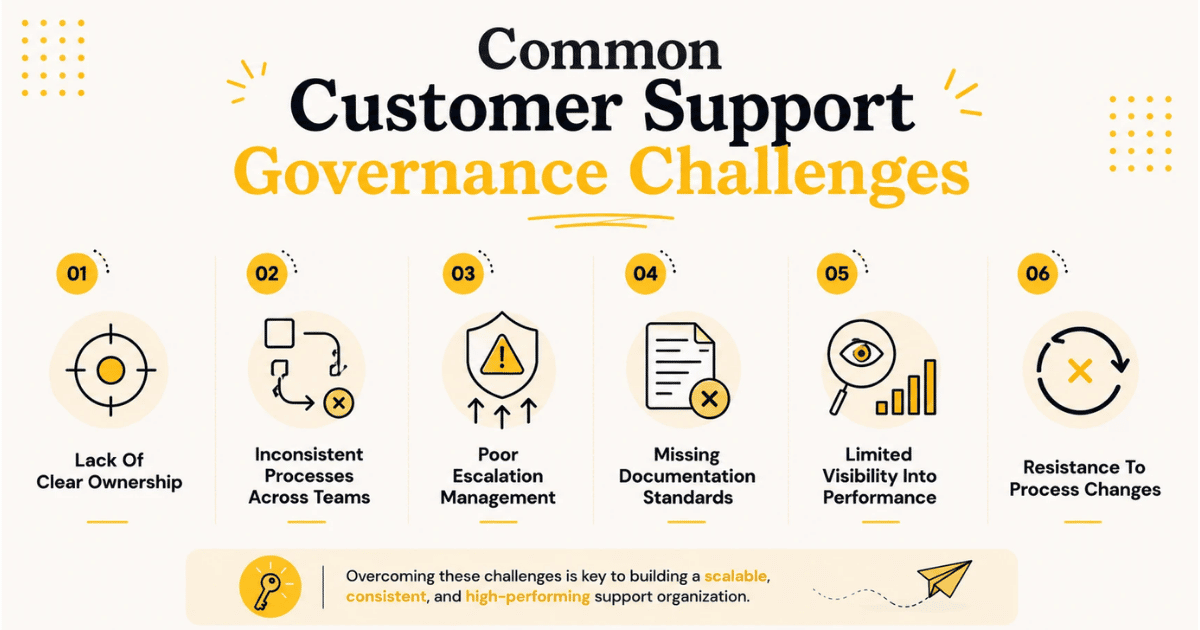
Building an effective customer support governance framework is not always straightforward. As SaaS companies grow, support teams often face operational issues that affect service quality, collaboration, and customer satisfaction. Identifying these challenges early allows organizations to improve processes and establish stronger governance practices.
Lack Of Clear Ownership
Unclear responsibilities create confusion within support teams. Agents may not know who owns escalations, approves policy changes, or handles customer issues. When multiple teams become involved without defined accountability, tasks often remain unresolved.
Clear ownership helps teams make faster decisions and improves accountability. Support leaders should define responsibilities for managers, team leads, and individual contributors to ensure every process has an assigned owner.
Inconsistent Processes Across Teams
Different teams often develop their own workflows, communication methods, and support procedures. Such inconsistencies can create uneven customer experiences and reduce operational efficiency.
Support, customer success, engineering, and product teams should follow standardized processes whenever possible. Consistent workflows help organizations maintain service quality, improve collaboration, and reduce confusion between departments.
Poor Escalation Management
Many organizations struggle with escalation management because they lack clear guidelines and escalation paths. Agents may delay escalating issues, while managers may become involved too late.
Poor escalation management can increase response times, frustrate customers, and create operational bottlenecks. Defined escalation procedures help support teams resolve issues faster and ensure critical problems receive immediate attention.
Missing Documentation Standards
Incomplete documentation creates knowledge gaps and limits organizational learning. Missing ticket notes, outdated procedures, and inconsistent documentation practices often result in repeated mistakes.
Standardized documentation ensures that support teams maintain accurate records, share knowledge effectively, and improve issue resolution. Well-documented processes also simplify onboarding and support continuous improvement efforts.
Limited Visibility Into Performance
Organizations cannot improve what they cannot measure. Limited access to operational data makes it difficult to identify service issues, monitor team performance, and evaluate customer satisfaction.
Support leaders require dashboards, reports, and performance metrics to understand trends and make informed decisions. Greater visibility enables teams to detect problems early and improve overall support operations.
Resistance To Process Changes
Employees may resist new policies, workflows, or governance initiatives because they are comfortable with existing practices. Resistance can slow implementation efforts and reduce adoption rates.
Effective communication, leadership support, and employee involvement help organizations manage change successfully. Creating a culture of continuous improvement encourages teams to embrace new processes and support long-term governance goals, and automated workflow software for smarter support can make those new processes easier to adopt day to day.
How EasyDesk Supports Customer Support Governance
EasyDesk’s customer support platform helps SaaS companies implement customer support governance by providing the tools needed to manage operations, improve accountability, and maintain service standards. Centralized ticket management gives support teams complete visibility into customer requests across multiple channels, similar to how the best IT help desk software for modern teams consolidates omnichannel support and automation.
SLA management and automation help teams monitor response targets, reduce breaches, and maintain consistent service delivery. Escalation workflows ensure that critical issues reach the appropriate teams quickly, improving resolution times and customer satisfaction, especially when powered by dedicated SLA management software.
Performance reporting provides valuable insights into support metrics, team productivity, and service quality. Knowledge base management allows organizations to create self-service resources and maintain accurate internal documentation.
EasyDesk also improves cross-team collaboration by connecting support, product, customer success, and technical teams. By combining automation, reporting, and workflow management features, EasyDesk helps organizations build a scalable and effective customer support governance framework.
Frequently Asked Questions
How Do SLAs Support Customer Service Governance?
Service level agreements establish clear expectations for response times, resolution targets, and service quality. SLAs improve accountability, help teams prioritize tickets, and ensure customers receive consistent support. They also allow managers to measure performance and identify areas that require improvement.
What Is A Support Escalation Process?
A support escalation process defines how unresolved or complex issues move to higher support levels. It outlines when tickets should be transferred to senior agents, managers, or technical teams. Clear escalation procedures reduce delays and improve issue resolution.
How Often Should Support Governance Policies Be Reviewed?
Most organizations should review operational performance weekly, conduct governance meetings monthly, perform service reviews quarterly, and evaluate governance policies annually. Regular reviews help teams adapt to changing customer expectations and business requirements.
What Metrics Should Support Leaders Monitor?
Support leaders should monitor first response time, resolution time, backlog volume, reopen rate, CSAT, CES, NPS, escalation rates, and SLA compliance. These metrics provide insight into operational performance and customer satisfaction.
How Does Help Desk Software Improve Support Governance?
Help desk software centralizes support operations, automates workflows, tracks SLAs, manages escalations, and provides performance reporting. It also improves collaboration, documentation, and visibility, making it easier to maintain consistent customer support governance.