Help desk support is one of the vital services for any business. Many organizations struggle with failing systems that frustrate employees and damage productivity. Response times increase, tickets pile up unresolved, and technical issues linger without solutions.
Cyber threats are growing in both frequency and sophistication. This makes effective IT helpdesk support more critical than ever. We've seen businesses lose revenue and face security vulnerabilities when their service desk falls short. Employee morale declines as well.
In this article, we'll explore what help desk support is and identify why help desk support services fail. We'll spot the warning signs and show you practical fixes. On top of that, we'll help you decide when outsourced help desk support might be your best solution to deliver reliable IT help desk support services.
What Is Help Desk Support
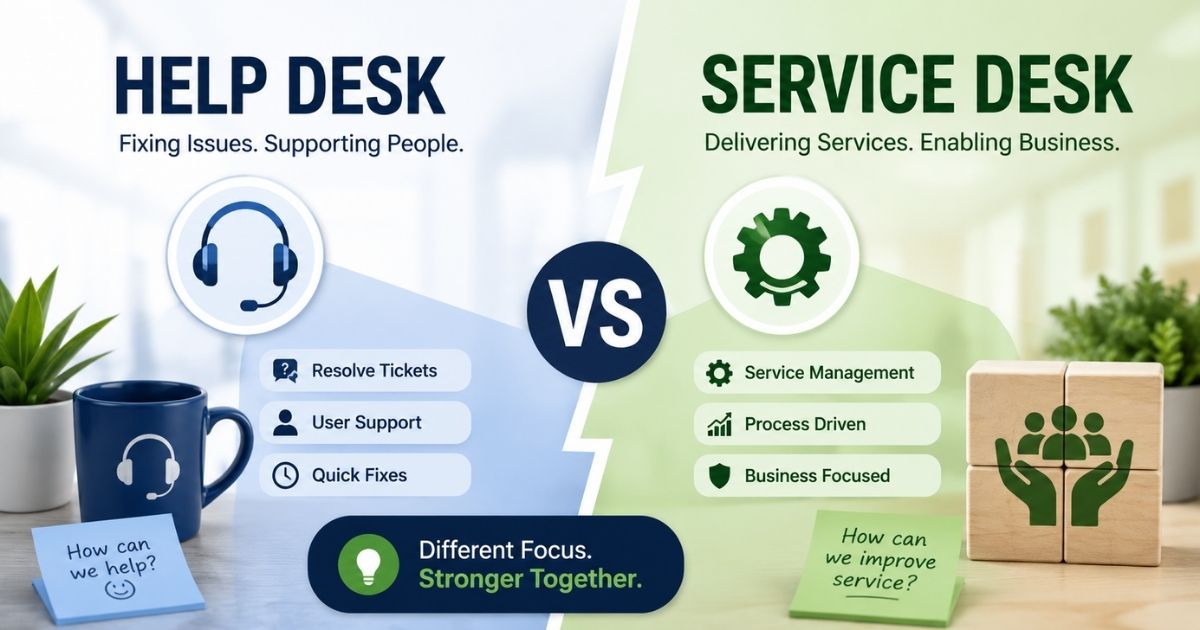
Help desk support is the first point of contact when customers or employees face technical problems. A help desk team handles customer inquiries, service requests, and technical issues related to software, operating systems, or computer hardware. A help desk technician or desktop support analyst focuses on providing technical assistance and resolving computer problems quickly. Teams often use help desk software or a ticketing system for ticket creation, tracking ticket volume, and managing customer requests.
A modern service desk also improves customer satisfaction through better response times and clear communication. Desk technicians use technical knowledge, troubleshooting tools, and problem-solving skills to resolve password resets, user account issues, and security access problems. Automation rules, a strong knowledge base, and efficient desk management processes help reduce unresolved issues.
Effective desk support keeps business operations smooth. Support technicians assist users, track tickets, and provide solutions that improve productivity and long-term desk success.
Common Reasons Why Help Desk Support Fails
Multiple factors contribute to help desk support failures. Understanding these root causes is the first step toward fixing them. We've identified five areas where organizations don't deal very well with these challenges.
Lack Of Proper Training And Knowledge
Training stands out as one of the top challenges help desks face. A team without full training in handling technical issues can't troubleshoot problems well or gives incorrect advice. This guides directly to unresolved issues and frustrated employees seeking technical assistance.
Then inadequate training results in longer resolution times and reduced customer satisfaction. Support technicians can't deliver the quality service users expect without access to a knowledge base containing up-to-date information and solutions.
Inadequate Staffing Levels
Understaffing creates a cascade of problems that damage help desk success. Slow response times and poor service follow when tickets overwhelm the team. North American help desks experience average turnover of 40% per year. This creates inconsistent service and makes generating reliable metrics nearly impossible because so many people are either training or moving on at any given time.
The workload increase compounds quickly. Each team member picks up additional tickets to compensate for absent colleagues. That 5% workload increase means 21 calls instead of 20 and adds hours to their week.
To name just one example, a team of 50 customer support agents managing 1,000 daily inquiries splits the load at 20 inquiries per agent. At 95% staffing with only 47 agents, each handles 21.3 inquiries and extends wait times measurably.
Poor Communication Channels
Communication breakdowns rank among the biggest risks to IT help desk support services. 51% of knowledge workers reported that poor communication increased their overall stress levels, and 41% noted decreased productivity due to poor communication. Employees get frustrated and problem resolution gets delayed when support staff fails to communicate clearly or takes too long to respond.
Miscommunication causes confusion and brings customer frustration from the original implementation forward. Without effective communication processes, several challenges emerge.
Similarly, 42% of respondents pointed to differing communication styles as the biggest culprit behind miscommunication at work. Using inappropriate channels to send particular messages can overturn collaboration advantages.
Outdated Technology And Tools
Legacy systems create substantial obstacles for helpdesk support services. 46% of help desks experience pain points working with older software and systems. These outdated technologies lack modern integration capabilities, are difficult to maintain, and pose security vulnerabilities. Supporting these legacy systems alongside newer solutions creates complex and time-consuming tasks for help desk staff.
Outdated hardware and software demand more time and effort to maintain and cause additional service delays. This increases the number of tickets, raises system failure risk, and extends IT downtime. The whole business suffers when companies don't invest in good quality, reliable tools.
Absence Of Clear Processes
Employees don't implement service in any consistent way without documented procedures or frequent training. A lack of documented procedures means there's no structure for handling tickets and escalations or the organization required to keep systems running smoothly. Such inefficient practices increase end-user IT costs in both manpower and lost work hours dramatically.
Poor processes lack directives and structure, so people aren't used well. Chaotic work environments make maintaining a happy workforce difficult. Chaos creates stress and drives employees to seek stability elsewhere.
Warning Signs Your Help Desk Support Is Failing
Spotting the red flags early saves you from bigger headaches down the road. Your help desk support might be crumbling right now, and you just need to catch it before the damage spreads. These warning signs tell you when service desk performance drops below acceptable levels.
Increasing Response Times
Response times reveal the health of your helpdesk support services faster than any other metric. 62% of businesses didn't respond to customer emails at all. Those that did took over 12 hours on average, with some stretching past 8 days. Your customers and employees don't wait that long. Nearly half expect a response in under 4 hours.
Slow response times create a ripple effect that damages everything. Customers turn to competitors when companies don't respond quickly enough. They vent frustrations publicly or stop buying. More than that, 70% of consumers say they'll discourage others from buying after a negative service experience.
The problem multiplies fast. Customers who don't get a response reach out again on another channel. 40% of millennials wait just 60 minutes before reaching out again on a different platform.
Rising Number Of Unresolved Tickets
Unresolved tickets pile up when your help desk can't keep pace with what you just need. An unresolved ticket means any status other than resolved or closed. These tickets signal deeper problems with your it helpdesk support structure.
Tickets go unresolved for several reasons. Companies lacking budget and resources often assign help desk functions to someone in another role. This works only if all support issues are resolved easily. The greater the complexity of your support issues and the less experienced your help desk technician, the more likely tickets never get resolved quickly enough or at all.
Some technicians lack authority to seek solutions beyond their knowledge base. They don't implement it if a solution isn't documented. Bottlenecks that leave tickets hanging occur when internal help desk teams wait for other support groups to respond.
Employee Frustration And Complaints
Your employees tell you when help desk support fails through their complaints and behavior. Employees complain about prolonged IT ticket resolution and slow response times from the service desk. This leads to frustration and decreased productivity. Limited budgets and understaffing result in delayed response times and difficulty resolving technical issues promptly. IT personnel face increased workload.
51% of knowledge workers reported that poor communication increased their overall stress levels. Another 41% noted decreased productivity due to poor communication. Morale drops and everyone involved slows down when staff can't log in, access files, or use tools they rely on.
Employees become less likely to call for assistance when issues arise if they are treated rudely, given bad information, or made to feel unimportant.
Repeated Issues With No Solutions
The same technical problems showing up again and again mean your service desk isn't fixing root causes. Issues that keep recurring point to a lack of proactive actions by your it help desk support services. Dealing with repeated issues and customer requests proves both challenging and time-consuming.
Start by analyzing patterns and identifying root causes to address repeated issues. Collect data on the most common computer problems faced by customers and assess the frequency and severity of each issue. Root cause analysis helps you identify why these technical issues happen.
Your desk support team just applies temporary fixes that don't last without this analysis. The problem resurfaces, employees submit another ticket, and the cycle continues. This wastes time and reduces customer satisfaction. It signals that your help desk software or processes just need immediate attention.
The Business Impact Of Failed IT Helpdesk Support
Poor help desk support affects daily business operations more than most leaders expect. Slow responses and unresolved technical issues reduce productivity and frustrate users. Employees depend on fast technical assistance to complete desk work. When support teams struggle with ticket volume, customer satisfaction and internal efficiency both decline.
Reduced Employee Productivity
Employees depend on help desk support when technical issues interrupt desk work. Computer problems, user account errors, or access issues can stop important tasks. A support technician must respond quickly to restore productivity. Delays cause employees to wait instead of focusing on their work.
A weak ticketing system also creates confusion. Tickets may not track correctly or service requests stay unresolved. Poor desk management increases response times and resolution times. As a result, business productivity suffers across teams.
Lower Customer Satisfaction
Customer support teams rely on stable systems and fast technical assistance. A faulty product, software error, or service issue can trigger many customer inquiries. Without efficient help desk software, customer requests pile up.
Customers expect quick answers through phone, chat, or other contact channels. Long response times lead to frustration. Poor support also affects trust in the company. Strong desk support improves customer satisfaction and builds long-term relationships with customers.
Higher Ticket Volume And Unresolved Issues
Weak help desk processes often lead to repeated tickets. Users contact support again when their technical problems remain unresolved. Ticket volume grows quickly when the desk team lacks automation tools or a clear ticket creation process.
Automation rules and a structured knowledge base help reduce repeated issues. Without those systems, support technicians must manually manage every request. That situation slows resolution times and increases pressure on the support team.
Security And Access Risks
Help desk teams often manage security requests such as password resets and user account access. Weak desk support can delay critical updates or access changes. Security risks increase when requests remain unresolved.
A skilled desk technician must understand operating systems, software access controls, and company security policies. Proper technical knowledge allows the team to respond quickly to different issues. Reliable help desk software also tracks security-related tickets and protects business data.
Poor Desk Management And Workflow
Inefficient desk management affects the entire support process. Service requests, technical issues, and customer inquiries require clear workflows. Without automation and proper tools, the support team struggles to track requests.
Help desk software organizes ticket creation, automation rules, and knowledge base access. Support technicians can explore previous solutions and resolve issues faster. Clear processes improve productivity and reduce pressure on help desk professionals.
Limited Professional Growth For Support Teams
Help desk technicians build expertise through problem-solving and real technical work. Weak support systems limit opportunities to develop skills. A chaotic desk environment prevents technicians from focusing on learning and troubleshooting.
Strong desk support tools improve professional growth. A support technician gains experience with computer hardware, operating systems, and software issues. Soft skills also improve through customer interaction and feedback. That skill set helps technicians enjoy working in support roles.
Long-Term Business Performance Decline
Poor help desk support slowly affects overall business performance. Employees lose time, customers report negative feedback, and technical problems interrupt services. A company may struggle to maintain productivity and efficiency.
Effective help desk systems support smooth operations. Modern ticketing systems, automation, and technical expertise help resolve different issues quickly. Strong desk success depends on trained professionals, clear processes, and reliable support tools.
How To Fix Your Help Desk Support System
Fixing broken help desk support takes careful action in multiple areas. Here's what works.
Implement Detailed Training Programs
Training transforms your desk support team from reactive firefighters into proactive problem solvers. HDI provides professional certification featuring classroom training attended in-person or online. The Certified Helpdesk Support Technician Course offers hands-on experience in troubleshooting and customer service. Professionals develop the skill of knowing how to log, track and escalate incidents based on Service-Level Agreements and best-practice protocols. Continuous investment in training improves problem resolution. Agents gain the technical knowledge needed to handle technical issues of all types.
Adopt Modern Helpdesk Software
Modern desk software eliminates the bottlenecks that legacy systems create. Freshdesk supports multiple languages and lets teams configure support portals, ticket forms and agent roles. Freddy AI automates ticket management and reduces resolution times by 34% while deflecting 53% of incoming tickets. Zendesk offers AI-powered functionality with automatic routing rules so agents answer tickets matching their abilities. The right tools improve response times and boost agent productivity.
Establish Clear Service Level Agreements
SLAs define how fast your support team responds to incoming tickets and resolves them. High-priority tickets might require response within 1 hour and resolution within 4 hours. Low-priority requests allow 12 hours response and 3 days resolution. Organizations with well-defined IT help desk tiers achieve a 72% first-call resolution rate compared to just 45% for those without structured tiers.
Create Detailed Documentation And Knowledge Bases
A knowledge base lets users find solutions on their own. Gartner reports that 74% of CX leaders prioritize improving content and knowledge delivery. Knowledge bases reduce dependence on support agents and improve first contact resolution rates. Update articles regularly and remove obsolete content. Optimize with meta tags for better discoverability.
Build A Tiered Support Structure
Tiered support connects requests with the right expertise. Tier 1 handles common issues with strong communication skills. Tier 2 tackles technical problems requiring in-depth troubleshooting. Tier 3 addresses complex challenges needing specialized knowledge. Tier 1 support that works well resolves 60-70% of all incoming tickets without escalation.
Monitor And Track Performance Metrics
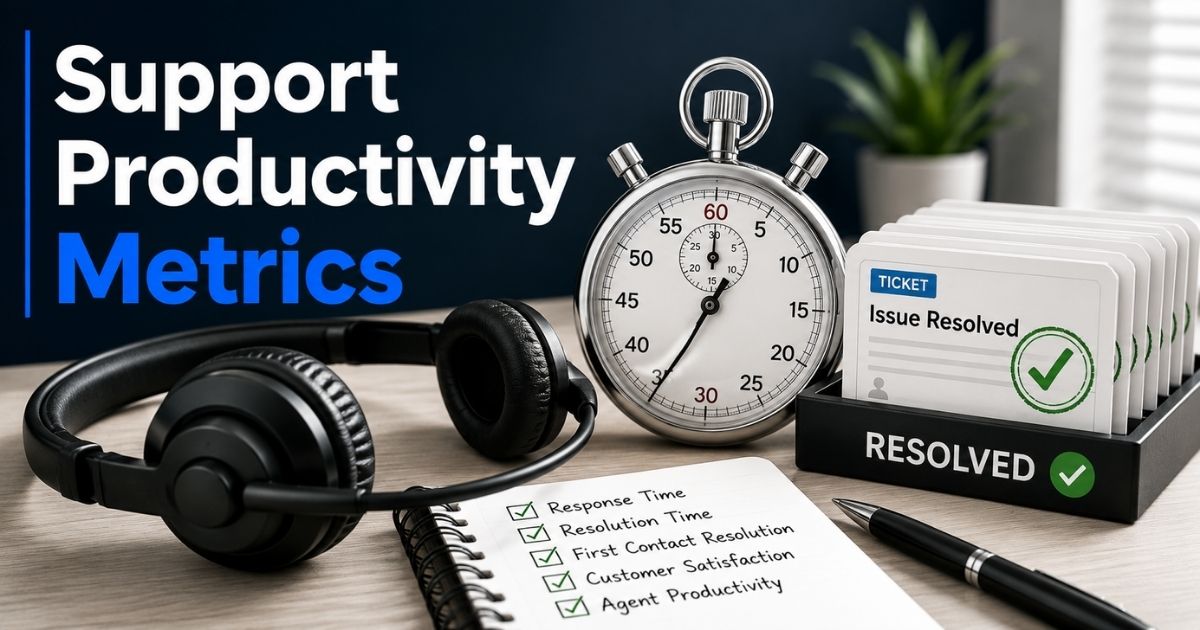
Track first response time, resolution time and customer satisfaction score to identify bottlenecks. A 1% improvement in First-Call Resolution Rate produces a 1% improvement in customer satisfaction. Use help desk software analytics dashboards to spot trends and adjust workflows.
Consider Outsourced Help Desk Support As A Solution
Sometimes the best fix is to look outside your organization. Outsourced help desk support offers a proven alternative when internal resources fall short.
Benefits Of Professional IT Help Desk Support Services
Professional providers deliver support around the clock. Your employees get help at 2 AM without waiting until morning. Cost savings add up fast when you eliminate salaries, training and infrastructure expenses. The average Level 1 help desk technician earns $78,752 a year. Help desks face 42% attrition rates. Outsourcing sidesteps these challenges.
You gain access to specialized technical knowledge your team might lack. Providers staff experts in multiple operating systems, software platforms and technical problems. Their Level 1 teams resolve 80% of issues without escalation.
When To Choose Outsourced Support
Think about outsourcing when your ticket volume overwhelms your team or response times keep climbing. Growing businesses need expandable support that grows with them. 50% of organizations already outsource their help desk function. That number doubled since 2021.
Budget constraints make outsourcing attractive. Building internal capacity costs more than partnering with established providers who spread costs across multiple clients.
Selecting The Right Provider
Security comes first. Verify certifications like SOC 2 and ISO 27001 before signing contracts. Ask about data protection practices and breach response procedures. Check their track record through case studies and client references.
Strong providers offer clear SLAs that define response times and resolution commitments. Leading services achieve first response times under 30 minutes for urgent issues with the best ticket management systems. Look for industry expertise matching your business needs.
EasyDesk Help Desk Software For Reliable And Scalable Support
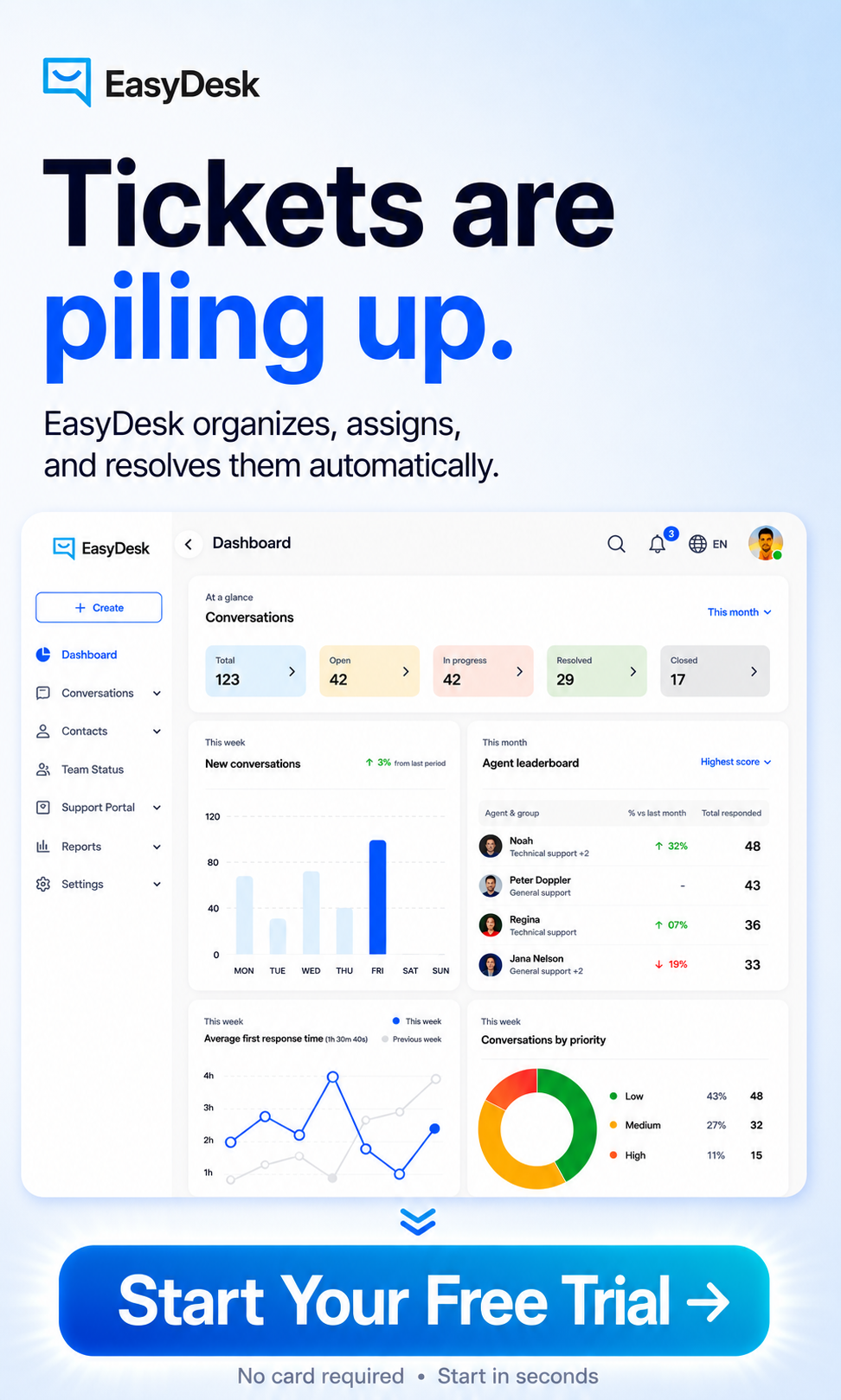
EasyDesk helps businesses manage help desk support with clarity and control. Teams receive customer inquiries, service requests, and technical issues in one place. The platform works as a powerful help desk software with a smart ticketing system for ticket creation and tracking. Support technicians can quickly review tickets, understand customer requests, and provide technical assistance. Clear workflows improve desk management and reduce unresolved issues. Faster response times help maintain strong customer satisfaction.
EasyDesk also supports productivity through automation rules and a shared knowledge base. Help desk technicians and support technicians can resolve computer problems, password resets, and user account issues with less effort. The service desk dashboard helps teams track ticket volume, resolution times, and different issues across the business using #1 ticketing software built for better customer support. Reliable desk support tools help professionals focus on problem-solving and deliver secure, transparent customer support and the best customer support with a ticketing software system across services, software, and technical environments, including turning emails into trackable tickets with the right tools powered by EasyDesk features for smarter, secure customer support.
FAQs
Can Help Desk Support Improve Employee Productivity In A Business Environment?
Yes. Effective help desk support reduces technical problems that interrupt daily desk work. Quick technical assistance helps employees resolve computer problems, access user accounts, and return to work faster. Strong help desk software and a ticketing system improve response times and productivity across the business.
Does A Ticketing System Help Track Customer Requests And Technical Issues Better?
Yes. A ticketing system organizes ticket creation, customer requests, and service requests in one place. Support technicians can track ticket volume, prioritize technical issues, and monitor resolution times. Structured desk management helps reduce unresolved issues and improves customer satisfaction.
Can Automation Tools Reduce Help Desk Ticket Volume?
Yes. Automation rules handle routine tasks like password resets, ticket routing, and basic troubleshooting. Help desk software uses automation to reduce manual desk work and speed up processes. Support technicians can then focus on complex technical problems and customer inquiries.
What Skills Should A Help Desk Technician Have For Effective Technical Support?
A help desk technician needs strong technical knowledge of operating systems, software, and computer hardware. Problem-solving, troubleshooting, and clear communication are also important soft skills. A balanced skill set helps technicians resolve technical issues and assist users more effectively.
How Does A Knowledge Base Support Faster Issue Resolution In A Service Desk?
A knowledge base stores solutions for common technical issues, computer problems, and service requests. Support technicians and users can explore guides and troubleshooting steps quickly. This knowledge improves response times and helps the help desk team resolve tickets faster.