Customers do not want complicated experiences. They want quick answers, smooth interactions, and zero frustration. Every extra step can push them away. That is where the customer effort score comes into play. It helps you understand how easy or difficult your service feels from the customer’s side.
A high-effort experience often leads to churn. A low-effort journey builds trust and loyalty. That is why modern support teams focus on reducing friction at every touchpoint. Customer effort score gives you a clear way to measure and improve that.
This guide breaks down everything you need to know. From basics to strategies, you will learn how to create effortless customer experiences that drive real growth.
What Customer Effort Score Means
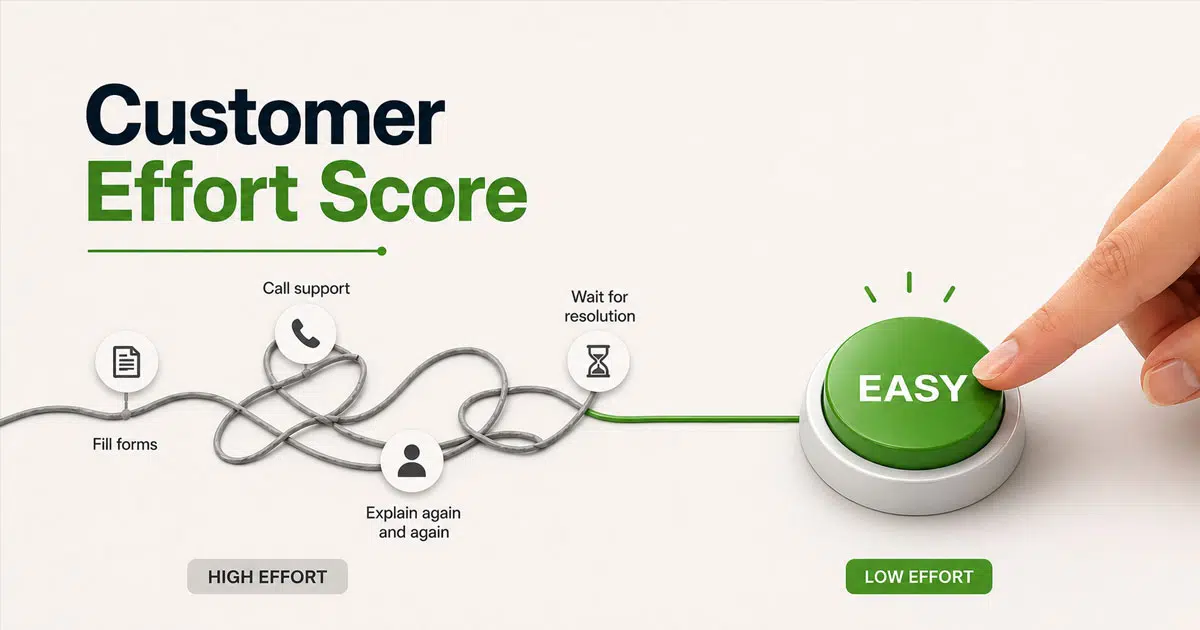
Customer effort score (CES) shows how much effort a customer needs to complete a task. It focuses on ease across customer service interactions, not just outcomes. The idea came from the Corporate Executive Board. A good customer effort score means customers find your process simple and user-friendly. It reflects real customer experience, not assumptions.
Customer effort score CES usually comes from CES surveys after a specific interaction. Customers rate how much effort they used, from strongly disagree to strongly agree. Teams use CES data to measure customer effort score and understand pain points across multiple channels. This includes self-service options, contact center support, and help from a customer service representative.
Lower customer effort leads to higher customer satisfaction and increased loyalty. High effort service interaction creates customer frustration and disloyal customers. A low effort experience supports repeat purchases, improves customer retention, and enhances overall customer happiness.
Why Customer Effort Score Is Important
Customer effort score shows how easy or hard your experience feels to customers. It goes beyond basic feedback. It reveals friction, delays, and gaps. Brands that reduce customer effort often see better customer satisfaction, stronger customer loyalty, and higher customer retention across every customer service channel.
Customer Loyalty And Retention
Low-effort experience builds trust fast. Customers prefer brands that save time and reduce hassle. Research shows 96% of customers with high effort experiences become disloyal customers. Many even spread negative word.
A good customer effort score leads to repeat purchases and increased loyalty. It also helps encourage customers to stay longer. Lower customer effort creates satisfied customers who return without hesitation.
Stronger Customer Satisfaction
Customer effort score connects closely with customer satisfaction score (CSAT). When customers rate effort as low, they often report higher overall customer happiness. That makes CES one of the most reliable customer experience metrics.
Customer service interactions across multiple channels affect this score. Smooth support from a customer service representative or self-service tools can enhance customer satisfaction. Poor support increases customer frustration quickly.
Lower Customer Service Costs
High-effort service interaction increases customer service costs. Customers contact support team multiple times. That adds pressure on the contact center and reduces operational efficiency.
A strong CES score means fewer repeat contacts. A modern ticketing system plus self-service options solve issues faster. This reduces workload on the customer support team and improves customer service altogether.
Clear Insights
CES surveys provide actionable insights that other customer experience metrics may miss. Survey responses show where customers struggle. Teams can interpret CES survey results to find real pain points.
CES data helps track CES across specific interaction points. It highlights gaps across multiple departments. That allows better customer service solutions and smarter customer experience strategy decisions.
Better Alignment
Customer expectations continue to rise. Customers prefer quick, simple, and user-friendly solutions. Complex journeys create high-effort experiences that push users away.
Customer effort score helps measure customer effort score in real time. It supports proactive communication and faster fixes. Brands that focus on lower customer effort stay up to date and build long-term customer happiness.
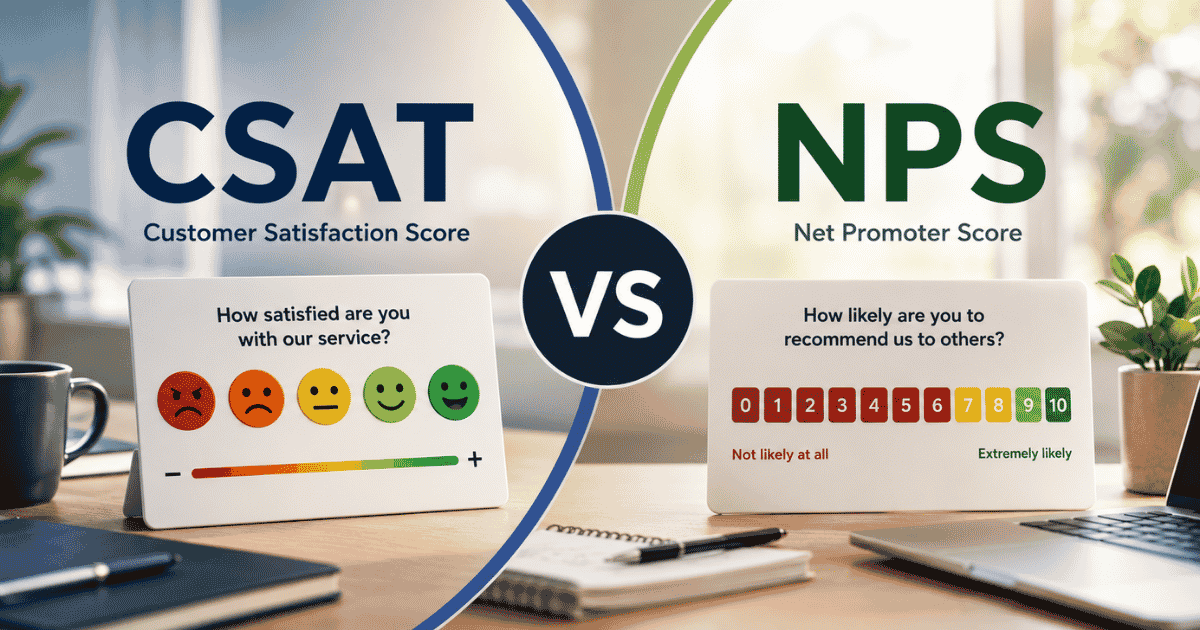
Customer Effort Score Vs CSAT Vs NPS Key Differences
Customer experience metrics often seem similar, but each serves a unique purpose. Customer effort score, customer satisfaction score, and Net Promoter Score help measure effort, satisfaction, and loyalty from different angles.
Aspect | Customer Effort Score (CES) | Customer Satisfaction Score (CSAT) | Net Promoter Score (NPS) |
|---|---|---|---|
Focus | Measures how much effort a customer uses in a specific interaction | Measures how satisfied customers feel after service | Measures customer loyalty and likelihood to recommend |
Question Type | “How easy was it to resolve your issue?” | “How satisfied are you with your experience?” | “How likely are you to recommend us?” |
Timing | After a specific interaction | After customer service interactions | After overall customer journey or key milestones |
Insight Depth | Provides actionable insights on friction and pain points | Gives general satisfaction feedback | Shows broad loyalty trends |
Business Impact | Helps reduce customer effort and improve efficiency | Improves customer satisfaction levels | Drives brand advocacy and growth |
Customer Behavior | Low effort leads to repeat purchases and retention | High satisfaction improves short-term happiness | High scores indicate long-term loyalty |
Best Use Case | Fix high effort service interaction issues | Track service quality performance | Understand overall brand perception |
How Customer Effort Score Works With Real Survey Examples
Customer effort score works by asking customers how easy a task felt during a specific interaction. It captures real feedback at key moments. CES surveys help measure customer effort score, uncover friction, and improve customer experience across every customer service channel.
Simple CES Question Format Explained
Customer effort score CES usually uses one clear question. It asks how much effort a customer had to put in. Most surveys follow a scale from strongly disagree to strongly agree.
A common example is, “The company made it easy to resolve my issue.” Customers rate their experience right after customer service interactions. Clear questions help collect responses that reflect real effort score without confusion.
Rating Scale And Customer Responses
CES surveys often use a 5 or 7-point scale. Customers rate effort based on their experience. A higher score usually means a low effort experience, while a low score shows high effort experiences.
Research shows that companies with strong CES score see up to 94% of customers more likely to repurchase. Survey responses help teams understand how customers feel during specific interaction points across multiple channels.
Real Survey Examples Across Channels
A contact center may ask CES after a support call. A self-service portal can trigger a survey after issue resolution. Email support teams also collect responses after closing tickets.
Customers prefer quick and user-friendly surveys. Short CES surveys get higher response rates than long forms. Real examples help track CES data across customer service channels and improve customer service solutions.
How Teams Interpret CES Survey Results
Teams analyze CES data to find pain points in the customer journey. They look for patterns in survey responses. High-effort service interaction often signals delays, unclear steps, or poor communication.
Support team and multiple departments use these insights to improve processes. Proper analysis helps interpret CES survey results and build better customer experience strategy with actionable insights.

Using CES Data To Improve Experience
CES data helps reduce customer effort and improve operational efficiency. Teams can fix issues in self-service tools, improve proactive communication, and support customer expectations.
Brands that track CES regularly see better customer satisfaction and increased loyalty. Lower customer effort leads to higher customer retention, better overall customer happiness, and fewer disloyal customers spreading negative word.
Customer Effort Score Calculation Methods And Formula Explained
Customer effort score calculation shows how easy or hard a customer experience feels. It uses simple survey data to measure customer effort score after a specific interaction. Clear methods help teams track CES, compare results, and improve customer experience with real, actionable insights.
Basic CES Formula And Structure
Customer effort score uses a simple average formula. Teams collect survey responses and divide total scores by total responses. This gives a clear CES score.
Customer effort score calculation looks like this: total effort score ÷ number of responses. Most CES surveys use a 5 or 7-point scale. A higher score usually reflects a low effort experience and better customer satisfaction.
Score Scale And Interpretation
CES surveys often use scales from strongly disagree to strongly agree. Customers rate how much effort they used during customer service interactions. Each response adds to the final effort score.
A good customer effort score depends on your scale. For example, a score above 5 on a 7-point scale often signals low effort. Lower scores highlight high effort experiences and customer frustration across customer service channels.
Collect Data Across Touchpoints
Accurate CES data comes from multiple channels. Teams collect responses from contact center calls, emails, and automated email-to-ticket systems in the self-service portal. This gives a full view of the customer journey.
Customers prefer quick feedback options. Short CES surveys improve response rates by up to 30%, based on recent CX studies. More data helps measure customer effort score with better accuracy and consistency.
Compare CES With Other Metrics
Customer effort score works best with other customer experience metrics like the Customer Satisfaction Score and Net Promoter Score. Each metric shows a different part of the experience.
CES focuses on effort. CSAT shows satisfaction. NPS measures loyalty. Together, they provide valuable insights that help improve customer experience strategy and increase customer loyalty.
Use Insights For Continuous Improvement
CES data helps teams find pain points and reduce customer effort. Support team and multiple departments can act on these insights to improve service flow.
Brands that focus on measuring CES, supported by ticket automation software, see up to 15–20% lower customer service costs. Lower customer effort improves operational efficiency, boosts customer retention, and enhances overall customer happiness.
When To Measure Customer Effort Score Across The Customer Journey
Customer effort score works best when measured at the right moments. Timing affects accuracy. Teams need to capture feedback after key customer interactions. This helps measure customer effort score clearly and improve customer experience with reliable CES data.
After Customer Support Interactions
Customer effort score should be measured right after customer service interactions. This includes contact center calls, live chat, or email support. Customers can recall how much effort they used during the specific interaction.
Studies show response accuracy drops by over 20% if surveys are delayed. Quick CES surveys help collect responses that reflect real experience. Support team can use this data to reduce customer effort and improve customer service solutions.
After Self-Service Completion
Self-service options like a self-service portal or knowledge base are key touchpoints. Customers prefer solving issues on their own. Measuring CES here shows if tools are user-friendly.
A low effort experience in self-service increases customer satisfaction and operational efficiency. Poor experience leads to customer frustration. CES surveys after self-service tools help identify gaps and improve customer experience strategy.
After Purchase Or Transaction
Customer effort score can be measured after a purchase or billing interaction. This shows how smooth the process felt. It also reveals friction in checkout or payment steps.
Research shows 86% of buyers will pay more for a better customer experience. A high effort score here may signal issues in the customer journey. Fixing them helps increase customer loyalty and repeat purchases.
During Onboarding Or Setup
Onboarding is a critical stage. Customers expect a simple start. Measuring CES during setup helps track early experience.
High effort experiences during onboarding can lead to early churn. CES data highlights pain points across multiple departments. Teams can use actionable insights to enhance customer satisfaction and meet customer expectations quickly.
After Issue Resolution And Follow-Up
Customer effort score should also be measured after issue resolution and follow-up. This ensures the problem was solved with low effort.
Customers rate experiences more positively when the resolution is fast and smooth. Proactive communication reduces repeat contacts and customer service costs. Tracking CES here improves customer retention and overall customer happiness.
Common Mistakes That Lower Customer Effort Score Performance
Customer effort score drops when small issues pile up across the customer journey. Many teams miss key gaps in service flow. Poor processes increase customer effort and hurt customer satisfaction. Fixing these mistakes helps improve customer experience and boost customer loyalty.
Delayed Or Poor CES Surveys
Late CES surveys reduce accuracy. Customers forget details after a specific interaction. That leads to weak CES data and poor insights.
Research shows response quality drops fast after 24 hours. Teams should measure customer effort score right after customer service interactions. Quick surveys help collect responses that reflect real experience and reduce bias in survey responses.
Complex And Long Processes
Long steps increase customer effort. Customers prefer fast and simple journeys. Too many steps create high effort experiences and customer frustration.
A study shows 73% of customers value time as the most important factor in service. Complex workflows across multiple channels reduce customer satisfaction. Simplified flows improve customer experience and lead to a good customer effort score.
Lack Of Self-Service Options
Limited self-service tools force customers to contact support team. This increases customer service costs and effort score. Customers prefer self-service for quick solutions.
A user-friendly self-service portal can reduce support calls by up to 40%. Strong self-service options create a low-effort experience. This helps enhance customer satisfaction and improve operational efficiency.
Poor Coordination Across Teams
Gaps between multiple departments increase effort. Customers repeat issues across customer service channels. This leads to high-effort service interaction and disloyal customers.
Disconnected systems affect customer service altogether. Teams need shared CES data and better collaboration. Strong coordination, supported by efficient support ticket management, improves customer interactions and supports a smoother customer journey.
Ignoring Customer Feedback And Insights
Customer feedback offers valuable insights. Ignoring it leads to repeated pain points. This increases customer frustration and lowers overall customer happiness.
Brands that act on feedback see up to 25% higher customer retention. Teams should track CES and interpret CES survey results regularly. Actionable insights help reduce customer effort and build increased loyalty.
How To Improve Customer Effort Score With Proven Optimization Strategies
Customer effort score improves when every step feels simple and fast. Teams need clear actions, not guesswork. Smart changes across customer service interactions can lower customer effort, boost customer satisfaction, and increase customer loyalty with measurable CES data.
Fix High Effort Touchpoints First
Start with areas that create high effort experiences. Use CES surveys to find pain points in the customer journey. Focus on steps where customers rate effort low or report customer frustration.
Data shows companies that act on CES insights can reduce churn by up to 15%. Support team should prioritize high-effort service interaction fixes using smart ticket prioritization in customer support. Quick wins improve customer experience and create a low-effort experience that customers value.
Strengthen Self-Service Experience
Customers prefer fast answers without contacting a customer service representative. Strong self-service tools reduce effort and improve operational efficiency. A user-friendly self-service portal makes problem-solving easier.
Reports show 67% of customers try self-service before reaching support. Clear guides, FAQs, and workflow automation help reduce customer effort. Better self-service options also lower customer service costs and improve customer satisfaction score.
Train Support Teams For Faster Resolution
Customer service team plays a key role in effort score. Skilled agents supported by customer support software resolve issues faster and reduce repeat contacts. This creates a smooth experience across customer service channels.
Research shows 73% of customers value quick resolution over friendly tone. Training support team with clear scripts and knowledge improves customer interactions. Faster support leads to better CES score and higher overall customer happiness.
Use Proactive Communication
Proactive communication reduces confusion and delays. Customers feel more confident when they get updates early. This lowers customer effort during a specific interaction.
Studies show proactive updates can reduce inbound queries by 20–30%. Contact center teams can use alerts, emails, or messages to guide customers, especially when moving from manual workflows to automated ticketing systems. Clear communication helps enhance customer satisfaction and prevent negative word.
Track And Optimize With CES Data
Regular tracking helps measure customer effort score across multiple channels, especially when combined with automated ticket management software. Teams should analyze survey responses and track CES trends over time. This provides valuable insights for continuous improvement.
Brands that focus on measuring CES and acting on data see up to 20% improvement in customer retention. Combining CES with Net Promoter Score and customer satisfaction score gives a complete view of customer experience metrics and long-term growth.
How EasyDesk Helps Improve Customer Effort Score Efficiently
EasyDesk optimizes customer service altogether by reducing friction across every touchpoint. It brings all customer interactions into one place, uses tools that turn emails into trackable tickets, and helps teams respond faster. This directly helps measure customer effort score and improve customer experience with real CES data.
EasyDesk uses helpdesk ticketing software with automation, ticket management, and multi-channel support to lower customer effort. It assigns tickets instantly and tracks service level agreements to ensure quick resolution. EasyDesk also offers a knowledge base, ticketing software for better customer support, and self-service options, so customers find answers without contacting a customer service representative.
The EasyDesk platform and its features also collect customer feedback and CES surveys to track effort score across the customer journey. Low effort interactions can drive up to 94% repeat purchases and reduce service costs by 37%. This helps support teams reduce customer frustration, enhance customer satisfaction, and increase customer loyalty.
FAQs
What Is A Good Customer Effort Score Benchmark?
A good customer effort score depends on your scale and industry. On a 7-point CES scale, scores above 5 usually reflect a low effort experience. Higher scores indicate customers find your service easy to use. A good CES score also means fewer pain points across the customer journey. It supports customer satisfaction and customer loyalty. Teams should track CES regularly and compare trends over time for better accuracy.
Can Customer Effort Score Replace Other Metrics?
Yes, but not completely. Customer effort score works best with other customer experience metrics like customer satisfaction score and net promoter score. Each metric shows a different view of customer experience. CES focuses on how much effort customers use. CSAT measures satisfaction. NPS shows loyalty. Together, they provide valuable insights for a strong customer experience strategy.
How Often Should Teams Measure Customer Effort Score?
No, measuring CES once is not enough. Teams should measure customer effort score after every key customer interaction. This includes support calls, self-service use, and issue resolution. Frequent CES surveys help collect responses that reflect real-time experience. Regular tracking helps reduce customer effort and improve operational efficiency across multiple channels.
Does Customer Effort Score Impact Revenue Growth?
Yes, customer effort score has a strong link to revenue. Research shows 94% of customers with low effort experiences are likely to repurchase. Lower customer effort leads to repeat purchases and increased loyalty. It also reduces customer service costs and improves customer retention, which directly supports business growth.
What Makes Customers Rate High Effort Experiences?
No, high effort does not happen randomly. It often comes from complex processes, poor communication, or lack of self-service options. Customers feel frustrated when tasks take too long. High effort service interaction creates negative word and disloyal customers. Fixing these issues helps improve customer experience, enhance customer satisfaction, and build overall customer happiness.