Ticket SLA management plays a critical role in modern customer support by defining how quickly and effectively support teams respond to customer queries. A well-structured SLA management system creates accountability, improves service delivery, and ensures every support request receives timely attention.
Strong SLA management directly influences customer satisfaction, service quality, and long-term business goals. When support teams meet clear SLA targets, customers experience faster responses, consistent resolutions, and higher confidence in the service provider. In this article, you will learn what ticket SLA management means, how SLAs work in customer support, common challenges teams face, and how the right tools help maintain SLA compliance while delivering consistent, high-quality support.
What Is Ticket SLA Management
Ticket SLA management refers to the process of defining, tracking, and enforcing service level agreements for support tickets across customer support operations. It ensures every customer request receives a response and resolution within agreed SLA timeframes based on priority, issue type, and business hours.
In practice, ticket SLA management helps customer service teams monitor response time, resolution time, and first response performance using SLA metrics and SLA timers. These measurements allow support agents to prioritize tickets correctly, meet service expectations, and maintain consistent service quality across all support channels.
An effective SLA management system also improves SLA compliance by providing visibility into potential SLA breaches before deadlines expire. For support managers, ticket SLA management acts as a control mechanism to measure SLA performance, identify performance gaps, and align support processes with business goals. When executed correctly, it strengthens customer experience, operational efficiency, and long-term customer retention.
Benefits Of SLA Ticket Management
SLA ticket management delivers measurable value by structuring how support teams respond, prioritize, and resolve customer requests. A well-defined SLA management system improves service quality, strengthens customer relationships, and helps support operations align more closely with business goals.
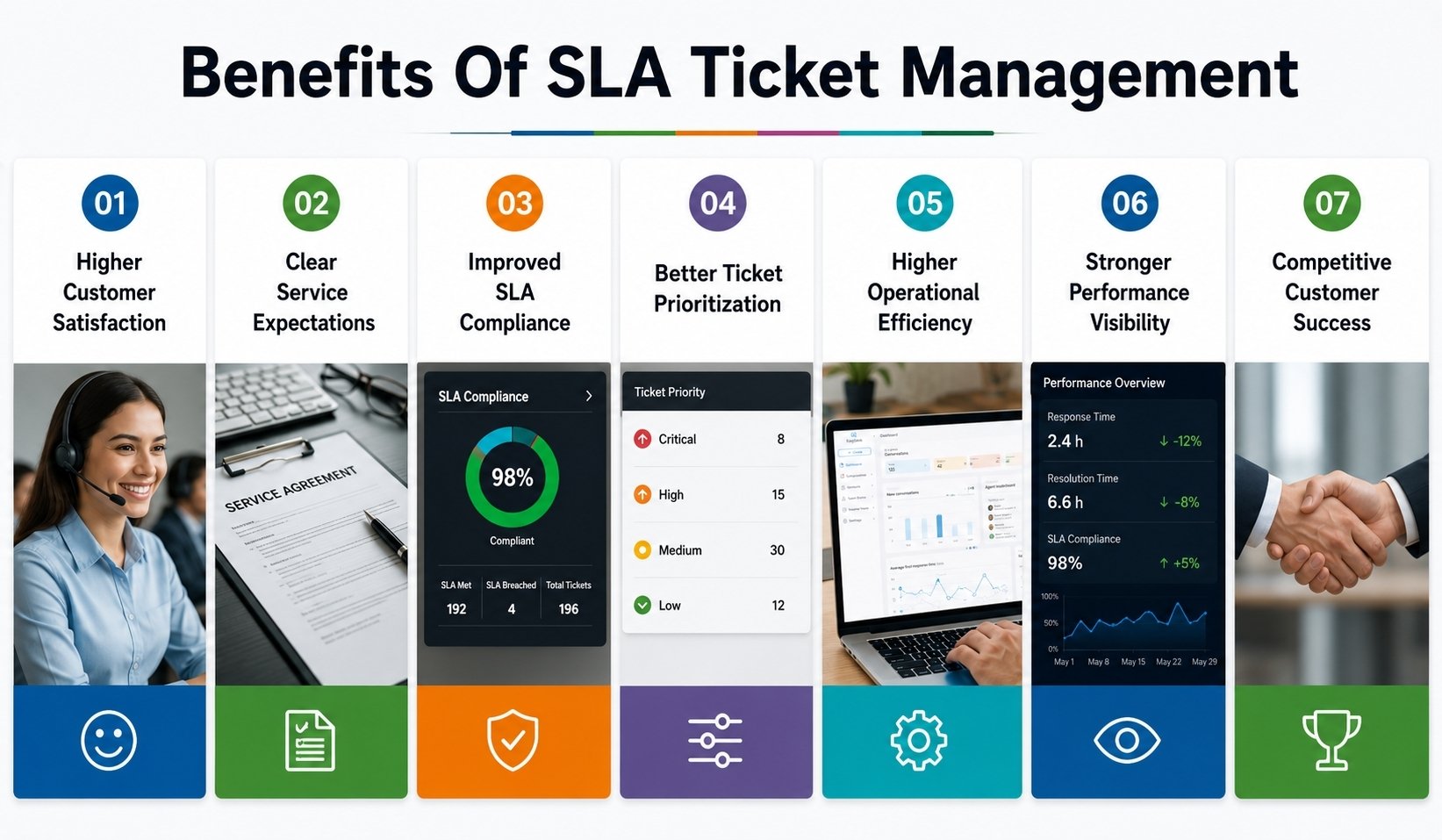
Higher Customer Satisfaction
SLA ticket management improves customer satisfaction by setting clear service expectations and consistently meeting them. When customers know expected response time and resolution time, uncertainty decreases, and confidence in the service provider increases.
Consistent SLA adherence ensures customer queries receive timely updates and reliable resolutions. This predictability improves the overall customer experience and contributes directly to a higher customer satisfaction score. Over time, dependable support builds trust and supports long-term customer retention.
Modern helpdesk ticketing systems help support teams manage service requests efficiently while improving communication with every end user. Faster notifications and reliable contact handling strengthen long-term client trust significantly.
Clear Service Expectations
Clear SLAs define what customers can expect from support services across different request types and priorities. These agreements remove ambiguity around response time, resolution time, and service quality.
For support teams, clear expectations reduce confusion and improve decision-making. Customer service agents understand priorities, while customers gain transparency through the support portal. This alignment helps meet customer expectations consistently and reduces friction during customer interactions.
Well-defined SLA policies establish the expected level of support within a specific time frame. Clear SLA requirements also help customers understand response commitments across every business day consistently.
Improved SLA Compliance
SLA ticket management provides the structure and visibility required to maintain strong SLA compliance. SLA timers, key SLA metrics, and real-time tracking help teams accurately monitor deadlines.
Improved compliance reduces SLA breaches and SLA violations across support operations. With better control over SLA performance, teams protect service quality and maintain reliable service delivery even as ticket volume grows.
Organizations improve SLA compliance when performance targets are consistently met across departments. A default SLA also helps teams maintain service quality during high-volume support event situations effectively.
Better Ticket Prioritization
Effective SLA management helps support teams prioritize tickets based on urgency, impact, and SLA targets. Priority tickets receive immediate attention, while standard requests follow defined workflows.
This structured prioritization improves response time and resolution time across all support requests. Support agents allocate effort more effectively, which leads to efficient support and fewer performance gaps within the customer service department.
Priority management improves the ability of support teams to set time limit controls for urgent requests. Faster response speed allows agents to resolve critical issues within few hours.
Higher Operational Efficiency
SLA ticket management strengthens operational efficiency by aligning support processes with measurable performance metrics. Workflow automation in customer support, automation rules, automated ticket routing, and clear workflows reduce manual effort and errors.
Efficient support processes allow teams to handle more customer requests without sacrificing service quality. Better efficiency also supports proactive management and helps allocate resources effectively across support agents and priority levels.
Efficient workflows improve internal security, streamline repetitive support tasks, and provide quicker access to customer information. Better automation also helps every company reduce operational delays and manual dependencies.
Stronger Performance Visibility
SLA management systems provide real-time insight into SLA metrics and performance trends. Support leaders can measure SLA performance using dedicated SLA tracking software, identify bottlenecks, and track average response time with accuracy.
This visibility supports data-driven decisions and continuous improvement. By monitoring performance metrics consistently, organizations close performance gaps and improve service delivery across evolving business needs.
Advanced reporting tools help businesses track key benefits through measurable SLA data and operational insights. Strong visibility also improves communication between departments responsible for customer service performance management.
Competitive Advantage And Customer Success
Reliable SLA adherence creates a competitive advantage by differentiating support quality. Customers value timely support, consistent responses, and dependable resolution of issues.
Strong SLA ticket management supports customer success by delivering exceptional support experiences. Over time, this reliability improves customer loyalty, strengthens brand perception, and supports sustainable business growth.
Reliable SLA management strengthens customer loyalty by ensuring service expectations remain clear and achievable. Consistent support quality helps providers build stronger client relationships and sustain long-term business growth.
Ticket SLA Management Fundamentals
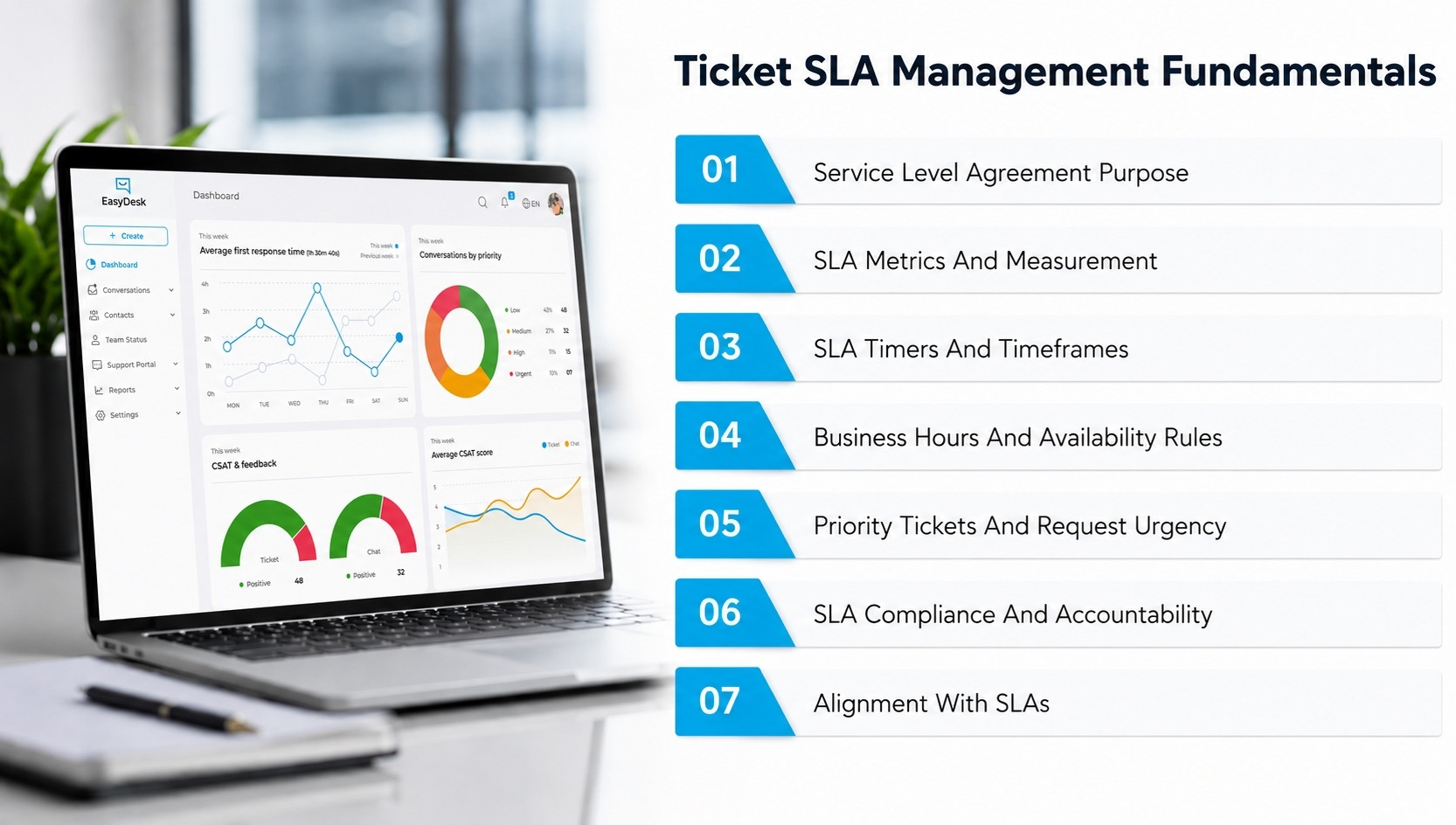
Ticket SLA management fundamentals define how support teams structure response commitments, track service delivery, and maintain SLA compliance across all support operations. This foundation ensures clear expectations, consistent service quality, and measurable performance aligned with customer expectations and business goals, reflecting why well-structured service level agreements are so critical for service success.
Service Level Agreement Purpose
A service level agreement establishes a formal commitment between the service provider and the customer regarding support services. Within a customer service department, SLAs define response time, resolution time, and service expectations for different types of support tickets. These agreements clarify what timely support means in practical terms and are best supported by dedicated SLA management software.
Clear SLAs protect both customers and support teams. Customers understand when to expect updates, while customer service agents gain a structured framework to manage customer queries efficiently. This clarity reduces confusion, strengthens trust, and improves overall customer experience by setting realistic and transparent service standards.
SLA Metrics And Measurement
SLA metrics provide measurable benchmarks to evaluate SLA performance across support operations. Common metrics include average response time, first response, resolution time, and SLA compliance rate. These indicators help support managers assess whether the support team meets agreed service level agreement commitments and highlight the value of a centralized SLA management system.
Accurate measurement allows teams to identify performance gaps early. When SLA metrics align with service expectations, support leaders can make data-driven decisions that improve service quality, optimize workflows, and maintain consistent SLA adherence across all support requests.
SLA Timers And Timeframes
SLA timers track deadlines associated with each support ticket based on defined SLA timeframes. These timers begin when a support ticket enters the system and reflect response and resolution commitments tied to business hours.
Visible SLA timers help support agents prioritize tasks effectively. When teams see real-time countdowns, they respond quickly and prevent SLA breaches before they occur. Proper timer configuration and integrated SLA tracking tools ensure fair measurement, accurate reporting, and consistent enforcement of help desk SLAs across customer support channels.
Business Hours And Availability Rules
Business hours define when SLA timers actively count toward response and resolution targets. These rules ensure SLA compliance reflects actual support availability rather than unrealistic expectations outside operating hours.
Clear business hour definitions help align service delivery with customer expectations. They also protect support teams from unfair SLA violations while allowing customers to understand when timely support is realistically available. This balance improves transparency and strengthens customer trust in the support portal.
Priority Tickets And Request Urgency
Priority tickets allow support teams to differentiate urgent customer issues from routine requests. Priority levels guide support agents on how to allocate resources effectively and respond to high-impact customer requests first, which is the core focus of ticket prioritization in customer support.
Well-defined priority rules improve SLA management by ensuring critical issues receive immediate attention. This approach reduces escalation pressure, improves resolution time for priority tickets, and supports efficient support across growing ticket volumes without sacrificing service quality.
SLA Compliance And Accountability
SLA compliance reflects how consistently a support team meets defined service level agreements. High SLA adherence signals reliable support processes, strong operational efficiency, and a mature SLA management system.
Accountability improves when SLA compliance remains visible to both agents and managers. Transparent reporting encourages proactive management, supports continuous improvement, and reinforces a culture of exceptional support focused on meeting customer expectations consistently.
Help Desk Alignment With SLAs
Help desk workflows must align closely with SLA targets to ensure efficient support delivery. Ticket assignment, escalation procedures, and automated workflows for smarter support all influence SLA performance.
When help desk processes support SLA goals, support agents handle customer requests with greater confidence and consistency. This alignment improves service delivery, reduces SLA violations, and strengthens long-term customer satisfaction and retention.
Types Of SLAs Used In Ticket Management
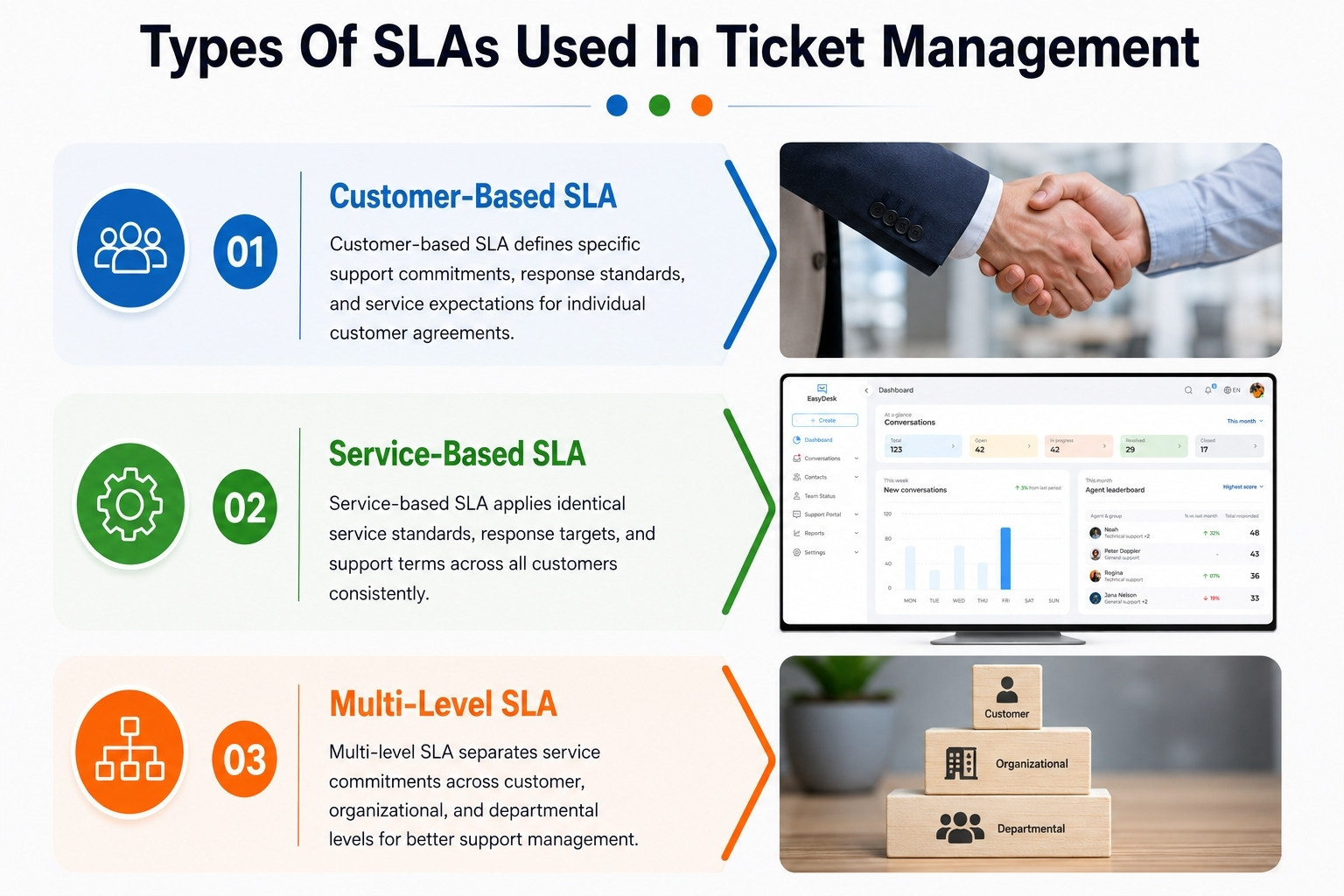
Different SLA structures help support teams manage service expectations across customers, services, and internal workflows. Choosing the right SLA type improves SLA compliance, supports efficient support operations, and ensures customer requests receive an appropriate response and resolution based on business priorities.
Customer-Based SLA Structure
Customer-based SLA applies unique service level agreement terms to specific customers or customer segments. These SLAs often align with contracts, service tiers, or customer value, allowing businesses to meet varied customer expectations effectively.
This approach helps customer service teams prioritize high-impact customer requests and deliver timely support where it matters most. Clear customer-based SLA rules also strengthen customer satisfaction by offering predictable service quality tailored to individual customer needs.
Service-Based SLA Structure
Service-based SLA defines uniform SLA targets for specific support services, regardless of the customer. Examples include standard response time for password resets or resolution time for billing-related support tickets.
This structure simplifies SLA management by applying consistent service expectations across all support requests within a category. Support teams benefit from streamlined workflows, while customers gain clarity on service delivery standards across common customer interactions.
Internal SLA Purpose
Internal SLA establishes performance expectations between internal teams such as support agents, escalation groups, and engineering teams. These agreements focus on handoff times, response commitments, and issue ownership within support operations, and are easier to manage with dedicated SLA management for support teams.
Clear internal SLA rules reduce delays, prevent miscommunication, and improve accountability. Strong internal alignment ensures customer issues progress smoothly across departments without unnecessary bottlenecks.
Internal SLA And Team Accountability
Internal SLA strengthens accountability by assigning clear ownership to each stage of the support process. Teams understand their responsibilities and support performance expectations through shared SLA metrics.
This clarity helps support managers in monitoring SLA adherence across internal workflows. Consistent accountability improves operational efficiency and reinforces a culture of timely support throughout the customer service department.
SLA Selection Based On Business Goals
Choosing the right SLA type depends on business goals, service complexity, and customer expectations. Customer-based SLA supports premium service models, while service-based SLA fits standardized support environments.
Strategic SLA selection helps allocate resources effectively and maintain service quality. Alignment between SLA structure and business objectives supports sustainable growth and consistent customer experience.
Combining Multiple SLA Types
Many organizations use a combination of customer-based, service-based, and internal SLA models. This hybrid approach provides flexibility while maintaining control over SLA performance.
Combined SLA structures allow support teams to handle diverse customer requests efficiently. Proper configuration ensures SLA compliance remains achievable across varied support services and evolving business demands.
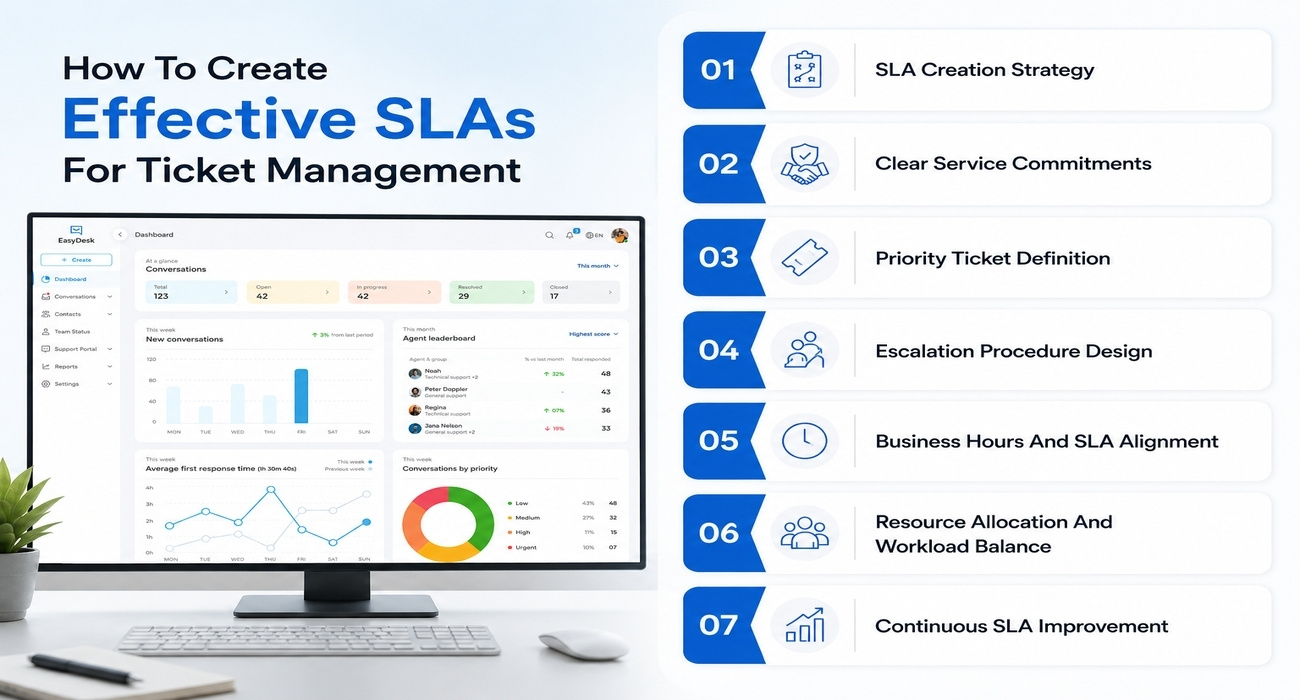
How To Create Effective SLAs For Ticket Management
Effective SLAs provide a structured framework that guides support teams toward timely support and consistent service delivery. Well-defined SLA creation improves SLA adherence, reduces SLA breaches, and aligns customer expectations with operational capabilities across support services.
SLA Creation Strategy
A strong SLA creation strategy starts with realistic SLA targets based on customer expectations, ticket volume, and historical support data. Targets must reflect actual support capacity and be supported by structured ticket creation and management to prevent frequent SLA violations and service fatigue.
Balanced SLA goals help customer service teams maintain service quality while managing support requests efficiently. When SLA targets align with real-world conditions, support agents gain confidence in meeting commitments and delivering exceptional support consistently.
Clear Service Commitments
Clear service commitments define response time, first response, and resolution time for each support ticket category. These commitments ensure customers understand service expectations before submitting requests through the support portal.
Defined commitments also help customer service agents prioritize tasks accurately. Transparent SLAs reduce confusion, support consistent service delivery, and strengthen customer trust throughout the customer support journey.
Priority Ticket Definition
Priority ticket rules classify customer requests based on urgency, impact, and customer importance. This classification allows support teams to respond quickly to high-impact customer issues while maintaining steady progress on standard requests.
Well-structured priority definitions improve SLA management by guiding support agents on how to allocate resources effectively. Clear priorities reduce delays and improve resolution time across diverse support scenarios.
Escalation Procedure Design
Escalation procedures define actions when support tickets approach SLA timeframes or risk SLA breaches. These procedures ensure issues receive attention before SLA violations occur and form a crucial part of any structured ticket escalation process.
Structured escalation improves SLA compliance by involving senior agents or specialized teams at the right moment. Clear escalation paths prevent unresolved customer issues from negatively affecting customer satisfaction and service quality
Business Hours And SLA Alignment
Business hours influence how SLA timers calculate response and resolution deadlines. Proper alignment ensures SLA adherence reflects actual support availability rather than unrealistic expectations.
Clear business hour definitions protect support teams from unfair SLA breaches while helping customers understand support timelines. This balance improves transparency and reinforces trust in support services.
Resource Allocation And Workload Balance
Effective SLA management requires proper resource allocation across support agents and priority levels. Balanced workloads and automated ticket management software help teams respond quickly and maintain consistent SLA performance.
When resources align with ticket demand, support operations run efficiently. This approach reduces performance gaps, improves operational efficiency, and supports long-term customer satisfaction.
Continuous SLA Improvement
Regular SLA reviews help organizations adapt to evolving business needs and changing customer expectations. Performance metrics and SLA reports highlight areas that require improvement.
Continuous improvement strengthens SLA management systems over time. Data-driven adjustments support proactive management, reduce SLA breaches, and ensure service delivery remains reliable as support demands grow.
Common Ticket SLA Management Challenges
Ticket SLA management challenges emerge when support operations scale faster than processes and tools. These challenges affect SLA compliance, service quality, and customer satisfaction, making it essential for support teams to identify root causes and apply practical, sustainable solutions.
High Ticket Volume Pressure
High volumes of support requests strain support teams and increase the risk of SLA breaches. When ticket inflow exceeds available resources, response time and resolution time suffer, even for experienced support agents.
Unmanaged ticket volume leads to backlog growth and reduced service quality. Without proper workload distribution, support teams struggle to deliver timely support and maintain consistent SLA performance across customer interactions.
Weak Ticket Prioritization
Poor prioritization prevents support teams from addressing critical customer issues promptly. When all support tickets receive similar attention, priority tickets risk delays and SLA violations.
Clear priority rules help support agents focus on high-impact customer requests. Strong ticket prioritization improves SLA adherence, reduces escalation pressure, and supports efficient support delivery across diverse support services.
Manual Support Processes
Manual workflows limit visibility into SLA timers and SLA metrics. Without automation, support agents rely on memory or spreadsheets to track deadlines, which increases the likelihood of SLA breaches, especially when comparing manual vs automated ticketing approaches.
Automation rules reduce human error and improve operational efficiency. Automated ticket routing and alerts, supported by modern ticket automation software, help support teams respond quickly and maintain consistent SLA compliance.
Limited SLA Visibility
Lack of real-time SLA visibility prevents proactive management. Support teams often discover SLA violations after deadlines expire, leaving no opportunity to intervene.
Live SLA dashboards and performance metrics allow teams to measure SLA performance continuously. Improved visibility supports data-driven decisions and helps prevent SLA breaches before they impact customer experience.
Resource Allocation Gaps
Uneven resource allocation causes bottlenecks in support operations. Some support agents become overloaded while others remain underutilized, especially when manual handling replaces streamlined ticket automation workflows, affecting response time and resolution quality.
Balanced resource allocation improves SLA performance and service delivery. Clear workload distribution helps support teams manage priority requests effectively and maintain consistent service quality.
Escalation Process Gaps
Undefined escalation procedures delay issue resolution and increase SLA violations. When escalation rules lack clarity, helpdesk support agents hesitate to involve senior teams or specialists.
Structured escalation procedures protect SLA adherence by ensuring timely intervention. Clear escalation paths improve accountability and prevent unresolved customer issues from harming customer satisfaction.
Inconsistent SLA Review
Infrequent SLA reviews prevent teams from adapting to changing customer expectations and evolving business demands. Static SLAs quickly become misaligned with support realities.
Regular SLA reviews support continuous improvement. Performance metrics highlight trends, uncover performance gaps, and guide adjustments that strengthen SLA management systems over time.
How EasyDesk Helps Businesses With Ticket SLA Management
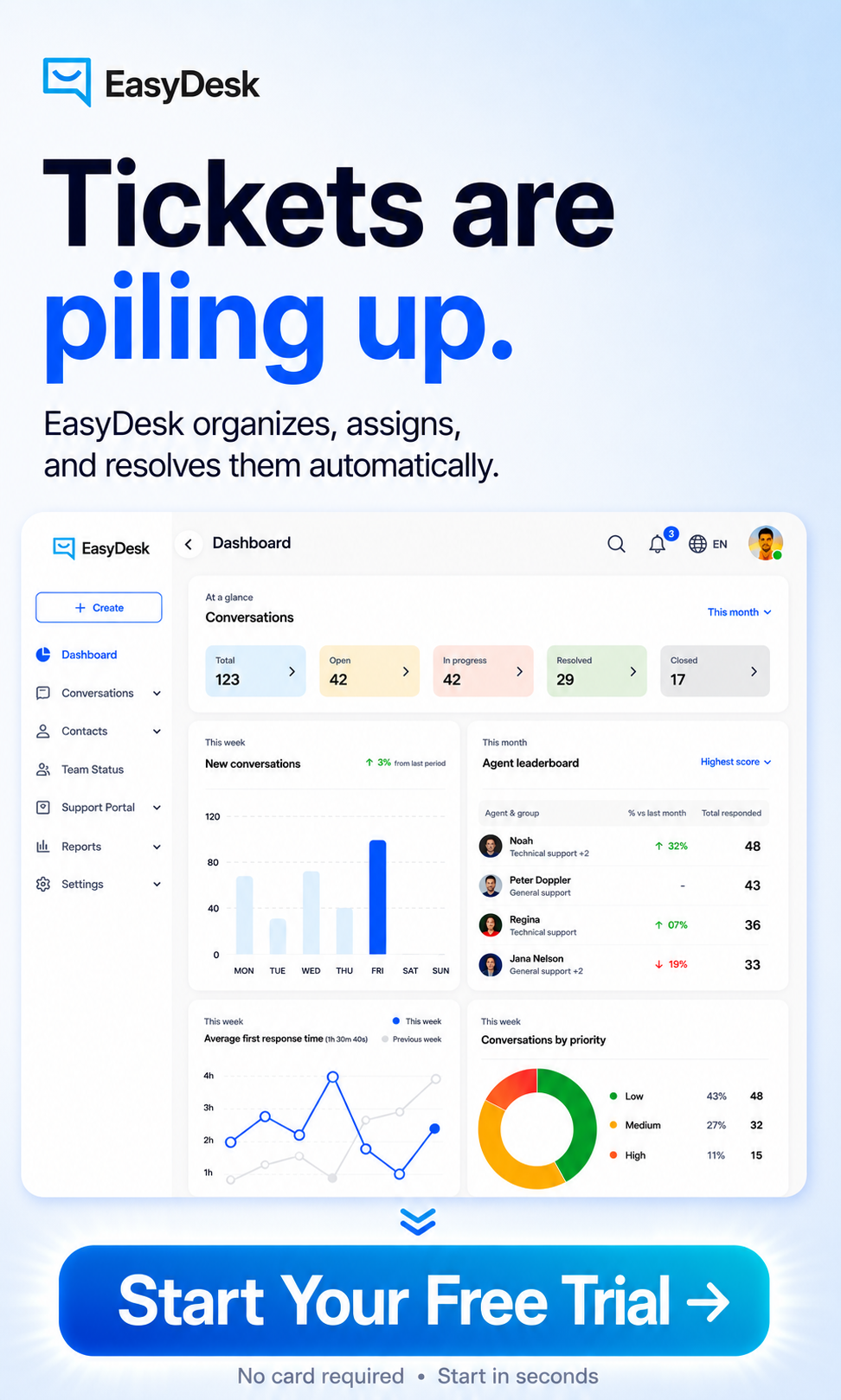
EasyDesk simplifies ticket SLA management by providing a centralized customer support platform and SLA management system that brings support tickets, SLA timers, and SLA targets into a single, intuitive help desk interface. This unified view gives support teams real-time visibility into SLA compliance without relying on manual tracking or fragmented tools.
Automation plays a key role within EasyDesk. Automated ticket assignment, automated ticket routing and automation rules assign customer requests to the right support agents instantly, enabling faster first response and balanced workload distribution. Smart prioritization ensures priority tickets receive immediate attention, helping support teams reduce average response time and maintain service quality.
Real-time SLA metrics and alerts help teams measure SLA performance continuously and prevent SLA breaches before deadlines expire. With actionable performance dashboards, businesses make data-driven decisions, improve operational efficiency, and consistently meet customer expectations while delivering reliable, high-quality support. EasyDesk also helps teams manage support tickets efficiently and streamline customer support with ticket automation, and you can enjoy all these features at a suitable price.
FAQs
How Does Ticket SLA Management Work In Customer Support?
Ticket SLA management works by setting clear service level agreement rules for response time and resolution time, then tracking each support ticket against those commitments. SLA timers monitor deadlines in real time, helping support teams prioritize requests, prevent SLA breaches, and deliver timely, consistent customer support.
How Does SLA Management Improve Customer Satisfaction?
SLA management improves customer satisfaction by setting clear service expectations and ensuring consistent response and resolution times. Reliable SLA performance builds trust and confidence in the customer support team.
What Are The Most Important SLA Metrics To Track?
Key SLA metrics include average response time, first response time, resolution time, SLA compliance rate, and number of SLA breaches. These metrics help support teams evaluate service quality and performance.
How Do SLA Timers And Business Hours Work?
SLA timers track deadlines based on defined SLA timeframes and business hours. Timers pause outside business hours and resume when support operations reopen, ensuring fair SLA measurement.
How Can SLA Management Software Prevent SLA Breaches?
SLA management software uses automation, alerts, and prioritization rules to highlight risks early. These tools help support teams respond quickly and allocate resources effectively.
What Is The Difference Between Customer Based SLA And Service Based SLA?
Customer-based SLA applies unique targets to specific customers or segments, while service based SLA applies uniform targets to specific support services. Each approach supports different business models.
How Can SLA Management Tools Improve SLA Compliance And Support Efficiency?
SLA management tools improve SLA compliance by automating ticket prioritization, tracking response and resolution time, and providing real-time visibility into SLA performance. These tools help support teams allocate resources effectively, prevent SLA breaches, and maintain consistent service quality across all support operations.