Help desk teams face growing pressure to deliver fast, consistent service around the clock. Customers and employees expect immediate responses, clear answers, and smooth resolutions regardless of which agent handles their request. Meeting these expectations with manual tests and processes alone is no longer sustainable.
This is where calculating automation roi becomes essential. When you understand the return on investment from help desk automation, you can make smarter decisions about which tools to adopt and how to scale your support operations. Automation is not just about cutting labor costs. It is about delivering reliable service that keeps both your team and your customers happy.
In this article, you will learn how to calculate test automation roi for your help desk, identify the areas where automation delivers the strongest returns, and avoid the common mistakes that undermine automation efforts.
What Does Automation ROI Mean For Help Desk Teams
Modern help desks handle requests across email, chat, portals, and social channels. Whether you support internal IT users or external customers, the challenge remains the same: deliver consistent, on-brand replies without burning out your agents. This is where understanding automation roi becomes critical for your automation strategy.
In plain terms, automation ROI measures the value your help desk gains from automated workflows, ticket routing, canned responses, and self-service options compared to the cost of those tools. The “return” includes both financial results like lower cost per ticket and fewer headcount hours, as well as service outcomes like SLA compliance, reduced wait times, and consistent answers across channels.
Typical automation features in 2024 help desk stacks include AI-powered triage, knowledge base suggestions, and workflow rules. Each ties directly to measurable returns. Before buying or scaling automation, your team should know how to calculate whether it makes sense for your specific queue and ticket volume. The following key variables will guide your roi calculations.
How To Calculate Automation ROI In Help Desk Service Delivery
The core formula for calculating roi is straightforward: ROI (%) = ((Value Gained − Investment) / Investment) × 100. This gives you a percentage that shows how much you earned back relative to what you spent.
For a help desk, “Investment” typically includes your annual software subscription, implementation and setup time, training costs for agents learning new workflows, and ongoing admin time to maintain automation rules and knowledge content. Many teams underestimate the maintenance costs, but neglected rules and stale content gradually erode your automation value.
“Value Gained” encompasses time saved per ticket, tickets resolved without human intervention through deflection, reduced overtime, fewer escalations, and improved customer satisfaction that lowers churn. You can measure value in hours saved or convert those hours to money using your agents’ fully loaded hourly rate.
For smaller teams, start by measuring in hours. When leadership asks for a business case, convert those hours to operational costs. A 10-agent internal IT help desk processing 2,000 tickets monthly might see average handling time drop from 18 to 11 minutes after implementing automation. That 7-minute reduction translates to roughly 233 hours saved monthly, or about $111,000 to $140,000 in annual value at $40 to $50 per hour.
Step-by-Step Help Desk Automation ROI Example
Clear ROI examples help teams connect automation investments with measurable outcomes. Structured scenarios highlight cost savings, efficiency gains, and operational impact while aligning decisions with key metrics and long-term service performance goals.
Map Baseline Metrics And Current Costs
A realistic ROI model starts with baseline measurement across key metrics such as ticket volume, handling time, and labor costs. In this scenario, eight agents manage 2,000 monthly requests, creating a predictable workload pattern. Translating effort into hourly automation time reveals operational inefficiencies similar to manual processes in software testing environments. Without structured automation testing, teams rely heavily on repetitive actions, much like redundant tests or manually executed test scripts. Identifying these inefficiencies builds the foundation for accurate return on investment roi calculations and highlights where automation delivers the strongest impact.
Apply Automation Across High-Impact Areas
Efficiency improves when automation targets repetitive workflows and structured requests. Introducing an automation framework that includes routing, knowledge integration, and self-service reduces workload pressure. Similar to how automated testing tools optimize testing workflows, help desk systems benefit from reducing manual intervention. Tasks resembling regression tests or smoke tests in software testing can be standardized through scripting tests and automated test cases. Modern technological advancements in test automation tools and support platforms enable teams to scale without increasing operational complexity. The result is faster execution, fewer delays, and consistent service delivery across the board.
Calculate ROI Using Real Data
Post-automation performance shows a drop from 18 minutes to 11 minutes per ticket, alongside 15% ticket deflection. This shift mirrors efficiency gains seen in unit tests and optimized testing workflows. Monthly savings reach 324 hours, translating to 3,888 hours annually. At $48 per hour, total savings equal $186,624. With total costs at $45,000, calculating automation roi becomes straightforward. The formula confirms a 314% return, clearly demonstrating positive roi within a short timeframe. Accurate roi calculations depend on aligning cost inputs with measurable outputs, ensuring every gain is tied to real operational improvements.
Evaluate Long-Term Impact And Scalability
Beyond immediate savings, long-term value emerges through continuous optimization. Reduced dependency on manual processes improves consistency, similar to how software testing evolves with automation. Teams avoid redundant tests, minimize errors, and maintain structured execution. Additional gains include improved service quality, reduced overtime, and better resource allocation. As automation expands, benefits compound across workflows, reinforcing scalability. A well-implemented automation strategy ensures sustainable growth, stronger performance, and ongoing efficiency without increasing team size or operational costs.
Areas Where Automation Improves ROI
Understanding where automation delivers the strongest returns helps you prioritize your automation initiatives. Let me break down the specific areas where help desk automation consistently proves its value.
Ticket Routing And Assignment Automation
Manual triage wastes time and often sends tickets to the wrong queue. Automated ticket assignment that considers agent skill, workload, and ticket category reduces average handle time by 15 to 25 percent compared to manual assignment. For distributed teams across time zones, this is especially valuable. When tickets reach the right specialist immediately, you eliminate handoffs and accelerate resolution throughout your ticket automation workflows.
SLA Monitoring And Escalation Automation
SLA breaches hurt your reputation and sometimes trigger financial penalties. Automated monitoring flags tickets trending toward breach and escalates them before missing targets. This prevents SLA penalties, maintains stakeholder confidence, and justifies your initial investment rapidly when SLA performance directly affects business metrics or client contracts.
Workflow Automation Across Support Processes
Think about all the repetitive tasks your agents handle daily. Workflow automation in customer support can auto-generate ticket templates, auto-populate user information from directory services, and auto-execute common actions like sending password reset links. A password reset that previously required manual verification becomes a fully automated process, removing thousands of manual actions annually. This streamlines business processes and improves release frequency for service improvements, especially when using modern IT help desk software for today’s teams.
Knowledge Base And Self-Service Automation
Intelligent systems that suggest relevant articles during ticket creation create dual-stage deflection. Users find answers through self-service before creating tickets. Agents use suggested knowledge to guide users toward self-resolution. A help desk with robust knowledge base and intelligent suggestion algorithms can achieve 20 to 35 percent deflection rates, significantly reducing agent workload.
Reporting And Performance Tracking Automation
Manual report creation consumes hours that could go toward helping users. Automated reporting with real-time dashboards shows metrics before and after automation implementation. This transparency builds stakeholder confidence and enables quick identification of workflows needing adjustment. You can continuously maintain visibility into what is working without additional administrative overhead.
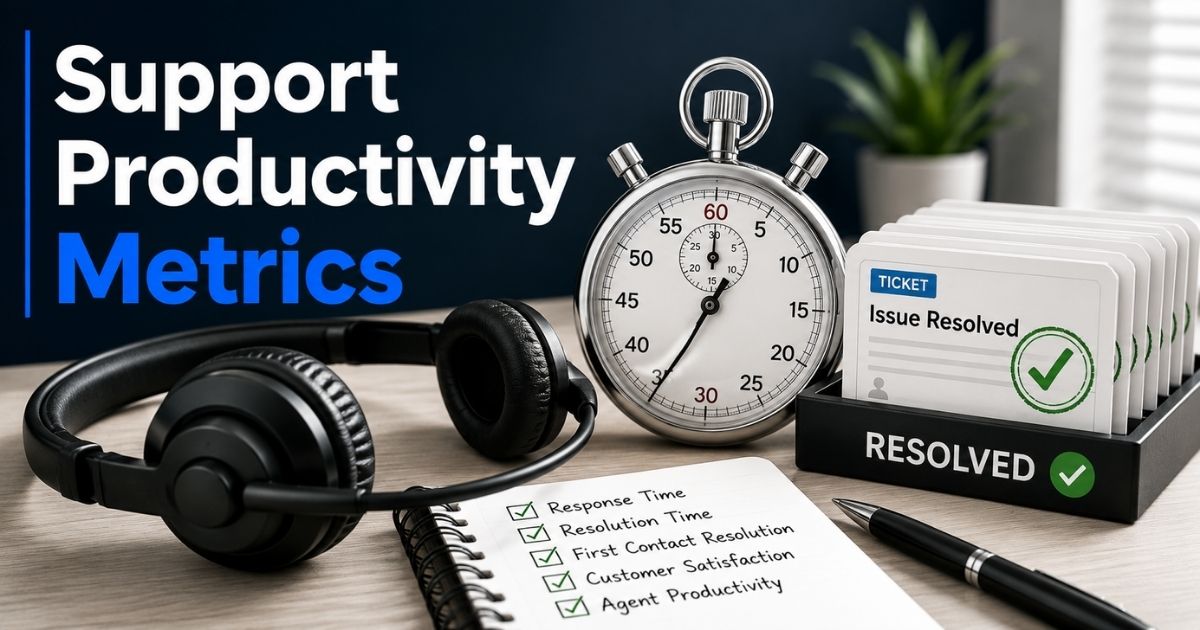
Quantitative Metrics That Prove Automation ROI
Tracking hard numbers before and after automation grounds your ROI conversations with leadership in data rather than assumptions. Not every help desk will track every metric. Pick 3 to 5 that map to your goals, like cutting response times or improving consistency across time zones. You can collect these metrics from your help desk platform’s reports or simple spreadsheets if your tooling is still basic.
Cost Per Ticket
Calculate cost per ticket by dividing net benefits from total monthly help desk cost (salaries, tools, overhead) by ticket volume. If a help desk costs $700,000 annually and processes 24,000 tickets yearly, cost per ticket is roughly $31.67.
Routing rules and self-service articles lower cost per ticket by shrinking average handle time and deflecting simple requests. Centralized platforms that help you manage support tickets efficiently make these savings easier to sustain. This is a core ROI signal for leaders. Track cost per ticket quarterly to show trends as automation coverage deepens and test coverage improves.
First Response Time
First response time is often the first visible change when automation is introduced. Auto-acknowledgements and intelligent routing eliminate idle time in the queue, often reducing median first response time from hours to minutes within weeks, especially when you reduce customer support response time with automation.
Compare median first response time before and after automation, and link this reduction directly to SLA targets. Consistent, branded auto-responses also improve perceived service quality, even before an agent takes over.
Resolution Time And Touches Per Ticket
Average resolution time measures how long tickets stay open. Touches per ticket counts the back-and-forth messages needed. Both matter for product quality in service delivery, and there are proven ways to cut average resolution time fast.
Guided forms, dynamic fields, and knowledge suggestions help agents solve issues in fewer replies and less calendar time. Track both metrics together. Automation should trim touches as well as total resolution time if implemented well throughout your testing process.
Deflection Rate From Self Service
Deflection rate is the percentage of issues solved by FAQ pages, chatbots, or portals without creating a full ticket. Modern ticketing systems that centralize and organize requests make it easier to build effective self-service that drives this rate up. This is different from manually executed test cases requiring agent intervention.
Estimate deflection by comparing portal article views and chatbot sessions with ticket numbers on related topics. A rising deflection rate reduces agent load, delays new hires, and reduces overtime, all contributing directly to cost savings.
Agent Utilization And Overtime
Consistent automation evens out workload, keeping agents focused on complex tickets instead of repetitive password resets. Track utilization (time spent on productive ticket work) and monthly overtime hours before and after automation. The #1 ticketing software built for better customer support should help you see these gains clearly in your reports.
Lower overtime and burnout are real ROI gains, even if they are not tied to direct revenue. These metrics reveal whether automation creates breathing room or merely shifts work complexity.
Qualitative Benefits That Strengthen Automation ROI
Not every benefit shows up in a spreadsheet. These softer wins still matter when pitching automation to stakeholders. Capture anecdotes and internal feedback alongside dashboard charts. Leadership often responds to real stories from employees and customers.
Consistent Answers Across Channels And Agents
Templates, macros, and shared knowledge bases keep responses accurate and on-brand regardless of which agent or shift is on duty. A well-structured help desk improves support behind the scenes and addresses test failures in service consistency that manual test cases cannot catch.
Note fewer “conflicting answer” complaints and reduced internal escalation requests as signs of stronger consistency. This consistency is especially valuable for companies with distributed teams and 24/7 support expectations where exploratory testing of service quality matters.
Happier Agents And Lower Turnover
Automating repetitive tasks frees agents to handle work needing judgment and empathy. This usually improves job satisfaction. Watch trends in agent churn, engagement survey scores, and sick leave after introducing automation.
Lower turnover quietly saves recruiting and training costs while preserving institutional knowledge. Help desk turnover averages 30 to 40 percent annually. Reducing this by even 5 to 10 percentage points saves $15,000 to $30,000 per retained employee.
Better Experience For Internal And External Customers
Faster, clearer, and consistent replies influence overall CSAT scores, even if budget impact is indirect. Capture feedback snippets from post-ticket surveys mentioning speed, clarity, or self-service as qualitative evidence of improved customer satisfaction.
For customer-facing teams, fewer frustrating support interactions improve retention and word of mouth over time. This gives you competitive advantage that compounds beyond immediate cost savings.
Common Mistakes That Undermine Help Desk Automation ROI
Failed automation projects often come from how they are planned and rolled out, not from the tools themselves. Avoiding a few predictable pitfalls can mean the difference between “we tried automation once” and a sustainable, high-ROI setup for your automation project, especially when you’re designing the right helpdesk setup to boost support.
Trying To Automate Every Ticket Type
Some requests like sensitive HR issues or complex outages need human judgment. Chasing full automation wastes time and reduces trust. Comparing manual vs automated ticketing approaches helps you focus on stable, rules-based tasks like account provisioning and common “how do I” questions.
Review your top 20 ticket categories and tag which ones are suitable for automation in the first 6 months. This lets you cover critical functionalities without overreaching. Avoid wrong test cases for automation by prioritizing high-volume, simple requests.
Ignoring Maintenance Of Workflows And Knowledge
Neglected rules, outdated forms, and stale knowledge base content slowly erode value. Test suites and automation scripts require continuous maintenance to stay relevant. Schedule monthly or quarterly “automation health checks” to retire unused rules and refresh articles.
Include this test maintenance time in ROI calculations so expectations stay realistic. Think of it like continuous integration for your service processes.
Not Involving Agents In Automation Design
Top-performing agents know which steps can be streamlined and which need a human. Excluding them leads to clumsy workflows. Run short design sessions or pilots with a handful of agents before pushing rules to the whole team.
When agents help design flows, adoption is smoother and ROI appears faster. They become comfortable executing tests of new workflows because they helped create them.
Focusing Only On License Cost
Leadership sometimes fixates on subscription fees and overlooks savings in time, overtime, and avoided headcount growth. Present a total cost view including admin time, training, and integration balanced against savings.
Pair cost charts with trend lines for first response time, backlog size, or deflection rate. This tells a complete story and demonstrates maximizing roi beyond simple upfront costs.
Practical Steps To Improve Automation ROI In Your Help Desk
This is not only about formulas. It is about making thoughtful, low-risk changes over a few months. Think of this as a short roadmap for the next 90 days to set up, measure, and refine help desk automation with ROI in mind using best practices.
Start With A Focused Pilot
Select one or two clear use cases, like password resets or software access requests. Automate them for a subset of users or a single region first. Define baseline metrics before the pilot starts and review after 30 and 60 days.
This keeps risk low while building a concrete success story for stakeholders. Implementing test automation on a small scale proves value before broader rollout.
Align Automation Goals With Business And IT Objectives
Tie your automation goals to company-level outcomes like faster employee onboarding, fewer disruptions, or better customer happiness scores. Agree on 2 to 3 success criteria with leadership at the start.
This alignment makes budget requests and renewal discussions much easier. A structured helpdesk implementation guide can also keep your rollout aligned with those outcomes. It connects your testing efforts to outcomes everyone cares about.
Use Reporting And Dashboards To Tell The Story
Simple dashboards for ticket volume, response times, and deflection quickly show whether automation is paying off. Purpose-built customer support software can improve response time by 3X while giving you the reporting needed to prove it. Build a recurring monthly snapshot comparing these metrics to pre-automation periods.
Screen captures or lightweight reports shared with managers, maintain support for continued improvements. Smarter helpdesk setups with easy-to-use tool interfaces make this straightforward.
Iterate Based On Feedback, Not Just Numbers
Combine quantitative metrics with comments from agents and users about where workflows feel confusing or helpful. Make small, regular changes to routing rules, forms, and canned responses rather than large overhauls.
This continuous improvement approach keeps ROI growing while avoiding big disruptions to daily operations and your development cycle. The #1 ticketing software built for better customer support should make these iterations simple rather than disruptive.
How EasyDesk Improves Automation ROI For Help Desks
EasyDesk brings all essential customer support features together in one streamlined platform designed specifically for teams seeking predictable automation ROI. As a cloud-based helpdesk ticketing software, it offers automated workflows, ticket routing, canned responses, and a built-in knowledge base that work seamlessly in real-life support scenarios.
The platform surfaces core metrics like first response time, resolution time, and self-service usage in clear dashboards. Managers can slice data by team or request type to show where automation helps most, which is crucial when you want to improve response time by 3X with customer support software. This visibility helps support leaders build stronger business cases using their own data.
EasyDesk keeps the agent interface clean and predictable, encouraging agents to lean on automation rather than work around it. Quick actions, response templates, and in-context knowledge suggestions cut repetitive work and support improved customer satisfaction. Smarter, secure EasyDesk features also support automated test execution time improvements and faster onboarding for new team members.
Frequently Asked Questions
How Long Does It Take To See Positive Automation ROI In A Help Desk?
Many teams start seeing measurable gains in 3 to 6 months once a pilot is live, baselines are set, and basic workflows have been tuned. Full payback on licensing and setup costs often appears within 12 months for teams handling several hundred tickets monthly. The average timeline varies based on ticket volume and automation scope, but focusing on high-volume, repetitive requests accelerates results.
Do Small Help Desk Teams Still Benefit From Automation ROI?
Even teams with 2 to 5 agents benefit if they face recurring questions and limited coverage across time zones or holidays. Smaller teams should start with a narrow scope, such as automating their top three ticket categories, to keep investment low and returns clear. The key is matching automation scope to your actual ticket patterns rather than trying to automate everything at once.
What Data Do I Need Before I Start Calculating ROI?
At minimum, you need monthly ticket volume, average handle time, current staffing costs, and at least one service metric like first response time or CSAT. If you lack historical data, track these metrics manually for one or two months before rolling out automation. This ensures accurate before-and-after comparisons that support credible ROI claims.
How Often Should I Review Automation ROI Metrics?
A light monthly review catches early issues and quick wins. A deeper quarterly review adjusts workflows and updates leadership on progress. After a year, you typically have enough trend data to refine your long-term automation roadmap and predict ROI for additional initiatives with greater confidence.
Can Automation Hurt Customer Or Employee Experience If Used Poorly?
Over-automating or using rigid bots frustrates people when they cannot reach a human for complex issues. Keep clear escape routes to human agents and monitor feedback continuously. When automation generates complaints about inability to reach humans or inappropriate automated responses, reduce automation scope and preserve human-centric resolution for complex issues. Balance is essential for sustainable quality assurance.