Customer support speed matters more than ever. Customers expect quick answers, but they also expect real solutions. Average handle time plays a big role here. It shows how long your team takes to handle each interaction from start to finish.
But lower time does not always mean better service. If agents rush, quality drops. If they take too long, costs rise. That is why average handle time needs the right balance. It connects efficiency with customer experience.
This guide breaks everything down in simple terms. You will learn what average handle time means, how to measure it, and how to improve it without hurting satisfaction.
What Is Average Handle Time
Average handle time is an important metric in any call center or contact center. It measures the total time customers spend on a support request. It includes talk time, hold time, and after-call work. In simple terms, average handle time AHT shows the average duration of customer interactions from start to contact resolution. Support teams use it as a key performance indicator to track agent productivity and service quality.
Average handle time measures how efficiently agents handle customer calls and resolve issues. A lower AHT can reduce operational costs, but rushing can hurt customer satisfaction and customer experience. A balanced approach helps meet customer expectations while maintaining high-quality service. Teams often calculate average handle time to identify patterns, improve agent performance, and support ongoing agent training. A good average handle time also supports first contact resolution rates and reduces customer churn.
Why Average Handle Time Is Important
Average handle time shapes both speed and service quality in a call center. It helps teams understand how long customer interactions take and where delays happen. AHT connects agent productivity, operational costs, and customer satisfaction. When managed well, it supports better customer experience and smarter staffing decisions.
Impact On Customer Satisfaction And Experience
Average handle time has a direct link to customer satisfaction. Long wait times or extended calls can frustrate customers. Shorter and efficient interactions improve the customer satisfaction score and net promoter score. Customers expect quick answers without feeling rushed.
A balanced AHT helps agents resolve the customer’s issue clearly. It supports first contact resolution and reduces repeat support requests. When customers feel heard, customer sentiment improves. That leads to lower customer churn and stronger loyalty.
Role In Operational Efficiency And Cost Control
Average handle time affects operational efficiency in every contact center. When AHT is high, agents spend more time per call. That increases staffing needs and operational costs. Lower AHT helps handle more customer calls with the same team.
Teams that track AHT can identify internal bottlenecks. Process improvements and workflow automation in customer support help reduce AHT without hurting service quality. Efficient workflows also improve agent productivity and reduce unnecessary follow-up time.
Connection With Agent Performance And Training
Average handle time is a key performance indicator for agent performance. It shows how well agents manage talk time, hold time, and after-call work. High AHT may signal gaps in agent training or knowledge.
Ongoing agent training helps agents handle call types better. A strong internal knowledge base supports faster contact resolution. When agents feel confident, they deliver high-quality service and meet customer expectations more easily.
Influence On Customer Experience Across Channels
AHT is not limited to phone calls. It applies to all support channels like chat and email. Each channel has a different average duration and response time expectation. Customers expect fast replies across all touchpoints.
Consistent AHT across channels improves the overall customer experience. It ensures that customers do not wait too long regardless of the platform. A smooth experience across channels builds trust and improves customer feedback.
Data Insights For Continuous Improvement
Average handle time helps teams identify patterns in customer interactions. It shows which call types take longer and why. Teams can use speech analytics and data insights to find inefficiencies.
AHT improvement efforts often include better tools and self-service customer support options. These reduce call volume and empower agents to resolve issues faster. With the right company’s approach, AHT becomes a strong revenue driver and supports long-term growth.
How To Calculate Average Handle Time Step By Step
Average handle time may look simple, but many teams miscalculate it. A clear method helps track real performance. It shows how long customer interactions take across support channels. Accurate AHT data and the right customer support metrics and KPIs support better decisions, planning, and service quality.
Step 1: Define All Time Components Clearly
Average handle time AHT includes three key parts. These are talk time, hold time, and after-call work. Talk time is the total talk time between the agent and the customer. Hold time is the total hold time when customers wait during a call.
After call work time includes notes, updates, and follow-up time. Many teams miss this part, which leads to wrong AHT data. Each component reflects how agents handle customer calls. Clear definitions help measure the average length of customer interactions correctly.
Step 2: Track Total Time Across All Calls
Next, collect the total time customers spend on support requests. Add total talk time, total hold time, and after call work for all calls handled. This gives the full workload of the support team.
A contact center with high call volume must track this daily. Modern tools and ticket automation software help capture accurate data. Reports show how much time agents spend on each call type. This step helps identify patterns and internal bottlenecks early.
Step 3: Count Total Number Of Calls Handled
Now count the total number of calls handled in a set period. This includes all completed customer calls, not just resolved ones. Every interaction adds to the total number.
Accurate call counts are critical for a reliable AHT calculation. Missing data can distort the average duration. High-performing teams track customer interactions across all support channels. This helps maintain consistency in performance tracking and agent productivity.
Step 4: Apply The Average Handle Time Formula
Use a simple formula to calculate average handle time. Divide total time by the total number of calls. The formula gives the average handle for each interaction.
AHT=(Total Talk Time+Total Hold Time+After Call Work)/(Total Number of Calls)
Most call center teams aim for a good average handle time between 4 to 8 minutes. Some industries report just under nine minutes. The right range depends on call types, average resolution time, and customer expectations.
Step 5: Analyze Results And Improve AHT
Calculation alone is not enough. Teams must analyze the results. Compare AHT with key metrics like customer satisfaction score and first contact resolution rates. A low AHT with decreased customer satisfaction is a warning sign.
Use insights to improve AHT through process improvements and agent training. Speech analytics can help identify inefficiencies. Self-service options reduce call volume and support requests. A balanced approach improves customer experience while maintaining operational efficiency.
Average Handle Time Benchmarks By Industry And Channel
Average handle time benchmarks give context to your performance. They show whether your support team is fast, balanced, or slow. But no single number fits all. AHT depends on industry, call types, and support channels. Smart teams compare data, not guess, and continuously improve overall customer support productivity.
Global Average Handle Time Range
Most call centers fall within a common AHT range. Recent 2025 data shows the global average handle time is around 6 minutes and 10 seconds.
Some reports also show a wider range between 6 to 10 minutes depending on complexity.
A good average handle time depends on balance. A very low AHT may hurt service quality. A high AHT may increase operational costs. Teams should align AHT with customer satisfaction and first contact resolution.
Industry-Wise Benchmark Differences
AHT changes across industries due to different customer needs. Retail and e-commerce usually have faster customer interactions. Their AHT often stays between 4 to 6 minutes.
Telecom and technical support handle more complex issues. Their AHT can reach 8 to 10 minutes.
Healthcare and finance also show higher average duration due to compliance and detailed processes. Each industry needs its own benchmark based on real call types and customer expectations.
Channel-Based Benchmark Variation
Support channels also affect average handle time. Live chat support software and phone calls usually have higher talk time and hold time. That increases the average length of customer calls.
Chat and email work differently. Agents handle multiple conversations at once. That may reduce response time but increase total interaction time.
Contact centers should not use one AHT for all channels. Each channel needs a separate benchmark to maintain service quality and operational efficiency.
Impact Of Call Complexity On AHT
Call types play a major role in AHT. Simple issues like account updates take less time. Complex cases need longer talk time and after-call work. Data shows AHT can vary by up to 20 percent based on issue complexity.
High complexity often lowers agent productivity if not managed well. Teams should group support requests by type. This helps identify patterns and set realistic AHT targets for each category.
Set A Benchmark That Fits Your Team
A good average handle time is not about copying industry numbers. It should match your company’s approach and customer expectations. Leading teams aim close to 6 minutes as a balanced target.
Use AHT with key metrics like customer satisfaction score and net promoter score. Combine insights from customer feedback and speech analytics. This helps reduce AHT without hurting quality service and improves long-term growth.
Key Factors That Increase Or Decrease Average Handle Time
Average handle time depends on multiple factors inside a contact center. It is not just about speed. It reflects how agents, tools, and processes work together. Each factor can increase or reduce AHT. Understanding them helps improve service quality, customer satisfaction, and operational efficiency.
Agent Skill And Training Quality
Agent performance has a strong impact on average handle time. Skilled agents understand the customer’s issue faster. They ask the right questions and resolve issues without delay. Poor training often leads to longer talk time and more follow-up time.
Data shows many teams struggle with training gaps, which affects efficiency. Well-trained agents improve first contact resolution and reduce repeat customer calls. Ongoing agent training also builds confidence. That helps agents meet customer expectations and deliver high-quality service with a good average handle time.
Call Complexity And Customer Issues
Not every customer interaction is simple. Some support requests are quick. Others need deep troubleshooting. Complex call types increase average duration, hold time, and after-call work. Research shows AHT can vary by up to 20 percent based on issue complexity.
Higher AHT in such cases is not always bad. It often means agents focus on proper contact resolution. Teams should segment customer calls by complexity. This helps set realistic benchmarks and improve overall operational efficiency.
Technology, Tools, And Automation Support
Tools play a big role in handling customer interactions. Modern customer service management systems prevent slow systems that increase hold time and total talk time. Agents may struggle without a strong internal knowledge base.
Modern automation tools improve AHT. Automated ticket management software and AI can reduce handle time by nearly 25 percent and improve productivity.
Speech analytics and smart routing help identify inefficiencies. These tools empower agents to respond faster. Better systems lead to improved response time and lower operational costs.
Process Efficiency And Internal Bottlenecks
Processes inside a call center affect AHT directly. Complex workflows increase after call work time. Frequent transfers also increase total hold time and delay resolution. High average handle time often signals internal bottlenecks.
Clear workflows and process improvements help reduce AHT. Simplified steps improve agent productivity. Efficient systems also support better service quality and faster contact resolution across support channels.
Customer Behavior And Expectations
Customer behavior also affects average handle time. Some customers explain issues clearly. Others need more guidance. Emotional conversations can increase average talk time.
Customer expectations have changed over time. Call duration has increased by about 19 percent due to more complex issues and higher expectations.
Agents should not hurry customers just to reduce AHT. That can lead to decreased customer satisfaction and repeat support requests. A balanced approach helps improve customer experience while maintaining a good average handle time.
Best Strategies To Reduce Average Handle Time
Reducing average handle time requires a balanced approach. Speed alone is not enough. Teams must protect service quality and customer satisfaction. The right strategies improve agent productivity, reduce delays, and support better customer experience across all support channels.
Strengthen Agent Training And Knowledge Access
Agent training has a direct impact on average handle time. Well-trained agents understand customer calls faster. They ask better questions and move toward contact resolution quickly. Poor training increases talk time and follow-up time.
Data shows strong training can improve first contact resolution by up to 25 percent.
An updated internal knowledge base also helps. Agents find answers without long hold time. This improves agent performance and reduces average handle time while maintaining high-quality service.
Use Automation And AI To Speed Up Workflows
Automation tools help reduce repetitive tasks in a contact center. AI can handle simple support requests and reduce call volume. It also supports agents with real-time suggestions during customer interactions.
Studies show AI can reduce average handle time by around 9 percent and improve issue resolution per hour by 14 percent.
Automation also reduces after-call work time. Faster workflows improve operational efficiency and lower operational costs without affecting customer experience.
Improve Call Routing And Reduce Hold Time
Call routing plays a key role in AHT. Automated ticket assignment ensures customers reach the right agent quickly. Poor routing increases total hold time and delays contact resolution.
Smart routing systems match call types with the right agents. This reduces transfers and improves response time. Research shows AI routing can cut customer wait effort by over 50 percent.
Better routing improves customer satisfaction and reduces unnecessary delays in customer interactions.
Optimize Processes And Remove Bottlenecks
Internal processes can slow down support teams. Complex workflows increase after call work and average duration. Agents may waste time on approvals or system navigation.
Process improvements help reduce AHT without rushing customers. Teams should identify patterns and remove internal bottlenecks. Speech analytics helps detect delays and inefficiencies.
Simple workflows improve agent productivity. Faster processes support better service quality and help teams meet customer expectations consistently.
Promote Self-Service And Reduce Call Volume
Self-service options reduce pressure on the support team. Customers can resolve simple issues without calling, which directly improves key customer satisfaction metrics. This lowers total number of calls and improves overall efficiency.
Industry trends show up to 80 percent of routine issues may be handled by AI or self-service in the near future.
Lower call volume allows agents to focus on complex customer issues. This improves average handle time and enhances customer experience without compromising quality service.
Common Mistakes That Hurt Average Handle Time Performance
Many teams try to reduce average handle time but end up making it worse. The problem often comes from poor strategy, not effort. Small mistakes can increase call duration, hurt service quality, and lower customer satisfaction. Fixing these mistakes and improving customer support response time helps improve AHT without damaging the customer experience.
Focus Only On Speed Over Resolution
Many call centers push agents to reduce average handle time at any cost. This creates pressure to hurry customers. Agents may cut conversations short or skip important steps. Research shows focusing only on speed can reduce first contact resolution and customer satisfaction.
A low AHT with poor resolution leads to repeat customer calls. That increases total call volume and operational costs. Teams should balance speed with proper contact resolution and service quality.
Lack Of Proper Agent Training And Support
Poor agent training is a common reason for high average handle time. Agents may struggle to understand customer issues. This increases talk time, hold time, and after-call work. Experts highlight that strong training and coaching improve efficiency and reduce delays.
Ongoing agent training helps agents handle different call types with confidence. A well-trained support team improves agent performance, reduces errors, and delivers high-quality service across customer interactions.
Overlooking Internal Bottlenecks And Processes
Inefficient processes increase average handle time. Complex workflows, approvals, and system delays add extra time to each call. Agents may need to switch tools or wait for information. Studies show high AHT often signals internal inefficiencies and workflow issues.
Process improvements can remove these bottlenecks. Clear workflows reduce after-call work time and improve response time. Efficient systems support better operational efficiency and faster issue resolution.
Poor Use Of Tools And Technology
Outdated tools slow down customer interactions. Agents may spend time searching for data or navigating systems. This increases total talk time and hold time.
Modern contact centers use automation tools and AI to reduce delays. Comparing manual vs automated ticketing shows how automation can cut AHT by handling repetitive tasks faster.
A strong internal knowledge base also helps agents respond quickly. Better tools empower agents and improve agent productivity without hurting customer experience.
Ignoring Customer Experience And Feedback
Some teams focus only on internal metrics. They ignore customer feedback and customer sentiment. This leads to poor decisions around AHT improvement. High average handle time can reduce customer satisfaction and impact revenue.
Customer experience should guide every decision. Teams should track customer satisfaction score and net promoter score along with AHT. This ensures a balance between efficiency and quality service.
Metrics To Track Alongside Average Handle Time For Better Insights
Average handle time alone cannot show the full picture. It only reflects speed. Teams need more key metrics to understand service quality, customer experience, and agent performance. A combined view helps improve AHT without hurting customer satisfaction or contact resolution.
First Contact Resolution And Repeat Calls
First contact resolution measures how often agents resolve issues in one interaction. It is one of the most important metrics in any call center. A high FCR means fewer repeat customer calls and better operational efficiency. Research shows a 1 percent increase in FCR can lead to a 1 percent increase in customer satisfaction.
Low AHT with poor FCR is a warning sign. It often means agents hurry customers without fully solving the customer’s issue. Strong FCR improves customer experience and reduces call volume.
Customer Satisfaction Score And Feedback
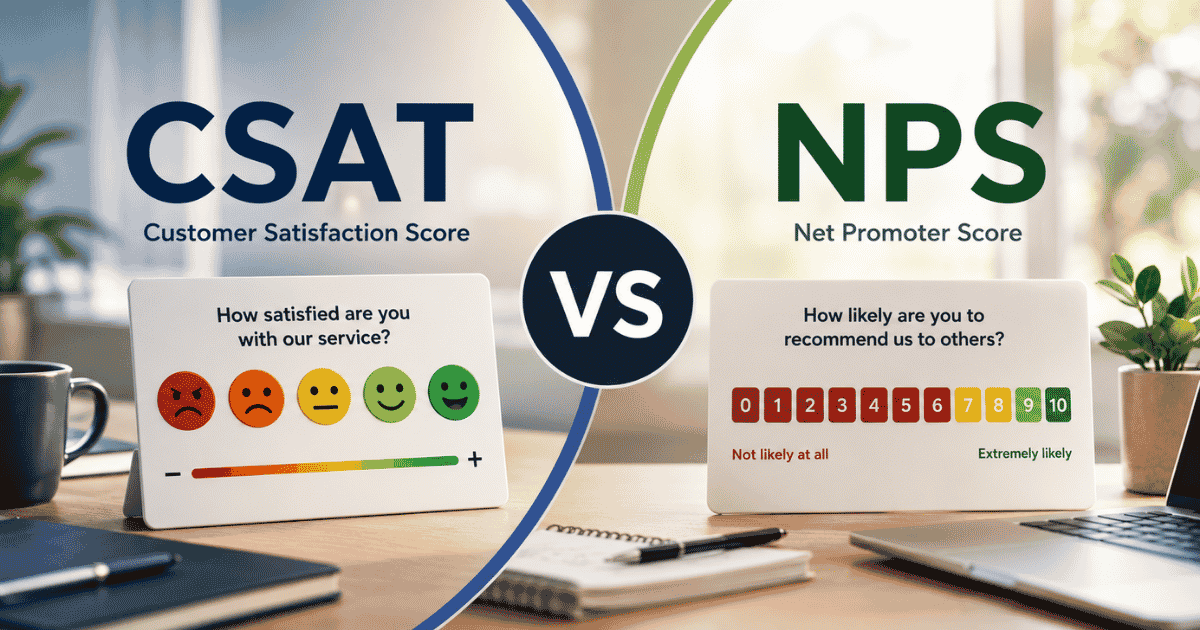
Customer satisfaction score shows how customers feel after interactions. It directly reflects service quality and agent performance. CSAT is usually collected through quick surveys after customer interactions, and a dedicated CSAT score guide for support teams can help design these programs effectively.
A low AHT with a low customer satisfaction score means poor service. Customers may feel rushed or unheard. Teams should always combine AHT with customer feedback. This helps improve customer sentiment and ensures high-quality service across support channels.
Net Promoter Score And Customer Loyalty
Net promoter score measures customer loyalty and long-term satisfaction. It shows how likely customers are to recommend your service.
A strong NPS indicates positive customer experience and trust. A low score signals deeper issues beyond handle time. Tracking NPS with AHT helps teams understand the bigger impact of customer interactions. It also supports better decision-making and long-term growth.
Average Speed Of Answer And Hold Time
Average speed of answer tracks how quickly agents respond to customer calls. It directly affects hold time and customer expectations. Clear ticket SLA management also shapes these expectations. Long wait times can frustrate customers before the conversation even starts.
Even with a good average handle time, long hold times can reduce customer satisfaction. Fast response time improves customer experience and reduces pressure during calls. Teams should balance AHT with quick and efficient response handling.
Cost Per Call And Operational Efficiency
Cost per call shows how much each customer interaction costs the business. It connects AHT with operational costs and staffing needs. Choosing the right help desk solution can lower these costs. Higher AHT often increases costs due to longer call duration.
Tracking cost alongside AHT helps improve operational efficiency. Well-structured ticket escalation processes and ticket automation help teams identify internal bottlenecks and reduce waste. A balanced approach ensures lower costs while maintaining service quality and a strong customer experience.
Conclusion
Average handle time is more than just a speed metric. It reflects how your support team balances efficiency and service quality. A good AHT helps control operational costs, improve agent productivity, and deliver a better customer experience.
The key is not to chase a low number. Focus on resolving the customer’s issue with clarity and care. Use AHT along with key metrics like customer satisfaction score, first contact resolution, and net promoter score. This gives a complete view of performance.
With the right strategy, tools, and agent training, teams can improve AHT without hurting quality service. A balanced approach helps meet customer expectations, reduce customer churn, and build long-term growth.
FAQs
Is A Low Average Handle Time Always Good?
No, a low average handle time does not always mean better performance. If agents hurry customers, service quality drops, and customer satisfaction suffers. A balanced AHT supports both efficiency and proper contact resolution.
Can Average Handle Time Affect Customer Churn?
Yes, average handle time can impact customer churn. Long wait times or poor resolution frustrate customers. When customer experience declines, customers may switch to competitors, affecting long-term growth.
What Is Considered A Good Average Handle Time For Small Teams?
A good average handle time depends on call types and support channels. Small teams often aim for 4 to 7 minutes. The focus should stay on service quality and meeting customer expectations, not just speed.
Does Average Handle Time Impact Revenue Growth?
Yes, average handle time can act as a revenue driver. Efficient customer interactions reduce operational costs and improve customer satisfaction. Better service leads to higher retention and stronger lifetime value.
How Do Self-Service Options Help Reduce Average Handle Time?
Self-service options reduce call volume and simple support requests. Customers resolve basic issues without contacting agents. This allows the support team to focus on complex customer interactions and improve overall AHT.