Organizations in 2025 face rising expectations for service reliability. Gartner reports that 85 percent of enterprises now demand at least 99.99 percent uptime in cloud contracts, up from 72 percent in 2023. Meanwhile, IDC notes that 62 percent of digital businesses cite SLA breaches as a top reason for switching vendors. These numbers reflect a reality where every service disruption carries significant consequences.
Most companies today manage dozens of external SLAs with customers and vendors alongside internal SLAs linking IT, support, and business units. This creates layered dependencies where internal failures can cascade into external breaches. A 2024 Forrester study found that 40 percent of SLA violations stemmed from unaligned internal processes, highlighting how service delivery depends on coordination across the entire organization.
This article defines internal and external SLAs, compares them across key dimensions, explains why alignment matters, and provides concrete operational use cases with common pitfalls. Written from the perspective of a service management platform vendor like EasyDesk, the focus is on practical guidance rather than legal boilerplate.
What Is Internal SLA
An internal SLA is a documented service commitment between teams or departments within the same organization. Common examples include IT committing to first response within 15 minutes for priority one incidents to customer support, or HR delivering new hire onboarding credentials within 24 hours to finance teams.
Key components of an internal SLA include service scope defining covered processes, response and resolution targets, clear ownership assignments, and escalation procedures. Unlike commercial contracts, internal SLAs typically lack legal enforceability but integrate with operating level agreements and internal KPIs. Governed through IT service management frameworks like ITIL, these agreements set service expectations that enable cross-team coordination and reduce conflicts.
What Is External SLA
An external SLA represents a formal contract between a service provider and an external customer, client, or vendor that specifies measurable performance levels. This service level agreement SLA is often legally binding and attached to master service agreements or subscription contracts.
Standard components include service descriptions, uptime percentages like 99.9 percent (43.8 minutes of monthly downtime) or 99.99 percent (4.3 minutes), support hours, response times, resolution timelines, maintenance windows, data protection commitments, and financial remedies such as service credits. External SLAs come in variations including customer based SLA (customized per client), service based SLA (standardized across users), and multilevel SLA (tiered with corporate baselines plus customer-specific additions). These agreements are visible to customer stakeholders and legal teams, shaping the entire agreement between parties involved.
Internal Vs External SLA Key Differences
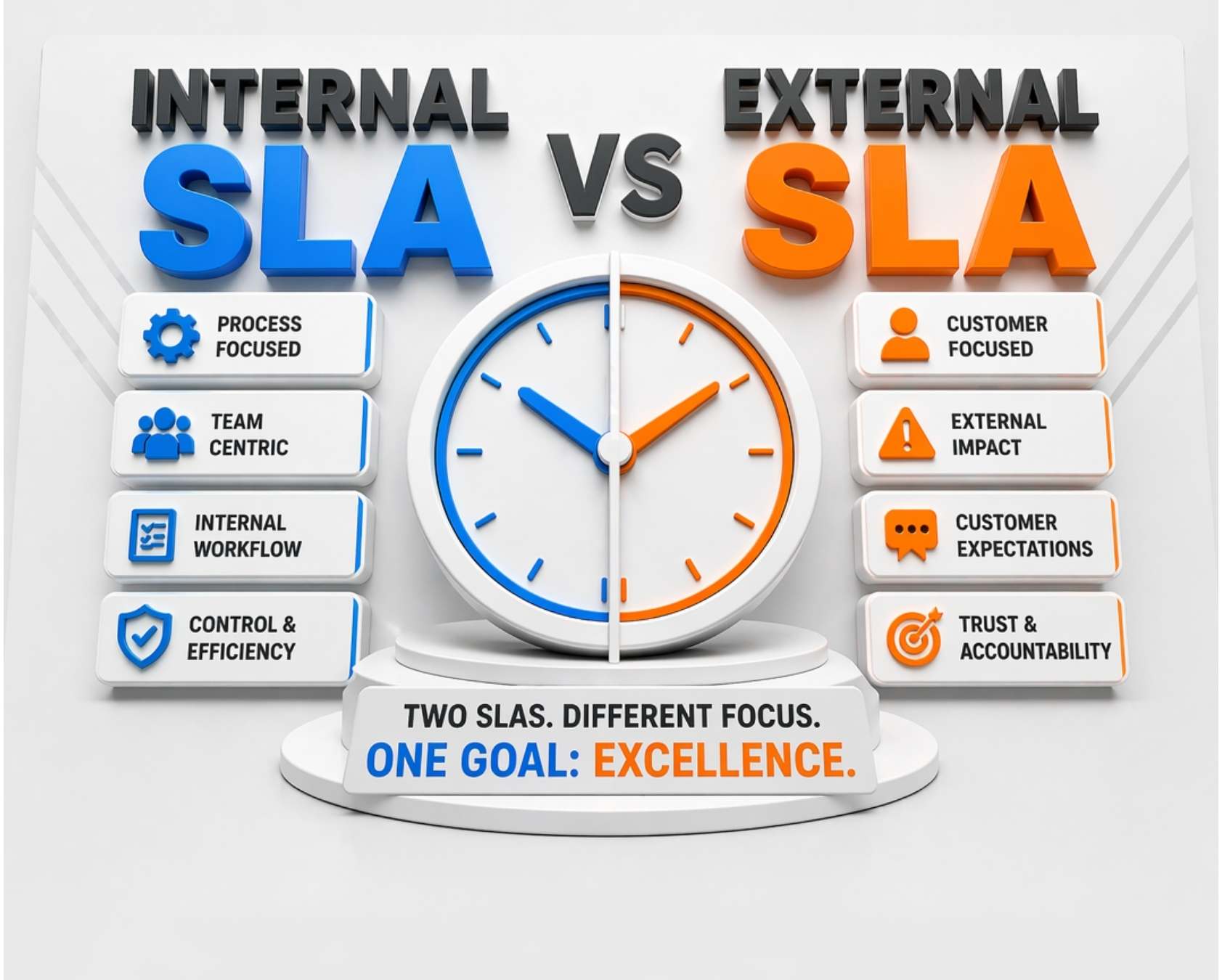
Internal SLAs serve as coordination tools between internal teams, while external SLAs combine performance expectations with commercial and reputational risk. The table below provides a detailed comparison across essential dimensions.
Dimension | Internal SLA | External SLA |
|---|---|---|
Parties Involved | Departments within same organization | Service provider and external customer |
Purpose | Team alignment and efficiency | Customer guarantees and contract compliance |
Legal Weight | Operational guidelines without legal binding | Formal contract with legal enforceability |
Penalties | Management interventions and scorecards | Service credits, fee reductions, termination rights |
Flexibility | Adjusted quarterly or post-incident | Requires formal amendments and legal review |
Reporting | Internal dashboards and reviews | Customer portals and formal SLA reports |
Visibility | Limited to operations teams | Transparent to customer stakeholders |
Scope And Coverage
Internal SLAs focus narrowly on operational workflows like ticket handoffs, change turnaround, or laptop provisioning within two business days. The service provided addresses specific internal processes that one unit delivers to another.
External SLAs cover end-to-end service outcomes the customer cares about, including service availability, data durability, and support channels. For example, while an internal SLA might target schema reviews within two business days, the external SLA promises an employee portal available 24x7 with defined uptime percentages.
Stakeholders And Accountability
Internal SLA stakeholders include IT operations managers, support team leaders, and business unit heads. Accountability relies on management escalation, performance reviews, and process improvements. When the database team misses an internal deadline, the product launch suffers, but remedies remain within the organization.
External SLA stakeholders involve customer executives, account managers, legal counsel, and sometimes regulators. When external clients experience a breach, consequences extend to service credits, contract penalties, and potential churn. Missed internal commitments frequently cascade into missed external obligations with key customers.
Metrics And Performance Tracking
Both internal and external SLAs use similar sla metrics: response time, resolution time, availability, and first contact resolution. However, targets differ based on the particular service and customer tier. An internal target might allow four-hour resolution for medium-priority tickets, while a premium external contract demands two hours for the same issue class.
Instrumenting systems with real-time monitoring and observability platforms is essential. According to Gartner, 65 percent of enterprises now adopt real-time synthetic testing. Platforms like EasyDesk provide SLA tracking software that centralizes metric definitions, track progress across teams, and generate dashboards showing performance levels for both internal leaders and external customers.
Communication And Reporting
Internal communication follows weekly or monthly operations reviews, shared dashboards, and incident postmortems. Clear communication happens through consistent terminology and shared definitions of incidents across departments.
External reporting includes monthly client reviews, formal SLA reports, and automated customer portals. Studies show that 70 percent of customers forgive downtime when providers offer proactive, transparent incident updates. Clear definitions prevent disputes and maintain trust even when service disruptions occur.
Enforcement And Penalties
Internal SLAs rarely involve financial penalties. Enforcement happens through management interventions, performance scorecards, and continuous improvement initiatives. The focus remains on driving efficiency and process optimization.
External SLAs often include explicit remedies. Cloud service providers commonly offer service credits worth a percentage of monthly fees when uptime drops below specific thresholds. AWS and similar providers scale credits with breach severity. However, overly punitive terms can encourage data gaming instead of genuine improvement, so penalties must be realistic and operationally measurable, reflecting a broader understanding of why SLAs matter for service success.
Flexibility And Change Management
Internal SLAs adjust more freely during quarterly planning cycles or after major incidents as processes mature. Teams can revise targets and responsibilities without formal legal review.
External SLAs require formal contract amendments, legal review, and customer acceptance, often taking weeks. According to IDC, 55 percent of SLA breaches during cloud migrations stem from unaligned changes. Aligning internal SLA modifications with external commitments ahead of time prevents promising more externally than the organization can deliver internally.
Visibility And Transparency
Internal visibility typically limits data to IT and operations teams through dashboards. Without deliberate reporting, not all business units see SLA performance data.
External SLAs demand higher transparency standards. Customers expect dashboards, regular reports, and clear root cause analyses after breaches. Modern service management tools surface the same operational data in different views, masking sensitive information for internal teams while providing external customers with appropriate visibility. Transparent internal data reduces finger-pointing and accelerates resolution.
Why Internal And External SLA Alignment Matters
Internal and external SLAs form a chain where every external promise depends on multiple internal commitments across teams and vendors. Misalignment inevitably leads to SLA breaches and customer dissatisfaction. External SLAs should be designed only after internal capabilities are mapped and validated.
Impact On Service Delivery
Aligned SLAs improve end-to-end service delivery by simplifying incident handling, change deployment, and problem management. Coordinated incident workflows between application, network, and security teams support strict external uptime guarantees. Industry surveys link clear SLAs and governance with 35 percent higher first contact resolution and 25 percent lower mean time to recovery, especially when teams focus on cutting average resolution time through better processes and tooling.
Role In Customer Experience
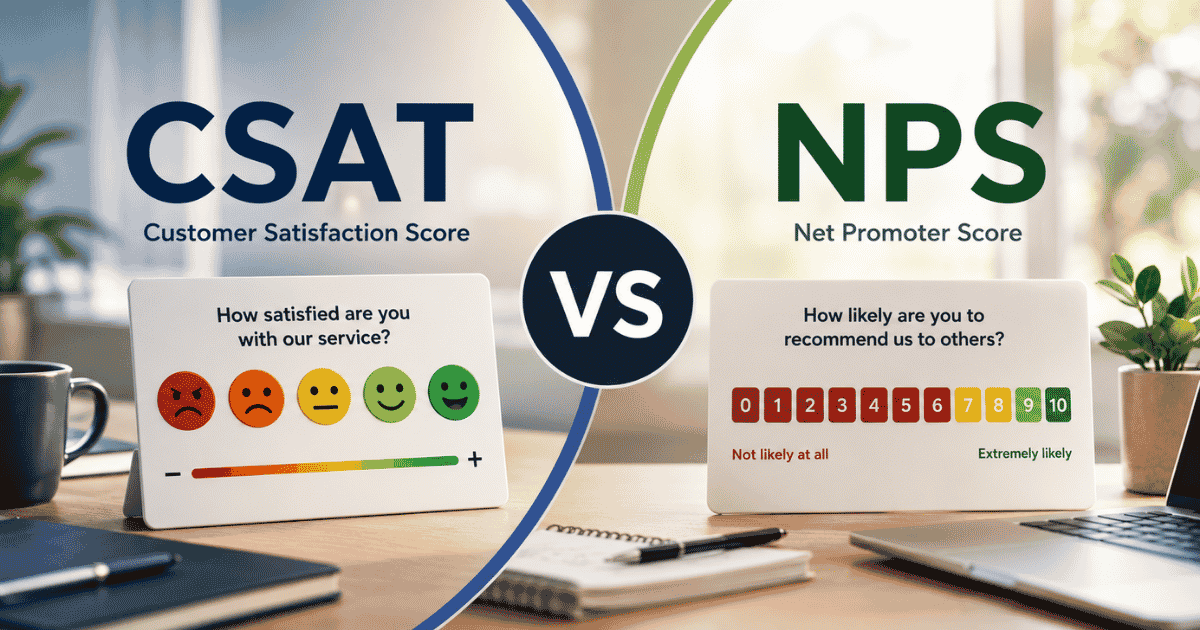
External SLAs shape customer expectations around responsiveness, directly influencing customer satisfaction scores and renewal rates. Strong internal SLAs help frontline teams deliver faster answers and proactive communication. Research indicates customers care as much about timely, honest communication as raw uptime figures. Two providers with identical 99.9 percent uptime but different communication practices can show NPS gaps of 20 points.
Alignment With Business Goals
Internal and external SLAs should derive from broader business objectives like market expansion, regulatory compliance, or premium positioning. A financial services firm targeting near real-time trading needs external SLAs emphasizing latency and availability, with internal SLAs enforcing strict change windows. SLAs should evolve alongside strategy, especially when moving to cloud computing architectures or launching different services at different price ranges, and they should tie directly into broader goals to improve customer service over the long term.
Influence On SLA Performance
Well designed internal SLAs make external SLA targets consistently achievable. Regular SLA reviews, blameless postmortems, and data-driven tuning of targets create feedback loops for continuous improvement. Organizations with mature SLA governance use rolling trend analysis to understand performance trajectories, not just monthly pass or fail scores. BMC reports show this approach improves consistency by 28 percent.
Risk Of Misalignment
Misalignment creates chronic SLA breaches, burnout, hidden workarounds, and trust erosion. When a vendor SLA is weaker than the company’s external SLA, structural exposure exists in the service chain. Quarterly end-to-end SLA mapping exercises help inventory all internal, external, and vendor SLAs for critical services. According to 2025 surveys, 50 percent of firms lack this mapping, exposing potential risks.
Internal SLA Use Cases In Operations
The following use cases demonstrate how internal SLAs structure daily operations, providing concrete scenarios with specific details and expected outcomes.
IT And Support Team Coordination
Internal SLAs between level one, two, and three support teams define ticket handoff and investigation targets. The service desk commits to triaging critical incidents within 10 minutes and escalating to engineering within 20 minutes. Shared dashboards and robust ticket SLA management keep these targets enforceable, cutting delays by 30 percent according to industry benchmarks.
A service provider agrees on clear expectations using performance metrics and service level sla definitions. Multi level coordination ensures each particular service maintains service quality across internal teams efficiently.
Incident Management Workflows
Internal SLAs define each step of major incident management from detection to resolution. A well defined sla process declares major incidents within 15 minutes of detecting priority one outages and convenes cross-functional response bridges within another 15 minutes. This aligns with external communication windows, such as issuing updates every 30 minutes during serious outages.
Clear expectations define escalation paths, where service provider agrees on response roles. Multi level workflows ensure performance metrics track each stage while maintaining consistent service level sla execution.
Cross Team Dependencies
Product, infrastructure, security, and data teams need explicit internal SLAs for change deployment and compliance reviews. The database team commits to completing schema reviews within two business days to support product launches with external release dates. Without explicit commitments, cross-team dependencies become hidden bottlenecks causing missed deadlines, especially for geographically distributed or remote support teams that need alignment.
External service agreement alignment requires performance metrics across internal teams. Clear expectations and multi level ownership ensure each particular service supports external clients without delays or service disruptions.
Internal Performance Targets
Internal SLAs set specific performance thresholds for internal platforms supporting end user experiences. Targets like sub-200 millisecond median response time for APIs ensure customer facing applications meet external speed promises. These connect to capacity planning, observability dashboards, and automatic alerts when thresholds are breached, all of which benefit from dedicated SLA management software.
Performance metrics define service level sla benchmarks tied to service availability. Multi level tracking ensures each particular service meets internal standards while supporting external customer expectations consistently.
Process Optimization
Internal SLAs drive process improvement by making bottlenecks visible. Tracking SLA misses and redesigning handoff steps can reduce internal ticket resolution time by 30 percent over a year. ITIL continual improvement practices structure optimization efforts around SLA data, enabling corrective actions that compound over time when supported by a centralized SLA management system.
Performance metrics highlight gaps where service provider agrees on corrective actions. Clear expectations and multi level analysis help refine service level sla execution, improving overall service quality and operational efficiency.
External SLA Use Cases For Customers
These patterns show how external SLAs frame relationships with customers and partners through recognizable scenarios.
Customer Facing Support Agreements
External support SLAs define tiers like bronze, silver, and gold with varying support hours, response times, and channels, often using structured ticket prioritization in customer support to match urgency with response targets. Premium tiers offer 24x7 coverage and 15-minute critical response, while standard tiers provide business hours and four-hour response. Clear external support SLAs set realistic customer expectations and reduce disputes about service offered, especially when grounded in helpdesk SLA best practices.
A formal contract between provider and a customer outlines service level sla terms, including service credits for failures. Clear communication ensures external customer alignment across different services and price ranges.
Managed Services And Contracts
Managed service providers for infrastructure and applications rely on external SLAs defining scope, responsibilities, and performance baselines over multi-year contracts. Network providers guarantee specific packet loss under 0.1 percent and latency below 50 milliseconds. Complex deals include different SLA tiers for components, requiring careful integration with internal agreements and a solid helpdesk implementation to operationalize those commitments.
Technology vendor contracts define service provider responsibilities and financial penalties tied to uptime percentages. Agreements specify service provided, performance levels, and corrective actions across cloud computing environments.
Service Availability Commitments
SaaS and cloud providers use external SLAs for uptime and durability with specific numbers. The difference between 99.9 percent and 99.99 percent availability translates to 43.8 minutes versus 4.3 minutes of permitted monthly downtime. These commitments influence architecture choices, redundancy investments, and disaster recovery strategies, often supported by automated ticket management software that keeps response workflows efficient at scale.
Service level agreement sla terms define uptime percentages, service availability, and resolution timelines. These agreements ensure providers maintain consistent service levels and minimize service disruptions for external clients.
Customer Expectation Management
External SLAs establish clear boundaries around coverage, excluding customer-caused issues or scheduled maintenance. Defining support for specific browsers, regions, or integrations prevents unrealistic assumptions. Transparent expectation management improves customer experience even when uptime guarantees are moderate, as customers value clarity about the specific service they receive, especially when providers can demonstrate real-world gains like improved response time and SLA adherence.
Clear expectations and service description help align external customer understanding. Agreements define specific details, ensuring expectations match service offered while protecting providers from potential risks and misunderstandings.
Vendor And Client Relationships
External SLAs serve as governance tools enabling joint reviews, improvement roadmaps, and renewal decisions. Mature organizations align vendor SLAs with customer SLAs to avoid gaps. Quarterly business reviews use SLA data as key inputs for vendor scorecards, ensuring customer service providers meet performance expectations across the relationship by continuously refining how they manage support tickets efficiently.
Contracts define parties involved, service provider obligations, and measurable benchmarks. Strong SLA governance ensures service quality, tracks progress, and supports long-term alignment between provider and external clients.
Common Mistakes In SLA Design And Implementation
Organizations frequently encounter these pitfalls when creating SLAs. Each represents a practical lesson for teams defining or managing service commitments.
Overpromising SLA Targets
Sales teams sometimes commit to aggressive response times or availability figures without validating internal feasibility. Promising 99.99 percent availability without multi-region redundancy creates structural problems. The long-term costs of frequent breaches include churn, service credit payouts, and reputation damage that exceed any short-term deal wins.
Misaligned expectations between provider and a customer often ignore clear expectations and performance expectations. Without aligning service level sla to real capacity, agreements expose organizations to financial penalties and long-term trust loss.
Ignoring Operational Capacity
Staffing levels and infrastructure inconsistent with SLA targets lead to burnout and missed commitments. Understaffed weekend support teams cannot meet 24x7 response SLAs during peak seasons. Capacity modeling and scenario planning must happen before finalizing SLA terms in any formal contract, ideally alongside designing smarter helpdesk setups for smoother support so day-to-day operations can realistically meet agreed targets.
Internal teams must align internal sla with actual resources across the same organization. Without balancing service levels and service offered, gaps appear between agreement terms and real service delivery performance.
Lack Of Real Time Monitoring
SLAs without reliable monitoring systems leave teams learning about breaches only after customer complaints. Synthetic monitoring, log analytics, and ITSM integrations enable proactive management. Real-time visibility allows early intervention like rerouting traffic before violations occur, preventing an estimated 60 percent of potential breaches according to Gartner when combined with EasyDesk features for smarter, secure support.
Performance metrics and sla metrics should track progress continuously. Without real time insights, service disruptions escalate, impacting external clients, customer satisfaction, and overall service quality across critical systems.
Poor Communication Across Teams
Weak internal communication creates conflicting priorities and confusion about SLA ownership. Product, operations, and customer success may have different understandings of what counts as an incident. Shared runbooks, cross-functional reviews, and common documentation align stakeholders around clear definitions.
Clear communication ensures all parties involved understand service expectations, escalation procedures, and responsibilities. Without alignment, service provider and internal teams fail to meet performance levels and consistent outcomes.
Inconsistent SLA Tracking
Scattered spreadsheets and manually compiled reports make SLA compliance difficult to verify. Centralizing SLA definitions, business hours calendars, and measurement logic in a single platform supports audits, customer reviews, and improvement cycles. A good SLA tracking system provides the consistency needed for service quality management and should fit within transparent customer support pricing plans that scale with team size and complexity.
Centralized systems help track progress using measurable benchmarks and key components. Consistent tracking improves service performance, reduces errors, and ensures service level agreement sla accuracy across different services and contracts.
How EasyDesk Simplifies SLA Management
EasyDesk provides a unified customer support platform supporting both internal and external SLAs from a single configuration hub. Teams can define multiple SLA policies, map them to services and customer groups, and automatically calculate response and resolution metrics.
The platform models internal dependencies by linking service desk SLAs with network and application team agreements, surfacing end-to-end impact. Real-time dashboards show when thresholds are at risk, automated alerts trigger before breaches occur, and customer-facing reports provide the transparency external clients expect.
Historical analytics guide continuous improvement by highlighting where misalignments exist. Whether managing a customer SLA or coordinating internal teams, EasyDesk helps organizations track progress and maintain service level commitments across the entire service chain while providing secure, transparent customer support.
FAQs
What Is The Main Difference Between Internal And External SLA?
An internal SLA coordinates teams within the same organization without legal penalties, focusing on operational efficiency and accountability. An external SLA is a formal contract between a provider and a customer with legally enforceable remedies like service credits or termination rights.
How Do Internal SLAs Impact External SLA Performance?
Strong internal SLAs prevent failures from cascading to customer-facing commitments. When internal teams meet their targets consistently, organizations achieve external SLA targets 25 to 40 percent more often according to Forrester research.
When Should Teams Use Internal SLAs Instead Of External Ones?
Use internal SLAs for departmental coordination like IT-to-support handoffs, HR onboarding processes, or infrastructure team commitments. External SLAs apply when service commitments involve external customers or vendors who need formal guarantees.
How Can Businesses Avoid SLA Conflicts Between Teams?
Establish shared definitions for incidents, outages, and response categories. Map all internal SLAs against external commitments during quarterly reviews. Cross-functional meetings ensure all parties understand their roles and how their targets connect to customer promises.
What Tools Help Manage Internal And External SLAs Effectively?
Platforms that centralize SLA definitions, automate metric tracking, and provide unified dashboards work best. Solutions like EasyDesk combine internal team coordination with customer-facing reporting, helping organizations maintain alignment and identify issues before they become breaches.