Support teams face pressure to resolve tickets fast. Customers expect quick answers and real solutions. A slow or weak ticket resolution rate leads to frustration, repeat queries, and growing backlogs. That is where most teams struggle.
Ticket resolution rate is not just a number. It shows how well your support system actually works. A higher rate means fewer unresolved issues and happier customers. It also reduces workload and improves team performance.
This guide breaks down everything you need to know. From calculation to strategy, you will learn how to improve your ticket resolution rate and deliver faster, more reliable support.
What Is Ticket Resolution Rate
Ticket resolution rate measures how many support tickets your customer service team successfully closes within a set period. It shows how well your customer service operations handle incoming tickets and support requests. A high resolution rate means more customer issues get solved, which helps improve customer satisfaction and overall customer experience.
You can calculate it using a simple resolution rate formula. Compare the number of tickets resolved with the total number of tickets assigned during a specific time period. This metric gives a complete picture of how efficiently your support team handles customer problems and meets your service level agreement.
Ticket resolution rate is not a standalone metric. It connects with resolution time, first contact resolution, and response time. Together, they show how fast support agents solve customer service requests and deliver faster resolutions.
How To Calculate Ticket Resolution Rate The Right Way
A clear calculation helps you understand how well your support performs. Many teams track the wrong numbers or miss key details. A proper method shows how many tickets get resolved within a set period and what affects your resolution rate.
Use The Resolution Rate Formula
Ticket resolution rate depends on a simple formula. Divide the number of tickets resolved by the total number of incoming tickets in a set period. Then multiply by 100. This shows your customer service resolution rate as a percentage.
Most teams use weekly or monthly data. Reports show high-performing teams often maintain a 70% to 85% resolution rate. This metric helps businesses track support performance and overall efficacy. It also shows how well agents handle customer service requests.
Define A Clear Time Period
A fixed time frame gives accurate results. You can measure daily, weekly, or monthly ticket resolution. Each time period reveals different patterns in customer service operations.
Busy support teams often track monthly data for a complete picture. During busiest times, resolution rates may drop due to high incoming tickets. A stable time frame helps compare performance across periods and improves planning for support requests.
Count Resolved Tickets Correctly
Not every ticket should count as resolved. Only include tickets where customer issues are fully solved. Reopened tickets should not be counted as final resolution.
Many companies miss this detail. That leads to inflated resolution rate metrics. A true count shows how many tickets agents actually solved. This helps improve customer satisfaction and gives a realistic view of customer support quality.
Exclude Duplicate And Spam Requests
Duplicate support tickets can distort your numbers. Some customers send multiple requests for the same issue. Spam tickets also affect your total number.
Filtering such tickets gives a cleaner dataset. Support teams using ticket automation reduce duplicates by up to 25%. Clean data improves resolution rate accuracy and helps teams focus on solving customers problems faster.
Track Related Metrics For Context
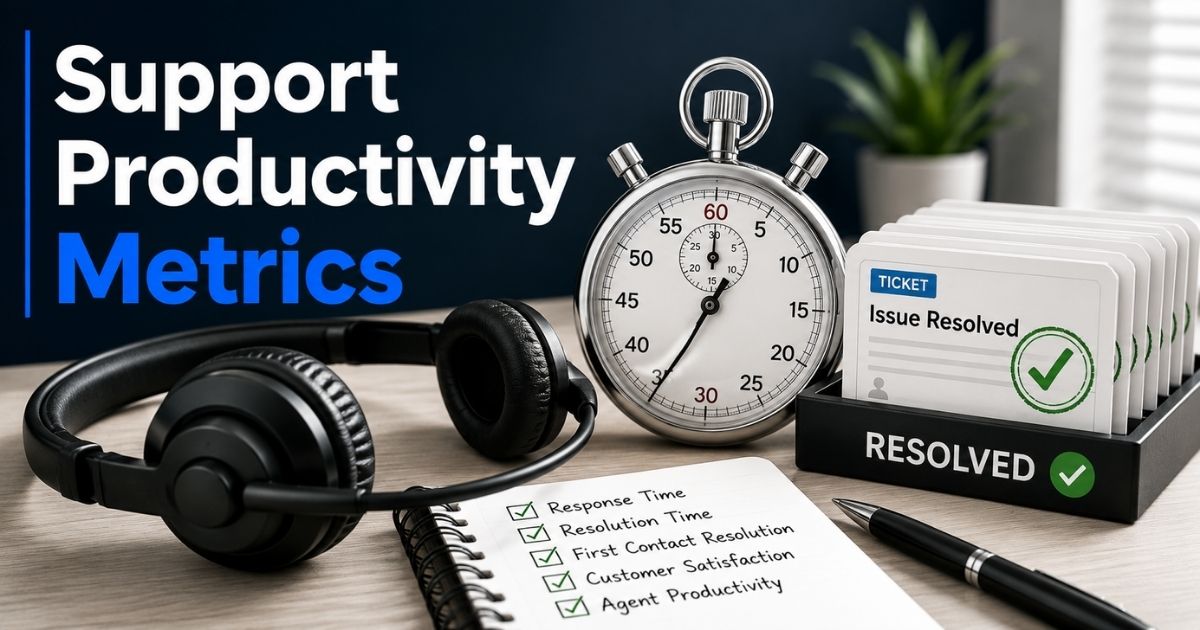
Ticket resolution rate alone does not show the full story. Combine it with resolution time, first contact resolution, and response time for better insight.
Teams with strong first contact resolution often deliver faster resolutions and higher customer satisfaction. Studies show improving FCR by 1% can boost customer satisfaction scores significantly. A combined view helps support agents deliver better customer experience and handle complex cases more efficiently.
Ticket Resolution Rate Vs First Contact Resolution: Key Differences
Both metrics look similar, but they measure different outcomes in customer support. One focuses on how many tickets get resolved over time. The other tracks how many issues get solved in the first interaction. Knowing the difference helps improve performance and customer experience.
Aspect | Ticket Resolution Rate | First Contact Resolution |
|---|---|---|
Definition | Measures how many support tickets are resolved within a set period | Measures how many customer issues are solved in the first interaction |
Focus | Overall resolution across all tickets | Immediate resolution without follow-ups |
Calculation | Tickets resolved ÷ total number of tickets × 100 | Issues resolved on first contact ÷ total requests × 100 |
Time Factor | Can include multiple interactions and longer resolution time | Focuses on single interaction, faster response time |
Impact On Customer Satisfaction | Improves customer experience over time | Strong impact on instant customer satisfaction |
Complexity Handling | Suitable for complex cases that need multiple steps | Works best for simple or standard requests |
Support Efficiency | Shows overall team performance and workload handling | Shows agent efficiency and quick problem-solving ability |
Business Value | Helps track long-term support success and backlog control | Helps deliver faster resolutions and happier customers |
Ticket Resolution Rate Benchmarks Across Industries
Benchmarks help you see where your support team stands. A good ticket resolution rate can vary by industry, workload, and customer expectations. Comparing your numbers with industry standards gives a clearer view of performance and areas to improve.
SaaS And Tech Support Benchmarks
SaaS companies handle a high volume of support tickets every day. Many deal with complex customer issues that need technical expertise. Reports show SaaS teams maintain a ticket resolution rate between 70% and 85%.
A strong support team also focuses on first contact resolution and faster resolutions. High-performing SaaS companies often combine ticket automation with a strong knowledge base. This helps reduce resolution time and improves customer satisfaction across customer service operations.
E-commerce Support Benchmarks
E-commerce businesses face different resolution expectations. Customers expect fast answers for order issues, refunds, and delivery problems. Industry data shows that e-commerce support teams often reach a resolution rate of 75% to 90%.
Simple support requests allow faster ticket resolution. Self-service options also play a crucial role. Many customers find answers without human intervention. This reduces incoming tickets and helps support agents handle more tickets during busiest times.
Telecom And IT Service Benchmarks
Telecom and IT services often deal with complex cases. These include network issues, service disruptions, and technical failures. Resolution rates in this industry usually range from 65% to 80%.
Longer resolution time is common due to multiple touchpoints. Support teams rely on escalation and specialized agents. A good resolution rate here depends on how well teams manage tickets assigned and maintain service level agreement targets.
Healthcare And Financial Services Benchmarks
Healthcare and financial services require accuracy and compliance. Customer service requests often involve sensitive data. Resolution rates typically fall between 60% and 75%.
Strict processes can increase average time to resolve tickets. Still, quality matters more than speed. A high resolution rate in this sector reflects trust, security, and strong customer experience. Businesses focus on solving customer problems while meeting industry regulations.
Key Factors That Affect Ticket Resolution Rate
Several elements shape your ticket resolution rate. Some relate to team skills, while others depend on tools and workflows. A small gap in any area can slow down support and reduce customer satisfaction. Understanding these factors helps improve customer service performance.
Agent Skills And Training
Support agents play a crucial role in ticket resolution. Skilled agents understand customer issues faster and provide accurate solutions. Teams with regular training often resolve more tickets within the first contact.
Industry reports show trained support teams can improve resolution rate by up to 25%. Strong product knowledge and clear communication also reduce resolution time. Well-prepared agents handle complex cases better and deliver a smoother customer experience.
Ticket Volume And Workload
High incoming tickets can overload your support team. During busiest times, agents may struggle to keep up with support requests. This leads to delays and lower resolution rate metrics.
Data shows teams with balanced workloads achieve up to 30% higher resolution rates. Proper automated ticket assignment helps distribute tasks evenly. It also ensures that customer service requests get handled without delays or confusion.
Quality Of Knowledge Base
A strong knowledge base gives agents easy access to solutions. It also helps customers find answers through self-service options. This reduces the number of tickets and improves overall support efficiency.
Studies suggest over 60% of customers prefer self-service for standard requests. A well-structured knowledge base software supports faster resolutions. It also reduces human intervention and improves customer satisfaction across support operations.
Use Of Automation And Tools
Ticket automation helps manage support tickets more efficiently. Automated workflows can assign tickets, send updates, and reduce manual work. This allows agents to focus on solving customers problems by using ticket automation across busy seasons.
Reports show automation can reduce resolution time by up to 40%. Dedicated ticket automation software and tools like chatbots and AI support systems also improve first contact resolution. Better tools lead to faster resolutions and a higher ticket resolution rate.
Response Time And SLAs
Response time directly affects how quickly issues get resolved. A slow first response often leads to longer resolution time. Service level agreements set clear expectations for support teams.
Companies that meet SLA targets often maintain higher resolution rates. Fast responses improve customer experience and build trust. A structured SLA also helps teams manage different resolution expectations and maintain consistent performance.
Proven Strategies To Improve Ticket Resolution Rate Faster
A higher ticket resolution rate does not happen by chance. It comes from clear processes, the right tools, and a well-trained support team. Small changes can create faster resolutions and better customer satisfaction across customer support operations.
Set Clear Ticket Priorities
Clear priorities help support agents focus on what matters most. Not every support ticket has the same urgency. Some customer issues need immediate action, while others can wait within the service level agreement, which is why structured ticket prioritization in customer support is essential.
Teams that use priority rules often resolve tickets faster. Data shows prioritization can improve resolution rate by up to 20%. It also reduces resolution time and helps manage incoming tickets during busiest times when combined with ways to cut average resolution time fast. A structured system ensures important requests get solved first.
Use Automation For Repetitive Tasks
Ticket automation removes manual work from daily operations. It can assign tickets, send updates, and handle standard requests without human intervention through automated ticket creation workflows. This saves time for support agents.
Reports show automation can reduce workload by 30% to 40%. It also improves first contact resolution by handling simple support requests quickly. Automation allows teams to focus on complex cases and deliver better customer experience.
Improve First Contact Resolution
First contact resolution plays a crucial role in ticket resolution rate. When issues get solved in the first interaction, it reduces follow-ups and backlog.
Studies show improving first contact resolution can increase customer satisfaction by over 15%. Support teams should provide agents with better tools, scripts, and access to a knowledge base. Faster answers lead to happier customers and stronger resolution rate metrics.
Build A Strong Knowledge Base
A well-organized knowledge base helps both agents and customers. It gives easy access to answers for common customer problems. This reduces the number of tickets and improves self-service.
Research shows over 60% of customers prefer self-service options. A strong knowledge base supports faster resolutions and reduces pressure on the support team. It also helps agents handle tickets assigned with more confidence and accuracy.
Monitor And Optimize Performance
Tracking performance helps improve ticket resolution rate over time. Teams should review resolution rate metrics, response time, and average time regularly.
Companies that monitor performance closely often see up to 25% improvement in support efficiency. Regular analysis helps identify gaps in customer service operations. It also ensures teams meet service level agreement targets and deliver consistent, high-quality support.
Common Mistakes That Lower Ticket Resolution Rate
Many teams struggle with ticket resolution rate due to avoidable mistakes. Small gaps in process, tools, or communication can slow down support and hurt customer satisfaction. Identifying these issues helps improve performance and deliver faster resolutions.
Poor Ticket Categorization
Incorrect ticket categorization creates confusion in customer service operations. When support tickets are not tagged properly, agents waste time figuring out customer issues. This increases resolution time and delays ticket resolution.
Studies show misrouted tickets can increase handling time by up to 35%. A clear system for manual vs automated ticketing helps agents access the right information faster. Proper categorization ensures support requests reach the right team and improves overall resolution rate.
Lack Of Agent Training
Untrained support agents struggle to solve customer problems quickly. They may need multiple interactions to resolve simple support requests. This lowers first contact resolution and affects customer experience.
Reports suggest companies with ongoing training programs see up to 20% higher resolution rates. Skilled agents understand different resolution expectations and handle complex cases better. Training improves both response time and quality of service.
Overloaded Support Teams
Too many incoming tickets can overwhelm a support team. During busiest times, agents may rush responses or miss key details. This leads to unresolved tickets and lower customer satisfaction.
Data shows balanced workloads can improve performance by nearly 30%. Proper resource planning and ticket automation help manage support requests efficiently. A well-structured team ensures more tickets get resolved within the set period.
Weak Knowledge Base
A poor knowledge base limits easy access to solutions. Agents spend more time searching for answers. Customers also cannot use self-service options to find answers on their own.
Research shows over 60% of customers prefer self-service for standard requests. A strong knowledge base supports faster resolutions and reduces human intervention. It also helps improve customer satisfaction and overall service quality.
Ignoring Performance Metrics
Many businesses fail to track resolution rate metrics properly. Without data, it is hard to understand how many tickets get resolved or where delays happen.
Companies that monitor metrics like resolution time and response time see better results. Tracking performance helps identify gaps in customer support. It also ensures teams meet service level agreement targets and deliver consistent results.
Tools And Automation To Improve Ticket Resolution Rate
The right tools can change how your support team performs. Manual work slows down ticket resolution and creates delays. Automation and smart systems, including the best free helpdesk ticket systems, help resolve tickets faster, reduce workload, and improve customer satisfaction across customer support operations.
Help Desk Software And Ticketing Systems
A modern help desk system keeps all support tickets in one place. It tracks incoming tickets, assigns tasks, and helps agents manage customer service requests with ease. This improves visibility across the support team and highlights the benefits of using a ticketing system.
Reports show companies using advanced ticketing systems improve resolution rate by up to 25%. A centralized helpdesk system gives agents easy access to customer data and past tickets. It also supports faster resolutions and better customer experience.
AI Chatbots And Virtual Assistants
AI tools handle simple support requests without human intervention. Chatbots can answer common customer questions and guide users to solutions. This reduces the number of tickets reaching support agents.
Studies suggest AI chatbots can resolve up to 60% of standard requests instantly. This improves first contact resolution and reduces resolution time. Customers get quick answers, which leads to higher customer satisfaction and better service performance.
Knowledge Base And Self-Service Tools
A strong knowledge base supports both customers and agents. It provides easy access to answers for common issues. Customers can use self-service options to find answers without contacting support.
Research shows over 65% of users prefer self-service before reaching out to a support team. This reduces incoming tickets and helps agents focus on complex cases. A well-structured knowledge base and modern ticketing software tools improve ticket resolution and overall support efficiency.
Automation And Workflow Management
Automation tools handle repetitive tasks in customer service operations. They assign tickets, send updates, and manage workflows automatically. This reduces manual effort and speeds up ticket resolution when you follow workflow automation best practices.
Data shows automated ticket management software can cut resolution time by up to 40%. It also helps maintain service level agreement targets. With fewer delays, support agents can resolve more tickets within a set period and improve resolution rate metrics.
Analytics And Performance Tracking Tools
Analytics tools help track resolution rate metrics in real time. They show how many tickets get resolved, average time, and response time. This gives a complete picture of support performance.
Companies that use analytics tools see up to 20% improvement in support efficiency. Insights help teams identify gaps and improve customer service quality, especially when paired with a structured helpdesk implementation guide. Better tracking leads to faster resolutions, higher customer satisfaction, and stronger NPS scores.
Final Thoughts
Ticket resolution rate is more than just a metric. It reflects how well your customer support works in real situations. A strong resolution rate means more customer issues get solved, faster response time, and better customer satisfaction.
Focus on the right strategy. Use clear processes, skilled support agents, and the right tools. Combine automation, a strong knowledge base, and performance tracking to handle support tickets more efficiently. Small improvements can lead to faster resolutions and fewer backlogs.
Keep tracking your resolution rate metrics over time. Compare results across different periods and adjust your approach. When your team resolves tickets quickly and accurately, you build trust, improve customer experience, and drive long-term business success.
FAQs
Does Ticket Resolution Rate Affect Customer Retention?
Yes, a strong ticket resolution rate directly impacts customer retention. When customer issues get resolved quickly, it builds trust and improves customer satisfaction. Faster resolutions lead to better customer experience and long-term loyalty.
Can Ticket Resolution Rate Vary Based On Support Channels?
Yes, the resolution rate can vary depending on channels like phone, email, or chat. Phone support often leads to faster first contact resolution, while email may increase resolution time. Each channel affects how support teams handle customer service requests.
How Does Ticket Resolution Rate Impact NPS Scores?
Ticket resolution rate plays a key role in NPS scores. When support tickets get resolved within the expected time frame and you actively reduce customer support response time, customers feel valued. Better service quality leads to higher satisfaction and improved NPS scores for businesses.
Is Ticket Resolution Rate Useful For Small Support Teams?
Yes, even small support teams benefit from tracking this metric. It helps measure how many tickets get resolved and highlights performance gaps. A clear view of resolution rate metrics supports better customer service operations.
Can Self-Service Options Improve Ticket Resolution Rate?
Yes, self-service options like a knowledge base help reduce incoming tickets. Customers can find answers without human intervention. This allows support agents to focus on complex cases and improve the overall ticket resolution rate.