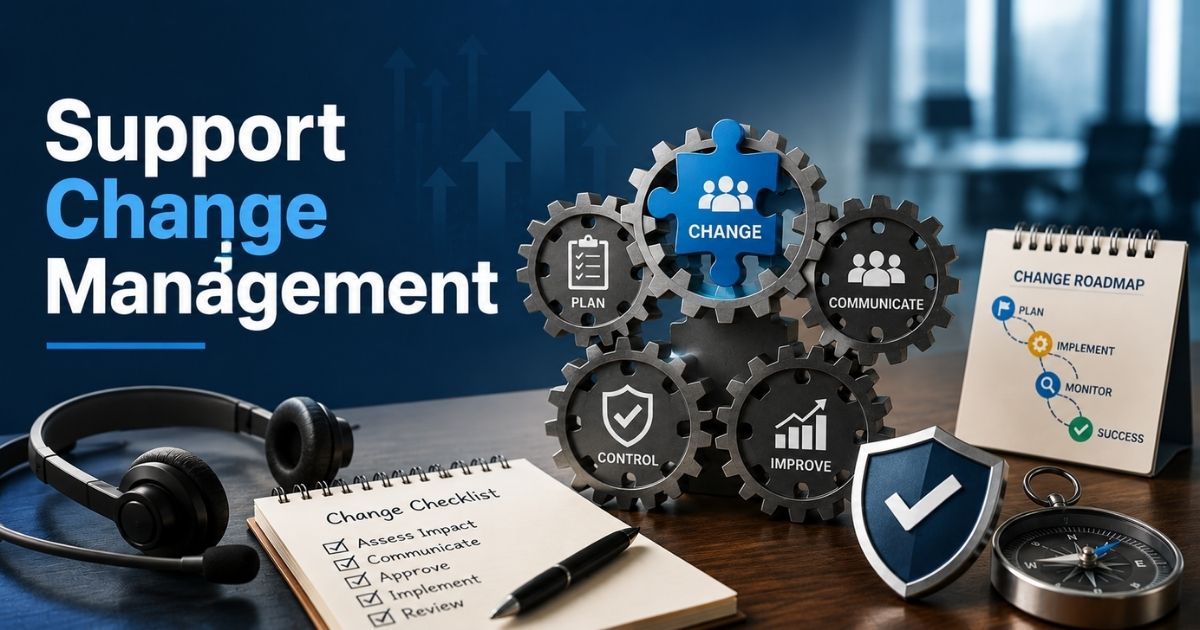
Support teams deal with change all the time. A new workflow gets introduced. An SLA changes. A help desk tool is updated. A new support channel goes live. But without a clear process, even small changes can create confusion, delays, and unhappy customers.
That is where support change management comes in. It gives teams a structured way to plan, roll out, and monitor changes while reducing risk. Strong change management also helps employees adapt faster and keeps service quality consistent during transitions. Organizations that manage change effectively are better equipped to handle disruption and stay competitive.
Many companies recognize the need for change, yet turning change into action remains a challenge. Research shows that 76% of organizations believe they have a change-seeking culture, but 61% still feel their culture falls short. Successful change is not just about processes or technology. It depends on leadership, communication, and employee involvement at every stage.
What Support Change Management Means
Support change management is how teams handle updates without disrupting service. It is a structured approach to planning, implementing change, and keeping everyone on the same page. In daily operations, a support team may update workflows, introduce new technology, or adjust business processes. A strong change management process helps manage change with less risk and better results. Every change initiative begins with a clear business case, defined desired outcomes, and a detailed plan. Leadership commitment and buy-in from key stakeholders are also key components of successful change management.
Successful change does not happen overnight. Resistance to change is a natural part of organizational change, especially when new processes or system change affect daily work. A dedicated change management team uses effective communication, management resources, and best practices to guide the whole organization. Change leaders set realistic expectations, answer key questions, and make necessary adjustments in a timely manner. Whether the goal is digital transformation or continuous improvement, a strong change management strategy helps ensure successful implementation and achieve success.
Why Support Teams Struggle Without Change Management
Support teams face change every day. New tools arrive. Workflows shift. Customer expectations grow. Without a clear system, even small updates can create confusion. A strong change management strategy helps teams adapt faster, reduce risks, and keep service quality high during change.
Unclear Changes Create Daily Chaos
Support teams rely on stable business processes. A proposed change without a detailed plan often creates confusion. Agents may follow different steps, and departments stop working from the same page. As a result, customer experience suffers.
Research shows that up to 70% of change initiatives fail due to poor communication and weak leadership support. Experts from Harvard Business Review have long emphasized that leadership commitment is critical for successful change. A structured approach helps teams manage change and keep the entire change effort aligned with business strategy.
Resistance Slows Down Progress
Resistance to change is a natural human response. Employees often worry about job roles, new technology, or changing routines. When leaders ignore those concerns, change resistance grows stronger.
Recent studies found that 37% of employees resist organizational change, often due to lack of trust or unclear goals. Successful change management addresses the human side of change. Effective communication, buy in from key stakeholders, and realistic expectations help teams adopt new behaviors and new habits more easily.
Poor Leadership Weakens Change Efforts
Every successful change initiative needs strong leadership. Without an executive sponsor or change leaders, teams often lose direction. Employees become uncertain about priorities and desired outcomes.
Management research consistently shows that active leadership support increases the chances of successful implementation. Leadership commitment also improves employee morale during periods of organizational change. A dedicated team with strong change management skills can guide the whole organization through change projects and ensure changes are implemented smoothly.
Lack Of Communication Creates Uncertainty
Employees want answers to key questions. Why is the change happening? How will it affect daily work? What does success look like? When communication channels fail, fear replaces trust.
Research shows that 29% of employees say change was not communicated clearly in their organization. Another 28% report lacking enough information to understand the change process. Effective communication keeps everyone on the same page and helps overcome resistance. Regular updates in a timely manner also strengthen company culture and support personal change.
No Measurement Leads To Failed Outcomes
Organizations cannot improve what they do not measure. Many change initiatives fail because teams never measure success or make necessary adjustments after launch. A change management plan should include clear goals and KPIs from the start.
Only 17% of executives believe their organizations are highly capable of executing major transformation efforts successfully. Successful change management requires continuous improvement, technical skills, and ongoing review at the organizational level. Whether using the ADKAR model or enterprise change management frameworks, teams achieve success when they track results and adapt while moving forward.
Common Support Changes Teams Handle Every Day
Support teams deal with change more often than many realize. Some changes are small, while others affect the entire service operation. A clear process helps teams reduce risk, maintain service quality, and adapt faster when customer needs or business goals evolve.
Workflow Updates
Support workflows rarely stay the same for long. Teams often update ticket routing, escalation paths, or approval rules to improve efficiency. As businesses grow, old workflows may no longer fit new demands.
Research shows that organizations with structured workflows adapt to change more successfully and reduce operational disruptions. Clear workflows also help teams maintain consistency during periods of rapid change.
A simple workflow change may seem minor, but it can affect response times, team collaboration, and customer satisfaction. Change management paired with workflow automation in customer support helps support teams roll out updates with less confusion.
SLA Policy Changes
Customer expectations change over time. Support teams often revise Service Level Agreements (SLAs) to meet new service goals or business requirements. A new SLA may include faster response times or different priority levels.
Studies show that customers increasingly expect faster support experiences across digital channels. Teams that fail to adapt often struggle to maintain service quality.
SLA changes affect agents, managers, and customers alike. Without proper communication, teams may miss targets and create frustration. A structured change process, supported by a dedicated SLA management system and features, keeps everyone aligned and ready for new expectations.
Tool And System Upgrades
Support teams regularly adopt new software or upgrade existing systems. Changes may include help desk platforms that improve support behind the scenes, chat tools, or automation features. New technology often improves efficiency, but it also creates adjustment periods.
Digital transformation continues to drive technology adoption across organizations. Experts note that successful implementation depends on both technology and employee readiness.
A system update without preparation can disrupt daily work. Training and communication help teams adapt faster and reduce resistance to change. Small adjustments today often prevent bigger problems later.
Knowledge Base Revisions
Support information changes constantly. Teams update help articles, FAQs, and internal documentation to keep information accurate, often using helpdesk ticketing software to centralize updates. Outdated content often leads to inconsistent support and customer confusion.
Modern knowledge management has become essential for customer service teams. Accurate documentation improves productivity and helps preserve important information across departments.
Knowledge base updates may look simple, but they directly affect service quality. Clear documentation ensures agents provide consistent answers and customers receive reliable self-service support.
Automation Rule Changes
Automation saves time, but rules require regular updates. Teams often adjust automated ticket assignment workflows, notifications, or chatbot workflows as customer behavior changes. Poorly configured automation can create delays instead of efficiency.
Modern service teams increasingly rely on automation to reduce manual work and improve consistency. Change management tools help teams track updates and reduce risks during automation changes.
Automation works best when teams monitor results and make adjustments. Regular reviews of your ticket automation software setup ensure changes support business goals while maintaining a smooth customer experience.
What Happens When Changes Are Made Without A Clear Process
Changes are necessary for growth, but poorly managed changes often create more problems than solutions. A missing process can confuse teams, delay responses, and frustrate customers. Support teams work best when every change follows a clear plan and shared goals.
Service Quality Starts To Drop
Support teams depend on consistency. When changes happen without a clear process, service quality often suffers. Agents may follow different workflows or use outdated information. Customers notice those gaps quickly.
Research shows that nearly 70% of change initiatives fail to meet their goals due to weak communication and poor leadership alignment. In customer support, even small changes can affect response times and resolution rates. A structured change process helps teams deliver reliable service while reducing disruption.
Employees Feel Confused And Frustrated
Employees need clarity during change. Without clear direction, people often feel uncertain about their roles and responsibilities. Confusion can lower confidence and reduce employee morale.
Studies show that 50% of communication leaders identify employee resistance and change fatigue as major barriers to successful change. Resistance to change is a normal response when people do not understand the reason behind a new process. Clear communication and leadership support help teams adapt faster and build trust.
Customer Experience Takes A Hit
Customers expect quick and consistent support. A poorly planned update can create delays, duplicate tickets, or missed requests. Even minor errors may damage trust.
Research on organizational change highlights that poor communication increases negative reactions and weakens customer-facing operations. Support teams must align changes with customer expectations. A clear change management plan ensures updates happen smoothly without affecting the customer experience.
Teams Lose Trust In Leadership
Employees look to leaders during periods of change. When leaders fail to explain what is changing and why, trust begins to fade. Teams may question priorities and lose confidence in decisions.
Research consistently identifies leadership commitment as a key factor in successful change management. Lack of executive sponsorship remains one of the leading causes of failed change efforts. Strong leaders create alignment, answer questions, and keep everyone focused on shared outcomes.
Business Goals Become Harder To Reach
Poorly managed changes do not only affect support teams. They also impact business goals and long-term growth. Delays, errors, and low adoption can slow progress across the organization.
Recent studies show that only about one-third of change initiatives achieve their intended goals. Many organizations struggle because they fail to measure results or adjust their strategy. Successful organizations review outcomes, learn from setbacks, and refine processes to improve future changes.
Step-By-Step Support Change Management Process
Support changes work best when teams follow a clear path. A structured workflow reduces confusion, improves adoption, and protects service quality. From planning to review, each step helps support teams adapt faster and achieve better outcomes.
Step 1: Define The Change And Goals
Every successful change starts with clarity. Teams should identify what needs to change and why it matters. A clear objective keeps everyone focused on the same outcome. It also helps support teams align changes with business goals and customer needs.
Research shows that organizations with defined goals and measurable outcomes are more likely to succeed with change initiatives. Experts also recommend setting clear success metrics before execution begins. A strong start reduces confusion and creates a roadmap for the entire process.
Step 2: Assess Risks And Impact
Every change affects people, systems, and workflows differently. Teams should evaluate possible risks before moving ahead. A support change may impact SLAs, ticket routing, or customer experience. Early assessment helps prevent costly mistakes later.
Studies show that many change efforts fail because organizations overlook stakeholder impact and resistance. Experts estimate that 60% to 70% of organizational changes do not achieve their intended goals. Risk assessment allows teams to prepare better and make smarter decisions before implementation.
Step 3: Communicate And Prepare Teams
Employees need to understand what is changing and how it affects their work. Clear communication builds trust and reduces uncertainty. Support teams should share timelines, expectations, and available resources before rollout begins.
Research consistently identifies poor communication as one of the leading causes of failed change efforts. Teams perform better when leaders explain the purpose and benefits of change. Training sessions and documentation also help employees feel ready for new processes and tools.
Step 4: Launch The Change Carefully
A successful rollout requires coordination and monitoring. Teams should implement changes in stages whenever possible. Small releases help identify issues before they affect the entire support operation.
Many organizations now use pilot programs to test changes before full deployment. Experts recommend phased rollouts because they reduce risk and improve adoption rates. Support teams can also gather feedback early and make quick adjustments when needed.
Step 5: Review Results And Improve
Change does not end after launch. Teams should track KPIs such as response time, CSAT, and resolution rates. Measuring results helps organizations understand whether the change achieved its goals.
Modern change management frameworks emphasize continuous improvement and ongoing review. Monitoring performance helps teams spot gaps and improve future initiatives. A post-change review creates valuable lessons and strengthens future support operations.
How To Assess Risk Before Making A Support Change
Every support change carries some level of risk. A small update can affect workflows, customers, or team productivity. Risk assessment helps teams spot issues early, reduce disruptions, and ensure changes deliver the expected results.
Know What Could Go Wrong
Every change starts with uncertainty. Teams should identify possible risks before making updates. A system outage, broken automation, or missed ticket in a manual vs automated ticketing setup can quickly affect customer service. A structured approach helps teams understand the impact of a proposed change before it reaches users.
Research shows that nearly 70% of change initiatives fail to achieve their goals, often due to poor planning and risk management. A strong change management process allows teams to manage change with confidence and support successful change across the organization.
Measure Impact Across Teams
Support changes rarely affect one department. A workflow update may impact agents, managers, and customers at the same time. Teams should evaluate how a change affects the whole organization and align it with business strategy.
Management research shows that change efforts succeed more often when key stakeholders participate early in planning. Different perspectives help teams spot hidden risks and build stronger buy in. A dedicated team can also review how organizational behavior and company culture may affect adoption. Clear communication keeps everyone on the same page and supports enterprise change management.
Prepare A Backup Plan
Not every change works as expected. Teams should create a change management plan that includes rollback steps and recovery actions. A detailed plan reduces downtime and helps teams make necessary adjustments if problems arise.
Experts recommend setting realistic expectations because successful implementation does not happen overnight. Support teams that prepare for setbacks are more likely to achieve success. Change leaders and an executive sponsor can guide the change effort when unexpected issues occur. A strong change management model ensures new practices are implemented smoothly while protecting employee morale.
Train Teams Before Launch
People often resist change when they feel unprepared. Training gives employees the technical skills and confidence they need to adapt. It also helps teams build new habits and understand how new technology supports daily work.
Research shows that 25% of organizations need to improve their change management skills to handle change effectively. Professional development and targeted training help reduce change resistance and improve adoption. Frameworks like the ADKAR model encourage personal change and support the early majority after early adopters embrace new systems.
Track Results And Adjust
Risk assessment does not end after launch. Teams should measure success through KPIs such as CSAT, SLA compliance, and resolution time. Data helps organizations understand whether desired outcomes have been achieved.
Successful change initiatives rely on continuous improvement and effective communication after rollout. Teams that monitor progress can make timely adjustments and strengthen future change projects. A strong support change management strategy helps ensure successful implementation while moving forward toward long-term goals. Clear metrics also help organizations maintain leadership commitment and build a culture ready for future change initiatives.
How Support Teams Communicate Changes Without Confusing Customers
Customers expect clear updates when something changes. They want to know what is changing, why it matters, and how it affects them. Good communication builds trust, reduces frustration, and helps support teams maintain strong customer relationships.
Share The Message Early
Customers dislike surprises. Support teams should communicate changes before they happen whenever possible. Early updates give customers time to prepare and adjust their workflows. It also reduces support tickets and confusion.
Research shows that 39% of employees resist change because they do not understand why it is happening. The same principle applies to customers. Clear and early communication creates trust and reduces uncertainty.
A simple message about timelines, expected impact, and next steps helps customers stay informed. Early communication also supports a smoother transition during service updates.
Use Clear And Simple Language
Technical terms can confuse customers. Support teams should explain changes in plain language that anyone can understand. Customers care more about outcomes than internal processes.
Experts note that poor communication remains one of the top reasons change initiatives fail. About 29% of employees say organizational changes are not communicated clearly. Clear messaging improves understanding and reduces resistance.
Teams should answer key questions directly. What is changing? When will it happen? What action is needed? Simple answers create a better customer experience.
Choose The Right Channels
Different customers prefer different communication channels. Some read emails. Others rely on in-app notifications, status pages, or help center articles. Support teams should use multiple channels to reach more users.
Research shows that effective communication improves engagement and adoption during periods of change. Organizations that communicate well experience better outcomes across change efforts.
A consistent message across all channels keeps customers on the same page. It also prevents mixed information from spreading across the customer base.
Explain The Customer Benefits
Customers want to know what is in it for them. A change may improve speed, security, or usability. Support teams should focus on benefits rather than features.
Studies show that organizations are more successful when people understand the value of change. Clear communication and buy-in increase the chances of success. Organizations are also three times more likely to succeed when stakeholders fully support change.
A customer-focused message creates confidence. When customers see value, they are more likely to adopt new features and workflows.
Collect Feedback After Launch
Communication should not stop after a change goes live. Support teams need feedback to understand customer reactions and identify areas for improvement. Feedback also helps teams make better decisions in the future.
Research highlights that successful change depends on communication, trust, and employee engagement. Organizations that listen and adapt often achieve stronger long-term outcomes.
Customer surveys, support tickets, and usage data reveal valuable insights. Those insights help teams refine processes and deliver better experiences with every change.
Key Metrics Of A Successful Support Change
Launching a change is only half the job. Teams also need to know whether the change delivered real value. The right metrics reveal what worked, what failed, and where teams need to improve moving forward.
Customer Satisfaction Scores
Customer satisfaction is one of the clearest signs of successful change. If CSAT scores rise after a support update, the change likely improved the customer experience. If scores drop, teams should investigate the cause.
According to industry research, 88% of customers say experience matters as much as products or services. Customer feedback helps teams measure success and understand whether desired outcomes were achieved.
Support teams should track CSAT before and after a change. A side-by-side comparison provides valuable insights and supports continuous improvement across the organization.
Response And Resolution Time
Customers expect quick support. A successful change management process should reduce delays rather than create them. Metrics like first response time and average resolution time reveal whether new processes are working.
Research shows that customers increasingly expect faster service across every channel. Delayed responses often lead to lower satisfaction and higher churn.
Teams should establish clear benchmarks before changes occur. Tracking performance over time helps leaders make necessary adjustments and improve support operations without disrupting service quality.
Adoption Rates Across Teams
A change only works when people use it. Employee adoption rates show whether support agents have accepted new workflows, tools, or policies. Low adoption often signals confusion or resistance to change.
Studies show that 39% of employees resist organizational change because they do not understand the reason behind it. Clear communication and training improve adoption rates significantly.
Support leaders should monitor usage data, collect feedback, and identify barriers early. Tracking CSAT scores for support teams alongside adoption is a strong sign that the change management strategy aligns with company culture and employee needs.
SLA Performance And Ticket Volume
Service level agreements help teams maintain quality standards. A successful implementation should improve SLA compliance and reduce unnecessary ticket volume. Rising backlogs may indicate problems with the change process.
Research highlights that organizations with structured support processes often achieve better operational outcomes and customer experiences.
Support teams should review ticket trends after every major update. Data analysis helps teams spot issues early and make decisions based on facts rather than assumptions.
Business Impact And Long-Term Results
The ultimate goal of change management is business success. Teams should evaluate whether changes improved productivity, reduced costs, or strengthened customer relationships. Metrics should align with broader business goals.
Research from McKinsey found that organizations with strong change capabilities are more likely to outperform peers during transformation efforts.
Support change management succeeds when outcomes improve across the whole organization. Regular reviews help teams refine strategies, strengthen future initiatives, and build a culture that adapts to change with confidence.
How Automation Makes Support Change Management Easier
Support teams handle many changes every week. Manual processes can slow teams down and increase mistakes. Automation helps teams work faster, stay organized, and maintain service quality while managing changes across systems and workflows.
Speed Up Approvals And Workflows
Change requests often move through several people before approval. Manual reviews can delay updates and create bottlenecks. Automation routes requests to the right people at the right time, making the process faster and more reliable.
Studies show that automation reduces repetitive work and improves workflow efficiency across service operations. Automated approvals also reduce human error and create consistent processes.
Support teams can automate ticket routing, change requests, and escalation paths using automated workflow software for smarter support. Faster approvals help changes move smoothly without affecting customer service.
Reduce Manual Errors
Even experienced teams make mistakes when tasks are repetitive. A wrong configuration or missed notification can disrupt support operations. Automation reduces those risks by following predefined rules every time.
Research shows automation improves accuracy, consistency, and process quality while reducing human intervention. Automated systems also help teams maintain compliance and operational standards.
Support teams can automate status updates, notifications, and workflow triggers with automated ticket management software. Fewer manual tasks allow agents to focus on customers rather than administrative work.
Improve Visibility Across Teams
Teams need clear visibility during periods of change. Automation creates audit trails, logs activities, and tracks progress in real time. Managers can quickly identify delays or issues before they grow into bigger problems.
Modern organizations rely on automation to improve transparency and strengthen decision-making across departments. Real-time visibility also supports faster responses when changes affect customers.
Shared dashboards and automated alerts help teams stay on the same page. Better visibility, supported by efficient support ticket management in EasyDesk, leads to stronger collaboration and smoother support operations.
Free Teams For High-Value Work
Support agents spend too much time on repetitive tasks. Automation handles routine activities such as ticket categorization, notifications, and data updates, especially when you implement ticket automation to streamline support. Teams can then focus on complex issues that require human judgment.
Research shows AI and automation can improve operational efficiency by up to 30% in many business functions. Productivity gains also help organizations scale without increasing workload.
Automation does not replace people. Instead, it allows support teams to spend more time solving customer problems and improving service quality by moving from shared inboxes to streamlined email-to-ticket automation.
Support Continuous Improvement
Change management is not a one-time effort. Teams must review outcomes, track metrics, and refine processes over time. Automation collects data automatically and helps leaders identify trends faster.
Research highlights that successful automation depends on people, processes, and technology working together. Around 70% of implementation challenges relate to people and processes rather than technical issues alone.
Automated reporting makes it easier to measure success and spot improvement areas. Support teams that combine automation with strong communication and ticket automation across channels build a culture ready for future change.
How EasyDesk Helps Teams Manage Support Changes With Less Risk
EasyDesk helps support teams manage change without adding complexity. From workflow updates to system changes, teams can plan, communicate, and execute changes with confidence. Built-in automation, ticket tracking, and reporting tools reduce risk and keep everyone aligned throughout the entire change effort. EasyDesk’s secure, transparent customer support platform also supports structured workflows that help teams adapt faster while maintaining service quality.
Support teams often struggle when change initiatives lack visibility. EasyDesk solves that with automated workflows, SLA management for support teams, and centralized collaboration tools. Teams can assign tasks, monitor progress, and keep key stakeholders informed in a timely manner. A dedicated team can track metrics, review outcomes, and support continuous improvement using real-time data and reports. Automated routing and a structured ticket escalation process for faster support also help ensure changes are implemented smoothly and reduce manual errors.
Whether your organization is adopting new technology, scaling support operations, or adapting to digital transformation, EasyDesk’s secure and efficient customer support platform provides the management resources needed for effective implementation. With AI-powered agents, team collaboration, and workflow automation, support teams can reduce manual work and handle more requests efficiently using EasyDesk’s smarter customer support features. Strong processes and the right tools, such as a modern IT help desk solution for support teams, help organizations build a resilient organization's culture that is ready for future change.
FAQs
What Is The Difference Between Change Management And Incident Management?
Change management focuses on planned updates to systems, workflows, or business processes. Incident management, on the other hand, deals with unexpected issues that disrupt services.
Can Small Support Teams Benefit From Change Management?
Yes. Change management is not only for large enterprises. Small teams also face organizational change, system updates, and new customer demands.
How Do You Prevent Change Fatigue In Support Teams?
Change fatigue happens when employees face too many changes in a short time. Teams can reduce fatigue by setting realistic expectations and prioritizing changes based on business strategy.
Does Every Support Change Need Executive Approval?
No. Not every support change requires approval from an executive sponsor. Low-risk updates can often follow predefined workflows and approval rules. High-risk changes that affect customers, security, or core systems should involve key stakeholders and change leaders to ensure successful change and reduce risk.
Can Change Management Improve Employee Engagement?
Yes. Effective change management strengthens trust, improves buy-in, and helps employees adapt to new behaviors and new practices.