Every organization receives a variety of user requests, from software access and equipment needs to account updates and support services. Without a clear service request process, requests can become delayed, overlooked, or difficult to track. Effective service request management helps businesses handle requests efficiently, improve service delivery, and maintain consistent service quality.
A structured approach also allows service desk teams to prioritize work, manage service request priorities, and ensure requests reach the right people at the right time. As request volumes grow, organizations often face challenges such as slow response times, poor visibility, and communication gaps.
Addressing those issues is essential for improving customer satisfaction and operational efficiency. This guide explores the key steps of the service request management process, common challenges organizations face, and practical solutions to streamline request handling.
What Is A Service Request
A service request is a formal request from a user for a service, resource, or support from an organization’s IT or service team. Common examples include software access, password resets, equipment requests, and account updates.
Modern service request management helps organizations handle requests efficiently through a service catalog and self-service portal. A clear process allows service teams to respond faster, maintain service quality, and improve user satisfaction. Effective handling of service requests also ensures consistent support and a better overall service experience for employees and customers.
What Is Service Request Management
Service request management is the process of tracking, organizing, and fulfilling service requests from employees or customers. Common examples of service requests include password resets, software access, hardware requests, and account updates. A structured process helps service teams respond quickly while meeting service level agreements.

Self-service tools also allow users to submit requests and find answers without contacting support. Well-designed self-service customer support capabilities improve efficiency, reduce delays, and ensure a consistent experience for everyone requesting services.
Different Types of Service Requests
Different organizations handle a wide range of service requests every day. Understanding the most common request types helps IT teams improve request fulfillment, maintain normal service operations, and deliver faster support through a service portal.
Access Requests
Access requests involve granting users permission to systems, applications, files, or databases. Employees often need access to new tools when joining a company or changing roles. A structured request fulfillment process ensures the right permissions are assigned while maintaining security and compliance. Access requests are among the most common tasks in IT service management.
Password Reset Requests
Password resets are one of the most frequent service requests handled by support teams. Users may forget passwords, lock their accounts, or need credential updates. Many organizations use self-service tools within their service management system to reduce workload and provide faster resolutions, often powered by structured knowledge base software and automated responses. Quick password assistance helps employees return to work with minimal disruption.
Hardware Requests
Hardware requests cover laptops, monitors, printers, mobile devices, and other equipment needed for daily work. Employees may request new devices, replacements, or upgrades. Effective enterprise service management helps organizations track inventory, manage approvals, and ensure equipment is delivered on time. Clear processes also help reduce delays and improve resource allocation.
Software Installation Requests
Software installation requests involve adding, updating, or removing applications required for specific job functions. Employees often need access to productivity tools, communication platforms, or specialized business software. IT teams review and approve requests before deployment to ensure compatibility, licensing compliance, and security requirements are met across the organization.
Information And Service Requests
Users frequently request information, documentation, policy details, or assistance with standard business services. Examples include requesting employee records, onboarding support, or training resources. Unlike incident management focuses, which deal with service disruptions, information requests support routine business needs. Proper handling ensures users receive accurate information and services without unnecessary delays.
Service Request Management Vs IT Service Request Management
Service Request Management and IT Service Request Management are closely related, but they differ in scope. Service Request Management refers to the process of receiving, tracking, and fulfilling requests across various departments, including HR, finance, facilities, and IT. It focuses on handling formal user requests in an organised and efficient manner while improving service quality and user satisfaction.
Feature | Service Request Management | IT Service Request Management |
|---|---|---|
Scope | All business departments | IT department only |
Request Types | HR, facilities, finance, and admin requests | Password resets, software, hardware, and access requests |
Goal | Improve overall service delivery | Improve IT service delivery |
Users | Employees and customers | IT users and employees |
Example | Leave request, document request | Software access, asset request |
While both approaches focus on fulfilling requests, IT Service Request Management supports technology services, whereas Service Request Management can extend across the entire organization to deliver cost effective service delivery.
Service Request Management Vs Incident Management
Service Request Management and Incident Management are both important parts of service operations, but they serve different purposes. Service Request Management focuses on handling routine requests such as software access, password resets, equipment requests, and other standard services. The goal is to fulfill user needs through a structured and predictable process.
Incident Management focuses on restoring services when something goes wrong. It deals with unexpected disruptions, system outages, application errors, or performance issues that affect normal business operations. The primary objective is to minimize downtime and restore services as quickly as possible.
Feature | Service Request Management | Incident Management |
|---|---|---|
Purpose | Handles routine service requests | Resolves service disruptions |
Nature | Planned and standard requests | Unplanned issues and failures |
Examples | Access requests, software installation | System outages, application errors |
Goal | Deliver requested services | Restore normal service quickly |
Priority | Based on request type and approval | Based on business impact and urgency |
Examples Of Common Service Requests
Organizations receive many user-initiated requests every day. A structured request process helps service teams handle requests efficiently, improve service availability, and reduce manual effort. Whether managed through IT service management practices, enterprise service platforms, or frameworks such as the Information Technology Infrastructure Library, clear request fulfillment procedures help ensure users receive the services they need on time.
- Password Reset Requests
One of the most common requests submitted to a service desk. Users request assistance when they forget passwords or get locked out of accounts. - Software Access Requests
Employees request access to applications, tools, or business systems required for their job responsibilities. - Hardware And Equipment Requests
Users submit requests for laptops, monitors, mobile devices, keyboards, or replacement equipment. - New Employee Onboarding Requests
Service teams coordinate account creation, device setup, permissions, and resource allocation for new hires. - Application Installation Requests
Employees request approved software installations on company-managed devices. - Access Permission Changes
Users request access modifications when changing departments, roles, or responsibilities. - Information And Documentation Requests
Employees may request company policies, records, reports, or other business documents from a service provider. - Facility And Workspace Requests
Requests for office access cards, meeting rooms, workspace changes, or maintenance support.
Proper request fulfillment helps organizations maintain efficient operations, improve user experiences, and ensure services are delivered consistently across the business.
Key Features of Service Request Management Software

Service request management software helps organizations manage routine requests in a structured way. Key features improve request handling, reduce manual intervention, and support business operations while maintaining overall service quality.
Self-Service Portal
A self-service portal allows users to submit and track requests without contacting support directly. Employees can request access, submit software requests, check request status, and find helpful resources. Self-service capabilities reduce workload for frontline support teams and provide faster service.
Automated Workflows
Automated workflows route requests to the right department or agent based on predefined rules. Approval processes, task assignments, and notifications happen automatically, reducing delays and manual intervention. Automation helps organizations manage routine requests more efficiently while ensuring consistent service delivery, similar to how workflow automation in customer support streamlines ticket handling and response times.
SLA And Request Tracking
Service request management software tracks service level agreements (SLAs) and monitors how long requests remain open. Dedicated SLA management software enables teams to prioritize critical requests, track service targets, and receive alerts when deadlines are approaching. Dedicated SLA tracking software helps organizations maintain accountability and improve service performance.
Service Catalog Management
A service catalog provides a centralized list of available services and formal request options. Users can easily find and submit requests for software, hardware, access permissions, content creation requests, and other business services. A well-organized catalog simplifies request handling and improves the user experience.
Reporting And Performance Analytics
Built-in reporting tools help managers measure request volumes, response times, resolution rates, and team performance. Analytics provide valuable insights into service trends, bottlenecks, and resource needs. Organizations can use this data to improve service delivery, optimize processes, and support better decision-making, especially when they focus on reducing customer support response time with automation.
Multi-Channel Request Submission
Users expect flexibility when submitting requests. Service request management platforms support requests through email, web portals, chat, mobile apps, and collaboration tools. Multiple submission channels make it easier for employees and customers to access support while helping teams capture and manage requests from a single system, much like multi-channel customer support software centralizes communication across different platforms.
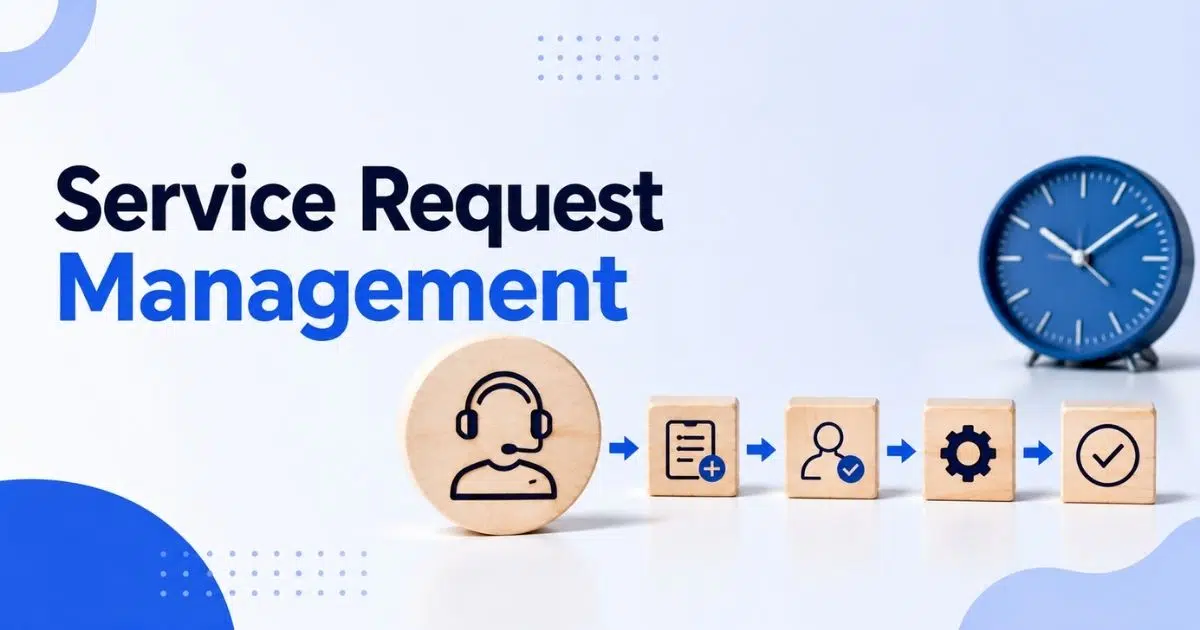
Service Request Management Process: Step-by-Step

A well-defined service request process helps organizations meet customer expectations, improve efficiency, and deliver services consistently. Modern automated workflow software for support can orchestrate each stage of the request lifecycle to ensure requests are handled properly from submission to completion.
Step 1: Request Submission
The process starts when a user submits a request through a service portal, email, chat, or other self service options. Requests can include software access, equipment needs, account updates, or other predefined services. Easy submission methods encourage users to report their needs quickly and help support teams capture accurate information from the beginning, especially when ticket automation streamlines support across channels. Proper request submission reduces confusion and creates a solid foundation for the rest of the process.
Step 2: Request Review And Categorization
After a request is received, support teams review the details and classify it based on request type, urgency, and department. Categorization helps teams determine the appropriate workflow and resources required for fulfillment. Accurate classification also prevents delays by ensuring requests are routed to the correct personnel. At this stage, teams verify that all necessary information has been provided before moving forward.
Step 3: Prioritization And Approval
Once categorized, the request is evaluated to determine its priority. Some requests require manager approval, budget authorization, or compliance verification before work can begin. Priority levels help teams balance urgent business needs with routine service requests. Effective prioritization ensures important requests receive timely attention while maintaining a steady flow of work across support teams.
Step 4: Assignment And Fulfillment
Approved requests are assigned to the appropriate team member or department. The assigned team performs the required tasks, such as granting access permissions, providing equipment, installing software, or updating records. Automated workflows can speed up fulfillment by routing tasks automatically and reducing manual effort. Efficient fulfillment helps maintain business productivity and minimizes the risk of service disruptions. Throughout this stage, users often receive status updates so they can track progress.
Step 5: Closure And Feedback Collection
After the requested service has been delivered, the request is reviewed and formally closed. Documentation is updated to maintain accurate records and support future reporting. Organizations frequently ask users for feedback to evaluate service performance and identify improvement opportunities. User feedback helps teams understand whether customer expectations were met and highlights areas that need attention. Regular reviews of completed requests also contribute to increased user satisfaction and better service quality over time.
Benefits Of Service Request Management
A well-structured service request management process does more than organize requests. It helps organizations improve efficiency, maintain service quality, and create a better experience for both users and support teams.
Faster Request Fulfillment
Service request management creates standardized workflows for handling routine requests. Instead of relying on emails, spreadsheets, or manual tracking, requests follow predefined processes from submission to completion. Moving from manual to automated ticketing further helps teams resolve requests faster and reduce delays. Faster fulfillment helps employees remain productive and ensures services are delivered when needed.
Better Visibility And Accountability
A centralized request management system provides complete visibility into every request. Managers can monitor request status, identify bottlenecks, and track how long requests take to complete. Clear ownership and tracking improve accountability across teams. Greater visibility also helps organizations make informed decisions about staffing, workloads, and resource allocation.
Improved Service Quality And User Experience
Users expect quick responses and consistent service. Service request management helps organizations meet those expectations by creating repeatable processes for handling requests. Automated notifications, status updates, and transparent workflows keep users informed throughout the process, similar to how automated ticket management software improves routing and response times. Consistent service delivery often leads to higher user satisfaction and stronger trust in support teams.
Reduced Operational Costs
Manual request handling consumes significant time and resources. Automation reduces repetitive administrative work, minimizes errors, and decreases the need for manual intervention. Support teams can focus on more valuable tasks instead of processing routine requests. Over time, organizations benefit from lower operational costs and more efficient use of available resources.
Data-Driven Service Improvement
Every request generates valuable performance data. Organizations can analyze request volumes, response times, fulfillment rates, and recurring service needs. Those insights help identify process inefficiencies and areas for improvement. Implementing a robust SLA management system helps support leaders use reporting data to optimize workflows, improve service delivery, and align services with changing business requirements.
Best Practices For Service Request Management

Effective service request management requires more than simply tracking requests. Organizations that achieve strong service performance focus on process design, automation, user experience, and continuous improvement.
Build A Clear Service Catalog
A service catalog should define every available service, request type, approval requirement, and fulfillment procedure. Clear service definitions reduce confusion, improve request accuracy, and help users find the right services quickly. Well-structured catalogs also reduce unnecessary back-and-forth communication between users and support teams.
Automate Repeatable Workflows
Many service requests follow the same steps every time. Password resets, software access requests, onboarding tasks, and equipment requests can often be automated. Ticket automation software for support teams helps reduce manual effort, shorten fulfillment times, and minimize human error so support teams can then focus their attention on more complex requests that require expertise and decision-making.
Define Service Levels And Measure Performance
Successful organizations establish service level targets for different request categories. Not every request requires the same response time. Access requests may require completion within hours, while hardware procurement may take several days, which is why well-structured service level agreements are critical for setting expectations and avoiding costly failures. A structured service level agreement helpdesk framework and measuring fulfillment times, backlog levels, and SLA compliance helps teams identify bottlenecks and improve service performance over time.
Use Self-Service And Knowledge Resources
Many requests can be resolved without direct support involvement. Self-service portals, knowledge bases, and automated request forms allow users to find answers and submit requests independently. A strong self-service strategy reduces ticket volumes, speeds up resolution times, and provides users with a more convenient support experience.
Review Request Data Regularly
Request data provides valuable insights into service demand, recurring issues, and process inefficiencies. Organizations should regularly analyze request trends, fulfillment rates, approval delays, and user feedback. Data-driven reviews help identify opportunities for service improvement, resource optimization, and workflow refinement. Continuous evaluation ensures service request management evolves alongside business needs.
Final Discussion
Service request management is far more than a ticket-tracking process. It provides a structured framework for delivering services consistently, efficiently, and at scale. As organizations grow, request volumes increase, approval chains become more complex, and user expectations continue to rise. Without a clear process, delays, bottlenecks, and service inconsistencies can quickly affect productivity and user satisfaction.
A well-designed service request management strategy helps organizations standardize request fulfillment, automate repetitive tasks, improve visibility, and measure service performance. It also enables support teams to focus on higher-value work rather than administrative activities. From request submission to final closure, every stage contributes to a smoother service experience.
Organizations that invest in clear workflows, self-service capabilities, and continuous process improvement are better positioned to deliver reliable services, increase operational efficiency, and build long-term trust with employees and customers.
FAQs
What Is The Difference Between A Service Request And A Change Request?
A service request is a request for a standard service such as software access, equipment, or password assistance. A change request involves modifying systems, applications, infrastructure, or business processes. Change requests usually require risk assessment, testing, and approvals because they can affect existing services and operations across the organization.
Who Is Responsible For Handling Service Requests?
Service requests are typically managed by service desk agents, support teams, or specific departments responsible for delivering the requested service. Depending on the request type, managers, approvers, or specialized teams may also participate in the fulfillment process to ensure requests are completed accurately and within expected timelines.
Can Service Requests Be Automated?
Yes. Many organizations automate routine requests such as password resets, access provisioning, software installations, and onboarding tasks. Automation reduces manual work, speeds up request fulfillment, improves consistency, and allows support teams to focus on complex issues that require human expertise and decision-making.
Why Is A Service Catalog Important?
A service catalog provides users with a clear list of available services, request options, and fulfillment expectations. It simplifies request submission, reduces confusion, improves request accuracy, and helps support teams process requests more efficiently. A well-maintained catalog also promotes consistency across service delivery operations.
How Can Organizations Measure Service Request Performance?
Organizations can evaluate performance using metrics such as request volume, fulfillment time, SLA compliance, backlog size, first-response time, and customer satisfaction scores. Regular analysis of these metrics helps identify process bottlenecks, improve efficiency, optimize resource allocation, and enhance the overall service experience.