Customer support operations have changed dramatically. What once worked with a shared inbox and a few spreadsheets now struggles to keep pace with rising ticket volume and customer expectations across multiple channels. Turning emails into trackable tickets with the right tools is critical here: a customer support ticketing system solves this by converting every customer inquiry into a trackable digital ticket. Whether a message arrives through email, live chat, social media, or web forms, the system captures it, assigns ownership, and tracks progress until resolution.
For support teams juggling customer calls, customer messages, and service requests across platforms, this structure prevents issues from slipping through the cracks. The sections ahead explain how these systems work in practice, how SLAs keep teams accountable, what to consider when selecting a platform, and how EasyDesk helps growing organizations deliver consistent customer experiences.
What Is A Customer Support Ticketing System
A customer support ticketing system is ticketing software that systematically captures every customer request and converts it into a structured ticket. Each ticket receives a unique identifier, timestamps, and metadata such as priority level, category, and assigned owner. Modern platforms unify email, live chat, contact forms, social channels, and phone notes into a single queue, preventing the fragmentation that comes from juggling multiple tools.
From EasyDesk’s perspective, ticket IDs ensure traceability. A ticket labeled #TKT-12345 links every update, internal note, and customer reply into one searchable record and reflects on secure and transparent customer support. Statuses like New, In Progress, and Resolved track where each issue stands. Categories such as Billing, Technical, or General route tickets to the right team members. Priorities ranging from Low to Critical dictate urgency and response timelines.
This structure matters whether you are a small startup handling 50 tickets weekly or an enterprise managing 50,000 monthly. Research indicates teams using unified inboxes resolve tickets 25 percent faster than those working across multiple disconnected apps. The ticketing process creates audit-ready histories for compliance requirements while feeding analytics that help managers refine staffing and workflows.
How Does A Customer Support Ticketing System Work Step By Step
Understanding the ticketing process helps teams maximize the value of their platform. Here is a chronological walk-through of a typical support journey in EasyDesk, from initial question to full resolution.
Ticket Creation
When a customer submits a request through a web form, email, or chat, the system automatically generates a ticket with a unique ID and timestamp. The ticket captures the subject, message body, sender details, and any attachments. This happens instantly, so no customer inquiries sit unnoticed in a crowded inbox.
Triage And Routing
Automation rules kick in immediately after creation. The system can auto-assign tickets based on keywords, language, time zone, or customer account type. For example, messages containing the word “refund” might route directly to the billing queue. Load balancing distributes work evenly across suitable agents, preventing overload. Some platforms reduce ticket assignment time to under two minutes through automated workflows.
Investigation And Collaboration
Service agents access a unified workspace displaying the full ticket history. They can add internal notes visible only to the team, @mention colleagues for input, and link related tickets when issues span multiple topics. This collaboration happens without exposing internal comments to the customer.
Resolution And Follow Up
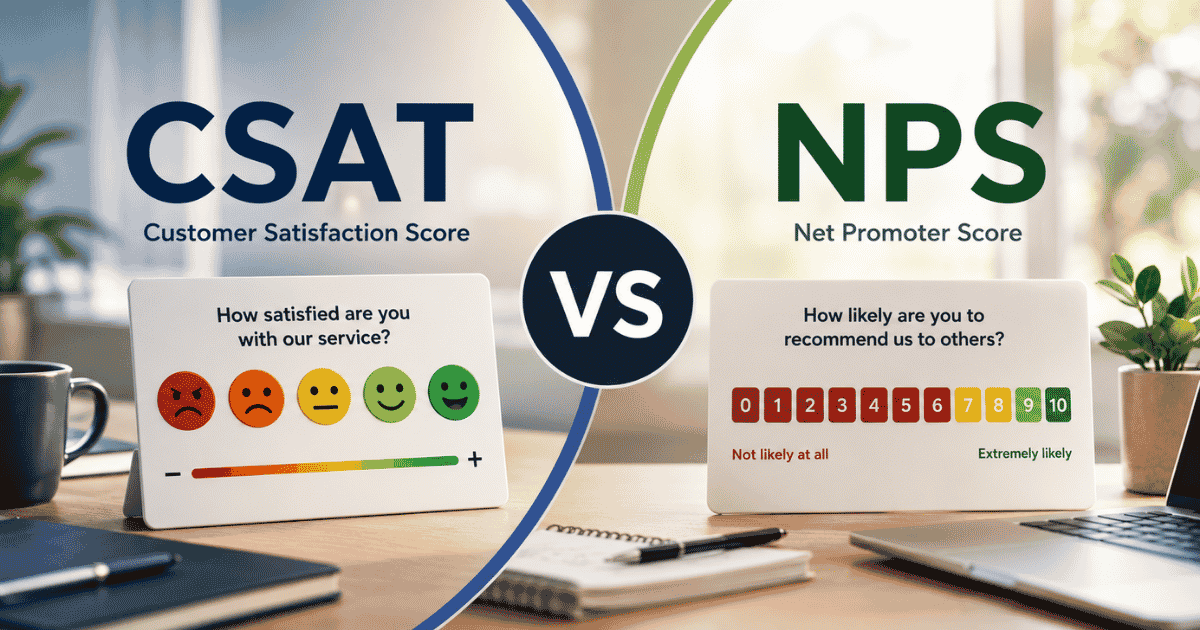
Once the agent resolves the issue, they update the status to Resolved or Closed. EasyDesk can trigger CSAT surveys to capture customer satisfaction feedback or schedule follow-up tasks. Every action logs automatically, feeding analytics that help leaders refine workflows and staffing plans over time.
This closed-loop process ensures nothing falls through the cracks while building a searchable knowledge base of past solutions.
Why Do Growing Teams Need A Ticketing System In 2026
Rising customer expectations demand faster responses. Research from Forrester indicates 73 percent of customers will abandon a brand after experiencing slow service. Ad-hoc tools that worked for a three-person team quickly break down as organizations scale.
Fragmented Tools Create Problems
When teams rely on separate Gmail inboxes, Slack DMs, and social media logins, response times balloon and error rates climb. Studies show response times increase by 50 percent due to context loss once teams exceed three to five agents without a centralized ticketing system. Customer data scatters across platforms, making it nearly impossible to see the full picture of any customer interaction.
Modern teams compare best ticketing systems like Jira Service Management, but scattered tools fail to align support requests. Without automated ticketing, teams miss ai features, leaving appropriate agents disconnected and never on the same page.
Data Consistency Matters
Every update in a proper ticketing system is logged, timestamped, and searchable. This consistency proves invaluable for audits, refunds, and compliance in regulated sectors. Finance teams report completing compliance checks 90 percent faster when they can reference complete ticket histories.
Strong data security and centralized logs ensure every self service portal interaction connects with internal workflows. Teams using ai agents and ai features and broader EasyDesk features maintain accuracy while routing support requests to appropriate agents efficiently.
Remote And Hybrid Teams Benefit
Centralized ticketing ensures a customer contacting your team at 22:00 UTC still receives a consistent experience. Automated ticket management software can route tickets to APAC agents automatically, with timezone-aware SLAs pausing timers outside business hours.
Distributed teams rely on ai powered automation to assign support requests based on team size and availability. This keeps everyone on the same page while ai agents optimize routing decisions across global operations.
Supporting Growth Stages
EasyDesk supports teams at every stage, from early adoption handling a few hundred tickets per month to large organizations processing tens of thousands with complex workflows. Market data shows 65 percent of scaling teams adopt ticketing systems once they cross the 500-ticket monthly threshold to prevent error spikes.
Scaling companies evaluate best ticketing systems and jira service management alternatives to handle rising support requests. With ai features and self service portal options, teams manage growth securely while maintaining strong data security standards.
What Is An SLA In A Ticketing System
Service Level Agreements define formal time-based commitments for responding to and resolving customer issues. They transform vague promises into measurable targets that keep service teams accountable.
External SLAs are promises made to customers, often tied to contracts or published support policies. Internal SLAs serve as benchmarks for planning, coaching, and performance management within the support team.
Typical SLA metrics include first reply time (how quickly an agent responds initially), next reply time (for ongoing threads), and full resolution time (the complete lifecycle from open to closed). EasyDesk dashboards monitor all these metrics in real time.
A concrete example: Priority 1 incidents requiring a first response within 15 minutes and resolution within 4 hours on business days. Such specificity transforms expectations from vague goals into enforceable commitments.
SLAs become enforceable only when properly configured with clear working hours, holiday calendars, and escalation rules. Without this setup, teams face false breach alerts or miss real violations.
How Do SLA Rules Work Inside A Ticketing System
This section explores how SLA logic operates practically, covering policy creation, priority connections, tracking, escalations, reporting, and business impact.
SLA Policies For Different Customer Segments
Support leaders in EasyDesk create multiple SLA policies for different customer tiers. An Enterprise policy might require a one-hour first response time, while a Standard policy allows four hours. Premium falls somewhere between.
Each policy attaches to tickets automatically based on conditions like contract value, customer tags, or product line. When a ticket arrives from a customer tagged as Enterprise, the system immediately applies the stricter timeline. This segmentation ensures high-value accounts receive appropriate priority without manual effort from agents.
Priorities And Business Hours Connected To SLAs
Priority levels directly influence SLA timers. Critical tickets might demand a 15-minute response window, while Low priority issues allow 48 hours. This differentiation ensures urgent customer issues receive immediate attention.
Business hours and holiday calendars pause SLA timers outside agreed support windows. A B2B team in London might configure 09:00 to 18:00 GMT hours with 2026 public holidays preconfigured. Different teams serving APAC or North America can maintain separate calendars aligned to their regions. This prevents false breach alerts when tickets arrive outside operating hours.
SLA Tracking And Breach Detection Work
EasyDesk continuously compares ticket timestamps with SLA settings, displaying countdowns like “2h 15m to first reply target.” This kind of SLA tracking software uses visual indicators in queues and ticket views with color coding: green for on track, amber for at risk, red for breached.
Consider a ticket opened at 10:00 with a four-hour response SLA. By 13:30, the system triggers a breach risk warning, giving agents and supervisors time to act before the deadline passes. All breaches log historically, enabling managers to investigate root causes and adjust coverage accordingly.
Escalations And Notifications Support SLAs
Automated escalations protect against missed deadlines. EasyDesk can escalate tickets nearing breach to senior agents or team leads based on time remaining. Notifications arrive through in-app alerts, email digests, or integrations with collaboration tools like Microsoft Teams.
An example workflow: a Priority 1 ticket receives an automatic flag to the on-call manager after 10 minutes without an agent update. This proactive engagement prevents high-priority issues from languishing unattended. Teams should start with simple escalation paths and add complexity as they mature.
Teams Report On SLA Performance Over Time
EasyDesk offers advanced reporting that summarizes breach rates, average time to first response, and resolution metrics by priority level. Tracking trends month by month reveals whether new hires, process changes, or additional features improve results.
Managers can segment reports by customer segment, product, or region to identify where expectations fall short. A narrative like “Enterprise tickets maintained 98 percent SLA compliance after adding weekend coverage” demonstrates the value of data-driven decisions.
SLAs Influence On Contract Renewals
Consistent SLA performance directly impacts customer success metrics including Net Promoter Score, satisfaction ratings, and churn risk. For B2B contracts, reliable SLA performance becomes a differentiator during renewal discussions.
Sales and customer success teams use SLA reports as evidence of reliability during quarterly business reviews. This connection between support operations and revenue reinforces that a ticketing system is only as valuable as the promises it helps you keep.
How To Choose The Right Customer Support Ticketing System
The right ticketing system should fit existing tools and workflows rather than forcing teams to rebuild everything from scratch.
Channels That Customers Actually Use
Start by listing every active channel your customers use in 2026: email, WhatsApp, Instagram, in-app chat, phone, and others. Prioritize systems that natively support omnichannel support without relying on fragile custom integrations. Many teams purchase tools optimized for phone support when most customer interactions now happen via chat and messaging apps.
EasyDesk centralizes both synchronous channels like live chat ticketing and asynchronous channels like email into a shared inbox, giving agents complete context regardless of how customers reach out.
Ticket Volume And Growth Forecast
Estimate your current monthly ticket volume and project it 12 to 18 months forward using historical data or sales forecasts. Choose a system handling at least double the projected 2027 volume to avoid disruptive migrations.
A SaaS company growing from 800 tickets monthly in mid-2024 to 3,000 by mid-2026 needs a platform that scales gracefully. EasyDesk handles this growth through additional automation rules and advanced routing without forcing a platform switch.
Integrations And Data Visibility
List essential tools before evaluating platforms: CRM systems, payment gateways, product analytics, and engineering trackers. EasyDesk integrates with common CRMs and collaboration tools to display customer data directly in the ticket sidebar. Agents see plan type, renewal date, and account value without switching applications.
Fragmented data leads to longer resolutions and inconsistent answers. An email ticketing system plus knowledge base integration further accelerates ticket handling by surfacing relevant articles during conversations.
Budget And Total Cost Of Ownership
Consider both direct costs (per-agent licenses, add-ons) and indirect costs (extensive training, setup time, custom development). A low-priced tool requiring multiple external add-ons often exceeds the total cost of a more complete platform.
Consider this scenario: a cheaper system at $15 per agent monthly requires consultants for setup, custom Zaps for integrations, and ongoing maintenance hours. A comprehensive customer support platform with transparent pricing and essential features built in delivers lower long-term costs despite higher initial licensing.
Level Of Usability And Support
An intuitive interface enables new agents to become productive within days rather than weeks. EasyDesk offers clear navigation, keyboard shortcuts, and contextual tips for faster onboarding. Self service resources informed by a ticketing software blog on tools and best practices reduce the training burden on team leads.
Evaluate vendor support quality including response times, onboarding resources, and migration assistance. Before committing, run a time-boxed pilot of 30 days with real tickets to validate that the platform fits your team’s workflow customization needs.
How To Implement A Customer Support Ticketing System Successfully
Technology alone does not guarantee results. Process mapping and change management determine whether a new system improves agent performance or creates frustration.
Map And Clean Existing Processes First
Document how tickets flow today, including who handles which topics and how handoffs occur between team members. This mapping reveals duplicate steps, bottlenecks, and inconsistent routing.
Consider an example: consolidating three shared inboxes into one unified queue with clear ownership rules eliminates confusion about who handles what. Complete this step before configuring any automation or SLAs.
Configure Workflows And Automation
Create basic queues such as Billing, Technical, and General, mapping each to specific teams. Initial automation rules within ticket automation software might auto-tag emails containing words like “invoice” or “refund” and route them to billing specialists.
Start with a small set of simple rules and gradually add complexity as metrics justify it. Automated acknowledgments set realistic expectations for response times based on SLA policies, improving customer experience from the first touch.
Migrate Historical Tickets And Knowledge
Export data from legacy tools via CSV or API and import it into EasyDesk so agents can reference previous conversations. When you manage support tickets efficiently using EasyDesk, migrate knowledge base articles, saved replies, and macros to preserve proven solutions.
A realistic timeline involves migration over two weekends with parallel running for two weeks to minimize risk. Field mapping and validation tests ensure customer data transfers correctly.
Train Agents And Stakeholders
Role-based training serves different needs. Frontline agents focus on ticket handling and workflows. Team leads learn queue management and escalation procedures. Admins master configuration and reporting.
Use real tickets from the last quarter as practice cases to make training relevant. Self-serve resources such as help centers and quick-start guides reduce dependency on live sessions. Schedule refresher sessions after the first 30 days to address emerging questions and refine processes.
Measure Early Success And Iterate
Treat the first 90 days as a calibration period. Monitor response times, backlog size, agent satisfaction, and user feedback through EasyDesk reports comparing pre-implementation and post-implementation metrics.
Adjust automation rules, SLAs, and queue structures based on concrete data rather than assumptions. Quarterly reviews keep the system aligned with evolving products, policies, and contact volume as your team grows.
Why Choose EasyDesk For Your Customer Support Ticketing Needs
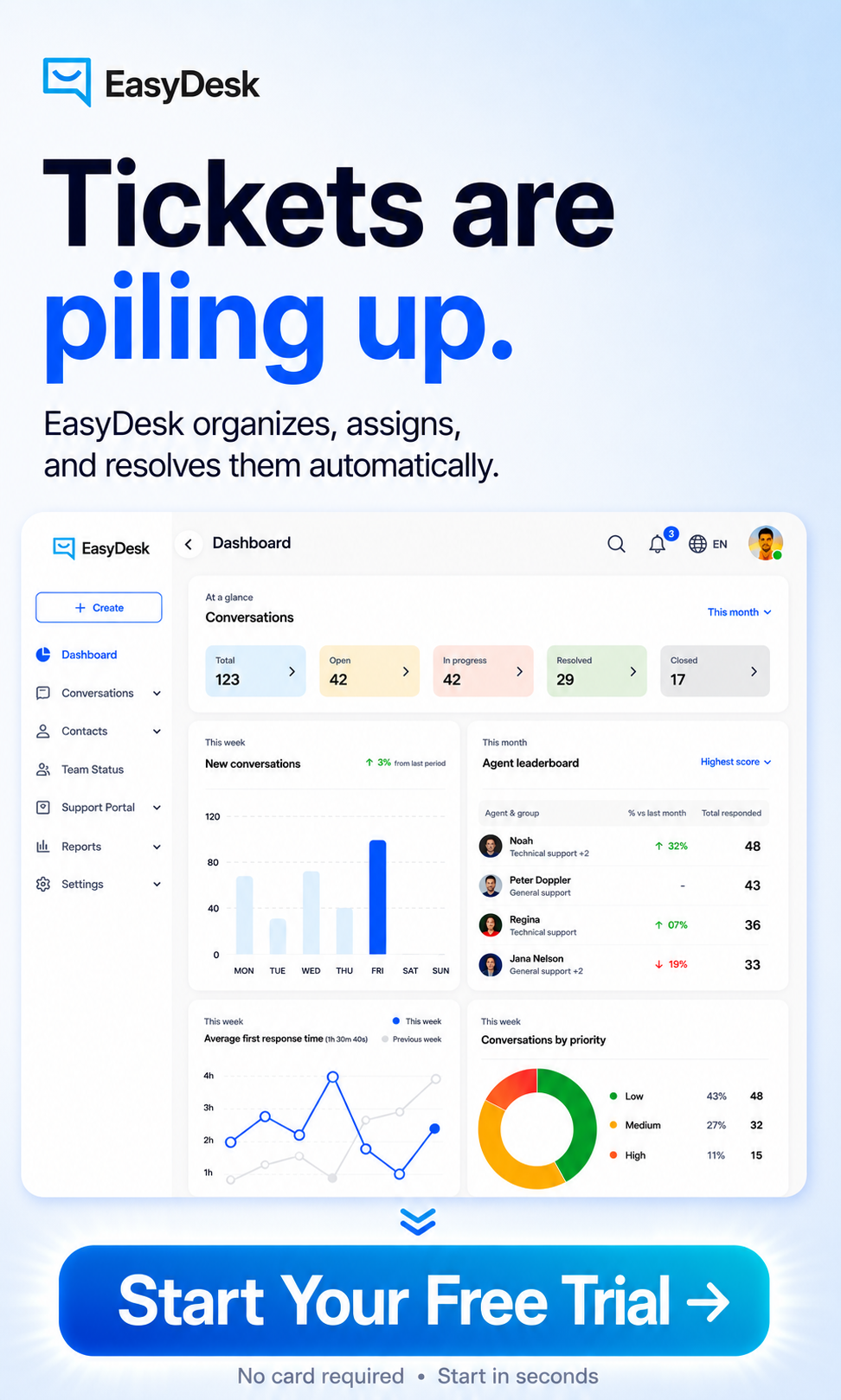
EasyDesk helpdesk ticketing software is a modern support ticketing system designed for customer-facing teams that want structured workflows without unnecessary complexity. The platform combines ticketing with omnichannel intake across email, chat, and social channels, SLA management with customizable workflows, automation rules that reduce manual effort, and readable reports that surface actionable insights.
EasyDesk supports both small teams just formalizing their support operations and larger organizations consolidating multiple tools onto a single platform. As a best ticket management system, the focus remains on clarity for service agents, affordable pricing for leaders, and consistent experiences for customers.
Key features in the #1 ticketing software system include asset management capabilities, task assignments for complex workflows, collaboration tools for team coordination, and an audit log for compliance requirements. Whether you need basic ticketing to start or advanced features as you scale, EasyDesk grows with your team’s productivity goals.
Ready to see how EasyDesk ticketing software can help your team deliver faster customer service and better service quality? Explore a live demo or start a free plan to experience the platform firsthand.
Frequently Asked Questions
How Is A Customer Support Ticket Different From A Regular Email
A support ticket carries structured metadata that ordinary email threads lack. This includes priority levels, assigned owners, status indicators, SLA timers, tags, and categories. EasyDesk enables search, reporting, and automation based on this extra data, making ticket management far more effective than a crowded inbox. Studies suggest up to 40 percent of issues get lost in unstructured email systems, while ticketing tools maintain complete accountability.
Can A Ticketing System Help With Internal Team Requests As Well
EasyDesk handles internal service requests using the same ticketing logic that powers customer support. HR teams manage employee questions, finance handles approval workflows, and IT tracks incident reports. Separate queues or projects keep internal and external tickets organized while sharing one common platform. Approximately 40 percent of teams use their ticketing tools for both purposes, reducing tool sprawl and training requirements.
How Long Does It Typically Take To Roll Out EasyDesk
Small teams with straightforward requirements typically complete rollout in 2 to 4 weeks. Larger organizations with complex workflows, integrations, and data migrations may need 6 to 8 weeks. Timelines shorten significantly when teams map existing processes in advance and ensure decision-makers remain available to approve configurations quickly.
What Security Features Should I Expect In A Modern Ticketing System
Essential security capabilities include role-based access control limiting who sees what, AES-256 encryption protecting data in transit and at rest, detailed audit logs tracking every action, and regular backups ensuring recoverability. EasyDesk incorporates these safeguards so only authorized users access sensitive customer conversations, attachments, and account information. These features satisfy compliance requirements for regulated industries.
Do Ticketing Systems Replace Live Chat Or Phone Support
Ticketing systems do not replace communication channels but rather centralize what happens after each interaction. Whether a conversation starts via customer calls, live chat, or email, the ticketing system captures transcripts, notes, and outcomes. Smarter helpdesk setups like EasyDesk maintain context across follow-up conversations so agents see the complete history regardless of how the customer originally reached out. This hybrid approach improves efficiency by roughly 35 percent compared to disconnected channel management.