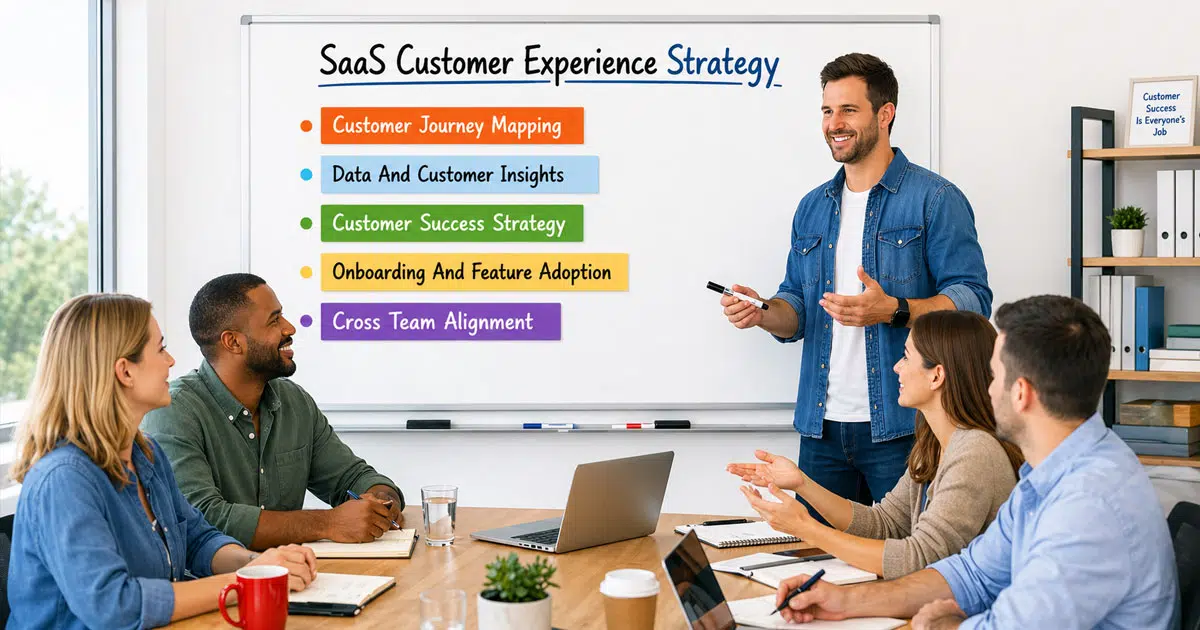
SaaS companies compete on experience, not only features. A strong SaaS customer experience strategy shapes every customer interaction. It connects customer support, product teams, and sales teams around shared goals. Most SaaS businesses focus on customer acquisition, but sustainable growth depends on customer retention and recurring revenue.
SaaS customer experience starts with the onboarding process and continues across the entire customer journey. Customer success managers and the customer success team use customer data, direct feedback, and user behavior insights to identify pain points. They track key metrics like customer satisfaction score, customer effort score, and net promoter score. They also monitor customer health, net revenue retention, and feature adoption.
A clear customer experience strategy increases customer satisfaction and builds loyal customers. Proactive support, responsive support, and a self-service knowledge base reduce support tickets and improve customer perception. When customers interact with helpful support resources and customer success software, they achieve desired outcomes. Happy customers create higher customer lifetime value and stronger customer loyalty.
What Is SaaS Customer Experience Strategy
A SaaS customer experience strategy defines how SaaS companies deliver value across the entire customer journey. It aligns customer support, product teams, and sales teams around shared customer needs. The goal is simple. Create a satisfying customer experience that increases customer satisfaction and builds customer loyalty. A strong customer experience strategy helps SaaS businesses understand how customers interact with the product at every stage.
SaaS customer experience relies on customer data, customer feedback, and user behavior insights. Customer success managers and the customer success team track metrics like customer satisfaction score, customer effort score, and net promoter score. They use data-driven insights to improve the onboarding process, feature adoption, and customer engagement. A clear customer success strategy improves customer retention, boosts recurring revenue, and raises customer lifetime value for both new customers and existing customers.
Why SaaS Customer Experience Strategy Is Important
SaaS markets move fast. Customer expectations rise every year. A clear SaaS customer experience strategy helps SaaS businesses stay competitive and relevant. It connects customer support, product teams, and sales teams around shared goals. Strong execution increases customer satisfaction, improves customer retention, and strengthens recurring revenue.
Customer Retention And Recurring Revenue
Customer retention fuels sustainable growth in SaaS. Research shows that a 5% increase in customer retention can raise profits by 25% to 95%. A focused SaaS customer experience strategy improves customer loyalty and keeps existing customers engaged.
Customer success managers track customer health, customer lifetime value, and net revenue retention. Proactive customer support and responsive support reduce churn. Happy customers renew contracts and expand usage. Loyal customers also reduce customer acquisition costs and protect the customer base.
Customer Satisfaction And Loyalty
Customer satisfaction shapes long term success. Metrics like customer satisfaction score, customer effort score, and net promoter score help track customer perception. High scores reflect a smoother customer experience across the entire customer journey.
Customer feedback analysis and direct feedback reveal customer needs and identify pain points. A strong customer success program uses actionable insights to improve support tickets, onboarding process, and feature adoption. Satisfied customers become loyal customers and brand advocates.
Customer Success And Desired Outcomes
Customer success drives measurable impact. SaaS customer success teams focus on helping customers achieve desired outcomes. Customer success software centralizes customer data and customer interactions. Clear visibility helps track metrics that matter.
Customer success strategy aligns with the sales process and product roadmap. Chief customer officer and customer success managers ensure customers interact with the right support resources at the right time. Exceptional customer experience increases customer lifetime and business growth.
Customer Insights And Competitive Advantage
Customer insights create strategic advantage. SaaS companies collect customer data across multiple customers and customer segments. Analysis of user behavior and support requests uncovers gaps in the customer journey.
Data-driven insights empower customers and guide product teams. Clear understanding of customer expectations improves core features and self-service knowledge base. SaaS businesses that use actionable insights deliver a more satisfying customer experience than competitors.
Customer Engagement And Sustainable Growth
Customer engagement strengthens long-term value. Engaged SaaS customers adopt features faster and submit fewer support tickets. Strong onboarding process increases feature adoption and reduces customer effort score.
Customer experience strategy aligns customer support and customer success team efforts. Coordinated communication increases customer satisfaction and improves net revenue retention. Most SaaS businesses that invest in SaaS customer experience see higher recurring revenue and stronger sustainable growth.
Core Elements Of A SaaS Customer Experience Strategy
A strong SaaS customer experience strategy depends on clear structure and alignment. SaaS companies need defined processes, measurable goals, and cross-functional collaboration. Each element supports the entire customer journey. Together, they increase customer satisfaction, improve customer retention, and drive sustainable growth.
Customer Journey Mapping
Customer journey mapping clarifies how customers interact with your product. It highlights touchpoints from customer acquisition to renewal. SaaS businesses that document the entire customer journey identify pain points faster.
Research shows that journey mapping can increase customer satisfaction by up to 20%. Clear visibility improves customer perception and customer engagement. Product teams and sales teams align around customer needs and desired outcomes.
Data And Customer Insights
Customer data fuels a data driven SaaS customer experience strategy. Analysis of user behavior, support tickets, and customer feedback reveals actionable insights. Clear segmentation across customer segments improves personalization.
Companies that use data driven insights are 23 times more likely to acquire customers and 19 times more likely to be profitable. Tracking customer health, net revenue retention, and customer lifetime value supports smarter decisions.
Customer Success Strategy
Customer success ensures customers achieve value fast. A defined customer success strategy aligns customer success managers, the customer success team, and the chief customer officer. Focus stays on measurable outcomes.
SaaS customer success programs improve customer retention and recurring revenue. Studies show that strong onboarding process and proactive support reduce churn by up to 15%. Clear goals increase customer loyalty and net promoter score.
Onboarding And Feature Adoption
Onboarding process shapes early customer perception. New users decide within the first weeks if the product meets customer expectations. Structured onboarding increases feature adoption and reduces customer effort score.
SaaS companies that optimize onboarding see up to 50% higher product adoption rates. Customer success software tracks customer feedback across multiple customers. Support resources and a self-service knowledge base empower customers early.
Proactive And Responsive Support
Customer support remains a core pillar. Responsive support builds customer trust. Proactive support prevents issues before they escalate into major support requests.
Research shows that 88% of customers expect quick responses. Efficient support team workflows reduce support tickets and increase customer satisfaction score. A smoother customer experience strengthens customer loyalty and retaining customers becomes easier.
Feedback And Continuous Improvement
Customer feedback management system closes the loop. Direct feedback, surveys, and SaaS customer experience FAQs reveal unmet customer needs. Net promoter score and customer effort score highlight areas for improvement.
SaaS companies that act on feedback increase customer satisfaction and business growth. Product teams refine core features based on actionable insights. Continuous improvement delivers an exceptional customer experience and supports sustainable growth.
Cross Team Alignment
Alignment across sales teams, product teams, and customer support ensures consistency. Customer interactions must reflect one unified customer experience strategy. Misalignment creates friction in the sales process and customer journey.
Organizations with strong cross-functional collaboration report 36% higher customer retention. Shared dashboards help track key metrics and track metrics across the customer base. Unified execution drives competitive advantage and long-term customer lifetime value.
Customer Journey Mapping In SaaS
Customer journey mapping gives structure to a SaaS customer experience strategy. It outlines how a SaaS customer moves from awareness to renewal. Clear maps reveal gaps in customer interactions. Strong visibility increases customer satisfaction, customer retention, and recurring revenue.
Journey Stages In SaaS
Every SaaS customer passes through key stages. Stages include customer acquisition, onboarding process, product adoption, renewal, and expansion. Each stage shapes customer perception and customer loyalty.
Research shows that companies with structured journey maps improve customer satisfaction by up to 20%. Defined stages help customer success managers and sales teams align actions with customer needs. Clear visibility across the entire customer journey supports sustainable growth.
Touchpoints And Customer Interactions
Touchpoints define how customers interact with your brand. Examples include website visits, sales process calls, support tickets, and self-service knowledge base usage. Each interaction shapes SaaS customer experience.
Studies reveal that 86% of buyers pay more for exceptional customer experience. Responsive support and proactive support improve customer satisfaction score and net promoter score. Consistent touchpoints increase customer engagement and retain users across multiple customers.
Customer Data And Insights
Customer data drives accurate journey mapping. Analysis of user behavior, support requests, and direct feedback reveals actionable insights. Clear segmentation across customer segments improves personalization.
Data driven insights help track key metrics like customer health, customer effort score, and customer lifetime value. SaaS businesses that use analytics effectively report 23% higher profitability. Strong insights empower customers and strengthen competitive advantage.
Pain Points And Improvements
Journey maps expose friction in the onboarding process and feature request management. Identification of pain points helps product teams refine core features. Customer success software tracks patterns across the customer base.
Organizations that resolve friction quickly see up to 15% lower churn. Improved support resources and faster response from the support team increase customer satisfaction. Smoother customer experience builds loyal customers and happy customers.
Alignment Across Teams
Alignment ensures consistent execution. Customer success team, customer support, and sales teams must share customer insights. Unified collaboration supports customer success strategy and desired outcomes.
Research indicates that strong cross-functional alignment increases customer retention by 36%. Shared dashboards help track metrics such as net revenue retention and customer lifetime. Coordinated effort strengthens SaaS customer success and drives business growth.
Key Metrics To Measure SaaS Customer Experience
Metrics define the strength of a SaaS customer experience strategy. Clear measurement helps SaaS companies understand customer perception and customer loyalty. Data reveals gaps across the entire customer journey. Strong tracking improves customer satisfaction, customer retention, and recurring revenue.
Customer Satisfaction Score
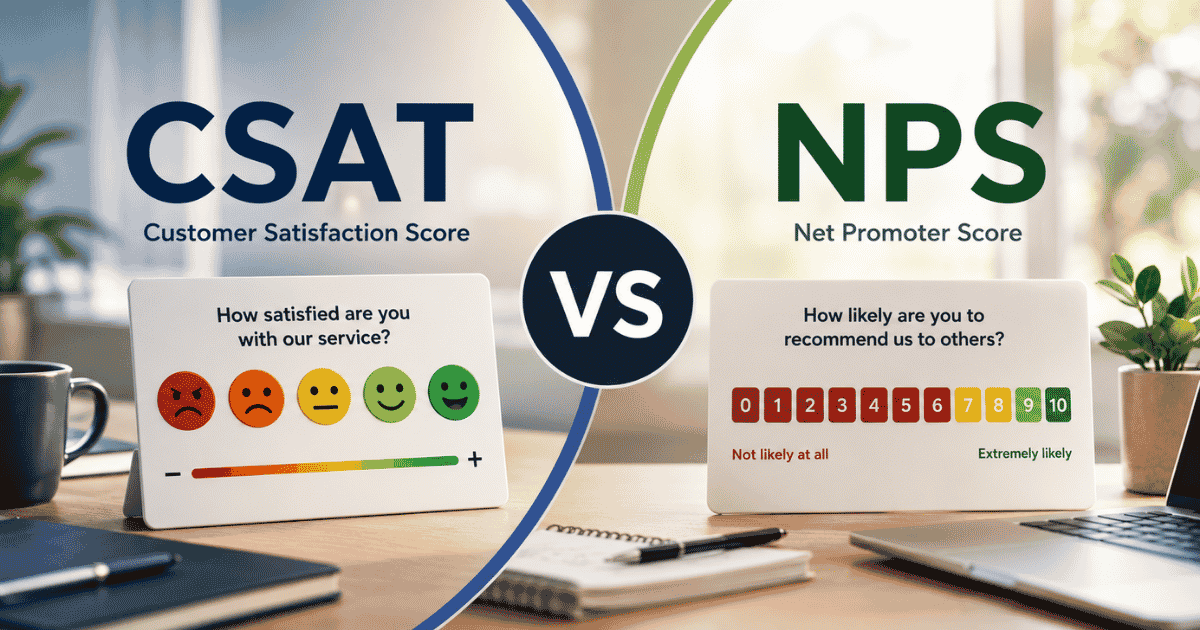
Customer satisfaction score measures how satisfied customers feel after customer interactions. Surveys after support tickets or onboarding process capture direct feedback. High scores reflect a satisfying customer experience.
Studies show that companies with high customer satisfaction score grow revenue 4% to 8% above market average. Customer success managers use this metric to identify pain points and improve support resources. Strong scores increase customer loyalty and retain users.
Net Promoter Score
Net promoter score evaluates how likely customers recommend your product. It reflects overall SaaS customer experience and customer engagement. A higher score signals strong customer loyalty.
Research indicates that companies with strong net promoter score grow more than twice as fast as competitors. Customer success team and sales teams use insights from promoters and detractors. Clear feedback supports actionable insights and business growth.
Customer Effort Score
Customer effort score measures how easy customers interact with your product or customer support. Low effort leads to higher customer satisfaction. Simple processes increase feature adoption and customer retention.
Studies show that 94% of customers with low effort experiences show higher repurchase intent. Clear workflows, proactive support, and responsive support reduce friction. Reduced effort strengthens customer perception and improves SaaS customer success outcomes.
Customer Lifetime Value
Customer lifetime value tracks total revenue from a SaaS customer across the customer lifetime. It connects customer experience strategy with financial results. High value indicates strong customer loyalty and recurring revenue.
SaaS businesses that increase customer retention by 5% can boost profits up to 95%. Customer success strategy focuses on onboarding process, customer health, and expansion opportunities. Strong lifetime value supports sustainable growth and competitive advantage.
Net Revenue Retention
Net revenue retention measures expansion, renewals, and churn within the customer base. It reflects success of SaaS customer experience and customer success program. A rate above 100% signals strong retention and upsell.
Top SaaS companies report net revenue retention above 120%. Customer success managers monitor user behavior, support requests, and customer data. Accurate tracking helps track key metrics and deliver exceptional customer experience across multiple customers.
Role Of Customer Support In SaaS Customer Experience Strategy
Customer support stands at the center of a SaaS customer experience strategy. Every support ticket shapes customer perception. Fast and helpful responses increase customer satisfaction and customer loyalty. Strong support performance protects recurring revenue and customer retention.
Responsive Support Builds Trust
Responsive support creates confidence across the entire customer journey. Customers expect quick replies when issues arise. Research shows that 88% of customers expect a response within one hour. Slow replies damage SaaS customer experience and customer satisfaction score.
A skilled support team structure resolves support requests with clarity. Clear communication reduces customer effort score and improves net promoter score. Satisfied customers renew contracts and recommend the product to new customers.
Proactive Support Reduces Churn
Proactive support prevents problems before ticket escalation. Analysis of customer data and user behavior reveals early warning signs in customer health. Customer success managers can intervene before churn risk increases.
Studies show that proactive outreach can reduce churn by up to 15%. Early guidance during onboarding process improves feature adoption. Strong coordination between customer support and customer success team strengthens customer retention and net revenue retention.
Support Insights Improve Products
Support tickets contain valuable customer feedback. Direct feedback highlights pain points in core features. Product teams use actionable insights to refine updates and align with customer needs.
Data driven insights from customer interactions improve the smoother customer experience. Clear documentation in a self service knowledge base empowers customers. Continuous improvement enhances customer lifetime value and competitive advantage for SaaS businesses.
Support Alignment Drives Growth
Alignment between customer support, sales teams, and customer success strategy ensures consistency. Unified messaging improves customer engagement across multiple customers. Clear processes support the sales process and customer acquisition efforts.
Organizations with strong cross team alignment report 36% higher customer retention. Shared dashboards help track metrics such as customer satisfaction score and net promoter score. Coordinated execution increases customer loyalty and supports sustainable growth.
Benefits Of SaaS Customer Experience Strategy
A clear SaaS customer experience strategy delivers measurable value. SaaS companies compete on experience as much as product features. Strong execution improves customer satisfaction, customer retention, and recurring revenue. Clear focus across the entire customer journey supports sustainable growth and long term business growth.
Higher Customer Retention
Customer retention remains the core driver of SaaS success. Research shows that a 5% increase in customer retention can boost profits by 25% to 95%. A strong SaaS customer experience reduces churn across existing customers.
Customer success managers monitor customer health and user behavior to identify pain points early. Proactive support and structured onboarding process improve feature adoption. Loyal customers stay longer and increase customer lifetime value.
Stronger Recurring Revenue
Recurring revenue depends on consistent customer satisfaction. Satisfied customers renew subscriptions and expand usage. Net revenue retention above 100% signals healthy SaaS customer success.
Customer experience strategy aligns customer success team, sales teams, and customer support. Clear tracking of net promoter score and customer satisfaction score improves decision making. Predictable revenue creates financial stability and supports sustainable growth.
Improved Customer Satisfaction
Customer satisfaction reflects overall SaaS customer experience. Studies show that companies prioritizing customer experience generate 4% to 8% higher revenue growth than competitors. High customer satisfaction score indicates a smoother customer experience.
Direct feedback and customer feedback surveys provide actionable insights. Reduced customer effort score shows customers interact easily with support resources and core features. Happy customers strengthen customer loyalty and customer perception.
Better Customer Insights
Customer data reveals patterns across multiple customers and customer segments. Analysis of support tickets and support requests highlights service gaps. Data-driven insights empower customers and guide product teams.
Organizations that rely on analytics are 23 times more likely to acquire customers. Clear tracking of customer lifetime and track key metrics supports smarter strategy. Customer insights create competitive advantage in crowded SaaS markets.
Enhanced Brand Loyalty
Customer loyalty grows from consistent positive customer interactions. Exceptional customer experience builds trust across the entire customer journey. Customers who feel valued often recommend products to new customers.
Net promoter score links closely with business growth. Loyal customers increase customer base and reduce customer acquisition costs. A well-executed customer success strategy creates long term relationships and drives sustainable growth.
SaaS Customer Experience Strategy Framework Step By Step
A structured framework turns strategy into measurable outcomes. SaaS companies need clarity across the entire customer journey. Each step must align customer support, product teams, and sales teams. Strong execution increases customer satisfaction, customer retention, and recurring revenue.
Step 1: Define Customer Segments
Clear segmentation strengthens any SaaS customer experience strategy. Divide the customer base by industry, company size, and user behavior. Accurate customer segments improve personalization and customer engagement.
Research shows segmented strategies can increase revenue by up to 760%. Customer success managers use customer data to identify pain points and desired outcomes. Focused targeting increases customer satisfaction and customer lifetime value across multiple customers.
Step 2: Map The Entire Customer Journey
Customer journey mapping outlines every stage from customer acquisition to renewal. Visibility into customer interactions reveals friction across the entire customer journey. Clear documentation supports a smoother customer experience.
Companies that map journeys report up to 20% higher customer satisfaction. Alignment across the sales process and onboarding process reduces confusion. Structured mapping improves customer perception and strengthens customer loyalty.
Step 3: Set Clear Customer Experience Metrics
Defined metrics guide execution and accountability. Track key metrics such as customer satisfaction score, customer effort score, net promoter score, and net revenue retention. Data driven insights improve decision quality.
High performing SaaS businesses monitor customer health and feature adoption closely. Strong measurement improves SaaS customer success and customer retention. Clear KPIs connect customer experience strategy with sustainable growth.
Step 4: Strengthen Onboarding Process
Onboarding process shapes early SaaS customer experience. New users evaluate value within the first weeks. Structured onboarding increases feature adoption and reduces support tickets.
Research shows effective onboarding can improve retention by up to 50%. Customer success team delivers proactive support and structured support resources. Early value creation builds happy customers and loyal customers.
Step 5: Enable Proactive Support
Proactive support prevents churn before escalation. Analysis of support requests and user behavior highlights risk signals in customer health. Customer success managers take early action.
Studies indicate proactive outreach can reduce churn by 15%. Responsive support lowers customer effort score and increases customer satisfaction score. Strong coordination between customer support and customer success strategy protects recurring revenue.
Step 6: Collect And Act On Feedback
Customer feedback drives continuous improvement. Direct feedback, surveys, and SaaS customer experience FAQs reveal unmet customer needs. Net promoter score identifies advocacy trends.
Organizations that act on feedback see stronger business growth. Product teams refine core features using actionable insights. Continuous optimization delivers exceptional customer experience and competitive advantage.
Step 7: Align Teams Around Customer Success
Alignment ensures consistent customer interactions across departments. Customer support, sales teams, and product teams must share customer insights. Unified ownership strengthens customer engagement.
Companies with strong cross-functional alignment report 36% higher customer retention. Chief customer officer often leads this coordination. Shared dashboards help track metrics and support long term customer lifetime value.
Best Tools To Execute A SaaS Customer Experience Strategy
The right tools turn a SaaS customer experience strategy into daily action. Technology connects customer data, customer interactions, and performance metrics. SaaS companies that invest in modern platforms report higher customer satisfaction and stronger customer retention. Smart tools support customer success, proactive support, and sustainable growth.
Customer Success Software
Customer success software centralizes customer data and customer health metrics. It helps customer success managers track feature adoption, user behavior, and renewal risks. Clear dashboards improve visibility across the entire customer journey.
Research shows that SaaS businesses with mature SaaS customer success programs achieve net revenue retention above 110%. Strong platforms help track key metrics such as customer lifetime value and customer satisfaction score. Data-driven insights support better decisions and higher recurring revenue.
Help Desk And Ticketing Systems
Help desk platforms manage support tickets and support requests efficiently. A strong support team uses automation to reduce first response time. Faster resolution time improves customer satisfaction and customer perception.
Studies indicate that 90% of customers rate immediate responses as important. Responsive support reduces customer effort score and increases net promoter score. Efficient ticket workflows strengthen SaaS customer experience and customer loyalty.
Customer Feedback Tools
Customer feedback tools collect direct feedback through surveys and in-app prompts. They measure customer satisfaction score, customer effort score, and net promoter score. Clear feedback reveals customer needs and identify pain points.
Organizations that actively use feedback data see up to 25% higher customer retention. Actionable insights guide product teams to refine core features. Continuous improvement creates exceptional customer experience for multiple customers.
Product Analytics Platforms
Product analytics platforms analyze user behavior and feature adoption. They reveal how customers interact with the product across customer segments. Clear insights highlight gaps in onboarding process and customer engagement.
Companies that use behavioral analytics improve customer retention by up to 15%. Customer success strategy becomes more precise with accurate customer insights. Better data improves customer lifetime value and sustainable growth.
Self-Service Knowledge Base
Self-service knowledge base tools empower customers with instant support resources. Customers resolve issues without opening support tickets. Easy access to documentation improves customer satisfaction.
Research shows that 67% of customers prefer self-service over speaking with customer support. Well-structured knowledge bases reduce customer service workloadfor the support team. Empowered customers experience smoother customer experience and higher loyalty.
CRM And Sales Alignment Tools
CRM systems align sales teams with customer success team efforts. Shared visibility into customer interactions improves the sales process and customer acquisition strategy. Accurate data strengthens customer experience strategy.
Integrated platforms help track metrics such as net revenue retention and customer lifetime. Unified collaboration increases customer engagement and retaining customers becomes easier. Strong alignment creates competitive advantage for SaaS businesses.
Customer Communication Platforms
Customer communication platforms manage email, chat, and in app messaging. Consistent messaging improves customer perception and customer engagement. Clear communication strengthens relationships across the entire customer journey.
Studies show personalized communication can increase revenue by 10% to 15%. Coordinated outreach supports proactive support and onboarding process success. Strong communication tools help create happy customers and loyal customers within the customer base.
Use Cases Of Successful SaaS Customer Experience Strategy
Real examples show how a strong SaaS customer experience strategy delivers measurable results. Leading SaaS companies focus on customer satisfaction, customer retention, and recurring revenue. Clear execution across the entire customer journey creates sustainable growth and competitive advantage.
Reduced Churn Through Proactive Support
A B2B SaaS company faced rising churn among existing customers. Analysis of customer data and user behavior revealed low feature adoption after onboarding process. The customer success team introduced proactive support and structured check ins.
Within six months, churn dropped by 18%. Customer health scores improved across multiple customers. Higher customer satisfaction score and lower customer effort score increased net revenue retention and customer loyalty.
Higher Adoption With Structured Onboarding
A mid market SaaS business redesigned its onboarding process. Clear milestones helped new users reach desired outcomes faster. Customer success managers monitored feature adoption and customer interactions closely.
Retention improved by 25% within one year. Support tickets related to confusion decreased significantly. A smoother customer experience increased customer lifetime value and strengthened SaaS customer success outcomes.
Revenue Growth From Customer Segmentation
A SaaS company segmented its customer base by usage patterns and industry. Targeted communication improved customer engagement across different customer segments. Sales teams aligned with customer success strategy.
Expansion revenue grew by 30% in two quarters. Net promoter score increased as satisfied customers recommended the product. Data-driven insights helped identify pain points and unlock cross sell opportunities.
Improved Satisfaction With Feedback Loops
A SaaS platform implemented continuous customer feedback collection. Direct feedback from surveys measured customer satisfaction score and net promoter score. Product teams reviewed actionable insights monthly.
Customer satisfaction increased by 15% within nine months. Core features improved based on real customer needs. Customers interact more confidently with support resources and self service knowledge base.
Stronger Retention With Cross-Team Alignment
A high-growth SaaS company aligned customer support, product teams, and sales teams under one customer experience strategy. Shared dashboards helped track key metrics such as customer health and net revenue retention.
Customer retention improved by 20% year over year. Clear accountability strengthened the sales process and customer acquisition efforts. Loyal customers expanded contracts, which boosted recurring revenue and long term business growth.
Common Mistakes In SaaS Customer Experience Strategy
Many SaaS businesses invest in tools but ignore strategy gaps. Weak execution harms customer satisfaction and customer retention. Poor alignment across the entire customer journey reduces recurring revenue. Clear awareness of common mistakes protects sustainable growth and customer loyalty.
Lack Of Clear Customer Journey Mapping
Customer journey mapping often receives little attention. Without clear visibility, SaaS companies miss critical customer interactions. Gaps appear in onboarding process and renewal stages.
Research shows that companies with structured journey maps improve customer satisfaction by up to 20%. Absence of mapping increases customer effort score and weakens customer perception. Clear documentation supports a smoother customer experience and better SaaS customer success outcomes.
Ignoring Customer Feedback
Customer feedback reveals customer needs and identify pain points. Many SaaS businesses collect surveys but fail to act on direct feedback. No action reduces trust and customer engagement.
Studies indicate that 52% of customers expect companies to respond to feedback within a week. Delayed action lowers net promoter score and customer satisfaction score. Product teams must convert actionable insights into improved core features.
Weak Onboarding Process
Onboarding process shapes early SaaS customer experience. Poor guidance leads to low feature adoption and frequent support tickets. New users often abandon products within the first 90 days.
Research shows effective onboarding can improve retention by up to 50%. Customer success managers must track customer health and user behavior. Structured onboarding increases customer lifetime value and strengthens customer loyalty.
Slow Or Reactive Support
Customer support plays a central role in customer experience strategy. Slow responses damage customer perception and increase churn risk. 88% of customers expect fast replies to support requests.
Reactive models fail to provide proactive support. Higher customer effort score leads to lower customer satisfaction. Responsive support and clear support resources improve customer retention and recurring revenue.
Poor Cross-Team Alignment
Misalignment between sales teams, product teams, and customer success team creates confusion. Mixed messaging harms customer interactions across the entire customer journey.
Organizations with strong cross-functional collaboration report 36% higher customer retention. Clear communication improves customer engagement and supports customer success strategy. Unified effort strengthens net revenue retention and long-term business growth.
Failure To Track Key Metrics
Many SaaS companies ignore essential KPIs. Lack of tracking customer satisfaction score, customer effort score, and net revenue retention weakens strategy. Decisions without data reduce competitive advantage.
Data driven insights increase profitability and customer retention. Clear dashboards help track key metrics across multiple customers. Measurement connects customer experience strategy to customer lifetime value and sustainable growth.
Overlooking Customer Segments
Customer segments differ in needs and desired outcomes. Uniform messaging across the customer base reduces personalization. Generic engagement weakens customer loyalty.
Segmented approaches can increase revenue significantly. Customer success software and CRM tools help analyze customer data. Targeted communication improves customer engagement, retain users, and deliver exceptional customer experience.
How EasyDesk Strengthens Your SaaS Customer Experience Strategy
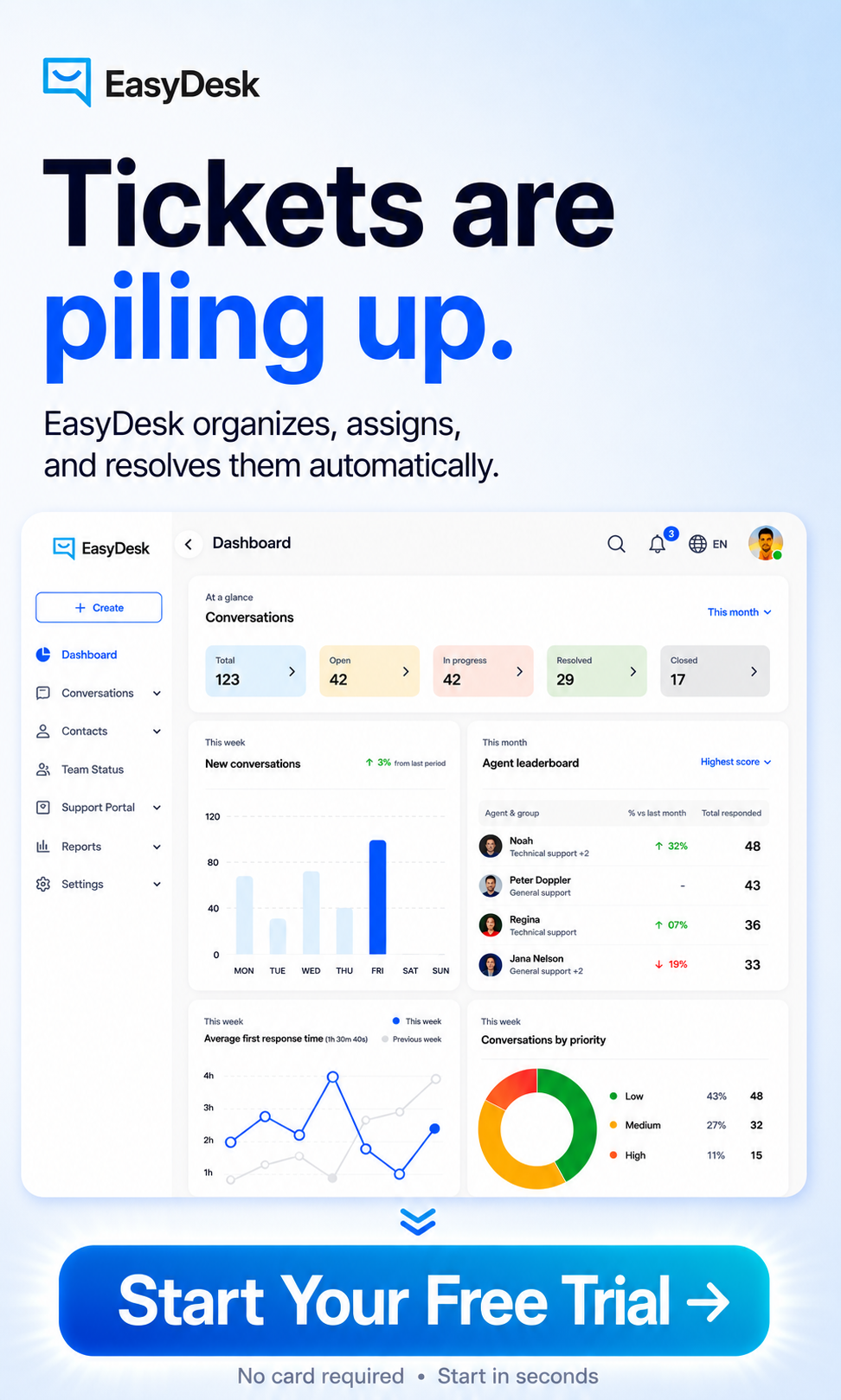
A strong SaaS customer experience strategy depends on clear visibility, faster resolutions, and meaningful customer interactions. EasyDesk helps SaaS companies deliver faster support, personalized engagement, and measurable improvements in customer satisfaction. With integrated workflows and feedback management, EasyDesk supports teams to meet customer expectations and build loyalty.
EasyDesk centralizes ticket creation and management so all customer interactions stay in one dashboard. This makes support responses faster and more organized. Automated workflows help assign tickets to the right agents and enforce service level agreements, reducing support tickets and lowering customer effort. The platform also includes a knowledge base and canned responses that empower both customers and support teams, increasing customer satisfaction scores and smoothing the customer journey.
Live chat and multi-channel support keep conversations timely and consistent. EasyDesk captures feedback directly and tracks it with priority levels, helping SaaS businesses act on insights and continually improve the experience for both new customers and existing users. You can enjoy EasyDesk at a suitable price.
FAQs
Does A SaaS Customer Experience Strategy Impact Customer Acquisition?
Yes. A strong SaaS customer experience strategy improves customer perception and brand reputation. Positive customer interactions and high net promoter score attract new customers and reduce customer acquisition costs.
Can Small SaaS Businesses Implement A Customer Experience Strategy?
Yes. Most SaaS businesses can start with clear customer journey mapping and basic customer feedback tools. Even simple tracking of customer satisfaction score and customer effort score improves customer retention and recurring revenue.
How Does SaaS Customer Experience Influence Customer Lifetime Value?
SaaS customer experience directly affects customer lifetime value. When customers achieve desired outcomes through proactive support and strong onboarding process, they renew contracts and expand usage across the customer lifetime.
Is Customer Success Software Necessary For SaaS Customer Success?
No, but it significantly improves efficiency. Customer success software centralizes customer data, tracks customer health, and helps customer success managers act on actionable insights across multiple customers.
How Often Should SaaS Companies Review Customer Experience Metrics?
SaaS companies should review key metrics monthly or quarterly. Regular reviews of net revenue retention, customer satisfaction score, and user behavior trends help refine customer experience strategy and support sustainable growth.
Does Proactive Support Improve Customer Retention In SaaS?
Yes. Proactive support reduces support tickets and identifies churn risks early. Early intervention by the customer success team strengthens customer loyalty and improves net revenue retention.
What Role Does Customer Engagement Play In SaaS Growth?
Customer engagement drives feature adoption and deeper product usage. Engaged SaaS customers interact more with support resources and self-service knowledge base, which increases customer satisfaction and long-term business growth.