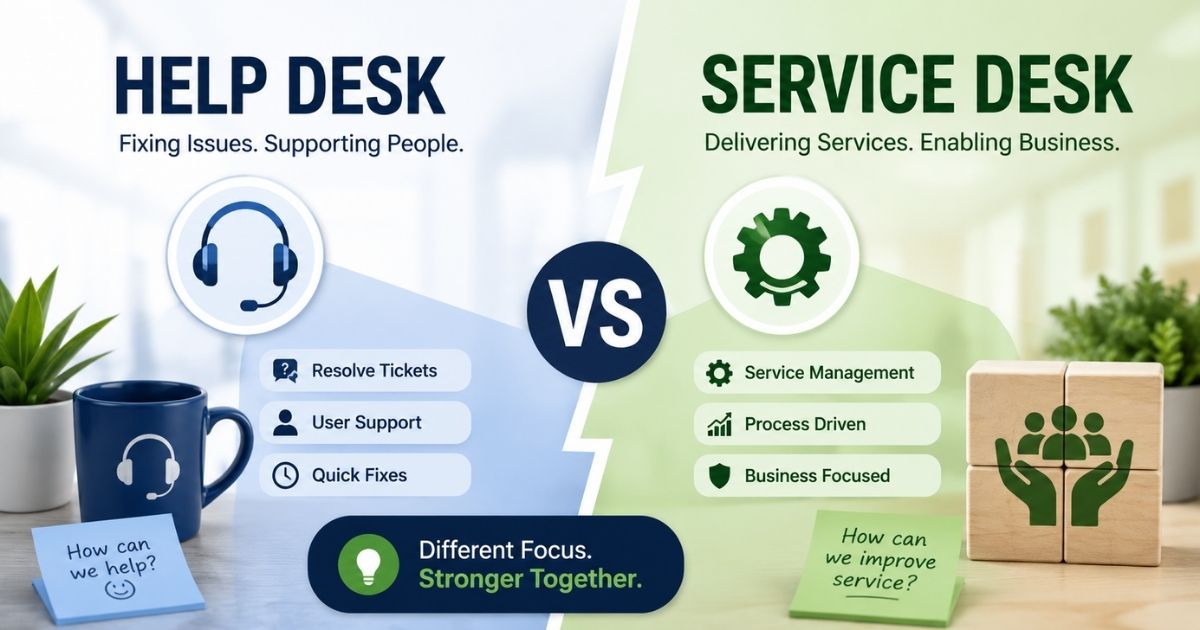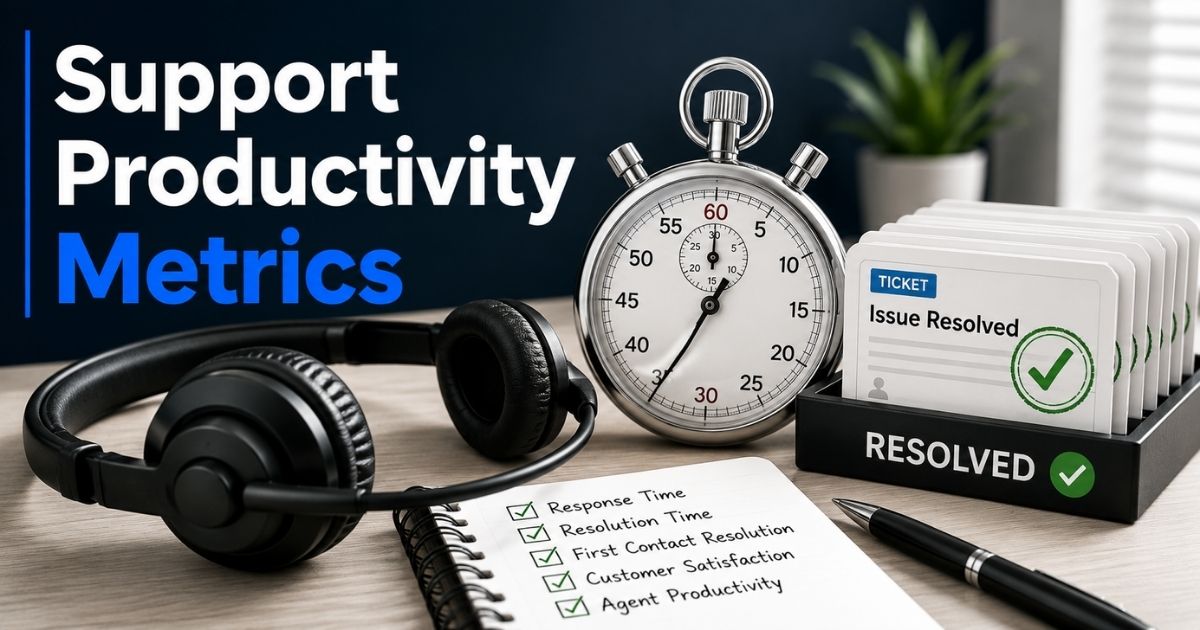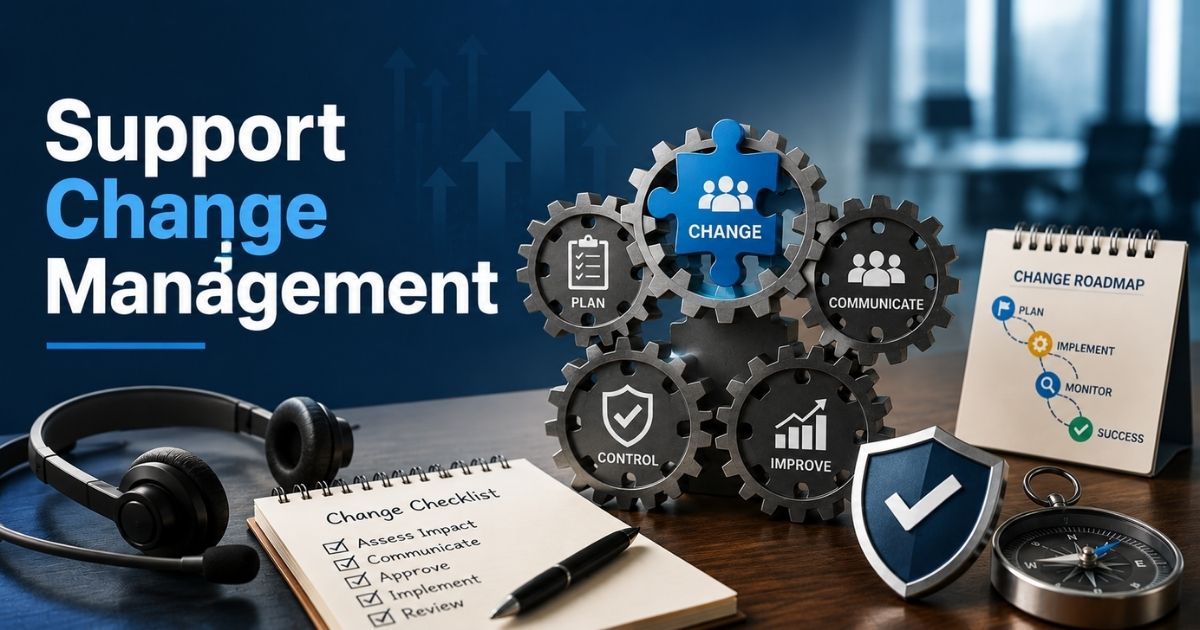
Helpdesks play a key role in any IT support team. Strong helpdesk training builds the foundation your team needs to work smoothly. Without proper training, ticket resolution slows down and customer experience drops quickly.
Good service desk training helps your team handle issues with more confidence. It combines technical skills with real customer support practices. That is what turns frustrated users into satisfied clients.
In this guide, you will learn the core skills every support agent needs. We will cover troubleshooting methods, customer service techniques, and ticketing systems. You will also see how to create a helpdesk training program that actually works, starting with understanding what a helpdesk system is and how it works.
What Is Helpdesk Training
Helpdesk training builds a solid foundation for anyone starting in a help desk or service desk role. It introduces core concepts of information technology, service management, and daily support tasks. A new employee learns how to use ticketing systems and their key benefits, handle support requests, and maintain systems. Entry level professionals gain the knowledge required to provide efficient helpdesk support and improve customer experience.
The training also focuses on technical support and desktop support skills. It covers troubleshooting, networking, hardware, software, and security basics. Hands-on labs, virtual machines, and real-world scenarios give practical experience. This helps support team members complete tasks on a daily basis with confidence.
Helpdesk training also improves communication skills and soft skills. It prepares IT professionals for a desk job with clear responsibilities and procedures. With proper support training and on the job training, students can successfully complete tasks and build a strong career path in the IT world.
Essential Technical Skills For Help Desk Support Training
Technical competence is the backbone of any successful help desk training program. Your support team needs specific hard skills to handle the daily troubleshooting tasks they'll face in their desk position. These skills range from hardware knowledge to advanced system administration.
Computer Hardware And Software Fundamentals
Understanding computer systems starts with knowing what's inside them. Help desk technicians should be familiar with internal hardware components like CPUs, RAM and hard drives. External peripherals matter too, including keyboards, mice and printers.
Operating system knowledge is no longer optional. Your IT professionals need expertise in Windows, macOS and Linux environments. Organizations once stuck to a single platform, but heterogeneous networks and end-user priorities now demand familiarity with diverse systems. Technicians must guide system configurations, resolve software problems and ensure compatible software applications across different platforms.
Software proficiency extends to productivity tools like Microsoft Office Suite and business applications that support daily operations. Adobe creative software and email clients also fall under this umbrella.
Network Configuration And Troubleshooting Basics
Networking skills have become indispensable as businesses embrace cloud computing and distributed workforces. Understanding concepts such as IP addressing and DNS will give your technicians the ability to resolve technical issues quickly.
Network troubleshooting involves checking physical connections first. Cables must be securely plugged in without loose connections or damage. Indicator lights on switches, routers and network interfaces help identify potential connectivity problems.
Your desk training should cover IP configuration verification. Technicians need to check IP addresses, subnet masks, gateway settings and DNS configurations. Misconfigured IP settings lead to connectivity problems that frustrate users.
Active Directory And User Account Management
Active Directory proficiency ranked among the top five specialized skills employers seek, appearing in 17% of job postings for help desk positions. Managing user accounts, permissions and security through Active Directory in Windows environments is part of this desk job.
Creating user accounts involves setting usernames, passwords and access permissions. Technicians must know how to reset passwords, unlock accounts and manage group memberships. Disabling and enabling accounts also falls under routine support tasks.
Security permissions are typically assigned to groups rather than individual accounts. Technicians control resource access efficiently by managing group membership. This approach streamlines user management and maintains security protocols.
Common Business Applications Support
Proficiency in various software applications enables technicians to provide technical assistance that works. Your team should be well-versed in common tools that end-users rely on for work.
Troubleshooting application issues, assisting with installations and explaining features comprise the bulk of application support work. Understanding how these programs integrate with operating systems helps solve compatibility problems faster.
Desktop And Device Management
Desktop management software and fast, scalable helpdesk ticketing platforms streamline oversight of endpoint environments. These tools keep user devices consistent, up to date and running smoothly. Automation features make it easier to manage multiple devices and maintain endpoint security across your organization.
Technicians use desktop management tools to deploy software applications, push updates and monitor device health. Remote monitoring capabilities allow support staff to diagnose issues before users report them.
Remote Support Tools And Techniques
Remote access platforms like TeamViewer, Remote Desktop and AnyDesk enable technicians to troubleshoot devices from a distance. These tools improve efficiency and reduce downtime.
Windows Remote Assistance lets trusted technicians take over PCs and fix problems remotely. Quick Assist provides similar functionality for giving and receiving remote assistance. Remote support tools allow agents to access user devices directly, troubleshooting as if they were in-person.
Strong security features like multi-factor authentication and encryption keep devices and data safe during remote sessions. Communication platforms that let technicians see end-user screens help resolve issues quickly.
Helpdesk Training Methods That Build Strong Support Teams
Helpdesk training works best when it mixes theory with real practice, and it becomes even stronger when supported by a structured helpdesk implementation plan for your support team. A structured approach helps support teams build skills faster. The right methods improve troubleshooting, communication, and customer experience while preparing IT professionals for real-world support tasks.
Hands-On Labs And Real World Practice
Hands-on labs give support teams practical experience with tools, systems, and ticketing systems. Teams work on real-world scenarios using virtual machines, hardware, and software. This builds confidence and improves troubleshooting skills on a daily basis.
Research shows that learners retain up to 75% of knowledge through practice, compared to only 10% from reading. That is why helpdesk training must include desk training and real tasks. It prepares entry-level professionals for actual support responsibilities and improves ticket resolution speed.
Structured Service Desk Training Programs
A structured service desk training program and the right helpdesk setup for better customer support create a clear path for new employees. It covers core concepts like service management, problem management, and support tasks. Each module focuses on the knowledge required for a help desk role.
Companies with structured training see up to 24% higher productivity in support teams. Clear procedures help teams communicate better and complete tasks without confusion. This approach also supports professional development and long-term career growth, especially when paired with the right free helpdesk ticket systems for growing teams.
On-the-Job Training And Mentorship
On-the-job training helps new employees learn faster in a real support environment. A senior team member acts as the contact person and guides them through daily tasks. This method builds both technical support and communication skills.
Studies show that 70% of workplace learning comes from real job experience. Mentorship helps new hires understand company procedures, tools, and systems. It also improves confidence and helps them handle clients more effectively.
Soft Skills And Communication Training
Technical knowledge alone is not enough for helpdesk support. Support teams must communicate clearly with clients and resolve issues with patience. Soft skills training focuses on empathy, clarity, and problem-solving.
According to reports, 86% of customers value good communication over technical speed. Strong communication skills improve customer experience and reduce frustration, and a well-designed help desk system that supports your team behind the scenes makes it easier to deliver that consistently. This training prepares IT professionals to handle real conversations in a desk position.
Continuous Learning And Skill Development
Helpdesk training should not stop after completion of a course. Technology changes fast, and support teams must keep learning. Regular training sessions help teams stay updated with new tools, security practices, and systems.
Organizations that invest in continuous training see up to 218% higher income per employee. Ongoing support training improves performance and helps teams maintain service quality. It also creates a culture of growth and long-term success.
Customer Service Skills Every IT Help Desk Training Should Cover
Customer service skills separate average help desk technicians from exceptional ones. Your support team can know every technical detail, but your customer experience suffers if they can't communicate solutions in a clear way or handle frustrated users with empathy. Service desk training must prioritize these soft skills alongside technical knowledge.
Communication With Non-Technical Users That Works
IT professionals face their biggest challenge when they interact with non-technical stakeholders. These are your business leaders, decision-makers, team managers, and end users who don't speak the language of technology. They rely on your support team to translate technical details into meaningful information they can act on.
The world of IT is riddled with jargon and acronyms that alienate non-technical stakeholders. Terms like bandwidth, VPN, DNS, and API sound like a foreign language to users. Explain what it does and why it matters instead of diving deep into how something works. Use ground examples and analogies to get your point across.
To name just one example, compare a network firewall to a bank's security system that protects valuable assets from unauthorized access. This method bridges the knowledge gap and makes abstract concepts tangible. Visual aids like charts, graphs, and diagrams also simplify complex data better than multi-page documents.
Call Handling And Information Gathering Techniques
Every caller who reaches your help desk should be greeted in the same way using the same words. The greeting sets the tone for the entire interaction and customer experience. Use a formal script that agents recite word for word: "Thank you for calling [company name]. How may I help you?" or "Welcome to the help desk. My name is [agent name]. How can I help you?".
Capture their information the same way every time after greeting the caller. Get the name and phone number so you can reach them if the call gets disconnected. Say something like: "May I have your name please? Just in case we get disconnected, what phone number should I use to reach you?".
Patience And Empathy In Support
Patience in customer service makes the difference between a good experience and a not-so-good experience. Customers are often frustrated and short on time at the time they ask for support. You reduce customer stress by listening to concerns, responding with a calm tone, and offering tailored solutions.
Trust forms the foundation of long-lasting connections. The assurance that your company values their needs leads to loyalty for customers. Patience lets your support team maintain composure during interactions and creates a less stressful work atmosphere.
Empathy statements help confirm customer feelings. Say things like: "I know how frustrating this situation must be for you" or "I'd find that annoying as well". These statements acknowledge the customer's frustration rather than pretending it shouldn't exist. Use phrases like "I'm sorry you've had to deal with this" to confirm the issue is genuinely arduous.
How To Build User Confidence During Support Calls
Nothing tanks quality scores faster than service reps who lack confidence. There's a direct correlation between rep confidence and average handle time. Customers sense doubt and begin to question everything they hear. Some even hang up hoping for someone who knows what they're doing.
Have your reps rehearse a powerful opening that identifies them as an expert. To name just one example: "Thank you for calling, I'm your fix-it genius". One rep transformed her performance by re-recording her opening greeting until it sounded energetic and confident. Customers began greeting her with comments like "I am glad that I got the expert". After that, she had to stay cheerful and be an expert, which built genuine confidence.
Best Practices For Faster Ticket Resolution
Faster ticket resolution starts with solid documentation, smart work habits, and proven strategies to cut average resolution time in your support team. Your help desk support training should emphasize practical skills that directly affect how quickly your support team closes tickets and improves customer experience.
Proper Ticket Documentation And Logging
Tickets that are logged well aren't just polite. They're the fastest path to resolution. Include your full name, department, company name and best contact method. Make it clear who the affected person is if you're logging an issue for someone else. This avoids wasting hours searching for the wrong user.
Be specific about the problem. "Printer broken" doesn't help anyone. "Unable to print from Word - Error Code 123" gives your support team something applicable. Add context about severity: "I am unable to connect to the office printer, this stops me sending invoices, and they're due today" gets more urgent attention than "Printer a bit slow".
Screenshots, screen recordings and photos provide evidence that saves countless "Have you tried turning it off and on again?" conversations. Update your ticket if the situation changes or fixes itself. This keeps everyone in the loop.
Knowledge Base Articles
A well-designed knowledge base and knowledge management setup can reduce customer support calls by up to 5% and lower monthly operational costs. Self-service through knowledge bases costs just two dollars per ticket resolution, compared to $22 for Level 1 tickets, $69 for Level 2 and $104 for Level 3.
Your service desk training should teach technicians to create knowledge articles as they resolve issues and understand how an email ticketing system turns customer emails into trackable tickets. Tag articles with appropriate keywords and provide clear, problem-specific topics to improve search capability. Role-based access ensures end users only see relevant solutions and reduces information overload.
Search Techniques And Research Skills Development
Research skills and smart ticket automation workflows determine how fast technicians find solutions. Use 2-4 keywords when searching databases. Boolean operators refine results: AND narrows by requiring all keywords, while OR broadens by finding any keyword and NOT excludes unwanted terms.
Phrase searches using quotation marks find exact matches. Searching "skin cancer" only brings up results discussing that specific condition. Brainstorm synonyms since different authors use different words for the same idea.
Ticket Escalation
Not every ticket needs escalation, but having a clear ticket escalation process for faster support ensures complex issues reach the right experts quickly. Knowledge base articles prevent starting troubleshooting from scratch. Update tickets with correct status and supporting information when escalation is necessary. This allows faster resolution by the receiving team.
Capture validated facts, diagnostic results, attempted remediation, business context and user accessibility during escalation. This context preservation reduces the time Level 2 teams spend reconstructing information before actual diagnostic work begins.
Time Management For Multiple Tickets
Processing tickets first-in, first-out isn't always best practice. Automated ticketing systems and automated ticket management software route and assign tickets in a way that keeps teams informed of status for clearer communication. Assess severity using a consistent ticket prioritization framework in customer support: issues affecting the whole company need immediate attention and high-priority labels. Single-user problems might be lower priority.
Free And Paid Resources For Help Desk Training Programs
Building your helpdesk training foundation requires access to quality resources and a clear understanding of what help desk software is used for. Both free and paid options exist for IT professionals who seek desk positions, including platforms like EasyDesk that show how to manage support tickets efficiently.
CompTIA A+ Certification Training Options
CompTIA A+ certification is the industry standard to start your IT career. It appears in more tech support job listings than any other IT credential. You'll need to pass two exams: Core 1 (hardware and networking) and Core 2 (operating systems and security). Professor Messer offers free CompTIA A+ training course videos. The collection includes 95 videos that total 25 hours and 38 minutes of content.
Online Learning Platforms For Service Desk Training
LinkedIn Learning provides IT Help Desk courses. "IT Help Desk for Beginners" has 84,630 viewers. "Customer Service: Problem-Solving and Troubleshooting" has 229,214 viewers. JobSkillShare offers free help desk IT support training. The training covers workstation setup, network connectivity, Windows 10 and 11 troubleshooting, and Office 365 skills.
YouTube Channels And Video Tutorials
YouTube hosts many free helpdesk training playlists, including tutorials that demonstrate how to streamline support with ticket automation. These playlists help you get hands-on experience with technical support concepts and develop practical skills, especially around automated ticket creation during busy seasons.
Industry Certification Programs Like HDI
HDI offers certifications based on globally recognized industry standards. International committee experts created these standards. Their programs cover technical support, desktop support, knowledge-centered support, and service management. Multiple delivery options are available.
Company-Specific Training Materials
Organizations create internal training for desk positions. The training covers proprietary systems, ticketing systems, and company procedures that are specific to their service desk operations.
How To Create An Effective On-The-Job Training System
Real learning happens when you work with experienced technicians and handle actual support tasks. Job training turns theoretical knowledge into practical experience that sticks with you throughout your desk career.
Shadow Experienced Technicians And Learn
Ask your manager to connect you with senior technicians who can show you the ropes. Shadow them during support calls and watch how they troubleshoot. Observe their communication skills with users. This hands-on experience teaches you problem-solving approaches you won't find in any help desk training program. Let them guide you through ticket handling before you work alone. Confidence builds through observation first.
Build Your Personal Documentation Library
Create your own reference collection as you resolve issues. Document solutions and troubleshooting steps that work for your organization. A well-laid-out documentation library saves time when problems arise and helps new team members learn faster. Store files in a centralized location where your support team can access them anytime.
Set Up A Home Lab to Practice
Build a small practice environment at home using virtual machines, refurbished hardware, or a home surveillance system. Start with simple setups like Active Directory labs or network configurations. You can experiment without risking production systems. Breaking things and fixing them yourself develops skills no training course can replicate.
Learn From Closed Tickets And Past Resolutions
Review resolved tickets to understand how experienced technicians handled issues. Study their documentation and note their troubleshooting paths. Learn from their solutions. This practice builds your knowledge base and prepares you for real-life scenarios on a daily basis.
Conclusion
Helpdesk training builds the solid foundation your support team needs to handle support tasks well. Technical skills like Active Directory and networking matter, but customer service abilities separate good technicians from great ones. Your career grows as you combine hands-on experience with ongoing professional development.
Core concepts through certification programs and a solid ticket SLA management strategy come first. Practice follows in virtual machines or home labs. Shadow experienced IT professionals and learn from ground tickets on a daily basis. Strong communication skills and practical experience will prepare you to succeed in any desk position.
The path to faster ticket resolution starts with proper training. Your organization and clients both benefit as you invest in developing these support skills.
FAQs
How Does Helpdesk Training Align With ITIL-Based Service Management Practices?
Helpdesk training integrates ITIL concepts like incident and problem management into daily support tasks. It helps support teams follow structured service management processes, improve ticketing systems usage, and maintain consistent customer experience across the organization.
Can Helpdesk Training Reduce Mean Time To Resolution (MTTR) In Complex Environments?
Yes, structured helpdesk training with hands on labs and real world troubleshooting reduces MTTR. It improves technical support skills, helps teams use tools efficiently, and ensures faster problem identification across systems, networking, and software environments.
Is Advanced Helpdesk Training Necessary For Handling Multi-Platform Desktop Support?
Yes, advanced desk training is important for managing Windows, Linux, and macOS systems together. IT professionals need deeper knowledge of hardware, software compatibility, and networking to handle complex support tasks in diverse environments.
How Do Ticketing Systems Data Improve Helpdesk Training Programs?
Ticketing systems provide real data on support tasks, resolution time, and recurring issues. Teams use this data to refine training programs, focus on weak areas, and improve practical skills required for better service and customer experience.
Does Helpdesk Training Support Career Growth Beyond Entry Level Roles?
Yes, helpdesk training builds a strong foundation for long-term career growth. It develops technical support, communication skills, and service management knowledge that help professionals move into advanced IT roles and leadership positions.