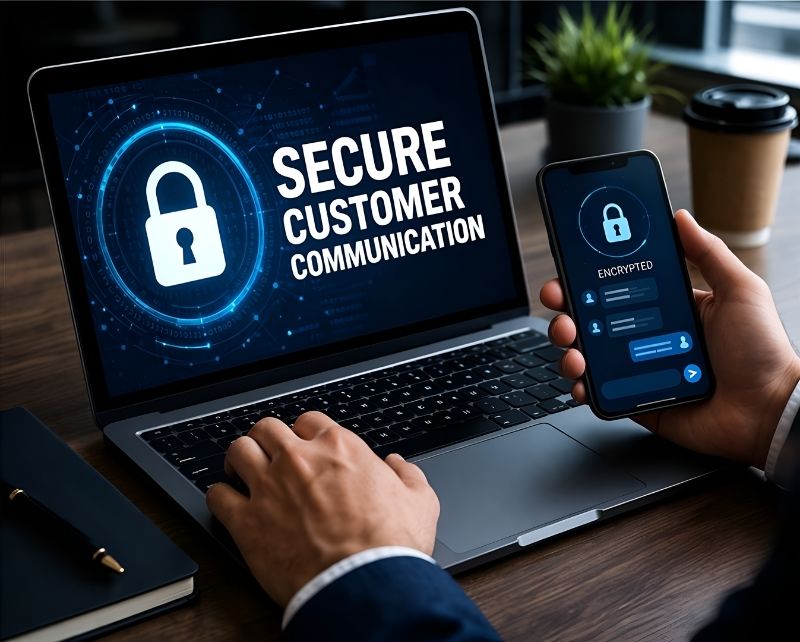
Customers expect fast replies. They also expect their data to stay safe. Messages, emails, and chats carry sensitive information every day. Without secure customer communication, even a small gap can lead to serious risks.
Many businesses still rely on scattered tools. That creates exposure and confusion. A secure system keeps conversations protected and organized. It also helps teams respond with confidence and consistency.
Secure customer communication is not only about safety. It directly affects trust, loyalty, and long-term growth. Businesses that protect every interaction build stronger relationships and stand out in competitive markets.
What Does Secure Customer Communication Mean
Secure customer communication means keeping every client interaction safe while still making communication easy. Every day, teams share messages, files, and updates across different communication channels. Many of those contain sensitive data or confidential information. Without secure communication, even a small mistake can lead to data breaches or unauthorized access. That is why businesses rely on end-to-end encryption, strong passwords, and two-factor authentication to communicate securely and reduce risks like phishing attempts.
Secure client communication also depends on using the right communication tools. Secure client portals, encrypted messaging, and secure file sharing services make it easier to share confidential documents without security concerns. Clear communication practices, access controls, and simple security measures help meet regulatory compliance and industry standards. In today’s digital landscape, secure communication not only protects data but also builds client trust through safe and effective communication.
Why Secure Customer Communication Is Important
Secure customer communication protects every client interaction across modern communication channels. In today’s digital landscape, businesses handle sensitive data daily. Weak security practices expose confidential information to risks like phishing attempts and unauthorized access. Strong systems help teams communicate securely, meet regulatory compliance, and build lasting client trust.
Protect Sensitive Client Information
Sensitive client information moves through messages, file sharing, and digital communication every day. Without secure communication channels or a well-managed shared inbox, that data becomes a prime target for cyberattacks. IBM reports the average cost of data breaches reached $4.45 million in 2023. That risk grows when businesses rely on traditional email or public Wi Fi.
Secure file sharing services, encrypted messaging, and secure client portals protect confidential data. End-to-end encryption and access controls ensure only the intended recipient can access information. Strong security measures reduce exposure and keep client communication safe.
Prevent Data Breaches And Security Threats
Cybercriminals actively exploit weak communication platforms. Verizon’s Data Breach Report shows over 74% of breaches involve human error, including phishing attempts and social engineering. Email remains a common entry point for attackers. Poor email security and weak passwords increase the risk.
Secure communication tools reduce those threats. Multi-factor authentication, strong passwords, and regular security updates add an extra layer of protection. Businesses that follow best practices stay ahead of evolving security threats and reduce the chances of unauthorized access.
Ensure Compliance With Industry Regulations
Many industries must follow strict compliance requirements. Legal professionals and financial advisors handle highly confidential documents and sensitive information. Regulations like GDPR and other privacy regulations require secure communication practices and proper audit trails.
Secure communication platforms help ensure compliance with regulatory requirements. Features like access controls, encrypted messaging, and secure file sharing support industry standards. Businesses that prioritize security avoid penalties and maintain credibility in regulated environments.
Build Client Trust And Confidence
Clients expect their data to stay secure in today’s world. Any security concern can damage relationships quickly. Studies show 81% of customers say trust influences their buying decisions. Secure customer communication directly impacts how clients perceive a business.
Secure channels, clear communication practices, and reliable communication tools build trust. When clients feel their sensitive information is protected, they are more likely to continue engagement. Strong security builds trust and supports long-term client relationships.
Support Safe And Effective Communication
Effective communication depends on both speed and security. Teams use collaboration tools, video conferencing, and multiple communication channels including social networks where social media support software can centralize and secure conversations to manage client interactions. Without secure systems, fast communication can create risks.
Secure communication ensures teams can communicate securely without slowing down workflows. Secure messaging, controlled access, and structured communication platforms keep information easily accessible but protected. Businesses that balance speed with security deliver better client experiences while maintaining strong protection.
Key Risks In Customer Communication Systems
Secure customer communication often fails due to hidden gaps inside everyday communication systems. Many teams rely on multiple communication channels without proper security practices. That creates exposure for sensitive data and increases security threats across digital communication environments.
Phishing And Social Engineering Risks
Phishing attempts remain one of the biggest threats in client communication. According to the 2024 Verizon Data Breach Report, over 68% of breaches involve human factors like phishing and social engineering. Attackers often target email because traditional email lacks strong verification layers.
Employees may unknowingly share sensitive information with the wrong sender. Weak email security and lack of awareness make this worse. Recognizing phishing attempts and training teams act as the first line of defense. Secure communication channels and encrypted messaging reduce exposure to such attacks.
Weak Access Control And Authentication
Unauthorized access often starts with poor access controls. Many systems still rely on simple passwords. That creates easy entry points for attackers. Microsoft reports that multi-factor authentication can block over 99.9% of account compromise attacks.
Strong passwords, two-factor authentication, and role-based access controls add an extra layer of protection. Secure client portals and communication platforms must limit access to the intended recipient only. Without proper authentication, even secure channels become vulnerable.
Unsecured File Sharing And Data Leakage
File sharing is a common part of client interactions. However, unsecured file-sharing services expose confidential documents. Many teams still use public Wi-Fi or basic tools without encryption, even when faster channels, such as live chat, are available to keep conversations organized and secure. That increases the risk of data breaches.
Secure file sharing and end-to-end encryption protect sensitive client information. Secure client communication systems ensure files remain accessible only to authorized users. Businesses that ignore secure file sharing face higher risks of confidential data leaks.
Fragmented Communication Channels
Multiple communication channels create confusion and security gaps. Teams often switch between email, chat, and messaging apps without unified control, which is why adopting robust shared inbox software for teams becomes critical. That makes it hard to track conversations and maintain secure communication practices.
Lack of centralized communication platforms increases security concerns. Messages get lost, and audit trails become incomplete. Secure customer communication requires structured communication tools that bring all client interactions into one controlled system. This approach supports better monitoring and reduces risk.
Compliance And Regulatory Failures
Failure to meet compliance requirements can lead to serious consequences. Many industries must follow strict privacy regulations and industry standards. Non-compliance can result in heavy fines and reputational damage. IBM states that compliance failures increase breach costs significantly.
Secure communication systems support regulatory compliance through audit trails, encrypted messaging, and controlled access. Legal professionals and financial advisors must ensure compliance at every stage of communication. Strong security measures help businesses meet regulatory requirements and avoid penalties.
Channels Where Customer Data Gets Exposed
Customer data moves across many communication channels every day. Each channel carries its own security concerns. Without secure customer communication, sensitive information can leak easily. Many businesses underestimate how common these risks are across digital communication systems.
Email Communication Risks
Email remains one of the most used communication channels in business. It also remains one of the weakest. According to Verizon, over 90% of cyberattacks start with email, which is why many teams turn to a structured ticketing software instead of relying on ad‑hoc inboxes. Traditional email lacks built-in encryption and strong identity checks.
Sensitive data often gets shared without secure communication practices. That exposes confidential data to phishing attempts and unauthorized access. Secure messaging, encrypted messaging, and strong email security reduce these risks. Businesses must move beyond basic email to communicate securely.
Public Wi-Fi And Remote Access
Public Wi Fi creates serious security threats for digital communication. Many employees access communication platforms from cafes, airports, or shared networks. These networks are often unsecured and easily exploited by attackers.
Data sent over public Wi Fi can be intercepted without strong security measures. Sensitive client information becomes vulnerable during file sharing or messaging. Secure communication channels with encryption and multi-factor authentication help reduce this risk. Remote teams must follow strict security practices to stay protected.
Unsecured Messaging And Chat Tools
Many teams rely on fast messaging tools for client interactions. However, not all communication tools offer secure channels. Some lack end-to-end encryption or proper access controls. That creates exposure for sensitive information.
Messages can be accessed by unintended users or stored without protection. Secure messaging and encrypted messaging ensure safe communication. Businesses must choose communication platforms with strong security measures. Fast communication should not come at the cost of security.
File Sharing Without Protection
File sharing plays a key role in secure client communication. Yet many businesses still use unsecured file-sharing methods. Sharing confidential documents through basic tools increases the risk of data breaches.
Secure file sharing services and secure client portals provide better protection. These tools use encryption and access controls to protect confidential data. Only the intended recipient can access files. Secure file sharing is essential for maintaining secure customer communication.
Multiple Disconnected Platforms
Using too many communication channels creates hidden risks. Teams often switch between email, chat, video conferencing, and collaboration tools. This fragmentation leads to weak communication practices and poor visibility, making an integrated omnichannel communication approach increasingly important.
Lack of centralized communication platforms increases security concerns. Audit trails become incomplete, and monitoring becomes difficult. Secure customer communication requires unified systems. A single platform improves control, reduces exposure, and strengthens overall security.
Essential Features Of Secure Customer Communication Platforms
Secure customer communication depends on the right set of features. Not every communication platform offers strong protection. Businesses must look beyond basic communication tools and focus on security measures that protect sensitive data and ensure safe client interactions.
End-to-End Encryption Protection
End-to-end encryption is a core part of secure communication. It ensures messages and files stay protected from sender to intended recipient. Even service providers cannot access encrypted data. This reduces exposure to security threats and unauthorized access.
IBM reports that encryption can reduce breach impact costs significantly. Encrypted messaging and secure channels protect confidential data across communication platforms. Businesses that use end-to-end encryption strengthen secure client communication and reduce risks in digital communication.
Multi-Factor Authentication Access
Passwords alone no longer provide enough security. Weak or reused passwords create serious vulnerabilities. Microsoft states that multi-factor authentication can prevent over 99.9% of account compromise attacks.
Two-factor authentication and multi-factor authentication add an extra layer of protection. Users must verify identity through multiple steps. This reduces unauthorized access and strengthens access controls. Secure communication platforms must include strong authentication for safe client communication.
Secure File Sharing Capabilities
File sharing is part of everyday client interactions. However, unsecured file sharing exposes confidential documents to data breaches. Many businesses still rely on basic file-sharing methods without encryption.
Secure file sharing services protect sensitive information through encryption and controlled access. Secure client portals ensure only authorized users access files. This improves communication practices and supports regulatory compliance. Secure file sharing is essential for protecting sensitive client information.
Role-Based Access Controls
Not every user should have full access to all data. Lack of access control creates serious security concerns. Employees may access sensitive information that is not relevant to their role.
Role-based access controls limit access based on responsibility. This reduces internal risks and improves data protection. According to Verizon, insider-related issues contribute to a large portion of breaches. Strong access controls ensure secure communication and protect confidential data across communication channels.
Audit Trails And Compliance Support
Tracking communication is critical for security and compliance. Many industries require detailed records of client interactions. Without audit trails, businesses struggle to meet regulatory requirements and industry standards.
Secure communication platforms provide audit trails for every message, file-sharing activity, and access event. This supports regulatory compliance and helps identify security threats. Features like security updates and compliance reporting, often built into the best ticket management systems, ensure businesses meet privacy regulations and maintain secure customer communication.
How Secure Customer Communication Systems Work
Secure customer communication systems combine multiple layers of protection across communication channels. Each layer focuses on keeping sensitive data safe during client interactions. A well-structured system ensures teams can communicate securely without slowing down workflows or increasing security concerns, especially when supported by robust conversation management software.
Data Encryption Across Channels
Secure communication starts with encryption. Every message, file-sharing activity, and digital communication gets encrypted before transmission. End-to-end encryption ensures only the intended recipient can read the content. This protects confidential data from interception.
According to IBM, encryption reduces the average cost of data breaches by over $360,000. Encrypted messaging and secure channels keep sensitive information protected across communication platforms. Without encryption, communication becomes vulnerable to security threats and unauthorized access.
Identity Verification And Access Control
Secure systems verify every user before granting access. Weak identity checks create entry points for attackers. That is why secure communication platforms use multi factor authentication and two factor authentication.
Microsoft reports MFA blocks more than 99.9% of automated attacks. Access controls ensure only authorized users can view sensitive client information. Role-based permissions further limit exposure. Strong identity verification keeps secure client communication reliable and protected.
Secure Message And File Handling
Secure communication systems manage how messages and files move across channels. Secure messaging and secure file sharing services protect confidential documents during transfer and storage. Files remain accessible only to approved users.
Secure client portals add another layer of protection. They centralize communication and control access. This reduces risks linked to unsecured file sharing and fragmented communication practices. Businesses can handle client interactions safely without exposing sensitive information.
Centralized Communication Platforms
Modern systems bring all communication channels into one platform. Email, chat, video conferencing, and collaboration tools work together in a controlled environment. This reduces security gaps caused by disconnected tools and mirrors how a smarter help desk platform centralizes secure customer communication.
Centralized communication platforms improve visibility and audit trails. Teams can track every interaction and detect unusual activity. This structure supports regulatory compliance and strengthens overall security practices in digital communication.
Continuous Monitoring And Security Updates
Security does not stop after setup. Systems must stay updated to handle new security threats. Regular security updates fix vulnerabilities and improve protection across communication tools.
Monitoring tools track activity and flag suspicious behavior. Verizon reports that many breaches go undetected for weeks without monitoring. Continuous monitoring helps teams stay ahead of risks like phishing attempts and social engineering. This ensures secure customer communication remains strong in today’s digital landscape.
Best Practices To Strengthen Secure Customer Communication
Secure customer communication requires consistent effort across tools, teams, and communication practices. A single weak point can expose sensitive data. Businesses must follow proven security measures to protect client interactions and maintain trust across all communication channels.
Use Strong Authentication Methods
Weak passwords remain a major risk in digital communication. Verizon reports that over 80% of breaches involve compromised credentials. Simple passwords and shared access increase security threats and unauthorized access.
Multi factor authentication and two factor authentication add an extra layer of protection. Strong passwords combined with identity verification reduce risks. Secure communication platforms must enforce strict access controls. This approach ensures only the intended recipient can access sensitive information and confidential data.
Adopt Secure Communication Channels
Not all communication channels are safe for sharing sensitive data. Traditional email and unsecured messaging tools often lack proper encryption. That creates serious security concerns for client communication.
Secure channels with end to end encryption protect messages and files. Encrypted messaging ensures safe data transfer across communication platforms. Businesses should avoid public Wi Fi for critical communication. Secure communication tools help teams communicate securely without exposing sensitive client information.
Train Teams To Handle Security Threats
Human error remains one of the biggest causes of data breaches. IBM reports that human factors contribute to nearly 95% of cybersecurity incidents. Employees often fail at recognizing phishing attempts and social engineering attacks.
Regular training helps teams follow best practices and improve communication practices. Teams should learn how to identify suspicious messages and avoid risky actions. Educate clients as well to reduce exposure. Strong awareness acts as the first line of defense against security threats.
Use Secure File Sharing And Portals
File sharing is essential in client interactions. However, unsecured file sharing increases the risk of exposing confidential documents. Many teams still rely on basic tools without proper security measures.
Secure file sharing services and secure client portals provide better protection. These tools use encryption and access controls to protect sensitive information. Files remain easily accessible only to authorized users. Secure file sharing strengthens secure client communication and reduces data breach risks.
Monitor Systems And Update Security Regularly
Security needs constant attention in today’s digital landscape. Outdated systems create vulnerabilities that attackers exploit. Many breaches happen due to missing security updates or weak monitoring.
Regular security updates improve protection across communication tools and platforms. Monitoring systems detect unusual activity and prevent unauthorized access. Continuous tracking also supports audit trails and regulatory compliance. Businesses that stay proactive can handle evolving security threats and maintain secure customer communication.
What Compliance And Data Protection Requirements Apply To Secure Customer Communication
Secure customer communication must follow strict compliance requirements and privacy regulations. Businesses handle sensitive data across communication channels every day. Without proper controls, security risks increase. Strong communication practices help ensure compliance and protect confidential information in today’s digital landscape.
Global Privacy Regulations And Standards
Businesses must follow global privacy regulations like GDPR and other industry standards. These rules define how sensitive information and confidential data should be handled across communication platforms. Non-compliance can lead to heavy fines and loss of client trust.
IBM reports that organizations with strong compliance programs reduce breach costs significantly. Secure communication channels, encrypted messaging, and proper data handling support privacy regulations. Following industry regulations ensures safe client communication and protects sensitive client information.
Industry Specific Compliance Requirements
Different industries follow different regulatory requirements. Legal professionals and financial advisors deal with highly sensitive client information. They must meet strict compliance requirements related to confidentiality and data protection.
Secure client communication systems help maintain compliance through audit trails and access controls. Communication tools must protect confidential documents and support secure file sharing. Businesses that meet industry standards reduce legal risks and strengthen secure communication practices.
Data Protection And Access Control Policies
Data protection depends on strong access controls. Not every employee should access all sensitive data. Poor access management increases the risk of unauthorized access and internal security threats.
Role-based access controls limit data exposure. Multi-factor authentication and strong passwords protect communication platforms. These security measures ensure only authorized users handle confidential data. Clear policies improve communication practices and support regulatory compliance.
Audit Trails And Documentation Requirements
Audit trails play a key role in compliance. Businesses must track client interactions, file sharing, and communication activities. Without proper records, it becomes difficult to prove compliance during audits.
Secure communication platforms provide detailed audit trails. These records help monitor access and detect unusual behavior. They also support regulatory requirements and industry standards. Strong documentation ensures transparency and improves overall security practices.
Security Measures To Prevent Data Breaches
Data breaches remain a major concern in today’s world. IBM states that the global average cost of a data breach reached $4.45 million. Weak systems and poor security practices increase exposure to security threats.
Robust security measures like end-to-end encryption, secure messaging, and regular security updates reduce risks. Secure communication channels protect sensitive client information across digital communication. Businesses that focus on enhancing security ensure compliance and build long-term client trust.
How Secure Communication Builds Trust And Reduces Churn
Secure customer communication directly affects how clients feel about a business. Every message, file, and interaction shapes trust. Weak security creates doubts, while strong protection builds confidence. In today’s digital landscape, secure communication plays a key role in retention.
Protect Client Data And Confidence
Clients expect their sensitive information to stay safe. Any leak of confidential data damages trust quickly. Cisco reports that 84% of customers care about data privacy and security practices before engaging with a company.
Secure communication channels, encrypted messaging, and secure file sharing protect sensitive client information. Strong security measures reduce risks of data breaches and unauthorized access. When clients feel safe, they stay longer and trust grows naturally.
Reduce Security Concerns In Communication
Security concerns often push clients away. Poor communication practices and weak communication tools increase doubts. Clients hesitate when they see risks in sharing confidential documents or sensitive data.
Secure client communication removes that friction. Secure channels, secure messaging, and clear communication practices help clients communicate securely without fear. This improves client interactions and creates a smoother experience across communication platforms.
Build Transparency With Secure Systems
Transparency strengthens trust in digital communication. Clients want to know how their data is handled across communication channels. Lack of visibility creates uncertainty and increases churn.
Secure communication platforms provide audit trails and clear access controls. Clients feel more confident when systems track interactions and protect data. This level of transparency supports regulatory compliance and builds long-term client trust.
Improve Client Experience With Safe Communication
Client experience depends on both speed and security. Fast responses without protection create risks. On the other hand, secure communication tools allow safe and effective communication without delays.
Collaboration tools, video conferencing, live chat software for your website, and secure client portals support smooth communication. Businesses can share updates, files, and messages safely. A secure and seamless experience improves satisfaction and reduces the chances of losing clients.
Strengthen Long-Term Client Relationships
Trust builds over time through consistent communication practices. One security failure can break that trust instantly. PwC reports that 32% of customers stop doing business after a bad experience, including security issues.
Secure customer communication ensures every interaction remains protected. Strong security practices, regular security updates, and robust security measures keep systems reliable. Businesses that focus on secure communication build trust, reduce churn, and maintain strong client relationships.
Choosing The Right Secure Customer Communication Solution
Choosing the right secure customer communication solution can directly impact security, efficiency, and client trust. Not all communication platforms offer the same level of protection. Businesses must evaluate features, risks, and compliance needs before making a decision.
Evaluate Security Features First
Security should be the top priority when selecting communication tools. Many platforms offer basic features but lack strong protection. That creates risks for sensitive data and confidential information.
Look for end-to-end encryption, secure messaging, and secure file sharing services. Multi-factor authentication and access controls are also essential. These security measures help prevent unauthorized access and protect client communication across all communication channels.
Check Compliance And Regulatory Support
Compliance requirements vary across industries. Legal professionals and financial advisors must follow strict privacy regulations and industry standards. Choosing the wrong platform can lead to compliance failures.
Secure communication platforms should support audit trails, data protection policies, and regulatory compliance. Features that help ensure compliance reduce risks and improve accountability. This is critical for handling sensitive client information and confidential documents.
Assess Communication Channels And Integration
A good solution should support multiple communication channels in one place. Teams use email, chat, video conferencing, and collaboration tools daily. Disconnected systems create security gaps and poor communication practices.
Choose platforms that unify communication channels. Multichannel helpdesk software improves visibility and reduces risks by consolidating conversations securely. Integration with existing tools also helps maintain smooth and effective communication without compromising security.
Review Access Control And User Management
Access control plays a key role in secure communication. Not every user should have full access to sensitive information. Weak access management increases internal security threats.
Role-based access controls and strong authentication improve protection. Two-factor authentication and complex passwords add an extra layer of security. These features ensure only authorized users can access confidential data and client interactions.
Consider Scalability And Ease Of Use
A secure solution must also be practical for daily use. Complex systems can slow down teams and affect communication. Ease of use ensures teams follow security practices without resistance.
Scalable communication platforms support business growth and handle increasing client interactions. Simple interfaces, regular security updates, and reliable performance improve adoption. Reviewing transparent EasyDesk pricing and support plans can help teams choose a solution that balances security and usability to ensure long-term success in secure customer communication.
How To Manage Secure Customer Communication Easily Using EasyDesk
EasyDesk makes secure customer communication simple by bringing all communication channels into one place. Instead of scattered tools, teams manage client communication through a centralized dashboard. Every message turns into a structured ticket, so nothing gets lost and sensitive data stays controlled, which is exactly what the EasyDesk customer support platform is built to deliver.
With built-in automation, teams can route conversations, manage secure messaging, and handle client interactions faster. Features like unified inbox, live chat, and multi-channel support help teams communicate securely without switching platforms, reflecting the broader EasyDesk features for smarter, secure support. This reduces security risks and improves visibility across communication.
EasyDesk also supports secure file sharing, access controls, and organized workflows. Its cloud-based helpdesk ticketing software capabilities help teams protect sensitive information while keeping communication easy and fast. Simple setup, clear workflows, and centralized communication tools help businesses maintain secure communication without adding complexity.
FAQs
Can Small Businesses Implement Secure Customer Communication Easily?
Modern communication platforms make secure customer communication accessible for small teams. Platforms that emphasize security, transparency, and ease of use, such as the approach described on the About EasyDesk secure customer support page offer features like secure client portals, encrypted messaging, and secure file sharing services that help protect sensitive data without complex setup or high costs.
Does Secure Communication Affect Response Speed?
Secure communication does not slow down client communication when the right communication tools are used. Secure channels, automation, and tools such as live chat support software support fast and effective communication while keeping sensitive information protected.
Can Secure File Sharing Replace Email Attachments?
Secure file-sharing services offer better protection than traditional email attachments. When they are part of a centralized ticketing workflow like systems that show how to manage support tickets efficiently using EasyDesk they use encryption and access controls to ensure confidential documents reach only the intended recipient without exposing confidential data or increasing security concerns.
How Do Businesses Manage Secure Communication On Mobile Devices?
Businesses use secure communication apps with multi-factor authentication and encrypted messaging to protect digital communication, which is especially important for remote support teams. Avoid public wi fi and follow security practices to reduce risks of unauthorized access and data breaches.
Why Client Awareness Matters In Secure Communication?
Client awareness reduces security threats like phishing attempts and social engineering. When businesses educate clients about secure communication channels, best practices, and process improvements such as streamlining support with ticket automation, it protects sensitive client information and strengthens overall communication security.