Customer support becomes harder when tickets pile up, teams miss responses, and support tools cost too much. Many businesses struggle with limited customization, expensive subscriptions, and workflows that do not match their support process. That is why more companies now look at open source ticketing system solutions.
An open source ticketing system gives businesses more control, flexibility, and freedom. Teams can customize workflows, automate repetitive tasks, and manage customer conversations from one place. Some platforms also offer strong community support, integrations, and scalable features without high licensing costs.
This guide covers everything you need to know about open source ticketing systems. You will learn how they work, their benefits, key features, top platforms, challenges, and how to choose the right solution for your business.
What Is An Open Source Ticketing System
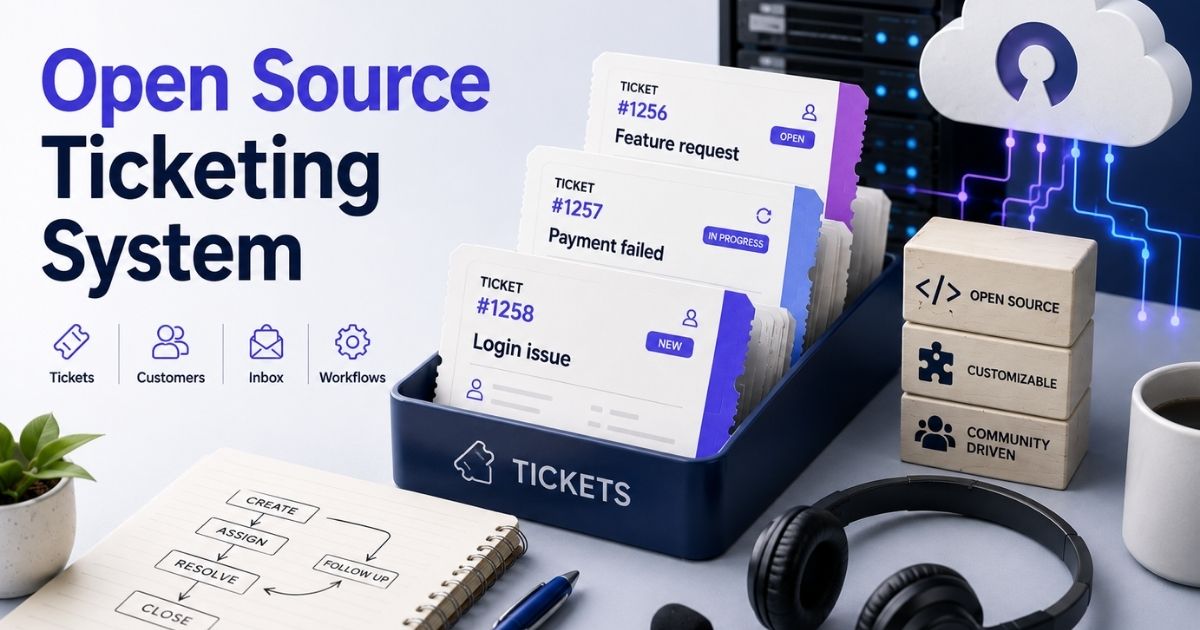
An open source ticketing system is a help desk software that helps businesses manage support tickets, customer support requests, and internal workflows from one platform. Unlike closed software, an open source ticketing system gives users access to the source code. Developers can review, extend, configure, and customize the system based on business needs. Many platforms offer a user-friendly interface, shared inbox, customer portal, knowledge base, approval workflows, and basic features for ticket management.
A source ticketing system helps teams streamline support processes across web, phone, email, and other channels. Agents can create ticket types, connect CRM tools, manage bugs, and filter support requests more easily. Most open source platforms are available through a public repository like GitHub with free code and flexible setup options.
Businesses decide to deploy open source helpdesk software because of transparency, security, development flexibility, and community support. A reliable system improves customer satisfaction, customer’s experience, and team collaboration across multi-channel customer support while reducing software costs and infrastructure limitations.
Why Businesses Choose Open Source Ticketing Systems Over Proprietary Software
Many companies now move away from expensive proprietary help desk software. Businesses want better flexibility, lower costs, and more control over customer support operations. An open source ticketing system gives teams the ability to customize workflows, manage support tickets efficiently, and improve customer satisfaction without heavy licensing fees.
Lower Software Costs
Proprietary ticketing system platforms often charge monthly fees per agent. Costs rise fast when support teams grow. Many businesses also pay extra for advanced features, integrations, and storage. That creates pressure on small and mid-sized companies.
An open source ticketing system reduces those expenses. Most platforms offer free code through a public repository like GitHub. Businesses can install the software on their own server and avoid recurring license costs. Reports from Gartner show software subscription costs increased by over 25% in recent years. Open source solutions help companies control long-term spending while still getting reliable support features.
More Control Over Features
Businesses often need custom workflows, ticket types, and approval workflows. Proprietary software may limit customization unless companies upgrade to expensive plans. Some platforms also restrict access to the source code.
An open source helpdesk system gives developers full access to the code. Teams can extend features, connect CRM tools, and configure the platform based on their support process. That flexibility helps businesses create a better customer’s experience. Companies with customized support systems also report higher operational efficiency, according to a 2025 HubSpot customer service study.
Better Transparency And Security
Security remains a major concern for every business. Companies want to know how their customer data moves through the system. Proprietary vendors rarely provide full transparency about their infrastructure or code structure.
Open source ticketing systems solve part of that problem. Developers and the community can review the source code for bugs, vulnerabilities, and security gaps. Many platforms receive constant updates from global contributors. IBM reported that the average data breach cost reached $4.88 million in 2025. Businesses now prefer systems where they can review security practices directly instead of relying only on vendor claims.
Flexible Deployment Options
Every company has different technical needs. Some businesses prefer cloud platforms, while others need on-premise infrastructure for compliance and privacy reasons. Proprietary vendors may not support both options properly.
An open source ticketing system gives businesses more deployment flexibility. Teams can deploy the software on local servers, private cloud environments, or hybrid systems. That flexibility helps companies manage support requests across web, phone, email, and shared inbox channels more efficiently, similar to the options outlined in a fast & scalable helpdesk software guide. Flexible setup options also make it easier to scale customer support operations as ticket volume grows.
Strong Community And Developer Support
Many open source platforms have active developer communities. Users regularly share plugins, setup guides, fixes, and feature improvements. That support network becomes valuable for businesses with internal technical expertise.
Popular source ticketing system platforms receive updates from thousands of contributors worldwide. Community-driven development often speeds up innovation and feature expansion. Stack Overflow’s 2025 developer survey showed that over 70% of developers trust open source software for business applications. Strong community support also helps businesses solve technical issues faster without depending fully on a single software vendor.
Key Features Every Open Source Ticketing System Should Include
An open source ticketing system should do more than just manage tickets. Businesses need tools that improve customer support, reduce manual work, and help teams respond faster. The right features also improve customer satisfaction, team productivity, and long-term system flexibility.
Multi-Channel Ticket Management
Customers now contact support teams through email, phone, live chat, social media, and web forms. A modern ticketing system should collect all support requests in one shared inbox. That helps agents track conversations without switching between platforms.
Zendesk reported in 2025 that over 70% of customers expect consistent support across multiple channels. A strong open source ticketing system connects different communication channels into one help desk platform. During high-volume seasons, teams can also apply tips to simplify holiday support with a helpdesk app. Teams can manage tickets faster and improve the customer’s experience with better visibility and response tracking by adopting omnichannel communication practices.
Knowledge Base And Customer Portal
A customer portal helps users find answers without contacting support agents. Many businesses now use self-service options to reduce ticket volume and improve response times. A knowledge base also helps customers solve common problems on their own, reflecting many benefits of using a ticketing system to organize and scale support.
According to Gartner, self-service support can reduce support tickets by up to 40%. A good source ticketing system should include searchable articles, FAQs, and support guides. Customers can create requests, review ticket status, and connect with support teams from one interface. That creates a more user-friendly experience for both businesses and clients.
Automation And Approval Workflows
Manual ticket handling slows down support operations. Teams often waste time assigning tickets, updating statuses, and sending repetitive replies. Automation features such as automated ticket assignment workflows help businesses streamline support processes and reduce delays.
An open source helpdesk platform should support approval workflows, automated routing, ticket filtering, and SLA management. Businesses can configure rules based on ticket types, priority, or department, especially when using multichannel helpdesk software for faster support. HubSpot research from 2025 found that automation improves support team efficiency by nearly 30%. Faster workflows also help agents focus on complex customer support requests instead of repetitive tasks when they streamline support with ticket automation.
Custom Integrations And API Access
Most businesses already use CRM systems, project management tools, and communication apps. A ticketing system should connect easily with those platforms. Poor integration often creates disconnected data and slower support processes.
Open source ticketing systems usually provide API access and flexible development options. Developers can extend features, connect third-party apps, and customize workflows based on business needs using automated workflow software for smarter support. Many platforms also support integrations through GitHub repositories and community plugins. Better integration helps teams manage customer data more efficiently across different systems.
Security And Access Control
Customer support systems handle sensitive client information every day. Businesses need strong security features to protect customer data and maintain trust. Weak access control can create serious compliance and privacy risks.
IBM’s 2025 cybersecurity report showed that human error still causes a large percentage of data breaches. A reliable open source ticketing system should support user permissions, encrypted communication, audit logs, and secure server deployment. Businesses also benefit from source code transparency because developers and the community can review vulnerabilities directly. Platforms like EasyDesk focus on secure, transparent customer support. Strong security features help companies build safer and more reliable support operations.
Best Open Source Ticketing System Platforms Compared
Businesses now have many strong open source ticketing system options. Some platforms focus on customer support, while others support IT service management and internal help desk operations. The best choice depends on your team size, technical expertise, workflow needs, and deployment preferences.
Platform | Best For | Key Features | Deployment Type | Technical Difficulty |
|---|---|---|---|---|
osTicket | Small support teams | Email ticketing, SLA management, customer portal, shared inbox | Self-hosted | Easy |
Zammad | Omnichannel customer support | Email, phone, social media support, advanced workflows, modern interface | Self-hosted & cloud | Moderate |
GLPI | ITSM and asset management | Ticket management, CMDB, inventory tracking, approval workflows | Self-hosted | Moderate |
FreeScout | Email-based customer support | Shared inbox, knowledge base, lightweight setup, modules | Self-hosted | Easy |
UVdesk | E-commerce support teams | Multi-channel support, workflow automation, CRM integration | Self-hosted & cloud | Moderate |
Znuny | Enterprise IT support | ITIL workflows, ticket automation, process management | Self-hosted | Advanced |
Benefits And Challenges Of Using An Open Source Ticketing System
An open source ticketing system gives businesses more flexibility and control than many proprietary platforms. At the same time, some systems require technical expertise and ongoing maintenance. Companies should understand both the benefits and challenges before choosing a source ticketing system for customer support operations and how a help desk can improve support behind the scenes.
Lower Long-Term Costs
Many businesses choose open source helpdesk software because it reduces software expenses. Proprietary ticketing systems often charge monthly fees for agents, storage, and advanced features. Costs increase fast as support teams grow.
An open source ticketing system usually offers free code through public repositories like GitHub. Businesses can deploy the system on their own infrastructure and avoid large subscription costs. The Linux Foundation reported in 2025 that commercial open source software continues to outperform many closed-source alternatives in long-term business value.
More Flexibility And Customization
Every business handles support requests differently. Some companies need approval workflows, custom ticket types, or CRM integrations that proprietary systems may not support properly. Limited customization can slow down customer support operations, which is why many teams compare open source helpdesk vs SaaS helpdesk software before choosing a platform.
Open source ticketing systems give developers full access to the source code. Teams can extend features, configure workflows, and connect third-party tools based on business needs, especially when they use smarter, secure customer support features and a smarter help desk platform to streamline support. Many companies also use open source platforms to create a more personalized customer’s experience. Flexible systems help support teams adapt faster as business processes change.
Better Transparency And Security Control
Businesses want stronger control over customer data and internal security practices. Proprietary vendors often hide system architecture and infrastructure details. That creates concerns for companies that manage sensitive client information.
Open source software improves transparency because developers and the community can review the code directly. Security bugs often receive faster attention from active contributors. Open source customer support platforms also support self-hosted deployment for better data control, especially when combined with automated ticket management software that enforces consistent, secure workflows. Industry reports from 2025 show that businesses increasingly prefer systems with transparent security practices and flexible deployment options.
Technical Setup Can Be Difficult
Open source systems often require technical expertise during setup and maintenance. Small businesses without internal developers may struggle with server configuration, software updates, and custom integrations. Some platforms also need manual troubleshooting after deployment.
A proprietary help desk solution usually handles hosting, updates, and infrastructure automatically. Open source ticketing systems place more responsibility on the business itself. Companies must decide whether they have the technical resources to manage the platform properly or adopt smarter helpdesk setups for smoother support. Complex setup processes can also slow down implementation for non-technical teams.
Community Support Has Limits
Most open source ticketing system platforms depend heavily on community support. Developers and users often share fixes, plugins, and setup guides through forums and public repositories. That creates strong collaboration and faster feature improvements.
Still, community-based support has limitations. Businesses may not receive guaranteed response times during urgent issues. Some projects also become inactive after a few years. Companies that need reliable enterprise support may need paid service providers or internal technical teams. A reliable support structure remains crucial for long-term system stability and customer satisfaction.
How To Choose The Right Open Source Ticketing System For Your Business
Every business has different customer support needs. Some teams need simple ticket management, while others require advanced workflows, CRM integration, and automation. The right open source ticketing system should match your business size, technical expertise, support channels, and long-term growth plans, similar to how you would choose helpdesk software for small growing businesses.
Check Your Support Requirements
Businesses should first review how their support team handles customer requests. Some companies manage tickets through email only, while others support phone, chat, web forms, and social media channels. A system that fits your workflow reduces confusion and improves response speed.
Zendesk reported in 2026 that customers now expect consistent support experiences across multiple channels. Businesses should choose a source ticketing system that supports their communication needs and ticket volume, similar to the principles in guides on what multi-channel customer support is. Clear planning also helps teams avoid paying for features they may never use.
Review Customization Options
Every company has unique workflows and approval processes. Some businesses need custom ticket types, automation rules, or client portals that generic help desk software may not support. Limited flexibility can slow down support operations later.
Open source ticketing systems provide better control because developers can access and modify the source code. Teams can configure workflows, extend features, and connect external tools more easily. Research from the open source software market shows that over 95% of organizations now maintain or increase open source software usage because of flexibility and customization benefits.
Evaluate Security And Deployment
Customer support platforms handle sensitive client information every day. Businesses should review security features carefully before deployment. Weak access control or outdated infrastructure can create major risks for customer data and internal systems.
A reliable open source ticketing system should support secure server deployment, user permissions, encrypted communication, and regular updates. Some businesses also prefer self-hosted infrastructure for better transparency and compliance control. Open source systems allow developers and the community to review the code directly, which often helps identify security issues faster than closed-source software.
Compare Community And Vendor Support
Community activity matters when choosing open source helpdesk software. Active communities usually provide faster bug fixes, setup guides, plugins, and feature improvements. Inactive projects may create long-term maintenance problems for businesses.
Companies should review GitHub repositories, documentation quality, and update frequency before deciding. Some platforms also offer paid vendor support for businesses that need guaranteed assistance. Strong support communities help teams solve technical issues faster and improve long-term system reliability. Businesses without internal developers should pay close attention to available technical support options and follow a clear helpdesk implementation guide for support teams.
Plan For Future Growth
Support needs often grow with the business. A small team may only need basic ticket management today, but future growth may require automation, advanced reporting, and CRM integration. Switching systems later can become expensive and disruptive.
HubSpot reported in 2025 that customer experience directly affects long-term customer loyalty and revenue growth. Businesses should choose a flexible platform that can scale with larger teams, higher ticket volumes, and more support channels. A scalable open source ticketing system helps companies avoid major migration challenges as operations expand.
Open Source Ticketing System Use Cases Across Different Industries
An open source ticketing system supports much more than basic customer support. Many industries now use these platforms to manage internal requests, technical issues, service workflows, and client communication. Flexible features and lower costs make open source helpdesk software useful across many business sectors, especially when teams follow a fast & scalable helpdesk software guide to evaluate their options.
IT And Software Companies
IT companies handle large volumes of support tickets every day. Teams manage software bugs, infrastructure issues, access requests, and technical support through centralized help desk systems. Fast response times directly affect customer satisfaction and service reliability.
An open source ticketing system helps IT teams automate workflows, assign ticket types, and manage approval processes more efficiently. Developers can also connect the platform with CRM systems, monitoring tools, and project management software. Research from Freshworks in 2025 showed that nearly 80% of IT leaders now prioritize workflow automation to improve support efficiency and reduce operational delays.
Healthcare Organizations
Hospitals and healthcare providers receive many patient support requests every day. Staff often manage appointment issues, billing questions, technical problems, and internal service tickets across multiple departments. Secure communication becomes crucial in healthcare environments.
Open source ticketing systems help healthcare organizations streamline support operations while maintaining better transparency and access control. Self-hosted deployment also gives hospitals more control over sensitive patient data and server infrastructure. Healthcare IT reports from 2025 show that healthcare providers continue increasing investments in secure digital support systems to improve patient experiences and operational efficiency, often relying on the best IT help desk software for modern teams or a live chat ticketing system that combines real-time communication with structured ticket management.
E-commerce And Retail Businesses
Online stores depend heavily on fast customer support. Customers contact support teams through email, web forms, phone, social media, and live chat channels. Delayed responses often lead to lost sales and poor customer experiences.
A source ticketing system helps e-commerce businesses manage support requests from one shared inbox. Teams can track orders, resolve payment issues, and connect CRM tools more easily. Statista reported in 2025 that global e-commerce sales continue to grow rapidly, which increases pressure on retail businesses to improve customer support workflows and response times.
Educational Institutions
Schools, colleges, and universities handle many internal and external support requests. Students often need help with admissions, accounts, learning platforms, and technical issues. Administrative teams also manage facility requests and staff support tickets.
An open source helpdesk platform helps educational institutions organize requests through one user-friendly interface. Teams can create ticket categories, automate responses, and build knowledge base articles for students and staff. Flexible deployment options also help institutions reduce software costs while improving service accessibility across departments and campuses.
Government And Public Services
Government organizations often manage large service request volumes from citizens and internal departments. Public agencies need reliable systems to handle complaints, service updates, technical support, and document requests. Transparency and accountability remain very important in public service operations.
Open source ticketing systems help government agencies improve workflow visibility and request tracking. Many organizations prefer open source software because it offers better transparency, customizable security controls, and lower licensing costs. Public sector technology reports from 2025 show that governments worldwide continue increasing adoption of open source platforms to modernize digital service infrastructure and reduce operational expenses, often starting with options covered in a best free helpdesk ticket system guide.
Future Trends In Open Source Ticketing Systems And Customer Support Technology
Customer support technology continues to evolve very fast. Businesses now expect smarter automation, faster ticket resolution, and more personalized customer experiences. Open source ticketing systems are also changing with AI, advanced analytics, and flexible integrations that help support teams work more efficiently.
AI-Powered Ticket Automation
AI now plays a major role in customer support systems. Modern ticketing platforms can classify support tickets, suggest replies, route requests, and automate repetitive workflows. Understanding the differences between manual vs automated ticketing helps teams choose the right level of automation, especially when exploring a broader ticketing software blog on tools and best practices. That reduces pressure on support agents and improves response times.
Industry reports show that AI may handle nearly 80% of routine customer interactions by 2026. Open source ticketing systems already integrate AI tools for ticket filtering, sentiment analysis, and smart automation. Businesses also prefer hybrid workflows where AI handles basic requests while human agents solve complex issues.
Smarter Omnichannel Support
Customers no longer use one support channel. Most users contact businesses through email, web chat, social media, phone, and messaging apps. Support teams now need one centralized system to manage every customer interaction.
Future open source helpdesk platforms will improve omnichannel support through shared inbox systems and unified customer data. Businesses want seamless communication across all channels without disconnected workflows. Customer support studies from 2026 show that speed and consistency now strongly affect customer satisfaction and long-term retention.
Predictive And Proactive Support
Traditional support systems react after customers create tickets. Future customer support technology will focus more on proactive service. Businesses want systems that identify problems before customers report them.
AI-driven ticketing systems now use predictive analytics to detect patterns, monitor system health, and reduce recurring issues. Some platforms already automate alerts, recommend solutions, and create support requests automatically. Guides on ticket automation software for modern support teams and resources that explain how the right helpdesk setup boosts customer support show how these capabilities are becoming more accessible. Experts expect predictive support to become a major feature in open source ticketing system development over the next few years.
Stronger Focus On Data Security
Customer support platforms store large amounts of sensitive data. Businesses now face stricter privacy regulations and higher cybersecurity risks. Security will remain one of the most important priorities for ticketing system providers.
Future open source ticketing systems will improve encryption, access control, audit tracking, and secure deployment options. Many businesses also prefer open source software because developers can review the source code directly for vulnerabilities and transparency. Industry experts now push for stronger AI governance, audit trails, and human oversight in customer support systems.
Growth Of Agentic AI Systems
Customer support automation continues moving beyond simple chatbots. Agentic AI systems can now complete tasks, update records, and resolve support tickets with limited human involvement. That creates faster workflows and lower operational costs for businesses.
Research from 2026 shows that agentic AI has become one of the biggest trends in customer support technology. Businesses increasingly use AI agents to manage ticket workflows, automate approvals, and improve customer experiences, often using tools that improve response time by 3X and deliver the best customer support with a leading ticketing system. Open source platforms will likely adopt more AI-driven capabilities as automation technology becomes easier to deploy and configure.
Why Businesses Choose EasyDesk For Modern Help Desk Operations
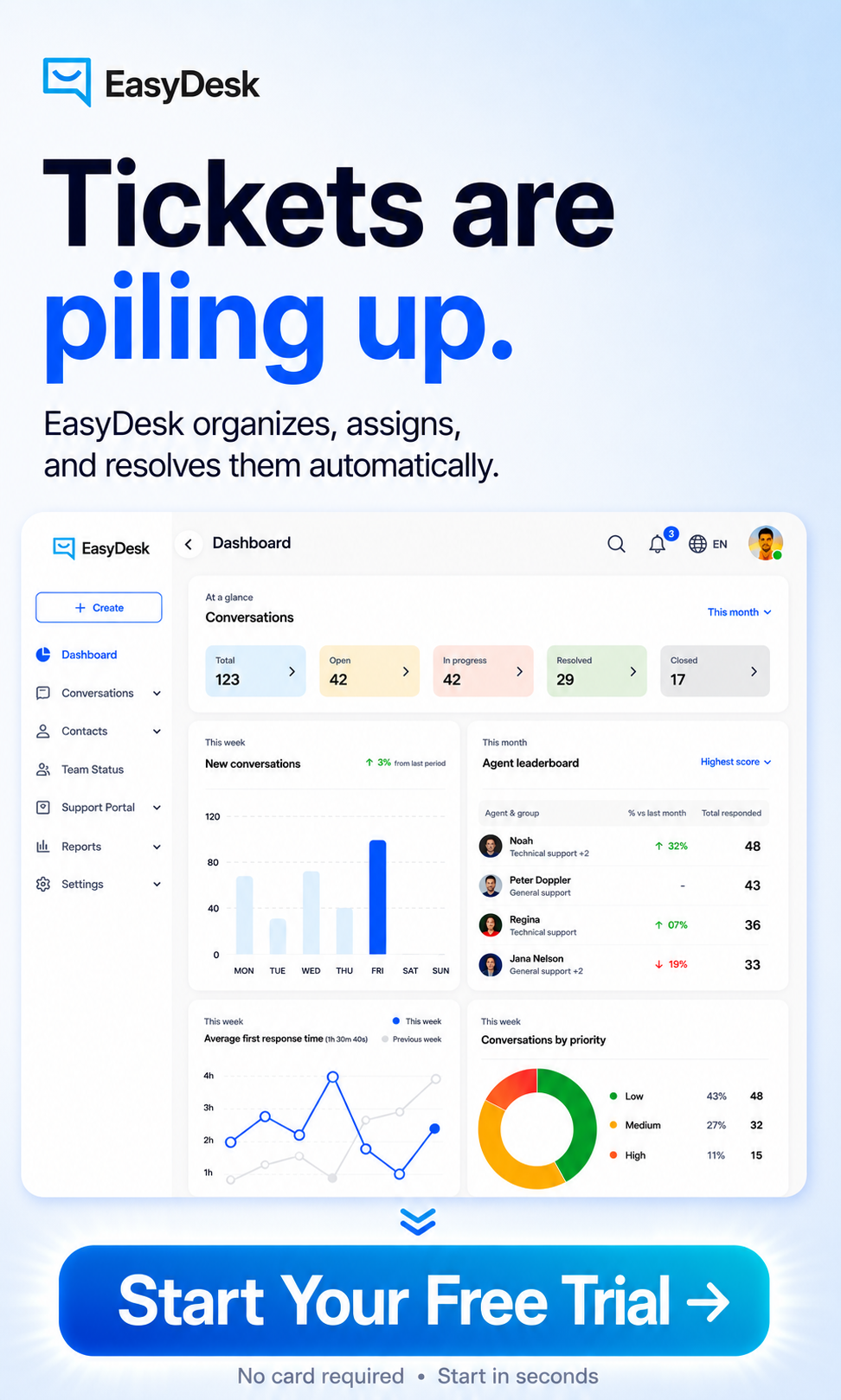
Businesses choose EasyDesk because it helps support teams manage customer conversations from one place. Teams can organize support tickets, automate workflows, and respond faster across multiple channels using a secure & efficient customer support platform. A clean interface and flexible help desk features also improve customer satisfaction and daily support operations.
EasyDesk helps businesses streamline customer support without complex setup or heavy infrastructure costs. Teams can manage requests through email, web forms, and shared inbox workflows more efficiently with helpdesk ticketing software tailored for growing teams and a ticket management system where EasyDesk leads the way. The platform also supports ticket tracking, team collaboration, and faster issue resolution for growing businesses.
Modern companies also need reliable support software that improves the customer experience. EasyDesk gives agents better visibility into support requests and customer interactions with ticketing software built for better customer support and multi channel support software for customer service. Businesses can improve response times, reduce manual work, and create more organized support processes with one centralized help desk solution.
FAQs
Can Small Businesses Use An Open Source Ticketing System Effectively?
Yes, small businesses can use an open-source ticketing system very effectively. Many platforms offer basic features, shared inbox tools, customer portals, and ticket management without expensive subscription costs. Small teams also benefit from a flexible setup and lower infrastructure expenses.
Does An Open Source Ticketing System Require Technical Expertise?
Yes, some open source helpdesk platforms require technical expertise for server setup, deployment, and customization. Businesses with internal developers usually manage the process more easily. Some platforms, however, offer user-friendly interfaces and simpler installation options for non-technical teams, making it easier to manage support tickets efficiently across channels and turn emails into trackable tickets with the right tools.
Can An Open Source Ticketing System Improve Customer Satisfaction?
Yes, a reliable ticketing system helps businesses respond faster to support requests and organize customer communication better. Features like automation, knowledge base access, and multi-channel support improve the customer’s experience and reduce delays in customer support workflows when backed by robust ticket creation and management.
What Is The Difference Between Open Source And Proprietary Ticketing Systems?
An open source ticketing system gives businesses access to the source code for customization and flexibility. Proprietary software usually limits code access and charges recurring licensing fees. Open source platforms also offer better transparency and deployment control for many companies, especially when they streamline customer support with ticket automation.
Which Industries Benefit Most From Open Source Ticketing Systems?
Industries like IT, healthcare, ecommerce, education, and government often use source ticketing systems to manage support tickets and internal requests. Flexible workflows, security controls, and scalable features make open source help desk software useful for many different business environments, particularly when they streamline support with ticket automation and adopt a smart ticketing tool that helps small teams keep up.