Customer expectations move fast today. People want quick answers, smooth communication, and zero delays. A missed ticket or slow reply can damage trust in minutes. That is why many businesses now rely on a cloud ticketing system to manage customer support from one place.
A cloud ticketing system helps teams track, organize, and resolve support requests without messy workflows. Support agents can access tickets from anywhere, automate repetitive tasks, and respond faster across multiple channels. Small businesses and large enterprises both use it to improve customer experience and team productivity.
This guide covers everything you need to know about cloud ticketing systems, from features and benefits to challenges, trends, and best practices.
What Is A Cloud Ticketing System
A cloud ticketing system is a cloud-based ticketing system that helps customer support teams manage customer inquiries, support tickets, and service requests from one platform. Unlike on-premises solutions, a cloud-based help desk works through an internet connection, so support agents can access tickets from multiple devices and locations. Many businesses use cloud helpdesk software to improve ticket management, customer interactions, and support operations without heavy manual effort.
A good ticketing system helps customer service teams automate ticket routing, streamline repetitive tasks, and manage tickets across multiple channels like email, chat, phone support, and social media. Cloud-based systems also support self-service, knowledge base access, and omnichannel support for faster responses. Many cloud-based ticketing software platforms integrate seamlessly with existing tools and collaboration tools to improve team performance and streamline communication.
Modern cloud-based solutions also focus on data security, enhanced security, and customer satisfaction. Support teams, technical teams, and internal IT departments can track performance, identify trends, and resolve customer issues more efficiently without compromising performance.
What Are The Types Of Ticketing Systems
Businesses use different ticketing systems based on their support operations, team size, and customer service goals. Some platforms focus on internal IT support, while others help customer support teams manage customer inquiries across multiple channels. The right system improves ticket management, customer satisfaction, and team performance, so many organizations review modern help desk solutions and deployment options before deciding.
Cloud-Based Ticketing System
A cloud ticketing system works through an internet connection and stores customer data on remote servers. Businesses use cloud-based ticketing software because support agents can access support tickets from multiple devices and locations. This setup works well for global teams and remote customer service teams.
Cloud-based help desk platforms also support automated workflows, omnichannel support, and collaboration tools. Research shows over 90% of businesses now use cloud-based services in some part of their operations. Cloud helpdesk software reduces manual effort and helps businesses resolve customer issues faster across multiple channels, and businesses can compare different cloud-based help desk solutions, their features, pros, and cons before choosing one.
On-Premises Help Desk System
An on-premises helpdesk system runs on local company servers instead of cloud-based systems. The internal IT department manages updates, security features, and system maintenance directly. Some businesses prefer this model for stronger control over customer data and support operations.
However, on-premises solutions often require higher setup costs and more technical expertise. Support teams may also face limitations with scalability and remote access. Many companies now shift from traditional desk systems to cloud-based help desk platforms for better flexibility and streamlined communication.
IT Service Management System
An IT service management ticketing system focuses mainly on internal IT support and technical service requests. Technical teams use it to manage incidents, hardware issues, software problems, and employee support tickets. Large organizations often rely on these desk ticketing system platforms to improve support processes.
Modern ITSM platforms also include automate ticket routing, knowledge base tools, and performance tracking. Businesses can identify trends, reduce repetitive tasks, and improve service team efficiency. Smarter help desk platforms show how the global IT service management market continues to grow rapidly due to higher demand for digital support operations.
Customer Support Ticketing System
A customer support ticketing system helps businesses manage customer inquiries, customer interactions, and external support requests. Support agents can organize support tickets from email, live chat, social media, and phone support into one dashboard. This improves customer satisfaction and consistent support.
Many customer support teams also use AI tools, self service options, and automated workflows to streamline repetitive tasks. A good ticketing system helps businesses track performance, resolve customer issues faster, and improve customer experience. Modern cloud-based solutions now combine help desk software with CRM and collaboration tools for better support operations, and businesses can gain even more value by understanding the broader benefits of using a ticketing system.
Key Features Of A Cloud Ticketing System
A cloud ticketing system should do more than just collect support tickets. Modern customer support teams need faster responses, better organization, and smooth communication across multiple channels. The right desk software helps businesses reduce manual effort, improve customer satisfaction, and resolve customer issues without delays.
Multi-Channel Ticket Support
Customers contact businesses through email, live chat, social media, and phone support. A cloud-based ticketing system brings all customer inquiries into one help desk software dashboard. Support agents can manage tickets faster without switching between tools, especially when they follow multi-channel customer support best practices and implement an email ticketing system with automation and tracking.
Strong multi-channel support also improves customer interactions and consistent support. Recent reports show companies with omnichannel support retain up to 89% of customers, while weaker systems retain only 33%. A cloud-based help desk helps service teams track customer queries across every channel from one place.
Automated Ticket Routing
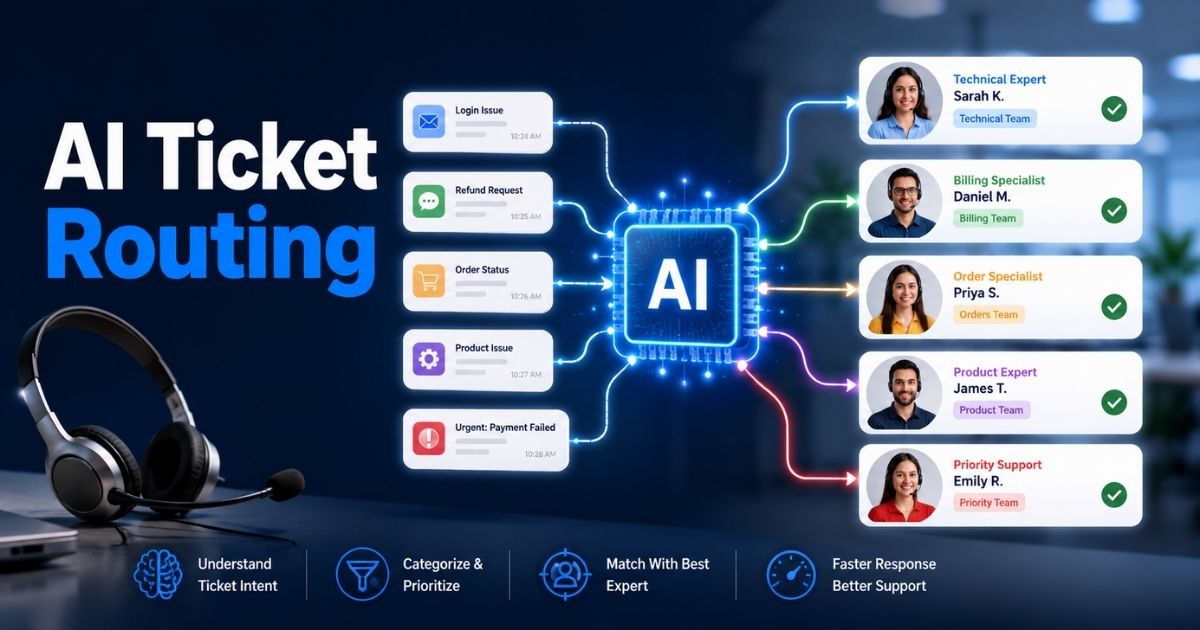
A good ticketing system should automate ticket routing and reduce repetitive tasks. Manual ticket assignment wastes time and slows support operations. Automated workflows send support requests to the right support teams based on issue type, priority, or department.
Modern cloud helpdesk software also helps customer service teams streamline repetitive tasks and improve team performance. Many businesses now rely on AI-powered ticket routing to handle complex tasks faster and follow workflow automation best practices in customer support. Research shows 75% of executives plan to automate at least half of customer service operations within three years.
Knowledge Base And Self-Service
Many customers prefer self-service before contacting external support or support agents. A cloud-based help desk should include a knowledge base with guides, FAQs, and troubleshooting steps. Self-service options reduce ticket volume and help customers solve simple customer issues quickly.
Support teams also benefit from fewer repetitive questions. That gives technical teams and the IT department more time for internal IT and complex service requests. Studies show younger users especially prefer self-service support for common problems. Cloud-based systems with strong self-service tools improve customer satisfaction and support processes.
Reporting And Performance Tracking
A cloud-based ticketing software platform should help businesses track performance and identify trends. Reports give customer support teams a clear view of response times, ticket resolution speed, and service quality. Managers can monitor support operations and improve weak areas quickly with tools like SLA management features for support teams.
Analytics also help service teams understand customer data and support trends across multiple channels. Businesses can spot repeated customer queries and improve support processes before issues grow larger. Modern desk systems use dashboards and collaboration tools to support better decisions without compromising performance.
Security And Tool Integration
Data security is now one of the most important essential features in any cloud-based solution. Customer data, service requests, and internal conversations must stay protected. Reliable cloud helpdesk platforms include enhanced security, access controls, and backup systems.
A cloud ticketing system should also integrate seamlessly with existing tools like CRM platforms, chat systems, and collaboration tools. Strong integration improves streamlined communication between support agents, technical expertise teams, and service providers. Businesses using cloud-based desk ticketing system platforms can support global teams from multiple devices with only an internet connection and paid plans that fit different business sizes.
Cloud Ticketing System Benefits For Customer Support Teams
Customer support teams handle large numbers of customer inquiries every day. Delayed responses and poor ticket management can quickly hurt customer satisfaction. A cloud ticketing system helps businesses improve support operations, reduce manual effort, and deliver faster service across multiple channels when they find the right cloud helpdesk tool for their team.
Faster Ticket Resolution
A cloud-based ticketing system helps support agents respond to support tickets much faster. Automated workflows, ticket routing, and centralized customer data reduce delays. Automated ticket management software helps customer service teams quickly identify the right person for each issue and resolve customer issues without confusion, especially when they streamline support with ticket automation.
Fast responses now matter more than ever. Research shows 73% of customers expect better personalization as technology improves. Cloud helpdesk software helps support teams provide consistent support while handling customer queries across email, chat, and phone support, as shown in a case study on how EasyDesk improved response time for a growing team.
Better Team Collaboration
Customer support teams often work across departments and locations. A cloud-based help desk improves streamlined communication between service teams, technical teams, and the IT department. Shared dashboards, collaboration tools, and ticket notes help everyone stay updated.
Global teams also benefit from cloud-based systems because support agents can access tickets from multiple devices with an internet connection. This flexibility improves team performance and reduces confusion during complex tasks. Better communication also helps businesses avoid duplicate replies and missed support requests.
Lower Manual Workload
Manual ticket assignment and repetitive tasks slow down support processes. A good ticketing system automates ticket routing, follow-ups, and status updates. Customer support teams can focus more on solving customer issues instead of handling routine tasks.
Modern desk ticketing system platforms also help businesses streamline repetitive tasks through automation and self-service options. Reports show automation can reduce customer service costs by up to 30% in many industries. A well-designed ticket automation software solution helps cloud-based ticketing software improve enhancing efficiency without compromising performance, especially when teams streamline customer support with ticket automation.
Improved Customer Experience
Customers expect quick and smooth support from every service provider. A cloud-based solution helps businesses offer omnichannel support through chat, email, social media, and phone support. Customers receive faster replies and more consistent support across every channel with multi channel support software for customer service.
Cloud-based helpdesk tools also improve customer interactions with knowledge base content and self-service options. Customers can solve simple issues without waiting for support agents. Better support experiences often lead to stronger customer satisfaction, loyalty, and retention for businesses.
Stronger Data And Performance Insights
A cloud helpdesk gives businesses access to real-time reports and analytics. Managers can track performance, monitor response times, and identify trends in customer issues. Clear insights help customer service teams improve support operations and service quality over time.
Many cloud-based help desk software platforms also include security features and enhanced security for customer data protection. Businesses can safely manage support tickets, internal IT requests, and external support cases from one platform. Strong reporting tools help teams make faster and smarter decisions.
Cloud Ticketing System Vs Traditional Help Desk Software
Businesses now expect faster support, remote access, and better flexibility from help desk software. Traditional desk systems still work for some companies, but cloud-based vs on-premises helpdesk comparisons show cloud-based ticketing software offers better scalability, automation, and support operations for modern customer support teams.
Feature | Cloud Ticketing System | Traditional Help Desk Software |
|---|---|---|
Deployment | Runs on cloud-based systems through an internet connection | Runs on local servers and on-premises helpdesk infrastructure |
Accessibility | Support agents can access tickets from multiple devices and locations | Access often stays limited to office networks |
Setup Cost | Lower upfront cost with flexible paid plans | Higher hardware and maintenance costs |
Scalability | Easy to scale for global teams and growing support operations | Expansion often requires extra hardware and technical expertise |
Maintenance | Service provider handles updates and maintenance | Internal IT team manages updates manually |
Ticket Management | Includes automated workflows and automate ticket routing features | Manual processes are more common |
Multi-Channel Support | Supports email, chat, phone support, and omnichannel support | Limited multi-channel support in many systems |
Collaboration Tools | Better streamlined communication and collaboration tools | Collaboration features may stay limited |
Data Security | Modern security features and enhanced security protections | Security depends heavily on internal setup |
Self Service | Includes knowledge base and self-service options | Self service support may require separate tools |
Integration | Can integrate seamlessly with existing tools and cloud-based solutions | Integration options may stay limited |
Performance Tracking | Real-time dashboards help track performance and identify trends | Reporting features may be less advanced |
Manual Effort | Reduces repetitive tasks and support requests through automation | More manual effort for support teams |
Customer Experience | Faster responses improve customer satisfaction | Slower workflows can affect customer interactions |
How AI And Automation Improve A Cloud Ticketing System
AI and automation now play a major role in modern customer support. Businesses want faster responses, smarter ticket management, and lower manual effort. Comparing manual vs automated ticketing shows how a cloud ticketing system with AI tools helps support teams improve support operations, customer satisfaction, and overall team performance.
Smart Ticket Routing
AI helps customer support teams automate ticket routing with better accuracy. The system can analyze customer inquiries, keywords, and ticket priority within seconds. Support tickets automatically move to the right support agents or technical teams without delays.
This process improves support operations and reduces repetitive tasks for customer service teams. Studies show AI-powered routing can reduce ticket handling time by nearly 30% in many service environments. Faster ticket routing also helps businesses resolve customer issues more efficiently across multiple channels.
Faster Customer Responses
A cloud-based ticketing system with automation can send instant replies to customer queries. Customers receive confirmation messages, ticket updates, and estimated response times automatically. This creates more consistent support and better customer interactions.
AI chatbots also help cloud-based help desk platforms handle common support requests without human involvement. Research from Gartner predicts AI will automate up to 80% of routine customer service tasks by 2029. Automated workflows allow support agents to focus more on complex tasks instead of repetitive questions.
Better Performance Tracking
AI tools help businesses track performance and identify trends in customer issues. Modern cloud helpdesk software analyzes customer data, response times, and ticket management patterns automatically. Managers can quickly spot delays, workload gaps, and service quality problems.
Advanced analytics also help service teams improve support processes and customer satisfaction. A cloud-based solution gives customer support teams real-time dashboards without relying on manual reports. Better insights help businesses make faster decisions and improve team performance over time.
Stronger Self-Service Support
AI improves self service by making knowledge base content smarter and easier to search. Customers can find answers faster through automated suggestions, chatbots, and self-service options. This reduces support requests and lowers pressure on customer support teams.
Cloud-based helpdesk platforms also learn from past customer interactions and service requests. Over time, AI systems provide more accurate recommendations for customer issues and internal IT support. Businesses can improve support operations while maintaining streamlined communication across service teams.
Lower Operational Costs
Automation helps businesses reduce manual effort and improve enhancing efficiency. A cloud-based ticketing software platform can handle repetitive tasks like ticket updates, follow-ups, and ticket categorization automatically. Support agents spend less time on routine work and more time helping customers.
AI-powered cloud-based desk systems also reduce staffing pressure for global teams and external support operations. Businesses using automation often lower customer service costs while improving customer satisfaction. Combined with enhanced security and integration with existing tools, automation creates a more scalable and user-friendly interface for modern help desk software.
Best Practices To Choose The Right Cloud Ticketing System
Every business has different customer support needs. Some teams handle simple customer inquiries, while others manage complex service requests across multiple channels. The right cloud ticketing system should match your workflows, support operations, and long-term business goals without creating extra manual effort.
Check Ease Of Use
A cloud-based ticketing system should have a user-friendly interface for support agents and customer service teams. Complex desk software often slows ticket management and creates confusion during busy support operations. Simple navigation helps teams resolve customer issues faster.
Ease of use also affects team performance and customer satisfaction. Research shows nearly 40% of employees struggle with poorly designed workplace software. A cloud-based help desk platform with clear dashboards and streamlined communication improves daily support processes for both technical teams and service teams.
Focus On Automation Features
Automation plays a major role in modern cloud helpdesk software. Businesses should look for ticket automation software with automated workflows, automate ticket routing, and tools that streamline repetitive tasks. Automation reduces manual effort and helps support teams handle larger ticket volumes more efficiently, especially when they streamline support with ticket automation.
AI-powered cloud-based systems can also improve customer interactions and reduce response times. Features like auto-assignment, ticket prioritization, and chatbot support help customer support teams manage support requests across multiple channels. Strong automation also supports global teams without compromising performance.
Review Security And Compliance
Customer data protection should always remain a priority. A cloud-based solution must include enhanced security, access controls, backup systems, and modern security features. Businesses handle sensitive customer inquiries and service requests every day, so weak protection creates serious risks.
Many industries also require compliance with security standards and privacy regulations. Reliable cloud-based ticketing software platforms often provide stronger data security than older on-premises helpdesk systems. A trusted service provider helps businesses protect internal IT operations and external support data more effectively.
Test Integration Options
A cloud ticketing system should integrate seamlessly with existing tools like CRM platforms, collaboration tools, and communication apps. Poor integration creates disconnected workflows and slows support operations. Strong integration improves ticket routing, customer interactions, and team collaboration.
Modern help desk software also supports omnichannel support through email, chat, social media, and phone support. Businesses using cloud-based desk systems often improve support efficiency by connecting all customer queries into one platform. Better integration helps service teams track performance and identify trends more accurately, especially when they follow a fast and scalable helpdesk software guide to choose the right tool.
Compare Pricing And Scalability
Businesses should compare paid plans carefully before choosing a cloud helpdesk platform. Some systems offer low starting prices but charge extra for essential features like knowledge base access, self-service tools, or advanced analytics. Long-term costs matter more than low entry pricing, and teams on tight budgets may start with options from a guide to the best free helpdesk ticket systems before upgrading.
Scalability is equally important for growing support teams. A cloud-based help desk should support larger ticket volumes, multiple devices, and expanding customer support operations over time. Guidance from a ticketing software blog covering tools and best practices and a detailed resource on how the right helpdesk setup boosts customer support helps businesses choose flexible cloud-based solutions that let them grow without switching platforms or increasing technical expertise requirements later.
Common Challenges Businesses Face With A Cloud Ticketing System
A cloud ticketing system improves customer support, but businesses can still face several challenges after adoption. Poor setup, weak support processes, and limited planning often reduce system performance. Companies need the right strategy to avoid delays, security risks, and workflow issues.
Poor User Adoption
Some support agents struggle to adapt to new cloud-based ticketing software. Complicated dashboards and confusing workflows can slow customer support teams instead of helping them. A difficult user-friendly interface often creates frustration across service teams and technical teams.
Training also plays a major role in team performance. Research shows nearly 70% of digital transformation projects face resistance from employees due to poor adoption and process changes. Businesses should provide proper onboarding and support so customer service teams can manage tickets and support requests confidently, following steps from a helpdesk implementation guide for support teams.
Weak System Integration
A cloud-based help desk should integrate seamlessly with existing tools like CRM systems, collaboration tools, and communication platforms. Poor integration creates disconnected customer data and slower support operations. Support agents may need to switch between multiple systems to resolve customer issues.
Disconnected workflows also increase manual effort and repetitive tasks. Businesses often face delays when customer inquiries from multiple channels fail to sync properly. Strong integration between desk software and cloud-based systems helps maintain streamlined communication and better customer interactions.
Security And Privacy Risks
Customer data protection remains a major concern for businesses that use cloud-based platforms. Weak security features can expose customer inquiries, support tickets, and internal IT data to cyber threats. Companies handling sensitive information need enhanced security and strict access controls.
Recent cybersecurity reports show cloud-related attacks continue to rise globally. Businesses should choose cloud-based solutions with strong data security, backup systems, and compliance support. A trusted service provider can help customer support teams protect customer data without compromising performance.
High Customization Complexity
Many businesses need custom workflows, automated workflows, and advanced ticket routing rules. Some cloud helpdesk software platforms make customization difficult without technical expertise. Complex setup processes can delay support operations and reduce enhancing efficiency.
Customer support teams may also struggle with overly complicated configurations. Too many automation rules can create confusion during ticket management and customer interactions. A good ticketing system should balance flexibility with simplicity for both support agents and service teams.
Internet And Downtime Issues
A cloud-based ticketing system depends heavily on a stable internet connection. Network outages or service downtime can interrupt support processes and delay customer service operations. Support agents may lose access to customer queries and service requests during disruptions.
Global teams and external support teams face even greater risks during long outages. Businesses should review uptime guarantees and backup options before selecting cloud-based help desk software. Reliable cloud helpdesk platforms often provide disaster recovery tools and performance monitoring to reduce downtime risks.
Future Trends Shaping The Cloud Ticketing System Industry
Customer support continues to change fast as businesses adopt smarter cloud-based systems. Modern support teams now expect automation, faster workflows, and better customer interactions. New technologies are reshaping how cloud ticketing system platforms manage support requests, customer data, and service operations.
AI-Powered Customer Support
AI will continue to shape cloud-based ticketing software over the next few years. Businesses now use AI tools to automate ticket routing, analyze customer inquiries, and improve ticket management. AI also helps support agents resolve customer issues faster through smart recommendations and automated workflows.
Recent industry reports show over 80% of customer service organizations plan to increase AI investments by 2026. AI-driven cloud helpdesk software improves customer satisfaction while reducing repetitive tasks and manual effort. Customer support teams can focus more on complex tasks and high-value customer interactions.
Stronger Omnichannel Support
Customers now expect support across email, live chat, phone support, and social media without delays. Future cloud-based help desk platforms will improve omnichannel support through better streamlined communication and centralized customer data. Support teams will manage all customer queries from one dashboard, much like modern multi channel support software for customer service.
Cloud-based systems are also improving multi-channel support for global teams and remote support agents. Businesses can maintain consistent support across multiple channels without switching between desk systems. Better channel integration helps service teams track performance and improve customer satisfaction more effectively.
Smarter Self-Service Tools
Self-service will become a larger part of modern help desk software. Businesses already use knowledge base systems and self-service options to reduce support requests. Future cloud help desk software and cloud-based ticketing systems will use AI to deliver more personalized answers and faster search results.
Customers prefer solving simple customer issues without contacting support agents. Industry studies show nearly 70% of customers now expect companies to provide self-service support options. Smarter cloud-based helpdesk platforms will help businesses reduce ticket volume and improve support operations at the same time.
Advanced Security Features
Data security will remain a top priority for every cloud-based solution. Businesses manage sensitive customer inquiries, internal IT requests, and service requests daily. Future cloud helpdesk platforms will include stronger enhanced security, automated threat detection, and better access controls.
Cybersecurity risks continue to grow for cloud-based services worldwide. Businesses now expect security features that protect customer data without compromising performance. Reliable service providers will focus heavily on compliance, backup systems, and safer cloud-based help desk environments for customer support teams.
Deeper Workflow Automation
Automation will move far beyond basic ticket routing in the future. Cloud ticketing system platforms will automate repetitive tasks, approvals, escalations, and support processes with minimal human involvement. Customer service teams will spend less time on routine work and more time solving customer issues.
Future cloud-based systems will also integrate seamlessly with existing tools, collaboration tools, and external support platforms. Automated workflow software shows how better automation improves enhancing efficiency and overall team performance. Businesses can manage larger ticket volumes while maintaining faster response times and streamlined communication across technical teams and service teams, especially when they adopt smarter helpdesk setups for smoother support.
How EasyDesk Helps Businesses Simplify Customer Support With A Cloud Ticketing System
EasyDesk helpdesk ticketing software helps businesses manage customer support from one centralized platform. The cloud ticketing system combines ticket management, automated workflows, omnichannel support, and collaboration tools to help customer support teams resolve customer issues faster, and a comparison of the best ticket management systems and why EasyDesk leads highlights these strengths. The EasyDesk customer support platform lets support agents manage customer inquiries from email, chat, and multiple channels without switching between different desk systems.
EasyDesk also helps businesses reduce manual effort through automate ticket routing, SLA tracking, canned responses, and self-service tools. Managing support tickets efficiently using EasyDesk allows customer service teams to track performance, identify trends, and improve customer satisfaction with better support processes. The cloud-based help desk supports global teams, multiple devices, and automated workflows for streamlined communication for both internal IT and external support operations.
Businesses can also integrate seamlessly with existing tools while keeping customer data protected through enhanced security and modern security features. About EasyDesk explains how the platform gives service teams a user-friendly, secure interface that improves team performance without compromising performance.
FAQs
Can A Cloud Ticketing System Work For Remote Support Teams?
Yes, a cloud-based ticketing system works very well for remote and global teams. Ticketing software built for better customer support ensures support agents can manage tickets, access customer data, and handle support requests from multiple devices with only an internet connection. Cloud-based systems also improve streamlined communication across service teams, which is especially valuable when following tips to simplify holiday support with your helpdesk app.
Does A Cloud Ticketing System Reduce Manual Work?
Yes, modern cloud helpdesk software reduces manual effort through automated workflows, automates ticket routing, canned responses, and self-service tools. A structured ticket creation and management system and tools that turn emails into trackable tickets with the right setup mean customer support teams can handle repetitive tasks faster and focus more on resolving customer issues and improving customer satisfaction.
Which Businesses Need A Cloud-Based Help Desk The Most?
Businesses with high customer inquiries, multi-channel support operations, or growing support teams benefit the most from a cloud-based help desk. SaaS companies, e-commerce brands, IT service providers, and customer service teams often use ticketing software built for better customer support to improve support operations and ticket management.
Can A Cloud Ticketing System Support Internal IT Requests?
Yes, many desk ticketing system platforms support both customer support and internal IT service requests. Technical teams and the IT department can track incidents, manage service requests, and monitor support tickets from one centralized help desk software dashboard.
Why Does Ticket Routing Matter In Customer Support?
Ticket routing helps customer support teams send customer queries to the right support agents faster. Automated ticket routing improves response speed, reduces repetitive tasks, and creates more consistent support across multiple channels. Businesses also use it to track performance and improve team performance over time.