IT problems rarely come at a good time. A slow computer, network failure, software crash, or password issue can stop work within minutes. Without a proper system, support requests pile up fast. Teams miss messages, employees wait longer, and small problems turn into bigger ones.
That is where IT support ticketing becomes important. A good ticketing system helps businesses organize support requests, assign tasks faster, track every issue, and improve response time. It creates a clear workflow for both IT teams and employees.
This guide covers everything about IT support ticketing. You will learn how it works, which features matter most, common mistakes to avoid, and how modern businesses use automation and AI to deliver faster support.
What Is IT Support Ticketing
IT support ticketing is a structured way to manage support requests inside a business. A ticketing system collects issues from employees or customers and turns them into trackable support tickets. An IT ticketing system helps support teams organize tasks, assign the right agents, and resolve issues faster. Modern support ticketing systems also connect with existing tools like Jira Service Management and Microsoft Teams to improve support operations and service management.
Most ticketing software includes key features like automated routing, self-service portals, knowledge base access, and automated workflows. A support agent can track the entire ticketing process from ticket triage to close tickets without confusion. Advanced help desk and ITSM software now use AI-powered automation, intelligent automation, and AI agents to reduce repetitive work and improve response times. This helps small businesses and larger organizations handle more tickets while maintaining service quality across the entire organization.
Essential Features Every IT Support Ticketing System Should Have
A modern IT support ticketing system does more than create tickets. It helps support teams manage service requests, reduce response times, and improve service quality across the entire organization. The right ticketing software also reduces repetitive work and helps teams collaborate without confusion.
Smart Ticket Automation
Automation features now play a major role in modern support operations. A good ticketing system should include automated routing, ticket triage, and automated workflows. Those tools help support teams send support tickets to the right agents without delays. According to recent industry reports, companies using AI-powered automation can resolve tickets up to 16 times faster than manual teams.
AI features also reduce repetitive work for every support agent. Modern ticket automation software and ITSM platforms can prioritize common issues, close tickets automatically, and handle basic ticketing tasks with AI agents. This helps the IT team focus on larger problems instead of wasting time on repetitive service requests.
Self-Service Support
A self-service portal is now an essential feature in every IT ticketing system. Employees want fast answers without waiting for a support agent. A strong knowledge base software with clear knowledge content is among the core benefits of using a ticketing system and helps users resolve issues on their own. Studies show 90% of users prefer immediate support when facing technical problems.
Self-service also supports ticket deflection. Fewer simple tickets reach the service desk, which helps support teams manage high ticket volume more effectively. Many desk solutions now include AI-powered search, chatbot support, and automated suggestions to improve employee service and reduce response times, especially when they follow self-service customer support best practices.
Omnichannel Communication
Support requests now come from many channels. Employees use email, chat apps, phone calls, and platforms like Microsoft Teams to contact support teams. A modern ticketing process should connect all communication into one system. That keeps every team member on the same page.
Omnichannel support also improves service management and service quality. A ticketing software built for better customer support typically offers shared inboxes and unified dashboards to help the right team members track IT tickets without losing context. Research shows businesses with connected omnichannel support channels improve customer satisfaction and faster ticket resolution compared to disconnected systems.
Easy Integration Options
A new system should work well with existing tools. Integration problems often create delays, duplicate tickets, and poor support operations. Modern ticketing solutions connect with project management platforms, collaboration tools, and change management systems. Platforms like Jira Service Management already support advanced integrations for service desk teams.
Easy integration also lowers the learning curve for small businesses and larger organizations. A structured ticket creation and management system lets support teams manage tickets from familiar platforms instead of switching between multiple apps. A clean interface and intuitive interface make daily service tasks easier for both agents and employees.
Scalable Reporting Tools
Strong reporting tools help support teams measure business goals and improve the IT ticketing process. A ticketing system should track response times, ticket volume, recurring issues, and service performance. Recent reports show average ticket volume has increased by 16% since 2020, which makes tracking more important than ever.
Advanced features like AI analytics and automated insights help teams resolve tickets faster and improve support quality. Managers can identify common issues, measure total cost, and optimize support operations before small problems grow into larger service failures. Platforms with comprehensive EasyDesk features for smarter support go beyond free plan options, as larger organizations usually need deeper analytics and enterprise-level ticket management features.
Key Benefits Of IT Support Ticketing For Modern Businesses
A reliable IT support ticketing system helps businesses stay organized and responsive. It improves support operations, reduces delays, and gives support teams a clear process for handling service requests. Modern ticketing solutions also help businesses scale support without losing service quality.
Faster Issue Resolution
A structured ticketing process helps support teams resolve issues much faster. Every support ticket goes directly to the right agents through automated routing and ticket triage. That reduces confusion and improves response times across the service desk.
Recent studies show companies that use AI-powered automation reduce average resolution time by up to 52%. Support agents also spend less time on repetitive work because automated workflows handle basic ticketing tasks, especially when they follow proven ways to cut average resolution time. Faster service keeps employees productive and reduces downtime for the entire organization.
Better Team Collaboration
IT support ticketing systems help teams collaborate from one central platform. Shared inboxes, ticket management tools, and omnichannel support keep every team member on the same page. No request gets lost between email threads or chat messages.
Modern platforms also connect with existing tools like Microsoft Teams and project management software. A cloud-based helpdesk ticketing software creates smoother communication between departments and support operations. A connected system helps right team members track service requests and close tickets without delays or duplicate work.
Higher Service Quality
A strong IT ticketing system improves service quality with clear workflows and accountability. Managers can track support tickets, monitor response times, and identify recurring issues before they become larger problems. That creates a more reliable employee service experience.
Research from HubSpot shows 93% of customers are likely to return to companies with excellent support experiences. Clear ticket management also helps support teams follow best practices and maintain consistent service standards. Better visibility leads to faster decisions and fewer support mistakes.
Lower Support Costs
Manual support processes increase labor costs and waste time. Automated ticket management software reduces extra work through automation features, AI agents, and self-service tools. Employees can access a knowledge base and resolve common issues without contacting the help desk.
Ticket deflection also reduces high ticket volume for support teams. Industry reports show businesses using self-service portals can lower support costs by up to 30%. Small businesses especially benefit because a free plan or low-cost desk solutions can still improve daily service operations without major additional cost.
Smarter Business Decisions
Modern ITSM software provides valuable data for business planning. Reporting tools track ticket volume, recurring issues, service performance, and total cost. Managers can use that information and broader customer support metrics to improve workflows and align support operations with business goals.
Advanced features like intelligent automation and AI analytics also help larger organizations predict future support demands. Teams can identify weak areas, improve change management, and optimize resource planning using well-structured customer service KPIs. Better data helps businesses build a stronger support system over time.
Common IT Support Ticketing Challenges And How To Solve Them
Even the best IT support ticketing system can create problems without the right setup. Poor workflows, slow response times, and disconnected support operations often reduce service quality. Businesses need clear processes and modern ticketing solutions to avoid delays and improve support performance.
High Ticket Volume
Many support teams struggle with high ticket volume every day. More tickets often lead to delayed response times, missed service requests, and frustrated employees. Moving from shared inboxes to automated email-to-ticket systems is often a first step, and research shows IT teams now manage nearly 30% more support tickets compared to pre-pandemic levels due to hybrid work environments.
A strong ticketing system solves this problem with automated routing, AI-powered automation, and self-service tools. Well-designed ticket automation workflows plus a knowledge base and self-service portal also reduce repetitive work through ticket deflection. Support agents can then focus on complex issues instead of basic ticketing requests.
Poor Ticket Prioritization
Some support tickets require immediate action, while others can wait. Without proper ticket triage, support teams may waste time on low-priority requests. That often creates service delays for critical business operations.
Modern ITSM software uses intelligent automation and AI features to sort tickets based on urgency, impact, and department. Robust ticket prioritization in customer support and automated workflows also assign tickets to the right agents faster, which is especially important for small teams using smart ticketing tools. This improves service management and helps support operations maintain consistent service quality across the entire organization.
Weak Team Communication
Disconnected communication creates confusion inside the service desk. Emails, chat apps, and shared inboxes can easily become unorganized without a centralized multi-channel customer support workspace. Team members may duplicate work or miss updates during the ticketing process.
Omnichannel support helps teams collaborate from one platform, following best practices from modern omnichannel communication guides for support teams. Many ticketing software systems for better customer support now integrate with Microsoft Teams, project management software, and existing tools. A clean interface keeps every support agent on the same page and improves coordination between departments and support teams.
Slow Employee Adoption
A new system often comes with a learning curve. Employees may avoid the help desk if the ticketing software feels difficult or confusing. Low adoption weakens support operations and reduces overall efficiency.
An intuitive interface and simple self-service options make employee service easier for everyone. Small businesses especially benefit from easy desk solutions with clear navigation and automation features. Recent reports show software adoption rates improve significantly when systems require minimal training and fewer manual steps.
Limited Reporting And Insights
Many businesses fail to track recurring issues, ticket management trends, or total cost. Without proper reporting, support teams struggle to improve workflows or align service with business goals. Poor visibility also affects change management and long-term planning.
Advanced features in modern ticketing solutions solve this problem with real-time dashboards and AI analytics. Managers can monitor response times, close tickets faster, and identify service gaps before they grow. Larger organizations especially rely on reporting tools to maintain performance and improve support quality at scale.
Best Practices To Improve IT Support Ticketing Performance
A strong IT support ticketing process needs more than good software. Clear workflows, fast communication, and smart automation all play a major role in support performance. Businesses that follow proven best practices usually resolve tickets faster and improve overall service quality.
Set Clear Ticket Priorities
Every support ticket should follow a clear priority structure. Critical issues need immediate attention, while low-impact requests can wait. Without proper ticket triage, support teams often waste time on the wrong tasks and delay urgent service requests.
Modern ticketing systems use automated routing and AI-powered automation to sort tickets based on urgency and impact. This helps right agents respond faster and improves response times across the service desk. Studies show businesses with structured prioritization reduce average resolution time by nearly 35%.
Build A Strong Knowledge Base
A detailed knowledge base helps employees solve common issues without contacting the help desk. Self-service tools reduce repetitive work and lower high-ticket volume for support teams. Employees also prefer fast answers instead of waiting for a support agent.
Strong knowledge content improves ticket deflection and supports better employee service. Modern ITSM software often includes AI features that recommend articles automatically during the ticketing process. Research shows companies with self-service portals and modern ticketing software best practices can reduce incoming support tickets by up to 25%.
Use Automation Wisely
Automation features help support operations move faster and stay organized. Automated workflows can assign support tickets, send status updates, and close tickets after resolution. This reduces manual tasks and keeps every team member on the same page.
Intelligent automation also helps larger organizations handle more tickets without adding extra staff. AI agents now support basic ticketing, password resets, and recurring issues. Purpose-built automated workflow software for smarter support and broader help desk platforms to streamline support help businesses that use automation tools improve service management efficiency while lowering total cost and additional cost linked to manual support.
Track Performance Metrics
Good ticket management depends on accurate reporting. Support teams should track response times, resolution rates, recurring issues, and service quality regularly. Without proper data, businesses struggle to improve support operations or align support with business goals.
Advanced features in modern ticketing software provide real-time dashboards and detailed analytics. Capabilities like automated ticket assignment help managers quickly identify weak areas inside the system and improve workflows before problems grow. Clear reporting also supports better change management and long-term planning for the entire organization.
Choose User-Friendly Tools
Complex software creates a long learning curve for both employees and support teams. A clean interface and intuitive interface make the ticketing process easier for everyone. Simple desk solutions often improve adoption rates faster than overloaded platforms with unnecessary features.
Many small businesses now prefer ticketing solutions that integrate with existing tools like Microsoft Teams and project management platforms. A platform built to manage support tickets efficiently with easy navigation helps teams collaborate without confusion. Reports also show employees are more likely to use self-service and support portals when the system feels simple and familiar.
How AI And Automation Are Changing IT Support Ticketing
AI and automation now shape the future of IT support ticketing. Modern ticketing systems use intelligent tools to reduce manual work, improve response times, and manage high ticket volume more efficiently. Businesses also use AI-powered automation to improve service quality without expanding support teams.
Faster Ticket Routing
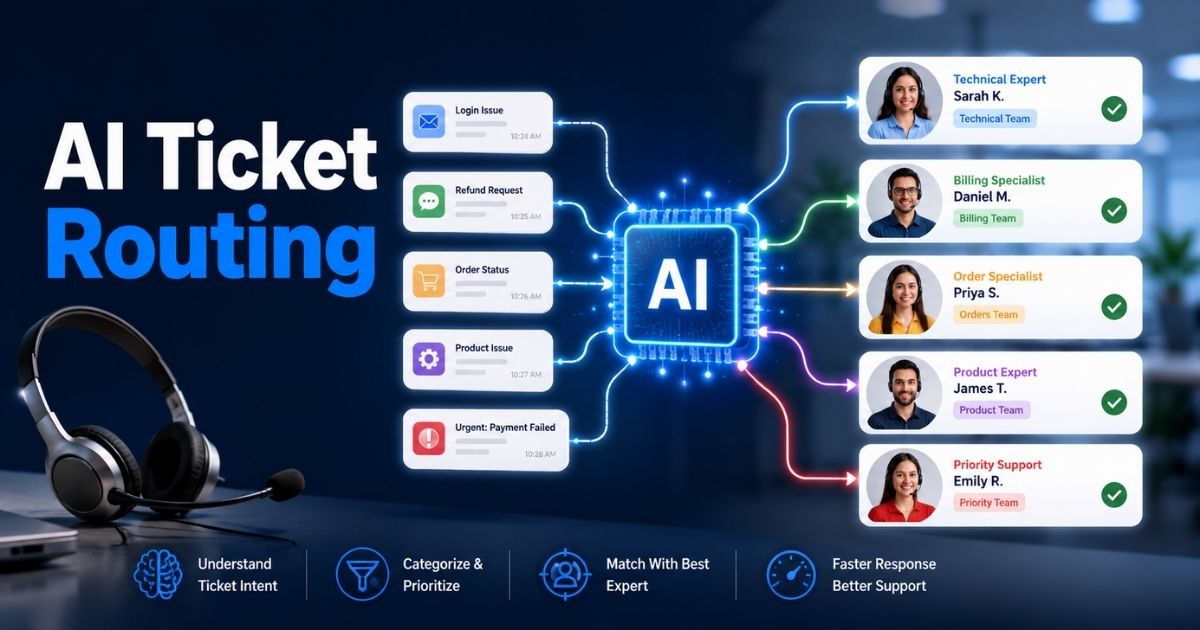
Manual ticket assignment slows down support operations. AI-powered automation now handles ticket triage and automated routing in real time. A modern IT ticketing system can analyze keywords, urgency, and user history before assigning support tickets to the right agents.
This process helps support teams resolve issues faster and reduce delays inside the service desk. Industry reports show automated workflows can lower first response times by more than 40%. Faster routing also keeps every team member on the same page during high-pressure situations.
Smarter Self Service
AI features now improve self-service portals and knowledge base systems. Employees can search knowledge content, ask AI agents questions, and solve common issues without contacting a support agent. This reduces repetitive work and lowers pressure on support teams.
Many ticketing solutions also use intelligent automation to suggest articles during the ticketing process. Better self-service increases ticket deflection and improves employee service across the entire organization. Studies show over 70% of users now prefer self-service support for basic technical problems.
Better Support Productivity
Automation features help support teams manage more tickets with fewer delays. Automated workflows can update ticket status, send notifications, and close tickets after issue resolution. That saves time for support agents and improves daily support operations.
Modern ITSM software also helps larger organizations reduce additional cost linked to manual support tasks. AI-powered systems can detect recurring issues, prioritize service requests, and improve ticket management accuracy. This allows support teams to focus on critical business problems instead of routine service tasks.
Improved Decision Making
AI analytics now play a major role in service management and change management. Advanced reporting tools help businesses track response times, recurring issues, and overall service quality. Managers can use this data to improve workflows and align support with business goals.
Modern help desk platforms also provide predictive insights through AI-powered automation. Teams can identify trends before problems affect the system or employee experience. Better reporting supports faster decisions and stronger long-term support planning across the organization.
More Personalized Support
Modern ticketing software now delivers more personalized employee service experiences. AI agents can access ticket history, previous service requests, and user preferences to provide faster support. This creates smoother communication between support teams and employees.
Omnichannel support also improves the experience across email, chat, and Microsoft Teams. A clean interface and intuitive interface make the ticketing process easier for both small businesses and larger organizations, especially when powered by multi channel support software for customer service. Research shows businesses that personalize support interactions often improve customer satisfaction and faster issue resolution rates.
IT Support Ticketing Metrics, SLAs, And KPIs You Must Track
Strong IT support ticketing performance depends on accurate tracking. Metrics, SLAs, and KPIs help businesses measure service quality, improve response times, and optimize support operations. Without clear data, support teams struggle to identify recurring issues and improve the overall ticketing process.
First Response Time
First response time measures how quickly a support agent replies after a ticket is created. Slow replies often frustrate employees and reduce trust in the service desk. Many businesses now treat this KPI as one of the most important support metrics.
Modern ticketing systems use automated routing, SLA tracking software to improve response time, and AI-powered automation to improve response times. Research shows nearly 60% of users expect a response within one hour for technical support requests. Faster replies improve employee service and help support teams manage high ticket volume more effectively.
Ticket Resolution Time
Resolution time tracks how long it takes to fully resolve tickets. This metric helps businesses understand support efficiency and overall service quality. Long resolution times often point to weak workflows, poor ticket management, or lack of automation features.
Modern ITSM software improves the ticketing process through intelligent automation and automated workflows. Comparing manual vs automated ticketing shows how AI agents can handle repetitive work and basic ticketing tasks faster than manual processes. Better resolution rates help support operations stay aligned with business goals and service expectations.
SLA Compliance Rate
Service level agreements define the expected response and resolution standards for support teams. SLA compliance measures how often support tickets meet those targets. As organizations learn what SLAs are and why they matter for service success, they see that low compliance rates usually indicate staffing problems, poor ticket triage, or overloaded support operations.
Many help desk platforms now include SLA tracking dashboards and automated alerts. A dedicated SLA management system and robust SLA management software help support teams prioritize urgent service requests before breaches happen. Industry reports show businesses with strong SLA management often achieve higher customer satisfaction and better operational performance across the entire organization.
Ticket Backlog Volume
Ticket backlog measures unresolved support tickets waiting inside the system. A growing backlog often signals high ticket volume, staffing shortages, or inefficient support operations. Large backlogs also increase employee frustration and delay service requests.
Advanced ticketing solutions use AI-powered automation to reduce ticket buildup through automated routing and self-service tools. A knowledge base and self-service portal also support ticket deflection for common issues. Businesses that monitor backlog volume closely, alongside other customer support metrics and KPIs, usually maintain faster support response times and better service quality.
Customer Satisfaction Score
Customer satisfaction scores help businesses understand how employees feel after support interactions. This KPI reflects communication quality, resolution speed, and overall employee service experience. Strong satisfaction scores often show that support teams follow best practices consistently.
Modern ticketing software collects feedback automatically after support tickets close. Omnichannel support, clean interfaces, and intuitive interface design also improve user experience. Studies show businesses that monitor customer service KPIs alongside faster response times and personalized support often achieve significantly higher satisfaction rates than slower support teams.
How To Choose The Best IT Support Ticketing Software For Your Business
The right IT support ticketing software can improve service quality, reduce response times, and simplify daily support operations. A poor system creates delays, confusion, and extra costs. Businesses should compare features, scalability, and long-term value before choosing a ticketing solution.
Check Core Features First
Every ticketing system should include the essential feature set needed for daily support operations. Ticket management, automated routing, omnichannel support, and self-service tools are now basic requirements for modern businesses. A strong service desk should also support SLA tracking and reporting.
Modern ticketing software often includes AI-powered automation, AI agents, and automated workflows. Those tools help support teams resolve tickets faster and reduce repetitive work by applying workflow automation in customer support to repetitive, rules-based tasks. Businesses should compare the feature list carefully before investing in a new system or long-term service management platform.
Focus On Ease Of Use
A complicated system creates a long learning curve for support teams and employees. A clean interface and intuitive interface help team members use the platform without confusion. Better usability also improves employee service and faster ticket adoption across the entire organization.
Research shows nearly 70% of software implementation problems happen because users struggle with system complexity. Small businesses especially benefit from simple desk solutions with clear navigation, often starting with a best free helpdesk ticket system before upgrading. Easy ticketing processes help support agents stay productive and reduce delays during high ticket volume periods.
Review Integration Options
Good ticketing solutions should connect with existing tools already used inside the business. Integration support helps teams collaborate and improves support operations without forcing employees to switch between multiple platforms every day.
Modern ITSM software often integrates with Microsoft Teams, project management platforms, and change management tools. Solutions that include robust SLA management with EasyDesk and platforms like Jira Service Management also support advanced workflows and automation features. Strong integrations improve communication, simplify service requests, and keep support teams on the same page.
Compare Pricing Carefully
The cheapest ticketing software is not always the best option. Businesses should compare total cost, advanced features, scalability, and additional cost linked to upgrades or AI features. A free plan may work for small businesses, but larger organizations often need enterprise-level support.
Support leaders should also calculate long-term value before choosing a help desk platform. A best-in-class ticket management system or robust multichannel helpdesk software with automation features, self-service portals, and ticket deflection tools can reduce staffing expenses over time. A scalable system helps businesses manage more tickets without increasing operational costs too quickly.
Test Reporting And Analytics
Strong analytics help businesses improve service quality and support performance. A modern IT ticketing system should track response times, recurring issues, SLA compliance, and support ticket trends in real time. Good reporting also supports smarter business decisions.
Advanced reporting tools help support teams identify weak areas before they affect daily service operations. AI-powered automation and intelligent automation now provide predictive insights for ticket management and resource planning. Businesses that monitor performance regularly usually resolve issues faster and improve overall support efficiency.
How EasyDesk Helps Businesses Improve IT Support Ticketing Efficiency
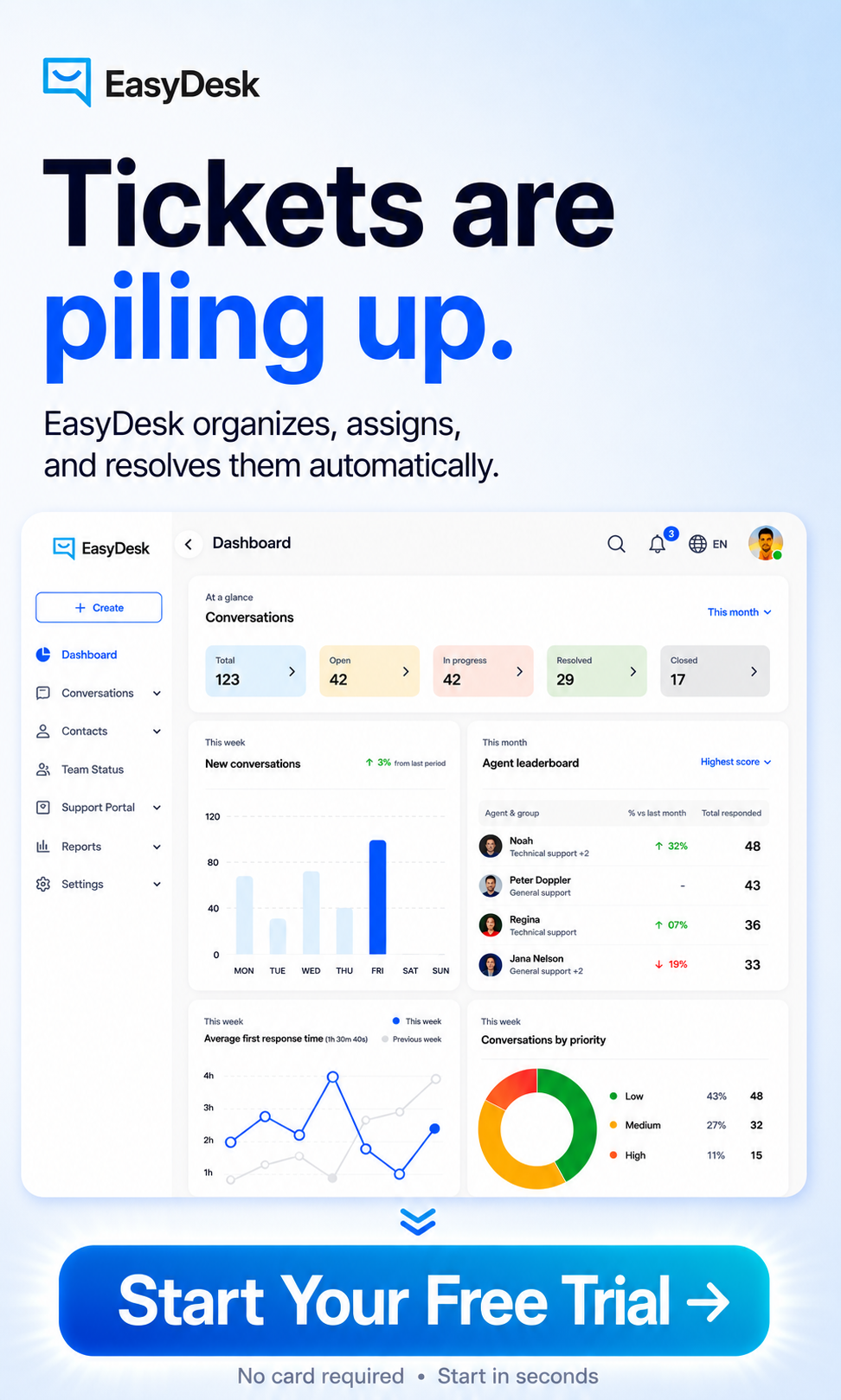
EasyDesk’s customer support platform helps businesses simplify IT support ticketing without adding extra complexity. The platform gives support teams one central ticketing system to manage support tickets, service requests, and daily support operations. Automated routing sends tickets to the right agents faster, which improves response times and service quality. Support teams can also track the full ticketing process from ticket creation to close tickets inside one clean interface.
EasyDesk also supports self-service, omnichannel support, and automated workflows to reduce repetitive work. Employees can use the knowledge base and self-service portal to resolve common issues without waiting for a support agent. Its approach to streamlining support with ticket automation, along with AI-powered automation and ticket management tools, helps businesses manage high ticket volume more efficiently. EasyDesk also integrates with existing tools, which helps teams collaborate and stay on the same page across the entire organization.
FAQs
Can Small Businesses Use IT Support Ticketing Software Effectively?
Yes. Modern ticketing software now offers free plan options, clean interfaces, and simple ticket management tools for small businesses. Many desk solutions also include self-service portals, automated workflows, and omnichannel support without high additional cost.
Does IT Support Ticketing Help Reduce Employee Downtime?
Yes. A structured ticketing process helps support teams resolve issues faster through automated routing, ticket triage, and AI-powered automation. Faster response times reduce delays and improve employee service across the entire organization.
What Is The Difference Between A Help Desk And ITSM Software?
A help desk mainly focuses on basic ticketing and support requests. ITSM software covers broader service management functions like change management, automated workflows, SLA tracking, and long-term support operations for larger organizations.
Can AI Agents Handle IT Support Tickets Without Human Help?
AI agents can manage repetitive work like password resets, ticket routing, and recurring issues through intelligent automation. However, complex support tickets still need support agents and right team members for proper resolution and service quality.
Why Do Businesses Use Self-Service Portals In Ticketing Systems?
Self-service portals help employees resolve common issues without waiting for a support agent. A strong knowledge base and knowledge content also improve ticket deflection, reduce high ticket volume, and support faster support operations. Recent reports show self-service demand continues to grow because users expect immediate support experiences.